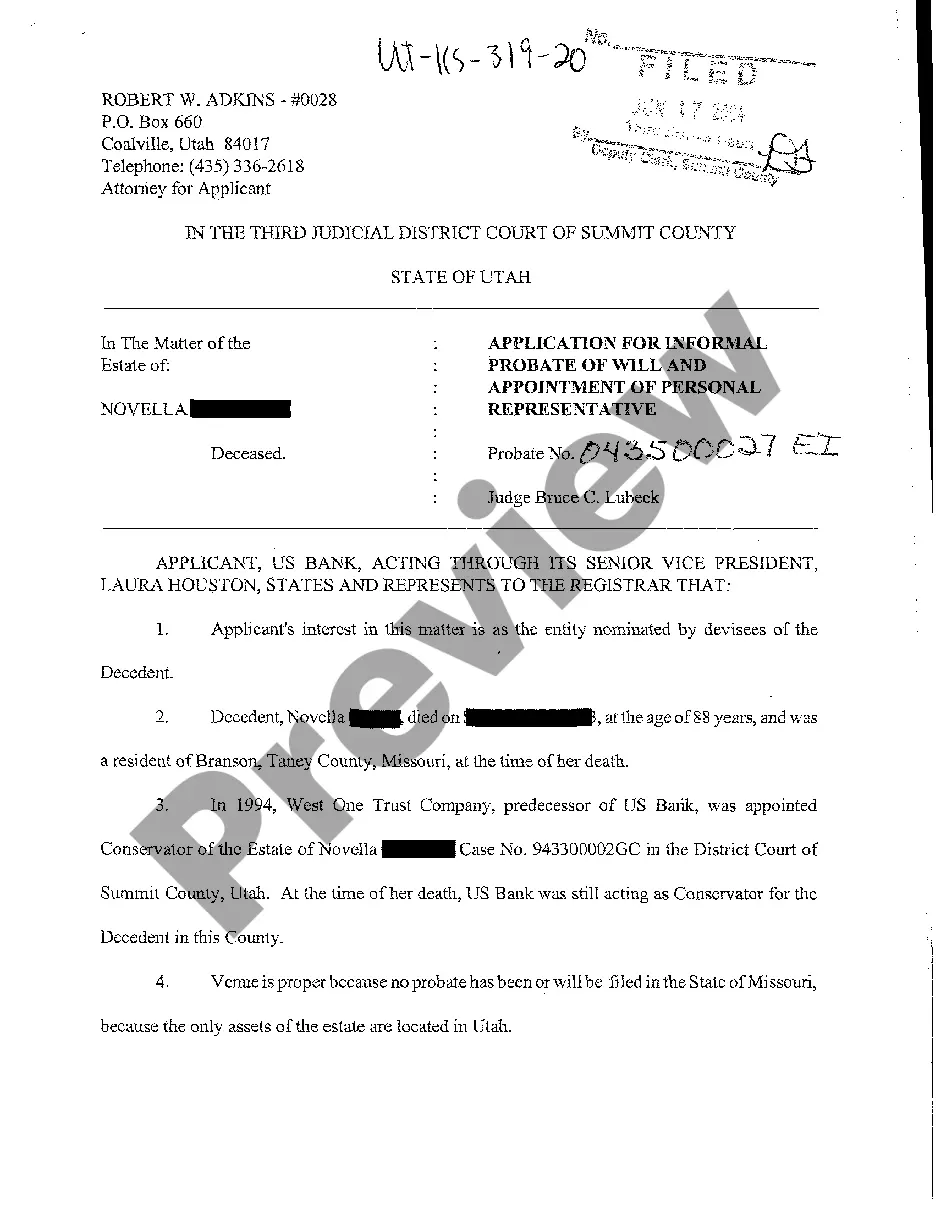
Washington Petition for Letters of Administration & Nonintervention Powers
Understanding this form
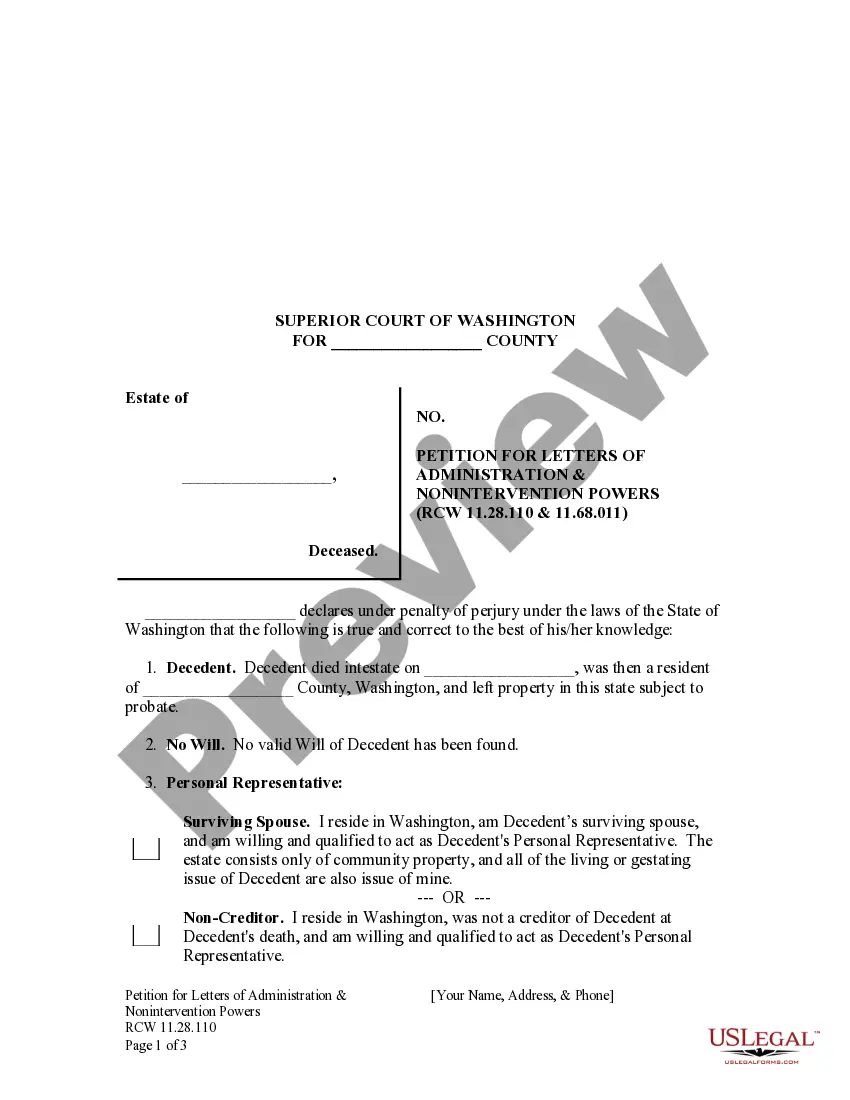
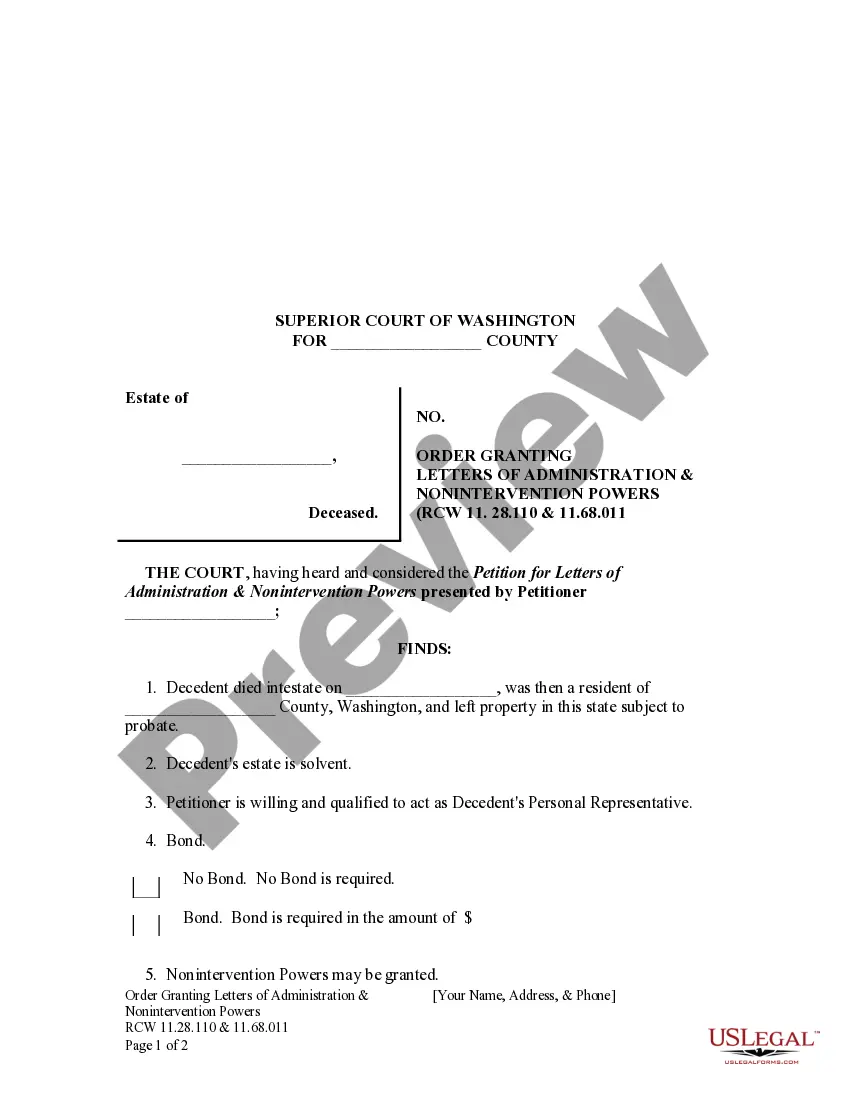
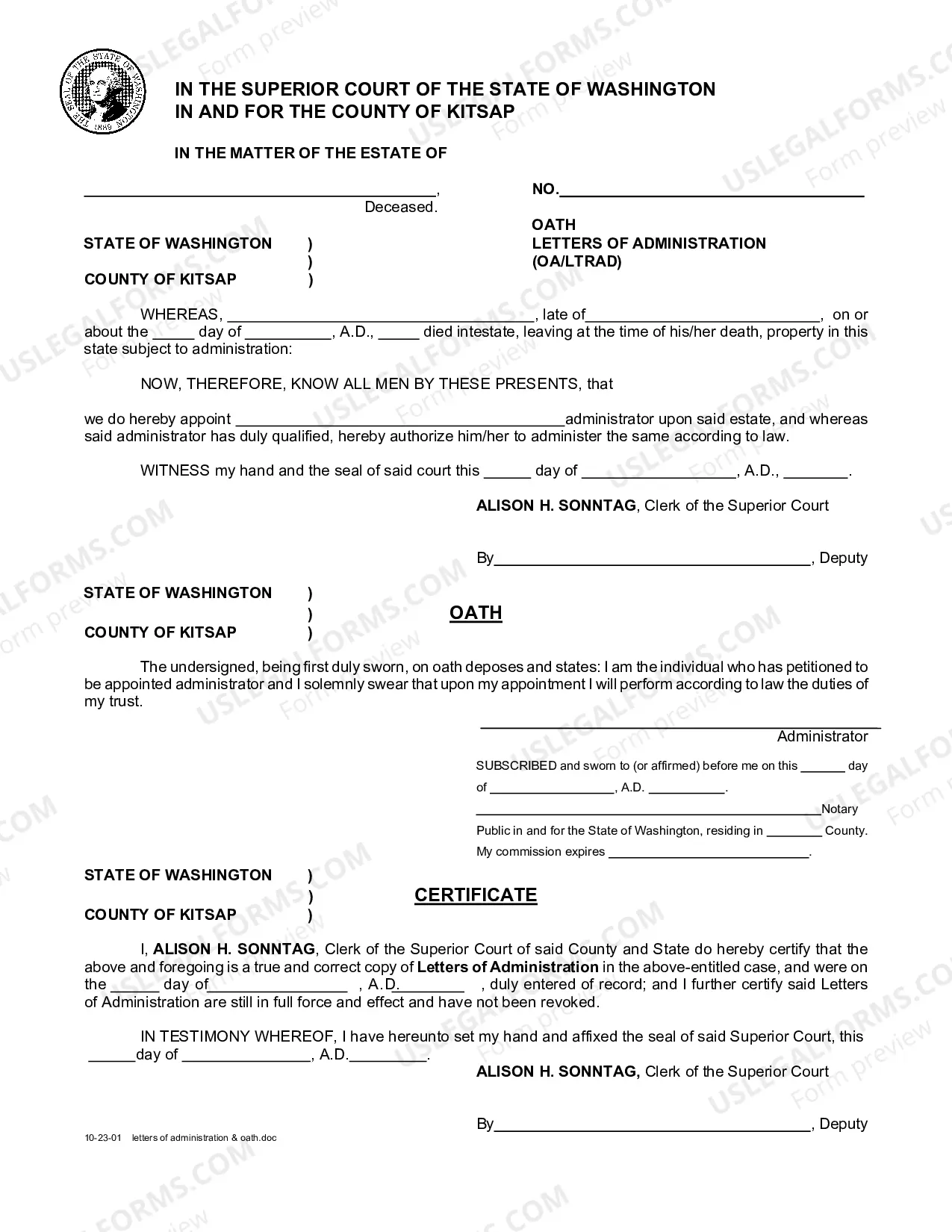
The Washington Petition for Letters of Administration & Nonintervention Powers is a legal document used to request the court appoint a personal representative for the estate of a deceased individual who died without a valid will, known as dying intestate. This form allows the appointed representative to manage the estate without requiring constant court supervision, streamlining the probate process.
Form components explained
- Identification of the decedent, including date of death and place of residence.
- Declaration stating no valid will has been found.
- Details on the personal representative, either the surviving spouse or a non-creditor residing in Washington.
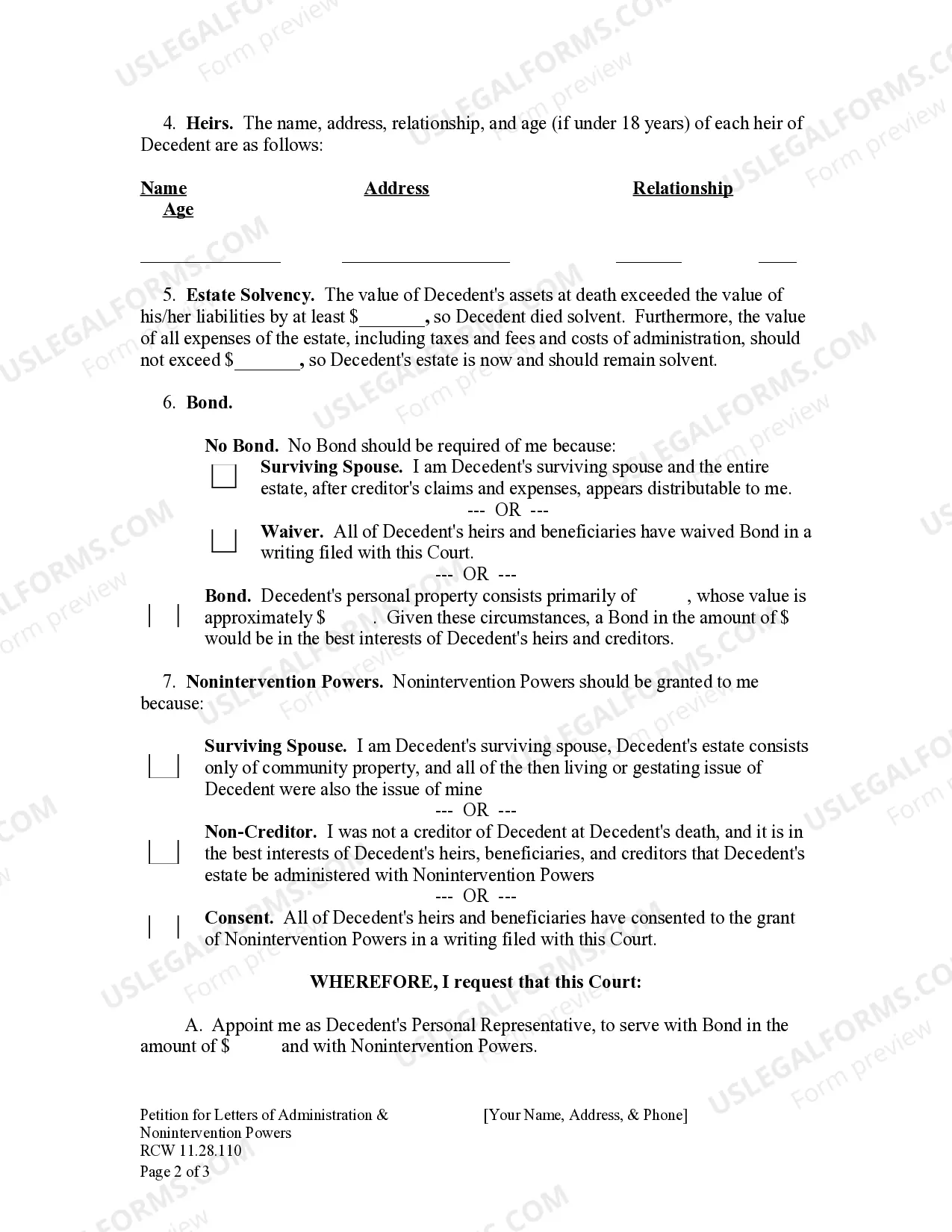
- Information about the decedent's heirs, their relationship, and ages if applicable.
- Statement of the estate's solvency, ensuring that assets exceed liabilities.
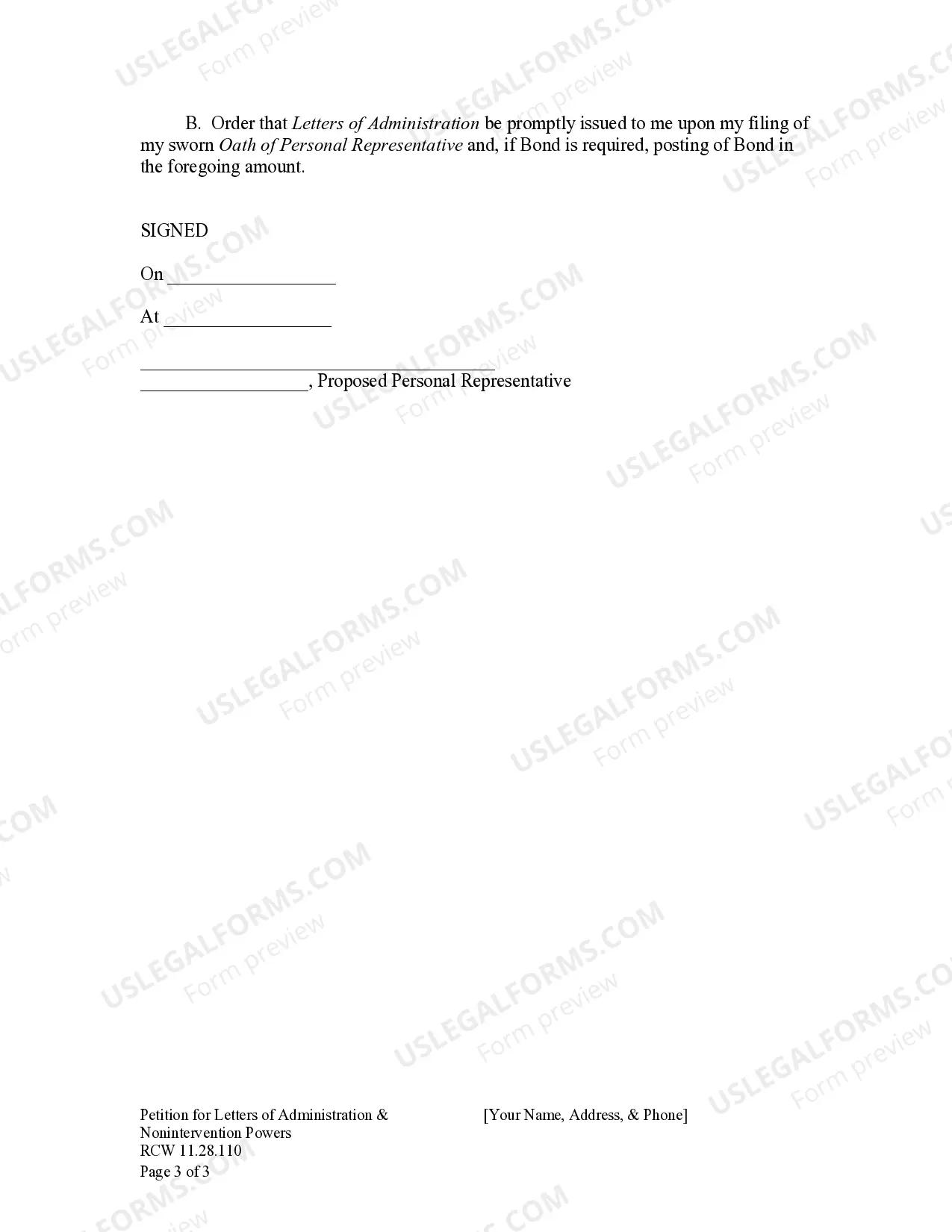
- Signature of the proposed personal representative indicating their willingness to serve.
When this form is needed
This form should be used in situations where a person has died without a will, and there is a need to manage their estate. It is applicable when you are either the surviving spouse or a qualified individual who has no debts owed to the deceased. This form is crucial for initiating the probate process and facilitating the administration of the estate efficiently.
Intended users of this form
- Individuals who are the surviving spouses of a deceased person who died intestate.
- Non-creditors of the decedent who wish to be appointed as personal representatives.
- Heirs looking to secure administrative rights over the deceasedâs estate.
How to complete this form
- Provide the name and date of death of the decedent.
- State that no valid will was discovered.
- Indicate whether you are the surviving spouse or a qualified non-creditor.
- List the heirs, including their names, addresses, relationships to the decedent, and ages if applicable.
- Complete the solvency declaration, ensuring the asset value exceeds any liabilities.
- Sign and date the form as the proposed personal representative.
Does this form need to be notarized?
This form does not typically require notarization unless specified by local law. Always check local regulations to ensure compliance.
Get your form ready online
Our built-in tools help you complete, sign, share, and store your documents in one place.
Make edits, fill in missing information, and update formatting in US Legal Forms—just like you would in MS Word.
Download a copy, print it, send it by email, or mail it via USPS—whatever works best for your next step.
Sign and collect signatures with our SignNow integration. Send to multiple recipients, set reminders, and more. Go Premium to unlock E-Sign.
If this form requires notarization, complete it online through a secure video call—no need to meet a notary in person or wait for an appointment.
We protect your documents and personal data by following strict security and privacy standards.

Make edits, fill in missing information, and update formatting in US Legal Forms—just like you would in MS Word.

Download a copy, print it, send it by email, or mail it via USPS—whatever works best for your next step.

Sign and collect signatures with our SignNow integration. Send to multiple recipients, set reminders, and more. Go Premium to unlock E-Sign.

If this form requires notarization, complete it online through a secure video call—no need to meet a notary in person or wait for an appointment.

We protect your documents and personal data by following strict security and privacy standards.
Typical mistakes to avoid
- Failing to include all required heir information, such as address or age.
- Not stating whether the decedent had a valid will.
- Omitting signatures or dates on the form.
- Neglecting to verify the solvency of the estate before filing.
Benefits of completing this form online
- Convenient access to downloadable templates anytime.
- User-friendly format that allows for easy completion and customization.
- Accuracy and reliability of forms drafted by licensed attorneys.
- Quick turnaround in obtaining necessary legal documents.
Looking for another form?
Form popularity
FAQ
Q: How Long Does an Executor Have to Distribute Assets From a Will? A: Dear Waiting: In most states, a will must be executed within three years of a person's death.
Probate in Washington typically takes six months to a year, depending on some choices the executor makes (discussed below). It can take much longer if there is a court fight over the will (which is rare) or unusual assets or debts that complicate matters.
Payment of executors It is legal for an estate executor to charge a fee for their services, given the extent of responsibility the executor accepts. The state typically sets the fee, but roughly three percent of the value of the estate is standard.
Children (or grandchildren if children have died) Parents. Siblings (or nieces and nephews over 18 if siblings have died) Half-siblings (or nieces and nephews over 18 if half-siblings have died) Grandparents. Aunts or uncles.
Subject to the provisions of this article, a person in the following relation to the decedent is entitled to appointment as administrator in the following order of priority: (a) Surviving spouse or domestic partner as defined in Section 37. (b) Children. (c) Grandchildren.
Finally, if an executor does not distribute the estate, he or she can face some serious penalties, such as being held in contempt of court, fined, or given a jail sentence. A civil lawsuit can also be filed against the executor in an attempt to reclaim what is rightfully yours.
The most common reason you will need to open a probate is when a bank or other financial institution tells you that the only way you can gain access to your loved one's funds is by providing them a document called "Letters Testamentary." The only way you can get this document is by beginning a probate and getting
Generally, an executor has 12 months from the date of death to distribute the estate. This is known as 'the executor's year'. However, for various reasons the executor may have been delayed and has not distributed the estate within this time frame.
Definition: Nonintervention PowersNonintervention powers are the authority of a personal representative to make decisions and take actions in order to facilitate the settlement of an estate in a probate proceeding without having to obtain the approval of the probate court.