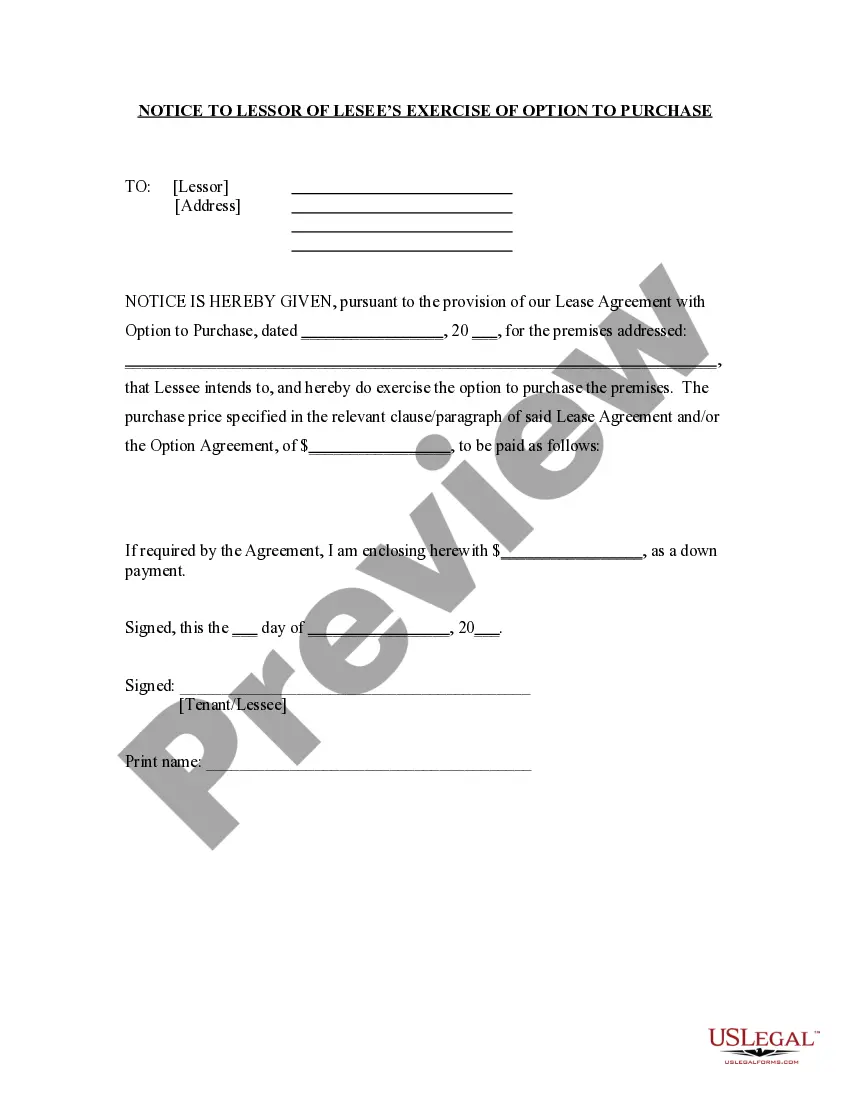
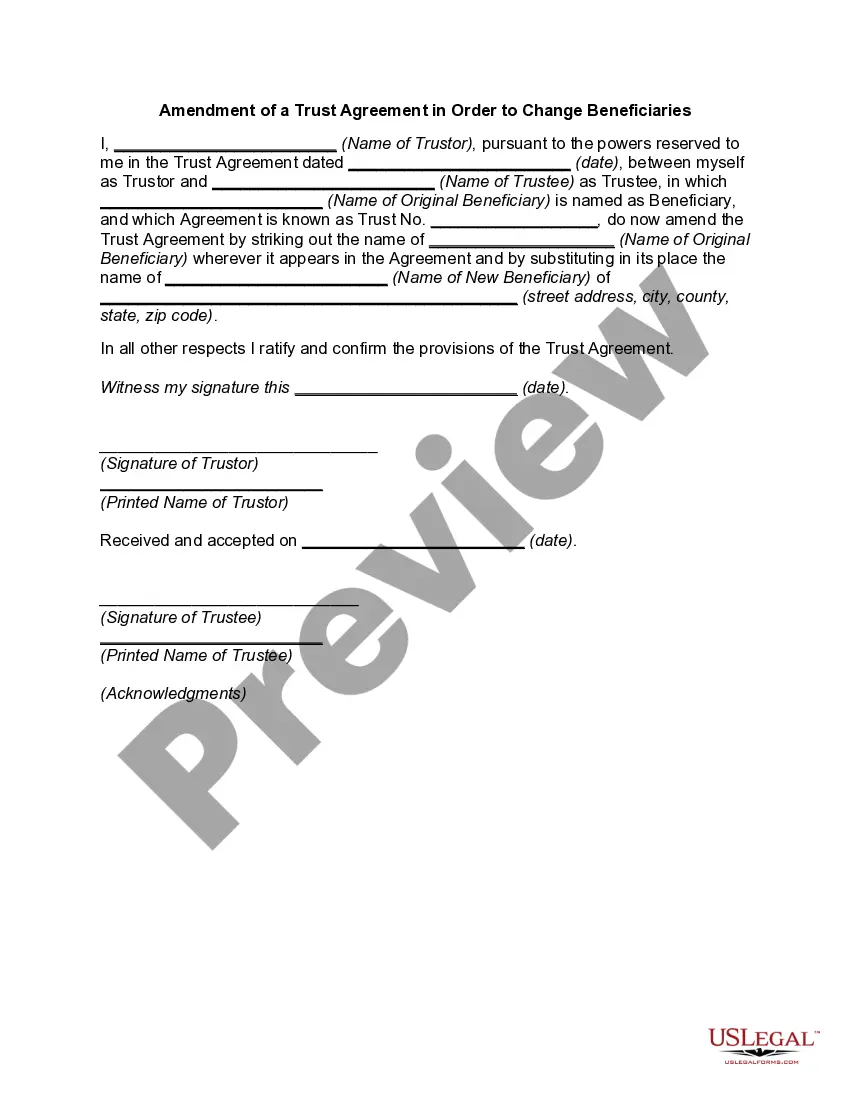
Amendment of a Trust Agreement in Order to Change Beneficiaries
What is this form?
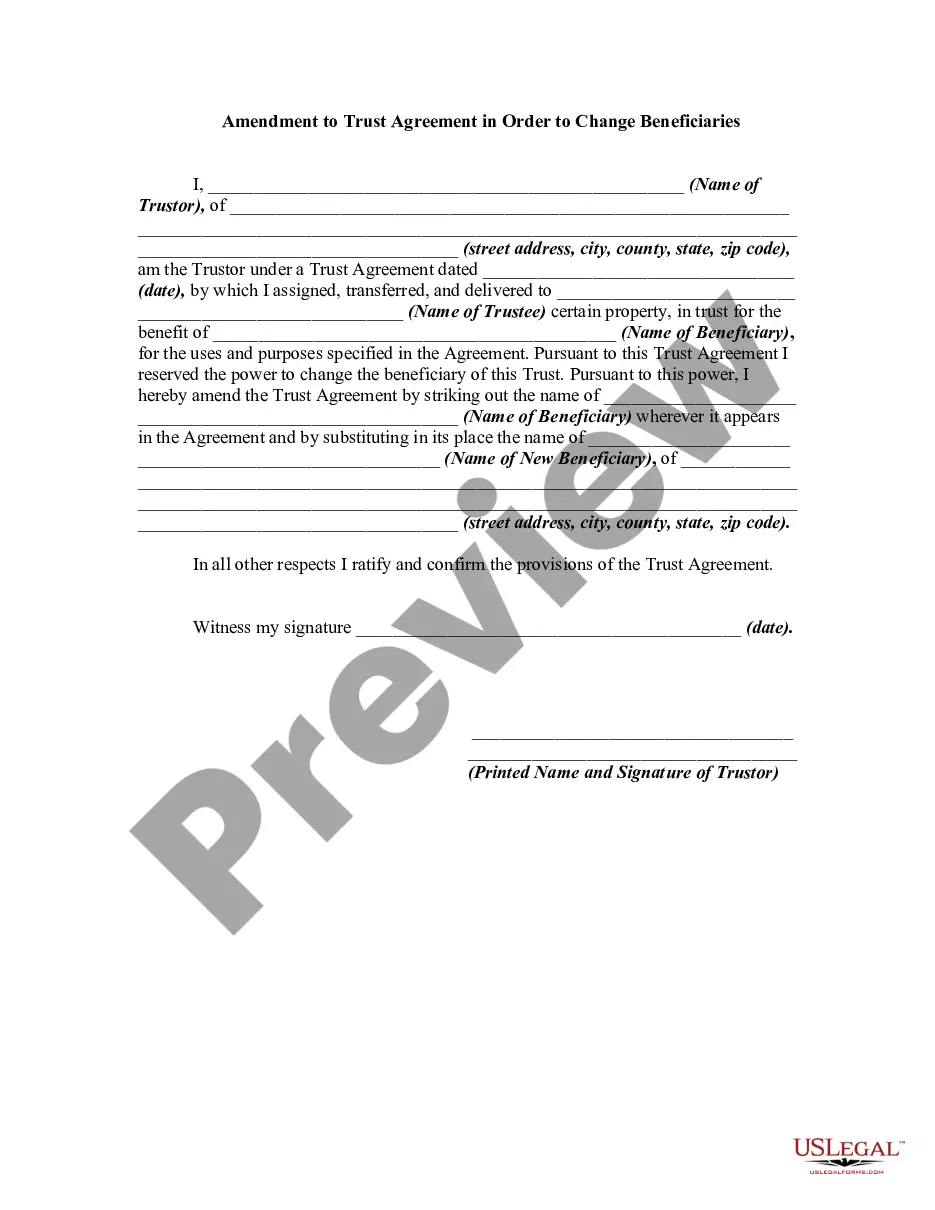
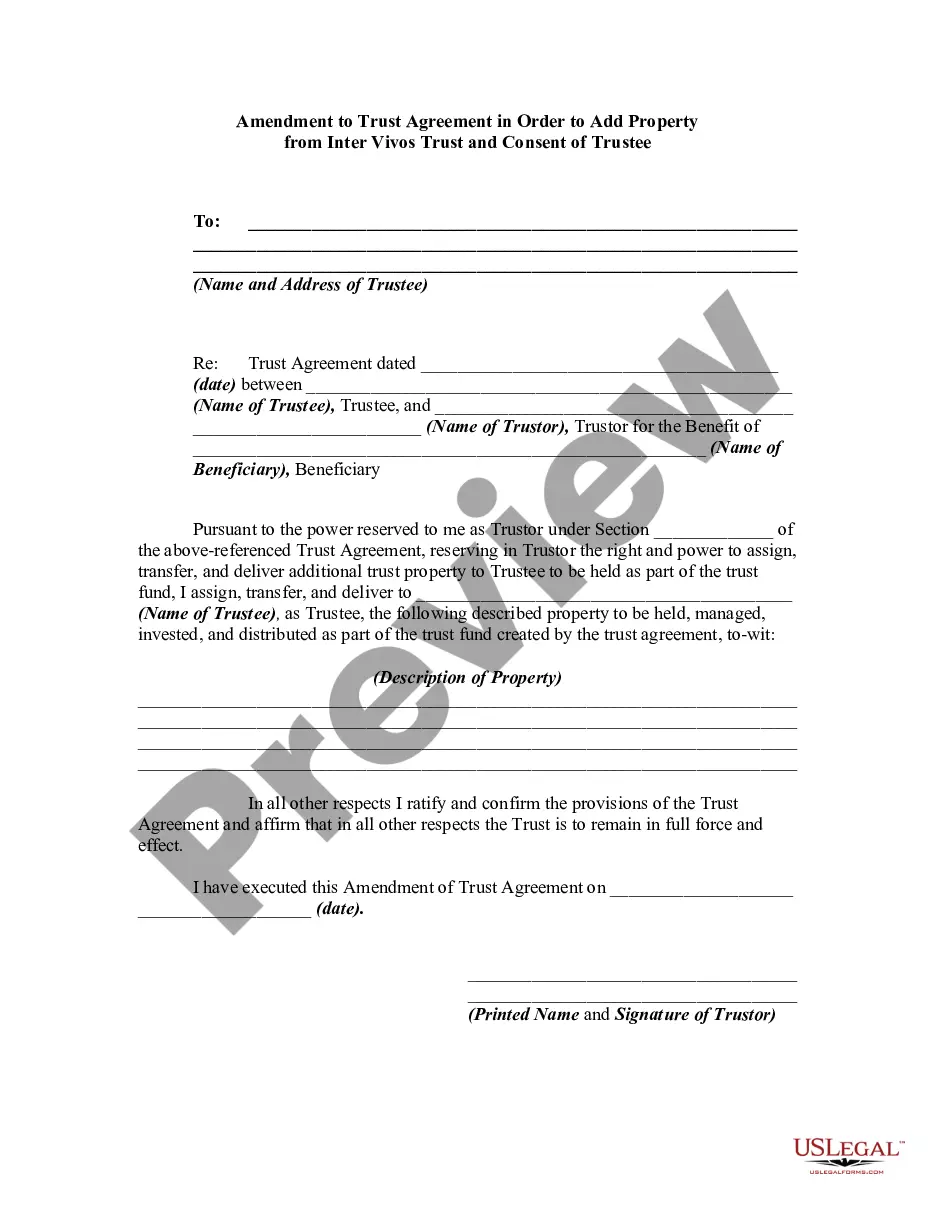
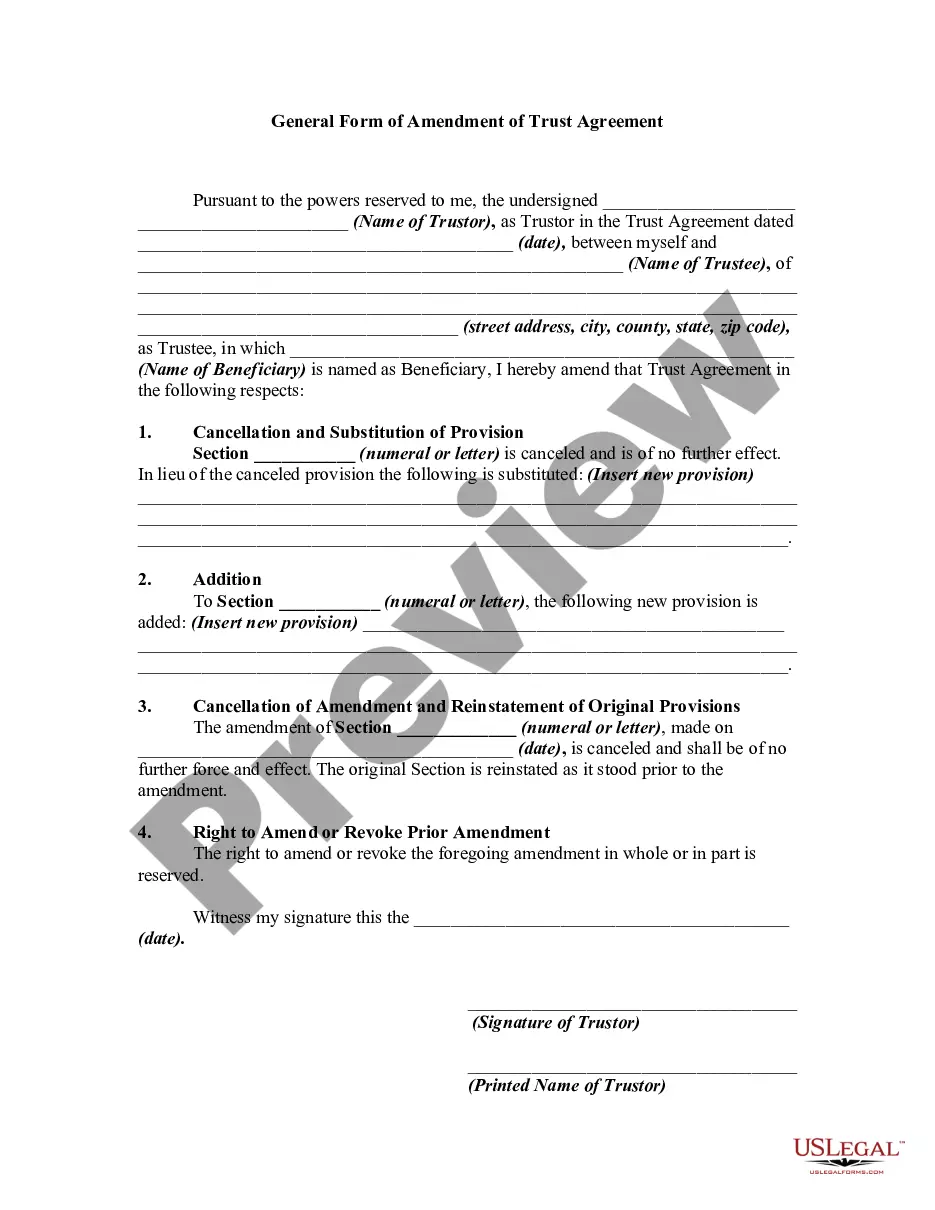
The Amendment of a Trust Agreement is a legal document used to modify existing trust agreements. Its primary purpose is to change or add beneficiaries, adjust asset dispositions, or update trustee information within a trust. Unlike a complete trust reformation, this amendment allows for specific alterations while preserving other original provisions of the trust agreement.
Key parts of this document
- Name of Trustor: The individual making the amendment.
- Date of Original Trust Agreement: The date when the initial trust was established.
- Name of Trustee: The person or entity that manages the trust.
- Name of Original Beneficiary: The individual whose benefits are being changed.
- Name of New Beneficiary: The new individual being added or substituted as a beneficiary.
- Trust Agreement Reference: Identification of the specific trust being amended.
When to use this form
This form is typically used when a trustor needs to change the beneficiaries of a trust for various reasons. Common scenarios include life changes such as divorce, the birth of a new family member, or the death of a beneficiary. It is essential to ensure that the current intentions regarding asset distribution are correctly reflected in the trust.
Who should use this form
- Individuals who have established a trust and wish to update beneficiary information.
- Trustors who need to modify asset distribution within an existing trust.
- Those who are looking to confirm or change the roles of trustees in the trust agreement.
How to prepare this document
- Identify the parties involved: Enter the name of the trustor, trustee, and beneficiaries.
- Specify the original trust: Provide the date and reference number of the existing trust agreement.
- Enter the new beneficiary: Fill in the name and address of the new beneficiary to be added.
- Sign and date the document: The trustor and trustee must sign and date the amendment accordingly.
- Keep a copy: Make sure to retain a copy of the amended document for future reference.
Does this form need to be notarized?
Notarization is generally not required for this form. However, certain states or situations might demand it. You can complete notarization online through US Legal Forms, powered by Notarize, using a verified video call available anytime.
Get your form ready online
Our built-in tools help you complete, sign, share, and store your documents in one place.
Make edits, fill in missing information, and update formatting in US Legal Forms—just like you would in MS Word.
Download a copy, print it, send it by email, or mail it via USPS—whatever works best for your next step.
Sign and collect signatures with our SignNow integration. Send to multiple recipients, set reminders, and more. Go Premium to unlock E-Sign.
If this form requires notarization, complete it online through a secure video call—no need to meet a notary in person or wait for an appointment.
We protect your documents and personal data by following strict security and privacy standards.

Make edits, fill in missing information, and update formatting in US Legal Forms—just like you would in MS Word.

Download a copy, print it, send it by email, or mail it via USPS—whatever works best for your next step.

Sign and collect signatures with our SignNow integration. Send to multiple recipients, set reminders, and more. Go Premium to unlock E-Sign.

If this form requires notarization, complete it online through a secure video call—no need to meet a notary in person or wait for an appointment.

We protect your documents and personal data by following strict security and privacy standards.
Typical mistakes to avoid
- Failing to specify the correct name of the original beneficiary.
- Not updating the trust reference number if it has changed.
- Omitting signatures or dates from the document.
- Not ensuring the form is in accordance with state requirements.
Benefits of completing this form online
- Convenience: Easily download and complete the form at your convenience.
- Editability: Customize the form to fit your specific needs before printing.
- Reliability: The forms provide a consistent legal framework drafted by licensed attorneys.
Legal use & context
- This form is legally binding once properly completed and signed by relevant parties.
- It serves to clarify and document changes to beneficiary designations within trust agreements.
- Proper completion is essential to avoid disputes or challenges regarding the trust's intentions in the future.
Key takeaways
- The Amendment of a Trust Agreement allows trustors to modify beneficiary designations.
- It is important to ensure that all fields are accurately filled to prevent misunderstandings.
- Verification of state-specific regulations is vital for legal compliance.
Looking for another form?

Form popularity
FAQ
A codicil is an addendum of any kind to a will. Codicils can alter, change, add to or subtract from the provisions in the will. They can be used to keep a will and testament current and up to date. A codicil can be used to add, remove, or change provisions in a will, as long as the changes are not too significant.
Trustees generally do not have the power to change the beneficiary of a trust. The right to add and remove beneficiaries is a power reserved for the grantor of the trust; when the grantor dies, their trust will usually become irrevocable.
Can You Change Beneficiaries in an Irrevocable Trust? The answer to that question can be ?yes,? based on your timing. If you are the grantor of an irrevocable trust, then once you create the trust ? designate the trustee and beneficiaries, etc. ? it becomes very difficult to change beneficiaries.
Be very clear about how you are changing this section of the trust. Make sure you state you are amending this section of the trust. Sign your living trust amendment before a notary. Attach the amendment to your original trust document and to any copies you made.
What is a Trust Amendment? A Trust amendment is a legal document changing one or more aspects of a revocable living Trust -- without revoking the entire structure. The goal of a living trust amendment is to help you make changes to beneficiaries, trustees, provisions, or modify any conditions to the Trust.
An amendment is a formal document making a change to one or multiple parts of a Revocable Living Trust. A codicil is a formal document making a change to one or multiple parts of a Last Will and Testament.
An amendment is a formal document making a change to one or multiple parts of a Revocable Living Trust. A codicil is a formal document making a change to one or multiple parts of a Last Will and Testament.