5.22 DEFINITION: AFTER-ACQUIRED EVIDENCE
What is this form?
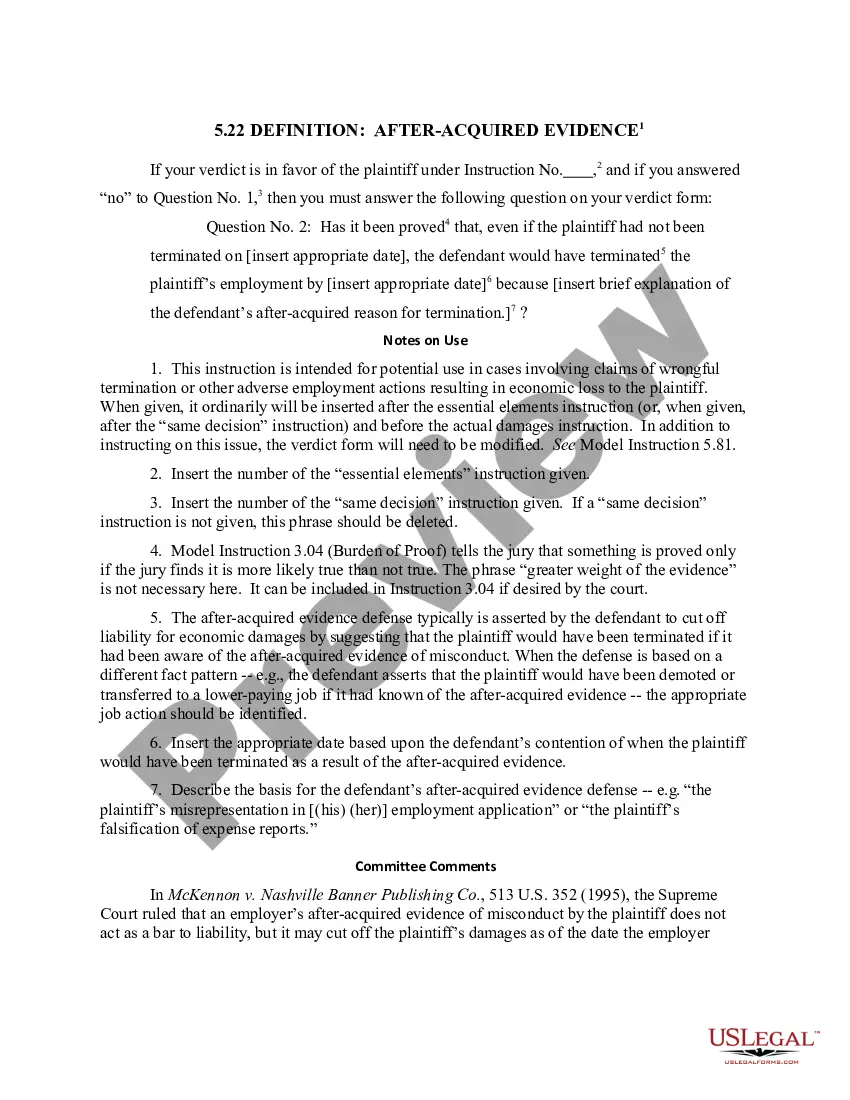
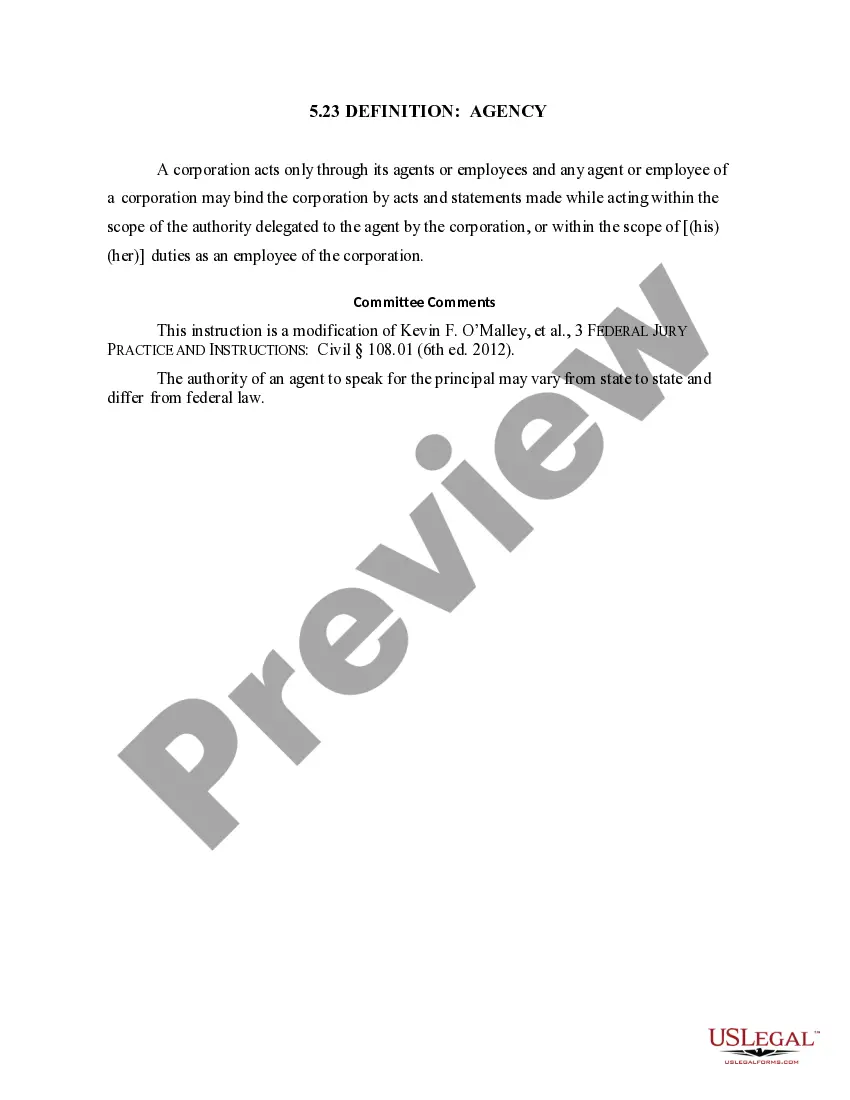
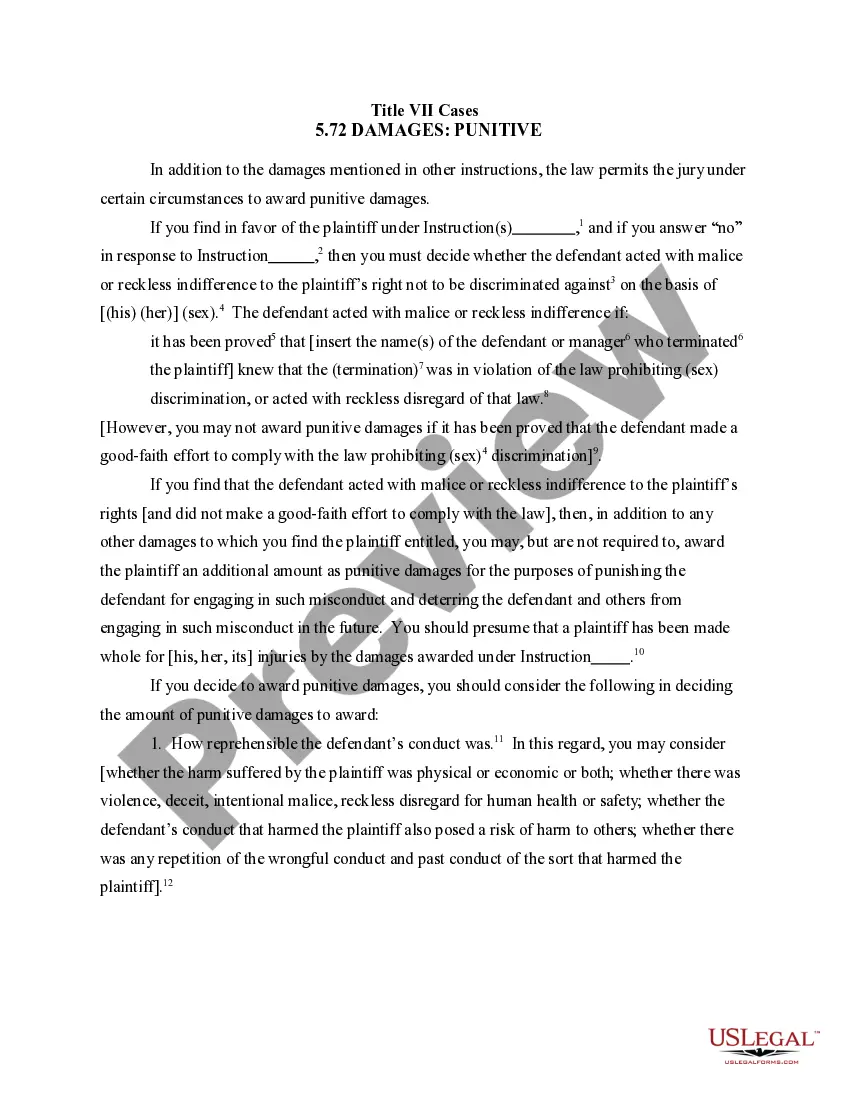
The 5.22 Definition: After-Acquired Evidence form is a legal document used in employment law cases involving wrongful termination claims. It helps determine whether an employer would have terminated an employee's employment if they had known about certain misconduct occurring after the termination date. This form is specifically valuable for cases where after-acquired evidence impacts the potential economic damages that a plaintiff can claim against their employer.
Form components explained
- Verdict question regarding after-acquired evidence.
- Inclusion of essential elements instruction number.
- Details on the date of termination and the after-acquired reasons.
- Guidance for evidence burden and the employer's defense standards.
- Instructions on modifying the verdict form.
When to use this document
This form is used in legal disputes surrounding wrongful termination claims where the employer asserts an after-acquired evidence defense. It is particularly relevant when an employer claims that if they had been aware of specific misconduct by the employee, they would have terminated their employment regardless of the initial reasons for termination.
Intended users of this form
- Employers seeking to assert an after-acquired evidence defense in wrongful termination cases.
- Plaintiffs in employment law cases needing to understand the implications of after-acquired evidence in their claims.
- Attorneys representing clients involved in employment disputes regarding termination.
Instructions for completing this form
- Identify the essential elements instruction number to include.
- Specify the date on which the plaintiff was allegedly terminated.
- Provide the reason for the termination as claimed by the employer.
- Ensure clarity on whether the defendant would have proceeded with termination based on after-acquired evidence.
- Complete any necessary modifications to the verdict form as per the instructions.
Notarization guidance
Notarization is not commonly needed for this form. However, certain documents or local rules may make it necessary. Our notarization service, powered by Notarize, allows you to finalize it securely online anytime, day or night.
Get your form ready online
Our built-in tools help you complete, sign, share, and store your documents in one place.
Make edits, fill in missing information, and update formatting in US Legal Forms—just like you would in MS Word.
Download a copy, print it, send it by email, or mail it via USPS—whatever works best for your next step.
Sign and collect signatures with our SignNow integration. Send to multiple recipients, set reminders, and more. Go Premium to unlock E-Sign.
If this form requires notarization, complete it online through a secure video call—no need to meet a notary in person or wait for an appointment.
We protect your documents and personal data by following strict security and privacy standards.

Make edits, fill in missing information, and update formatting in US Legal Forms—just like you would in MS Word.

Download a copy, print it, send it by email, or mail it via USPS—whatever works best for your next step.

Sign and collect signatures with our SignNow integration. Send to multiple recipients, set reminders, and more. Go Premium to unlock E-Sign.

If this form requires notarization, complete it online through a secure video call—no need to meet a notary in person or wait for an appointment.

We protect your documents and personal data by following strict security and privacy standards.
Common mistakes to avoid
- Failing to specify the correct dates relevant to the termination.
- Not clearly defining the after-acquired reasons for termination.
- Overlooking the necessity to include related jury instructions on essential elements.
Why use this form online
- Convenient access to downloadable legal templates.
- Editability allows users to customize specific details easily.
- Reliable formats drafted by licensed attorneys to ensure compliance with legal standards.
Legal use & context
- After-acquired evidence defenses can effectively limit potential damages in wrongful termination suits.
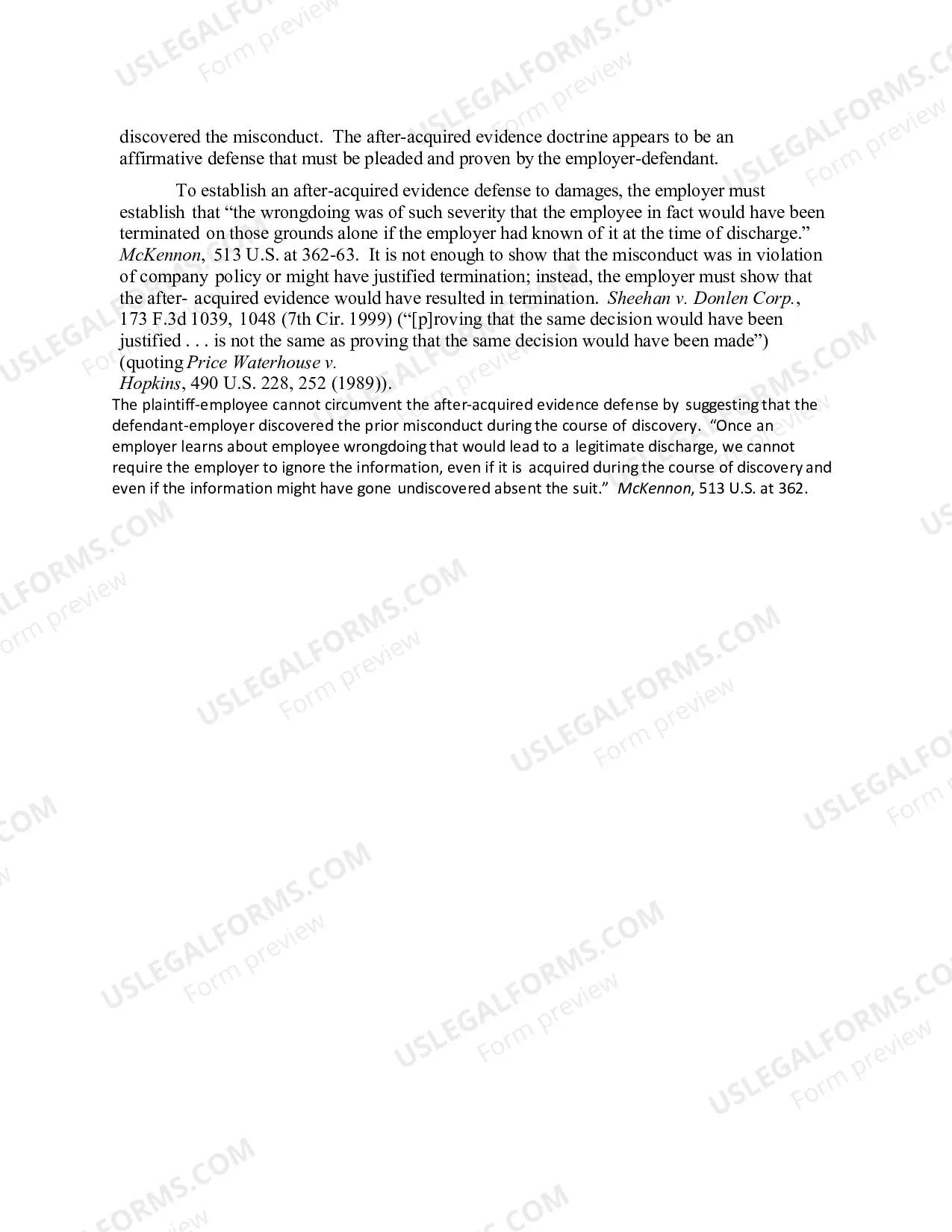
- The Supreme Court case McKennon v. Nashville Banner Publishing Co. establishes precedent regarding after-acquired evidence.
- Employers must substantiate that misconduct was severe enough to warrant termination if known earlier.
Looking for another form?
Form popularity
FAQ
The doctrine of After-Acquired Cause comes into play. A defence of after-acquired cause is the company stating it has discovered information that if discovered during the employment relationship would have been the reason it dismissed the employee for cause.
?In general, the after-acquired-evidence doctrine shields an employer from liability or limits available relief where, after a termination, the employer learns for the first time about employee wrongdoing that would have led to the discharge in any event.
Most commonly, the after-acquired evidence doctrine will bar the former employee in this hypothetical from recovering a portion of her back pay, which are wages the former employee would have received if she had continued working for the employer.
The doctrine of after-acquired evidence refers to an employer's discovery, after an allegedly wrongful termination of employment or refusal to hire, of information that would have justified a lawful termination or refusal to hire.
Title VII of the Civil Rights Act of 1964. Title VII of the Civil Rights Act, as amended, protects employees and job applicants from employment discrimination based on race, color, religion, sex and national origin.
After-acquired evidence may be learned through discovery in the case and commonly includes evidence that the employee: Lied during the application process to get the job. Committed egregious misconduct during employment, such as theft of trade secrets.
Wrongful termination and after-acquired evidence After-acquired evidence is evidence that an employer finds following the termination of an employee that shows the employee engaged in some wrongdoing in the workplace while employed that would have caused them to be fired anyway.