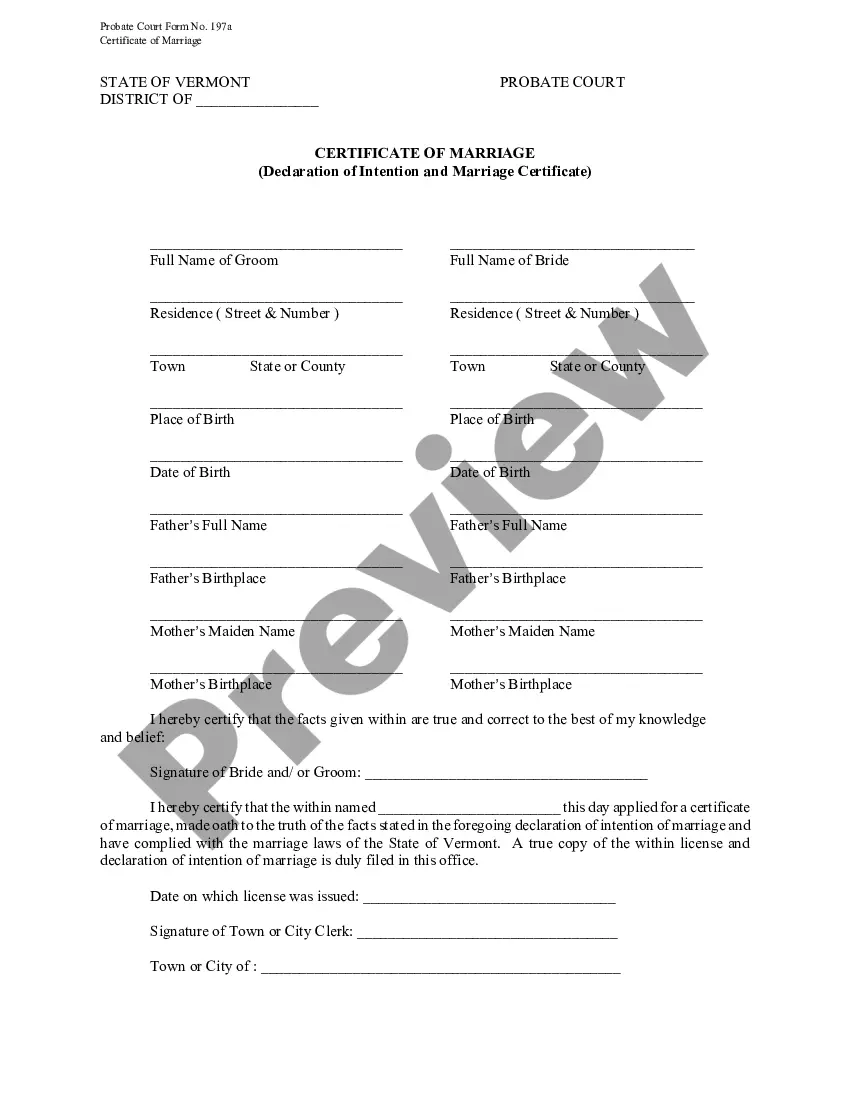
Contract or Agreement to Convey Easement for Driveway
What is this form?
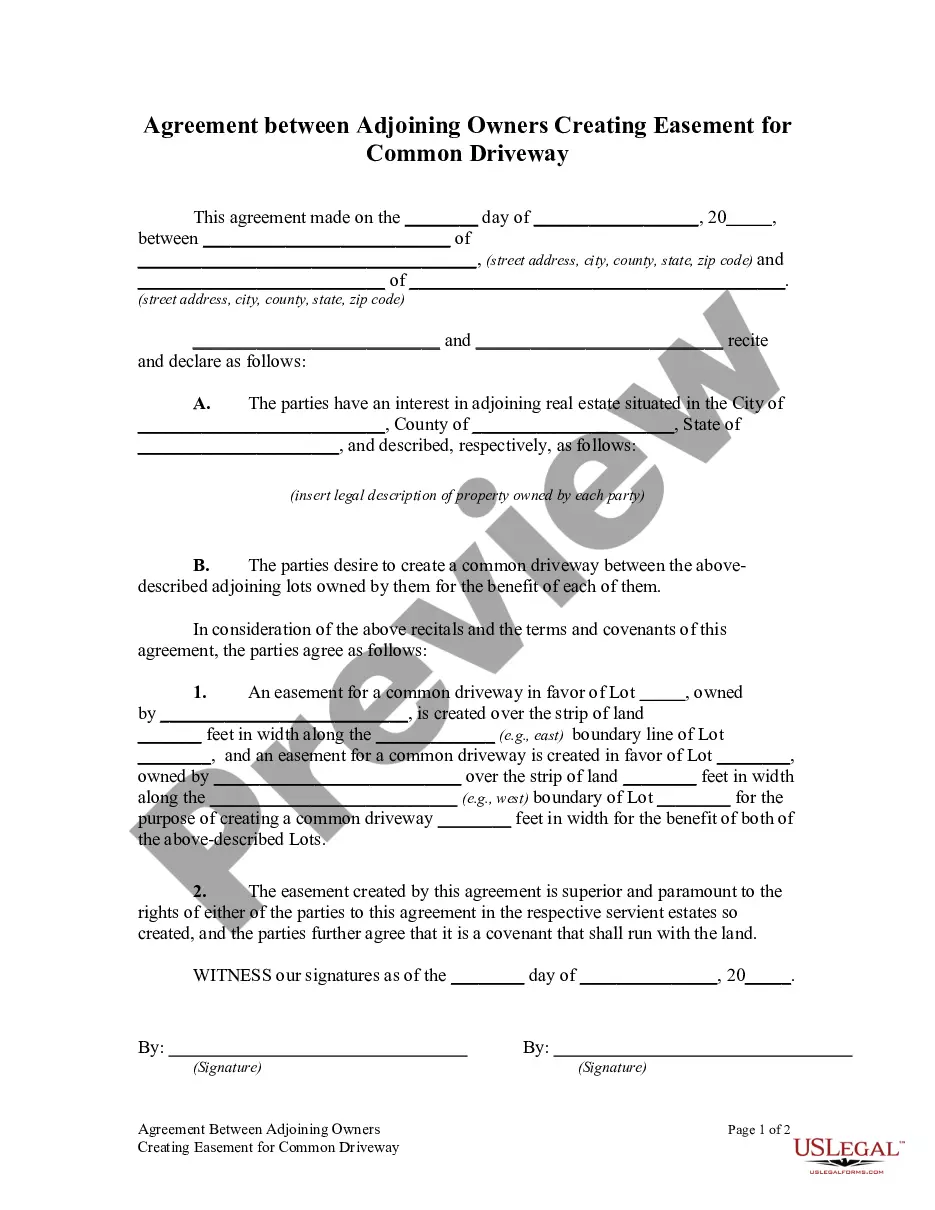
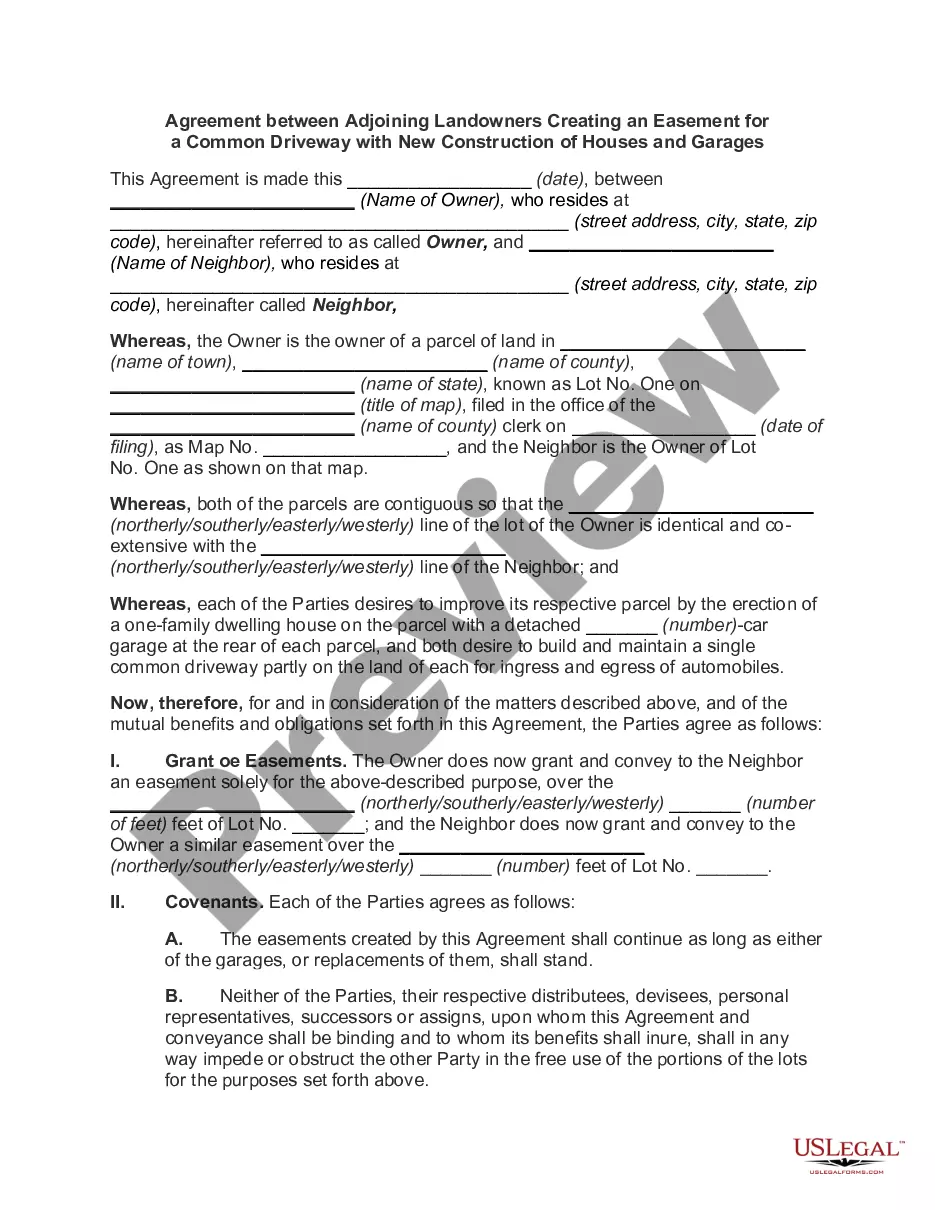
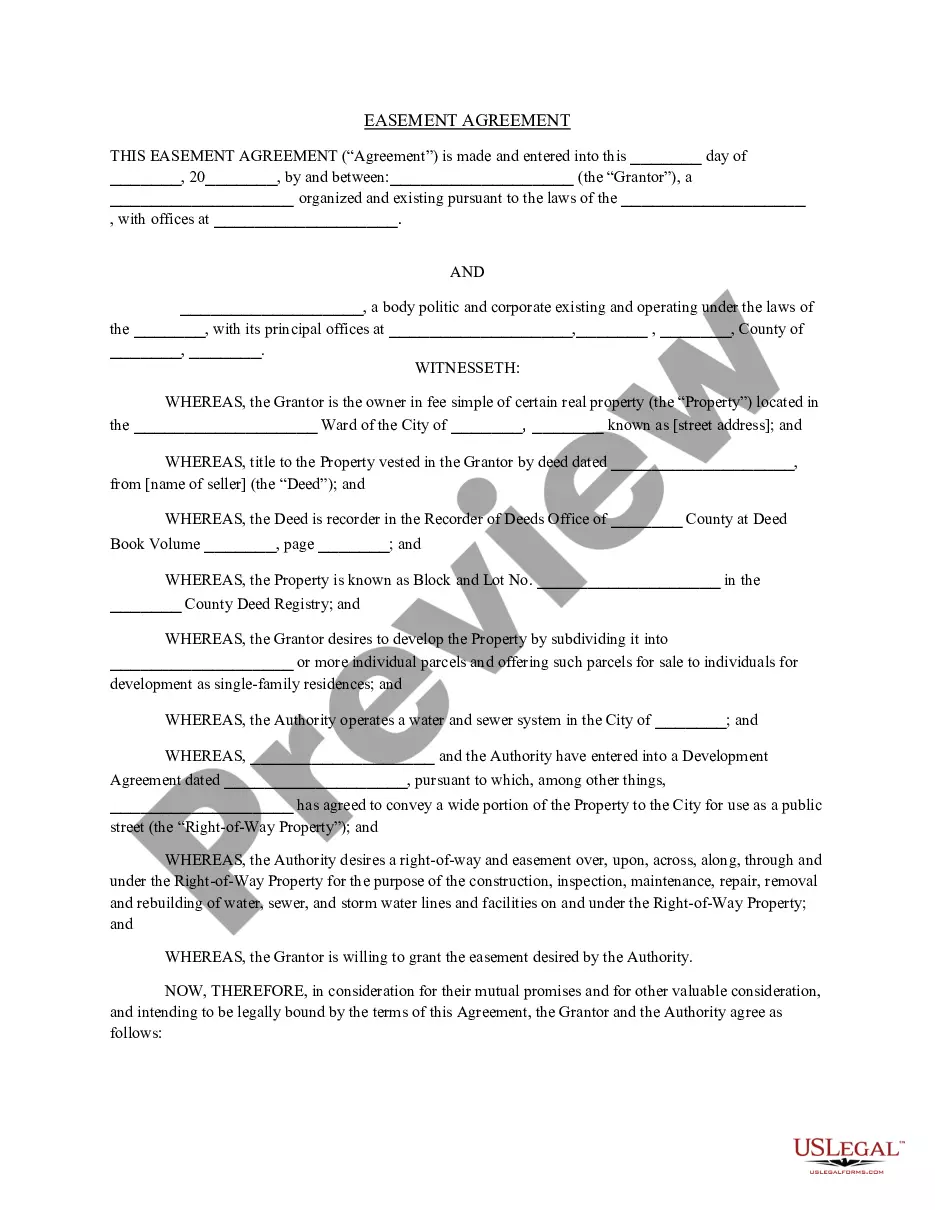
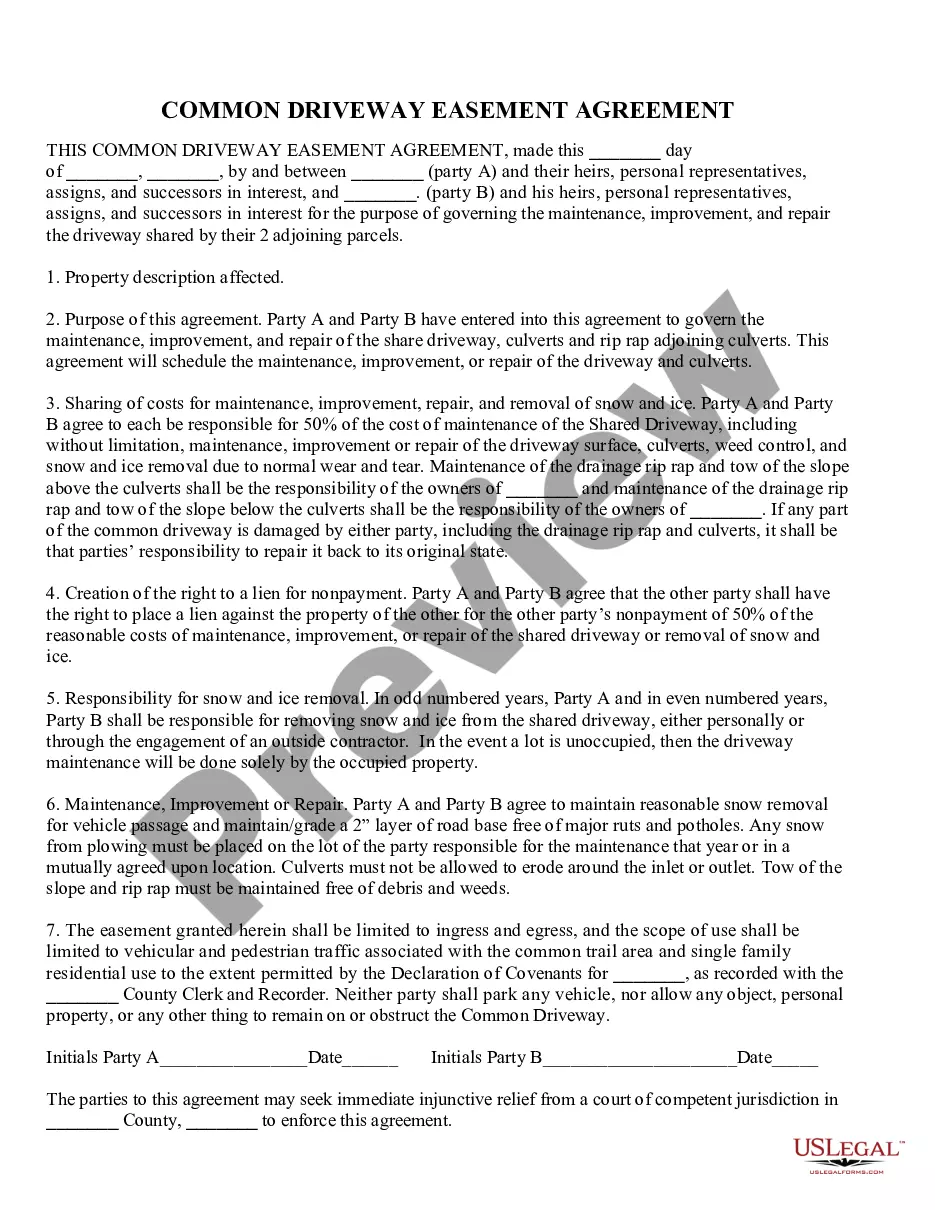
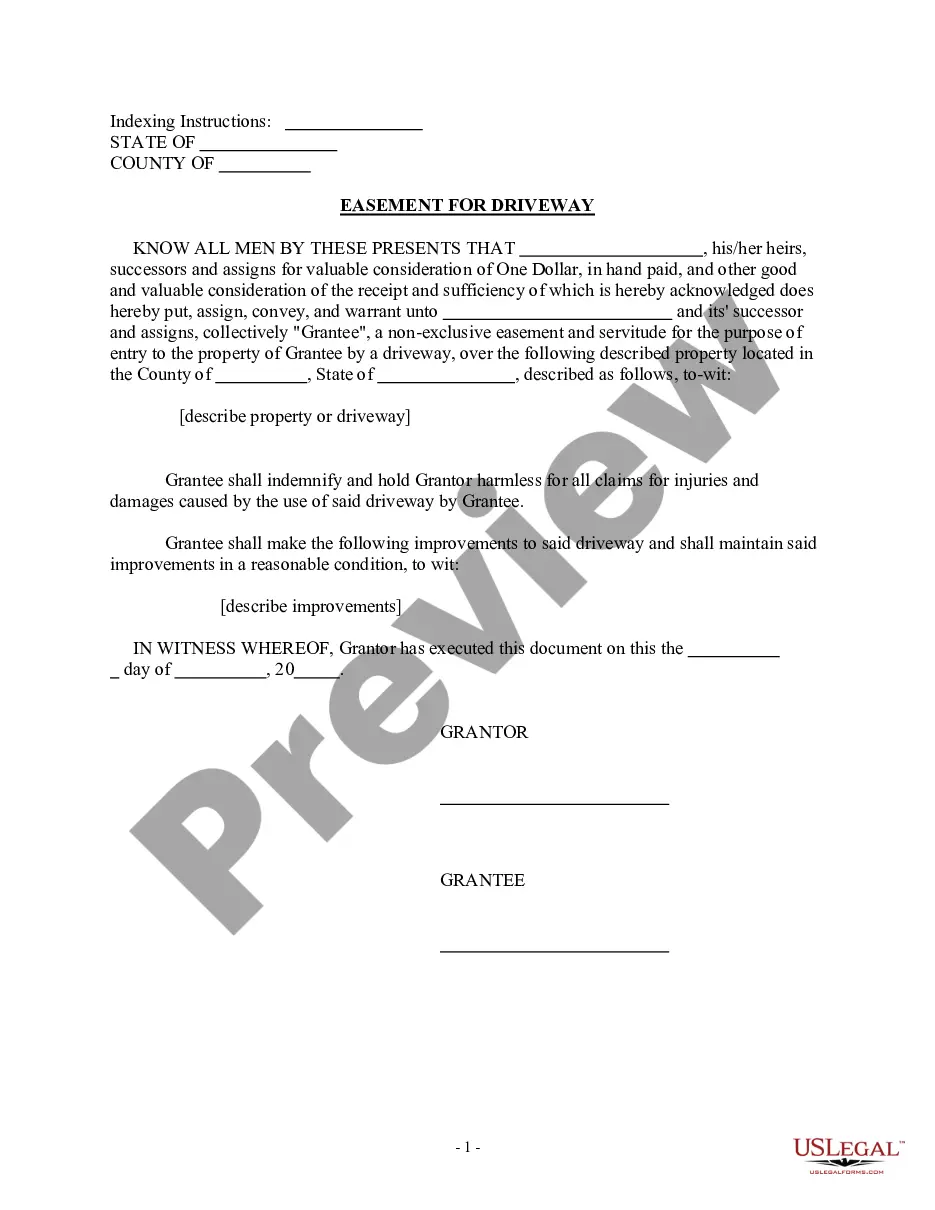
This Contract or Agreement to Convey Easement for Driveway grants a party the right to use another party's land for a specific purpose, typically involving access for vehicles. This legal document is essential for formalizing easement arrangements and ensuring clarity on rights and responsibilities. It is distinct from a standard lease or property transfer, as it specifically pertains to the right of usage and not ownership transfer.
What’s included in this form
- Identification of the parties involved, including the property owner and the corporation.
- A legal description of the property subject to the easement.
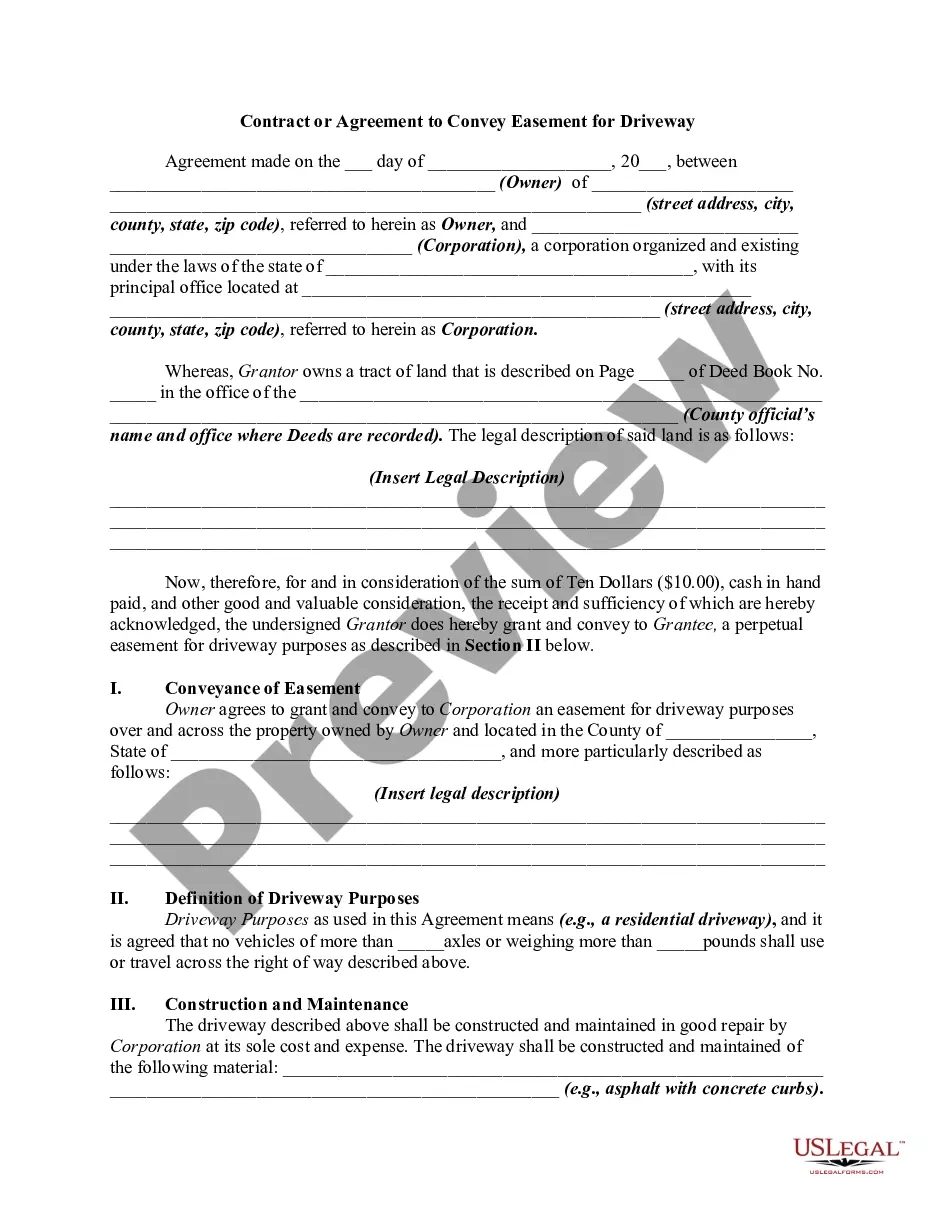
- Details regarding the specific purpose of the easement, including any restrictions on vehicle size and weight.
- Terms regarding construction and maintenance responsibilities for the driveway.
- Compensation details for the easement provided by the corporation to the owner.
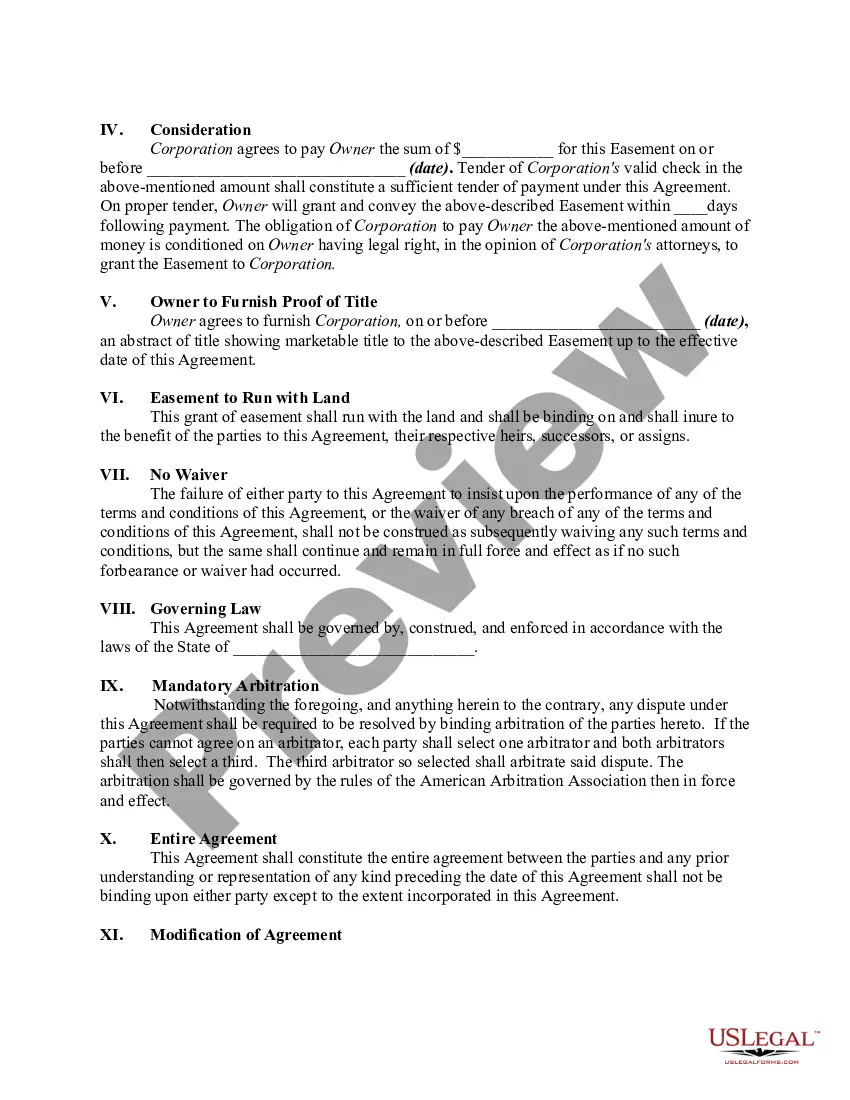
- Legal provisions for dispute resolution, including mandatory arbitration.
Common use cases
This form is appropriate to use when a property owner wishes to grant a corporation or another party the right to establish a driveway over their land. It is commonly employed in scenarios such as commercial developments, residential settings needing access roads, or situations where property access is shared among multiple entities. Utilizing this form helps prevent disputes by clearly establishing the conditions of the easement.
Intended users of this form
- Property owners who need to grant easement rights to another party.
- Corporations or businesses requiring access to property for operational needs.
- Legal representatives managing real estate transactions involving easements.
How to complete this form
- Identify the parties: Fill in the names and addresses of the property owner and the corporation requesting the easement.
- Specify the property: Provide a legal description of the property where the easement will be granted.
- Define the easement purpose: Clearly state the intended use, including any vehicle restrictions.
- Outline construction and maintenance details: Specify who will build and maintain the driveway, including materials used.
- Enter payment terms: Specify the amount to be paid for the easement and the timeline for payment.
Is notarization required?
This form needs to be notarized to ensure legal validity. US Legal Forms provides secure online notarization powered by Notarize, allowing you to complete the process through a verified video call, available anytime.
Get your form ready online
Our built-in tools help you complete, sign, share, and store your documents in one place.
Make edits, fill in missing information, and update formatting in US Legal Forms—just like you would in MS Word.
Download a copy, print it, send it by email, or mail it via USPS—whatever works best for your next step.
Sign and collect signatures with our SignNow integration. Send to multiple recipients, set reminders, and more. Go Premium to unlock E-Sign.
If this form requires notarization, complete it online through a secure video call—no need to meet a notary in person or wait for an appointment.
We protect your documents and personal data by following strict security and privacy standards.

Make edits, fill in missing information, and update formatting in US Legal Forms—just like you would in MS Word.

Download a copy, print it, send it by email, or mail it via USPS—whatever works best for your next step.

Sign and collect signatures with our SignNow integration. Send to multiple recipients, set reminders, and more. Go Premium to unlock E-Sign.

If this form requires notarization, complete it online through a secure video call—no need to meet a notary in person or wait for an appointment.

We protect your documents and personal data by following strict security and privacy standards.
Common mistakes to avoid
- Failing to provide a clear legal description of the property involved.
- Not specifying the terms of maintenance for the driveway.
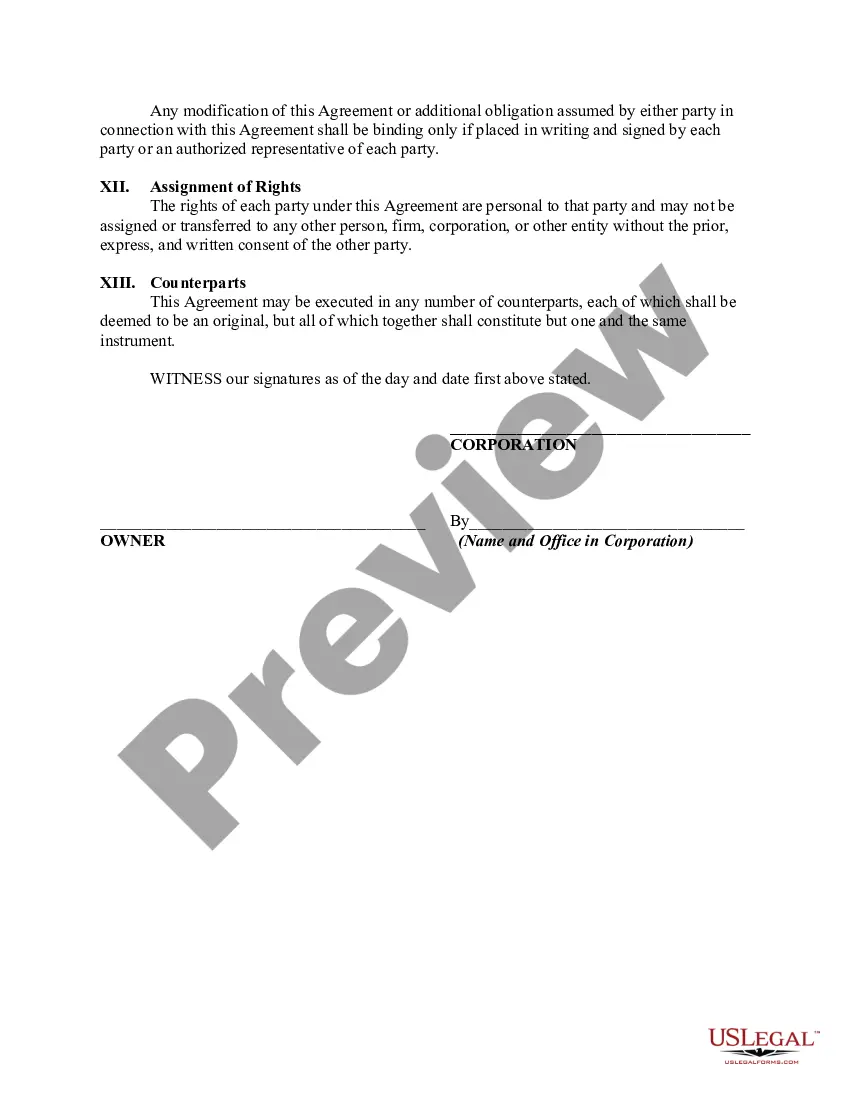
- Leaving out any necessary signatures or completion dates.
- Not clarifying restrictions on vehicle size or weight.
Advantages of online completion
- Convenience: Easily download the form anytime, without the need for physical paperwork.
- Editability: Each form can be customized to meet specific legal or personal requirements.
- Reliability: The forms are created by licensed attorneys, ensuring legal compliance and accuracy.
Looking for another form?


Form popularity
FAQ
An easement deed allows a party that is not the owner to use a portion of the land. It is a written agreement between two parties that spells out what part of the property is available for access and how it may be used. Since you are granting an easement to your land, you can set any terms and conditions you like.
An easement is a limited right to use another person's land for a stated purpose. Examples of easements include the use of private roads and paths, or the use of a landowner's property to lay railroad tracks or electrical wires.
Easements can be created in a variety of ways. They can be created by an express grant, by implication, by necessity, and by adverse possession.
An easement may be created by means of an appropriate dealing registered in NSW LRS or by the inclusion in a Section 88B instrument lodged with a new deposited plan.
Give the document a simple title: Grant of Easement is sufficient. Identify the parties. You need to explain who the parties are to the agreement. The person granting the easement to his property is the Grantor and the person gaining access to the property is the Grantee.
An easement is a nonpossessory right to use and/or enter onto the real property of another without possessing it. It is "best typified in the right of way which one landowner, A, may enjoy over the land of another, B".
Nine Essential Property Easement Agreement Considerations. Legal Description of Properties. Depiction of the Easement Area. Covenant Not to Disturb the Use of the Easement. Determination of Maintenance Obligations. Payment of Property Taxes.
Generally speaking, an easement is a more serious property right; it is the legal right to use someone else's land for a particular purpose. Easements are often recorded at the county clerk's office and encumber your property's title.Here, however, you probably do not need to take the step of granting an easement.