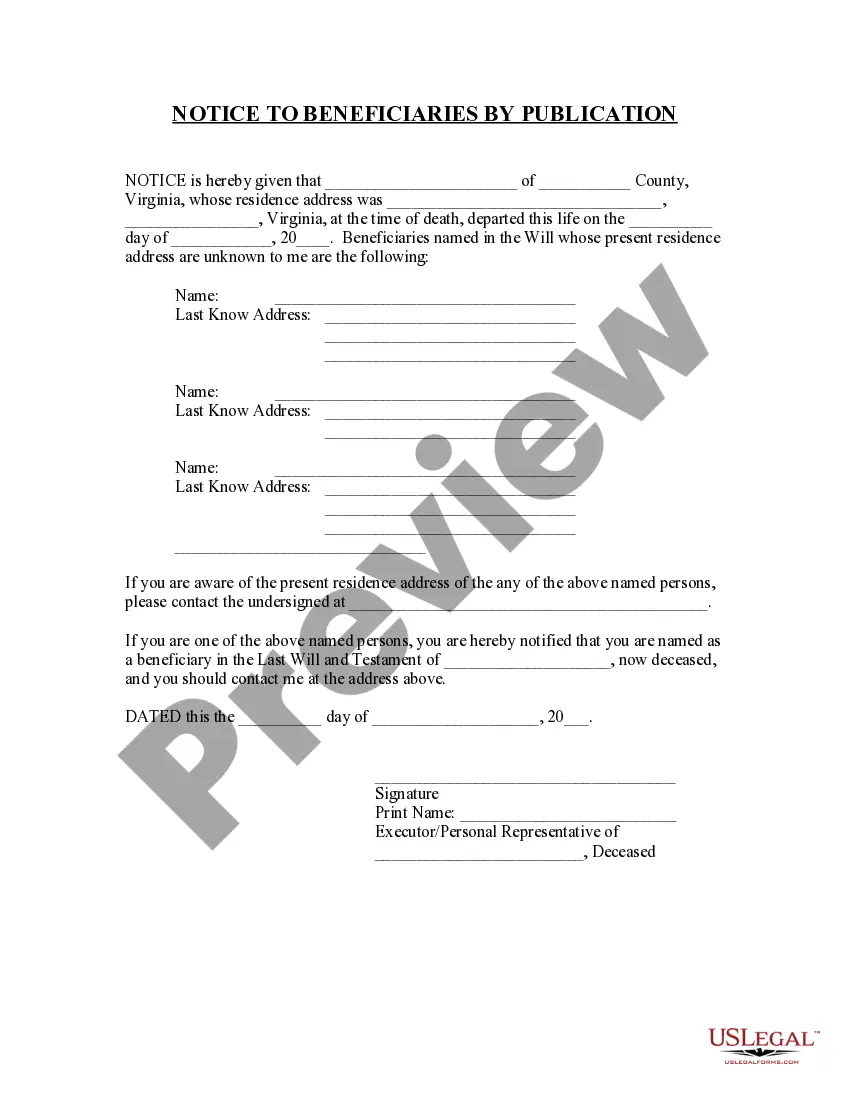
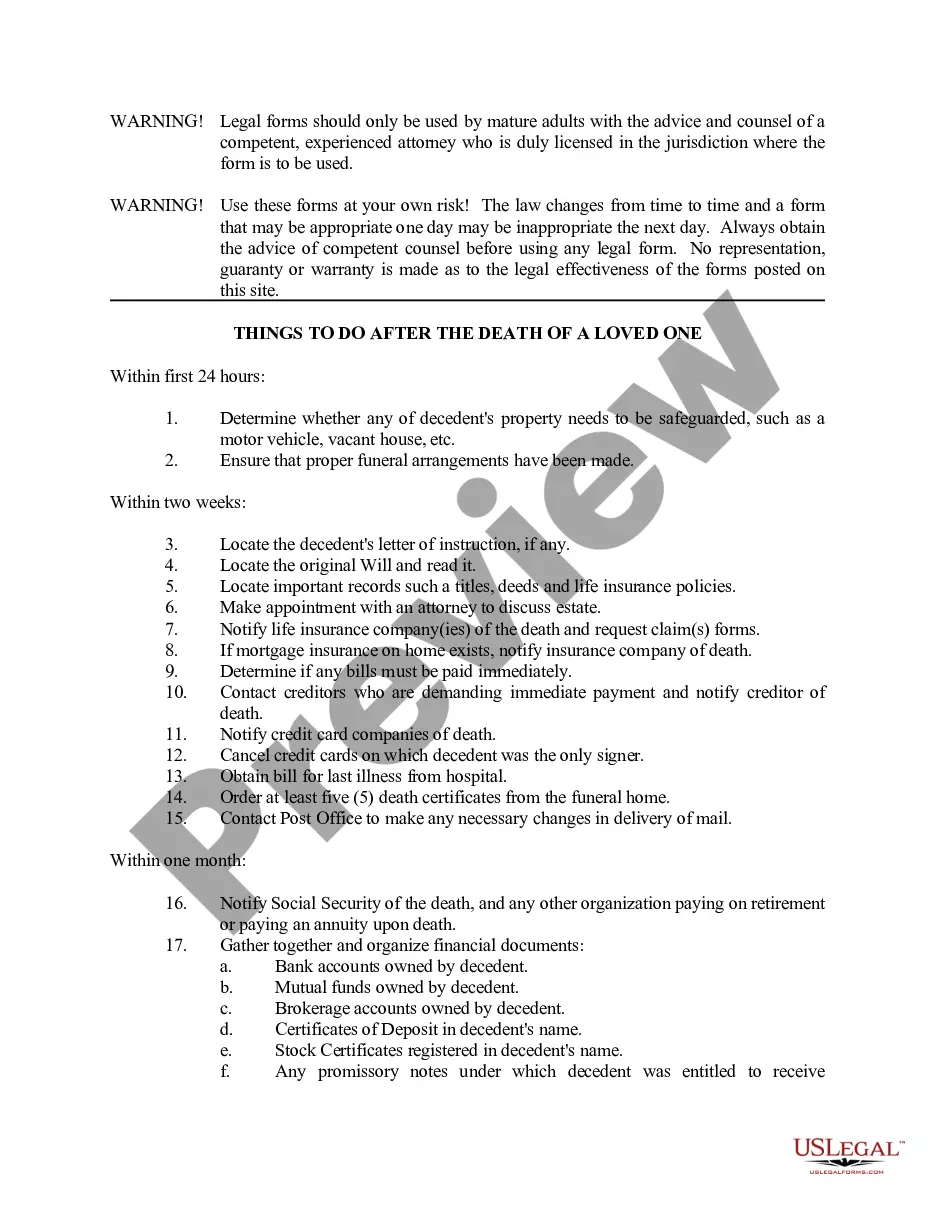
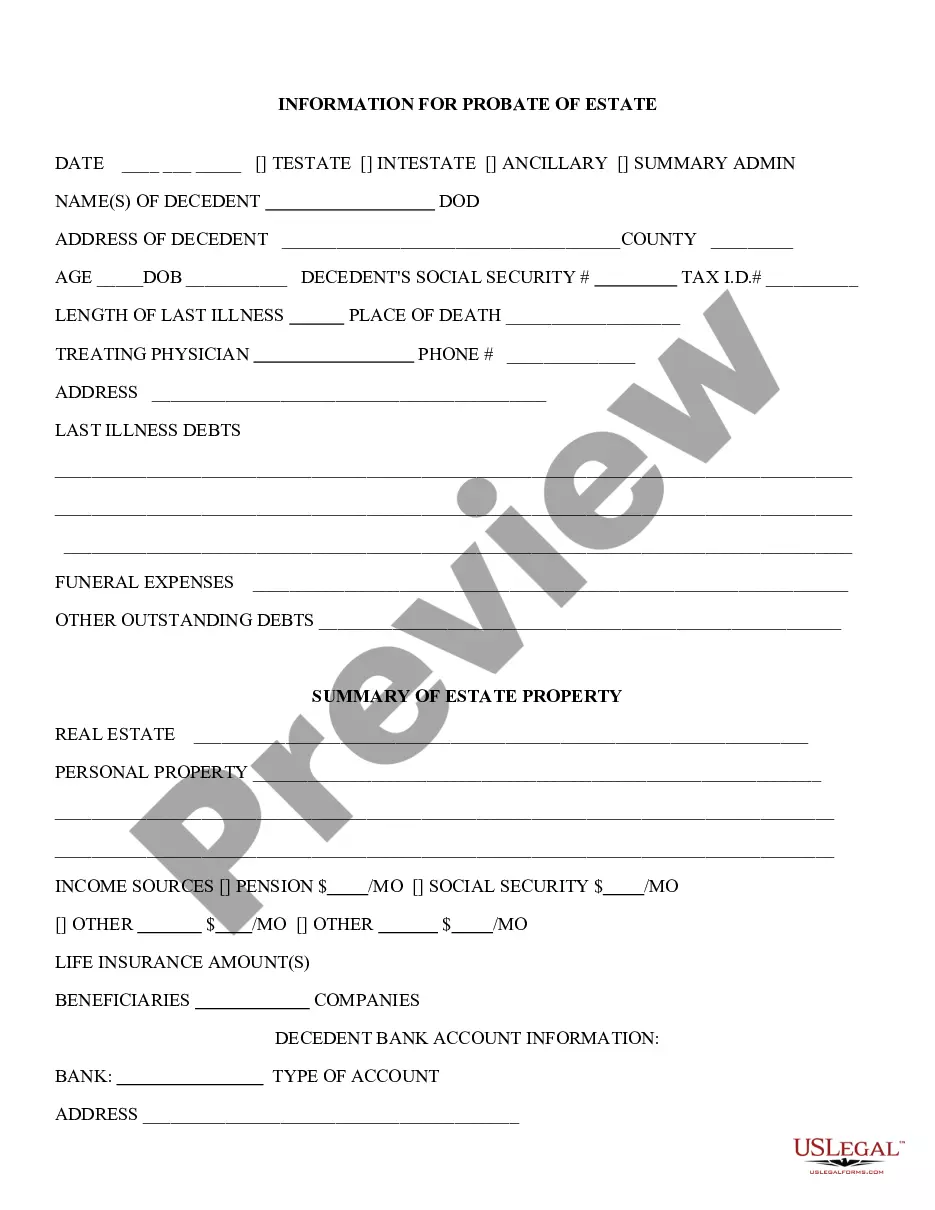
This Notice to Beneficiaries form is for the executor/executrix or personal representative to provide notice to the beneficiaries named in the will of the deceased. A second notice is also provided for publication where the location of the beneficiaries is unknown.
Virginia Notice to Beneficiaries of being Named in Will
Category:
State:
Virginia
Control #:
VA-WIL-800
Format:
Word;
Rich Text
Instant download
Description
Free preview





How to fill out Virginia Notice To Beneficiaries Of Being Named In Will?
Looking for a Virginia Notice to Beneficiaries of being Named in Will on the internet might be stressful. All too often, you see papers that you just think are alright to use, but find out later they are not. US Legal Forms provides over 85,000 state-specific legal and tax forms drafted by professional attorneys according to state requirements. Have any form you are searching for quickly, hassle-free.
If you already have the US Legal Forms subscription, merely log in and download the sample. It’ll instantly be added to the My Forms section. In case you do not have an account, you need to sign-up and select a subscription plan first.
Follow the step-by-step recommendations listed below to download Virginia Notice to Beneficiaries of being Named in Will from the website:
- See the document description and click Preview (if available) to check if the form suits your expectations or not.
- If the document is not what you need, find others using the Search engine or the provided recommendations.
- If it is appropriate, click Buy Now.
- Choose a subscription plan and create an account.
- Pay with a card or PayPal and download the template in a preferable format.
- After downloading it, you can fill it out, sign and print it.
Get access to 85,000 legal forms from our US Legal Forms library. In addition to professionally drafted samples, users can also be supported with step-by-step guidelines on how to find, download, and fill out templates.
Form popularity
FAQ
The person named as the Executor in the Will (or the Administrator if there is no Will) is responsible for contacting all of the Beneficiaries. This person should promptly notify everyone who has an interest in the Estate, advising what their entitlement is, to avoid any confusion later on in the process.
What are my rights as a beneficiary?A beneficiary is entitled to be told if they are named in a person's will. They are also entitled to be told what, if any, property/possessions have been left to them, and the full amount of inheritance they will receive.
Call the probate court to obtain the name and phone number of the executor, if you cannot obtain it from family members. Ask the executor of the will whether you are a beneficiary in your relative's will. Ask for a copy of the will so you can verify the information he provided.
As Executor, you should notify beneficiaries of the estate within three months after the Will has been filed in Probate Court. For beneficiaries of assets that are not included in the will (and therefore do not pass through Probate) there are no specific notification requirements.
Beneficiaries of a will must be notified after the will is accepted for probate. 3feff Moreover, probated wills are automatically placed in the public record. If the will is structured to avoid probate, there are no specific notification requirements. 4feff This is relatively rare.
The person named as the Executor in the Will (or the Administrator if there is no Will) is responsible for contacting all of the Beneficiaries. This person should promptly notify everyone who has an interest in the Estate, advising what their entitlement is, to avoid any confusion later on in the process.
All taxes and liabilities paid from the estate, including medical expenses, attorney fees, burial or cremation expenses, estate sale costs, appraisal expenses, and more. The executor should keep all receipts for any services or transactions needed to liquidate the assets of the deceased.