Release of Judgment Lien on Properties and Assets of Defendant
Understanding this form
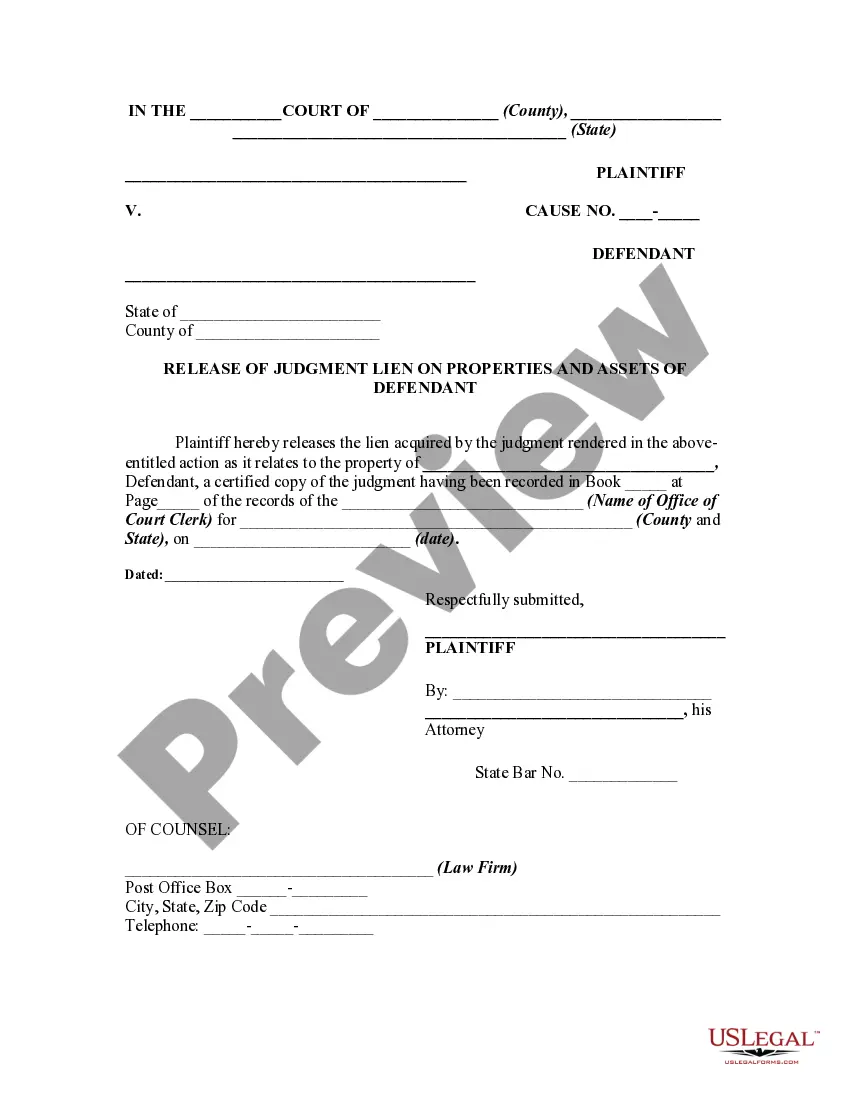
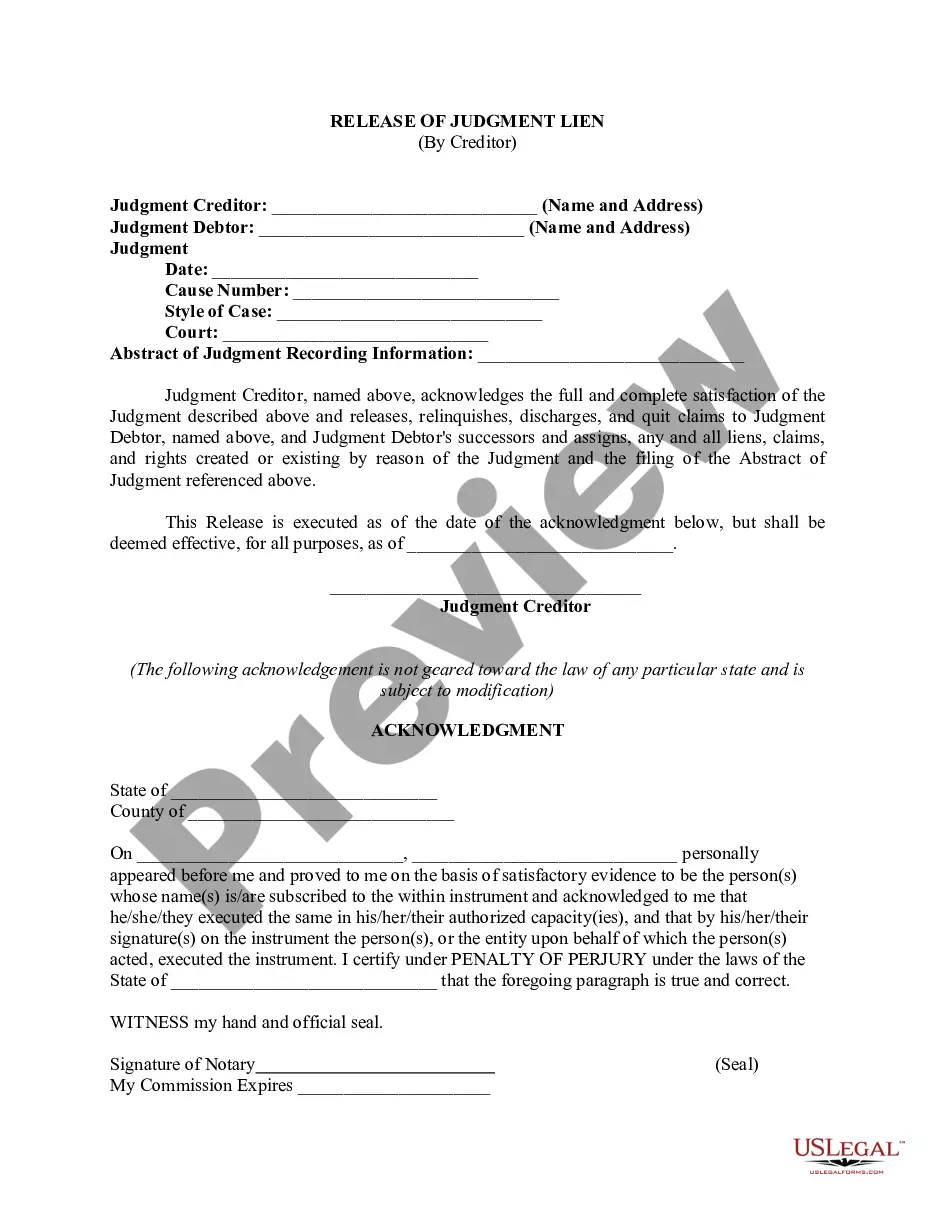
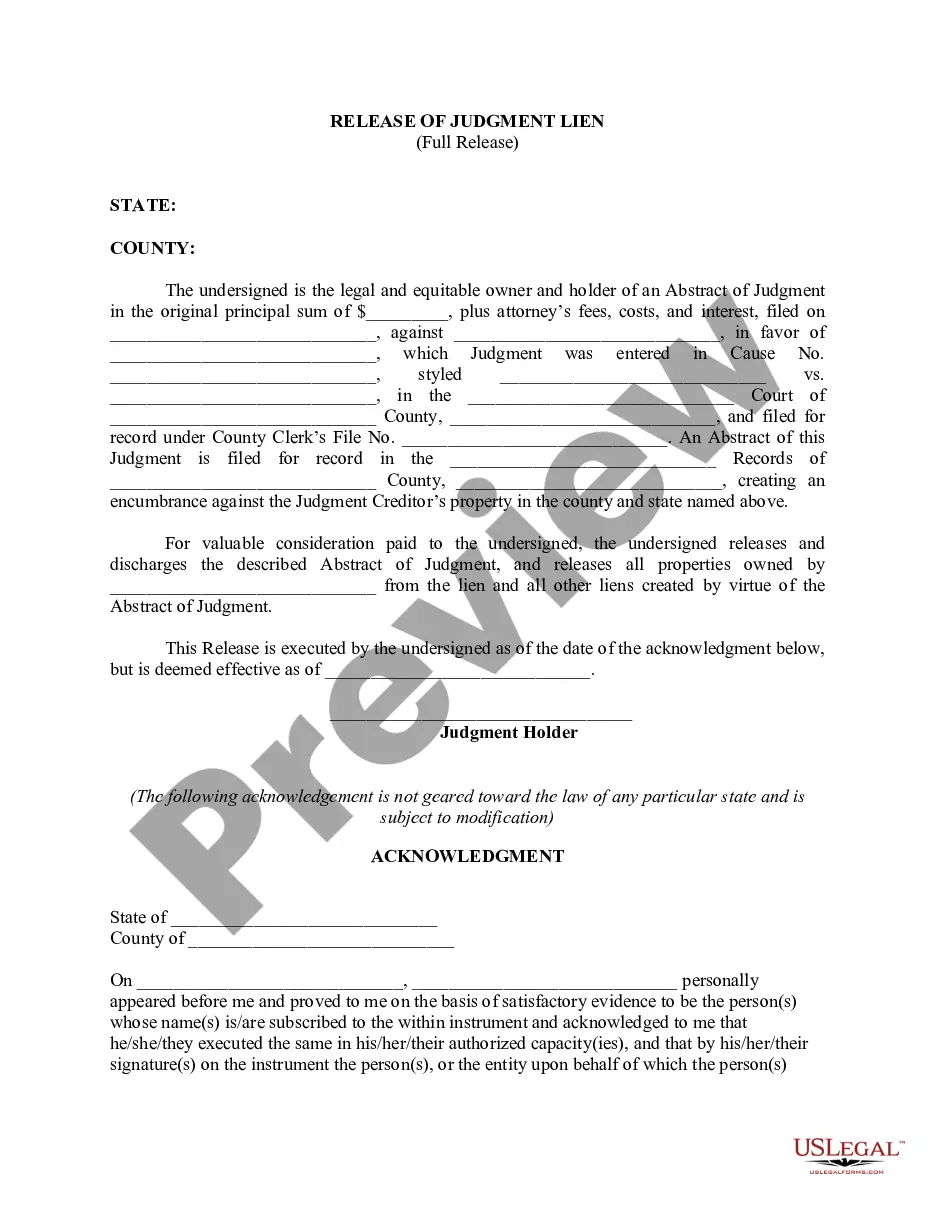
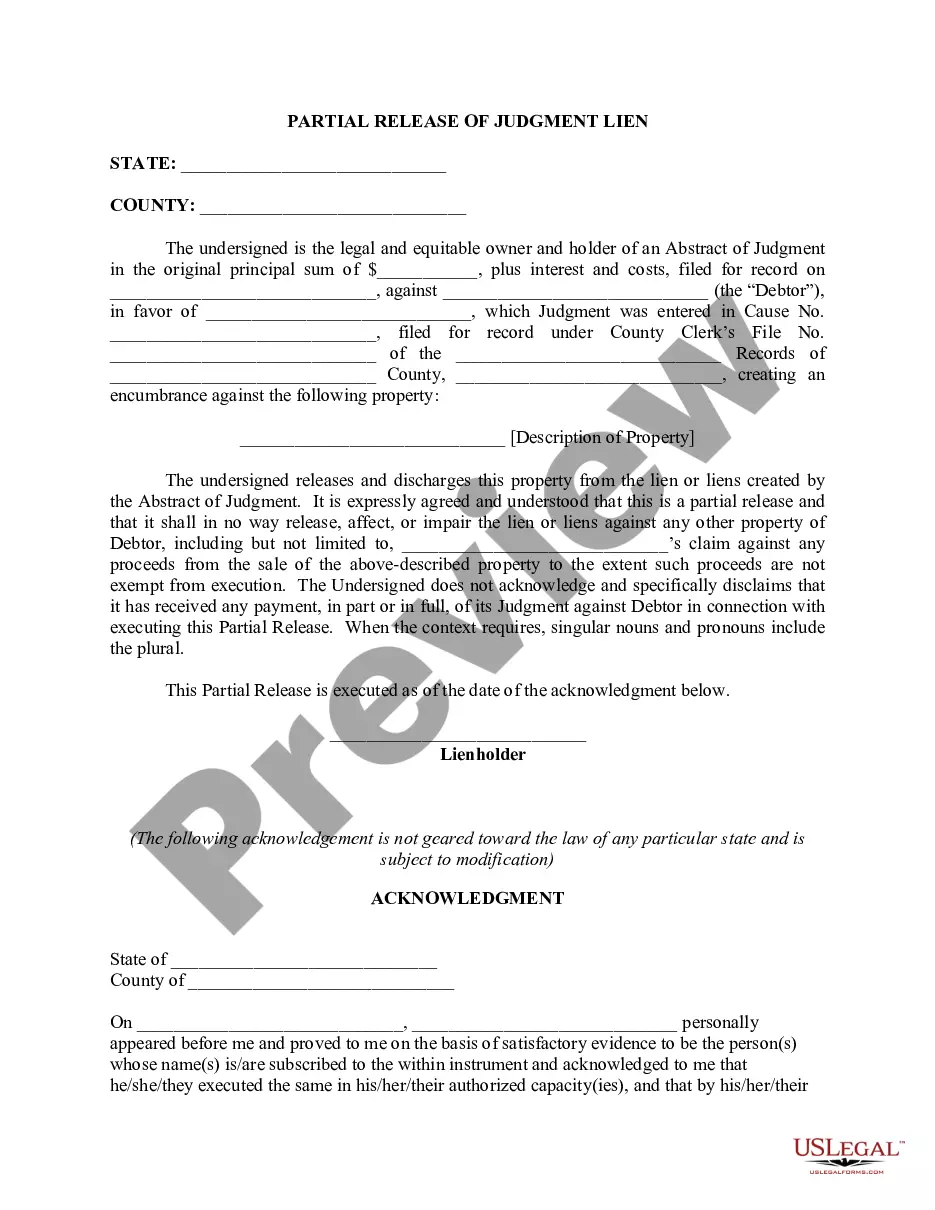
The Release of Judgment Lien on Properties and Assets of Defendant is a legal document used to officially release a lien that a creditor has on a debtor's property following a court judgment. This form is important for clearing the title of the debtor's property, ensuring it is free from claims that may have arisen from the previous judgment. Unlike other forms related to judgments, this specific form focuses on the release aspect, allowing the debtor to regain full ownership rights without the encumbrance of the lien.
Key parts of this document
- Case details, including the names of the plaintiff and defendant and the cause number.
- Statement of lien release pertaining to the debtor's property.
- Reference to the court judgment and where it was recorded.
- Date of the release and signatures of the involved parties.
When this form is needed
This form should be used when a creditor agrees to release a judgment lien they have on a debtor's property. Common scenarios include the following: - The judgment debt has been satisfied or paid in full. - The debtor has entered into an agreement with the creditor that requires the lien to be released. - The judgment has been vacated or reversed by a higher court.
Who needs this form
This form is intended for:
- Creditors who wish to officially relinquish their claim on a debtor's property.
- Debtors who need to clear a lien from their property title following the satisfaction of a judgment.
- Attorneys representing either party in the judgment release process.
How to complete this form
- Identify the parties involved, including the plaintiff and defendant.
- Locate and enter the case details, including the cause number and court information.
- Specify the property that the lien pertains to in the appropriate section.
- Include the date the lien was recorded and the date of release.
- Collect signatures from the plaintiff and their attorney to finalize the document.
Notarization guidance
Notarization is generally not required for this form. However, certain states or situations might demand it. You can complete notarization online through US Legal Forms, powered by Notarize, using a verified video call available anytime.
Get your form ready online
Our built-in tools help you complete, sign, share, and store your documents in one place.
Make edits, fill in missing information, and update formatting in US Legal Forms—just like you would in MS Word.
Download a copy, print it, send it by email, or mail it via USPS—whatever works best for your next step.
Sign and collect signatures with our SignNow integration. Send to multiple recipients, set reminders, and more. Go Premium to unlock E-Sign.
If this form requires notarization, complete it online through a secure video call—no need to meet a notary in person or wait for an appointment.
We protect your documents and personal data by following strict security and privacy standards.

Make edits, fill in missing information, and update formatting in US Legal Forms—just like you would in MS Word.

Download a copy, print it, send it by email, or mail it via USPS—whatever works best for your next step.

Sign and collect signatures with our SignNow integration. Send to multiple recipients, set reminders, and more. Go Premium to unlock E-Sign.

If this form requires notarization, complete it online through a secure video call—no need to meet a notary in person or wait for an appointment.

We protect your documents and personal data by following strict security and privacy standards.
Typical mistakes to avoid
- Failing to include specific property details, which could leave the lien in place.
- Not signing the document, making it invalid.
- Incorrectly referencing the court judgment, leading to confusion or disputes.
Benefits of completing this form online
- Convenience of instant access and download from anywhere.
- Editable templates that allow users to customize their information easily.
- Reliability of professionally drafted forms that adhere to legal standards.
Key takeaways
- The form releases a lien, clearing the debtor's property for future transactions.
- Accurate completion is essential to ensure legal effectiveness.
- Consult state-specific requirements for filing and recording.
Looking for another form?
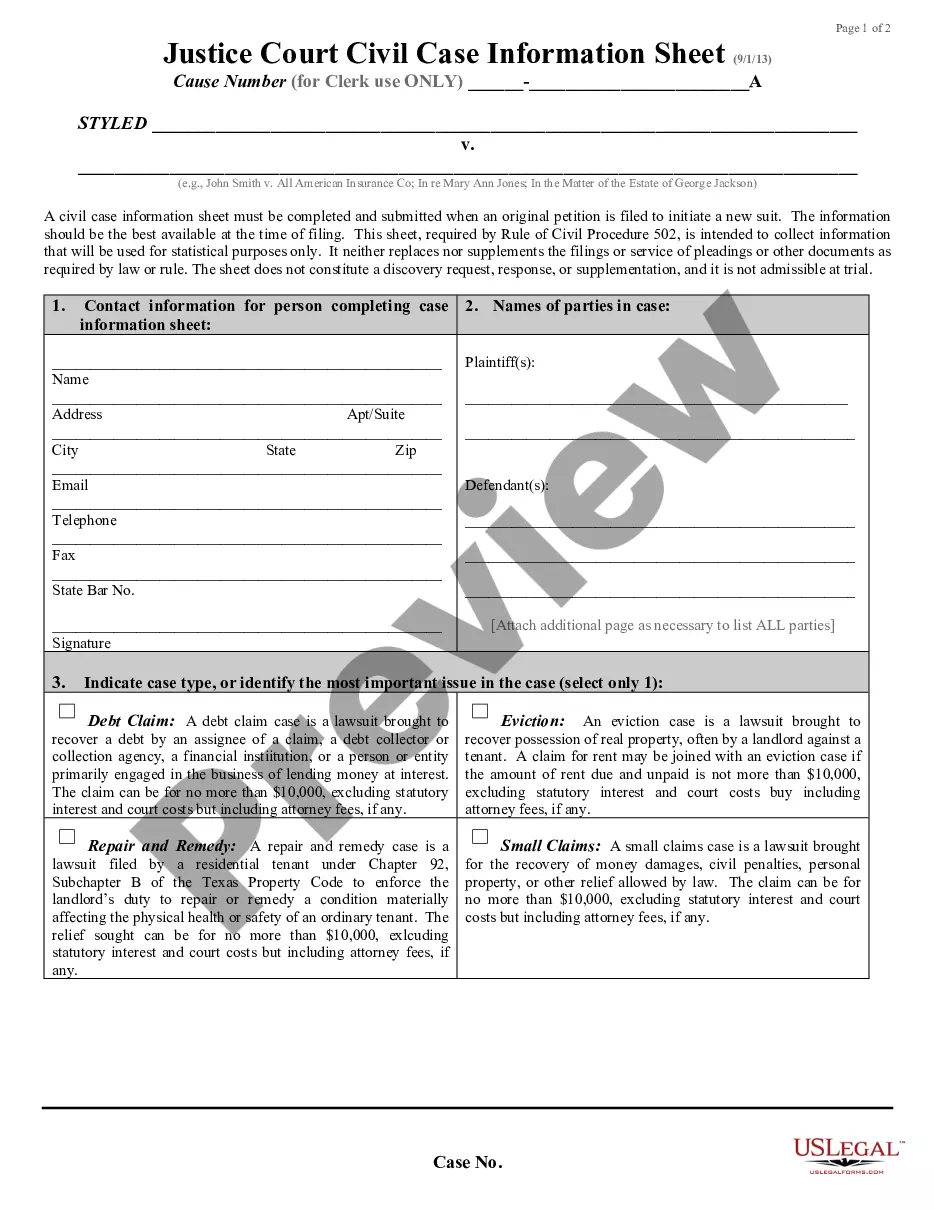
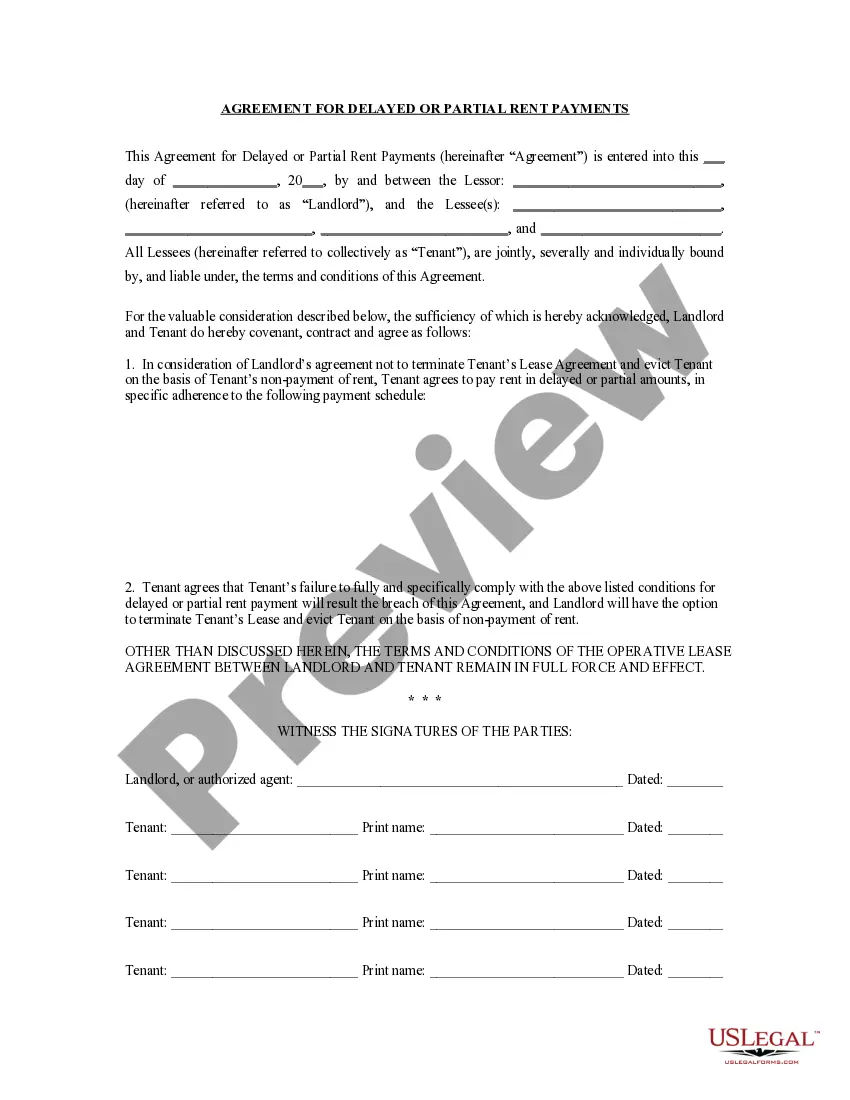
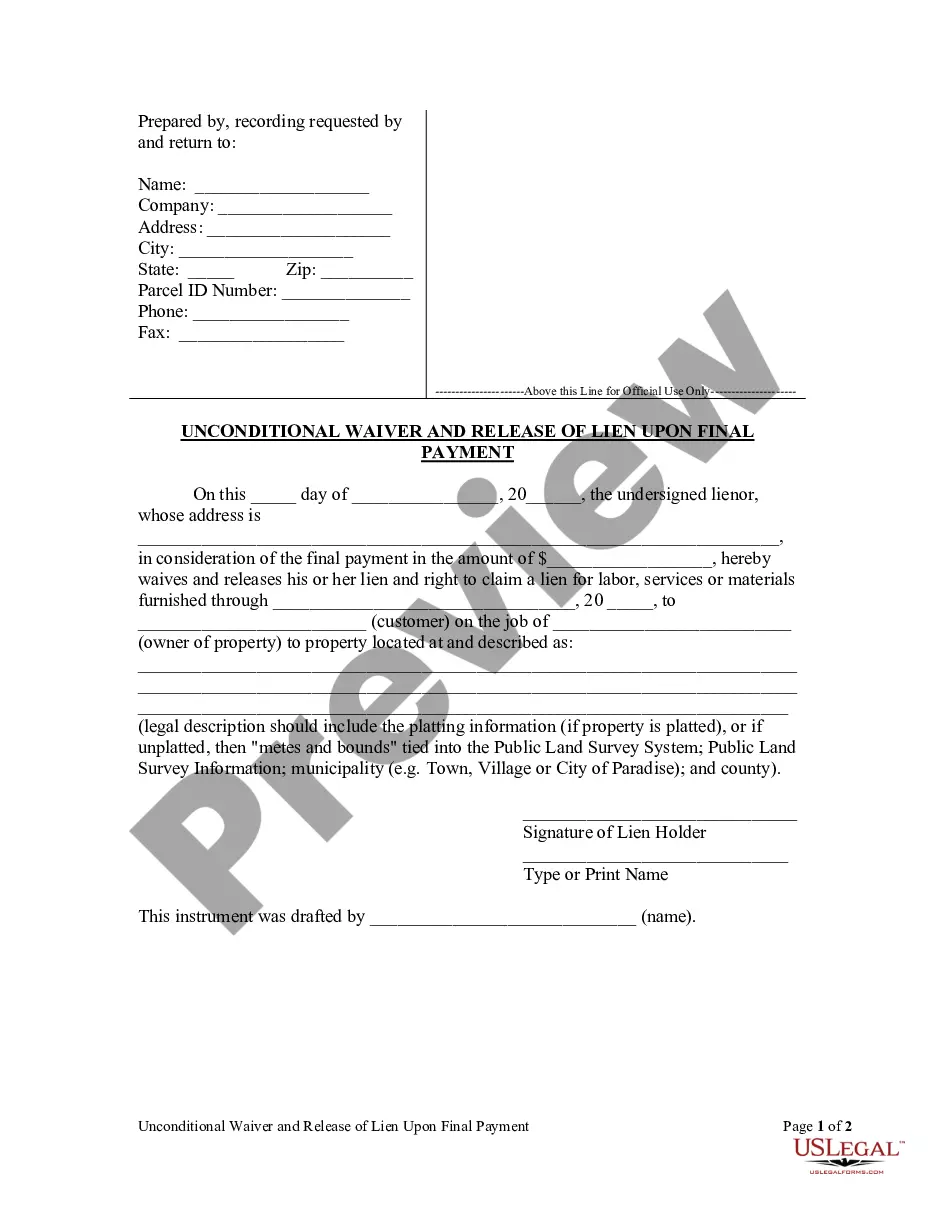
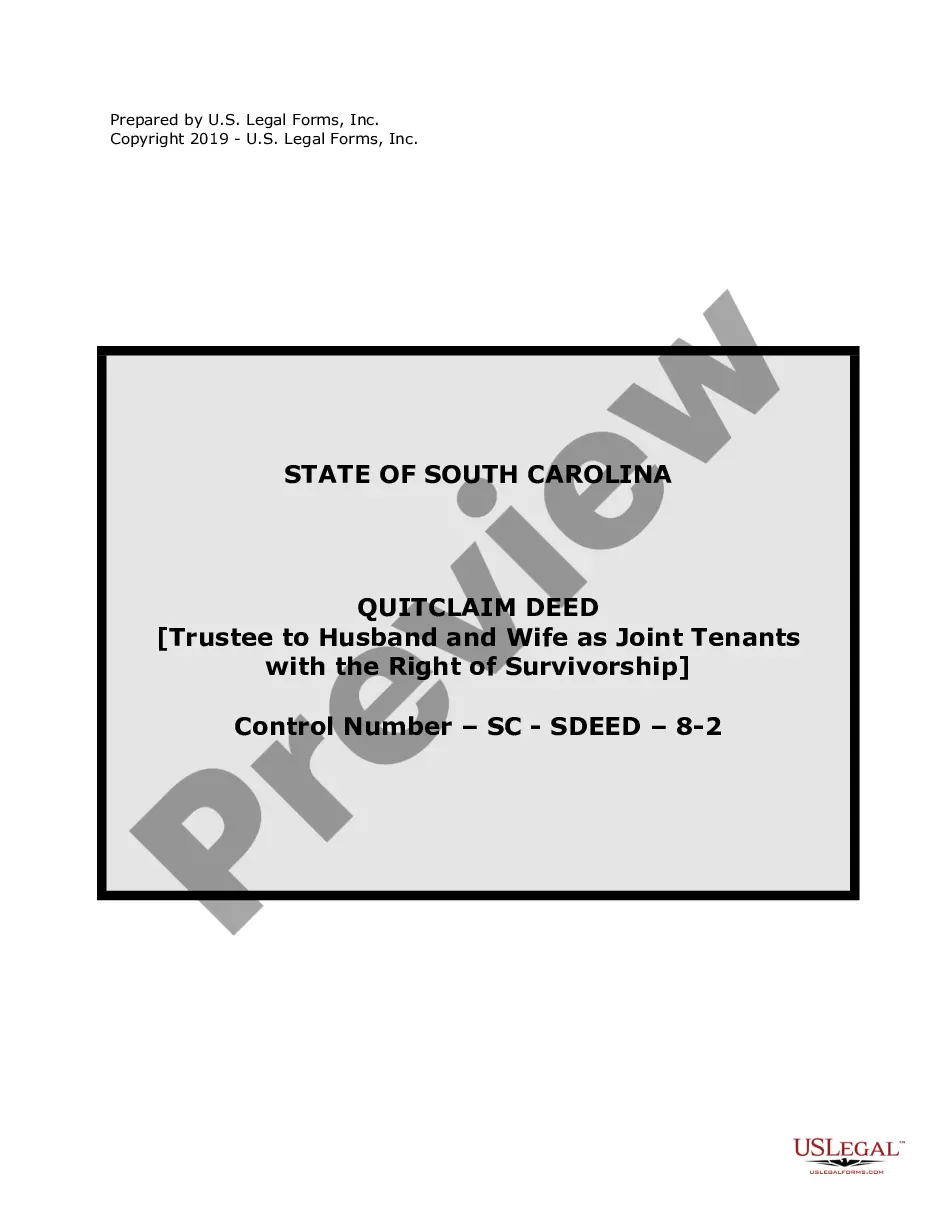
Form popularity
FAQ
A simple way to collect a judgment is by deducting money out of the debtor's paycheck using a wage garnishment. The debtor must have a decent income because both the federal government and states cap the amount you can take, and certain types of income, like Social Security, are off-limits.
2. States where the lien law doesn't require a written contract. In these states, contractors and suppliers are generally allowed to file a lien even if they don't have a written contract.These states typically permit parties with verbal, oral, or even implied contracts to claim lien rights.
Which is a voluntary lien against a person's property? Mortgage lien.
In many situations, one of the best ways to collect a judgment after winning a case is to put a lien on the debtor's property. This gives you a claim to the property and, in some cases, the property will be sold at public auction in order to satisfy the debt that is owed.
Someone who is owed money is generally not able to just put a lien on property without first securing a judgment. Securing a judgment requires the creditor to sue the debtor. This may be through circuit court in many jurisdictions. If under a certain dollar amount, this suit may be through the small claims court.
The debtor must get a discharge or release of the abstract of judgment to remove the lien from the home. Contact the judgment creditor shown on the abstract. Arrange to pay the debt in full or negotiate payments. Ask the creditor for a discharge if paying in full.
The short answer to that question is usually no. If somebody owes you money you could sue them, you could obtain a judgment, you can obtain what's called a "judgment lien" and once you get the judgment lien, you can have the court record that against their property including the real estate.
Judgment Liens Arise As a Result of a Lawsuit A judicial lien is created when a court grants a creditor an interest in the debtor's property, after a court judgment.
A judgment is a court order. A lien is a claim of interest in a property right. A judgment can turn into a lien when the law allows this. For example, if a creditor records a court judgment, it can affect the right of an owner of real property to sell the...