Answer by Defendant in a Civil Lawsuit Alleging the Affirmative Defense of Assumption of Risk
About this form
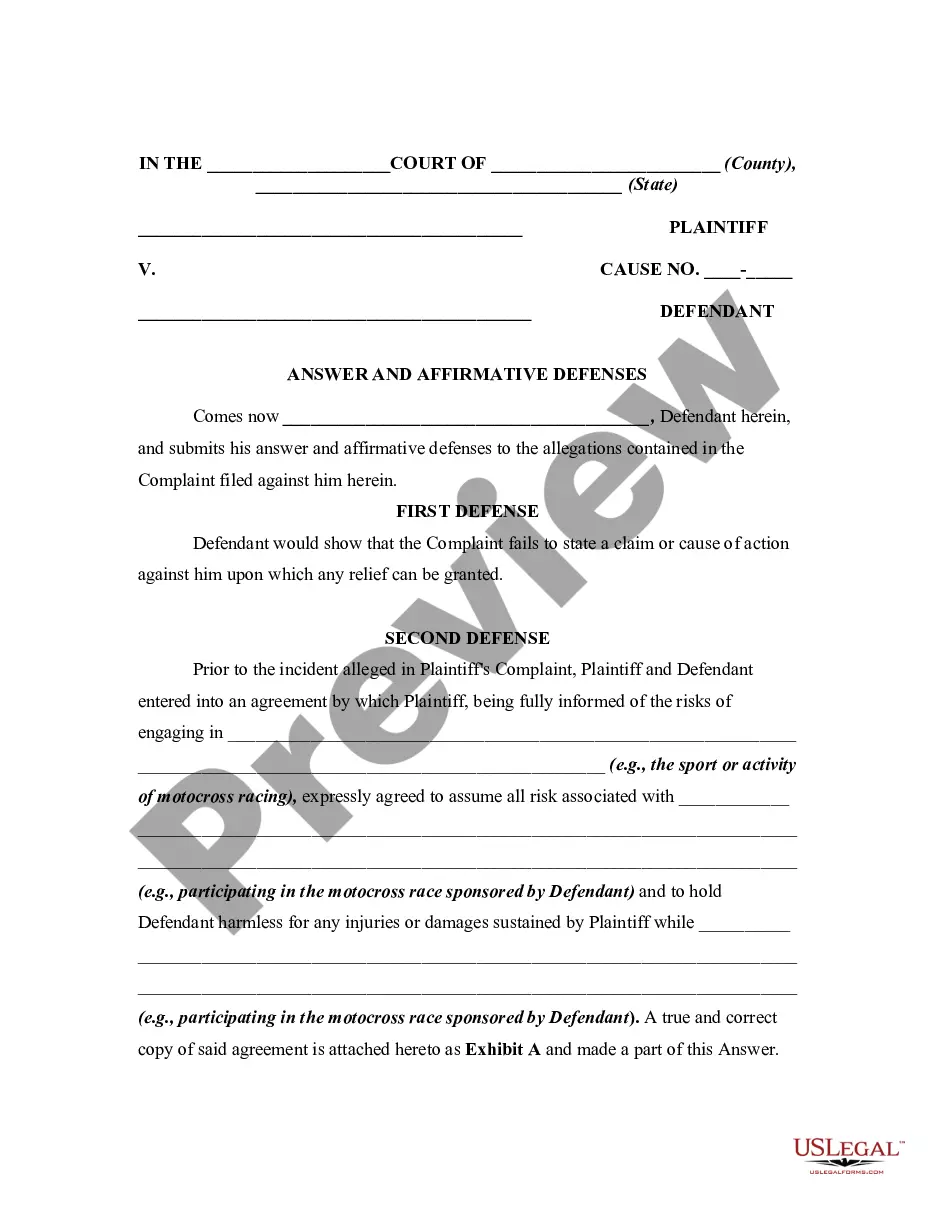
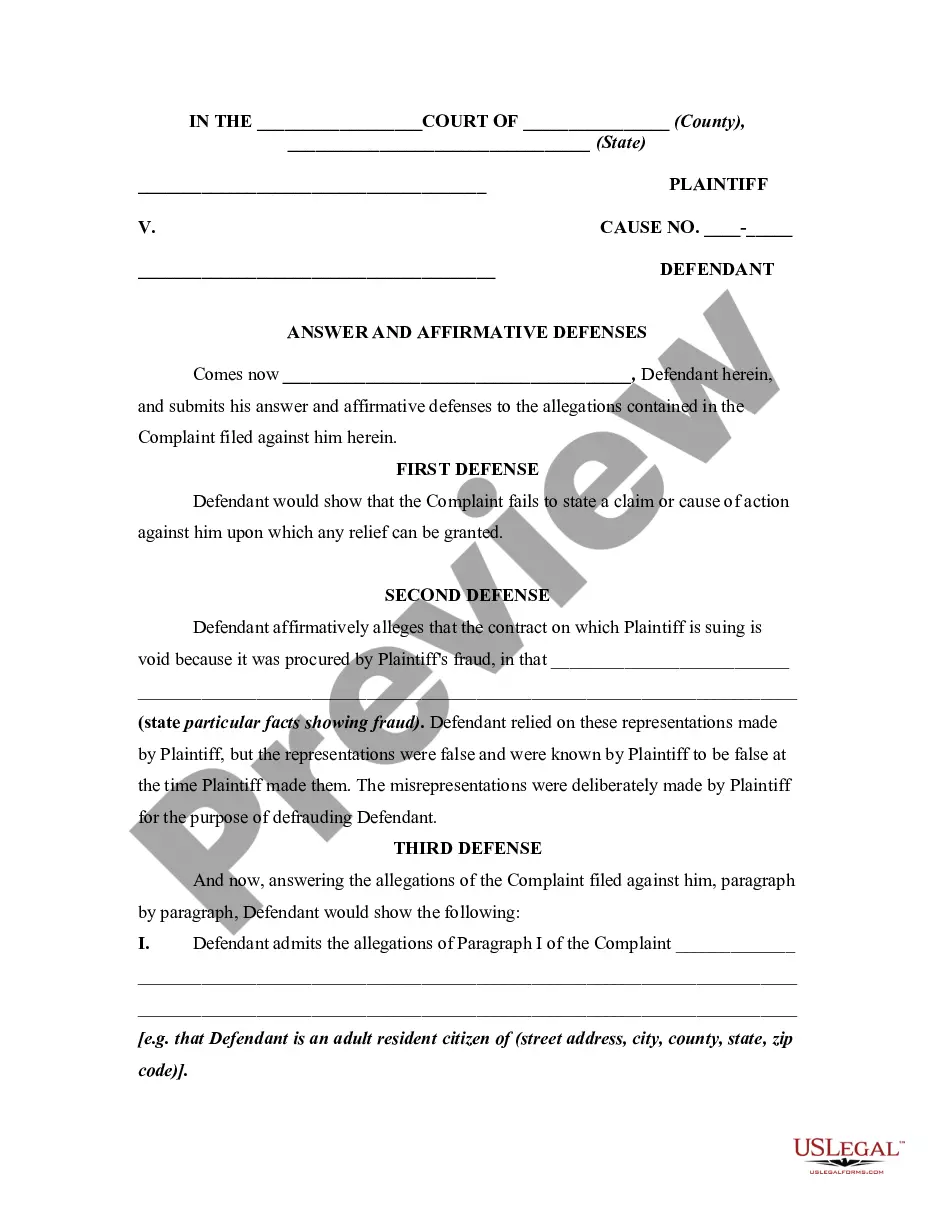
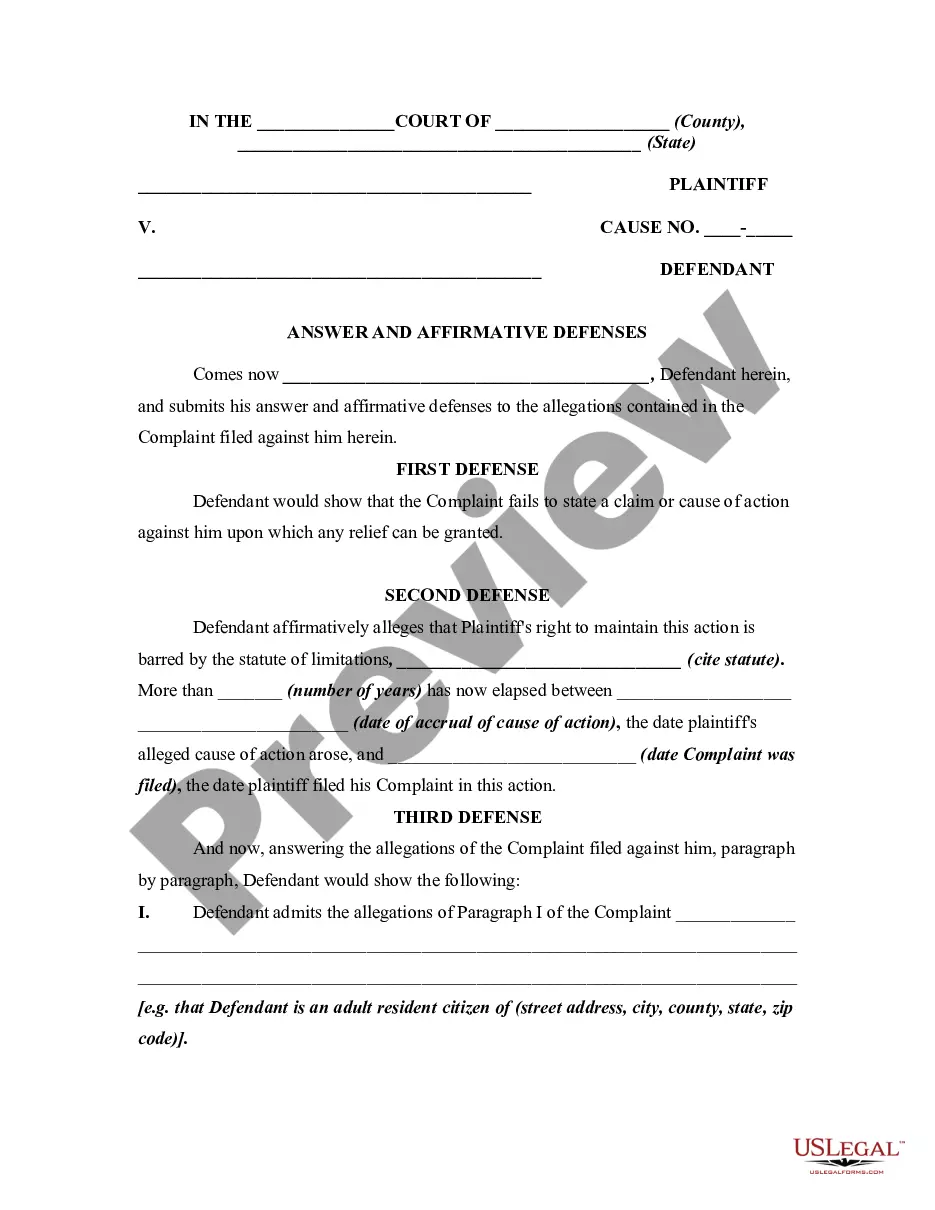
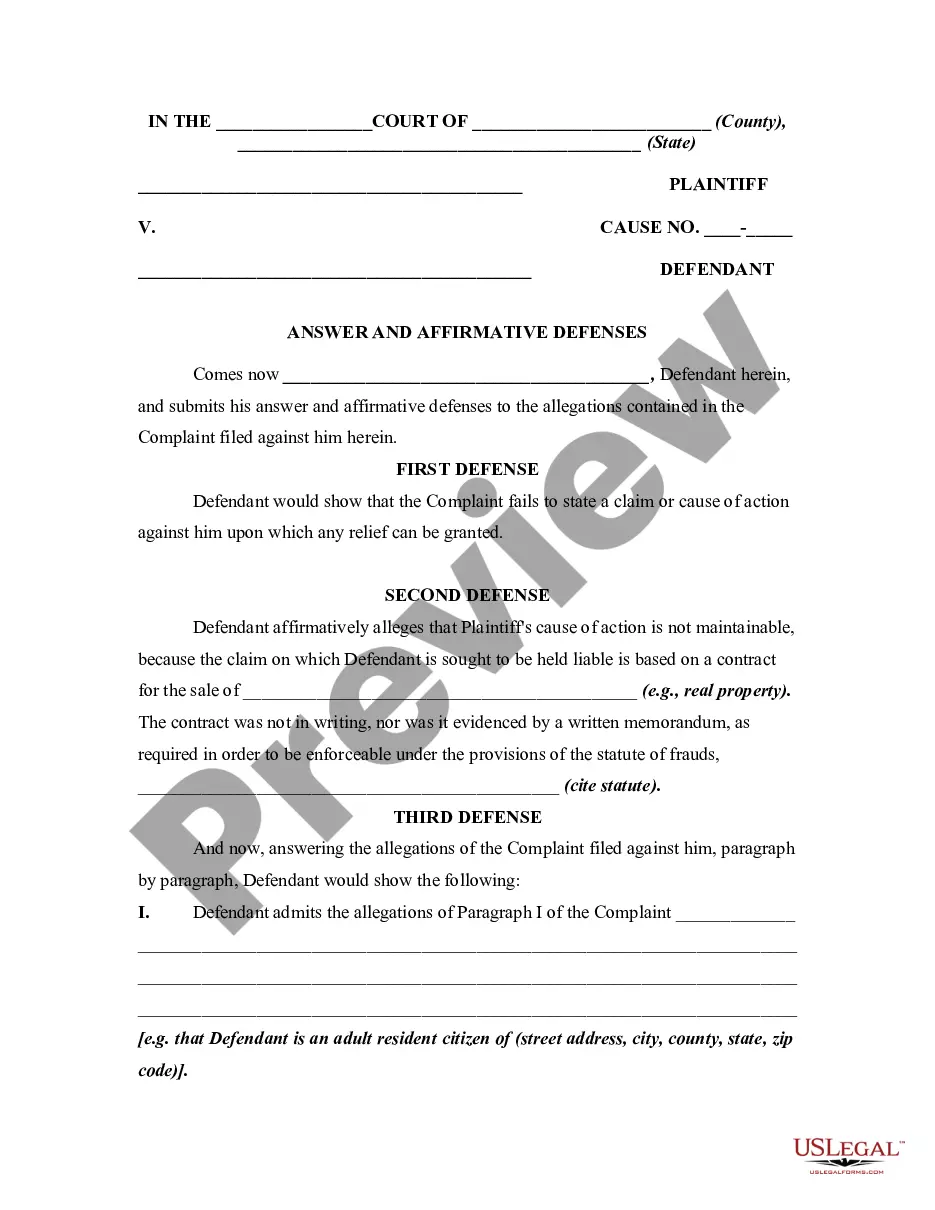
This form, titled "Answer by Defendant in a Civil Lawsuit Alleging the Affirmative Defense of Assumption of Risk," serves as a legal document that a defendant can use to respond to a plaintiff's allegations in a civil lawsuit. It specifically frames the argument that the plaintiff knowingly accepted the risks associated with an activity, effectively functioning as a defense against claims of negligence. Unlike general answers to lawsuits, this form includes a structured approach to asserting the affirmative defense of assumption of risk.
Form components explained
- Defendant's identification: Details the defendant's name and status.
- Complaint overview: Acknowledges the allegations made in the plaintiff's complaint.
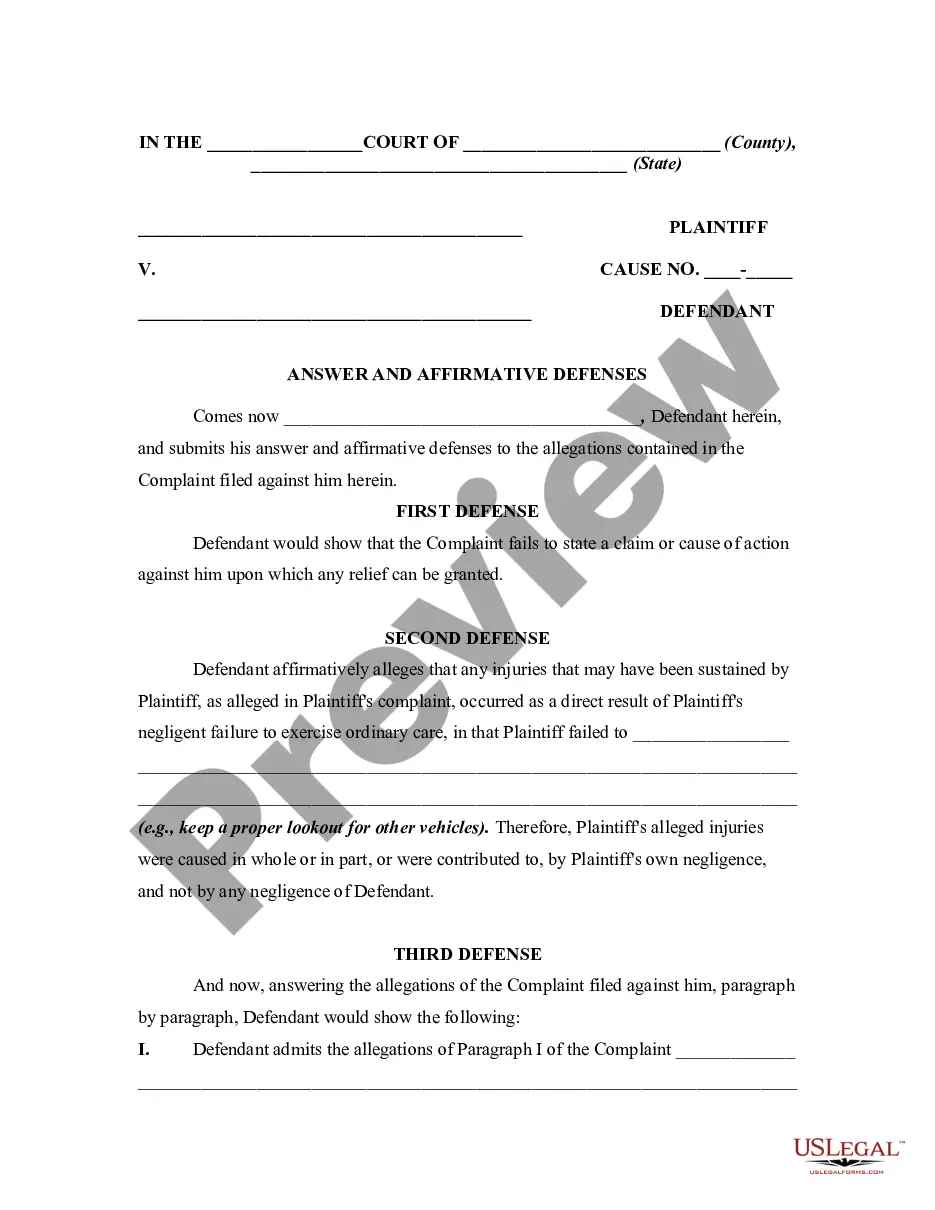
- First defense: Argues that the complaint fails to state a valid claim against the defendant.
- Second defense: Provides the basis for the assumption of risk defense, including any agreements made by the plaintiff.
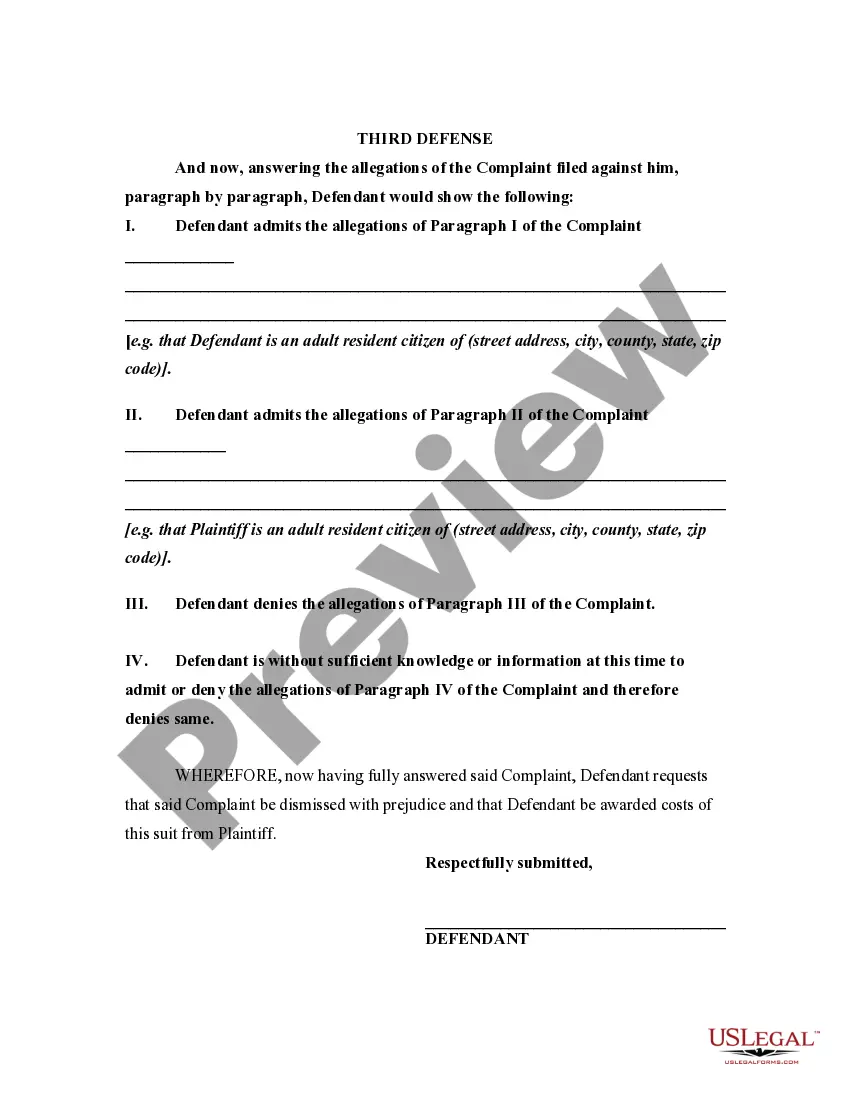
- Paragraph-by-paragraph response: Offers specific responses to each allegation in the complaint.
- Request for dismissal: Concludes with a request to dismiss the complaint and an award of costs.
When to use this form
This form is appropriate when a defendant is responding to a civil lawsuit where the plaintiff claims negligence, particularly in situations involving activities with inherent risks. It is useful in scenarios such as sports, recreational events, or other activities where risk acceptance is implied by participation. When a defendant intends to argue that the plaintiff was aware of and accepted the risks involved, this form should be utilized.
Who should use this form
- Defendants in civil lawsuits: Individuals or entities being sued for negligence.
- Legal professionals: Attorneys preparing a defensive response on behalf of a client.
- Parties involved in high-risk activities: Participants in sports or events known for their potential hazards.
- Those asserting affirmative defenses: Individuals who wish to formally present their claims regarding assumption of risk as part of their defense strategy.
How to complete this form
- Identify the parties: Enter the full names of the plaintiff and defendant, as well as the case number.
- Respond to the complaint: Address each allegation in the complaint, indicating whether they are admitted, denied, or if further information is needed.
- Assert defenses: Clearly outline the defenses being raised, particularly focusing on the assumption of risk.
- Attach supporting documents: Include any agreements or evidence related to the assumption of risk as exhibits.
- Sign and date the form: Ensure the defendant signs the document before submitting it to the court.
Notarization guidance
This form does not typically require notarization to be legally valid. However, some jurisdictions or document types may still require it. US Legal Forms provides secure online notarization powered by Notarize, available 24/7 for added convenience.
Get your form ready online
Our built-in tools help you complete, sign, share, and store your documents in one place.
Make edits, fill in missing information, and update formatting in US Legal Forms—just like you would in MS Word.
Download a copy, print it, send it by email, or mail it via USPS—whatever works best for your next step.
Sign and collect signatures with our SignNow integration. Send to multiple recipients, set reminders, and more. Go Premium to unlock E-Sign.
If this form requires notarization, complete it online through a secure video call—no need to meet a notary in person or wait for an appointment.
We protect your documents and personal data by following strict security and privacy standards.

Make edits, fill in missing information, and update formatting in US Legal Forms—just like you would in MS Word.

Download a copy, print it, send it by email, or mail it via USPS—whatever works best for your next step.

Sign and collect signatures with our SignNow integration. Send to multiple recipients, set reminders, and more. Go Premium to unlock E-Sign.

If this form requires notarization, complete it online through a secure video call—no need to meet a notary in person or wait for an appointment.

We protect your documents and personal data by following strict security and privacy standards.
Mistakes to watch out for
- Failing to address each allegation in the complaint individually.
- Not providing sufficient detail regarding the assumption of risk defense.
- Omitting to attach necessary supporting documents.
- Submitting the form without signature or proper dates.
Why use this form online
- Convenience: Downloadable templates can be completed at your own pace, from anywhere.
- Editability: Forms can be easily customized to suit specific case needs or jurisdictional requirements.
- Reliability: The forms are drafted by licensed attorneys, ensuring legal validity.
Legal use & context
- This form allows defendants to formally present their defenses in court.
- It is necessary for defendants to respond within the timeframe established by the court rules.
- Utilizing this form appropriately can help in achieving desired outcomes in negligence claims.
Looking for another form?
Form popularity
FAQ
A denial or failure of proof defense focuses on the elements of the crime and prevents the prosecution from meeting its burden of proof. An affirmative defense is a defense that raises an issue separate from the elements of the crime.
Accord and Satisfaction, Arbitration and Award, Assumption of the Risk, Contributory Negligence, Discharge in Bankruptcy, Duress, Estoppel, Failure of Consideration,
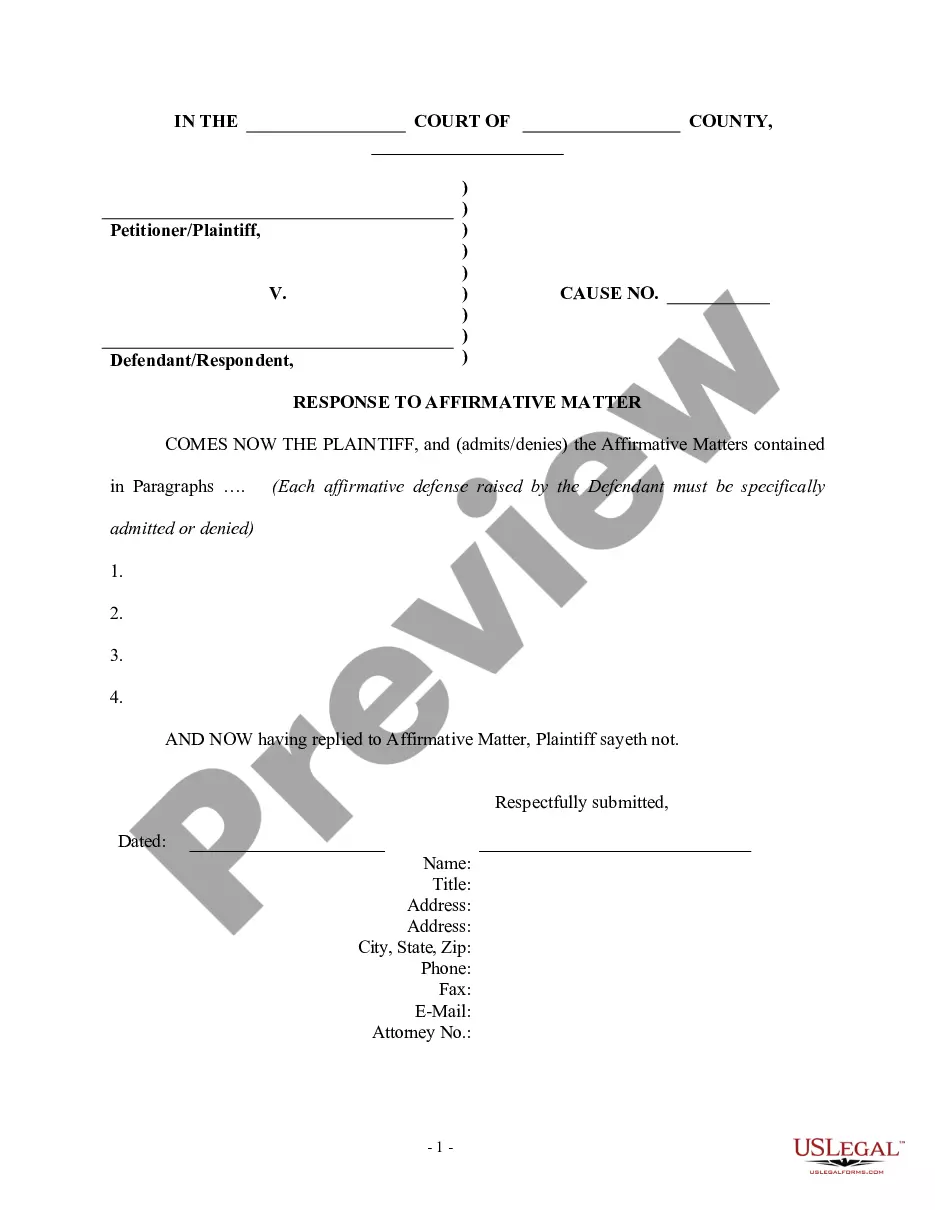
13 (When pleadings deemed denied and put in issue). Under the codes the pleadings are generally limited. A reply is sometimes required to an affirmative defense in the answer.In other jurisdictions no reply is necessary to an affirmative defense in the answer, but a reply may be ordered by the court.
While the availability of an affirmative defense will depend on the state, there are generally two categories of affirmative defenses, justifications and excuses.
A party presents a justiciable defense of estoppel if he or she shows a misrepresentation of a material fact upon which the party asserting estoppel detrimentally relied.
Estoppel is a legal principle that prevents someone from arguing something or asserting a right that contradicts what they previously said or agreed to by law. It is meant to prevent people from being unjustly wronged by the inconsistencies of another person's words or actions.
An affirmative defense operates to prevent conviction even when the prosecutor has proof beyond a reasonable doubt as to every element of the crime. Some jurisdictions place the burden on the defendant to prove the defense, while others require that the prosecution disprove the defense beyond a reasonable doubt.
Affirmative defenses are legal defenses that raise new facts or issues not raised in the Complaint. If you want the court to consider your legal defenses you MUST include them in your Answer. Therefore, any possible defense you might want the court to consider at trial should be in your Answer.
An affirmative defense to a civil lawsuit or criminal charge is a fact or set of facts other than those alleged by the plaintiff or prosecutor which, if proven by the defendant, defeats or mitigates the legal consequences of the defendant's otherwise unlawful conduct.