Insanity - Form of Verdict
What is this form?
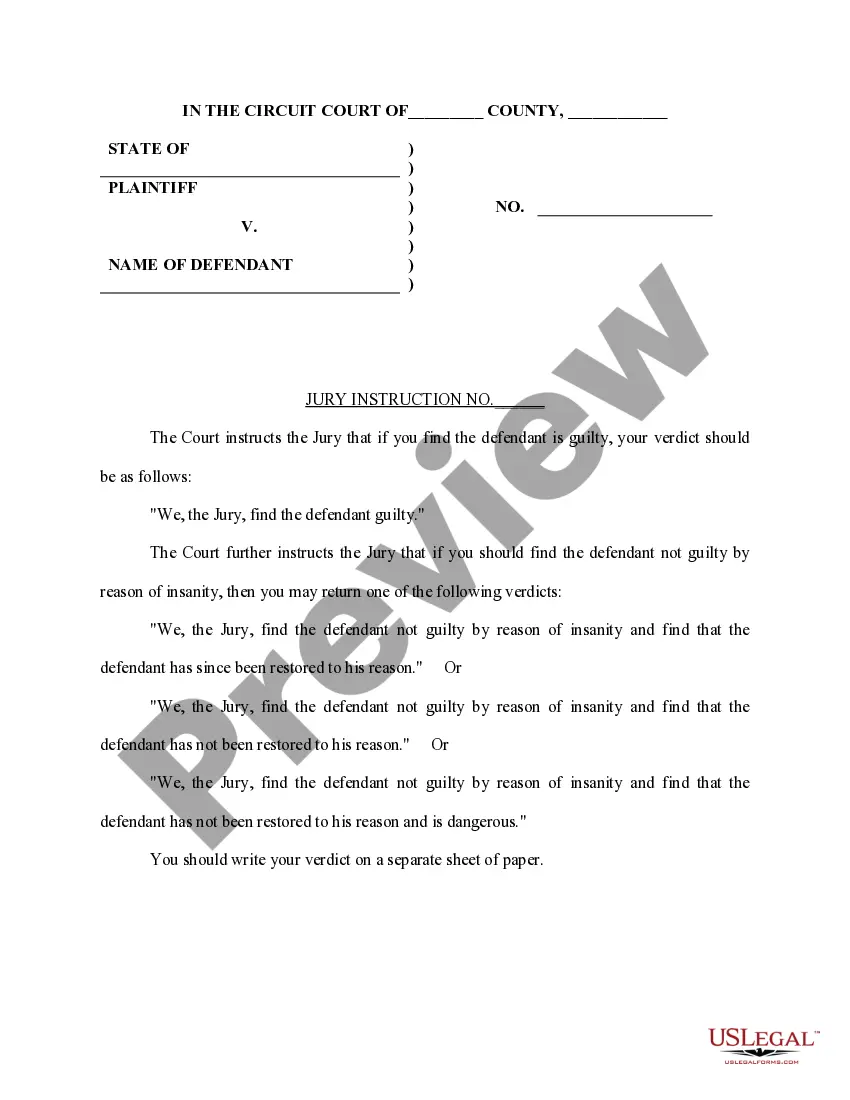
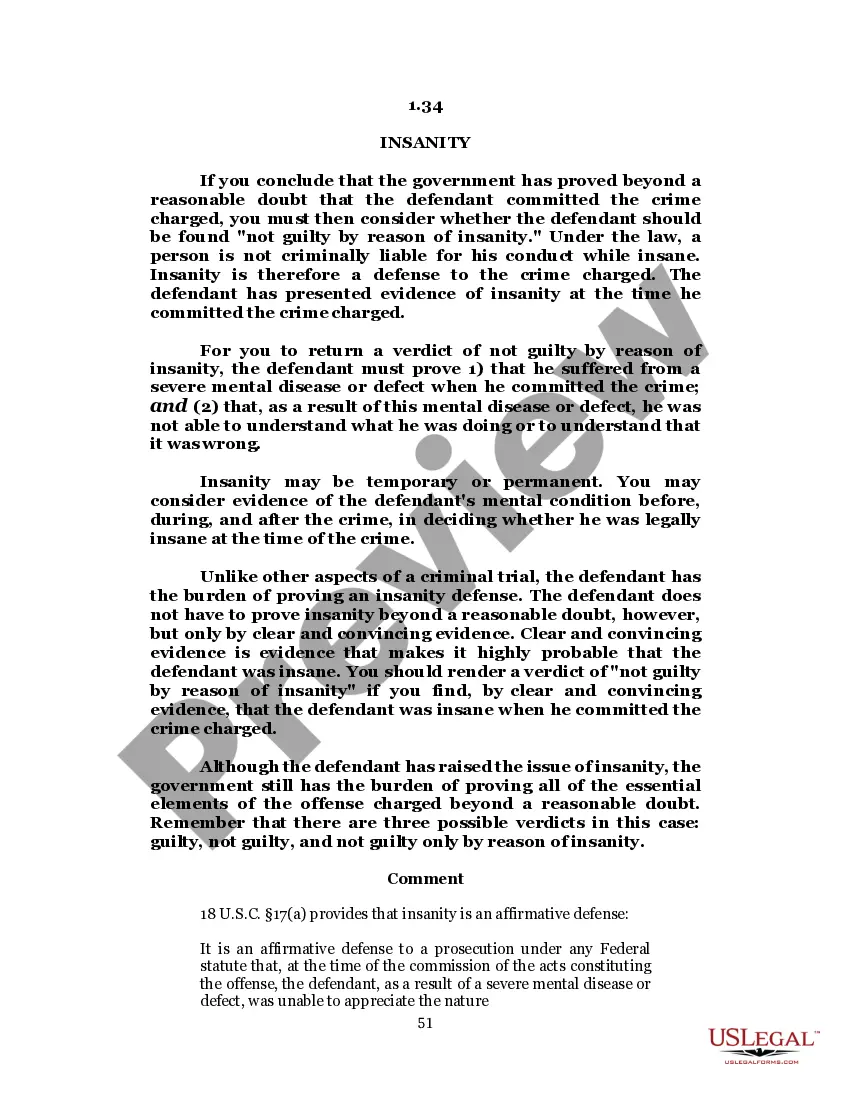
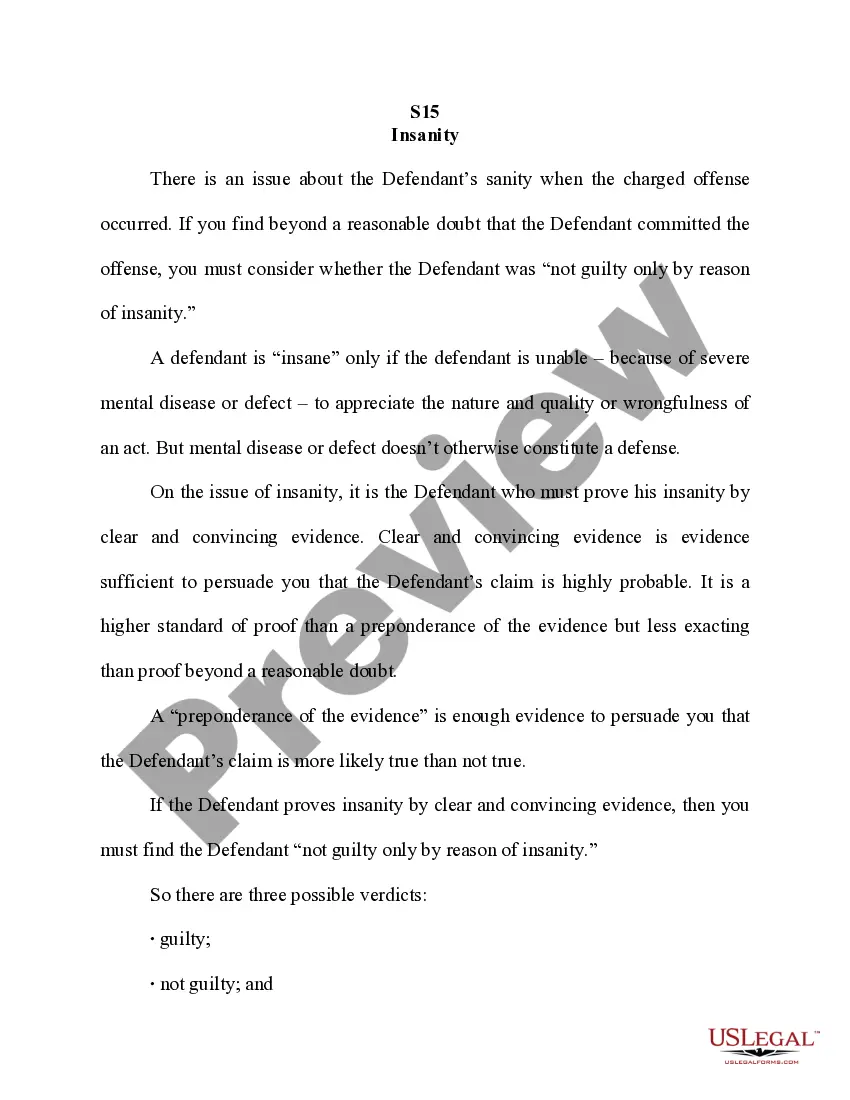
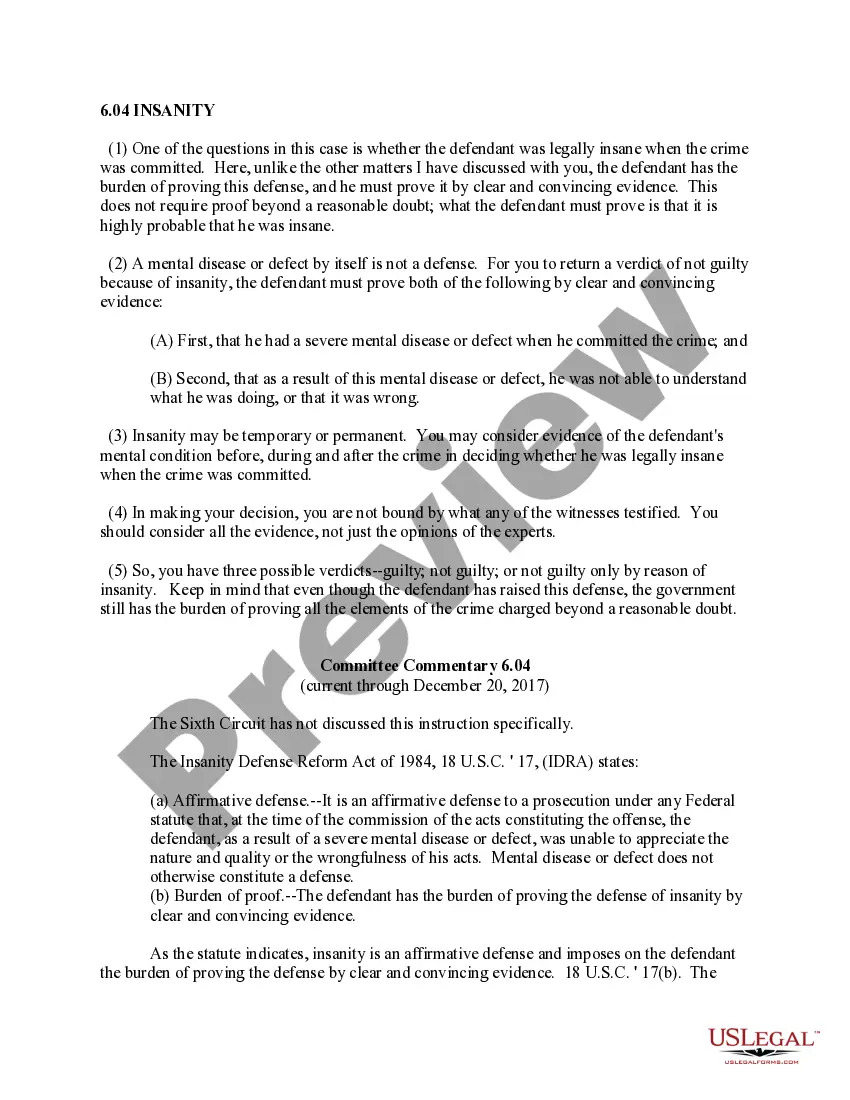
The Insanity - Form of Verdict is a legal document used in court to communicate the jury's decision regarding a defendant's mental state at the time of the crime. This form specifically provides options for the jury to determine if the defendant should be found not guilty by reason of insanity. It differs from standard verdict forms by incorporating considerations of the defendant's mental health, thus impacting sentencing and treatment rather than merely guilt or innocence.
Key components of this form
- The option to find the defendant guilty.
- The option to find the defendant not guilty by reason of insanity.
- Distinctions regarding the defendant's mental status post-verdict: restored to reason, not restored, or dangerous.
- Instructions for recording the verdict on a separate sheet of paper.
When to use this document
This form is used during criminal trials when the defense argues that the defendant was not in a sound mental state at the time of the offense. It is relevant in cases where mental health issues are central to the defense and the jury must decide whether those issues absolve the defendant of legal guilt.
Who this form is for
- Jury members participating in a trial involving an insanity defense.
- Judges overseeing cases where mental health is a factor in the defendant's culpability.
- Legal professionals and attorneys involved in the trial process.
Instructions for completing this form
- Review the instructions provided by the court regarding the verdict options.
- If finding the defendant guilty, record your verdict clearly.
- If finding the defendant not guilty by reason of insanity, select which of the three specified options applies.
- Write your final verdict on a separate piece of paper as instructed.
- Ensure all jury members agree on the verdict recorded.
Notarization requirements for this form
Notarization is generally not required for this form. However, certain states or situations might demand it. You can complete notarization online through US Legal Forms, powered by Notarize, using a verified video call available anytime.
Get your form ready online
Our built-in tools help you complete, sign, share, and store your documents in one place.
Make edits, fill in missing information, and update formatting in US Legal Forms—just like you would in MS Word.
Download a copy, print it, send it by email, or mail it via USPS—whatever works best for your next step.
Sign and collect signatures with our SignNow integration. Send to multiple recipients, set reminders, and more. Go Premium to unlock E-Sign.
If this form requires notarization, complete it online through a secure video call—no need to meet a notary in person or wait for an appointment.
We protect your documents and personal data by following strict security and privacy standards.

Make edits, fill in missing information, and update formatting in US Legal Forms—just like you would in MS Word.

Download a copy, print it, send it by email, or mail it via USPS—whatever works best for your next step.

Sign and collect signatures with our SignNow integration. Send to multiple recipients, set reminders, and more. Go Premium to unlock E-Sign.

If this form requires notarization, complete it online through a secure video call—no need to meet a notary in person or wait for an appointment.

We protect your documents and personal data by following strict security and privacy standards.
Common mistakes to avoid
- Failing to select a specific verdict option related to insanity.
- Not writing the verdict on a separate sheet as required.
- Confusing the guidelines for guilt versus insanity verdicts.
Advantages of online completion
- Convenience of access from anywhere with internet connectivity.
- Editable format allowing for accurate completion.
- Reliable templates created by licensed attorneys.
Legal use & context
- This form is legally binding once completed and submitted as part of a jury trial.
- Its use ensures that the mental state of the defendant is properly assessed within the legal framework.
- Judicial systems recognize the insanity defense as a legitimate legal argument, making this form essential in related trials.
Summary of main points
- The Insanity - Form of Verdict is essential for jury determination of a defendant's mental state.
- It offers specific verdict options that impact legal outcomes based on mental health.
- Proper completion is critical to ensure the accuracy and legality of the jury's decision.
Looking for another form?
Form popularity
FAQ
The four versions of the insanity defense are M'Naghten, irresistible impulse, substantial capacity, and Durham.
The insanity defense, also known as the mental disorder defense, is an affirmative defense by excuse in a criminal case, arguing that the defendant is not responsible for their actions due to an episodic or persistent psychiatric disease at the time of the criminal act.
Generally speaking, criminal insanity is understood as a mental defect or disease that makes it impossible for a defendant to understand their actions, or to understand that their actions are wrong.
The four tests for insanity are the M'Naghten test, the irresistible-impulse test, the Durham rule, and the Model Penal Code test.
And how often does it succeed? Although cases invoking the insanity defense often receive much media attention, the defense is actually not raised very often. Virtually all studies conclude that the insanity defense is raised in less than 1 percent of felony cases, and is successful in only a fraction of those1.
Insanity. The legal concept referring to the criminal's state of mind at the time the crime was committed. It requires that, due to a mental illness, a defendant lacks moral responsibility and culpability for the crime, and therefore should not be punished.
Four states, including Kansas, Montana, Idaho, Utah, do not allow the insanity defense. In other states, the standards for proving this defense vary widely. The following provides the status of the insanity defense in each jurisdiction.
There are several legal tests used by State courts to determine whether someone was insane at the time of the incident. These insanity defenses include the M'Naghten Rule; the Irresistible Impulse Test; the Durham Rule; and the Model Penal Code test.
Insanity, in criminal law, condition of mental disorder or mental defect that relieves persons of criminal responsibility for their conduct.