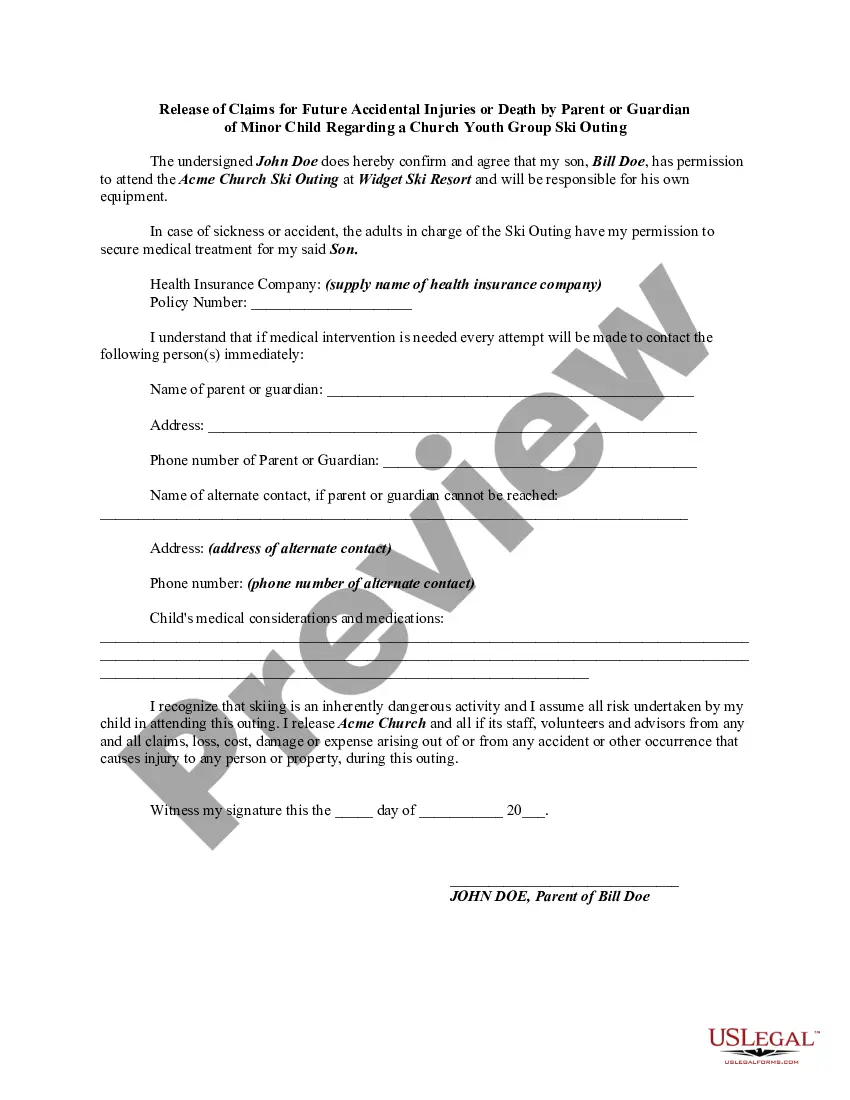
Release of Claims for Future Accidental Injuries or Death by Parent or Guardian of Minor Child Regarding a Church Youth Group Ski Outing
About this form
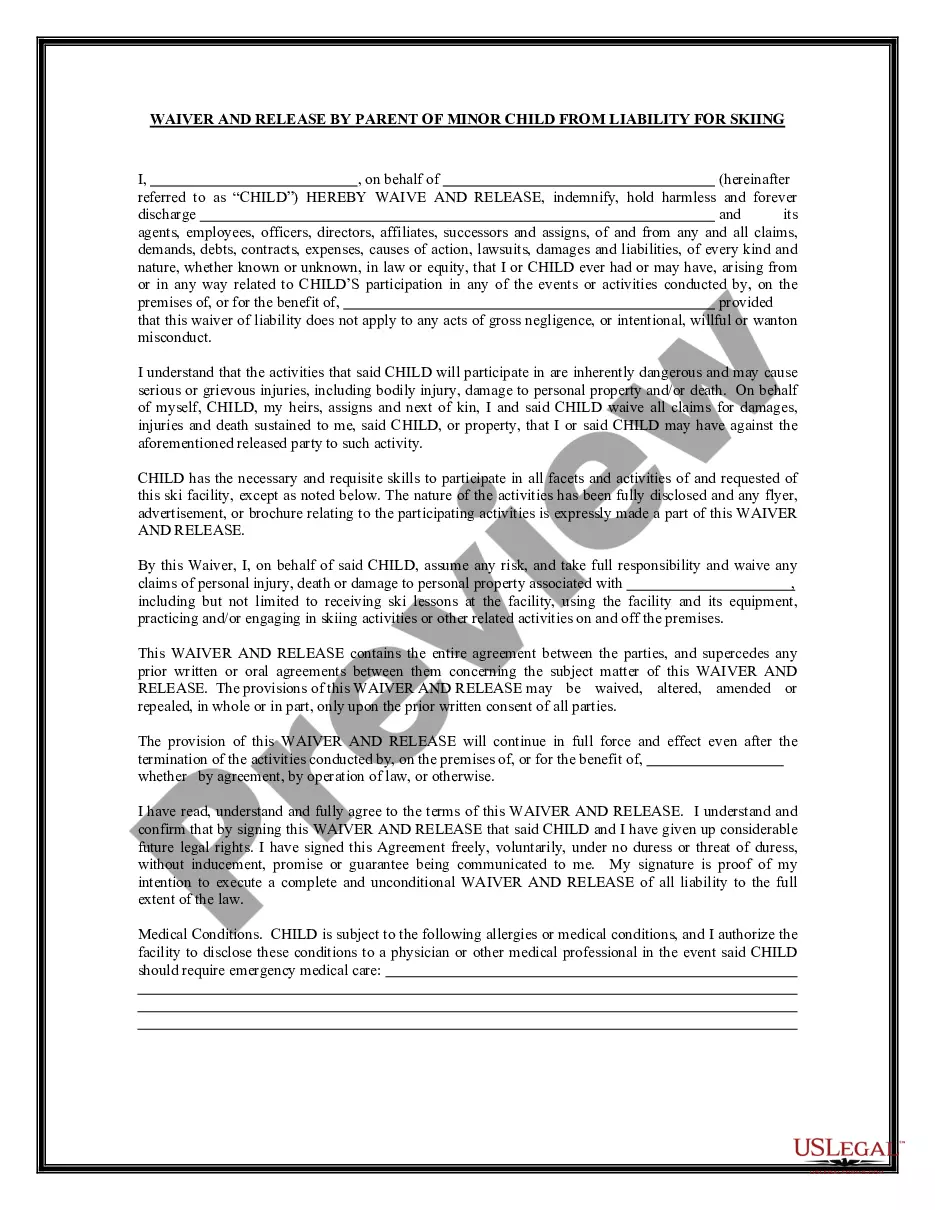
This form is a Release of Claims for Future Accidental Injuries or Death by Parent or Guardian of a Minor Child Regarding a Church Youth Group Ski Outing. It allows a parent or guardian to waive certain legal rights on behalf of their minor child before the child participates in the ski outing organized by the church. This release aims to protect the church and its volunteers from liability for any accidents or injuries that may occur during the outing. Unlike other waivers that might be used after an incident, this form is signed in advance to manage risks associated with the activity.
Key parts of this document
- Permission for the child to attend the ski outing.
- Authorization for adults in charge to secure medical treatment in case of an emergency.
- Information fields for health insurance company and policy number.
- Contact information for parent or guardian and an alternate contact.
- Medical considerations and medications for the child.
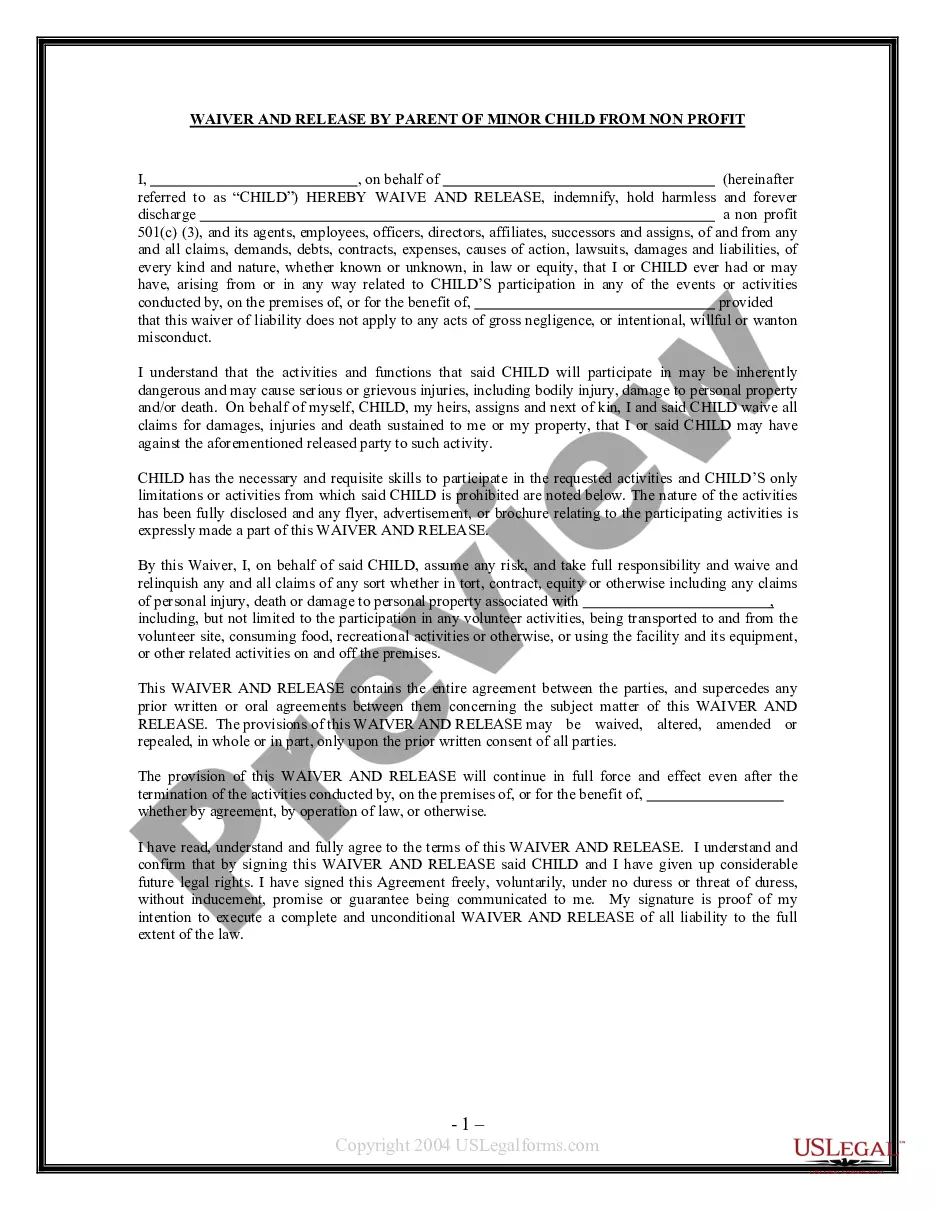
- Assumption of risk and release of claims against the church and organizers.
When to use this document
Use this form when a minor child is attending a church-sponsored ski outing, and a parent or guardian wishes to release the church from liability for potential injuries. It is especially relevant for youth group activities where there may be inherent risks, such as skiing. The form should be completed before the event to ensure all necessary permissions and releases are in place.
Who can use this document
This form is intended for:
- Parents or guardians of minor children participating in the ski outing.
- Church leaders and organizers responsible for planning the outing.
- Volunteers and staff overseeing the ski event who require legal protection from liability.
Completing this form step by step
- Provide the child's full name and confirm permission to attend the ski outing.
- Fill in the details of the health insurance company and policy number.
- List the contact information for the parent or guardian and an alternate contact person.
- Document any relevant medical considerations or medications for the child.
- Read and understand the assumption of risk statement before signing.
- Sign and date the form to finalize the release of claims.
Notarization requirements for this form
This form does not typically require notarization unless specified by local law. However, it is recommended to keep a signed and dated copy for your records and to ensure all parties involved have a copy for reference.
Get your form ready online
Our built-in tools help you complete, sign, share, and store your documents in one place.
Make edits, fill in missing information, and update formatting in US Legal Forms—just like you would in MS Word.
Download a copy, print it, send it by email, or mail it via USPS—whatever works best for your next step.
Sign and collect signatures with our SignNow integration. Send to multiple recipients, set reminders, and more. Go Premium to unlock E-Sign.
If this form requires notarization, complete it online through a secure video call—no need to meet a notary in person or wait for an appointment.
We protect your documents and personal data by following strict security and privacy standards.

Make edits, fill in missing information, and update formatting in US Legal Forms—just like you would in MS Word.

Download a copy, print it, send it by email, or mail it via USPS—whatever works best for your next step.

Sign and collect signatures with our SignNow integration. Send to multiple recipients, set reminders, and more. Go Premium to unlock E-Sign.

If this form requires notarization, complete it online through a secure video call—no need to meet a notary in person or wait for an appointment.

We protect your documents and personal data by following strict security and privacy standards.
Avoid these common issues
- Failing to complete all required fields, especially contact and insurance information.
- Not reading the assumption of risk statement thoroughly before signing.
- Signing the form without clear understanding of its implications.
Benefits of using this form online
- Immediate access to a legally sound template drafted by licensed attorneys.
- Conveniently fill out and download the form from anywhere, saving time.
- Editable format allows for easy customization to fit specific needs.
Legal use & context
- Releases are generally enforceable unless they violate public policy or are seen as unconscionable.
- The efficacy of this form may vary depending on the state laws regarding parental waivers for minors.
- Releases cannot absolve liability for gross negligence or intentional misconduct.
What to keep in mind
- The form releases a church from liability regarding accidental injuries during a youth ski outing.
- Complete the form accurately before the outing to ensure its legality.
- Consult local laws to understand how waivers affect minor childrenâs rights.
Looking for another form?

Form popularity
FAQ
Personal injury cases are legal disputes that arise when one person suffers harm from an accident or injury, and someone else might be legally responsible for that harm.If the case involves medical malpractice, your personal injury attorney will be working with insurance companies and hospital attorneys.
An injury claim is another phrase for insurance claim, where the injured victim files a claim for compensation with an insurance company, either his insurance company the insurer of the at-fault party.The insurance adjuster may also call you and try to get you to make a statement.
How Much Compensation Is Typical in Personal Injury Cases? More than half of our readers received payouts ranging from just $3,000 to $25,000. But another 26% of readers received over $25,000, making the overall average $52,900.
The two basic categories of damages awarded in personal injury claims are compensatory and punitive.
There are two types of compensatory damagesgeneral and actual. Actual damages are intended to provide funds to only replace what was lost. General compensatory damages awarded are more complex, as these compensatory damages do not represent a monetary expenditure.
Personal injury implies any type of injury sustained in accidents. These types of injuries may arise from car accidents, slip and fall accidents, defective products, or wrongful death claims. On the other hand, bodily injury is more limited and may imply injuries sustained by another person, usually in a car accident.
A bodily injury claim is a request for compensation for expenses related to physical injuries sustained in a car accident. Bodily injury claims usually cover medical bills and lost wages, and these claims can be paid by either the injured party's insurance company or the at-fault driver's insurance.