Agreements, Contracts, Assignments, Pooling Orders, Etc.
What is this form?
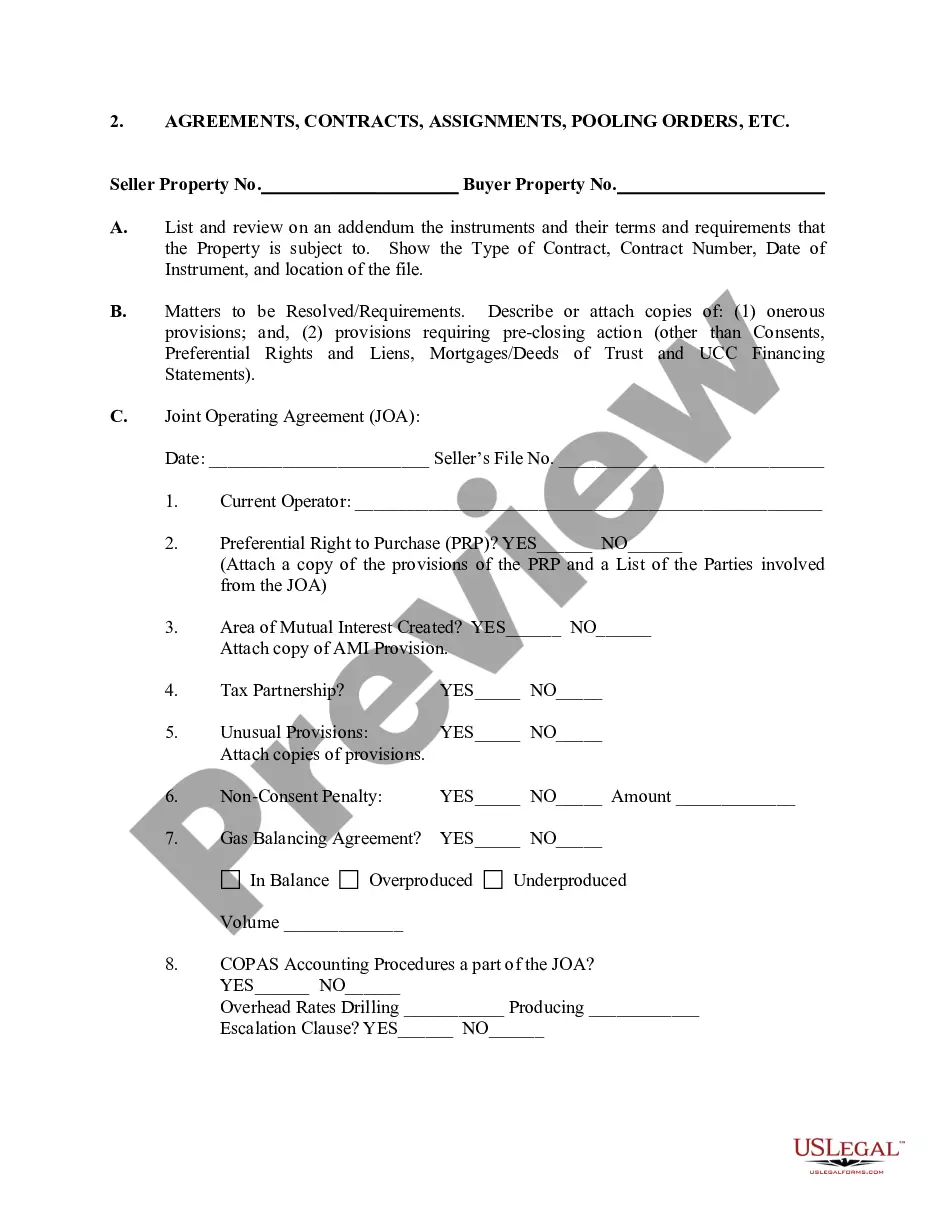
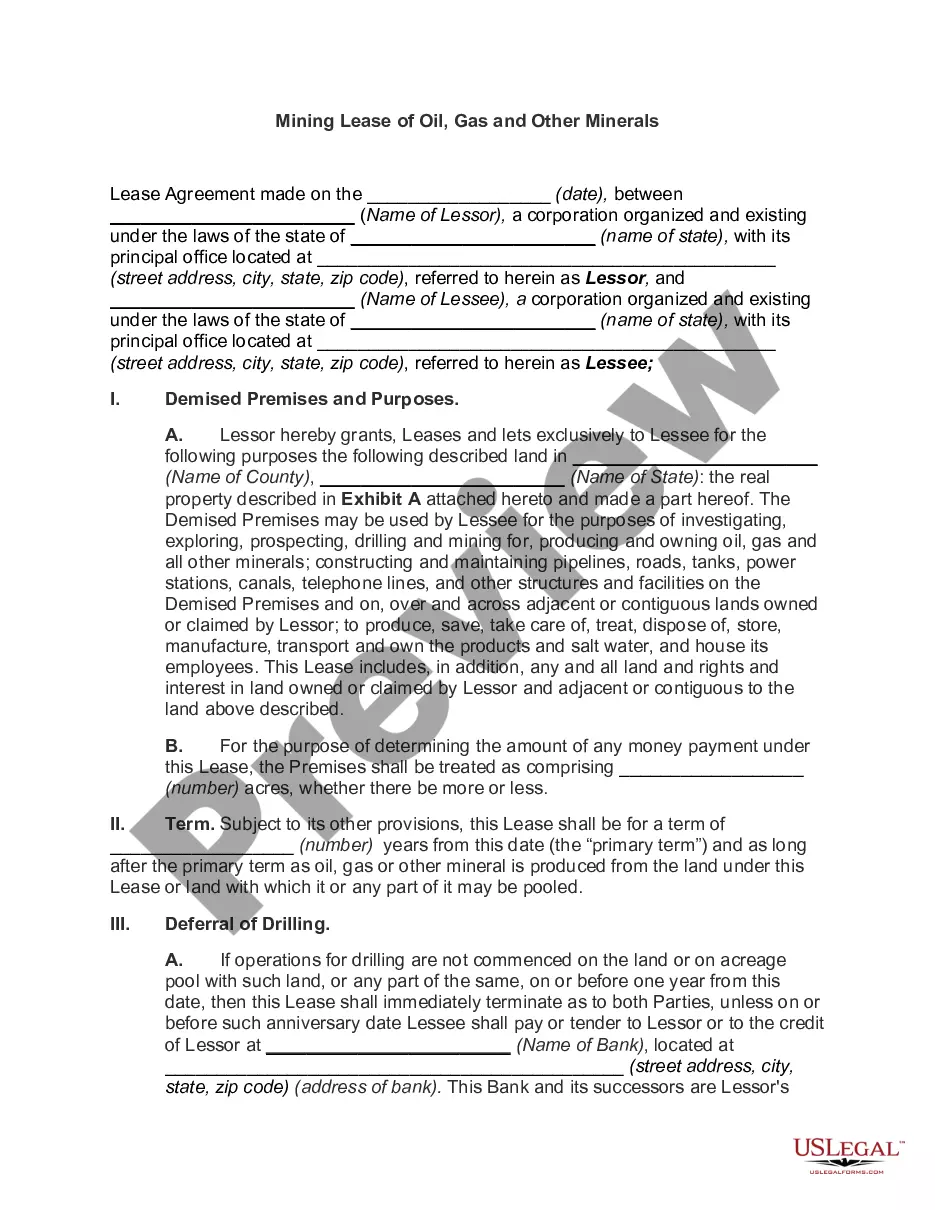
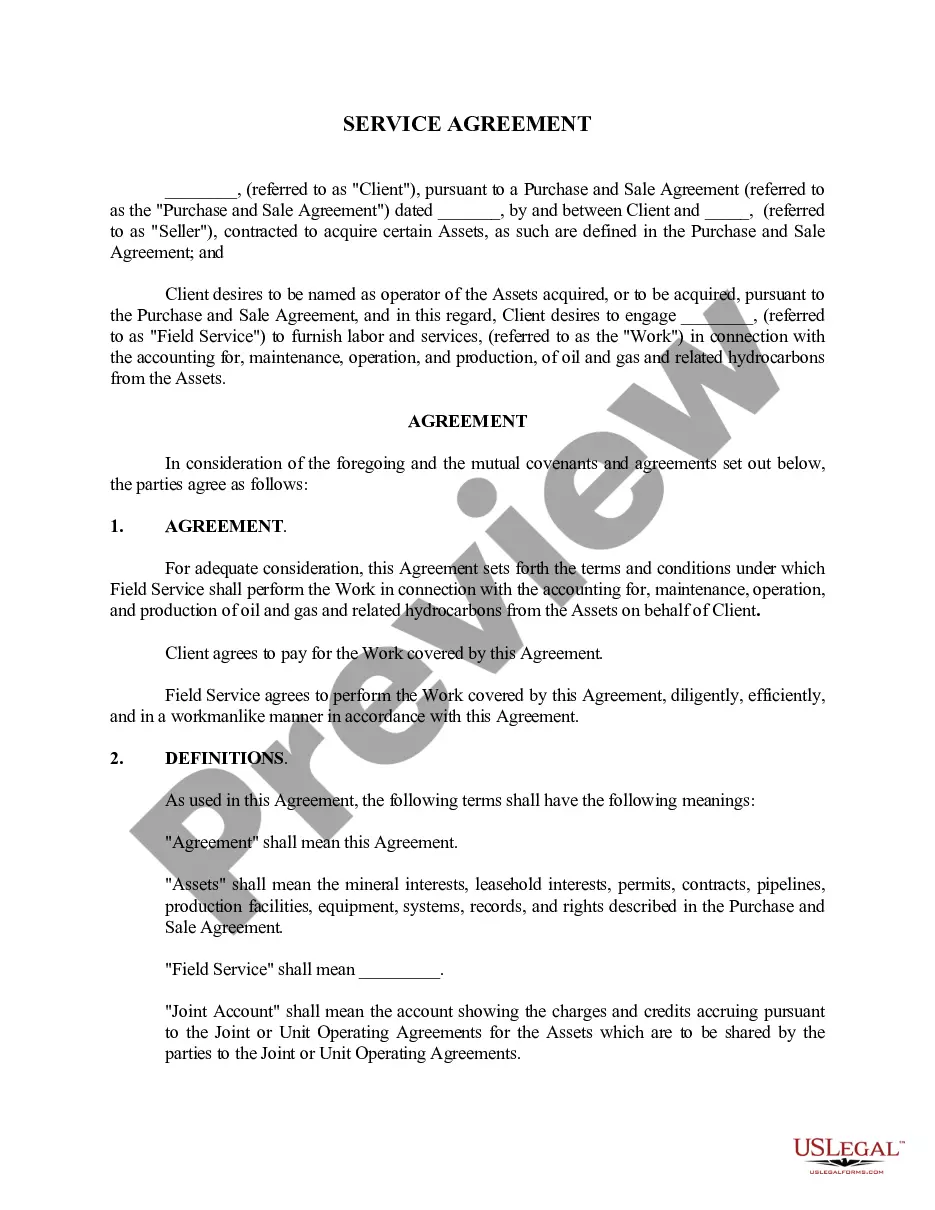
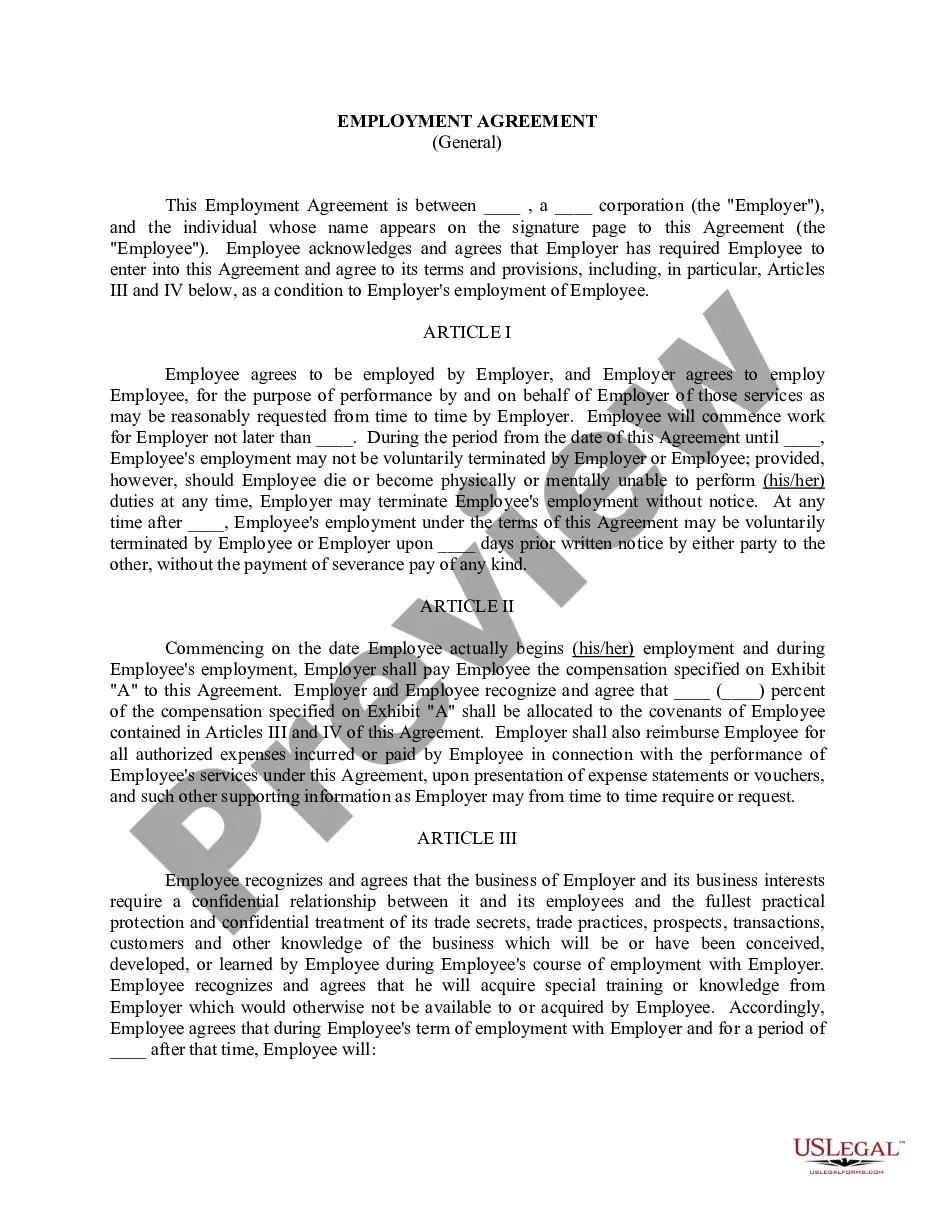
This form serves as a comprehensive tool for listing and reviewing various agreements, contracts, and assignments related to property transactions. It is designed to help parties identify specific contractual obligations and requirements that the property may be subject to. Unlike simpler forms, this detailed contract form ensures you have all necessary provisions categorized effectively, enhancing clarity and legal compliance during transactions.
What’s included in this form
- Seller and Buyer Property Numbers: Unique identifiers for the properties involved.
- Detailed listing of contracts and their terms: Includes type of contract, contract number, and relevant dates.
- Requirements for matters to be resolved: Identification of onerous provisions and necessary pre-closing actions.
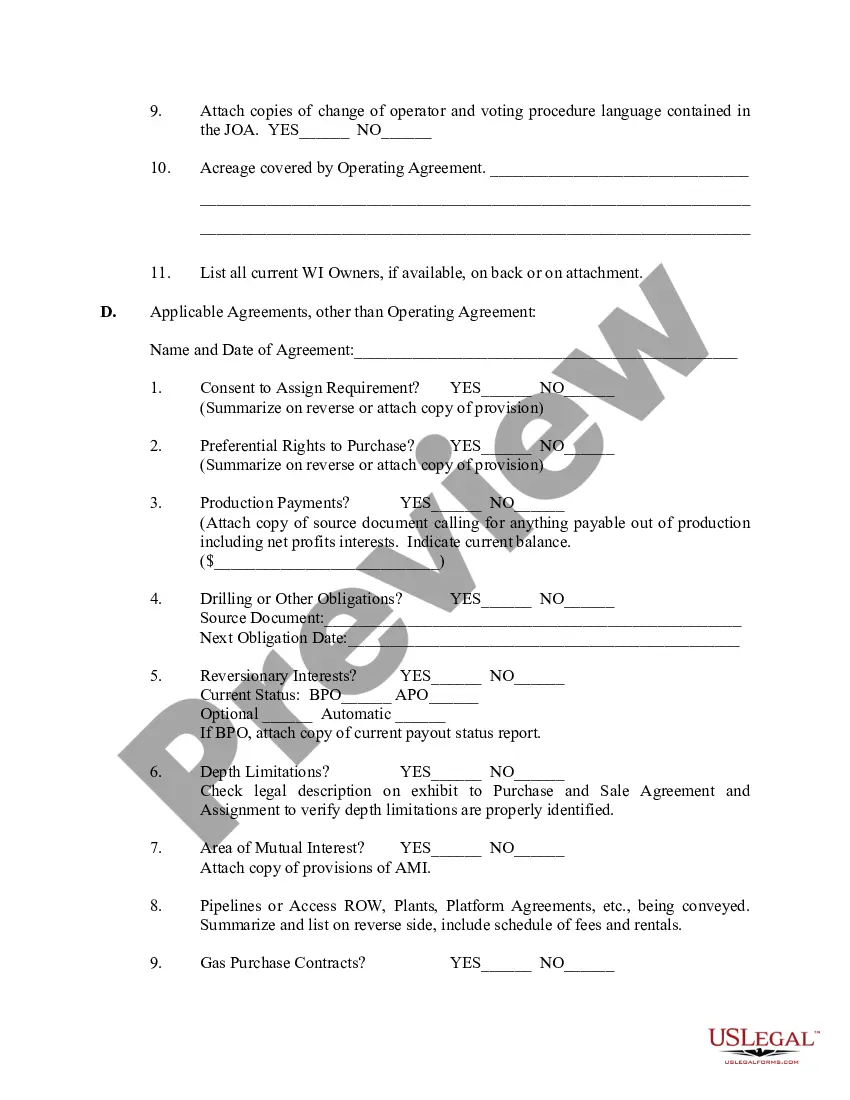
- Joint Operating Agreement details: Specifics surrounding operators and preferential rights.
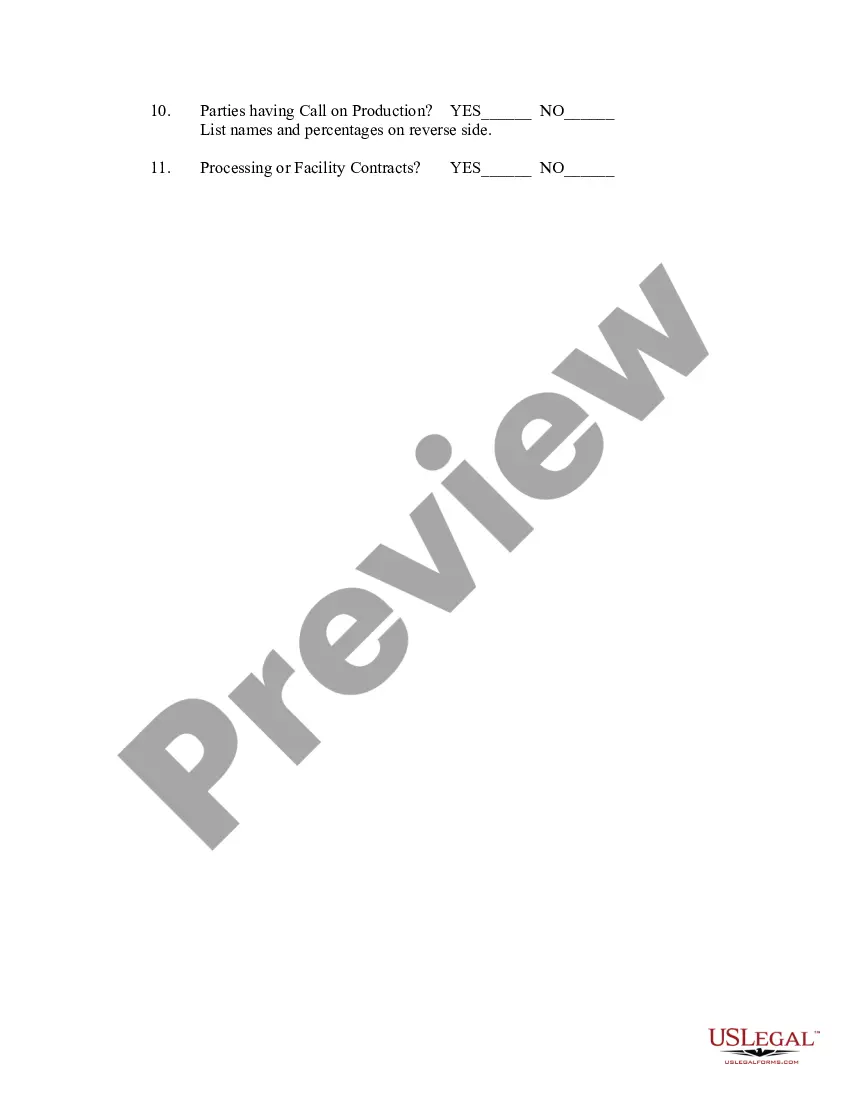
- Additional agreements: Includes consent to assign requirements and drilling obligations.
When this form is needed
This form is essential when buying or selling property that is affected by multiple agreements or contracts. It should be used in situations where parties need to outline obligations under existing contracts, clarify any special provisions, or ensure compliance with pre-closing requirements. It also assists in resolving issues regarding shared interests and operator responsibilities before finalizing property transactions.
Intended users of this form
- Real estate professionals involved in property sales and purchases.
- Buyers and sellers of property who need to clarify contractual obligations.
- Legal representatives managing property transactions for clients.
- Parties to joint operating agreements or those participating in property partnerships.
Steps to complete this form
- Identify the properties involved by entering the Seller and Buyer Property Numbers.
- List all relevant contracts in detail, including type and contractual obligations.
- Document any requirements for resolution regarding onerous provisions or pre-closing actions.
- Complete the Joint Operating Agreement section with necessary information about operators and rights.
- Attach all supporting documents as indicated, ensuring detailed documentation for accuracy.
Notarization requirements for this form
Notarization is not commonly needed for this form. However, certain documents or local rules may make it necessary. Our notarization service, powered by Notarize, allows you to finalize it securely online anytime, day or night.
Get your form ready online
Our built-in tools help you complete, sign, share, and store your documents in one place.
Make edits, fill in missing information, and update formatting in US Legal Forms—just like you would in MS Word.
Download a copy, print it, send it by email, or mail it via USPS—whatever works best for your next step.
Sign and collect signatures with our SignNow integration. Send to multiple recipients, set reminders, and more. Go Premium to unlock E-Sign.
If this form requires notarization, complete it online through a secure video call—no need to meet a notary in person or wait for an appointment.
We protect your documents and personal data by following strict security and privacy standards.

Make edits, fill in missing information, and update formatting in US Legal Forms—just like you would in MS Word.

Download a copy, print it, send it by email, or mail it via USPS—whatever works best for your next step.

Sign and collect signatures with our SignNow integration. Send to multiple recipients, set reminders, and more. Go Premium to unlock E-Sign.

If this form requires notarization, complete it online through a secure video call—no need to meet a notary in person or wait for an appointment.

We protect your documents and personal data by following strict security and privacy standards.
Mistakes to watch out for
- Neglecting to attach necessary addenda for terms and requirements.
- Failing to complete sections related to joint operating agreements.
- Overlooking the need to summarize complex provisions or agreements.
- Not verifying that all parties have signed the relevant documents before finalization.
Benefits of completing this form online
- Immediate access to downloadable templates ensures you have the right form at your fingertips.
- Edit and customize the form to suit specific transaction needs without the hassle of starting from scratch.
- Easily store and manage completed forms digitally for future reference and compliance.
- Access legal expertise through forms drafted by licensed attorneys to ensure adherence to legal standards.
Quick recap
- This form helps organize various contracts and obligations for property transactions.
- It is suitable for a wide range of users, including property buyers, sellers, and agents.
- Thorough completion of the form ensures all contractual elements are reviewed and understood.
Looking for another form?

Form popularity
FAQ
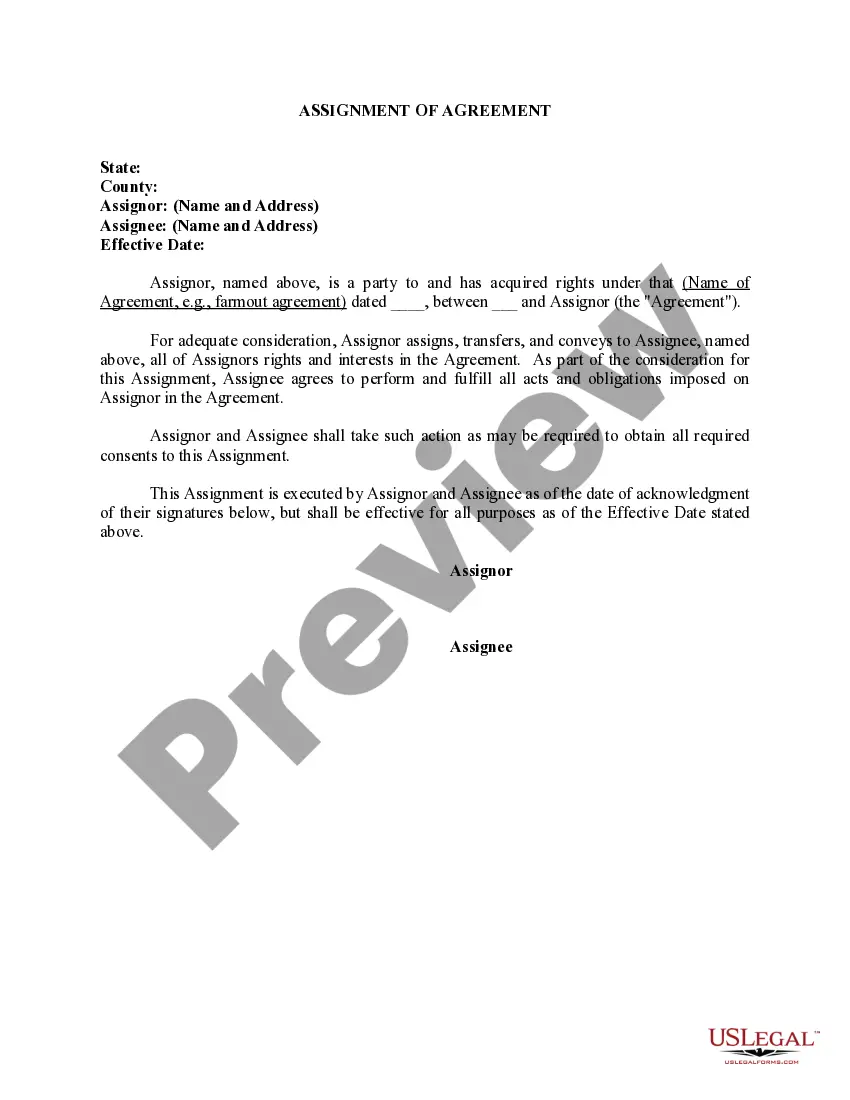
An agreement in which one party transfers its contractual rights and obligations to another party.For a form of an assignment and assumption agreement used with an asset purchase, see Standard Document, Assignment and Assumption Agreement.
In your Assignment Agreement, you should include information like: the name of the person handing over contractual duties (called "the assignor"); the recipient of the contractual rights and obligations (called "the assignee"); the other party to the original contract (called "the obligor"); the name of the contract
Generally speaking, contracts can be freely assigned to third parties.This contract cannot be assigned to anyone without the written consent of both parties.
A contracting process is a series of tasks and activities, defined differently by each individual company.A contracting approach is determined based on the situation and contract documents are prepared. This may include specifications, terms and conditions, or requirements.
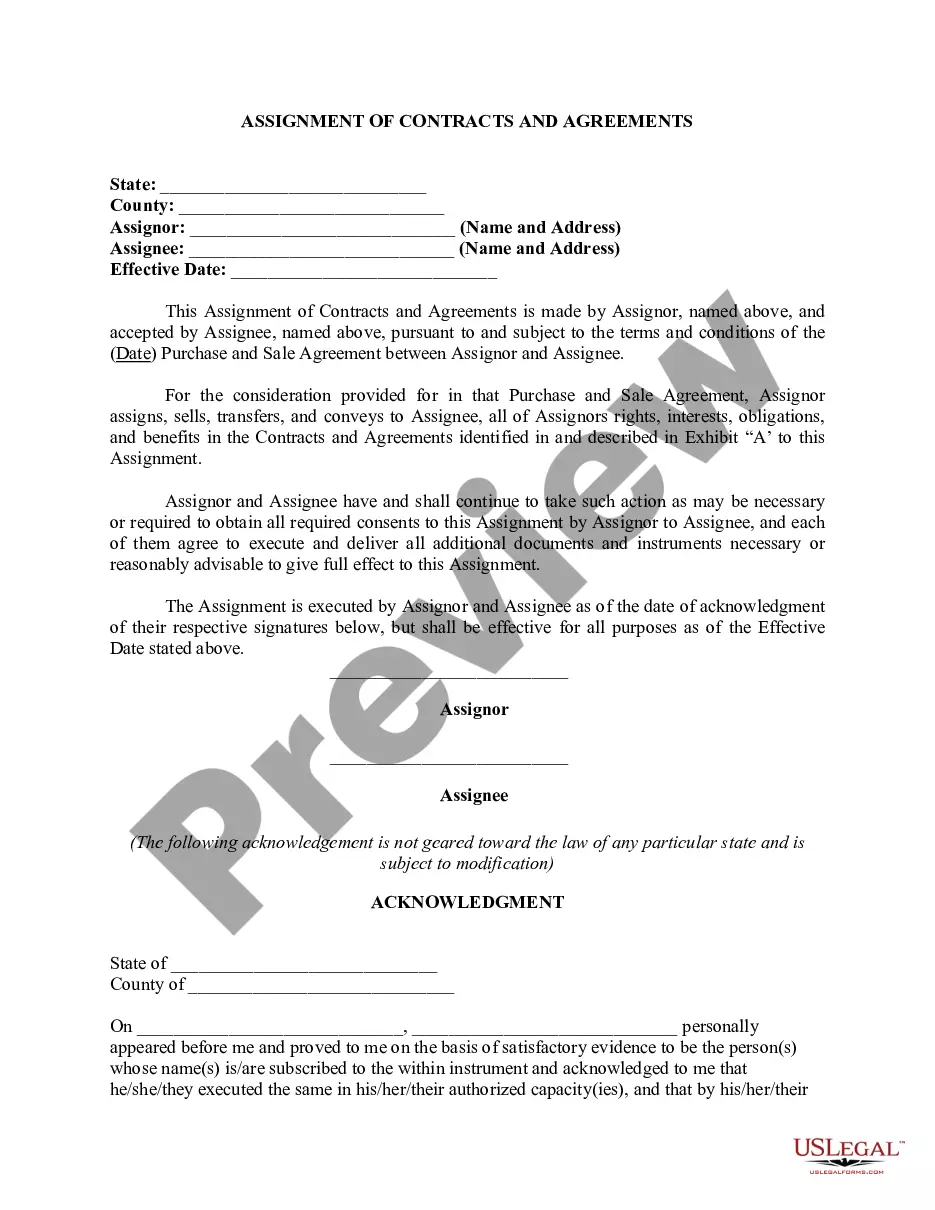
An assignment of contract occurs when one party to an existing contract (the "assignor") hands off the contract's obligations and benefits to another party (the "assignee"). Ideally, the assignor wants the assignee to step into his shoes and assume all of his contractual obligations and rights.
An assignment of purchase agreement and sale is when a buyer of a new home sells a third party the right to assume the purchase contract. In this situation, the buyer is the assignor, and the third party is the assignee. Under the agreement, the assignee pays a higher price.
An assignment of contract occurs when one party to an existing contract (the "assignor") hands off the contract's obligations and benefits to another party (the "assignee"). Ideally, the assignor wants the assignee to step into his shoes and assume all of his contractual obligations and rights.