Stock Sale and Purchase Agreement - Long Form
Overview of this form
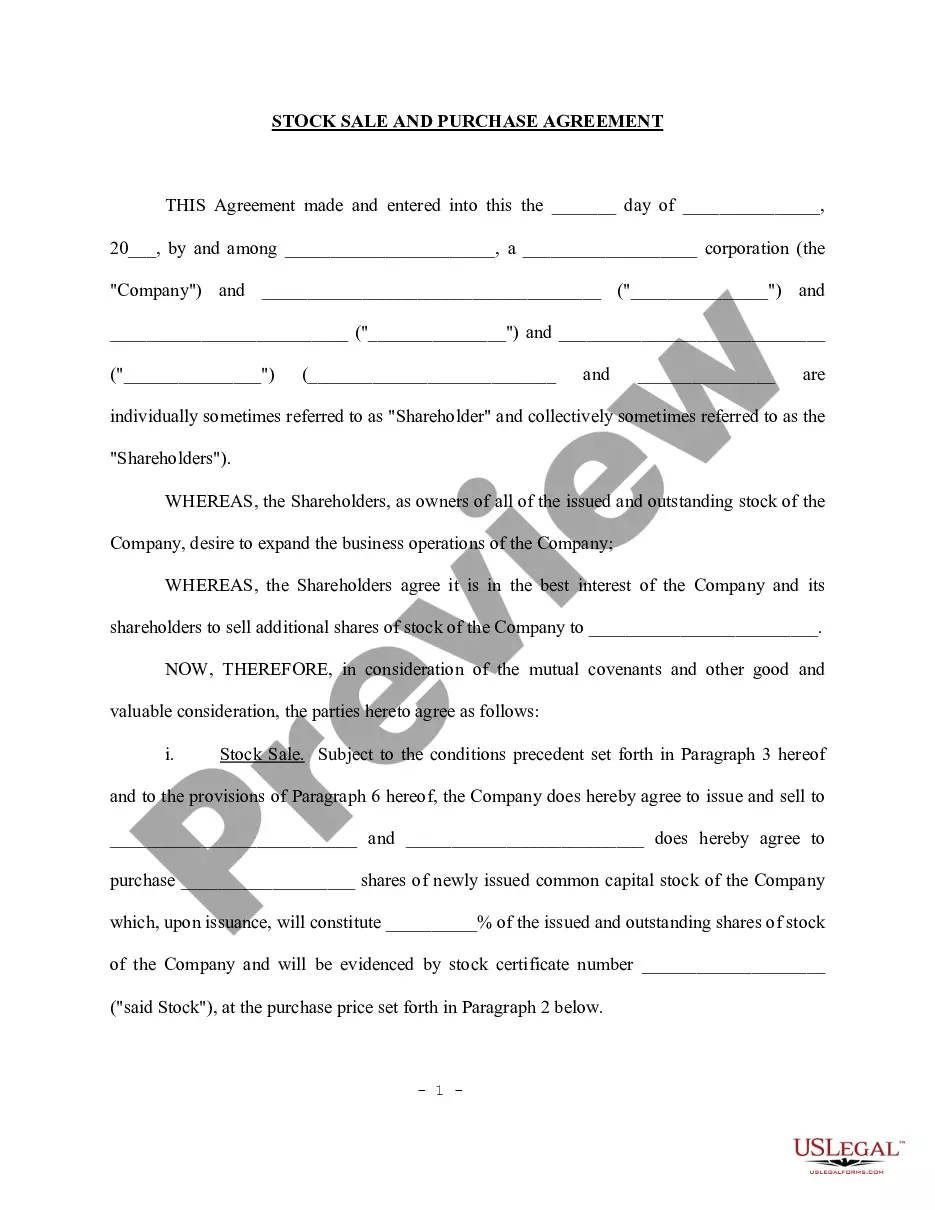
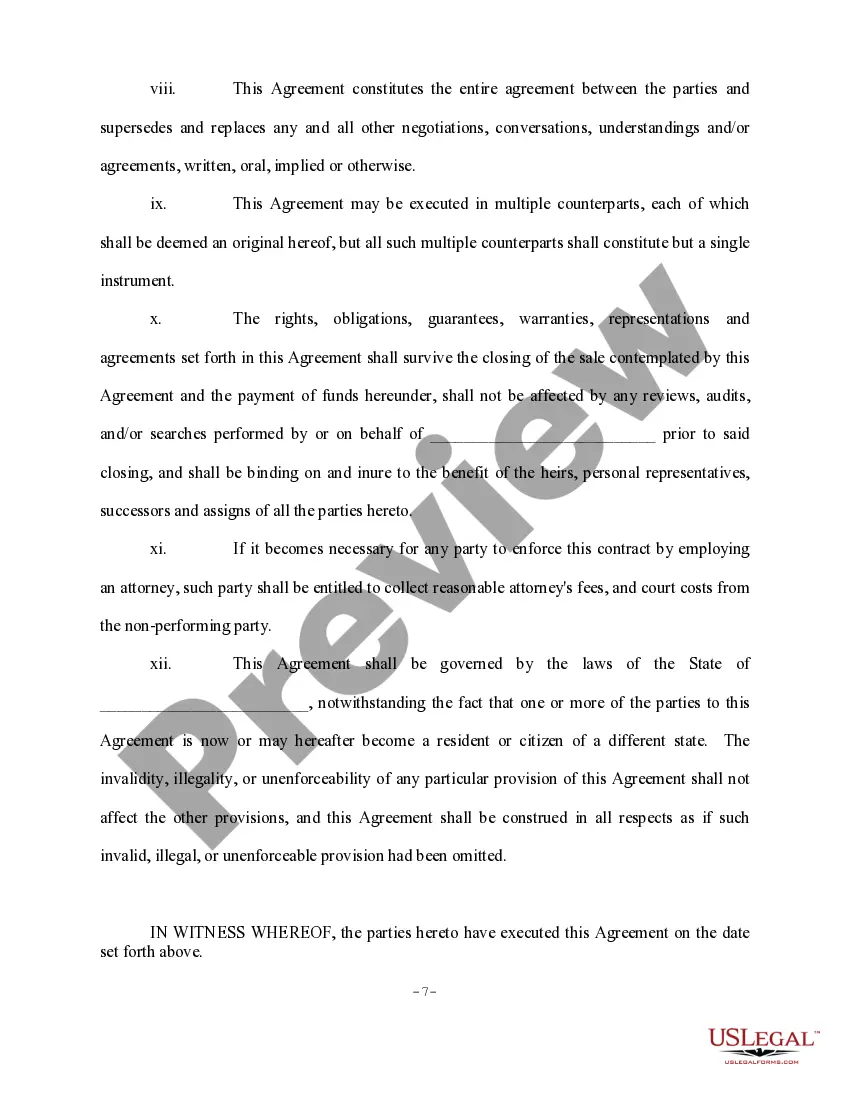
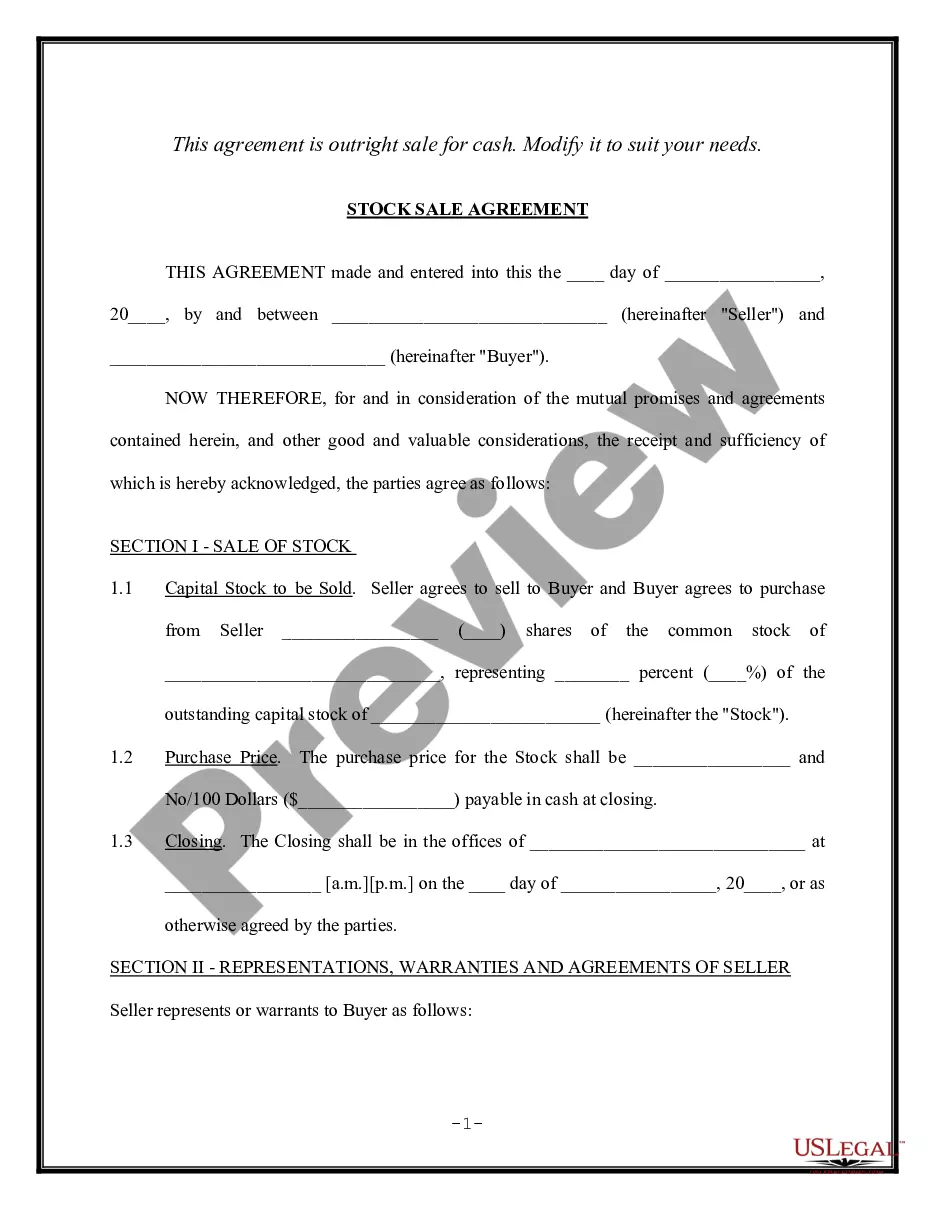
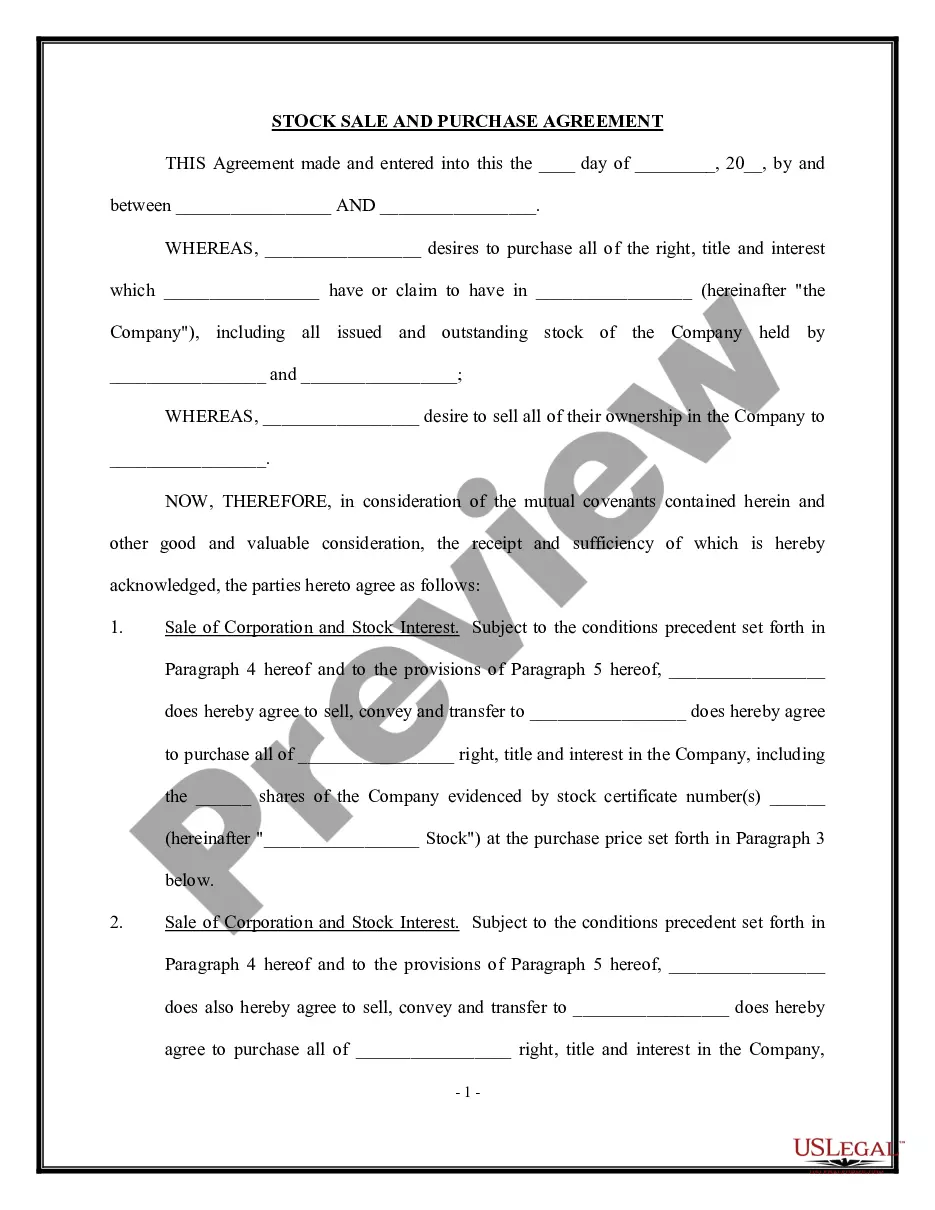
This Stock Sale and Purchase Agreement is a legal document that formalizes the sale of shares in a corporation. It outlines the agreed terms between shareholders regarding the sale of additional stock, ensuring all parties understand their rights and obligations during the transaction. This agreement is essential for maintaining transparency and legality in stock transfers, distinguishing it from simpler forms like stock transfer letters.
Main sections of this form
- Identification of parties involved (company and shareholders).
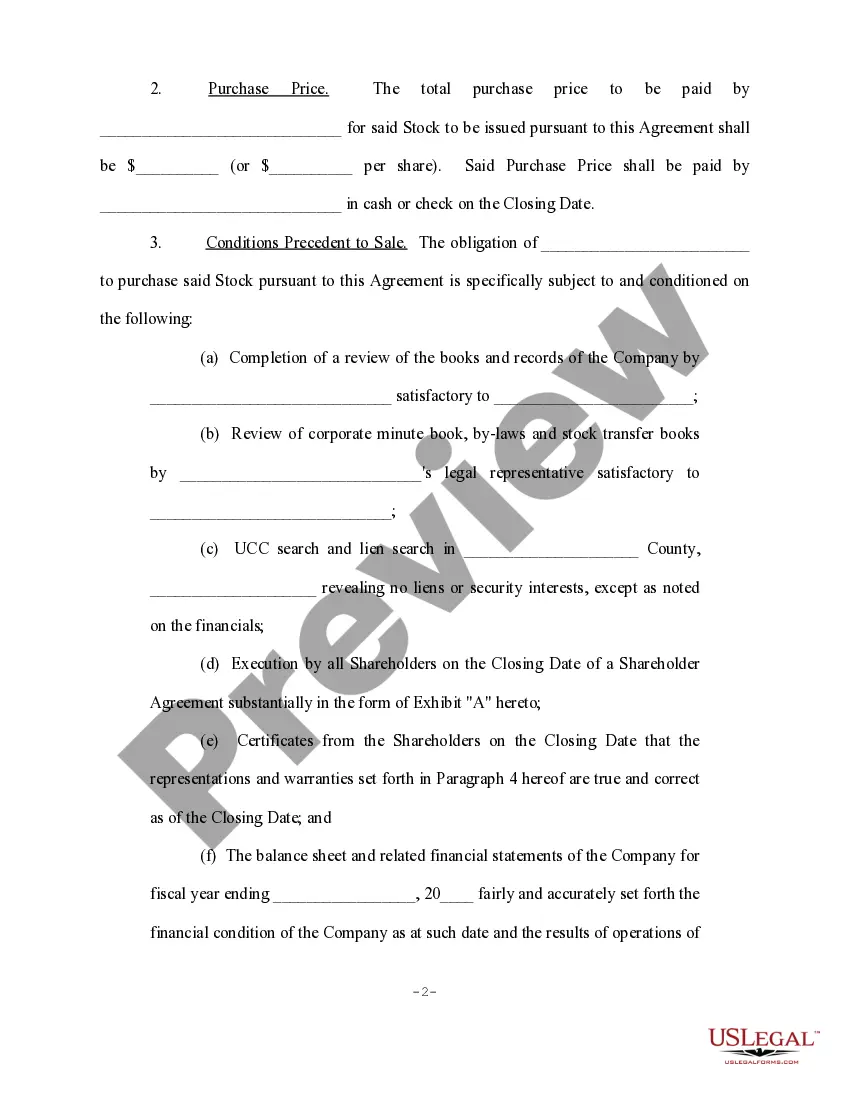
- Description of the stock to be sold and its purchase price.
- Conditions precedent that must be met prior to the sale.
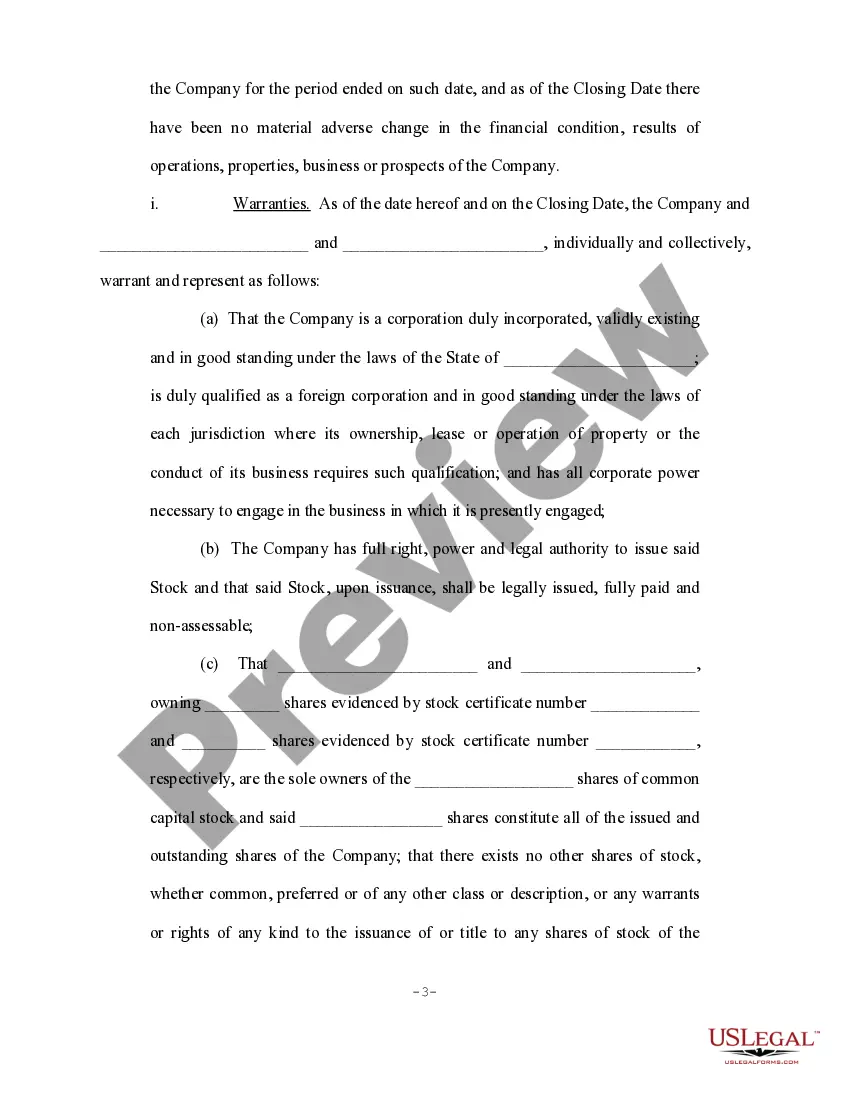
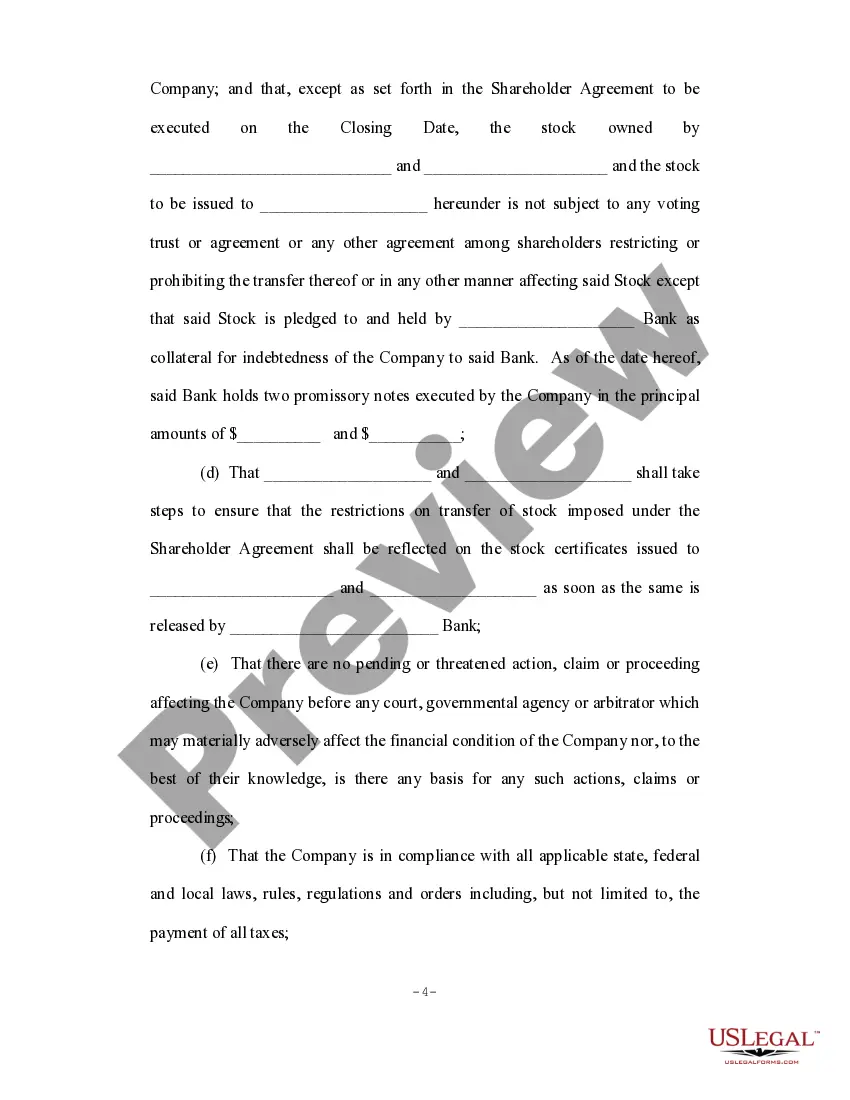
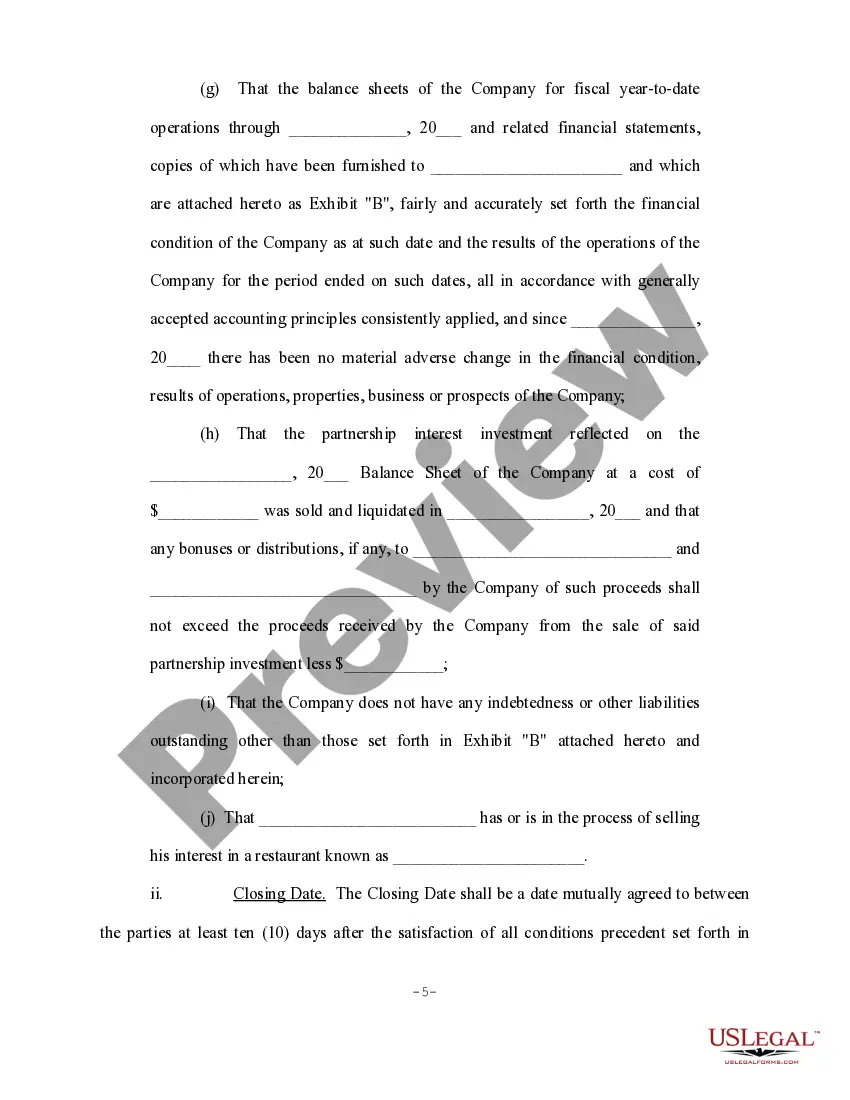
- Warranties and representations made by the company and shareholders.
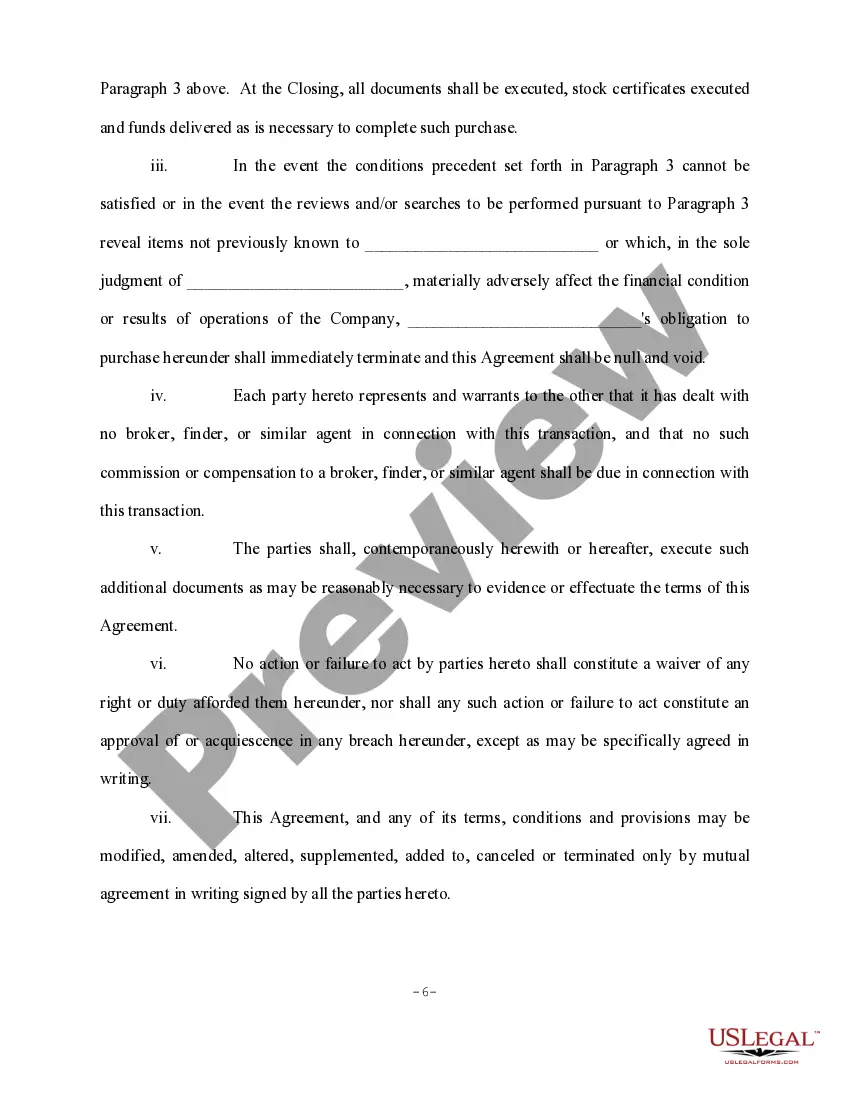
- Provisions for the closing date of the sale and execution of documents.
- Legal clauses regarding enforcement and amendments to the agreement.
When to use this form
This form should be used when shareholders of a corporation decide to sell additional shares of stock. It is appropriate in scenarios such as bringing in new investors, raising capital for business expansion, or when current shareholders want to adjust their ownership percentages. It is also advisable for any corporate restructuring that involves stock issuance.
Intended users of this form
- Shareholders looking to sell their shares in a corporation.
- Corporations planning to issue additional shares.
- Investors seeking to purchase shares from existing shareholders.
- Legal representatives handling corporate transactions.
Instructions for completing this form
- Identify the parties: list the company and all shareholders involved.
- Specify the stock being sold, including the number of shares and purchase price.
- Outline any conditions that need to be met before the sale can proceed.
- Include all warranties and representations provided by the sellers regarding the stock.
- Sign and date the document to finalize the agreement.
Does this form need to be notarized?
This form does not typically require notarization to be legally valid. However, some jurisdictions or document types may still require it. US Legal Forms provides secure online notarization powered by Notarize, available 24/7 for added convenience.
Get your form ready online
Our built-in tools help you complete, sign, share, and store your documents in one place.
Make edits, fill in missing information, and update formatting in US Legal Forms—just like you would in MS Word.
Download a copy, print it, send it by email, or mail it via USPS—whatever works best for your next step.
Sign and collect signatures with our SignNow integration. Send to multiple recipients, set reminders, and more. Go Premium to unlock E-Sign.
If this form requires notarization, complete it online through a secure video call—no need to meet a notary in person or wait for an appointment.
We protect your documents and personal data by following strict security and privacy standards.

Make edits, fill in missing information, and update formatting in US Legal Forms—just like you would in MS Word.

Download a copy, print it, send it by email, or mail it via USPS—whatever works best for your next step.

Sign and collect signatures with our SignNow integration. Send to multiple recipients, set reminders, and more. Go Premium to unlock E-Sign.

If this form requires notarization, complete it online through a secure video call—no need to meet a notary in person or wait for an appointment.

We protect your documents and personal data by following strict security and privacy standards.
Avoid these common issues
- Failing to meet the conditions precedent before finalizing the sale.
- Not including all required parties in the agreement.
- Incomplete or inaccurate description of the stock being sold.
- Neglecting to review legal compliance for stock sales in the relevant state.
Benefits of using this form online
- Convenient access: download and complete the form at any time.
- Editability: customize the form to fit specific transaction details.
- Reliability: ensures that all necessary legal components are included.
Quick recap
- The Stock Sale and Purchase Agreement is crucial for formalizing stock transactions.
- It ensures all parties are protected and understand their rights and duties.
- Meeting conditions precedent is vital for the validity of the agreement.
Looking for another form?
Form popularity
FAQ
An asset purchase agreement (APA) is an agreement between a buyer and a seller that finalizes terms and conditions related to the purchase and sale of a company's assets.An APA differs from a stock purchase agreement (SPA) where company shares, title to assets, and title to liabilities are also sold.
An asset purchase involves the purchase of the selling company's assets -- including facilities, vehicles, equipment, and stock or inventory. A stock purchase involves the purchase of the selling company's stock only.
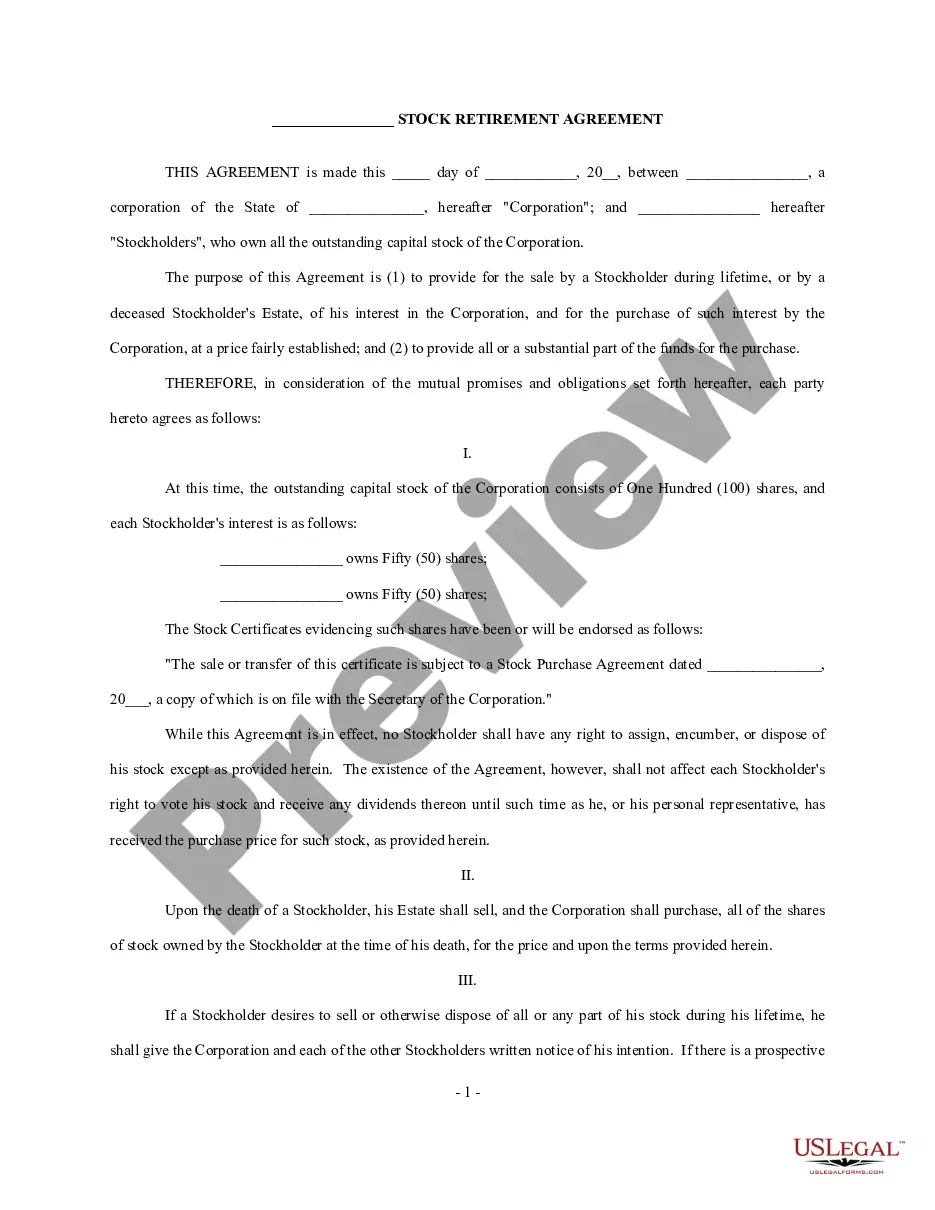
A stock agreement -- also known as a buy-sell agreement, "buyout agreement" or shareholders' agreement -- controls who owns shares of stock in your corporation and when a shareholder can or must be bought out by the corporation or the other shareholders.
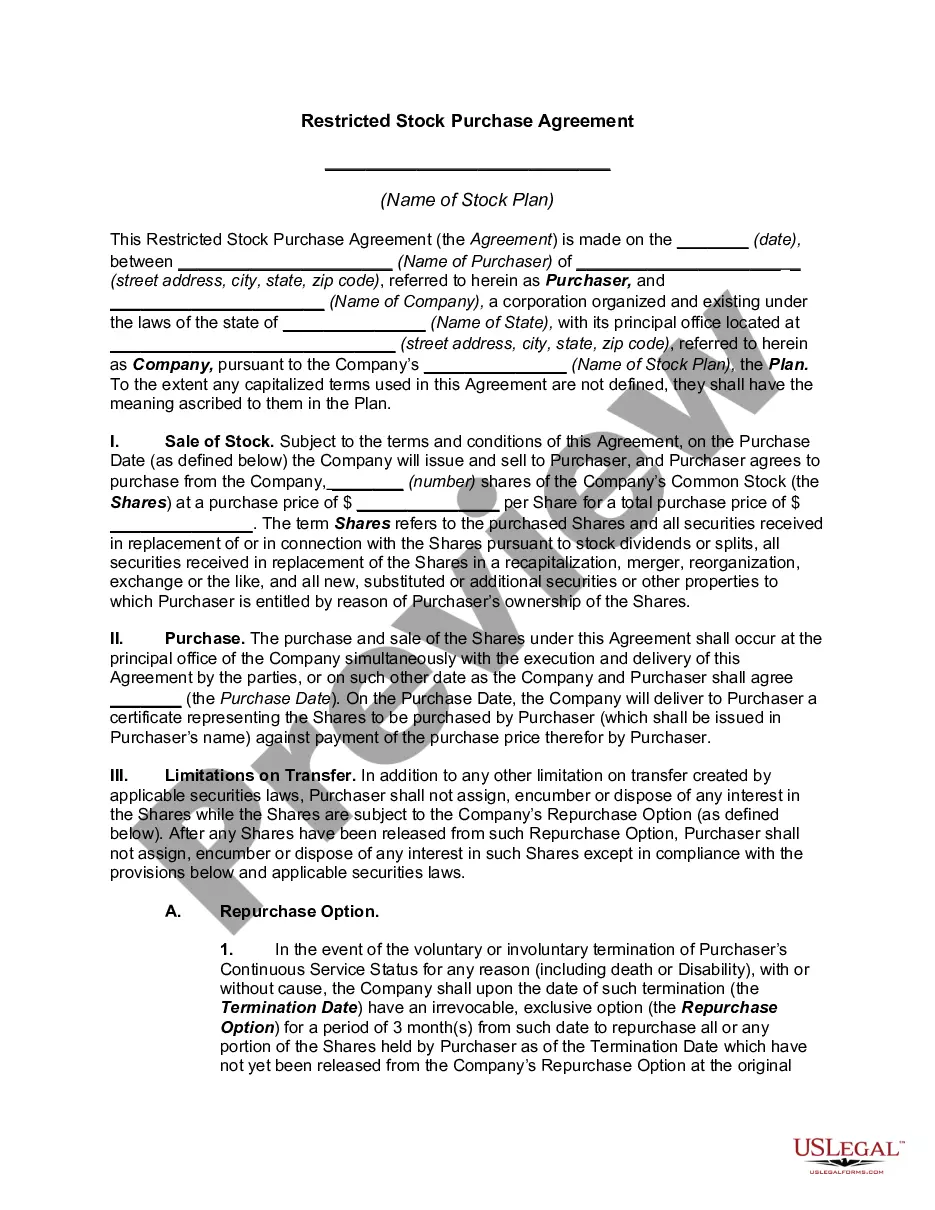
A restricted stock purchase agreement is a type of written agreement that places restrictions on the stockholder's rights with respect to the shares being issued.of the shares and grant a series of rights in favor of the Company to buyback shares, exercise a right of first refusal, and others.
In an asset purchase, the buyer agrees to purchase specific assets and liabilities.In a stock purchase, the buyer purchases the entire company, including all assets and liabilities.
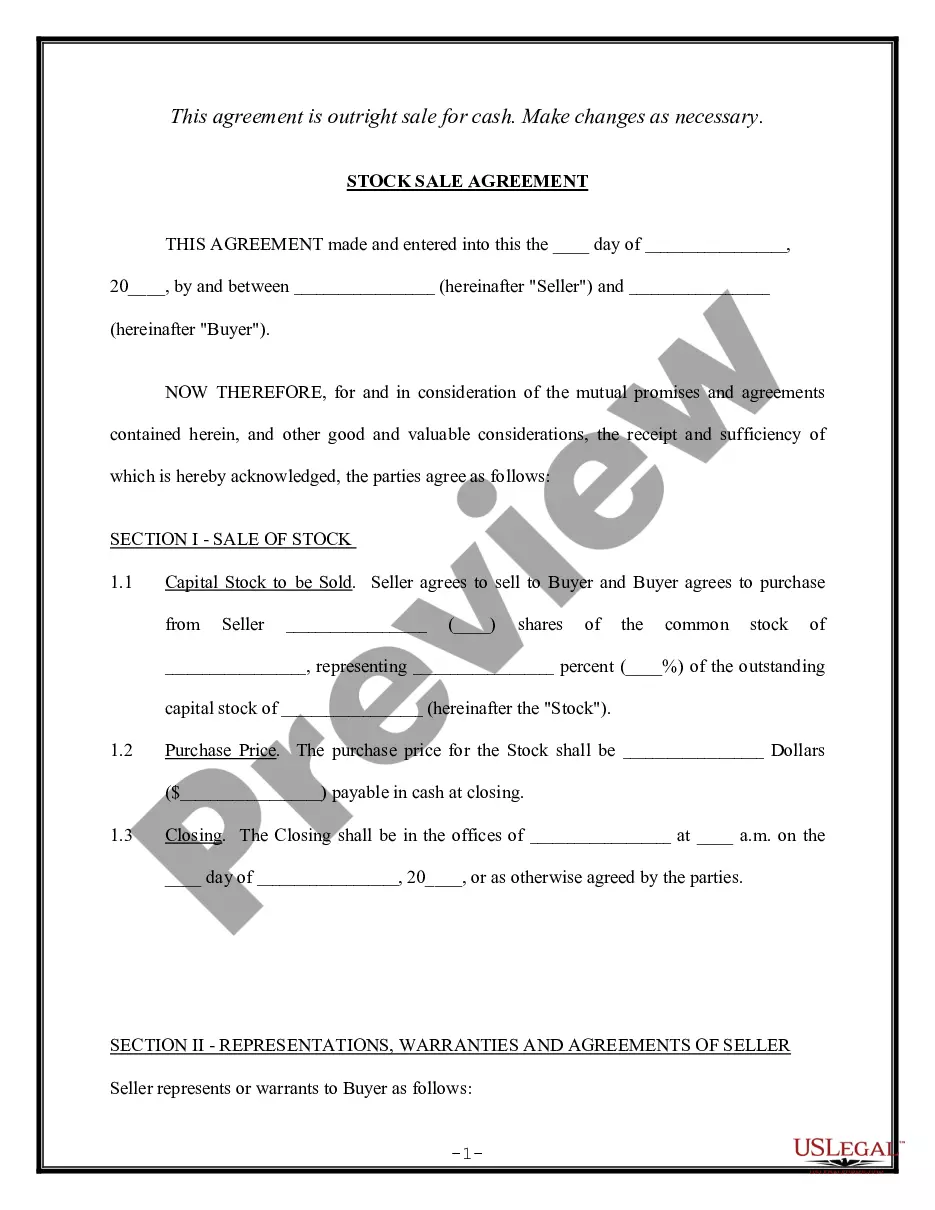
A stock purchase agreement is an agreement wherein the owner of shares of stock (the Seller) agrees to sell the stock to a buyer (the Purchaser). Generally, this type of form is used for the stock of a small corporation. Both federal and state securities laws govern the sale of stock.
A stock purchase agreement is a contract to transfer ownership of stocks from the seller to the purchaser. The key provisions of a stock purchase agreement have to do with the transaction itself, such as the date of the transaction, the number of stock certificates, and the price per share.