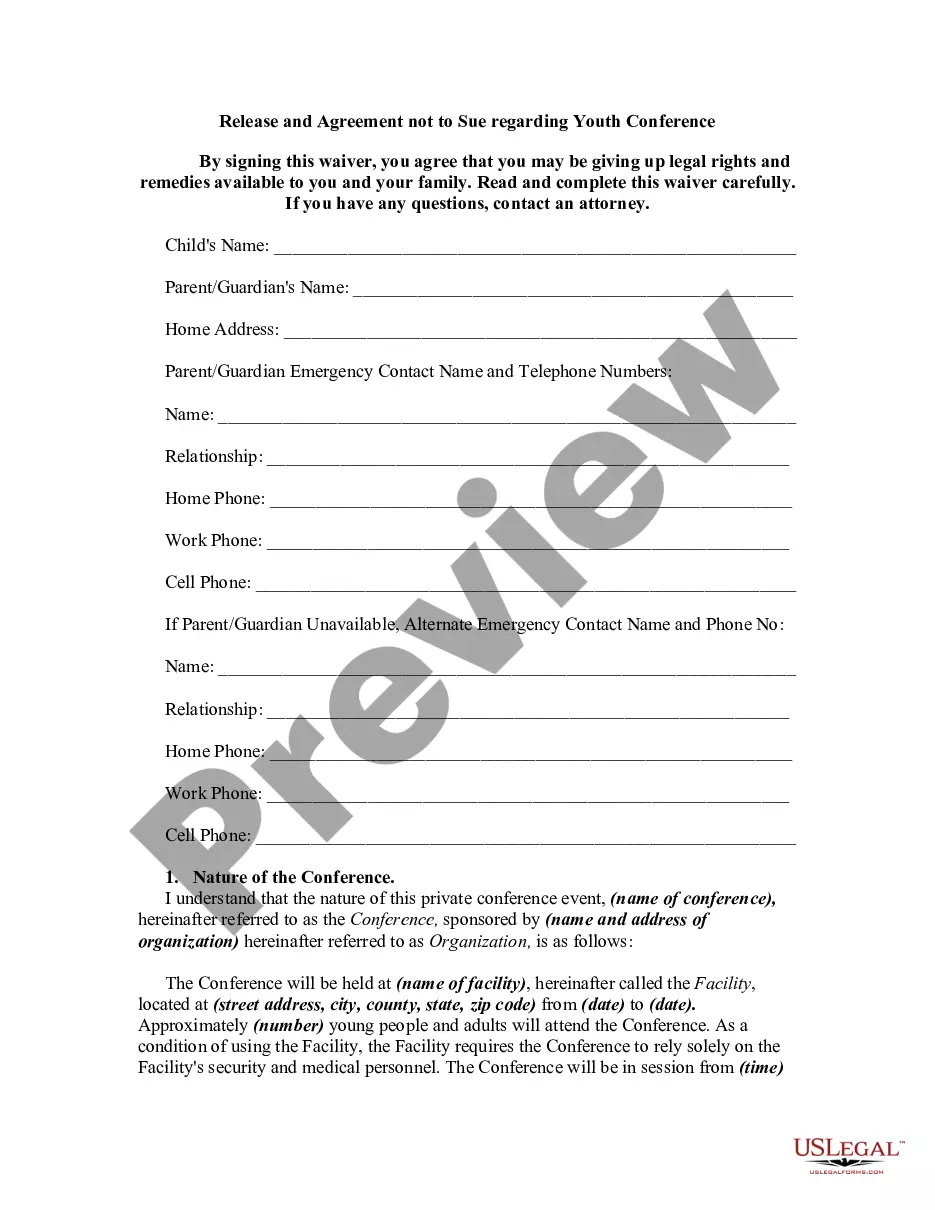
Release and Agreement not to Sue regarding Youth Conference
Understanding this form
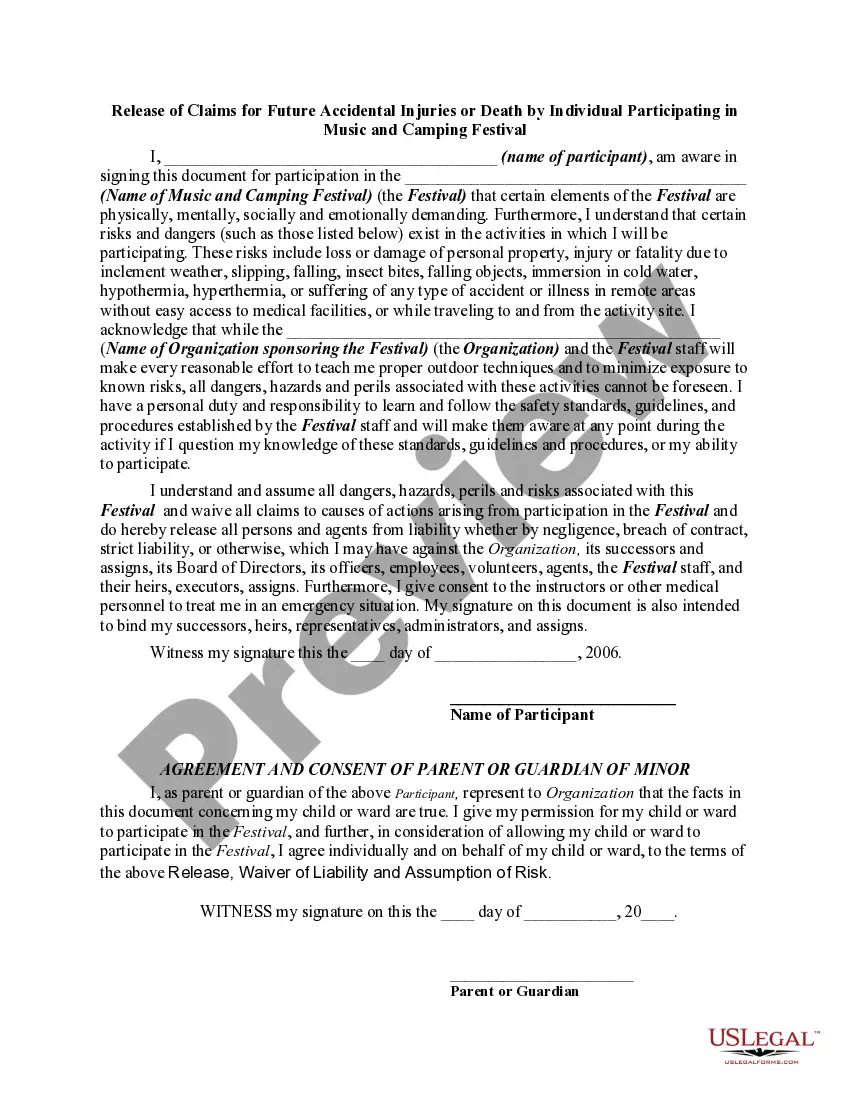
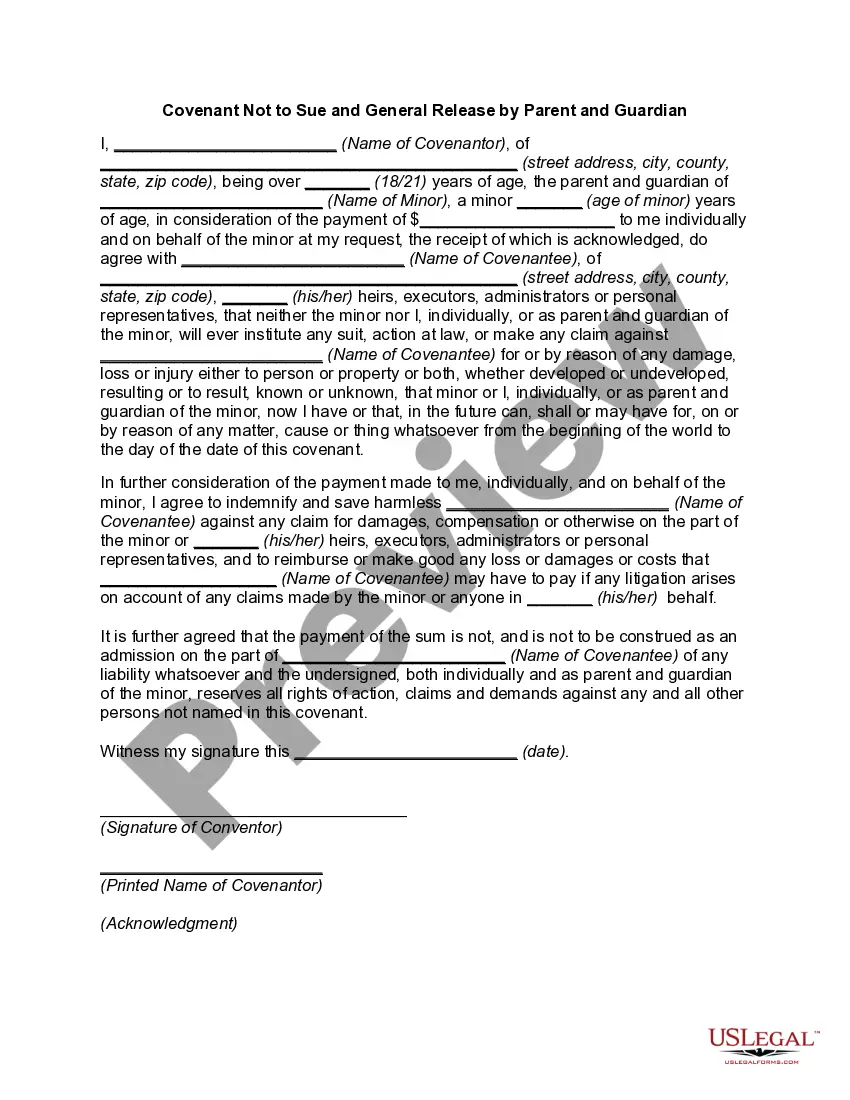
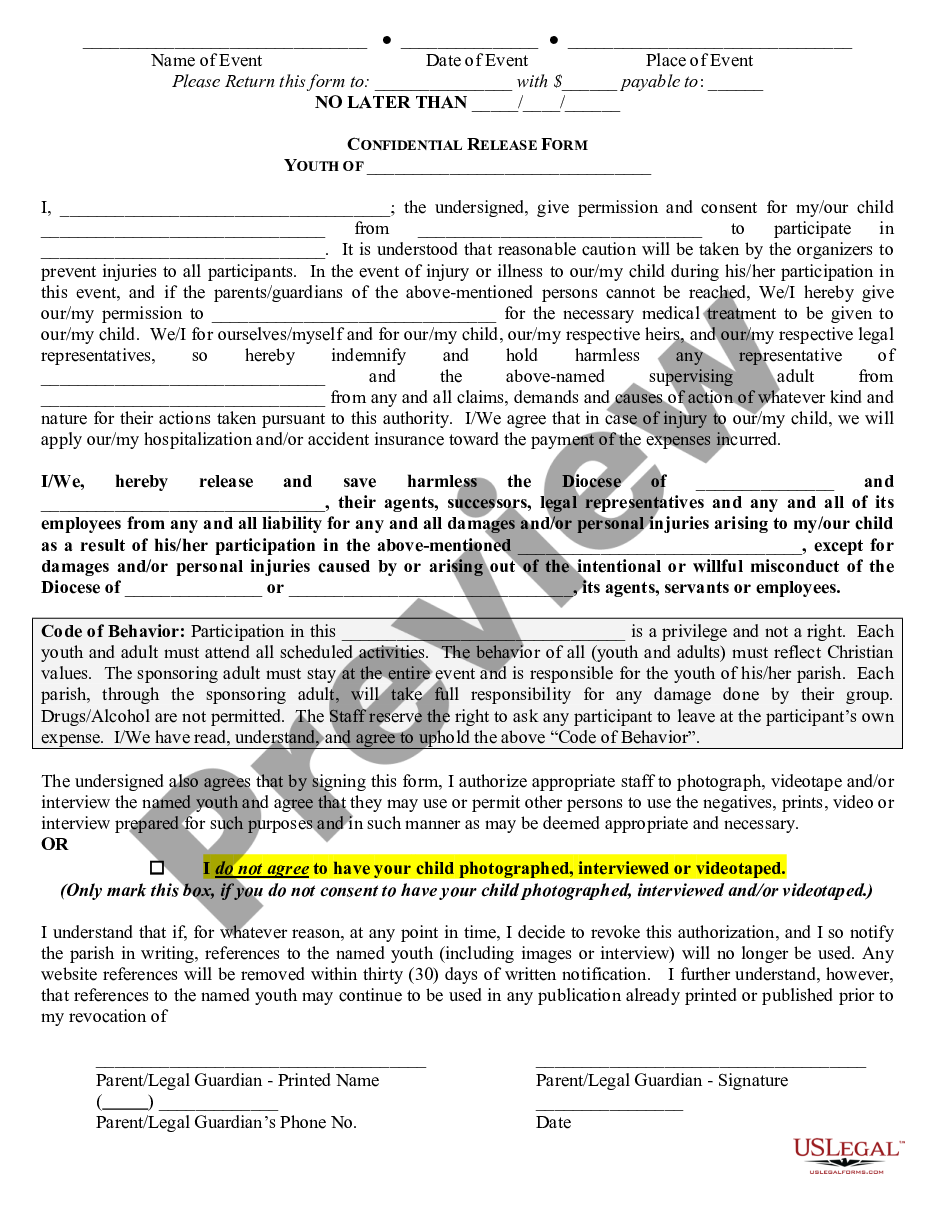
The Release and Agreement not to Sue regarding Youth Conference is a legal document that allows parents or guardians to release an organization and its affiliates from liability concerning injuries or damages that may occur during a youth conference. This form is crucial for ensuring that participants understand and accept the risks involved in attending a conference, while also protecting the organization from potential lawsuits related to those risks. It differs from similar forms by specifically focusing on youth events and the unique aspects of such gatherings.
Main sections of this form
- Child's and parent/guardian's names and contact information.
- Description of the conference, including its nature and location.
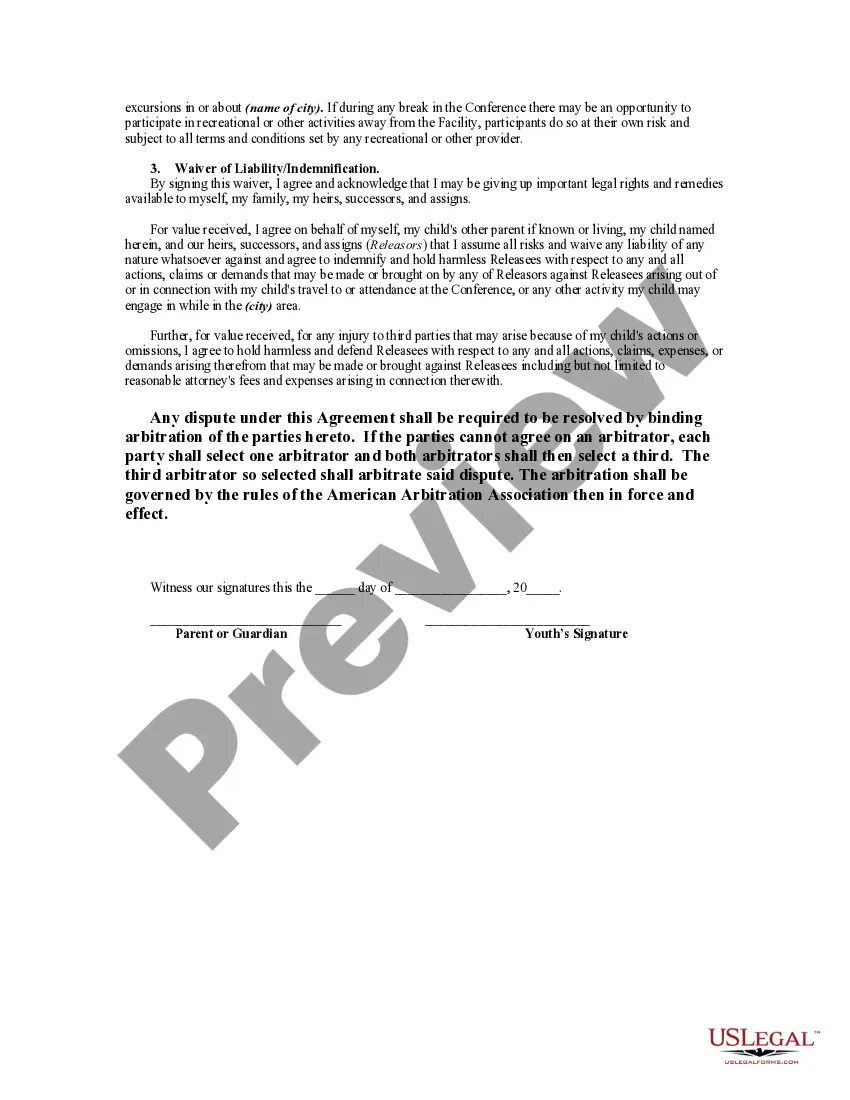
- Disclaimer of liability regarding the risks associated with the conference.
- Waiver of rights concerning legal claims against the organization and its representatives.
- Information on emergency contacts and procedures.
Common use cases
This form should be completed when a child is attending a youth conference organized by a specific organization. It is particularly important for protecting both the child and the organization from legal claims related to accidents or incidents that may occur during the event. Use this form whenever a youth participant must agree to release the organization and its employees from liability before participating in activities and events.
Who can use this document
- Parents or guardians of children participating in youth conferences.
- Organizations hosting youth conferences that require legal protection and liability waivers.
- Chaperones or representatives who need to ensure liability is managed during youth activities.
How to prepare this document
- Fill in the child's name and the names of the parent or guardian.
- Provide the home address and emergency contact information.
- Detail the nature and schedule of the conference, including dates and locations.
- Read the waiver carefully and sign to acknowledge understanding of the risks.
- Complete the section regarding indemnification and disputes, and sign as required.
Does this form need to be notarized?
Notarization is generally not required for this form. However, certain states or situations might demand it. You can complete notarization online through US Legal Forms, powered by Notarize, using a verified video call available anytime.
Get your form ready online
Our built-in tools help you complete, sign, share, and store your documents in one place.
Make edits, fill in missing information, and update formatting in US Legal Forms—just like you would in MS Word.
Download a copy, print it, send it by email, or mail it via USPS—whatever works best for your next step.
Sign and collect signatures with our SignNow integration. Send to multiple recipients, set reminders, and more. Go Premium to unlock E-Sign.
If this form requires notarization, complete it online through a secure video call—no need to meet a notary in person or wait for an appointment.
We protect your documents and personal data by following strict security and privacy standards.

Make edits, fill in missing information, and update formatting in US Legal Forms—just like you would in MS Word.

Download a copy, print it, send it by email, or mail it via USPS—whatever works best for your next step.

Sign and collect signatures with our SignNow integration. Send to multiple recipients, set reminders, and more. Go Premium to unlock E-Sign.

If this form requires notarization, complete it online through a secure video call—no need to meet a notary in person or wait for an appointment.

We protect your documents and personal data by following strict security and privacy standards.
Common mistakes to avoid
- Failing to provide complete and accurate contact information.
- Not reading the waiver carefully before signing.
- Leaving out important details regarding the conference schedule or risks involved.
- Not including an emergency contact in case the parent or guardian is unavailable.
Benefits of completing this form online
- Convenient access allows for quick completion and submission.
- Editability makes it easy to personalize the form to fit specific needs.
- Reliable legal templates drafted by licensed attorneys ensure compliance with relevant laws.
Legal use & context
- This release form helps reduce legal liability for organizations when hosting events involving minors.
- The form provides clarity regarding the understanding of risks associated with the event for all parties involved.
- Properly executed waivers can be enforceable in court, protecting the organization from lawsuits associated with accidents during the conference.
Main things to remember
- The form is a legal agreement that protects organizations from liability during youth conferences.
- It should be completed by parents or guardians prior to the child's participation in the event.
- Understanding and acknowledging risks is crucial for everyone involved.
- This form facilitates a safer environment by clearly outlining the responsibilities and rights of all parties.
Looking for another form?

Form popularity
FAQ
Get help. Writing a waiver should not be complicated. Use the correct structure. Proper formatting. Include a subject line. Include a caution! Talk about the activity risks. Do not forget an assumption of risk. Hold harmless.
In California, a liability waiver must be clear, unambiguous, and explicit. In other words, waivers cannot be printed in faded ink, in small font, on the back of a paper, or in an otherwise ambiguous form. If the waiver that you sign is not represented clearly, it may not hold up in the event of a lawsuit.
200bStart the letter off with a clear explanation regarding your request. For instance, explain that you're requesting certain fees or charges to be waived or to be released from a previous engagement. Communicate any supporting or relative dates, names of parties, monetary figures, or venues as facts.
In California, a liability waiver must be clear, unambiguous, and explicit. In other words, waivers cannot be printed in faded ink, in small font, on the back of a paper, or in an otherwise ambiguous form. If the waiver that you sign is not represented clearly, it may not hold up in the event of a lawsuit.
A liability waiver, or release of liability, is a legal document that a company or organization has you sign in order to protect them from being sued in the event that you are injured.
A waiver is not complete until it includes the signatures of both the event host and business owner and that of the participant. The date should also be included alongside the signatures. You may also include a signature line for a witness if necessary.
A release and waiver agreement is an enforceable promise not to pursue legal action in exchange for compensation. The releasee gives money or some other form of compensation to the releasor, who then agrees not to press charges, sue, or take any other legal action against the releasee.
The Waiver must be clearly worded and unambiguous in its intent to relieve any and all legal liability, even liability for negligence. The Waiver should be prominent and not hidden in the fine print of a long contract. The Waiver must be signed by the person who it is being used against.