Utah Commercial Sublease
Understanding this form
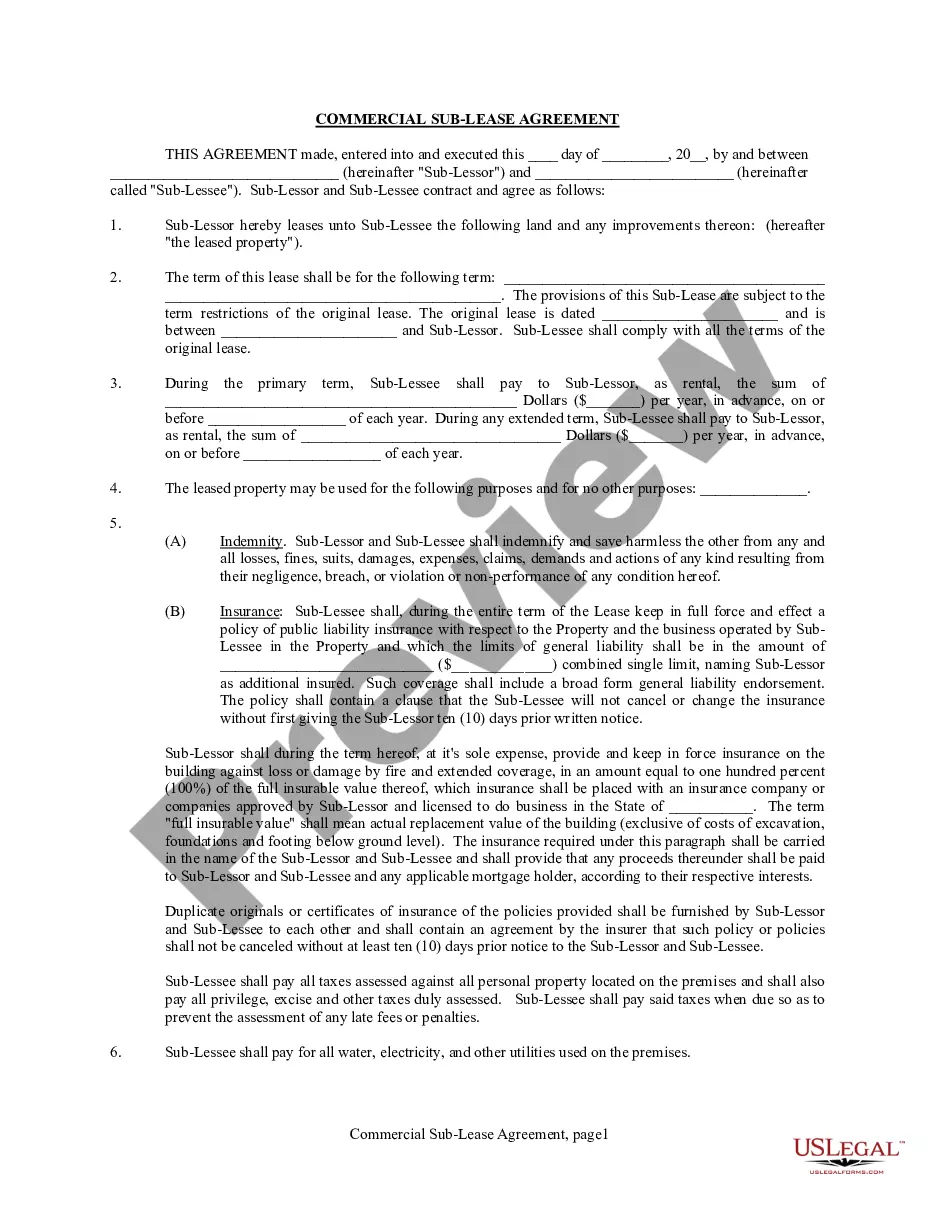
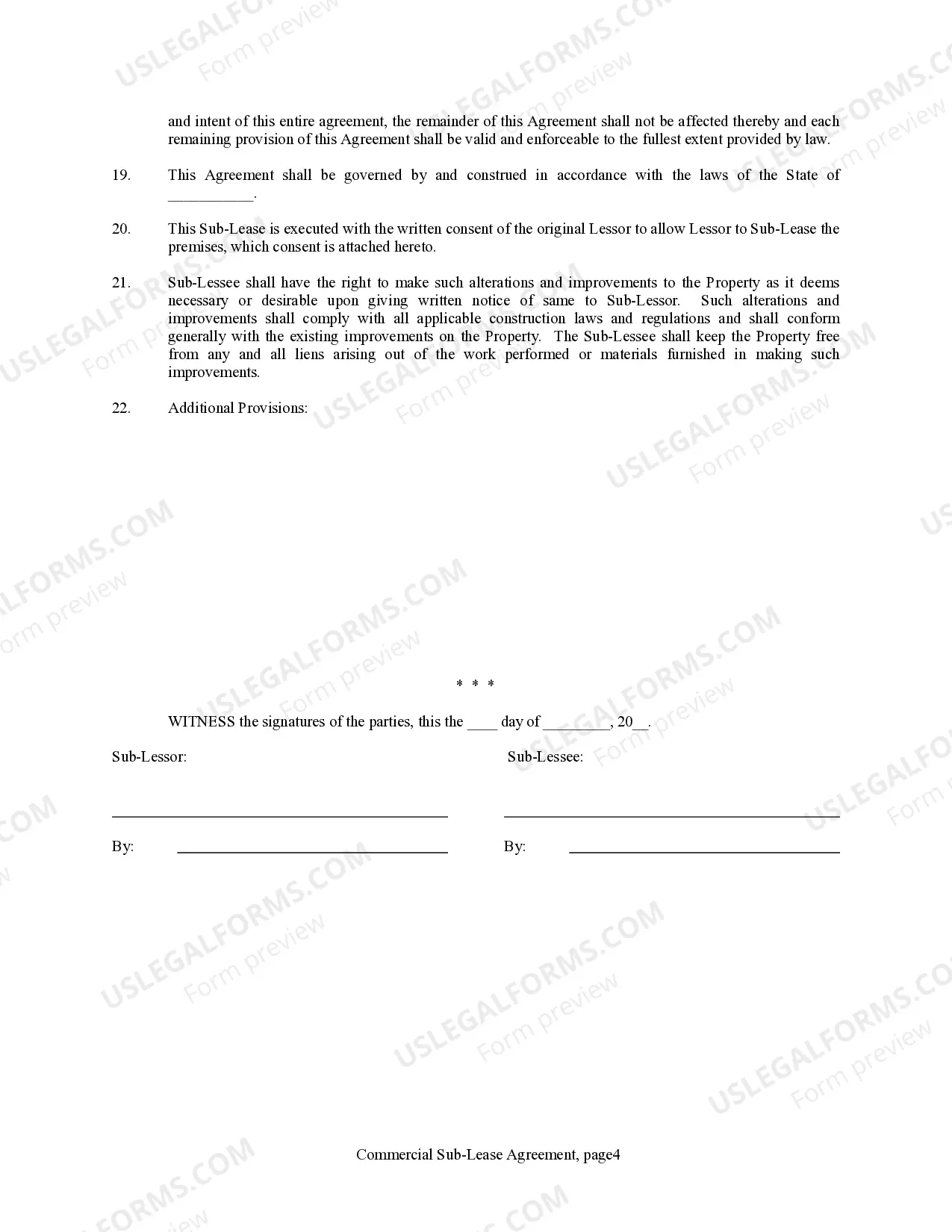
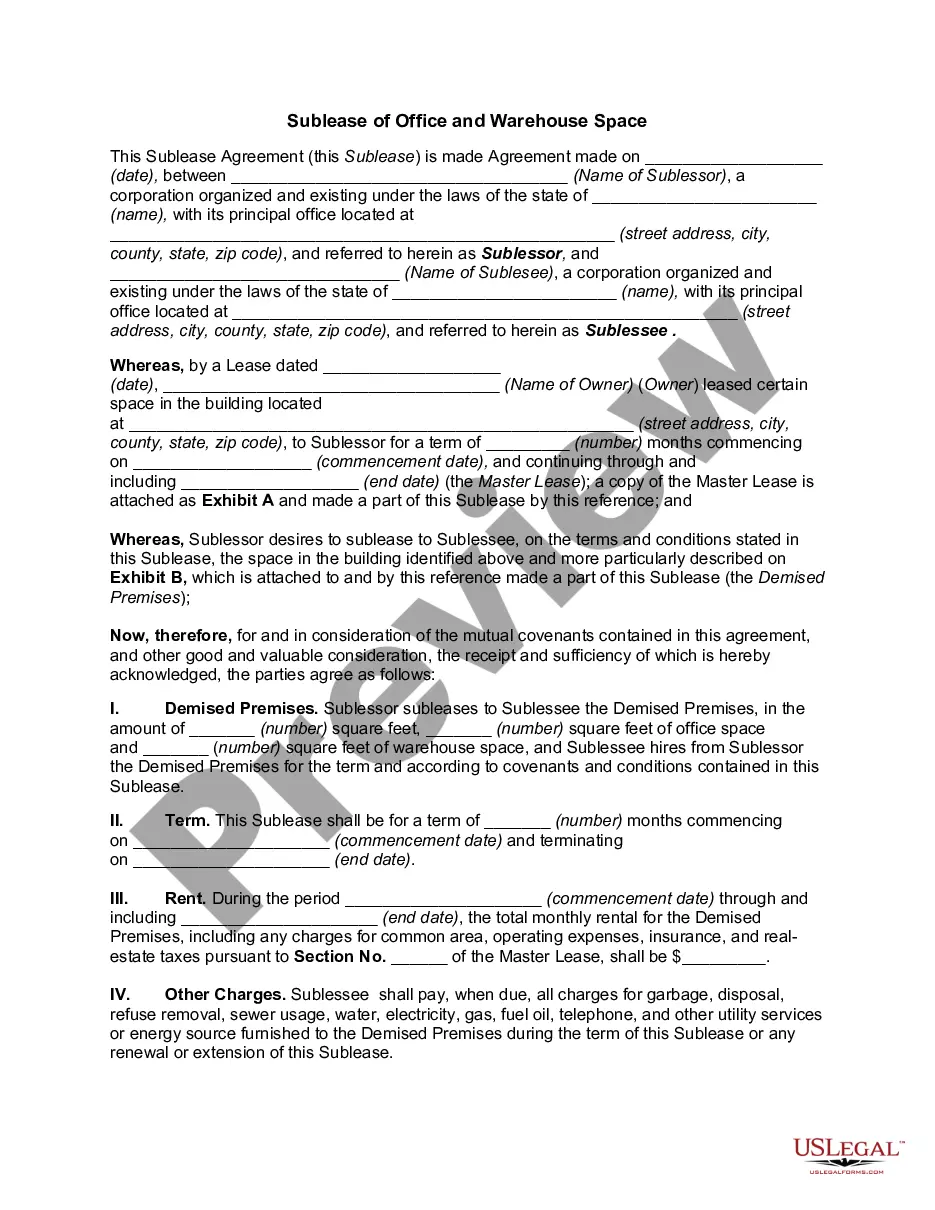
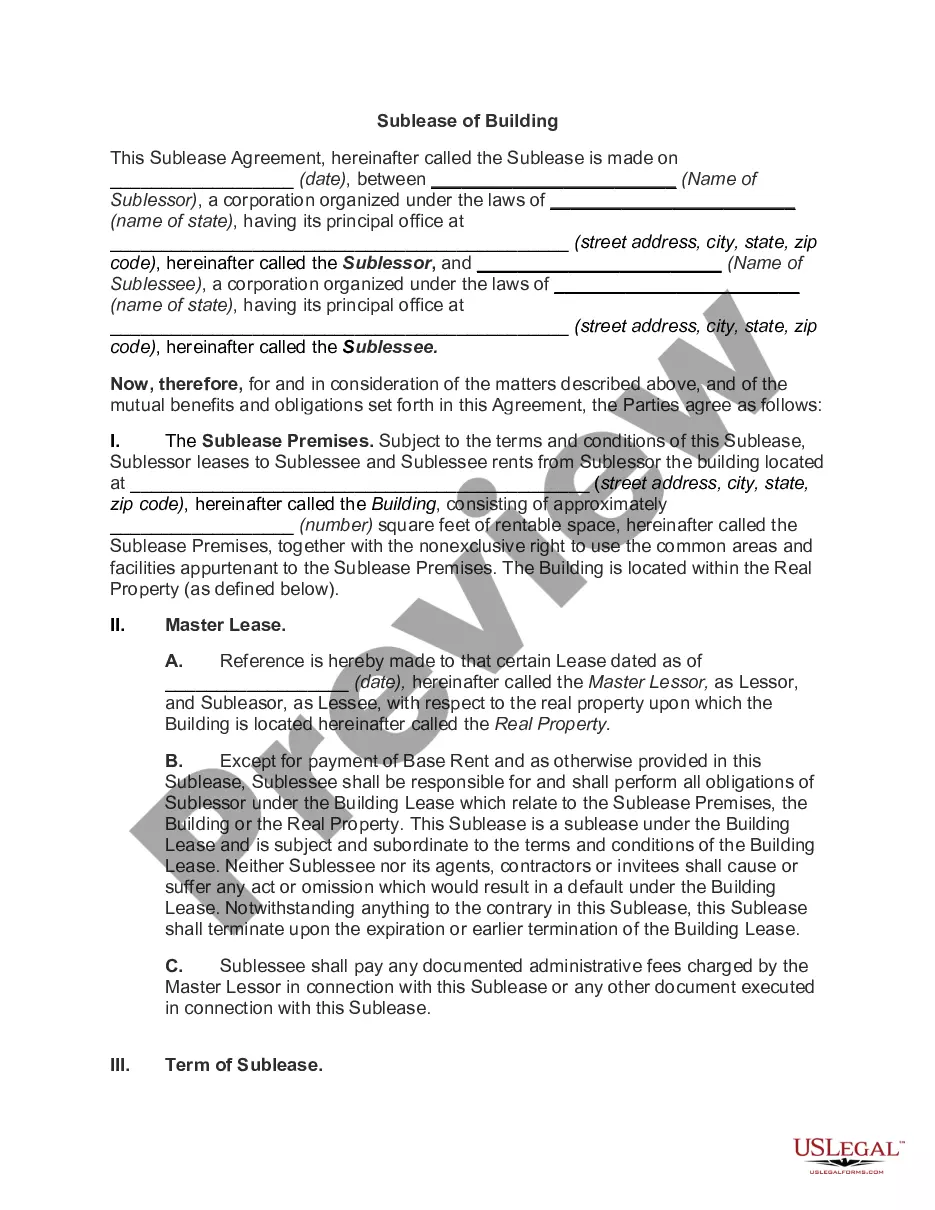
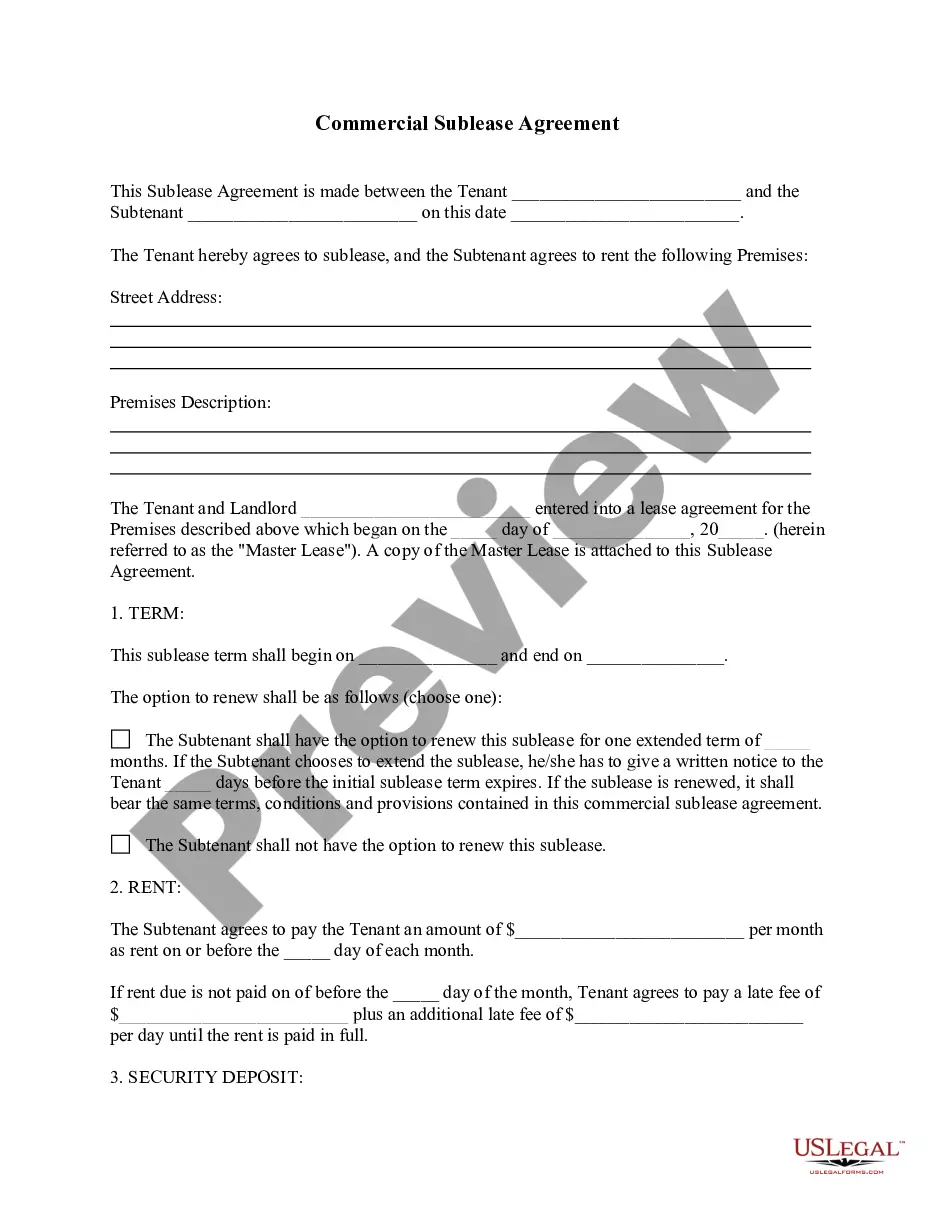
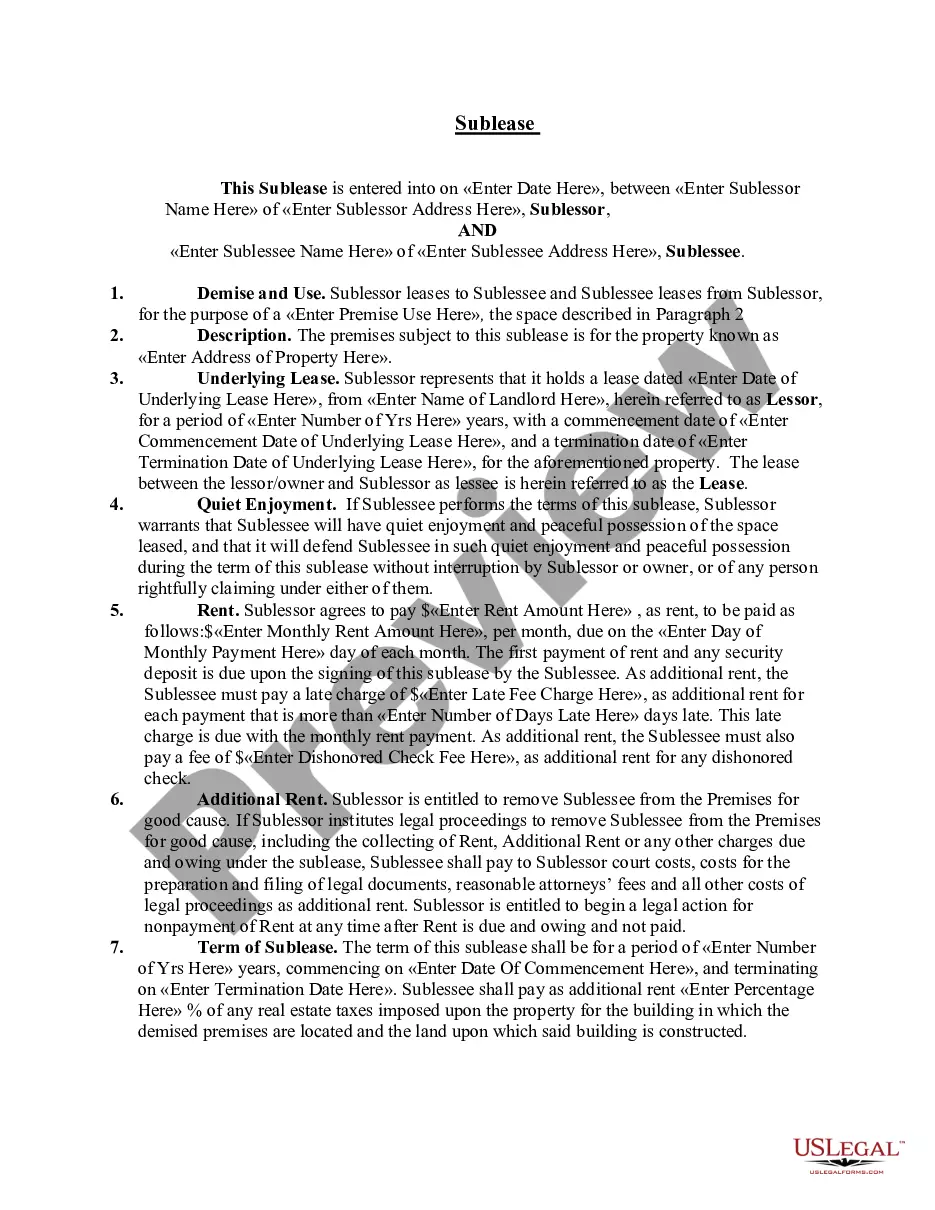
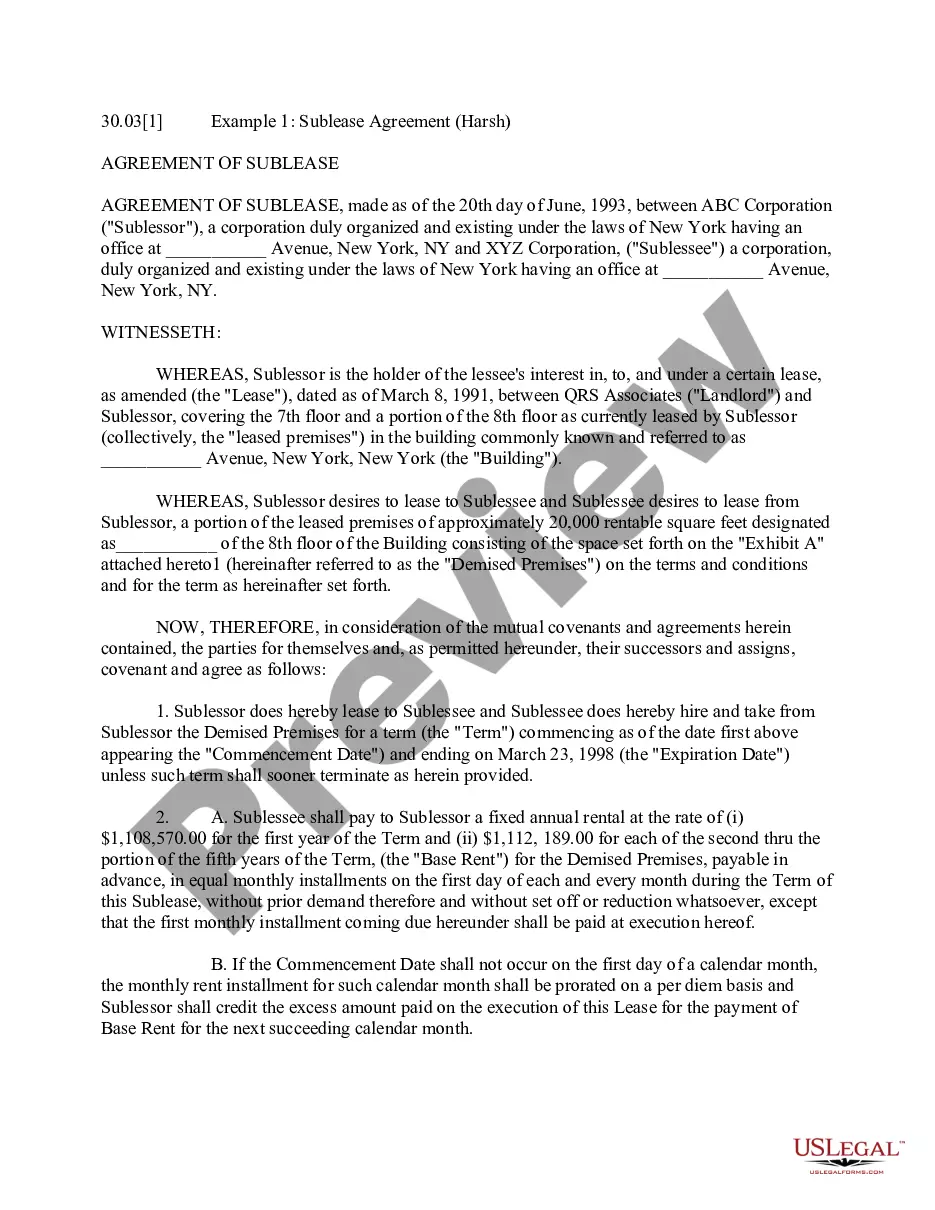
The Commercial Sublease form is a legal document that facilitates the leasing of commercial property from a current tenant (Sub-Lessor) to a new tenant (Sub-Lessee). This type of sublease allows a tenant to rent out their leased space while still being bound by the original lease's terms. It is important to understand how this sublease differs from a direct lease, as the Sub-Lessor remains responsible to the original landlord, and the Sub-Lessee must adhere to not only the sublease terms but also those of the original lease.
Key parts of this document
- Identifies the agreement date and parties involved: Sub-Lessor and Sub-Lessee.
- Details the leased property and its intended use.
- Specifies rental amounts and payment schedule.
- Includes indemnity and insurance requirements for both parties.
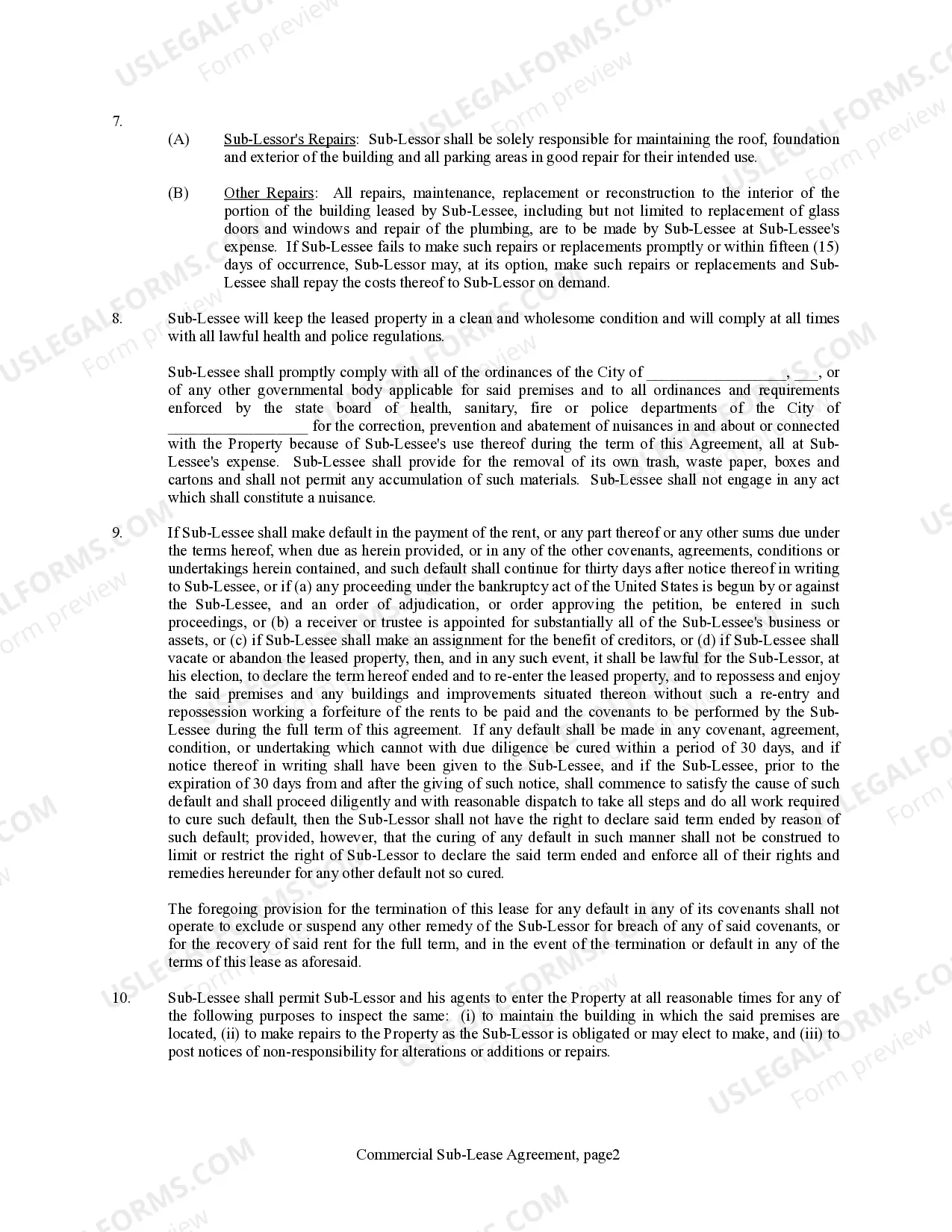
- Outlines maintenance responsibilities and repair obligations.
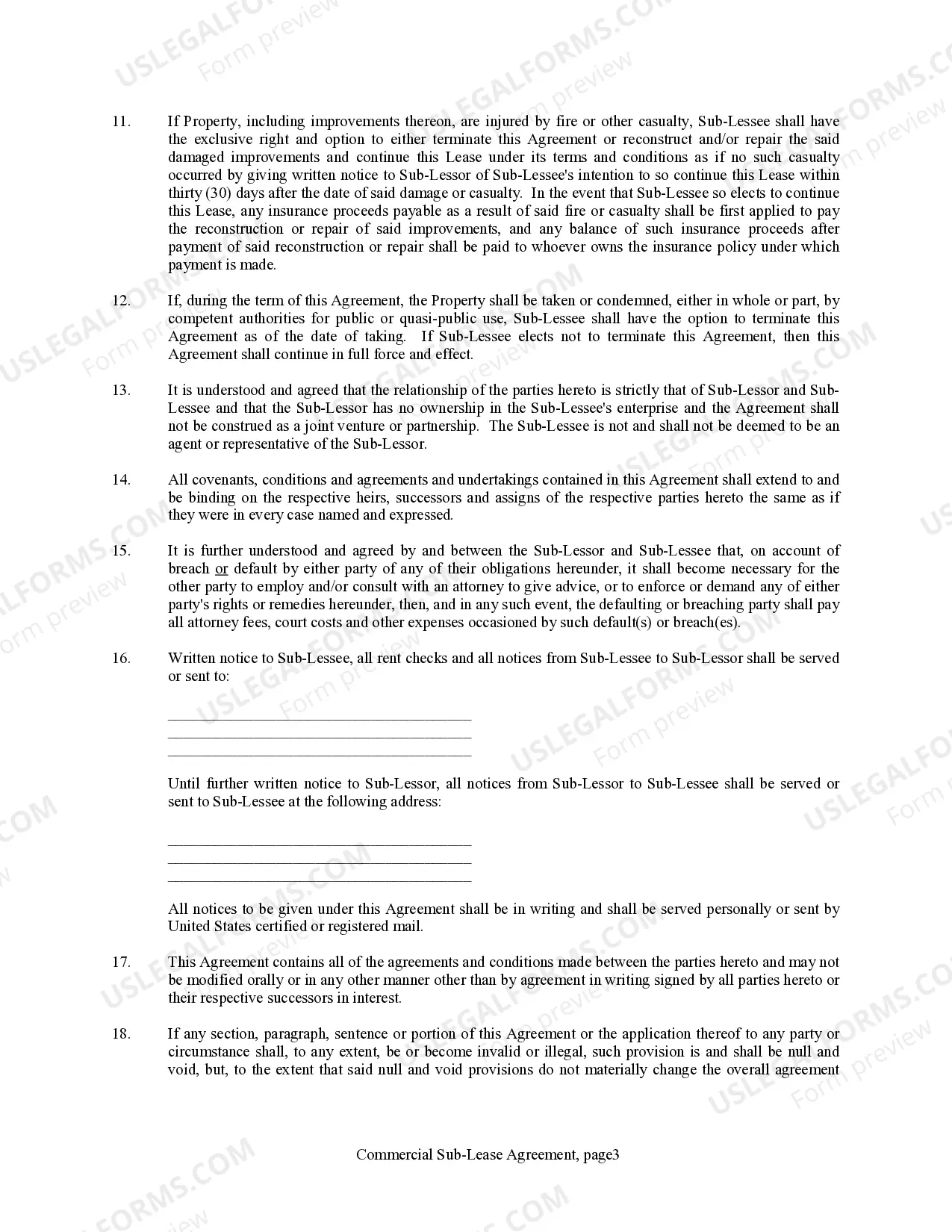
- Addresses conditions for default and termination of the lease.
When this form is needed
This form is necessary when a current commercial tenant wants to sublease their rented space to another party. It is commonly used in situations where the original tenant needs to relocate or reduce expenses but still wishes to retain their lease. Businesses often encounter this scenario when downsizing or entering a temporary hiatus. It ensures that both the original leasing terms and the subleasing conditions are legally documented and followed.
Who needs this form
This form is appropriate for:
- Business owners looking to sublet part or all of their leased commercial space.
- Tenants with an existing lease who need to temporarily transfer their lease obligations.
- Property managers overseeing tenants who wish to sublease their rented properties.
- Individuals seeking legal protection and clarity in leasing arrangements.
How to complete this form
- Identify the parties involved by filling in the names of the Sub-Lessor and Sub-Lessee.
- Specify the property being leased, including any improvements or defining characteristics.
- Clearly state the rental amount and payment due dates for the term of the sublease.
- Outline the intended use of the leased property explicitly.
- Include necessary insurance and indemnity details as required by the agreement.
- Ensure all parties review and sign the agreement to make it legally binding.
Does this document require notarization?
Notarization is not commonly needed for this form. However, certain documents or local rules may make it necessary. Our notarization service, powered by Notarize, allows you to finalize it securely online anytime, day or night.
Get your form ready online
Our built-in tools help you complete, sign, share, and store your documents in one place.
Make edits, fill in missing information, and update formatting in US Legal Forms—just like you would in MS Word.
Download a copy, print it, send it by email, or mail it via USPS—whatever works best for your next step.
Sign and collect signatures with our SignNow integration. Send to multiple recipients, set reminders, and more. Go Premium to unlock E-Sign.
If this form requires notarization, complete it online through a secure video call—no need to meet a notary in person or wait for an appointment.
We protect your documents and personal data by following strict security and privacy standards.

Make edits, fill in missing information, and update formatting in US Legal Forms—just like you would in MS Word.

Download a copy, print it, send it by email, or mail it via USPS—whatever works best for your next step.

Sign and collect signatures with our SignNow integration. Send to multiple recipients, set reminders, and more. Go Premium to unlock E-Sign.

If this form requires notarization, complete it online through a secure video call—no need to meet a notary in person or wait for an appointment.

We protect your documents and personal data by following strict security and privacy standards.
Mistakes to watch out for
- Failing to obtain the original landlordâs consent for the sublease.
- Not specifying the exact terms and duration of the lease properly.
- Overlooking the need for insurance requirements in the agreement.
- Ignoring the original lease's restrictions which could invalidate the sublease.
Benefits of using this form online
- Easy access to customizable templates tailored for different situations.
- Immediate downloads for quick completion.
- Reliability backed by licensed attorney drafts for legal protection.
- Convenience of editing and revising forms as needed from anywhere.
- The sublease agreement is legally binding once signed by all parties and meets local regulations.
- It is crucial for the Sub-Lessee to adhere to the conditions set by the original lease to avoid conflicts.
- The Sub-Lessor retains rights under the original lease, impacting the sublessee's rights and responsibilities.
Main things to remember
- A commercial sublease allows a tenant to lease their space to another party under the original lease terms.
- Important elements include identification of parties, property details, payment structure, and compliance with the original lease.
- Signing parties should ensure all terms are clear and agreeable to prevent future disputes.
Looking for another form?


Form popularity
FAQ
The landlord cannot refuse the assignment or sublet unless there is a good reason, such as the proposed tenant's inability to pay the rent or problematic behavior of this tenant. This is the case no matter what your lease or the building rules say.
Each state has different laws regarding subtenancy, with most landlords prohibiting subletting a property without prior permission. If subletting occurs without the landlord's knowledge, that landlord has the right to serve a three-day notice of eviction to both the tenant and the sublessor.
A sublease is a legally binding contract made between a tenant and a new tenant (also known as a subtenant or a sublessee).Usually, the first tenant must get consent from the landlord before he/she is allowed to sublease the premises.
A commercial sublease is an agreement between a tenant currently leasing a property, a new tenant looking for space, and the property owner. When you sublease your space you are the sublessor (or sublandlord) and your new tenant is the sublessee (or subtenant).
You can help the situation a lot by providing as much notice as possible and writing a sincere letter to your landlord explaining why you need to leave early. Ideally you can offer your landlord a qualified replacement tenant, someone with good credit and excellent references, to sign a new lease with your landlord.
Writing Your Sublease. State the name of the parties and the date of the contract. Identify the full names of each party and what their role is in the contract. The original leaseholder of the property is the Tenant and the person subletting the property is the Subtenant.
Your roommate is not required to get your consent for a sublease unless your lease agreement explicitly states that they have to. There are no laws that prevent your roommate from subletting without your consent.
If a court finds you guilty of the first offence of unlawful subletting, you can be fined in the magistrates' court.At the magistrates' court, you can get up to six months in prison or a fine, or both. At the Crown Court the maximum penalty is imprisonment for two years or a fine, or both.
The Bottom Line: The Utah Tenant's Rights Act does not explicitly permit nor prohibit sublets, so you must follow the terms of your lease. If your lease prohibits sublets, then sadly, you aren't allowed to sublet. You should always obtain written approval from your landlord prior to subletting.