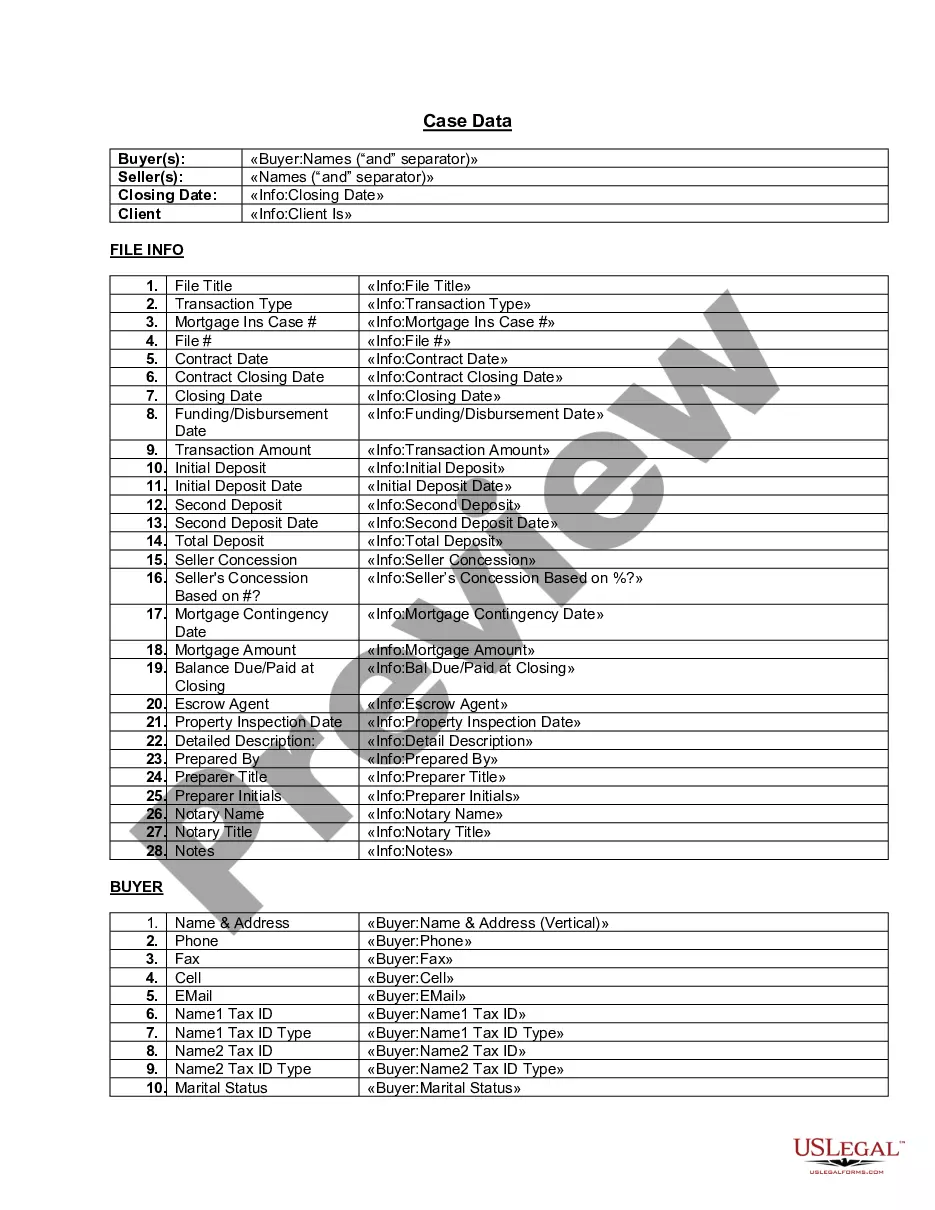
License of Property for Advertising through use of a Roof of a Building
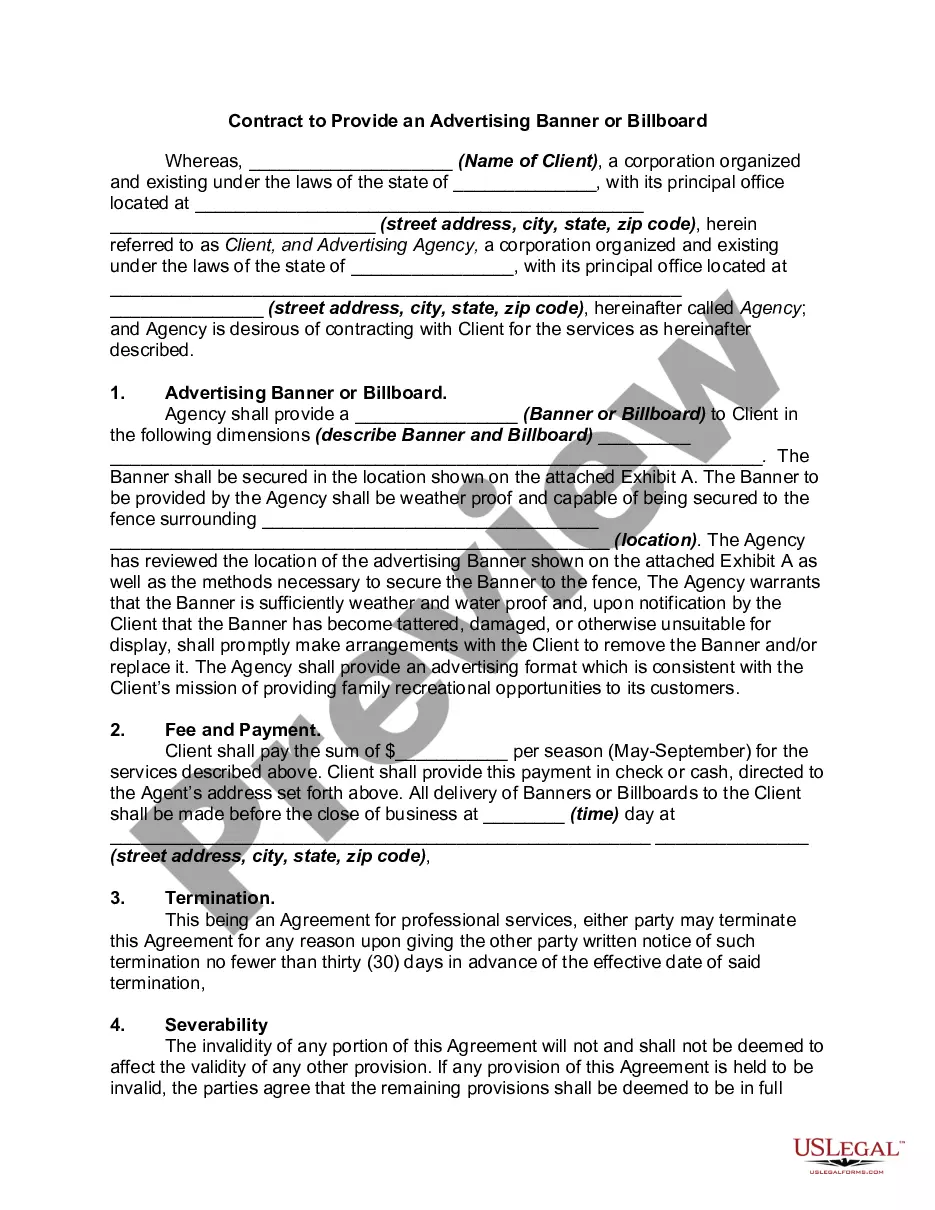
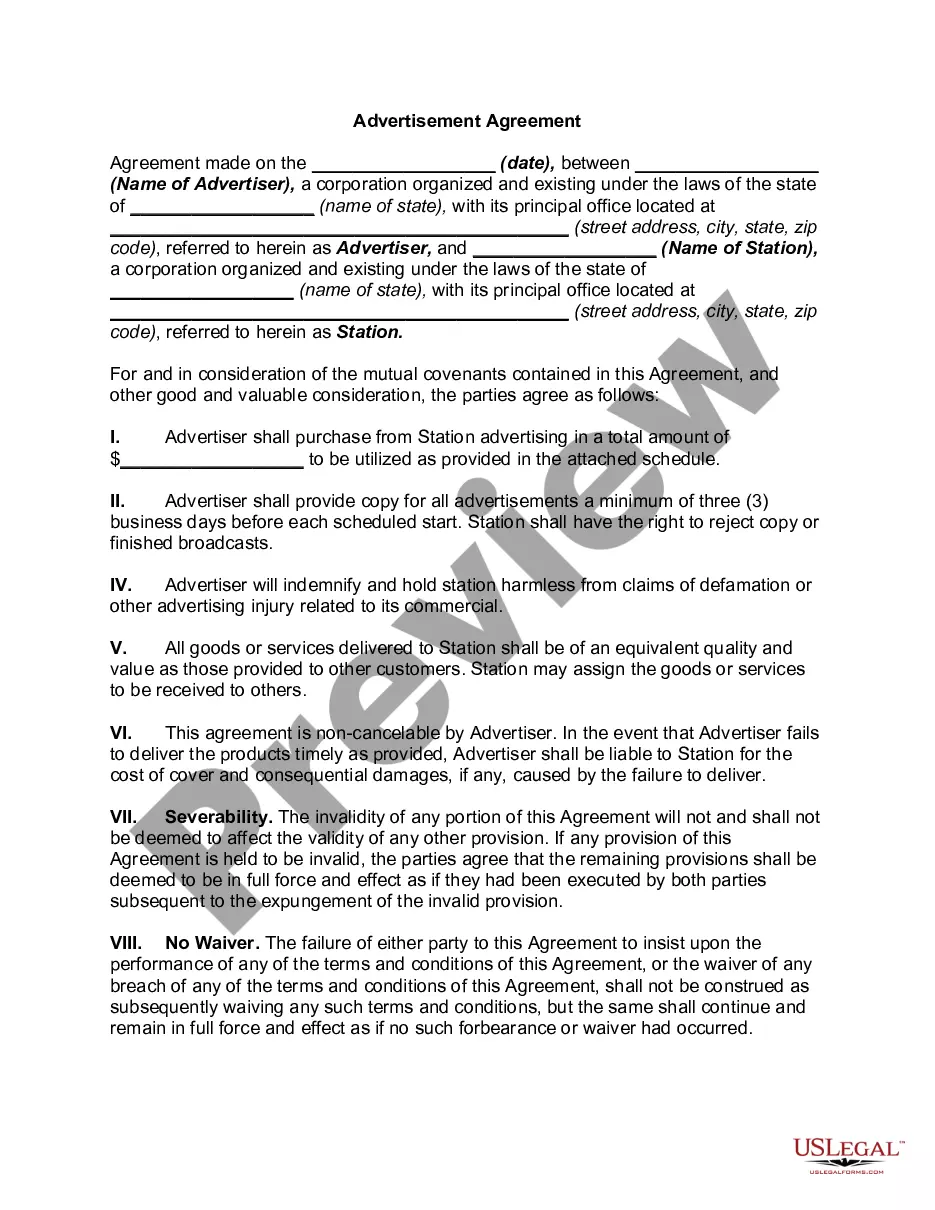
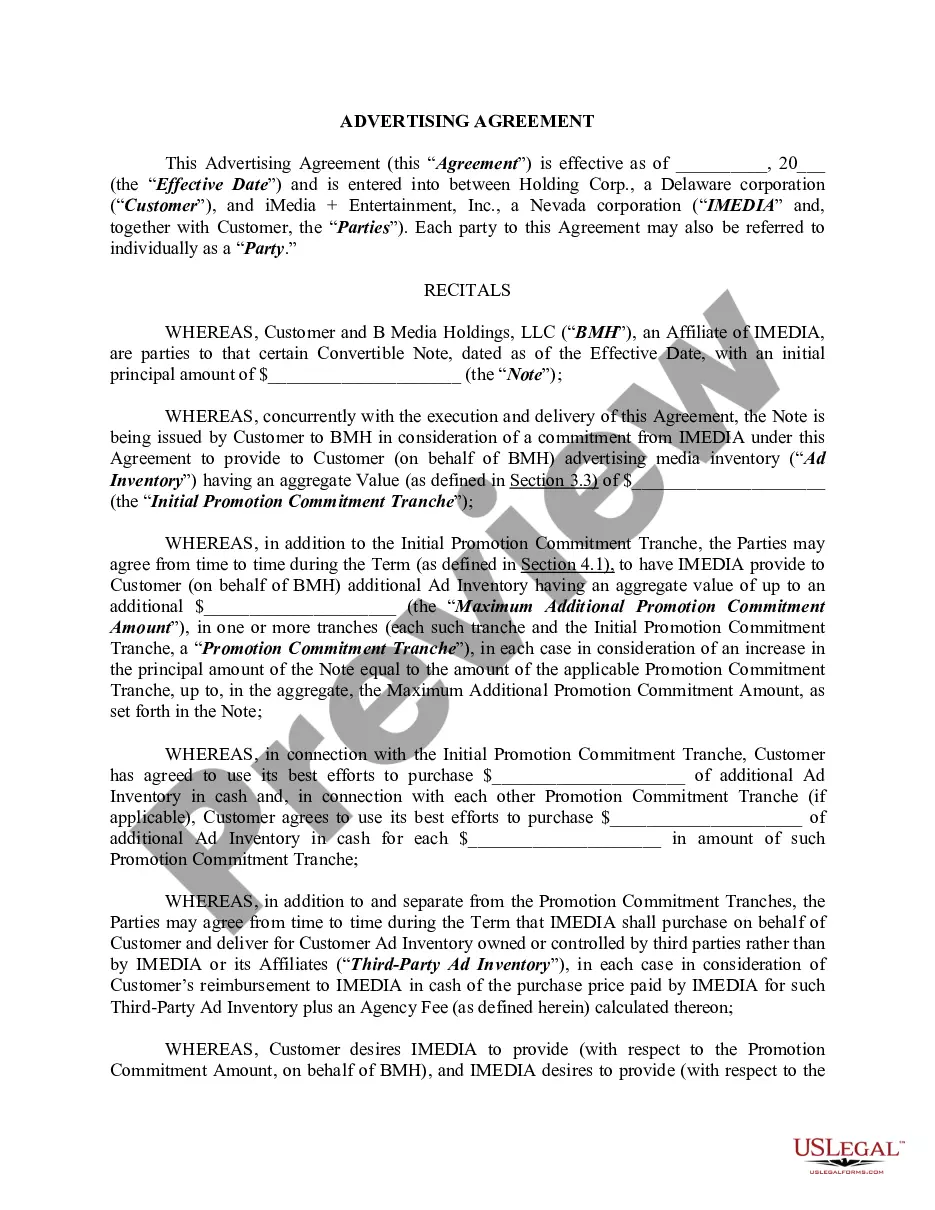
What is this form?
The License of Property for Advertising through use of a Roof of a Building is a legal agreement that allows one party, the Licensee, to use the roof of a specific building owned by another party, the Licensor, for advertising purposes. This form clearly outlines the rights and responsibilities of both parties, differentiating it from other real estate or lease agreements by focusing specifically on advertising use of the property.
Main sections of this form
- Licensor and Licensee details: Names and addresses of both parties.
- Property description: Address and identification of the building's roof to be used for advertising.
- Payment terms: Monthly fee to be paid by the Licensee, as well as the commencement date.
- Usage restrictions: Limitations on how the roof can be used, specifically for advertising signs and displays.
- Indemnification clause: Protection for the Licensor against claims related to the advertising signs.
- Termination terms: Conditions under which the license can be terminated by the Licensor.

Common use cases
This form should be used when a property owner (Licensor) wants to permit another party (Licensee) to utilize the roof of their building for advertising purposes. This scenario often arises in urban settings where buildings are positioned for maximum visibility, allowing businesses to promote their services effectively by installing advertisements on rooftops.
Who can use this document
- Commercial property owners looking to monetize their roof space through advertising.
- Businesses seeking to utilize rooftops for their advertising campaigns.
- Real estate professionals facilitating agreements between clients for advertising space.
How to prepare this document
- Identify the parties by entering the full names and addresses of both the Licensor and Licensee.
- Specify the property by detailing the address and name of the building whose roof will be used.
- Enter the payment details, including the monthly fee and the date the payment starts.
- Clarify the term of the license by noting the start date and potential termination conditions.
- Incorporate indemnity provisions by including any necessary language to protect the Licensor from claims.
- Finally, have both parties sign and date the agreement to make it legally binding.
Does this form need to be notarized?
This form does not typically require notarization to be legally valid. However, some jurisdictions or document types may still require it. US Legal Forms provides secure online notarization powered by Notarize, available 24/7 for added convenience.
Get your form ready online
Our built-in tools help you complete, sign, share, and store your documents in one place.
Make edits, fill in missing information, and update formatting in US Legal Forms—just like you would in MS Word.
Download a copy, print it, send it by email, or mail it via USPS—whatever works best for your next step.
Sign and collect signatures with our SignNow integration. Send to multiple recipients, set reminders, and more. Go Premium to unlock E-Sign.
If this form requires notarization, complete it online through a secure video call—no need to meet a notary in person or wait for an appointment.
We protect your documents and personal data by following strict security and privacy standards.

Make edits, fill in missing information, and update formatting in US Legal Forms—just like you would in MS Word.

Download a copy, print it, send it by email, or mail it via USPS—whatever works best for your next step.

Sign and collect signatures with our SignNow integration. Send to multiple recipients, set reminders, and more. Go Premium to unlock E-Sign.

If this form requires notarization, complete it online through a secure video call—no need to meet a notary in person or wait for an appointment.

We protect your documents and personal data by following strict security and privacy standards.
Mistakes to watch out for
- Failing to accurately identify the property, leading to potential disputes.
- Not including the correct payment terms or missing out on payment start dates.
- Omitting legal requirements for advertising permits or licenses before installation.
- Neglecting to specify the termination notice period, which could cause confusion later.
Why complete this form online
- Convenience of completing the form from anywhere at any time.
- Editability allows users to customize terms to fit specific needs easily.
- Reliable legal format that ensures compliance with standard requirements.
Looking for another form?




Form popularity
FAQ
Property is any item that a person or a business has legal title over. Property can be tangible items, such as houses, cars, or appliances, or it can refer to intangible items that carry the promise of future worth, such as stock and bond certificates.
The property() method in Python provides an interface to instance attributes. It encapsulates instance attributes and provides a property, same as Java and C#. The property() method takes the get, set and delete methods as arguments and returns an object of the property class.
Answer. The noun property can be countable or uncountable. In more general, commonly used, contexts, the plural form will also be property. However, in more specific contexts, the plural form can also be properties e.g. in reference to various types of properties or a collection of properties.
A property, in some object-oriented programming languages, is a special sort of class member, intermediate in functionality between a field (or data member) and a method.
One final important thing to note is that land use is sometimes defined as mixed-use. Property can be a combination of commercial, residential, and agricultural land use. If a residential property has a small business on the premises, then it would be defined as mixed-use.
1a : a quality or trait belonging and especially peculiar to an individual or thing. b : an effect that an object has on another object or on the senses. c : virtue sense 2. d : an attribute common to all members of a class.
Properties overviewProperties enable a class to expose a public way of getting and setting values, while hiding implementation or verification code. A get property accessor is used to return the property value, and a set property accessor is used to assign a new value.
The noun property can be countable or uncountable. In more general, commonly used, contexts, the plural form will also be property. However, in more specific contexts, the plural form can also be properties e.g. in reference to various types of properties or a collection of properties.
In general, properties are the settings of an object on a computer. For example, you could right-click highlighted text and view the properties of that text.For example, in Microsoft Windows you can access the properties of a file by right-clicking the file name and selecting Properties.