Visiting Professor Agreement - Self-Employed Independent Contractor
What this document covers
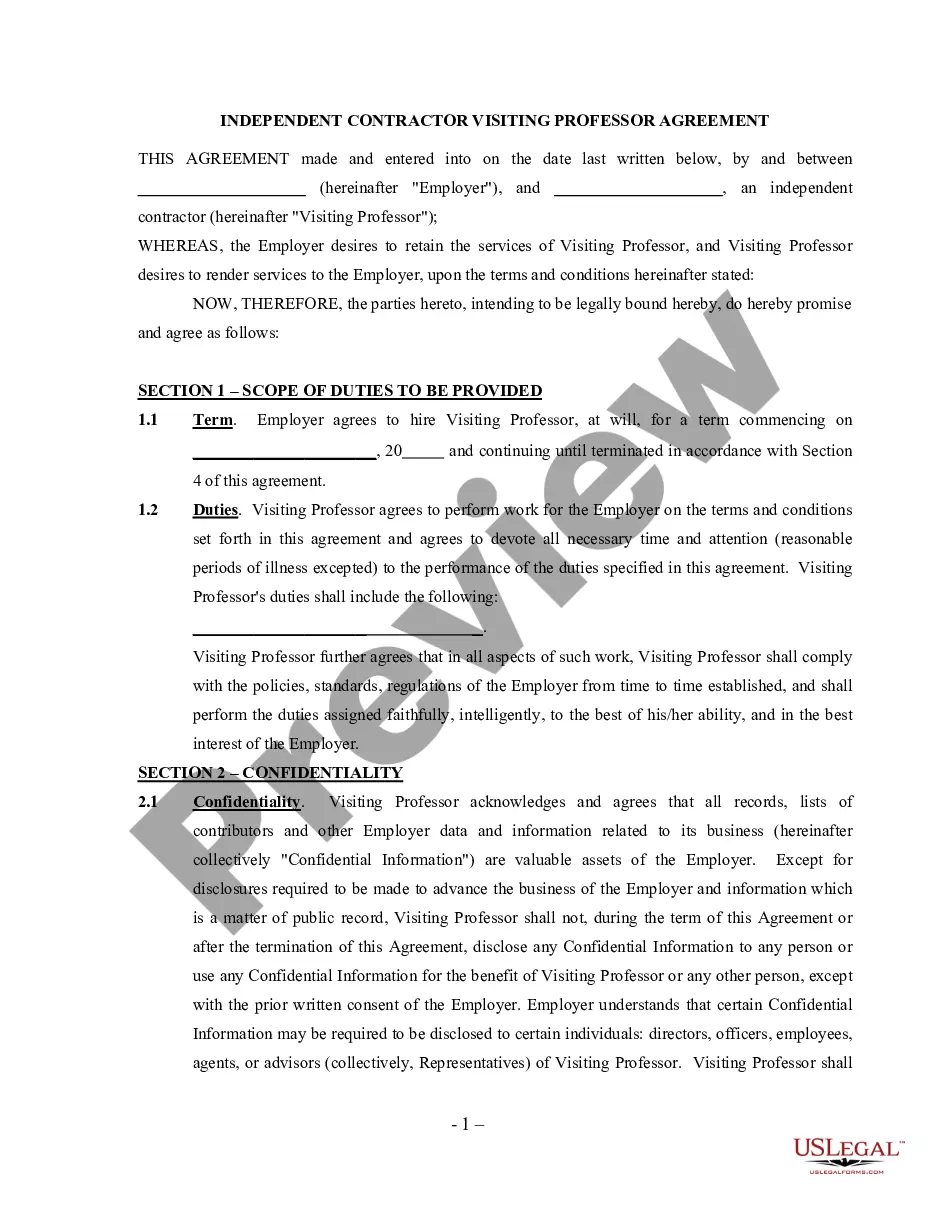
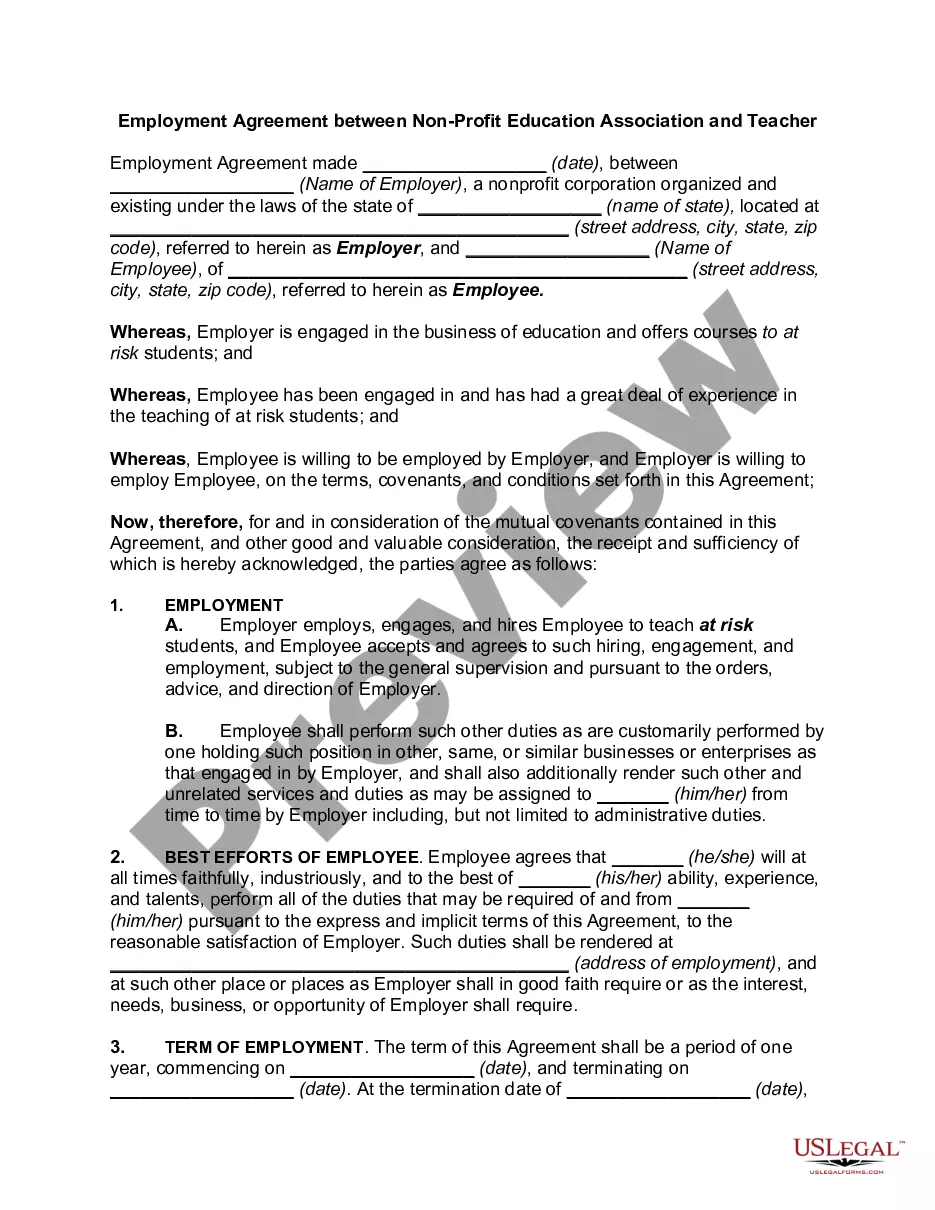
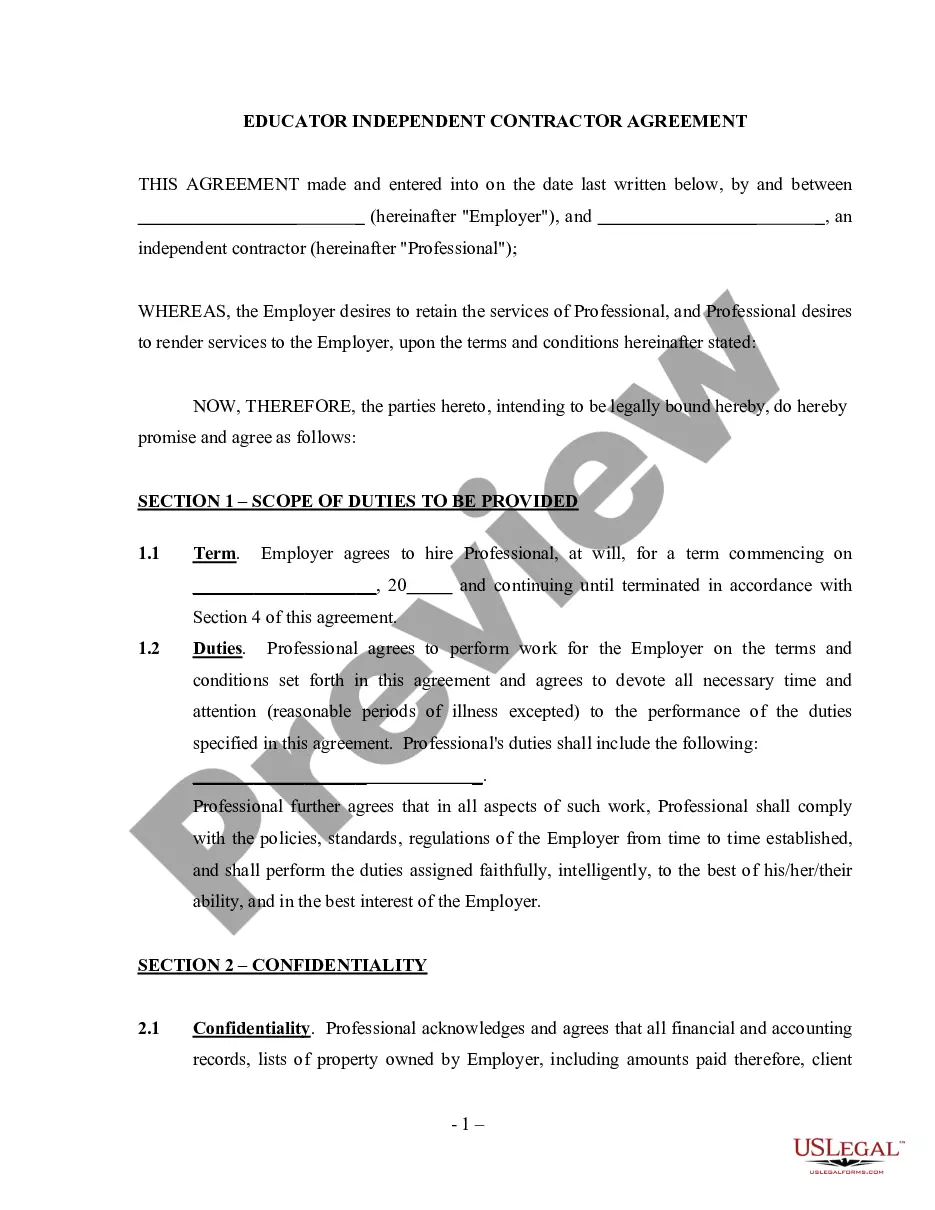
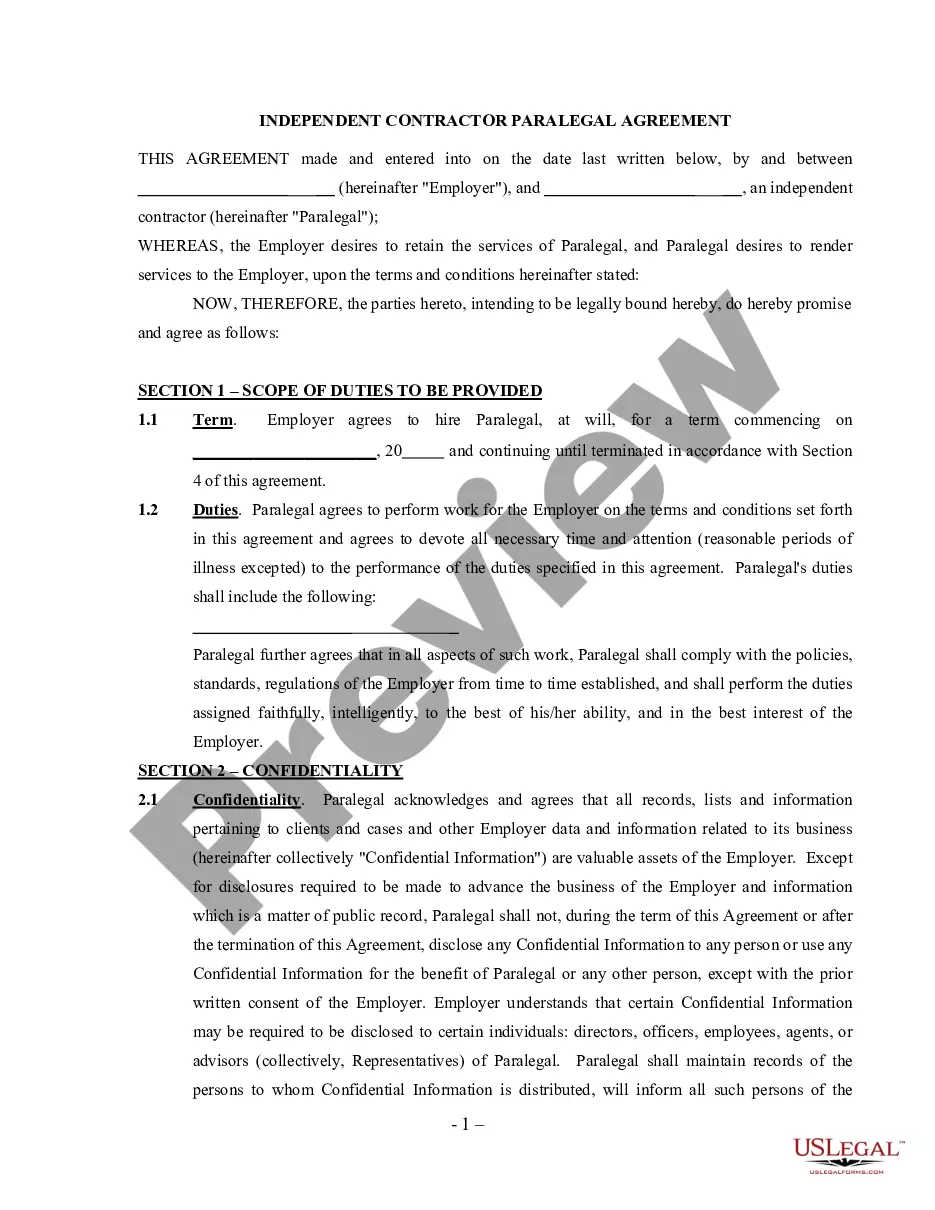
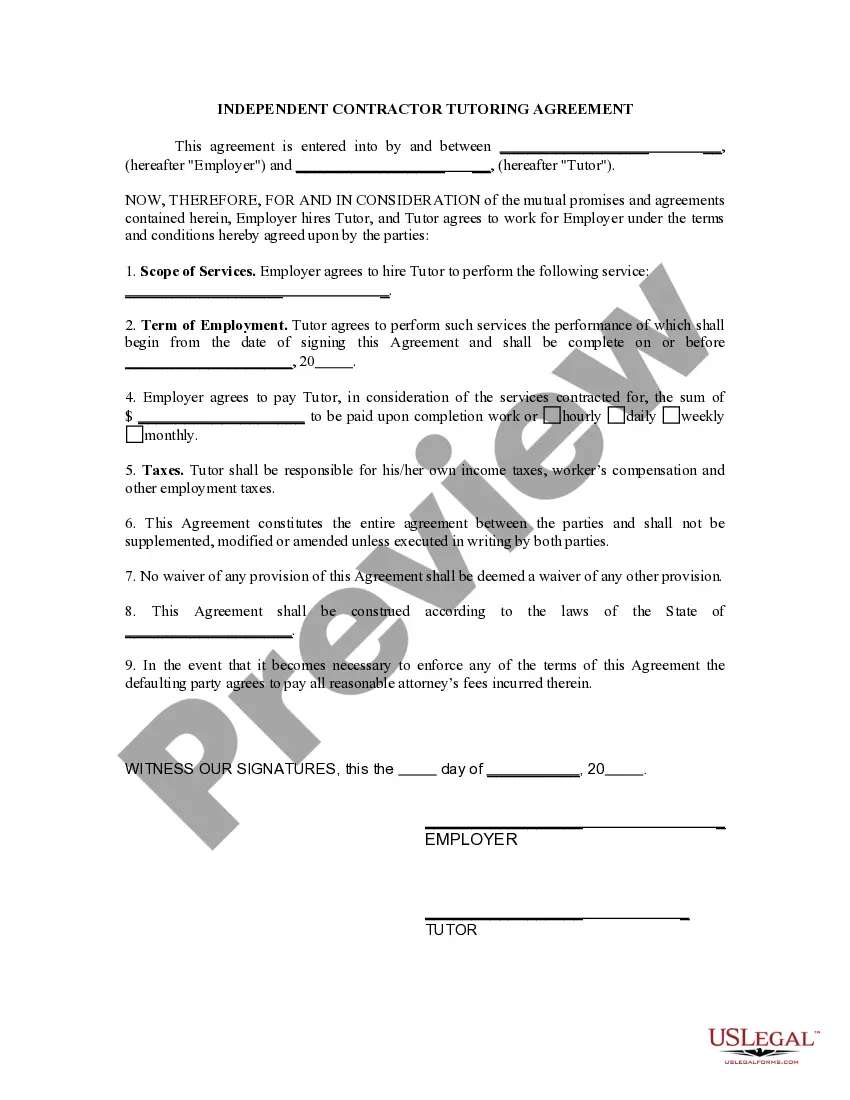
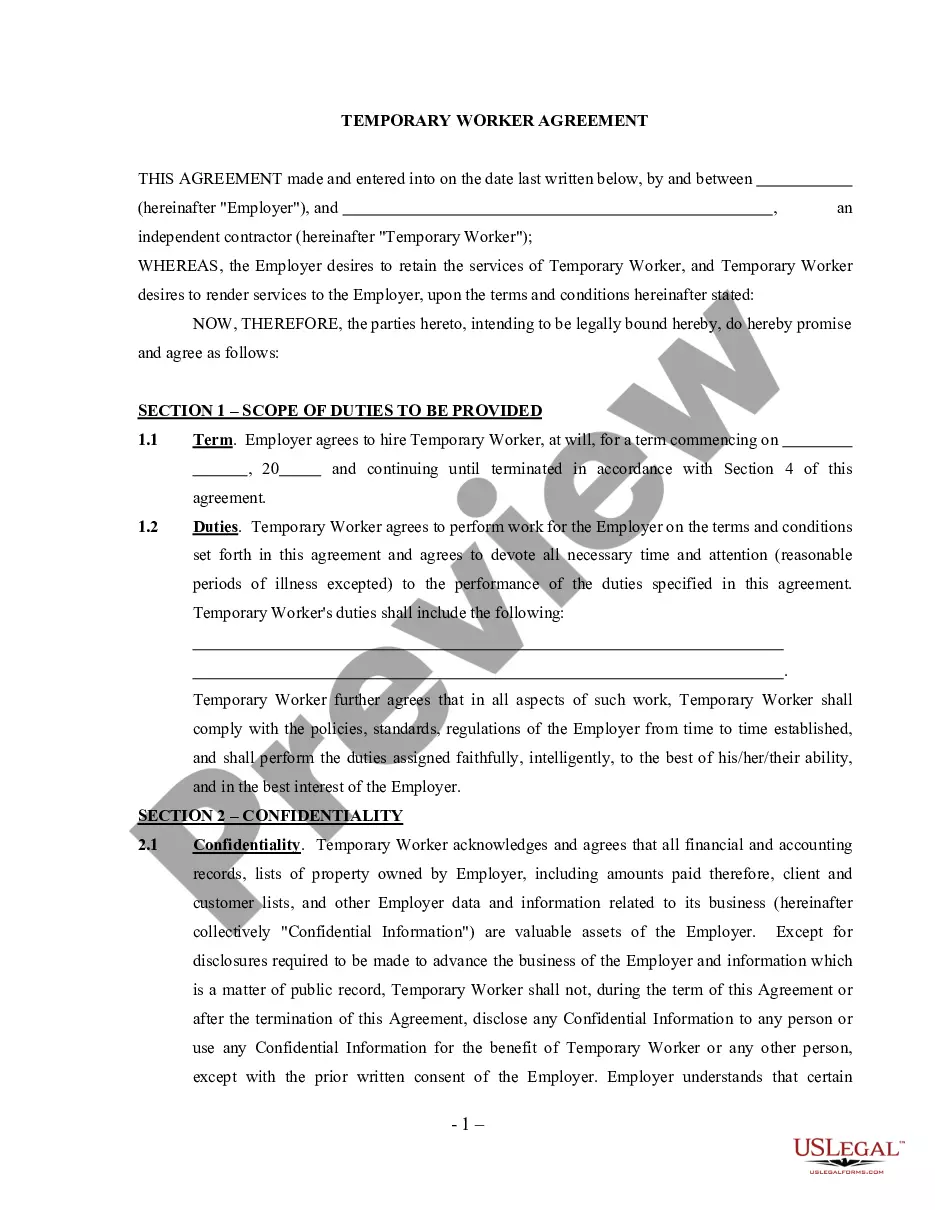
The Visiting Professor Agreement - Self-Employed Independent Contractor is a legal document that formalizes the relationship between an employing institution and a visiting professor. This agreement outlines the duties, compensation, and other terms under which a professor provides academic and teaching services for a specified duration. Unlike traditional employment contracts, this document establishes the visiting professor as an independent contractor, providing flexibility for both parties.
Key components of this form
- Scope of Duties: Details the tasks and responsibilities assigned to the visiting professor.
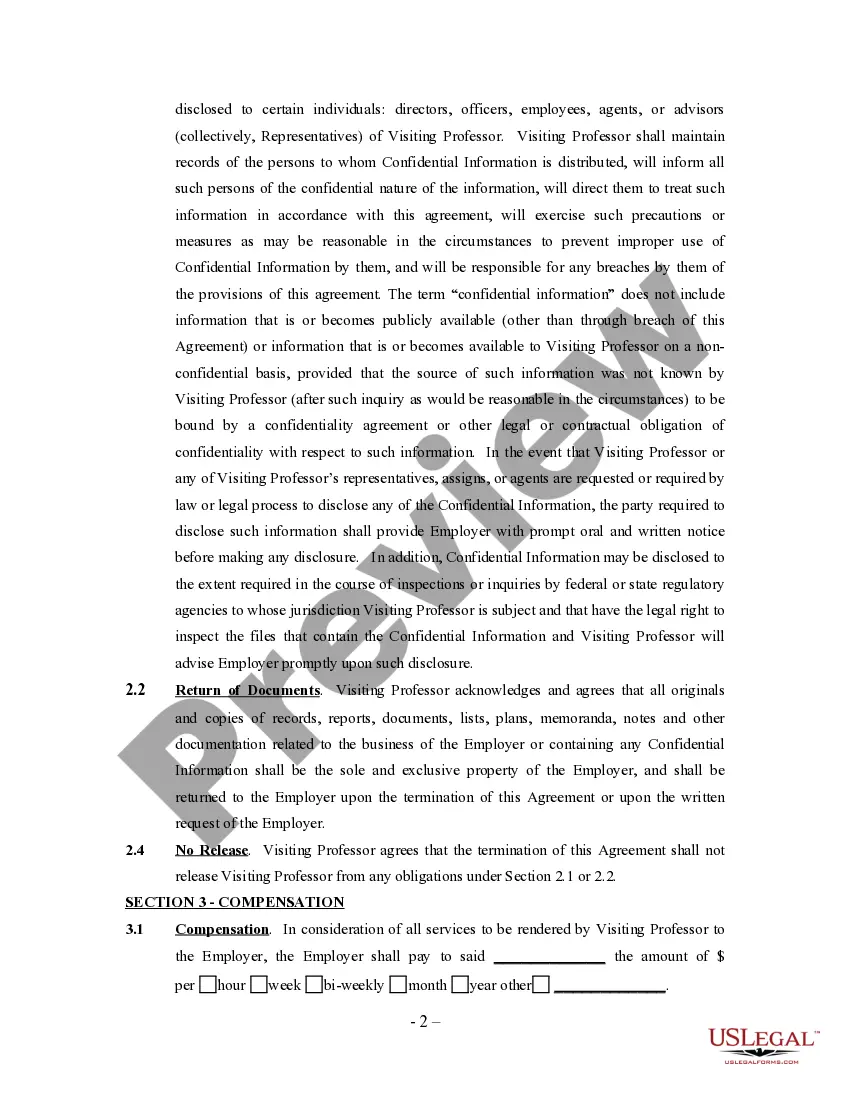
- Confidentiality: Sets forth obligations regarding the handling of the employer's confidential information.
- Compensation: Specifies the payment terms agreed upon for the professor's services.
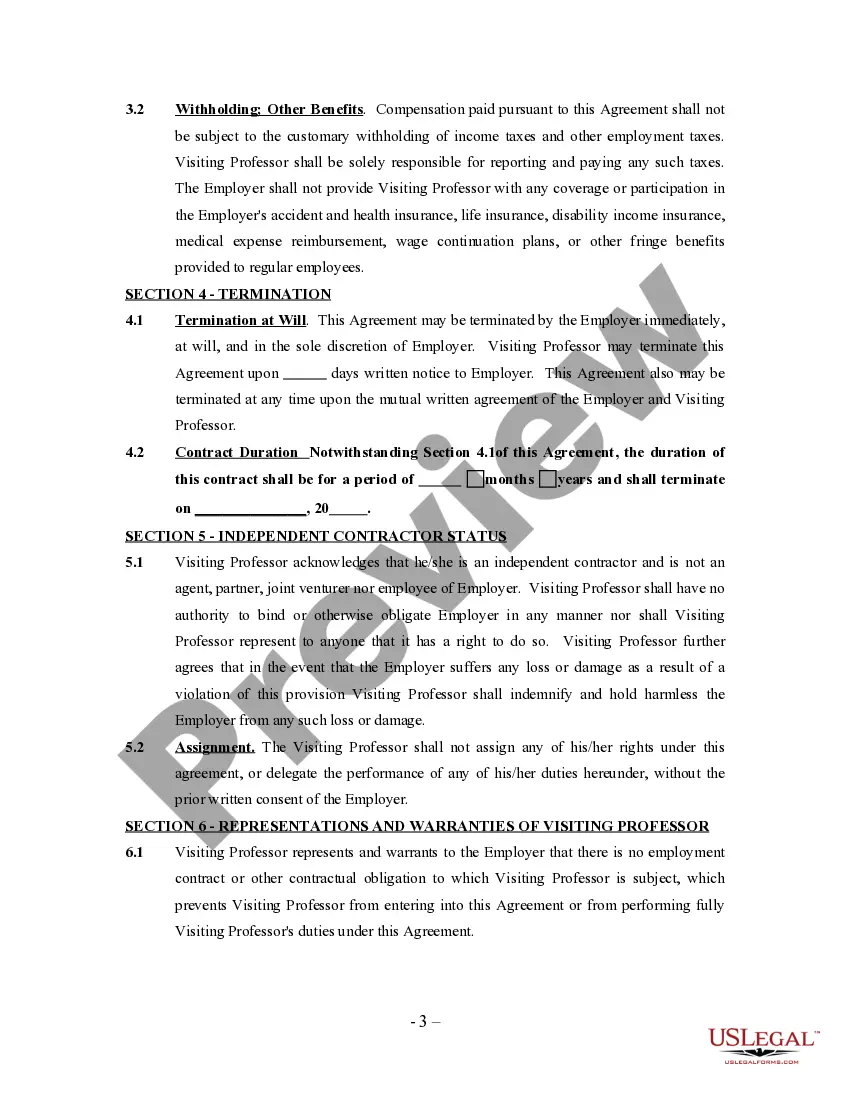
- Termination: Outlines conditions under which the agreement may be terminated by either party.
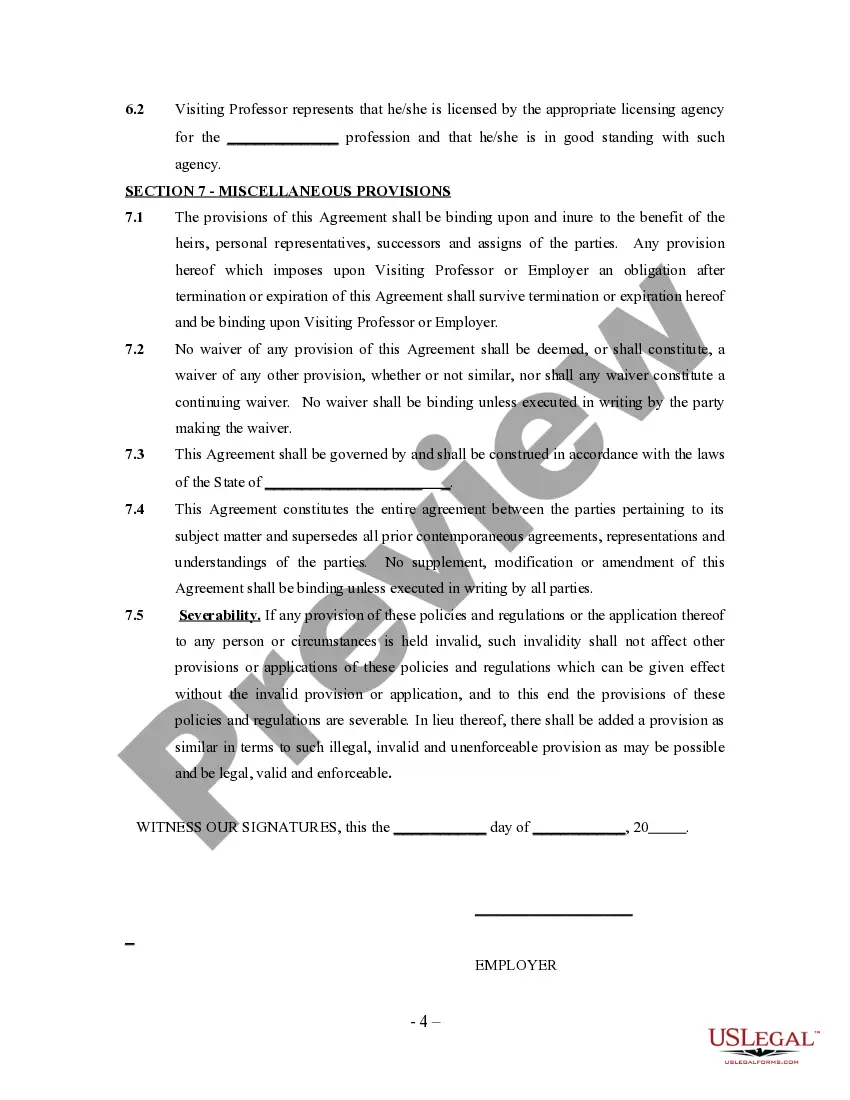
- Representations and Warranties: Provides assurances from the visiting professor regarding their qualifications and absence of conflicting obligations.

Situations where this form applies
This agreement is used when a college or university hires a visiting professor on a contract basis to deliver specific courses or educational services. It is particularly useful for institutions needing short-term teaching support or specialized knowledge without committing to full-time employment. Examples include when a professor is hired for a semester or for a particular program that requires their expertise.
Intended users of this form
- Educational institutions seeking to engage visiting professors on a contractual basis.
- Independent academics or professionals with teaching qualifications looking to offer their services temporarily.
- Administrators responsible for managing hiring contracts and ensuring compliance with institutional policies.
How to prepare this document
- Identify the parties: Enter the name of the employer and the visiting professor.
- Outline the scope of duties: Specify the academic and teaching responsibilities assigned to the professor.
- Detail the compensation: State the payment amount and schedule for the professor's services.
- Specify confidentiality obligations: Include clauses that protect the employer's confidential information.
- Include termination conditions: Define how either party can terminate the agreement and any related procedures.
Does this form need to be notarized?
Notarization is not commonly needed for this form. However, certain documents or local rules may make it necessary. Our notarization service, powered by Notarize, allows you to finalize it securely online anytime, day or night.
Get your form ready online
Our built-in tools help you complete, sign, share, and store your documents in one place.
Make edits, fill in missing information, and update formatting in US Legal Forms—just like you would in MS Word.
Download a copy, print it, send it by email, or mail it via USPS—whatever works best for your next step.
Sign and collect signatures with our SignNow integration. Send to multiple recipients, set reminders, and more. Go Premium to unlock E-Sign.
If this form requires notarization, complete it online through a secure video call—no need to meet a notary in person or wait for an appointment.
We protect your documents and personal data by following strict security and privacy standards.

Make edits, fill in missing information, and update formatting in US Legal Forms—just like you would in MS Word.

Download a copy, print it, send it by email, or mail it via USPS—whatever works best for your next step.

Sign and collect signatures with our SignNow integration. Send to multiple recipients, set reminders, and more. Go Premium to unlock E-Sign.

If this form requires notarization, complete it online through a secure video call—no need to meet a notary in person or wait for an appointment.

We protect your documents and personal data by following strict security and privacy standards.
Mistakes to watch out for
- Failing to clearly define the scope of duties, leading to misunderstandings about responsibilities.
- Neglecting confidentiality clauses, which can expose sensitive information.
- Overlooking the need for signatures from both parties, which can render the agreement unenforceable.
Why complete this form online
- Convenience: Easily accessible for download and completion at your convenience.
- Editability: Tailor the form to fit specific circumstances and needs.
- Reliability: Crafted by licensed attorneys to meet legal standards for independent contractor agreements.
Legal use & context
- This agreement is legally binding upon acceptance by both parties.
- It clarifies the independent contractor status, which can help avoid misclassification liabilities.
- Adherence to the terms protects both the employer and the visiting professor, fostering a clear understanding of roles and expectations.
Main things to remember
- This agreement formalizes the relationship between an employer and a visiting professor as independent contractors.
- It includes essential sections like duties, compensation, and confidentiality.
- Use this form to ensure clarity and legal protection for both parties involved in providing educational services.
Looking for another form?







Form popularity
FAQ
The IRS view is that most crew members, actors, and others working on a film production should be classified as employees, not independent contractors, and that taxes should thus be withheld.
Teachers are independent contractors only if (a) you do not control or direct how they teach their classes, (b) if teaching yoga is outside of your yoga business, and (c) the teacher has an independent business that is the same as they work they do for you.
Right to a Contract. Right to Control. Right to Make Decisions. Right to Work When You Want. Right to Work Where You Want. Right to Advertise. Right to Receive Payment. Right to Work with Other Contractors.
The general rule is that an individual is an independent contractor if the payer has the right to control or direct only the result of the work and not what will be done and how it will be done. The earnings of a person who is working as an independent contractor are subject to Self-Employment Tax.
Simply put, being an independent contractor is one way to be self-employed. Being self-employed means that you earn money but don't work as an employee for someone else.An independent contractor is someone who provides a service on a contractual basis.
The earnings of a person who is working as an independent contractor are subject to Self-Employment Tax. If you are an independent contractor, you are self-employed. To find out what your tax obligations are, visit the Self-Employed Tax Center.
For colleges and universities, the general rule is that instructors, adjunct faculty, and proctors are employees. Guest speakers and performers are independent contractors. Researchers and consultants must be determined on a case to case basis.
Are adjunct professors independent contractors (1099 workers) or W2 employees?Though there is a movement to classify academic freelancers who teach as adjuncts as a part of their paid work as independent contractors, the law has not changed and most often adjuncts are classified as W2 employees for tax purposes.