Nebraska Marital Domestic Separation and Property Settlement Agreement no Children parties may have Joint Property or Debts where Divorce Action Filed
About this form
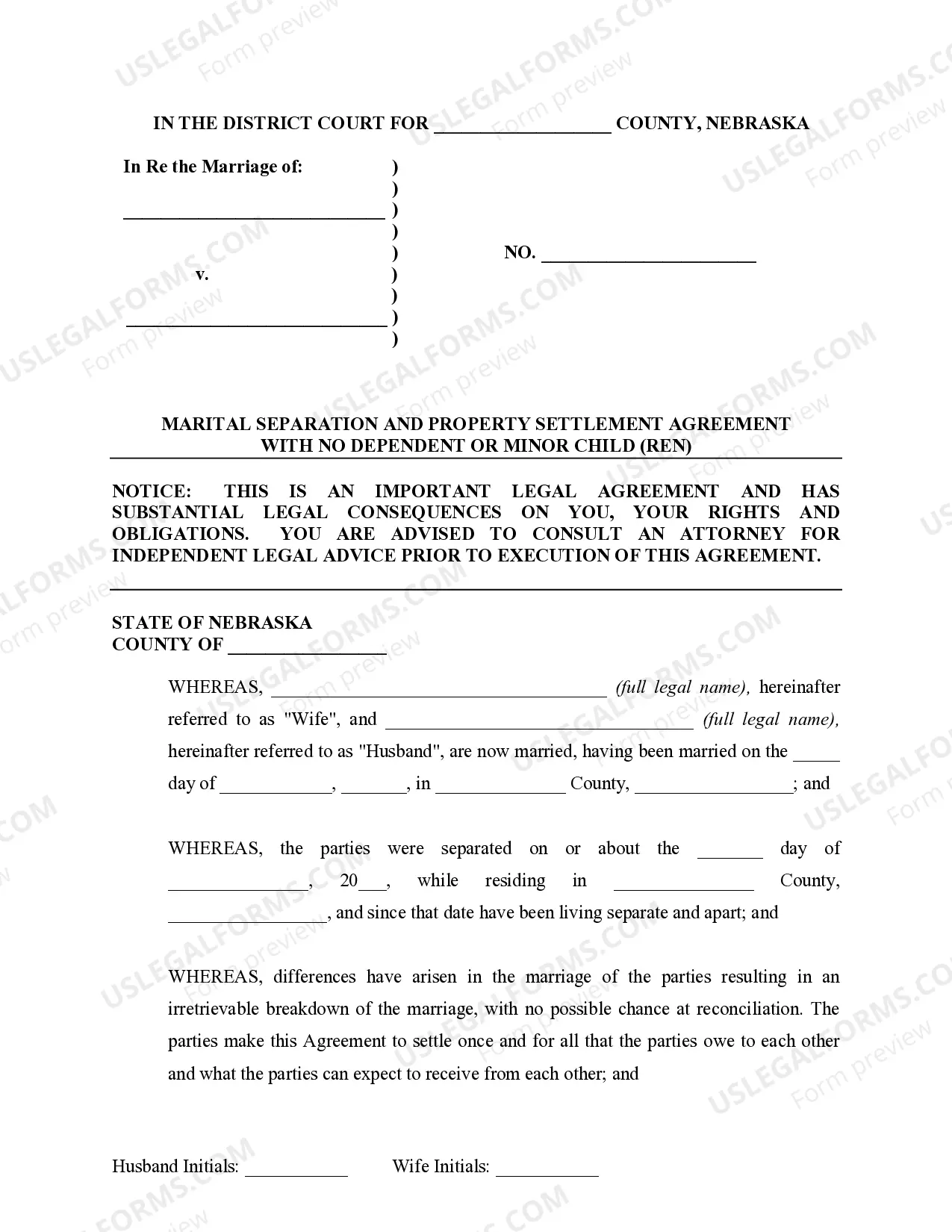
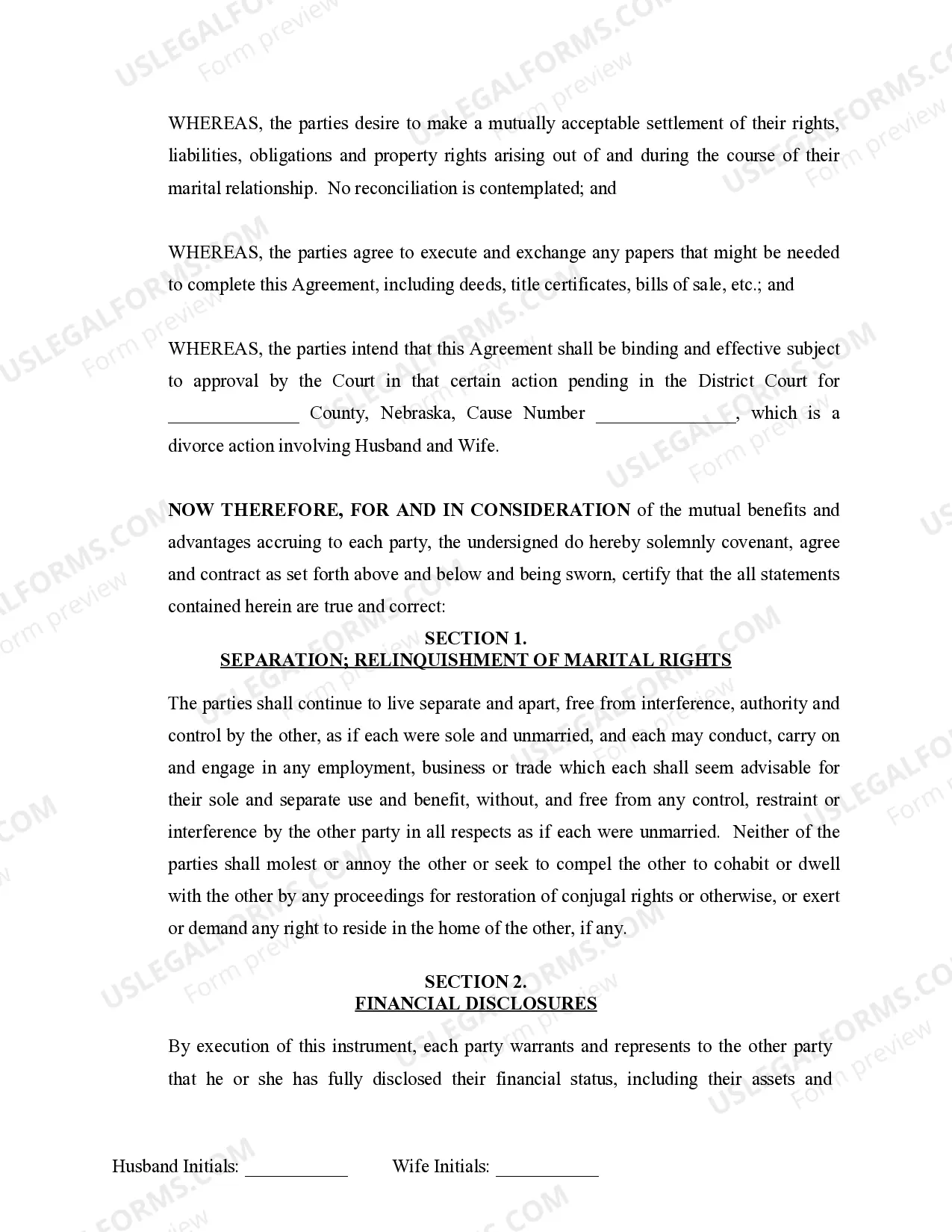
The Marital Domestic Separation and Property Settlement Agreement is a legal document designed for married couples without children who are undergoing a divorce. This agreement allows the parties to resolve their joint property and debts, detailing how assets and liabilities will be divided between them. It is specifically tailored for use in the State of Nebraska during divorce proceedings.
Key parts of this document
- Separation relinquishment of marital rights
- Disclosure of financial information by both parties
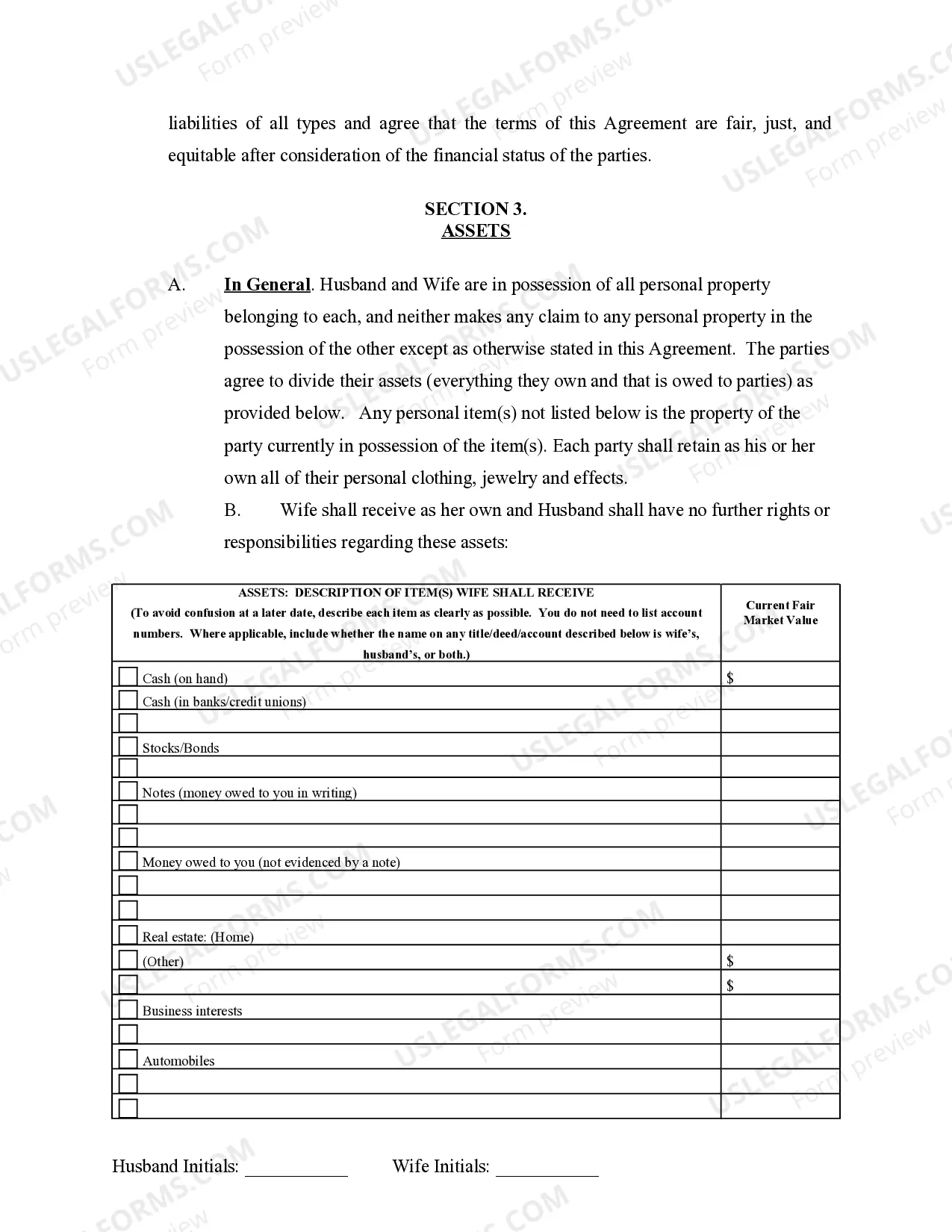
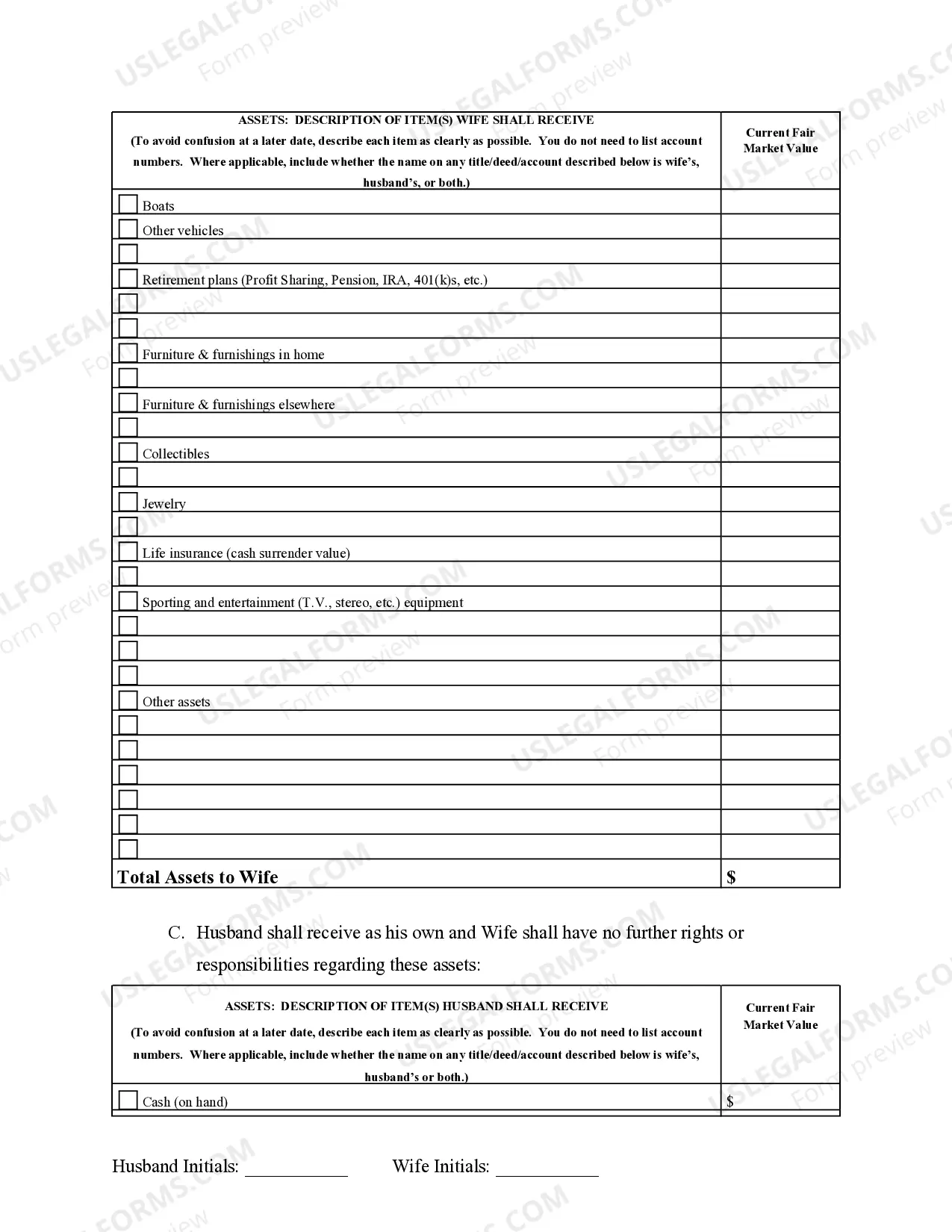
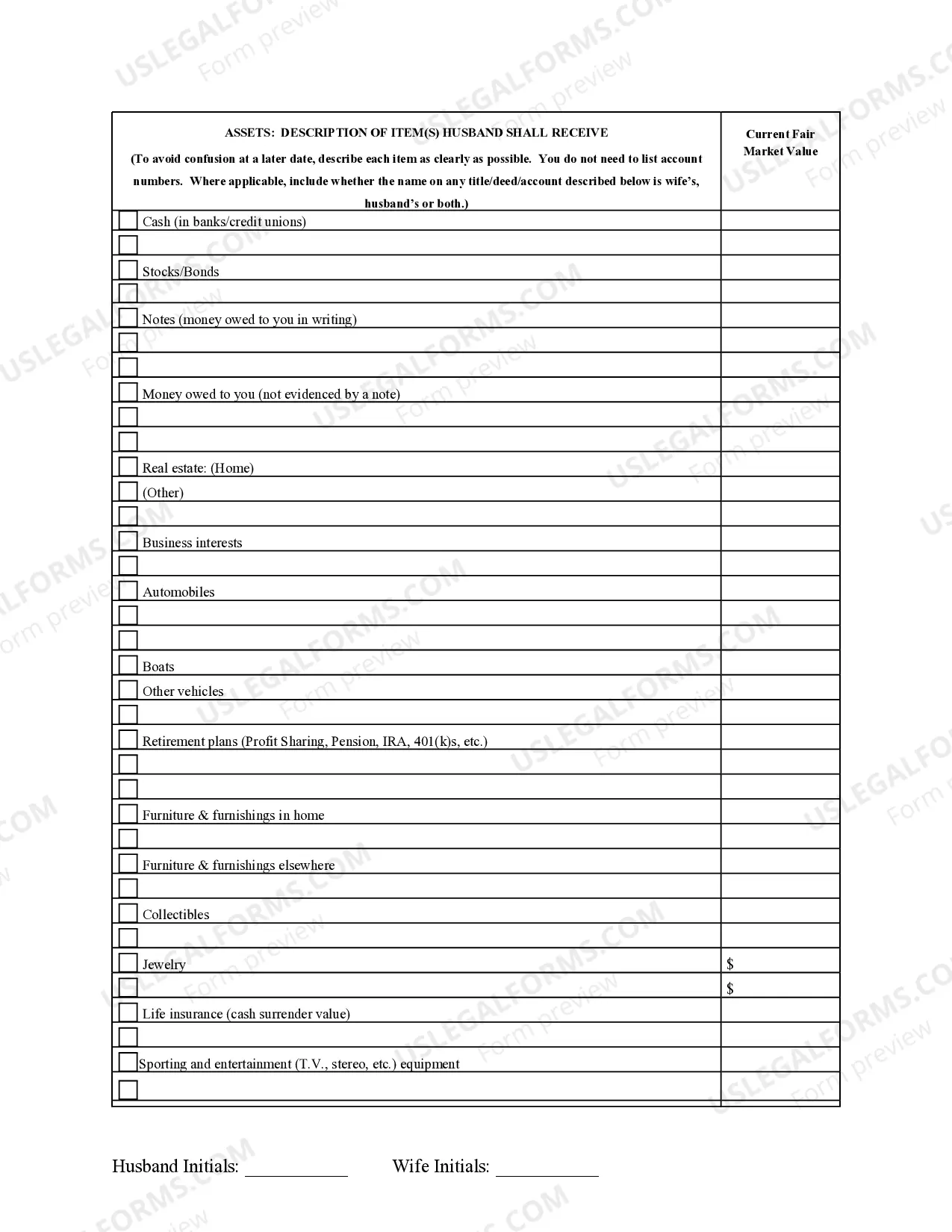
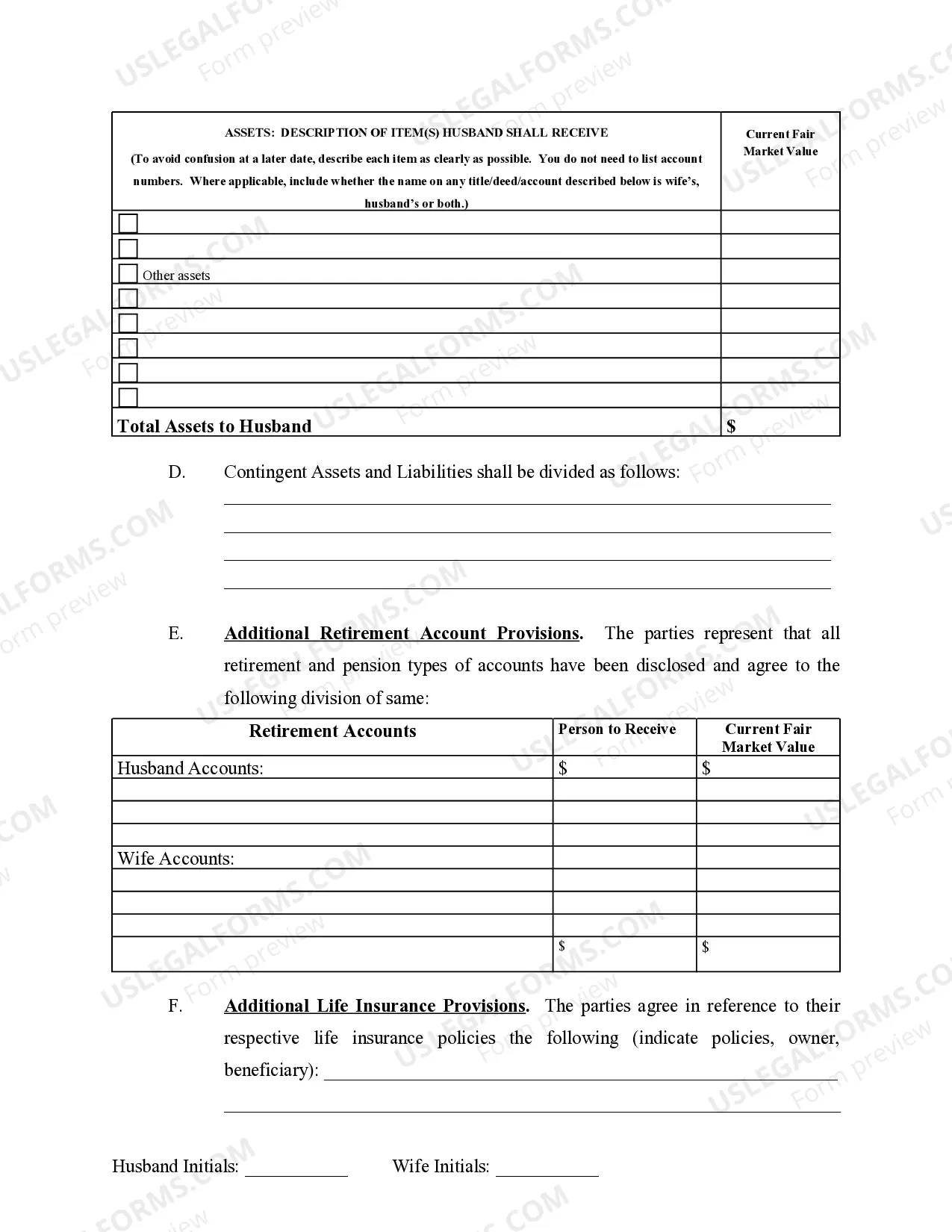
- Detailed division of assets and liabilities
- Provisions for future support and indemnity
- Legal requirements for signatures and notarization
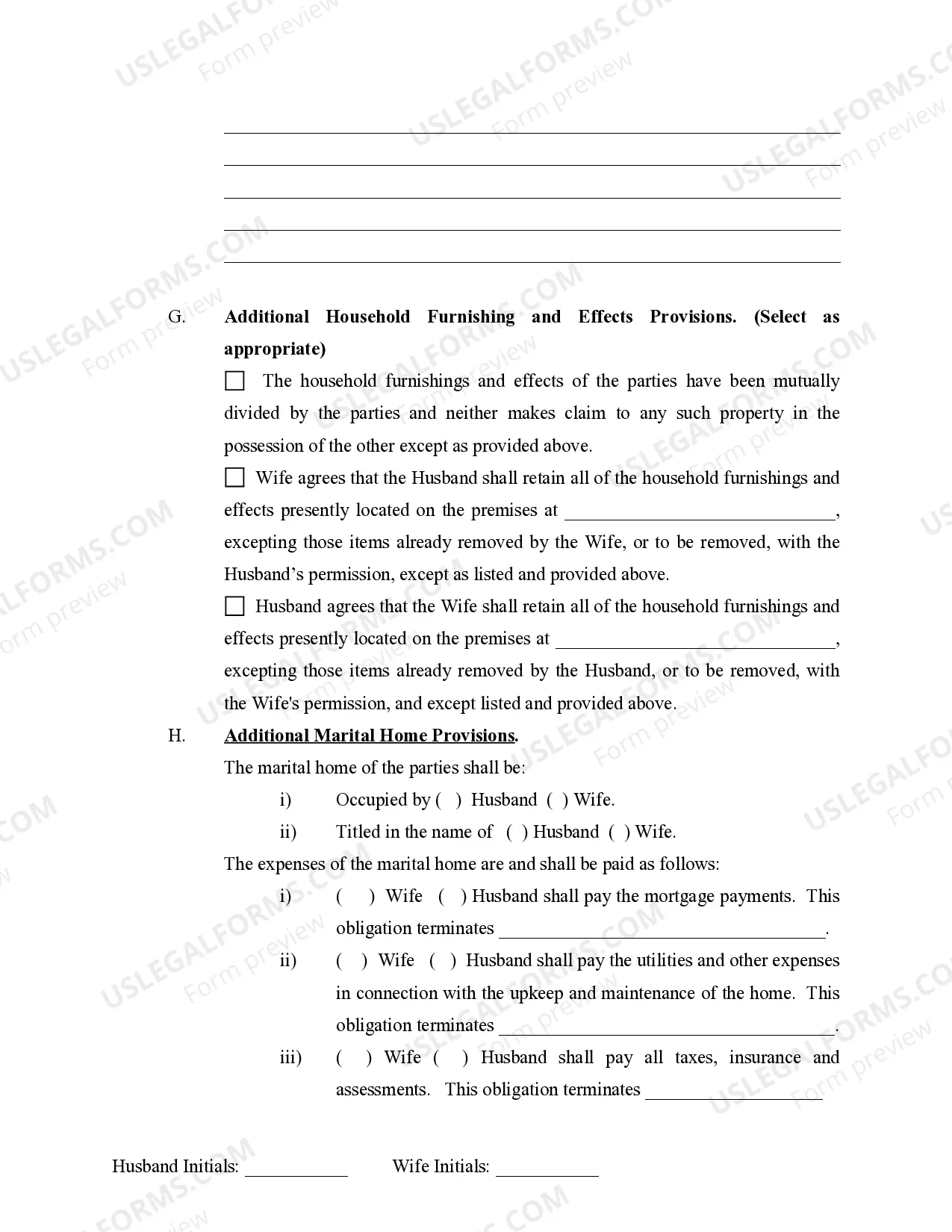
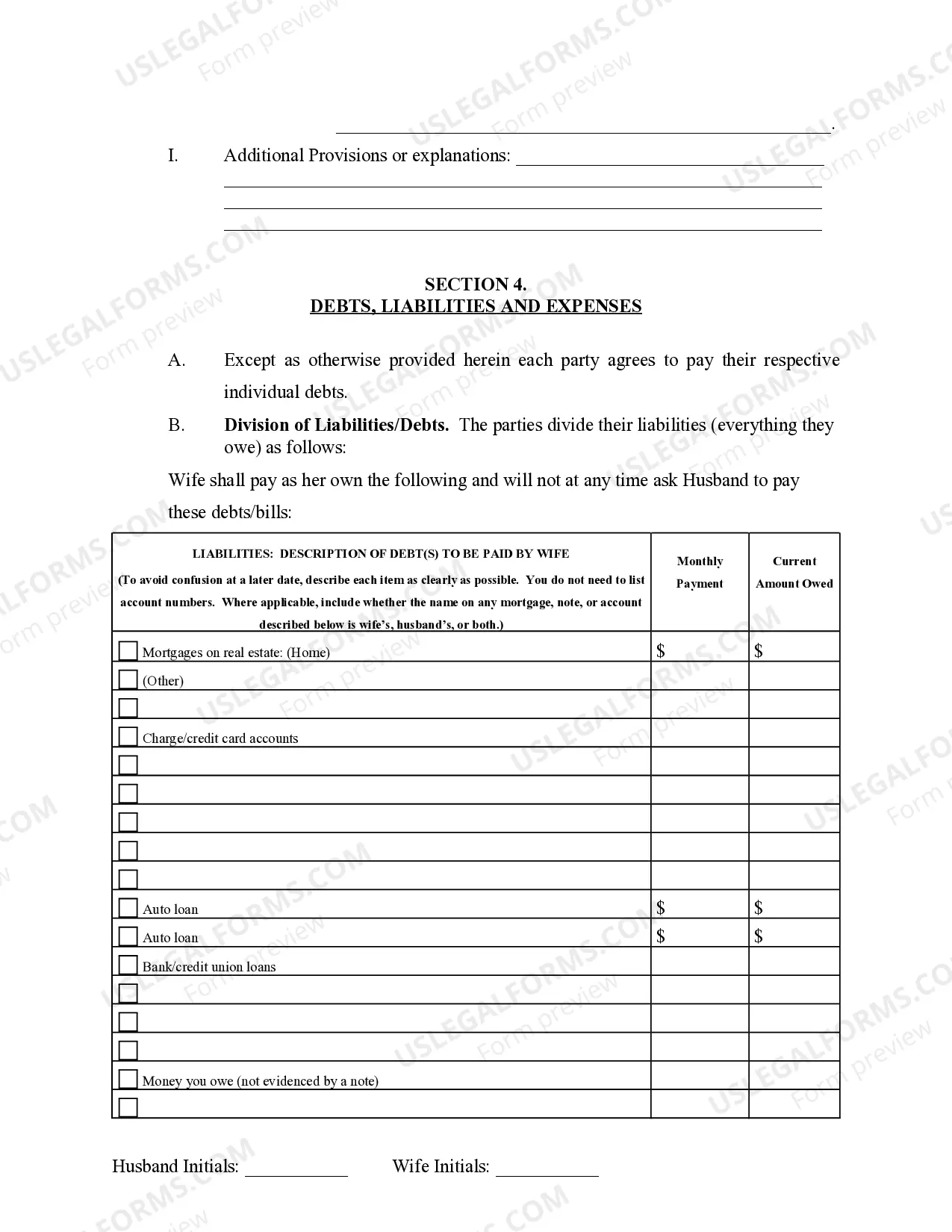
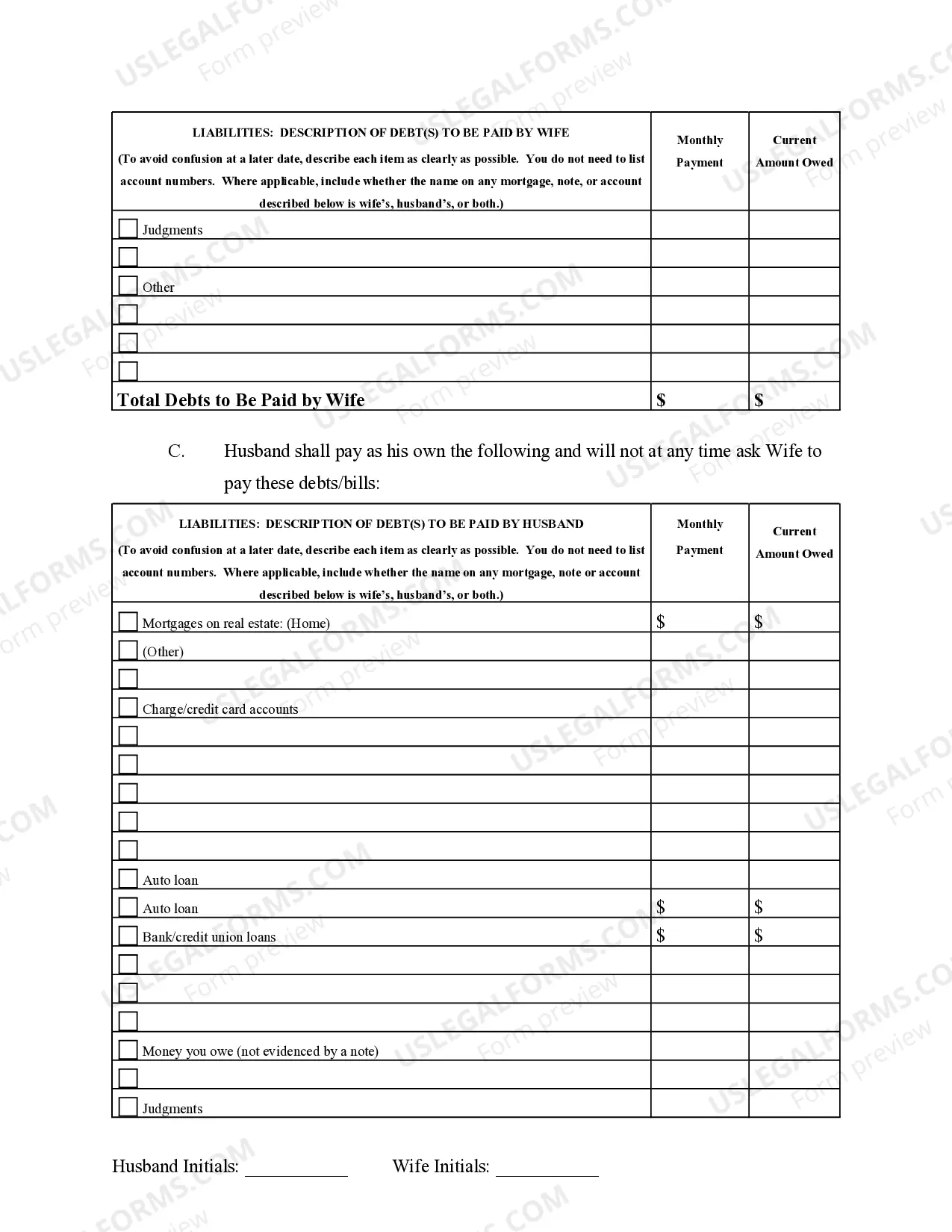


When this form is needed
This form should be utilized when a married couple without children intends to formalize their separation while a divorce action is pending. It is applicable in situations where both parties wish to clarify their financial responsibilities and rights regarding shared property and debts.
Intended users of this form
- Married couples in Nebraska planning to divorce
- Couples without dependent children
- Individuals seeking to clarify the division of joint property and debts
Completing this form step by step
- Identify both parties by entering their full legal names and contact information.
- Disclose and list all assets and debts, detailing who will receive which items.
- Specify any spousal support agreements, including amounts and payment frequency.
- Have both parties sign the document in front of a notary public.
- File the agreement with the appropriate court as part of the divorce proceedings.
Notarization guidance
Yes, this form must be notarized to be legally valid. US Legal Forms provides integrated online notarization, allowing you to finalize your agreement through a secure video call, with 24/7 availability, ensuring you do not need to travel to a notary's office.
Get your form ready online
Our built-in tools help you complete, sign, share, and store your documents in one place.
Make edits, fill in missing information, and update formatting in US Legal Forms—just like you would in MS Word.
Download a copy, print it, send it by email, or mail it via USPS—whatever works best for your next step.
Sign and collect signatures with our SignNow integration. Send to multiple recipients, set reminders, and more. Go Premium to unlock E-Sign.
If this form requires notarization, complete it online through a secure video call—no need to meet a notary in person or wait for an appointment.
We protect your documents and personal data by following strict security and privacy standards.

Make edits, fill in missing information, and update formatting in US Legal Forms—just like you would in MS Word.

Download a copy, print it, send it by email, or mail it via USPS—whatever works best for your next step.

Sign and collect signatures with our SignNow integration. Send to multiple recipients, set reminders, and more. Go Premium to unlock E-Sign.

If this form requires notarization, complete it online through a secure video call—no need to meet a notary in person or wait for an appointment.

We protect your documents and personal data by following strict security and privacy standards.
Common mistakes to avoid
- Failing to fully disclose all assets and debts.
- Not having the agreement notarized as required.
- Leaving important sections blank or unaddressed.
- Not consulting with an attorney for independent advice.
Why use this form online
- Convenience of completing the form from home.
- Edit and customize the document as needed before printing.
- Access to attorney-drafted content that ensures legal compliance.
Main things to remember
- The agreement is essential for dividing assets and debts during divorce.
- It is specific to Nebraska legal requirements.
- Notarization is necessary for its enforcement.
Looking for another form?


Form popularity
FAQ
Marital Settlement Agreements, reached between the parties in writing and signed by the parties, become legally binding when approved by the court at the time of the final court hearing.Once approved by the court, such post judgment stipulations do become legally binding and enforceable between the parties.
Some people wonder if they can save even more by money by writing their own settlement agreement and not seeking the help of a divorce attorney at all. While there is no legal requirement that you have a lawyer draft your settlement agreement, it is certainly a good idea to do so.
Your divorce settlement agreement should cover everything that is important to you, including custody of your children, child support payments, alimony, and the separation of your property, such as your family home, vehicles, and other assets.
Yes, it is mandatory. Each party must obtain independent legal advice prior to signing a separation agreement. You also cannot use the same lawyer and should not use the same law firm. If you fail to obtain advice from a lawyer, the separation agreement will be unenforceable.
A detailed parenting-time scheduleincluding holidays! Specifics about support. Life insurance. Retirement accounts and how they will be divided. A plan for the sale of the house.
Make sure you have all of the basic information and divorce forms you need according to the divorce laws in your state. Make sure you have all of the personal information you need. Include a statement that you and the other party are in agreement with the contents of the document.
A fair settlement should include ample parenting time for each parent. An equitable visitation agreement may not give parents equal custodial time, but it should provide for frequent and continuing contact with each parent.
Rights to Property after Separation: When You're Married and Getting a Divorce. The benefit of getting married is that, in the event of a divorce or separation, you are entitled to a share of the property.The right to stay in your home unless a court order excludes it.
#1. Start with the Basics. #2. Include the Details. #3. Confirm Your Agreement. #4. Identify and Divide Assets and Debts. #5. Create a Parenting Plan for Custody and Visitation. #6. Agree on Child Support and Spousal Support (Alimony) #7. Polishing Your Agreement. Conclusion.