Shut-In Gas Royalty
What this document covers
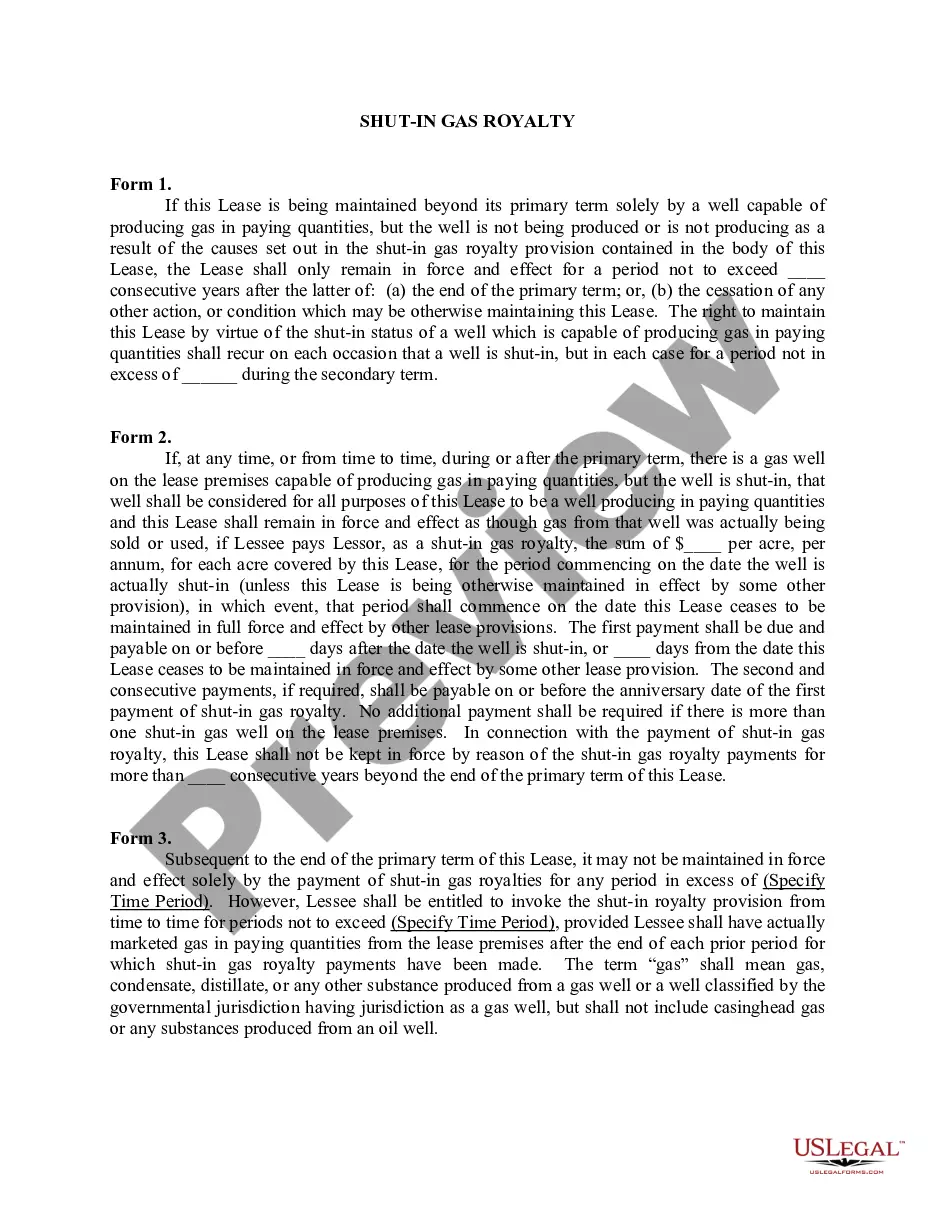
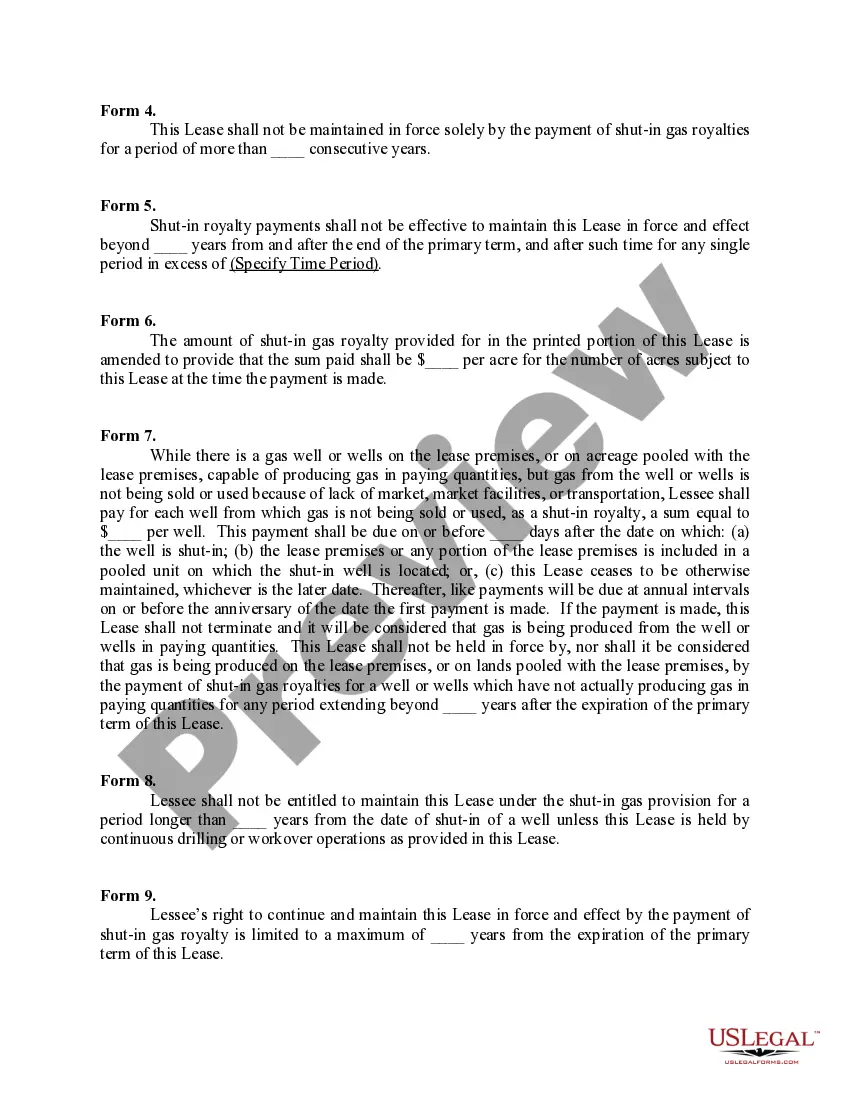
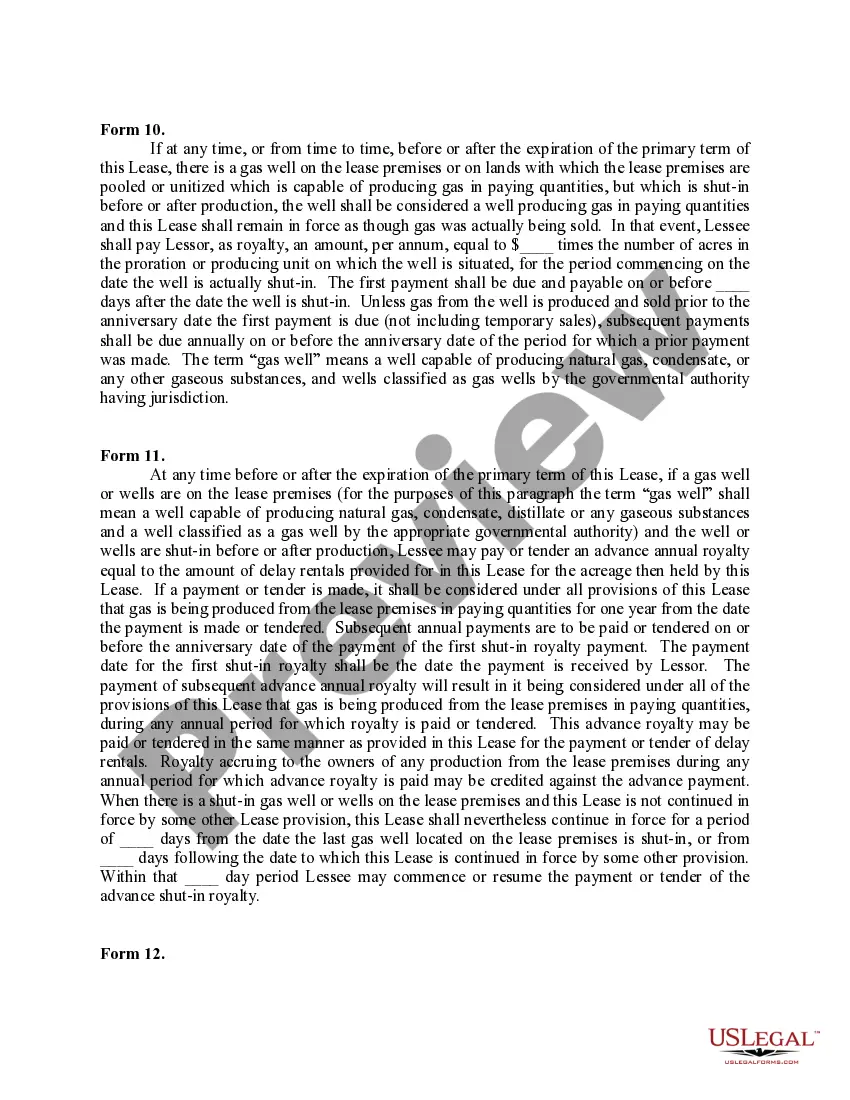
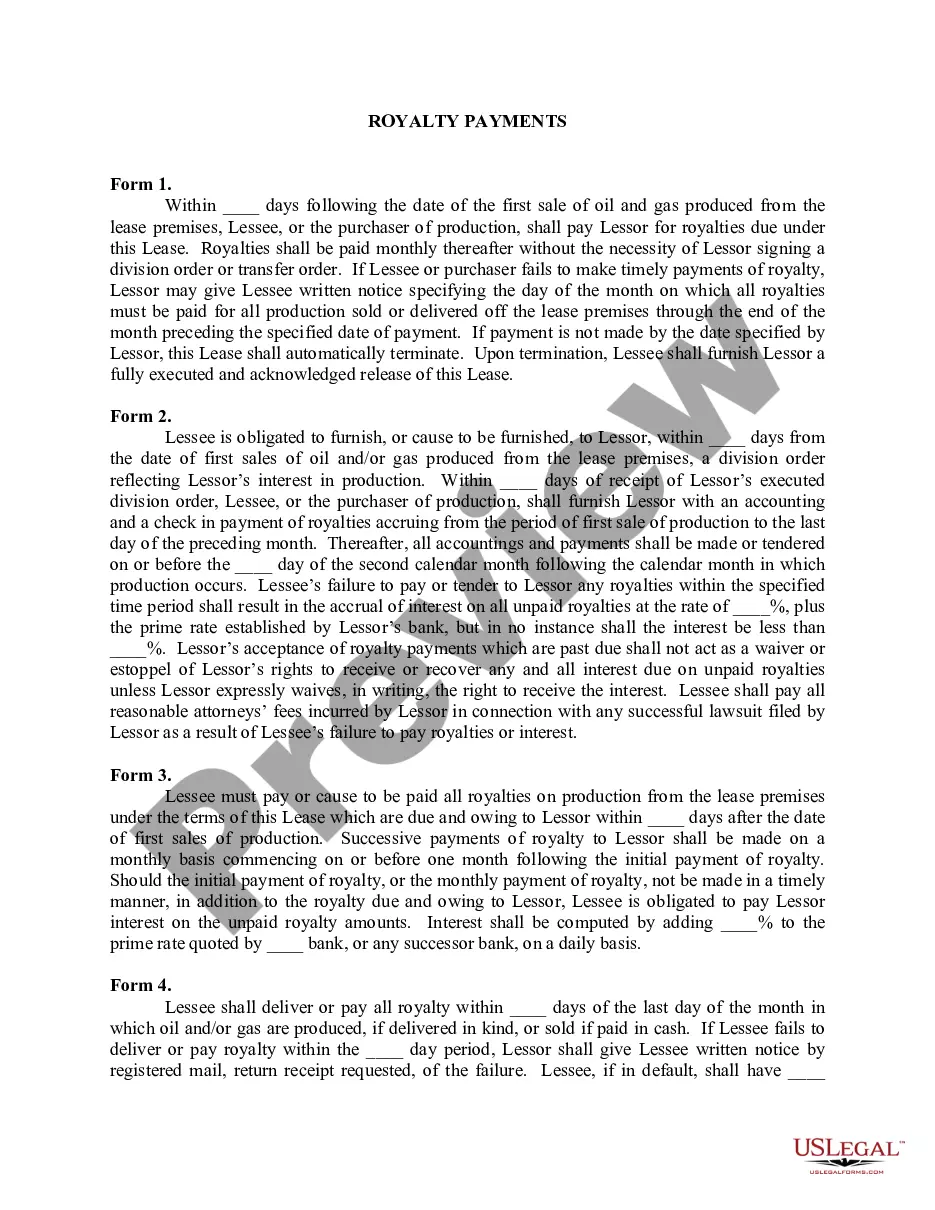
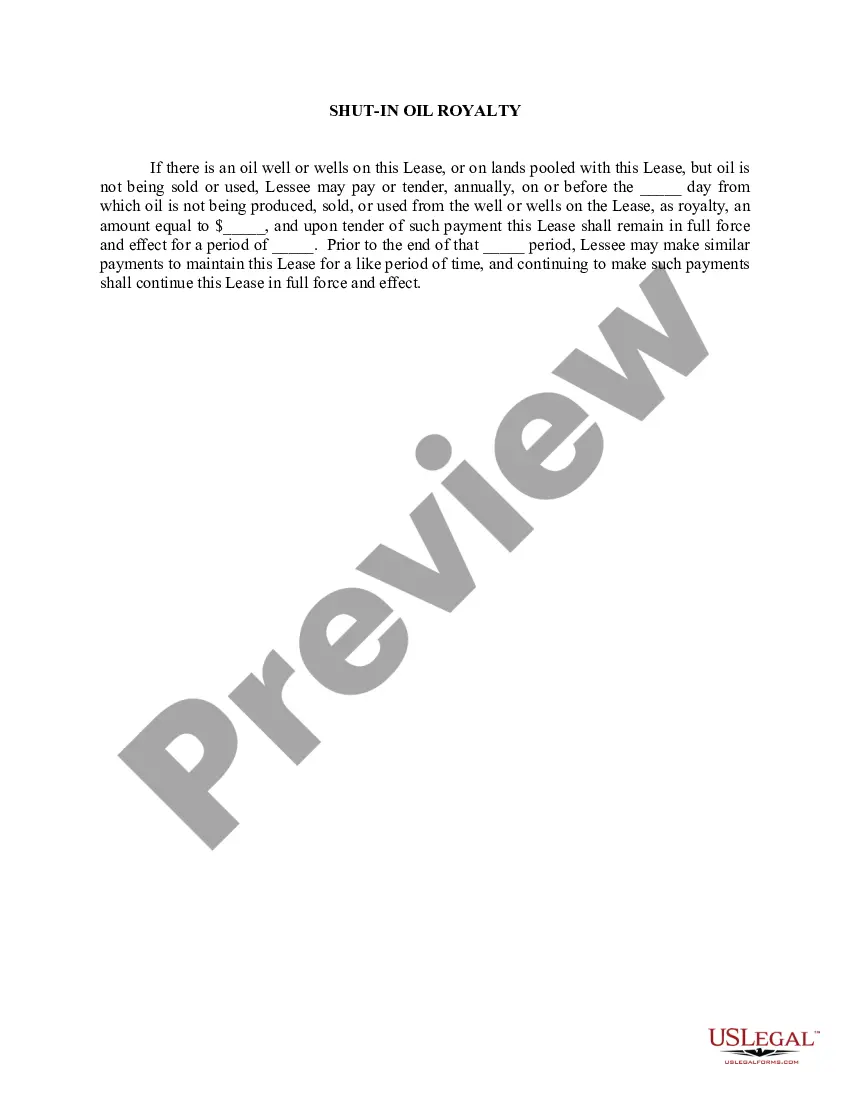
The Shut-In Gas Royalty form is a lease rider that is used in oil and gas transactions to add specific provisions regarding the management of shut-in gas wells. This form allows lessors to agree to conditions that maintain the lease when a natural gas well capable of producing gas is not currently in use. It is an essential tool for property owners and lessees to outline circumstances under which the lease remains valid, providing protections against lease termination due to market conditions or operational challenges.
What’s included in this form
- Definitions of terms related to gas wells and production.
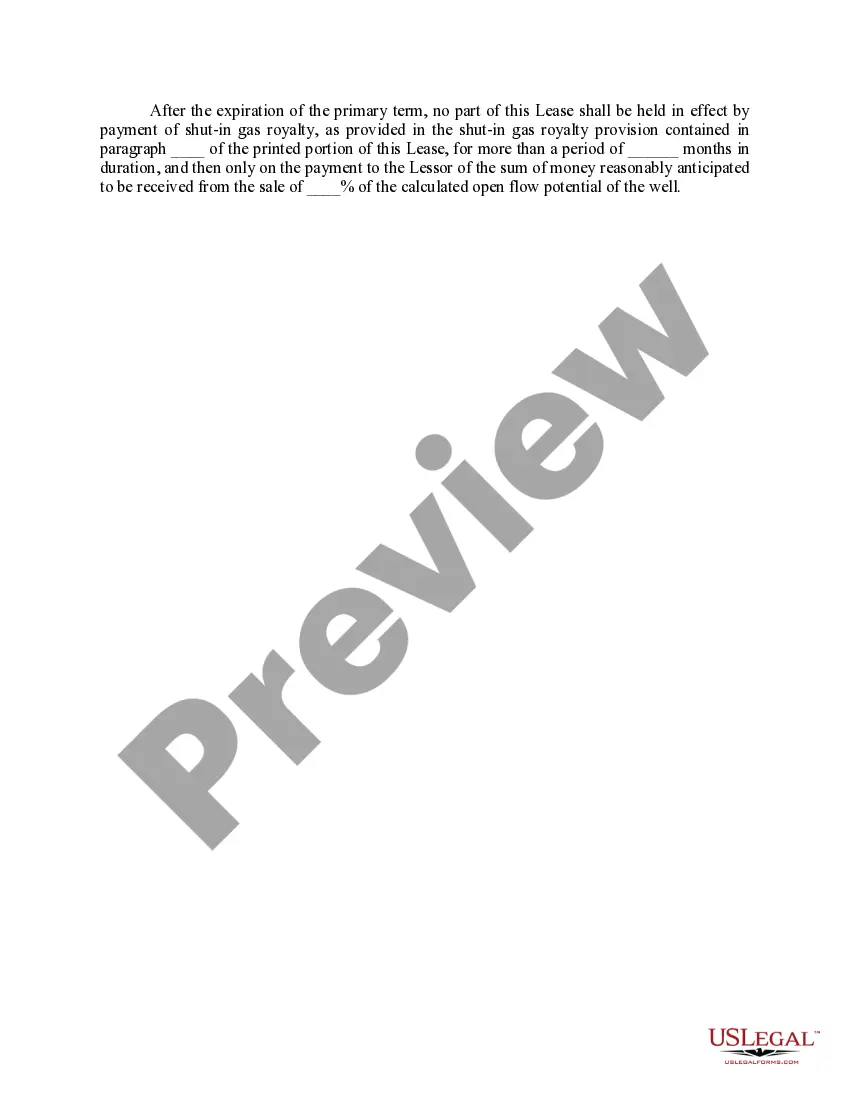
- Provisions for the maintenance of the lease during periods of shut-in gas production.
- Payment clauses detailing shut-in gas royalties, including timing and amounts.
- Limitations on duration for which the lease can be held in force by pay of shut-in royalties.
- Clauses addressing multiple gas wells and their individual shut-in royalty payments.
Situations where this form applies
This form is necessary when engaging in an oil and gas lease where there is a well capable of producing gas but is currently not producing due to reasons such as market conditions or maintenance challenges. It protects the interests of both the lessor and lessee by specifying the conditions that allow the lease to remain in effect, preventing unintentional lease termination.
Who this form is for
- Property owners (lessors) who are leasing their land for oil and gas exploration.
- Companies or individuals (lessees) engaged in the oil and gas industry.
- Legal professionals representing either party in the lease agreement.
- Anyone involved in negotiations regarding gas well management and royalty payments.
Instructions for completing this form
- Identify the parties involved: the lessor and lessee.
- Specify the details of the well, including its location and production capacity.
- Enter the terms of the shut-in royalty payments, including amounts and payment schedules.
- Define any time limitations for maintaining the lease through shut-in royalty payments.
- Ensure all parties sign the document where indicated.
Notarization guidance
In most cases, this form does not require notarization. However, some jurisdictions or signing circumstances might. US Legal Forms offers online notarization powered by Notarize, accessible 24/7 for a quick, remote process.
Get your form ready online
Our built-in tools help you complete, sign, share, and store your documents in one place.
Make edits, fill in missing information, and update formatting in US Legal Forms—just like you would in MS Word.
Download a copy, print it, send it by email, or mail it via USPS—whatever works best for your next step.
Sign and collect signatures with our SignNow integration. Send to multiple recipients, set reminders, and more. Go Premium to unlock E-Sign.
If this form requires notarization, complete it online through a secure video call—no need to meet a notary in person or wait for an appointment.
We protect your documents and personal data by following strict security and privacy standards.

Make edits, fill in missing information, and update formatting in US Legal Forms—just like you would in MS Word.

Download a copy, print it, send it by email, or mail it via USPS—whatever works best for your next step.

Sign and collect signatures with our SignNow integration. Send to multiple recipients, set reminders, and more. Go Premium to unlock E-Sign.

If this form requires notarization, complete it online through a secure video call—no need to meet a notary in person or wait for an appointment.

We protect your documents and personal data by following strict security and privacy standards.
Avoid these common issues
- Failing to specify the payment amount for shut-in royalties.
- Omitting critical time periods for maintaining the lease.
- Not signing or dating the form, which can lead to disputes.
- Using outdated or incorrect terms that do not meet current legal standards.
Benefits of completing this form online
- Convenience of downloading and completing the form from anywhere.
- Editability, allowing customized terms for specific lease situations.
- Reliability of templates drafted by licensed attorneys ensuring legal compliance.
Legal use & context
- This form ensures that lessees retain their rights when gas wells are inactive, reducing the risk of lease termination.
- It establishes a clear framework for compensating lessors during periods of inactivity, promoting fair practices in lease agreements.
What to keep in mind
- The Shut-In Gas Royalty form is essential for maintaining lease agreements when gas wells are not in production.
- Clear definitions of payment amounts and periods are vital for both parties involved.
- Consideration of state-specific regulations can enhance compliance and protect both lessor and lessee interests.
Looking for another form?
Form popularity
FAQ
To shut in a well means to make it not produce, so we'll start with a primer on production. When a well is producing it means the well has been drilled, completed in a reservoir, and oil and/or gas is somehow moving up the wellbore and to the surface facility.
Shut-In Clause: Where a gas well has been completed but no market exists for the gas, the shut-in clause enables a lessee to keep the non-producing lease in force by the payment of the shut-in royalty. Such payment serves as constructive production and avoids application of the automatic termination rule.
In the petroleum industry, shutting-in is the implementation of a production cap set lower than the available output of a specific site. This may be part of an attempt to constrict the oil supply or a necessary precaution when crews are evacuated ahead of a natural disaster.
To restart production, it is necessary to bring a new rig, drill the cement plug, and pump the sludge blocking the well head.At best, resuming production may require months of work, at worst, shutdown can permanently diminish the throughput of the facility. Offshore drilling platforms have their own challenges.
Essentially, the shut-in royalty provision allows a lessee to temporarily cease production (i.e., shut-in a well) and pay a shut-in royalty to the lessor in place of the royalty on production that is not occurring during the shut-in period.
Shut in a well in the Oil and Gas Industry To shut in a well is to close off a well so that it stops producing.The company had to shut in a well that began producing water in order to prevent contamination of the dry oil from other wells when production was commingled.
In the petroleum industry, shutting-in is the implementation of a production cap set lower than the available output of a specific site. This may be part of an attempt to constrict the oil supply or a necessary precaution when crews are evacuated ahead of a natural disaster.