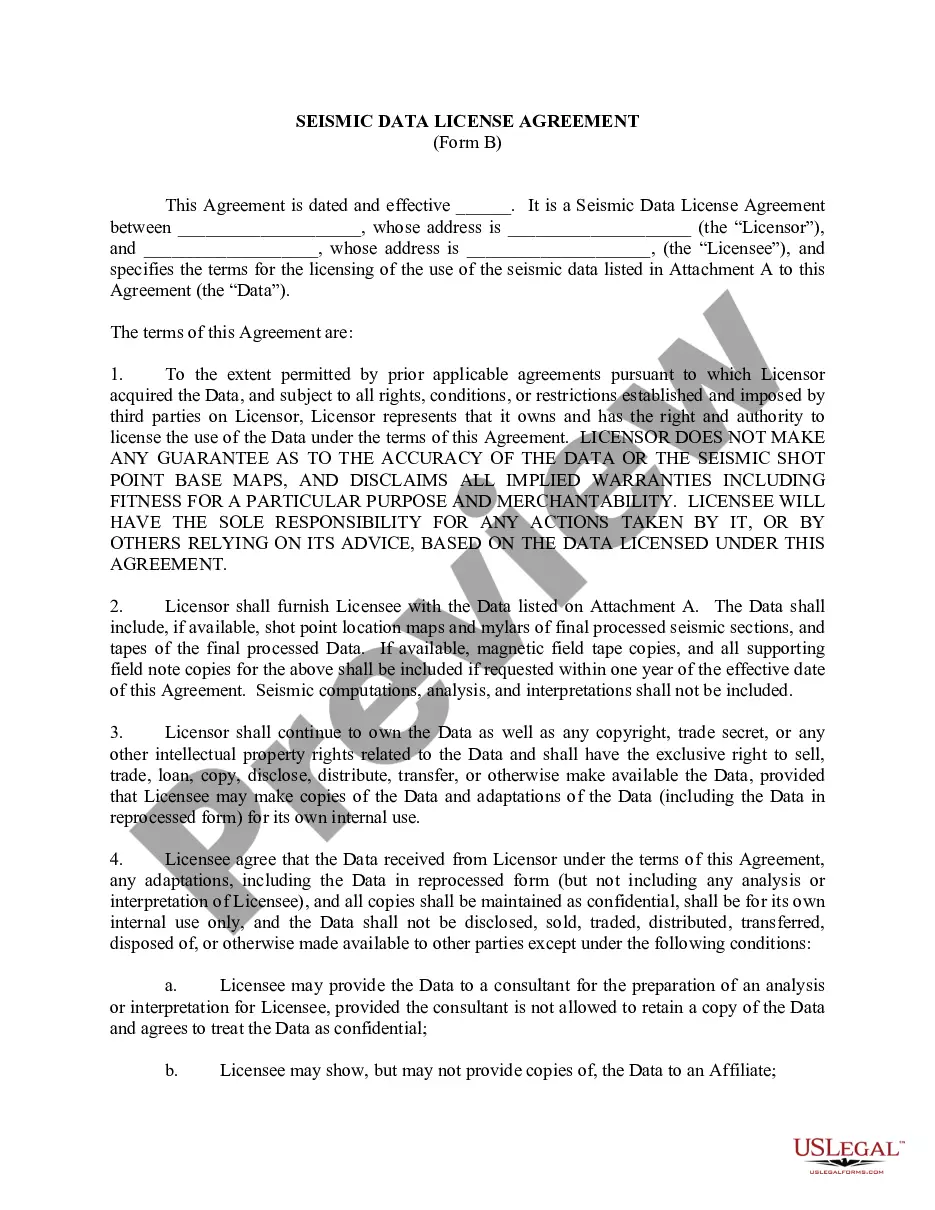
Consignment Agreement
Understanding this form
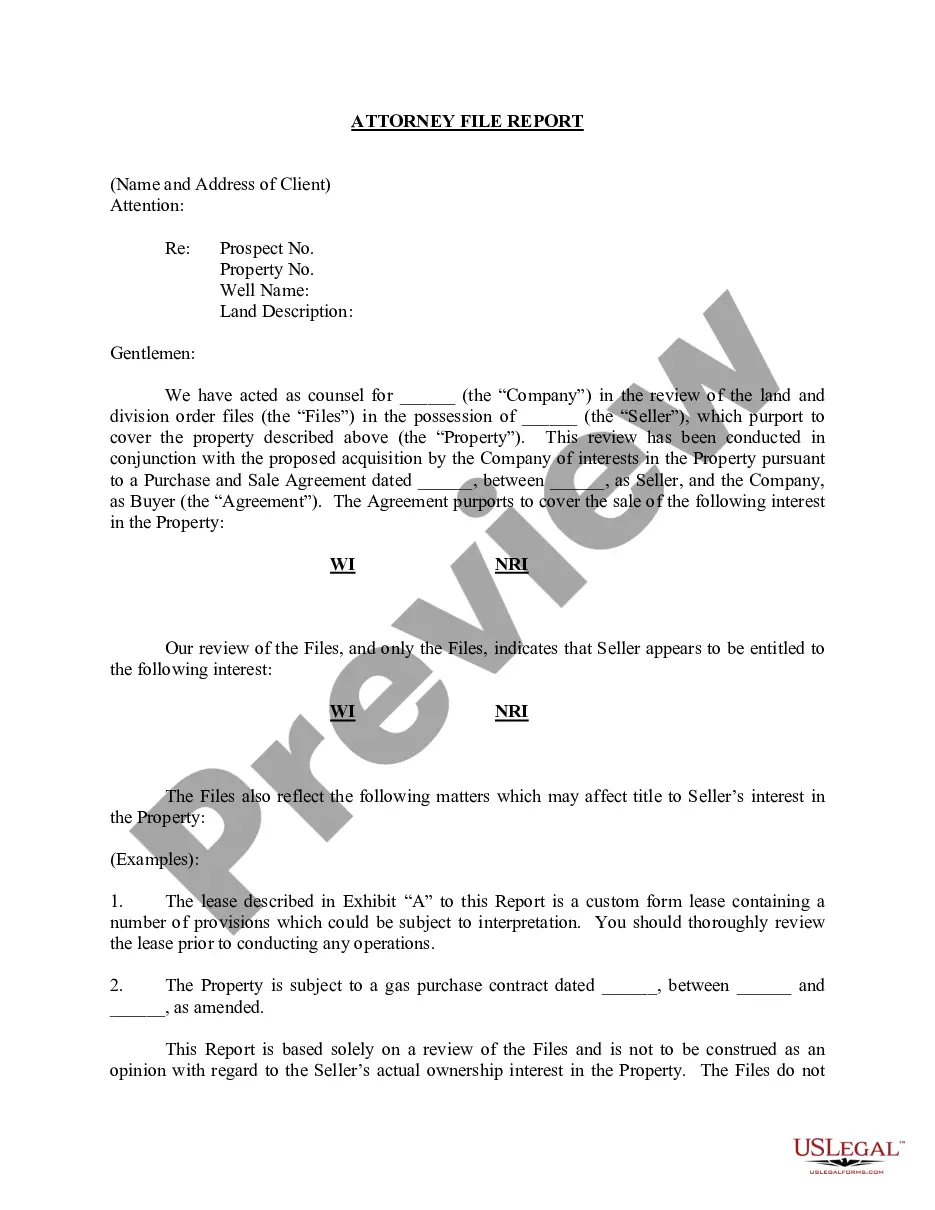
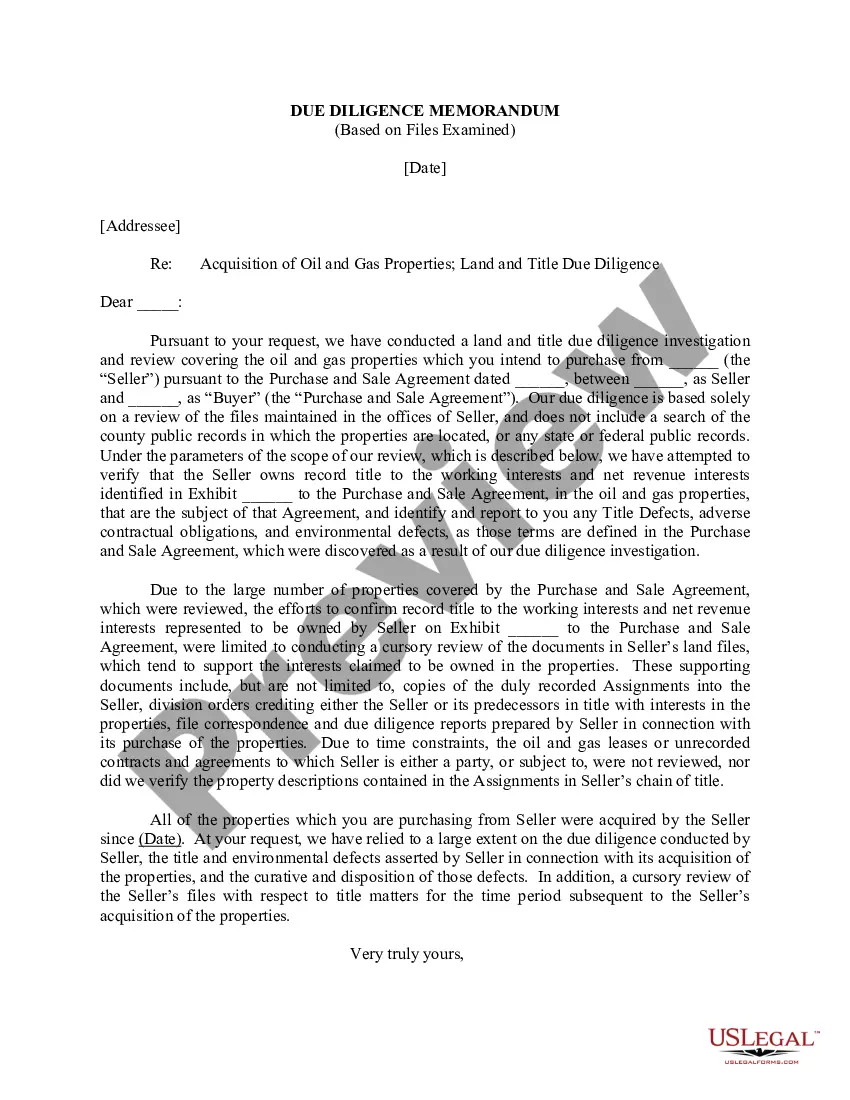
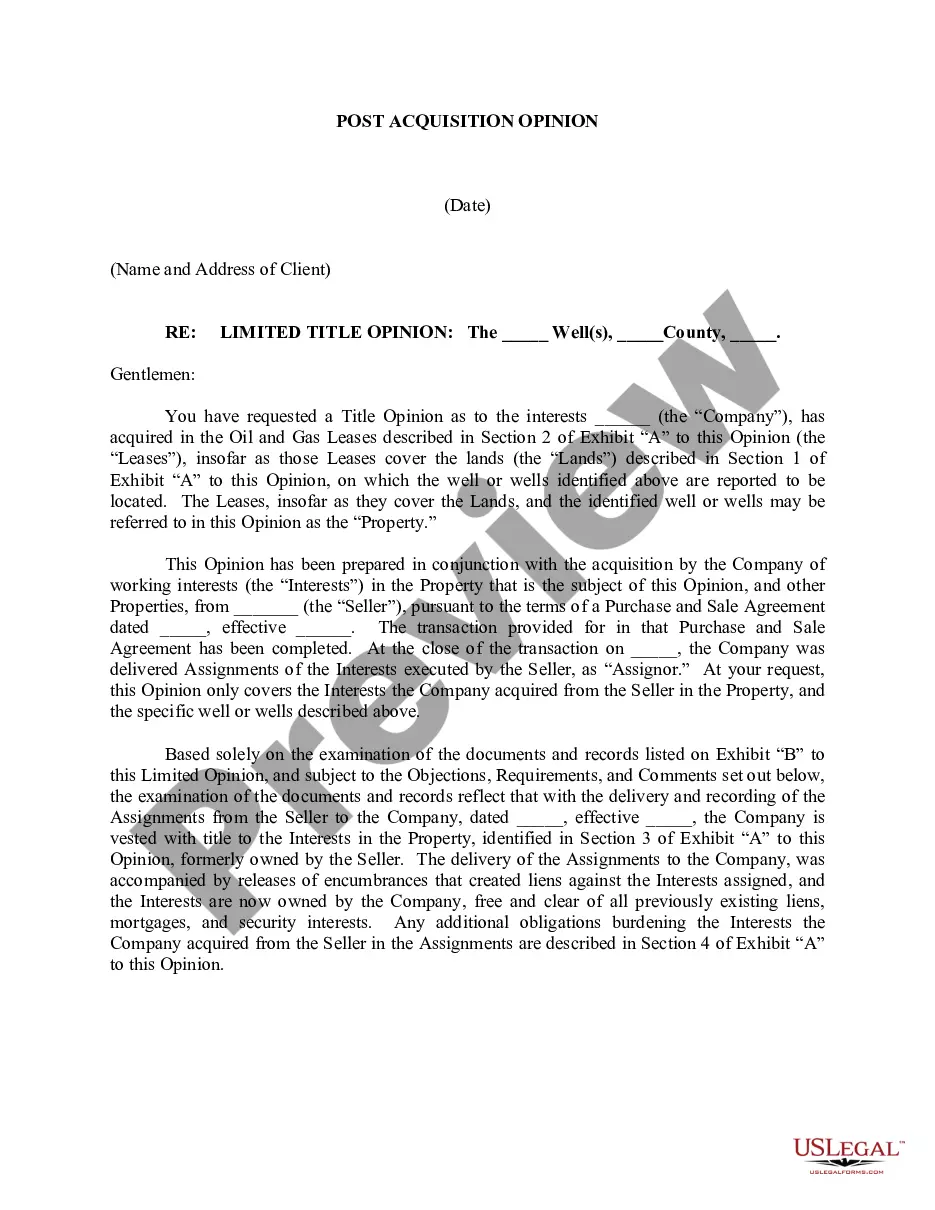
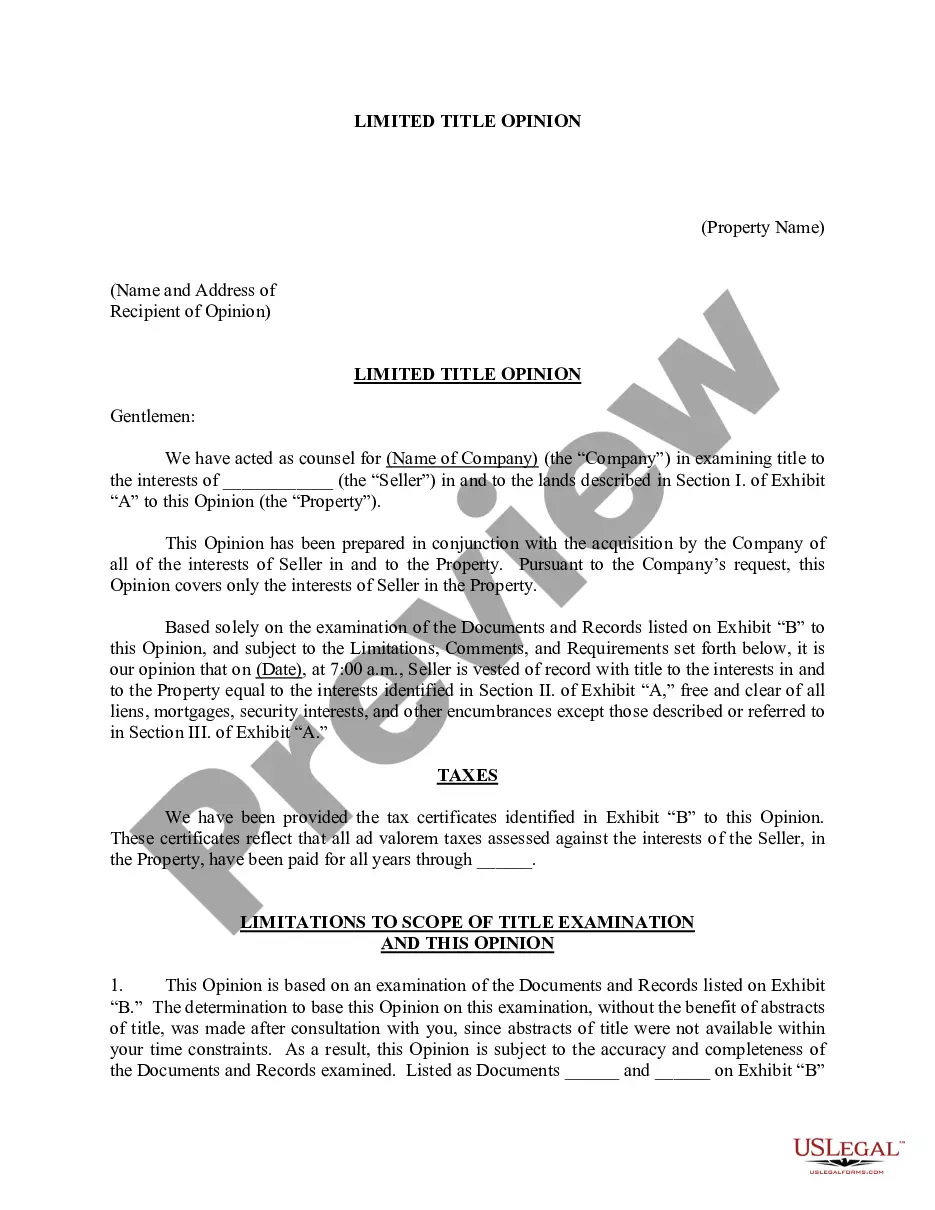
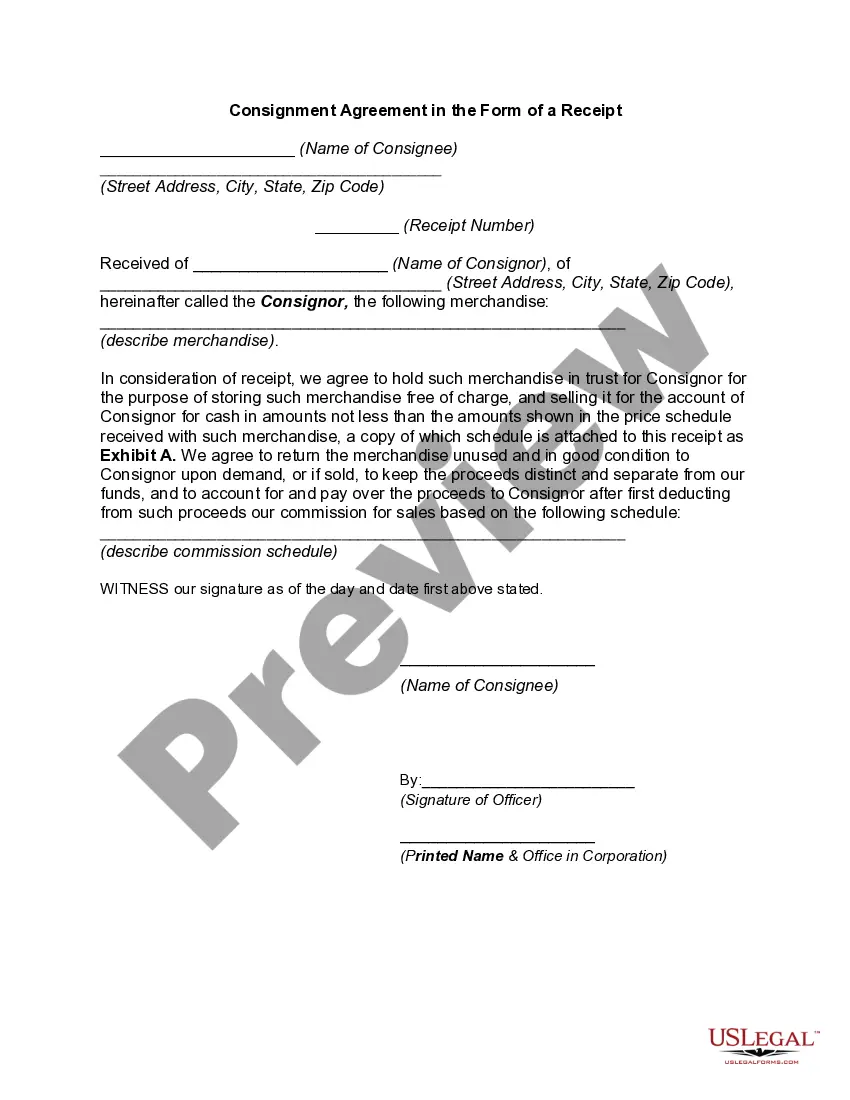
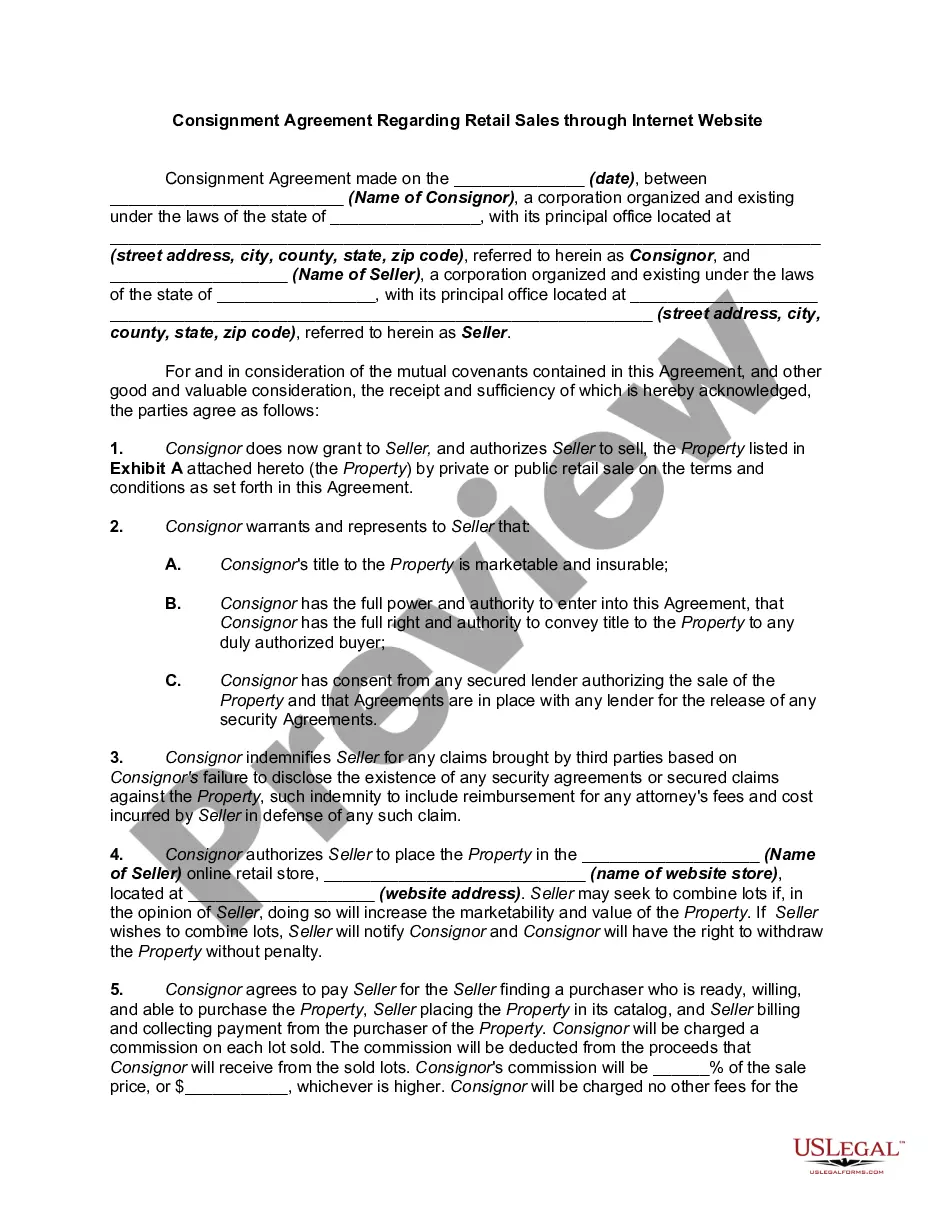
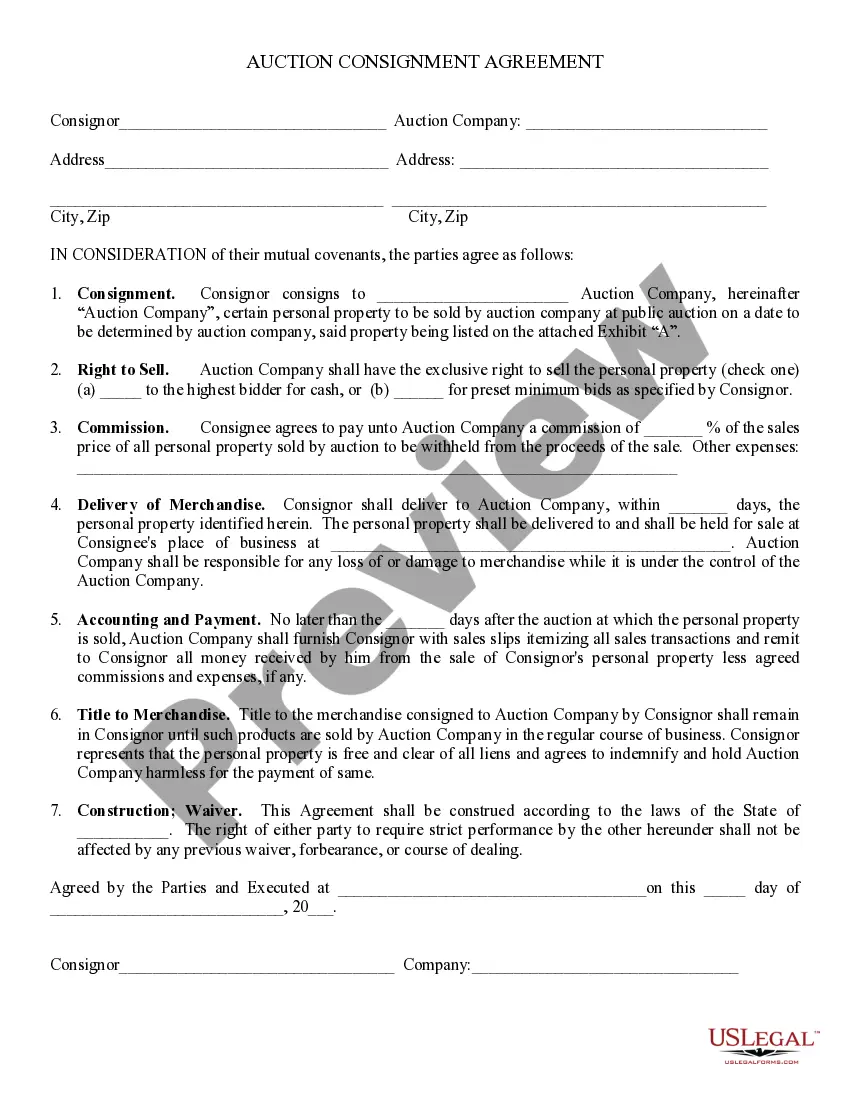
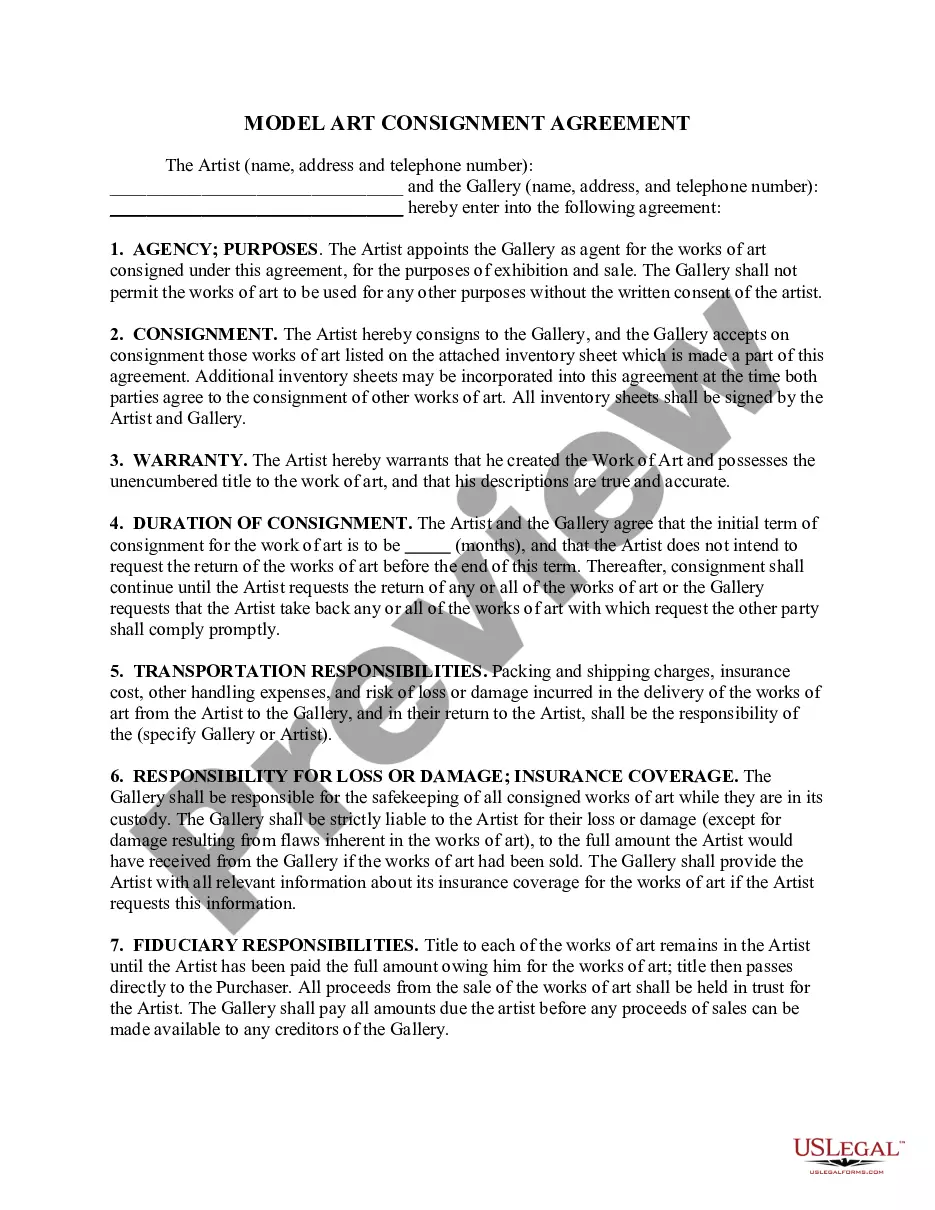
The Consignment Agreement is a legal document that outlines the relationship between a consignor and a consignee. Under this agreement, the consignor delivers specific property to the consignee for the purpose of selling it. This form ensures that the ownership remains with the consignor until the property is sold, distinguishing it from other sale agreements.
Form components explained
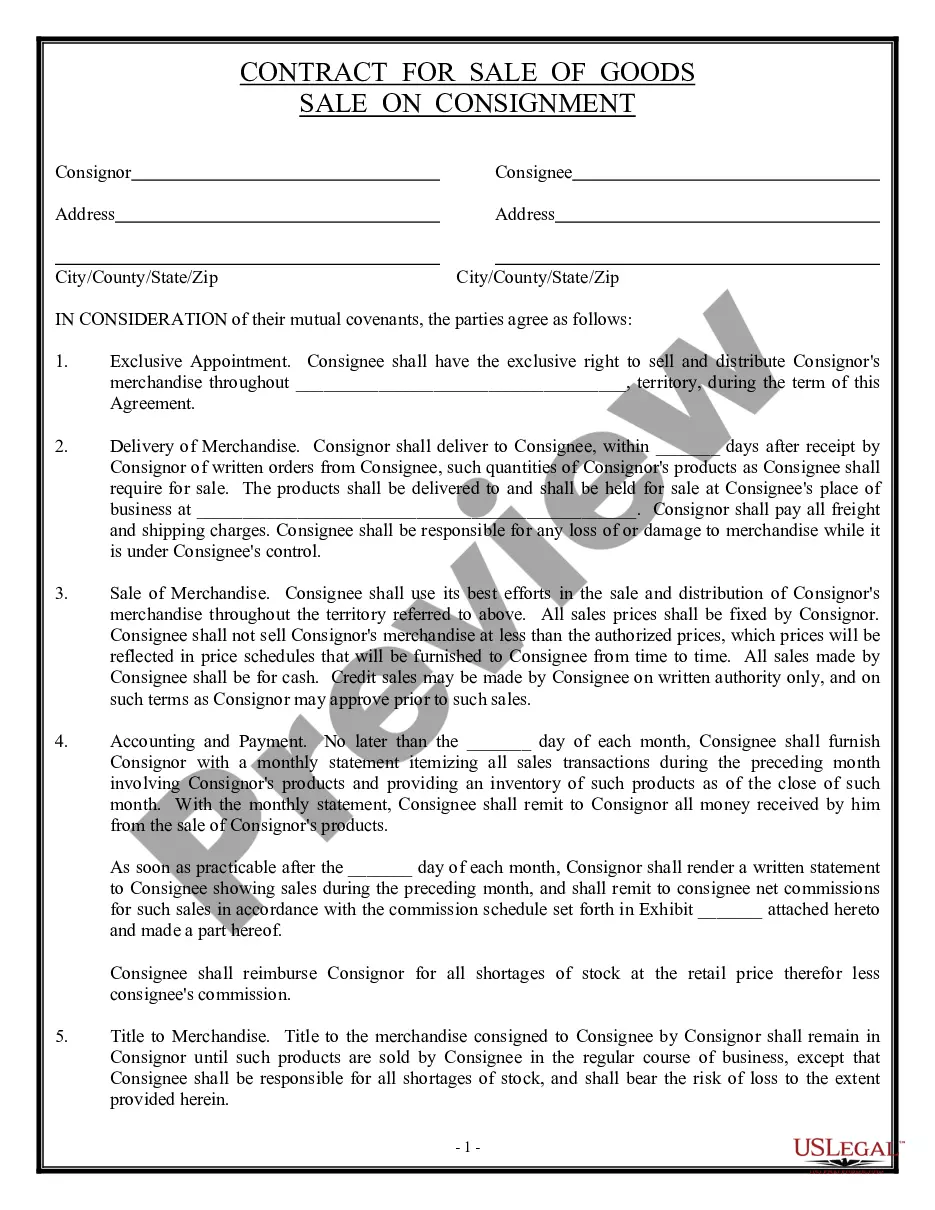
- Identification of the consignor and consignee.
- Description of the consigned property.
- Terms regarding the exclusivity of the sale rights.
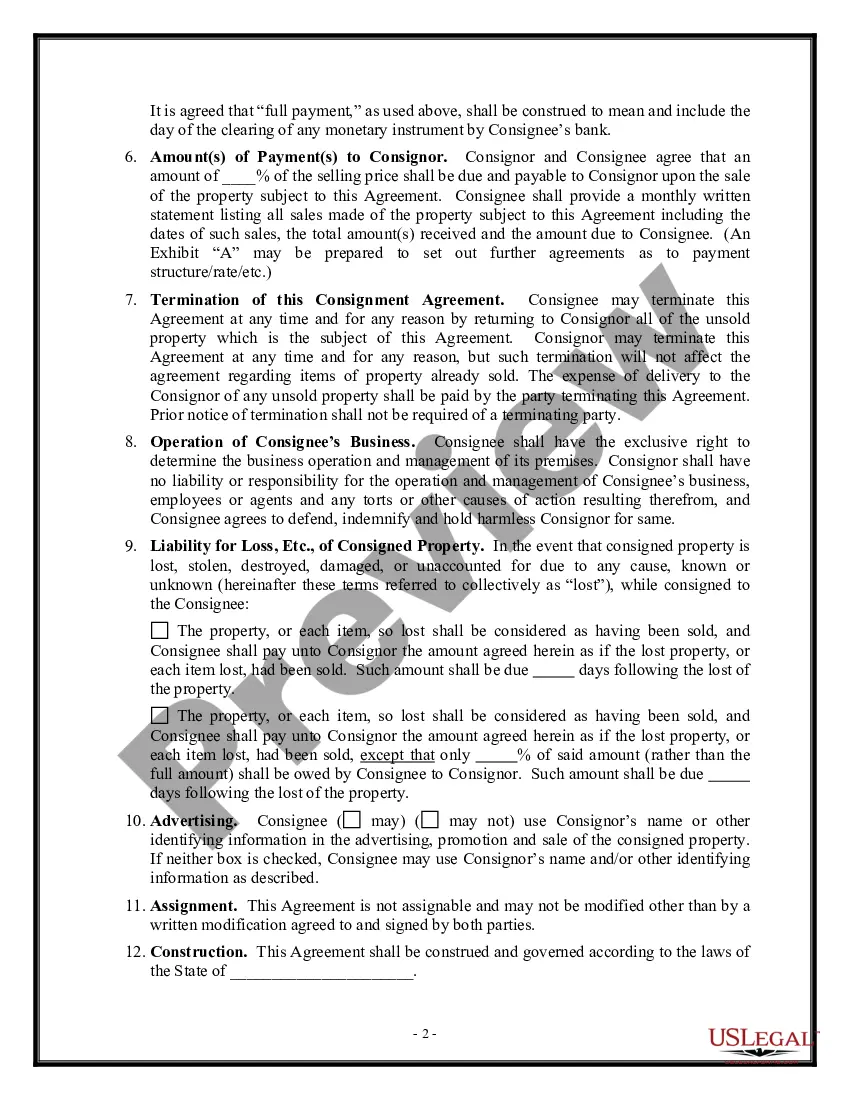
- Payment terms and structure for the sale proceeds.
- Conditions for termination of the agreement.
- Liability and operational responsibilities.

Common use cases
You should use a Consignment Agreement when you want to send goods to another party for sale without transferring ownership until the items are sold. This is useful for artists, authors, or businesses that want to sell products through retailers or agents while maintaining control over their property until a sale occurs.
Who should use this form
- Individuals or businesses looking to consign goods for sale.
- Artists or creators wanting to sell their work through galleries or shops.
- Venues or events needing to handle merchandise on behalf of sellers.
- Businesses that offer products on a consignment basis to retailers.
How to complete this form
- Identify the parties involved by entering the names of the consignor and consignee in the specified sections.
- Provide a detailed description of the property being consigned.
- Determine and enter the terms regarding exclusivity for the consignee's right to sell.
- Specify the pricing terms and payment details, including any percentages agreed upon for the sale proceeds.
- Sign the agreement in the presence of a notary public to ensure its legal validity.
Does this document require notarization?
Yes, this form must be notarized to be legally valid. US Legal Forms offers integrated online notarization, providing a secure video call service that is available 24/7, ensuring convenience without the need to travel.
Get your form ready online
Our built-in tools help you complete, sign, share, and store your documents in one place.
Make edits, fill in missing information, and update formatting in US Legal Forms—just like you would in MS Word.
Download a copy, print it, send it by email, or mail it via USPS—whatever works best for your next step.
Sign and collect signatures with our SignNow integration. Send to multiple recipients, set reminders, and more. Go Premium to unlock E-Sign.
If this form requires notarization, complete it online through a secure video call—no need to meet a notary in person or wait for an appointment.
We protect your documents and personal data by following strict security and privacy standards.

Make edits, fill in missing information, and update formatting in US Legal Forms—just like you would in MS Word.

Download a copy, print it, send it by email, or mail it via USPS—whatever works best for your next step.

Sign and collect signatures with our SignNow integration. Send to multiple recipients, set reminders, and more. Go Premium to unlock E-Sign.

If this form requires notarization, complete it online through a secure video call—no need to meet a notary in person or wait for an appointment.

We protect your documents and personal data by following strict security and privacy standards.
Common mistakes to avoid
- Not accurately describing the consigned property, which can lead to disputes.
- Failing to clarify the exclusivity terms, possibly causing confusion about sales rights.
- Neglecting to enter payment terms clearly, leading to misunderstandings during compensation.
- Not obtaining the necessary notarization, which may invalidate the agreement.
Advantages of online completion
- Convenience of downloading and completing the form at any time.
- Editability allows you to customize the agreement to meet specific needs easily.
- Reliable templates drafted by licensed attorneys ensure compliance with legal standards.
Legal use & context
- This agreement is legally binding once signed and notarized.
- It provides protection for both the consignor and consignee in case of disputes.
- Understanding and adhering to the terms are essential for enforceability.
Key takeaways
- A Consignment Agreement allows property owners to safely sell their goods through another party while retaining ownership until sold.
- Clear payment terms and detailed property descriptions are crucial components of this agreement.
- The document must be notarized for legal validity, ensuring both parties' signatures are verified.
Looking for another form?
Form popularity
FAQ
Consignment is an arrangement in which goods are left in the possession of an authorized third party to sell. Typically, the consignor receives a percentage of the revenue from the sale (sometimes a very large percentage) in the form of commission.
The delivery of goods to a carrier to be shipped to a designated person for sale. If the goods are transported by a carrier to the consignee, the name of the consignor appears on the bill of lading as the person from whom the goods have been received for shipment.
Introduction of Parties. Identifies the parties and the date of the agreement. Recitals. Section 1: Consigned Property. Section 2: Delivery of Goods. Section 3: Consignment Period. Section 4: Efforts to Sell. Section 5: Title to Products. Section 6: Payment; Commission.
Parties. Provide the names and addresses of the consignor and the consignee.Item(s) for sale.Pricing.Payment.Expenses.Record-keeping.Ownership.Insurance.Sold: Using a Consignment Agreement .com\nwww..com > articles > sold-using-a-consignment-agreement
Consignment is when a shop sells goods for an owner. The owner keeps ownership of his item until it sells, if it sells. As the owner, you'd pay a small fee to the shop as compensation for them selling your item.Generally, when they sell your bicycle, they take their 50% or $10.
The parties to a consignment are consignor and consignee whereas the parties to the sale are buyer and seller.In consignment, only the possession of goods transfers not the ownership. On the other hand, in the sale, both the ownership and possession are transferred to the buyer.
Benefits of Consignment for a Small Business The principle benefit of consignment is that it enables small businesses to sell their goods without the expense of having their own storefront.Consignment gives small businesses the opportunity to sell their goods without having to pay rent on premises and staff.
Specifically, the contract should include details about payment and what happens if the consignee does not fulfill their duties. The Consignment Contract should outline all of the parties expectations for their working relationship. It should be created, printed, and signed by both parties before the work begins.