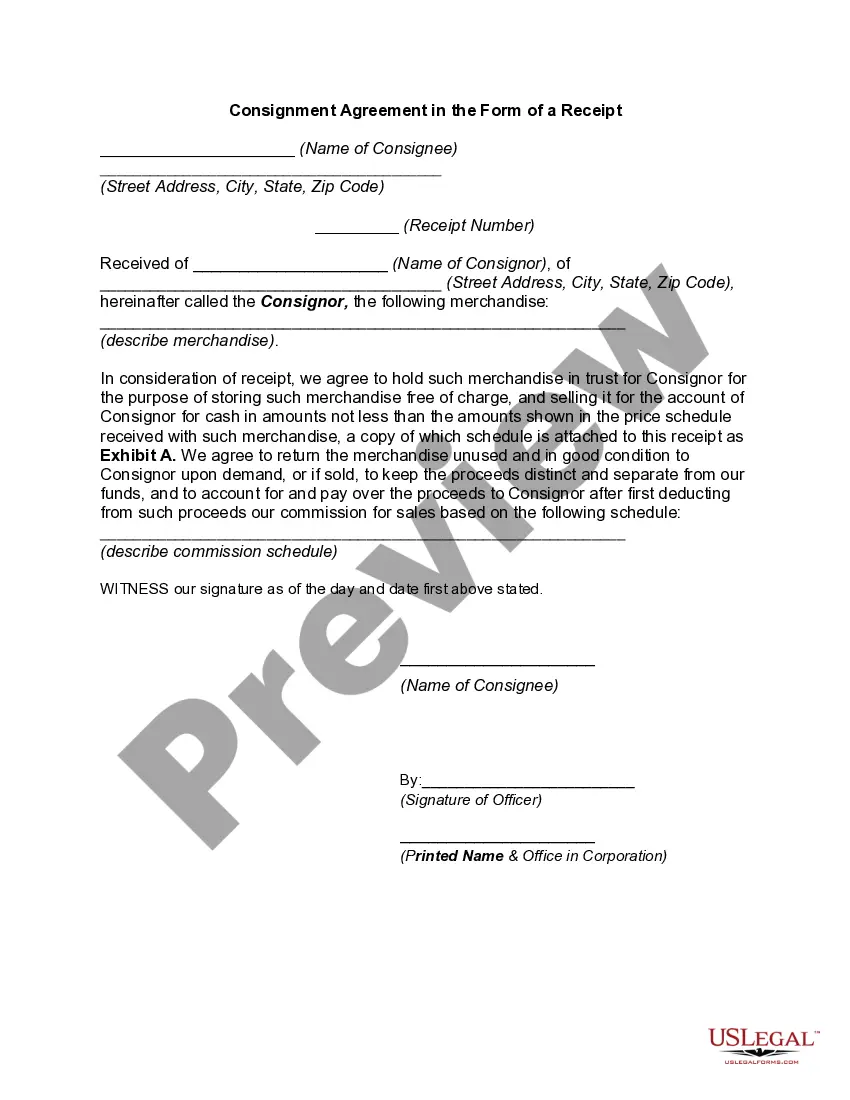
Consignment Agreement in the Form of a Receipt
What this document covers
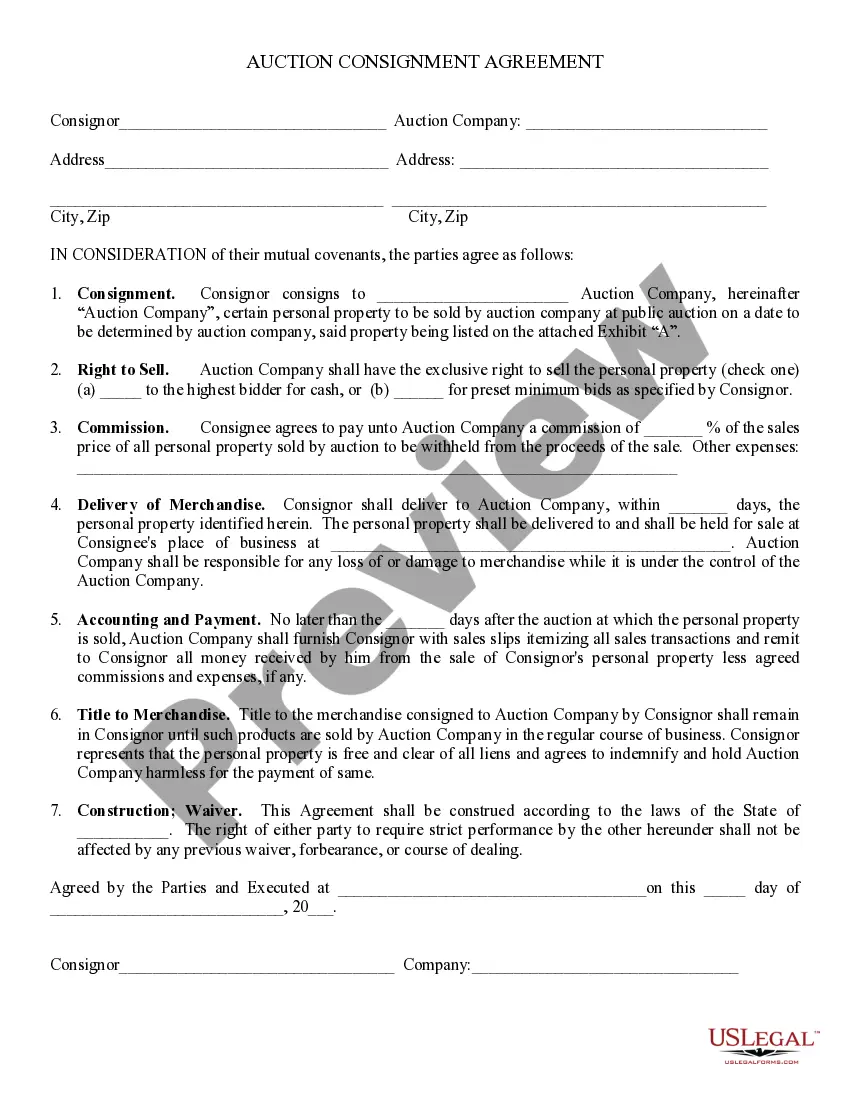
A consignment agreement in the form of a receipt is a legal document that outlines the terms and conditions under which a consignee can store, sell, or use goods provided by a consignor. This agreement specifies the responsibilities of both parties regarding the merchandise, including conditions for sale and the handling of proceeds. It differs from standard sales agreements as it emphasizes trust and the arrangement for consignment stock rather than an outright sale.
Main sections of this form
- Name and address of the consignee.
- Receipt number for tracking purposes.
- Name and address of the consignor.
- Description of the merchandise being consigned.
- Commission schedule detailing the fees to be deducted from sales proceeds.
- Signatures for both the consignee and the consignor for validation.

Common use cases
This consignment agreement should be used when a consignor wishes to hand over goods to a consignee for the purpose of storage and sale. It is useful in situations such as:
- Retail businesses that need to sell product inventory without initial purchase.
- Art galleries that display and sell artworks on behalf of artists.
- Consignment shops that specialize in selling second-hand or unique items.
Who this form is for
This form is suitable for:
- Individuals or businesses acting as consignors looking to sell goods without transferring ownership.
- Consignees such as retailers or resellers who manage goods on behalf of others.
- Artisans or creators who wish to partner with stores to sell their products.
Completing this form step by step
- Identify and enter the name and address of the consignee at the top of the form.
- Record the receipt number for tracking and reference.
- Provide the name and address of the consignor.
- Accurately describe the merchandise being consigned.
- Specify the commission schedule to clarify payment terms.
- Have authorized personnel sign the agreement to formalize the transaction.
Notarization requirements for this form
This form does not typically require notarization to be legally valid. However, some jurisdictions or document types may still require it. US Legal Forms provides secure online notarization powered by Notarize, available 24/7 for added convenience.
Get your form ready online
Our built-in tools help you complete, sign, share, and store your documents in one place.
Make edits, fill in missing information, and update formatting in US Legal Forms—just like you would in MS Word.
Download a copy, print it, send it by email, or mail it via USPS—whatever works best for your next step.
Sign and collect signatures with our SignNow integration. Send to multiple recipients, set reminders, and more. Go Premium to unlock E-Sign.
If this form requires notarization, complete it online through a secure video call—no need to meet a notary in person or wait for an appointment.
We protect your documents and personal data by following strict security and privacy standards.

Make edits, fill in missing information, and update formatting in US Legal Forms—just like you would in MS Word.

Download a copy, print it, send it by email, or mail it via USPS—whatever works best for your next step.

Sign and collect signatures with our SignNow integration. Send to multiple recipients, set reminders, and more. Go Premium to unlock E-Sign.

If this form requires notarization, complete it online through a secure video call—no need to meet a notary in person or wait for an appointment.

We protect your documents and personal data by following strict security and privacy standards.
Common mistakes to avoid
- Failing to accurately describe the merchandise can lead to disputes.
- Not including clear terms regarding the commission structure.
- Omitting a receipt number may cause tracking issues.
Benefits of completing this form online
- Easy access to a comprehensive, attorney-drafted consignment agreement.
- Quickly download and print the form for immediate use.
- Edit and customize fields as needed to suit specific transactions.
Looking for another form?
Form popularity
FAQ
Consignment is an arrangement in which goods are left in the possession of an authorized third party to sell.Consignment arrangements, however, would not include retailers such as Walmart or most supermarkets, which purchase goods outright from wholesalers and then sell their items at a markup.
Specifically, the contract should include details about payment and what happens if the consignee does not fulfill their duties. The Consignment Contract should outline all of the parties expectations for their working relationship. It should be created, printed, and signed by both parties before the work begins.
Introduction of Parties. Identifies the parties and the date of the agreement. Recitals. Section 1: Consigned Property. Section 2: Delivery of Goods. Section 3: Consignment Period. Section 4: Efforts to Sell. Section 5: Title to Products. Section 6: Payment; Commission.
The parties to a consignment are consignor and consignee whereas the parties to the sale are buyer and seller.In consignment, only the possession of goods transfers not the ownership. On the other hand, in the sale, both the ownership and possession are transferred to the buyer.
Parties. Provide the names and addresses of the consignor and the consignee. Item(s) for sale. Pricing. Payment. Expenses. Record-keeping. Ownership. Insurance.
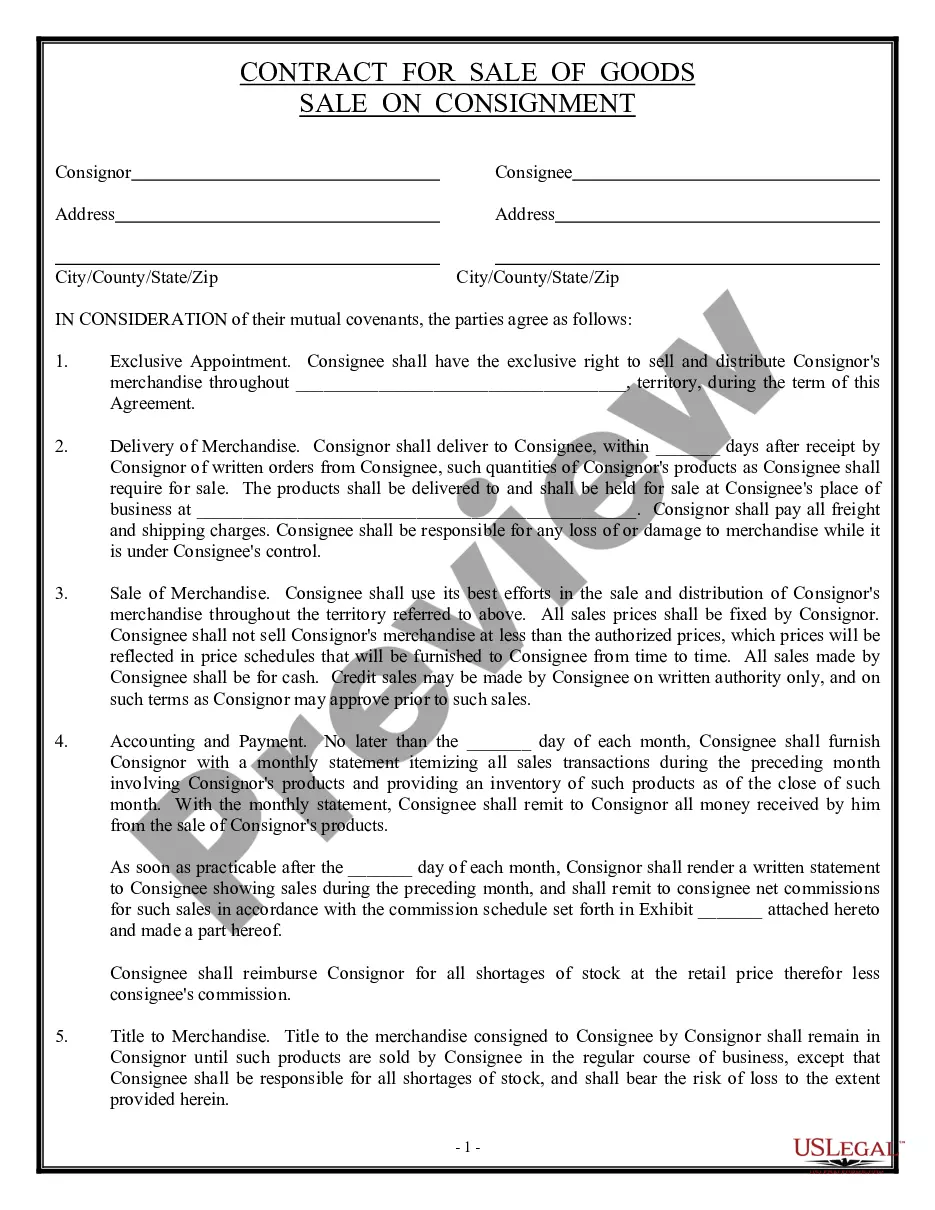
A consignment agreement is an agreement between a consignee and consignor for the storage, transfer, sale or resale and use of the commodity. The consignee may take goods from the consignment stock for use or resale subject to payment to the consignor agreeably to the terms bargained in the consignment agreement.
Parties. Provide the names and addresses of the consignor and the consignee. Item(s) for sale. Pricing. Payment. Expenses. Record-keeping. Ownership. Insurance.
A consignment agreement is a contract that places an item the consignor (or owner) owns with the consignee (or seller) for the consignee to sell. The consignee often takes a commission or fee and then the remainder of the sale price is paid to the consignor.