Sample Letter to Mayor - Federal Legislation
About this form
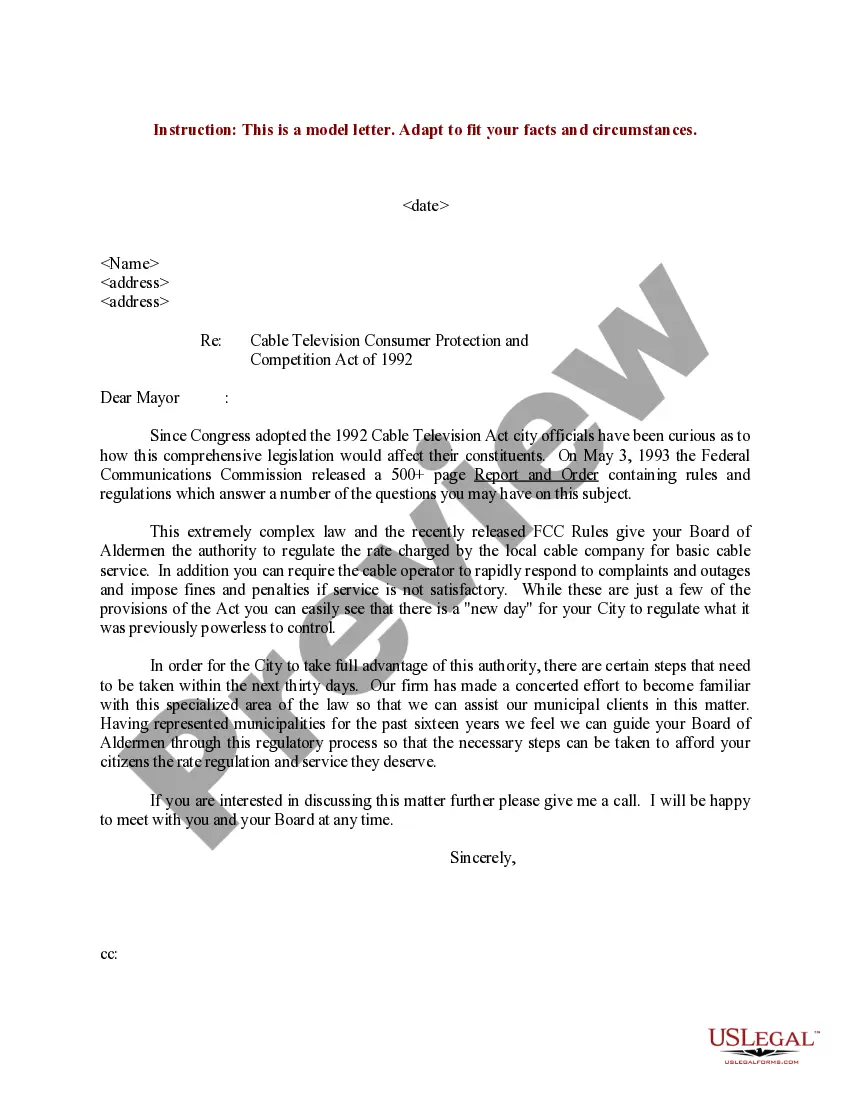
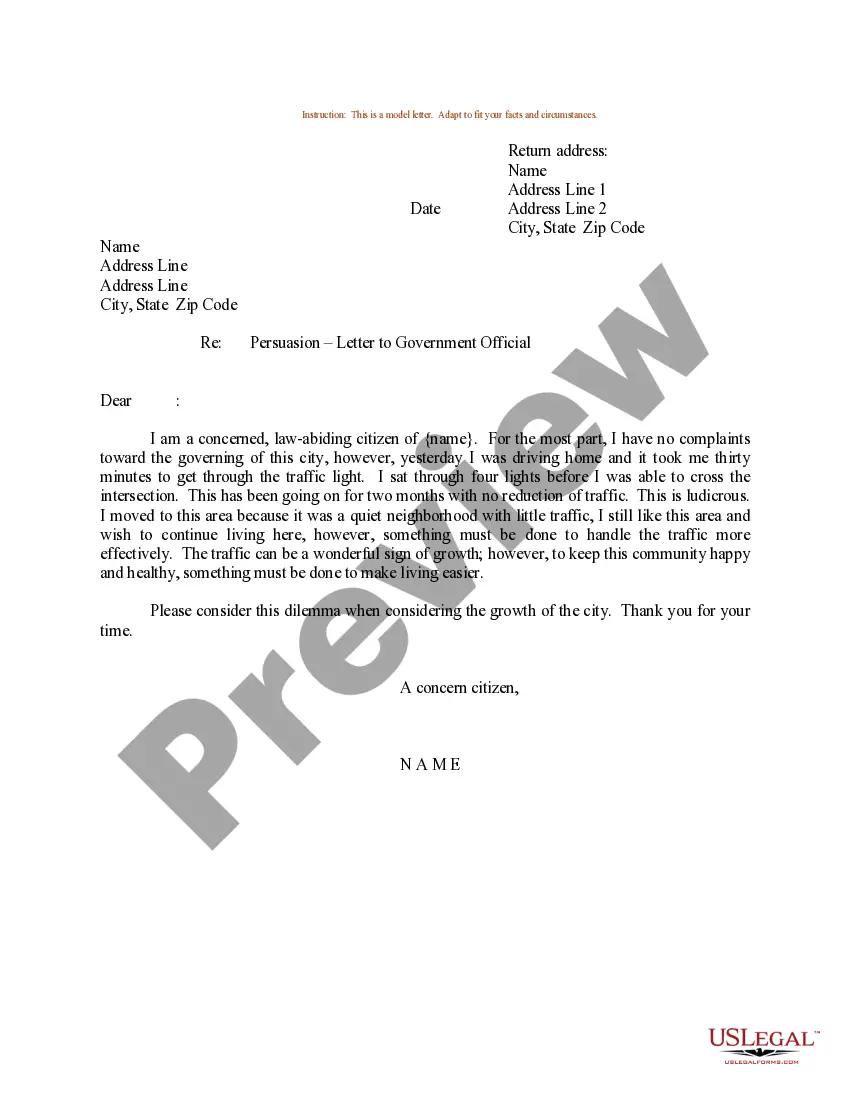
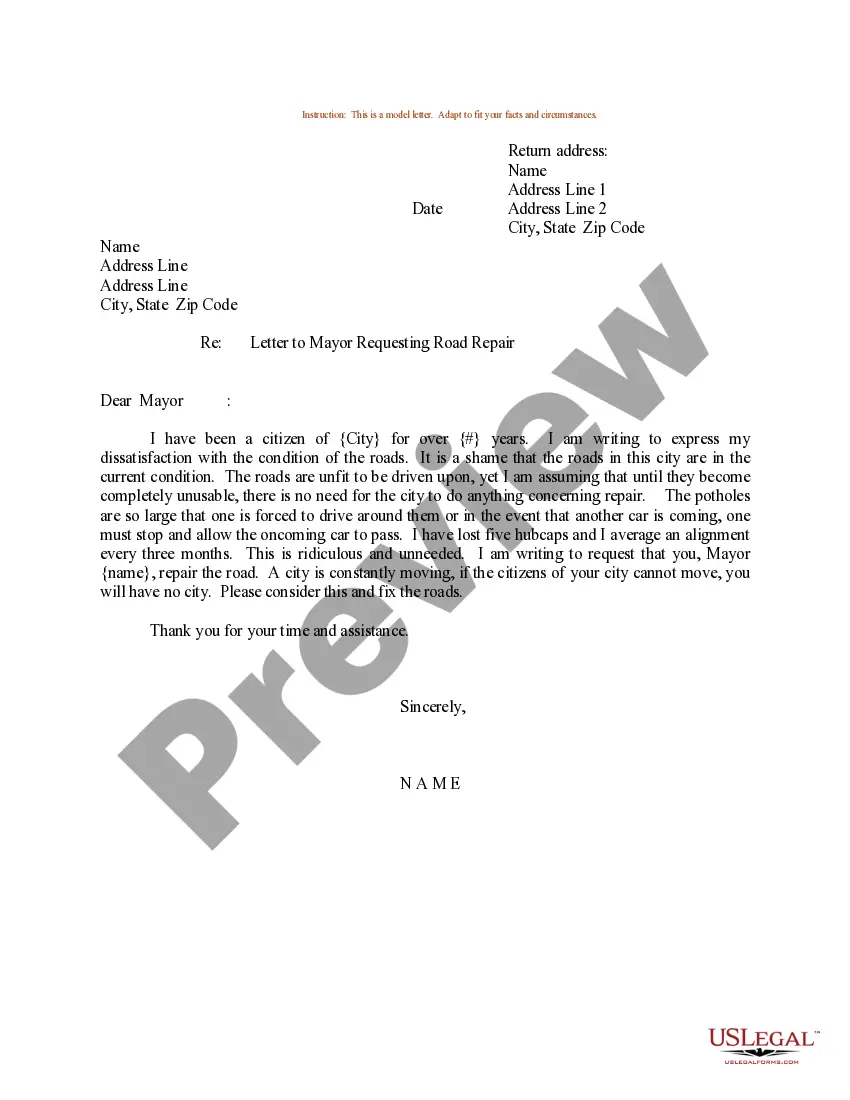
This Sample Letter to Mayor concerning Federal Legislation is a template designed to help citizens communicate with their local government regarding important legislative issues. This form stands out as a model letter that can be customized based on individual circumstances and is specifically focused on topics like the Cable Television Consumer Protection and Competition Act of 1992. It provides a structured approach to advocate for local cable regulation, making it essential for residents wishing to voice their concerns effectively.
Form components explained
- Date: The date when the letter is being sent.
- Recipient information: Space to fill in the name and address of the Mayor.
- Subject line: Clearly states the purpose of the letter regarding the specific federal legislation.
- Body: Discusses the implications of the federal law and how it empowers local authorities.
- Closing: A professional sign-off that offers the writer's willingness to discuss the matter further.
- CC line: Optional space to acknowledge others who may receive the letter.
Common use cases
This form is applicable when a resident wants to address their local Mayor about federal laws that impact local governance, specifically concerning cable service regulations. Use this letter to express concerns, suggest changes, or request further dialogue about the local cable provider's practices. It's a suitable option for community advocates, local activists, or any interested citizen who seeks to influence municipal cable policy.
Who can use this document
- Citizens interested in local governance.
- Community leaders advocating for cable service improvements.
- Residents who wish to address legislative impacts on local services.
- Anyone looking to establish communication with their local government representatives.
Completing this form step by step
- Enter the date at the top of the letter.
- Fill in the name and address of the Mayor to whom the letter is addressed.
- Specify the subject of the letter regarding the Cable Television Consumer Protection and Competition Act of 1992.
- Adapt the body of the letter to include your specific points or concerns about local cable regulation.
- Sign the letter at the bottom to complete your communication.
Notarization guidance
This form does not typically require notarization to be legally valid. However, some jurisdictions or document types may still require it. US Legal Forms provides secure online notarization powered by Notarize, available 24/7 for added convenience.
Get your form ready online
Our built-in tools help you complete, sign, share, and store your documents in one place.
Make edits, fill in missing information, and update formatting in US Legal Forms—just like you would in MS Word.
Download a copy, print it, send it by email, or mail it via USPS—whatever works best for your next step.
Sign and collect signatures with our SignNow integration. Send to multiple recipients, set reminders, and more. Go Premium to unlock E-Sign.
If this form requires notarization, complete it online through a secure video call—no need to meet a notary in person or wait for an appointment.
We protect your documents and personal data by following strict security and privacy standards.

Make edits, fill in missing information, and update formatting in US Legal Forms—just like you would in MS Word.

Download a copy, print it, send it by email, or mail it via USPS—whatever works best for your next step.

Sign and collect signatures with our SignNow integration. Send to multiple recipients, set reminders, and more. Go Premium to unlock E-Sign.

If this form requires notarization, complete it online through a secure video call—no need to meet a notary in person or wait for an appointment.

We protect your documents and personal data by following strict security and privacy standards.
Avoid these common issues
- Failing to personalize the letter with specific details regarding your concerns.
- Not including the recipient's correct title or address.
- Using overly complex language instead of clear and straightforward communication.
- Neglecting to proofread for spelling and grammar errors.
Advantages of online completion
- Convenient: Download and complete the form at your convenience.
- Editability: Easily modify the template to suit your unique situation.
- Reliability: Assured quality from a template drafted by licensed attorneys.
Legal use & context
- This letter serves as an official means of communication with government officials.
- It helps citizens assert their rights and concerns regarding federal legislation affecting local services.
- The content of the letter can be a legal basis for further discussions or actions needed to address local issues.
What to keep in mind
- This form aids in addressing the local governance of cable services under federal legislation.
- It is adaptable for various users wanting to engage with their local government.
- Customization is key; ensuring the letter reflects individual concerns enhances its effectiveness.
Looking for another form?








Form popularity
FAQ
Use Proper Salutation. The salutation should be "Dear Representative Smith" or Dear Senator Smith" or "Dear Assemblyman Smith" depending on the office held. The address should read: Honorable Jim Smith, Address, City, State, Zip.
Dear (Representative/Senator/Congressman or Congresswoman) (Last name): My name is (your first and last name) and I am a regional center consumer (family member /service provider/advocate/community member) who resides in your district. (State why you support or oppose the bill or other issue here.
Say why you are writing and who you are. List your "credentials" and state that you are a constituent. Provide more detail. Be factual and not emotional. Close by requesting the action you want to be taken.
Address your letter correctly. Be sure you have the correct address and salutation on your letter. Write to the legislators for whom you can vote. Address only one issue per letter. Ask for something specific. Make it personal. Include your return address on your letter.
Put Your Name and Address at the Top of Message. The first thing your representative wants to determine is if you live in his or her district. Humanize Your Message. Be Brief. Be Clear About Your Position. Make Your Message Timely. Don't "Flame." Avoid Attachments. Don't Become "Spam."
Use letterhead. Verify the correct spelling of the legislator's name. Verify the correct title to use when addressing the legislator. Keep it short (one page maximum). Identify the issue. If the issue is a particular bill, verify the full name and bill number.
Choose three important points to focus on: 2022 Flesh out the most persuasive points likely to gain support for your position. Address a new point in each paragraph. Writing three short letters to individual people is more effective than writing one long letter. Ensure your facts are accurate and credible.
Open the letter in an official manner. Explain the purpose for your letter. Summarize your understanding of the issue/decision being considered. Explain your position on this issue. Describe what any changes will mean to you, and to others.