SEX TRAFFICKING
About this form
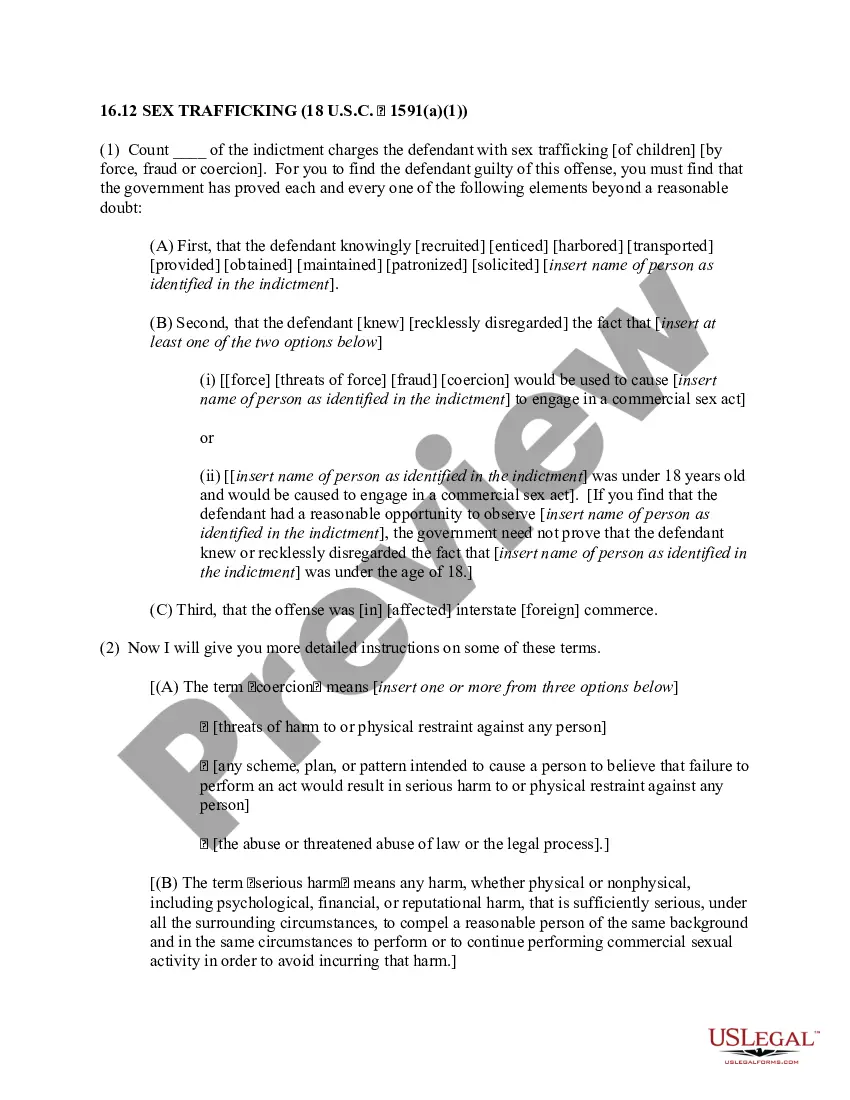
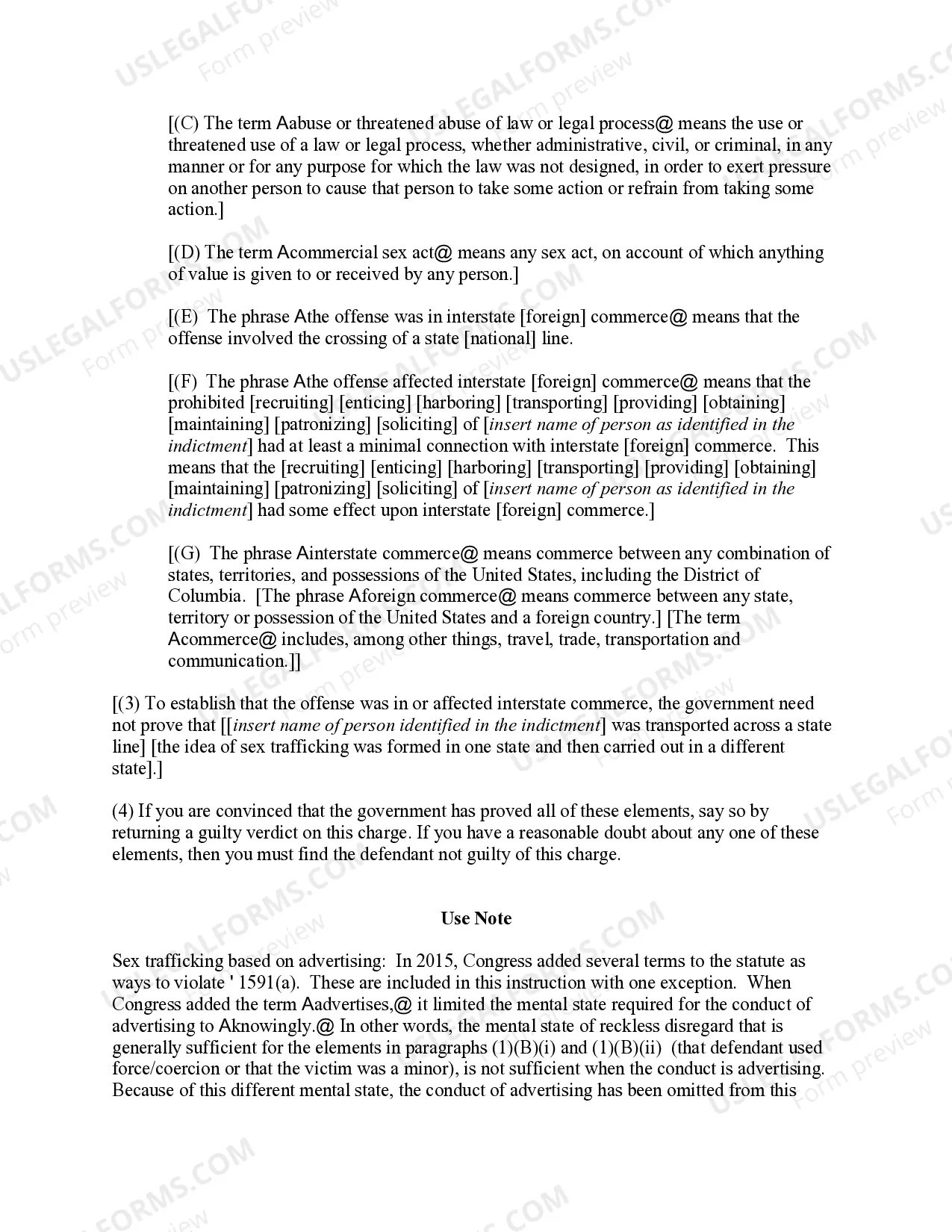
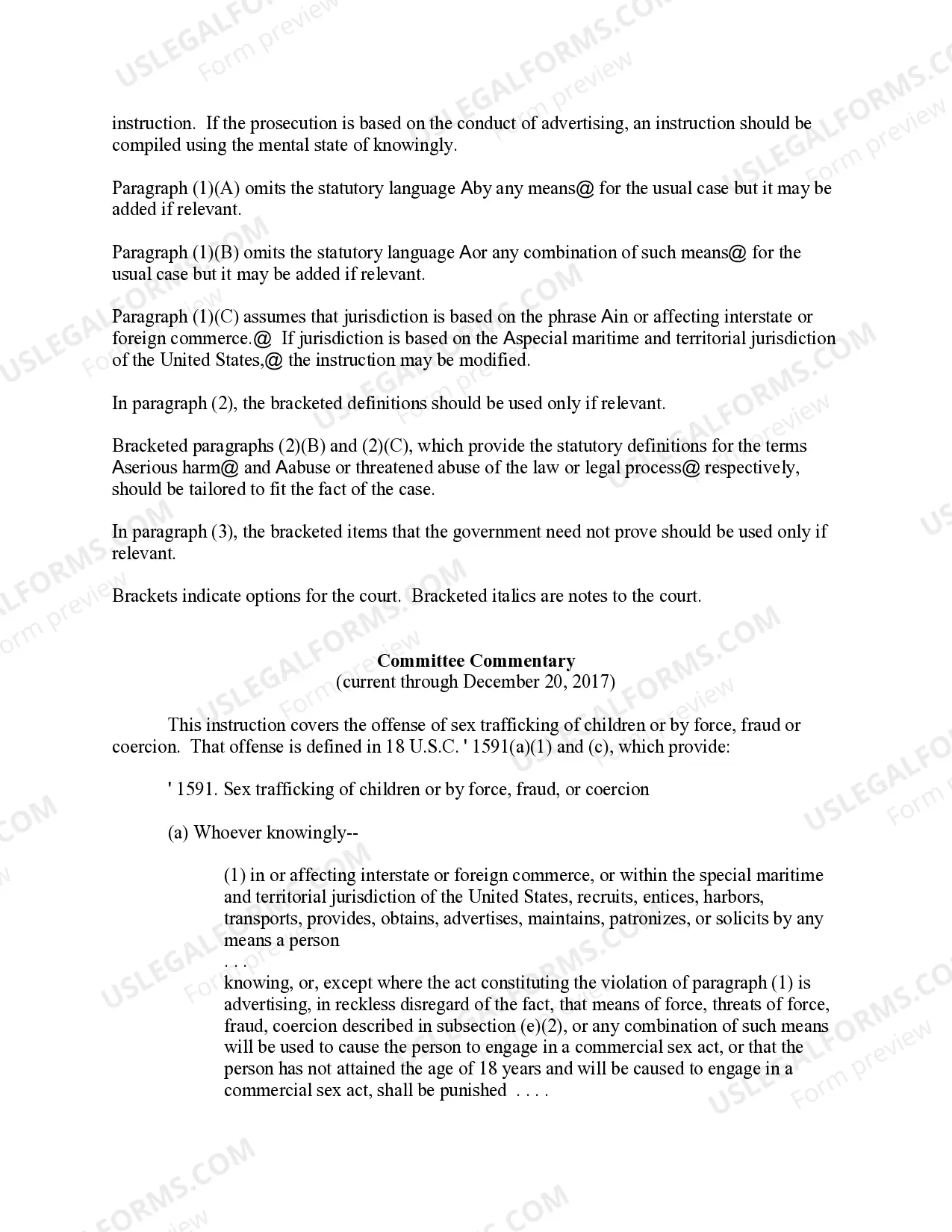
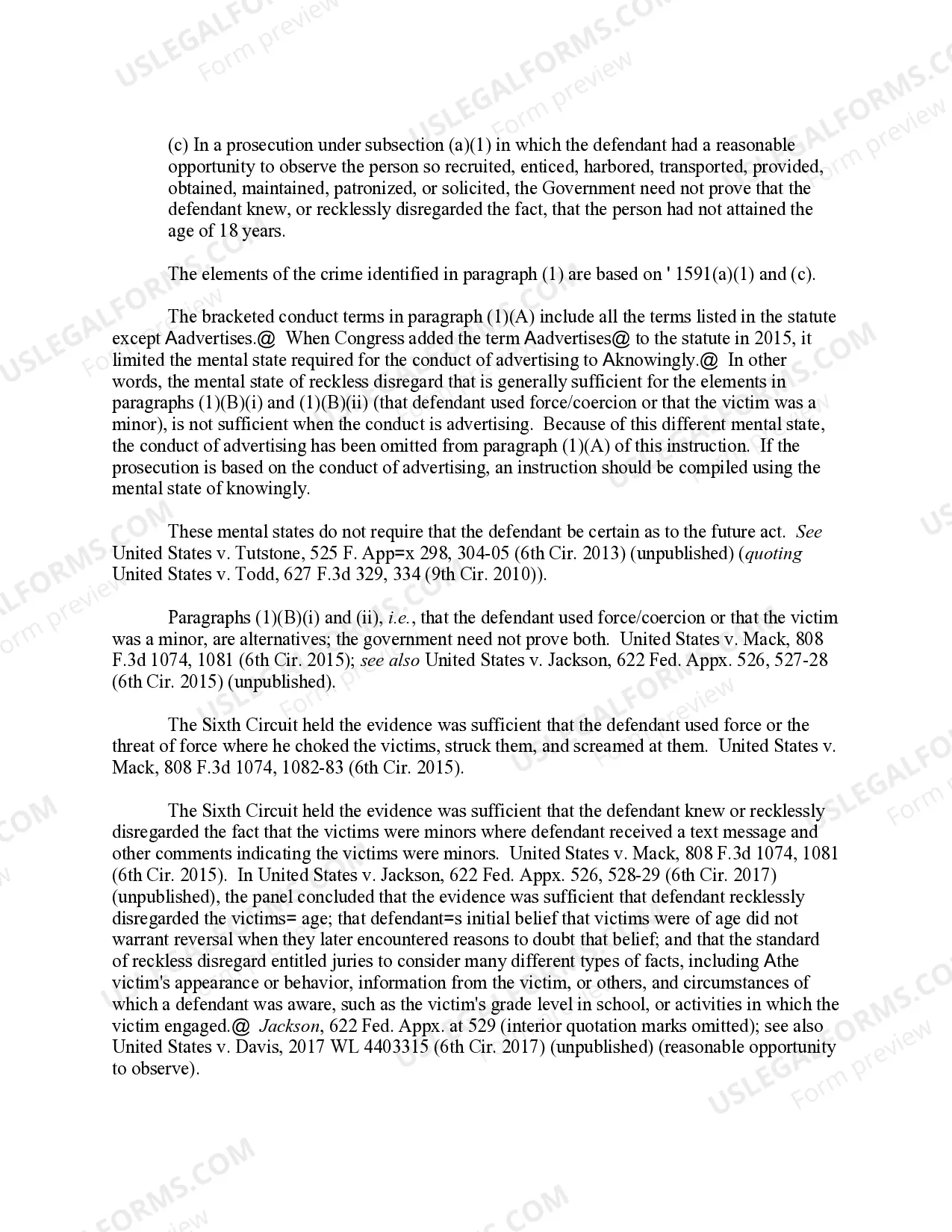
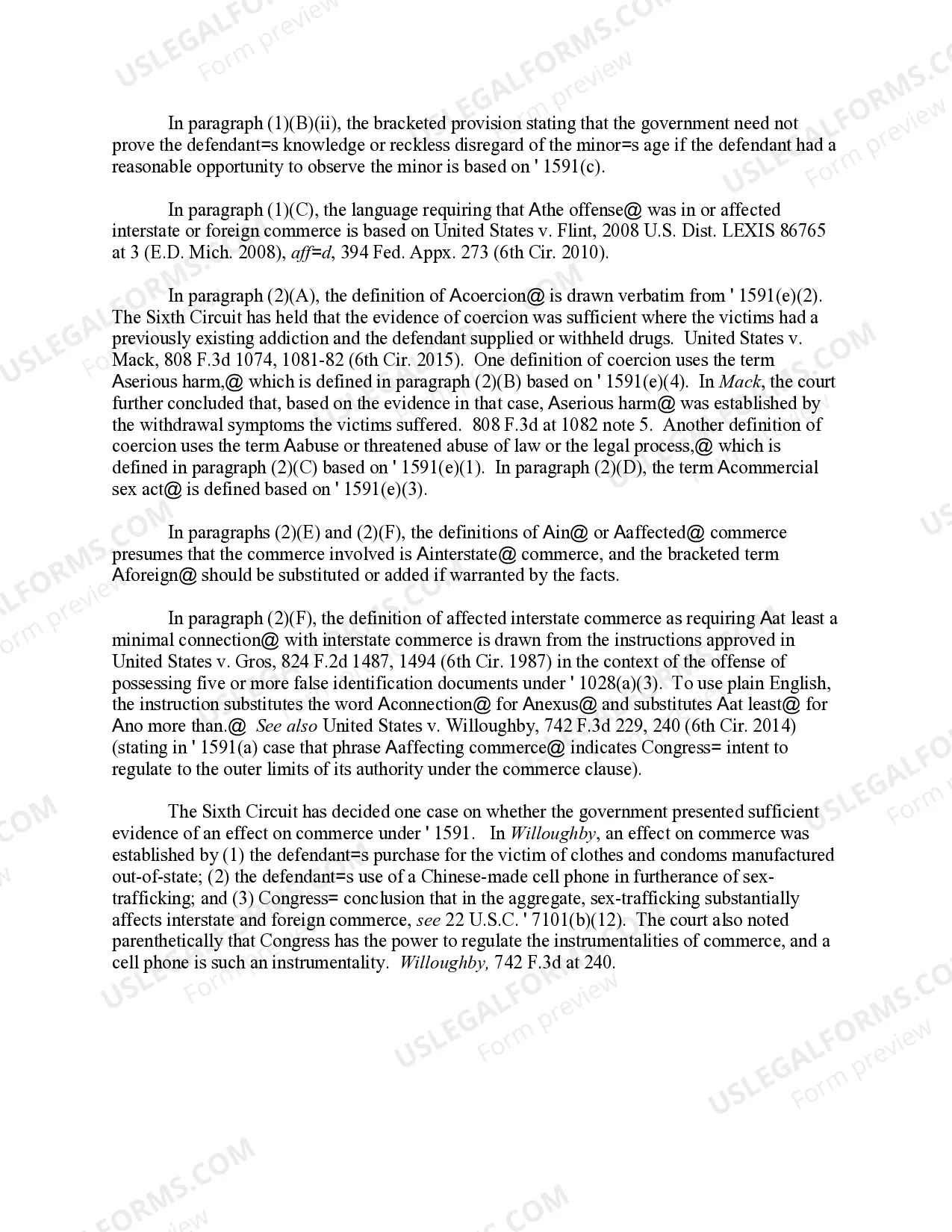
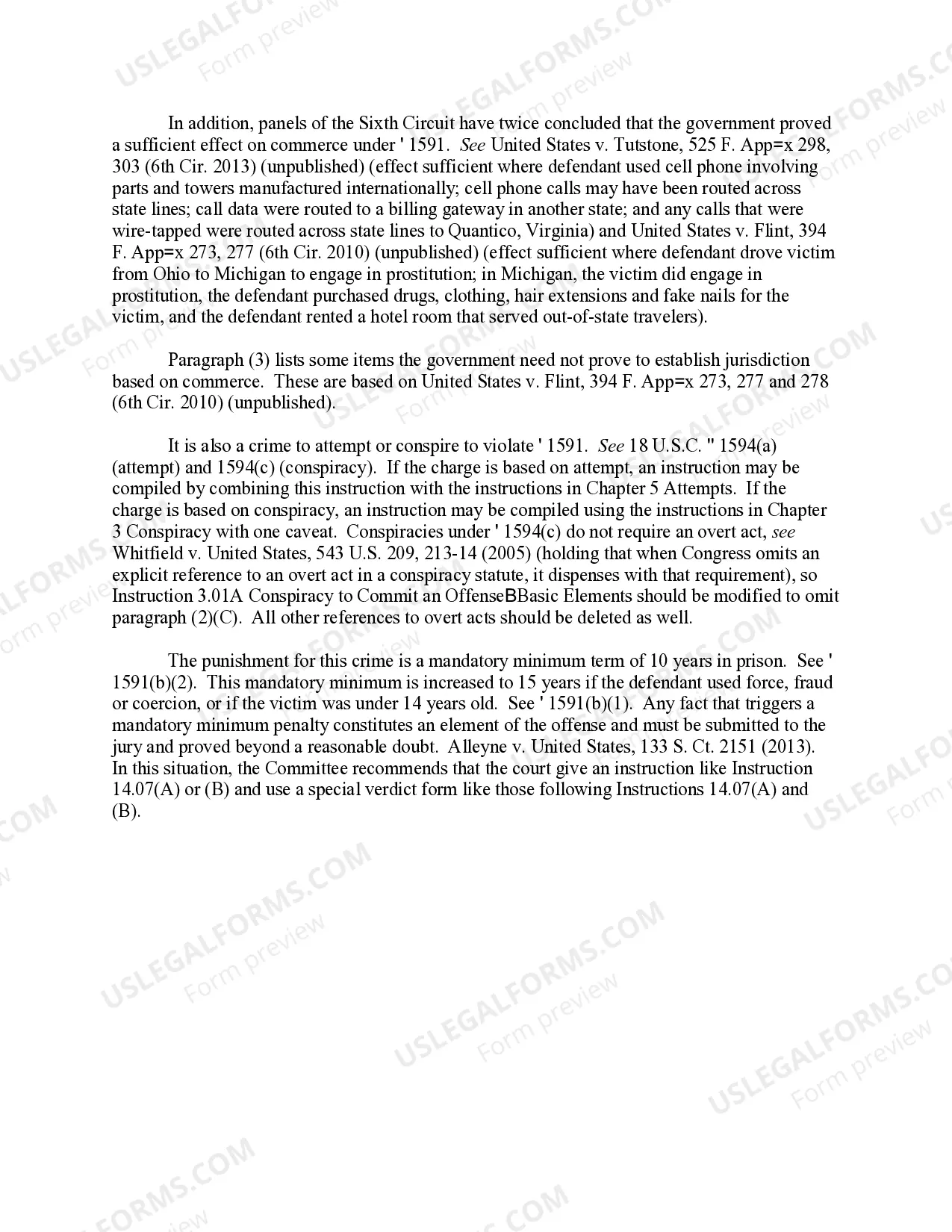
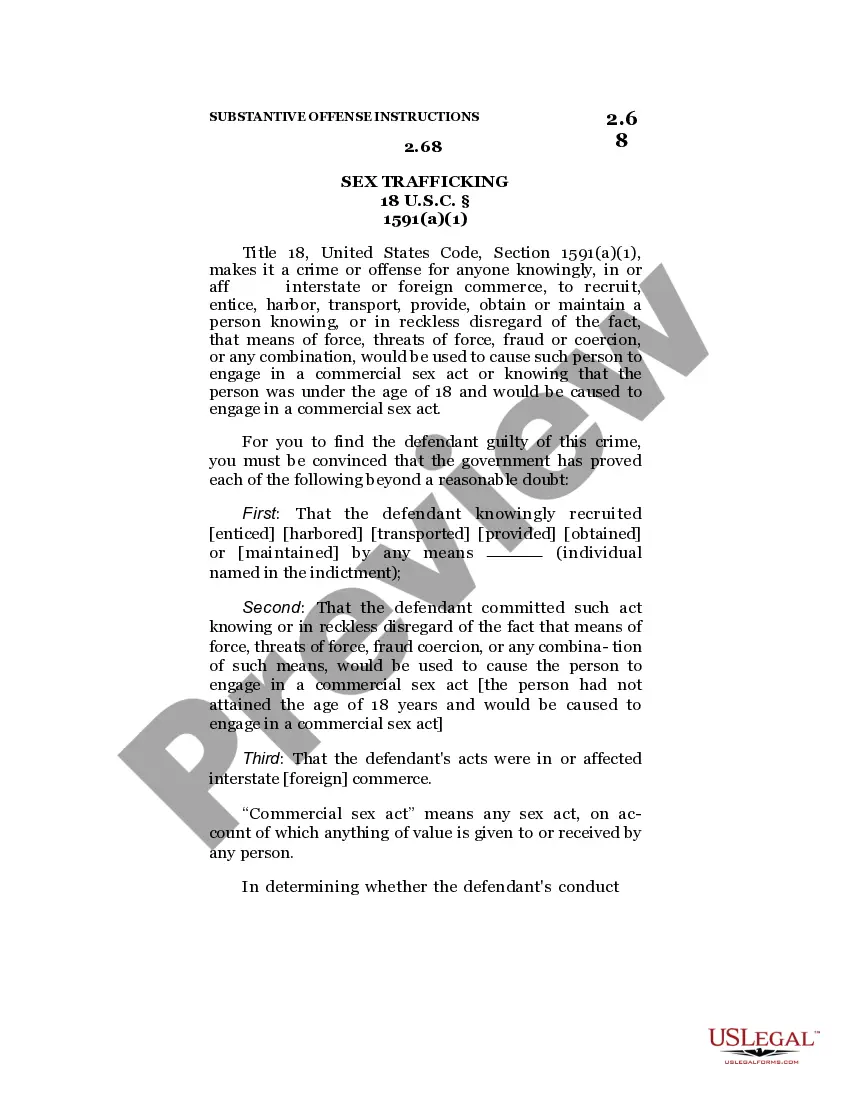
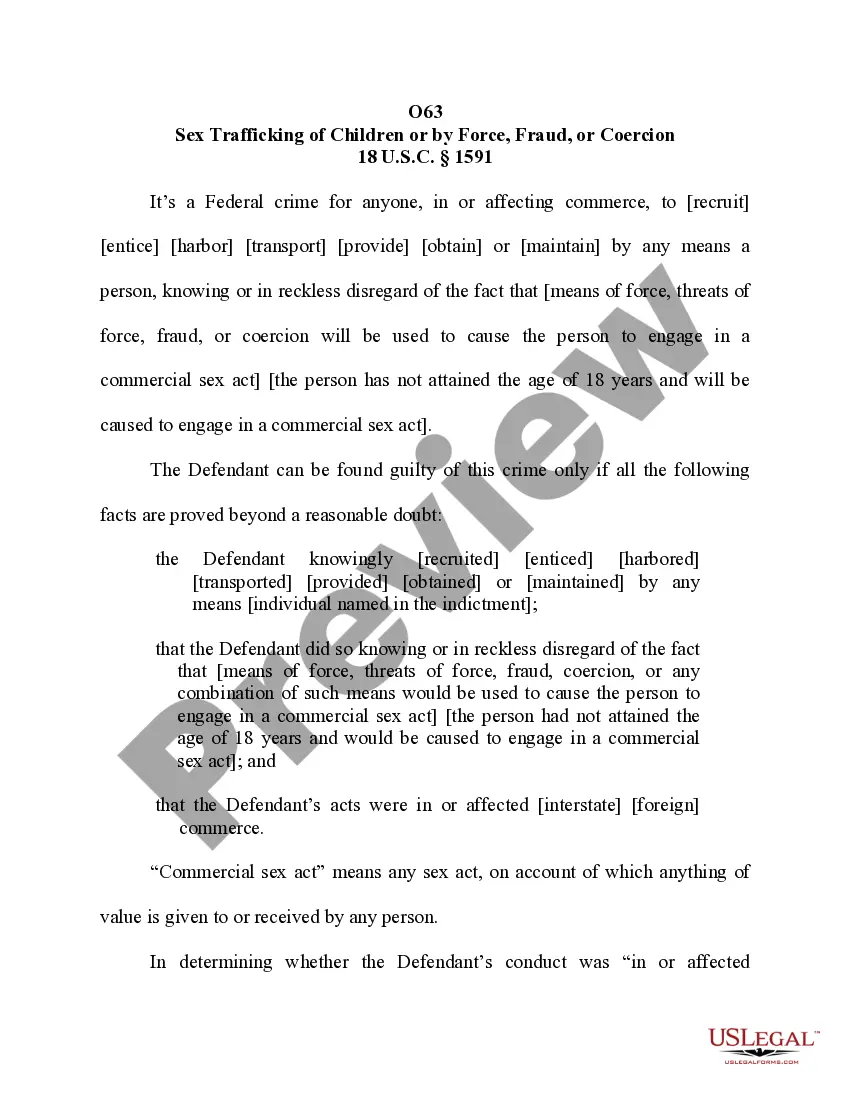
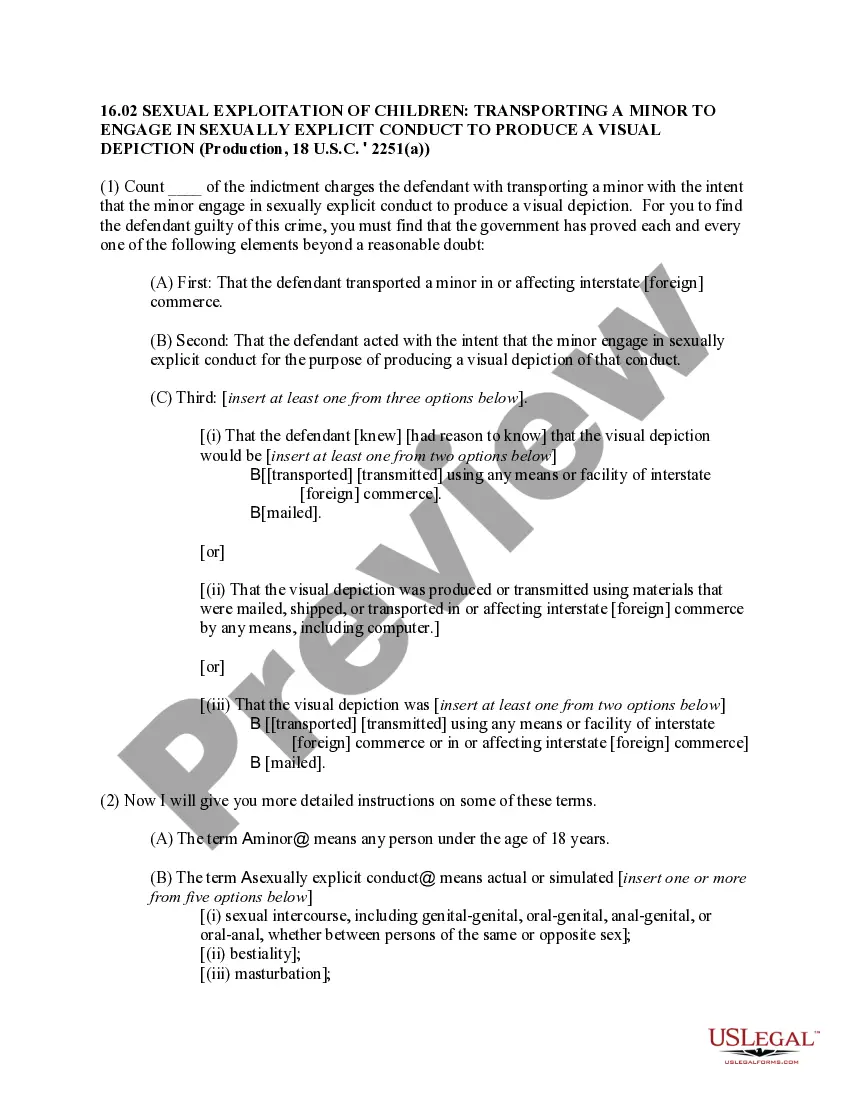
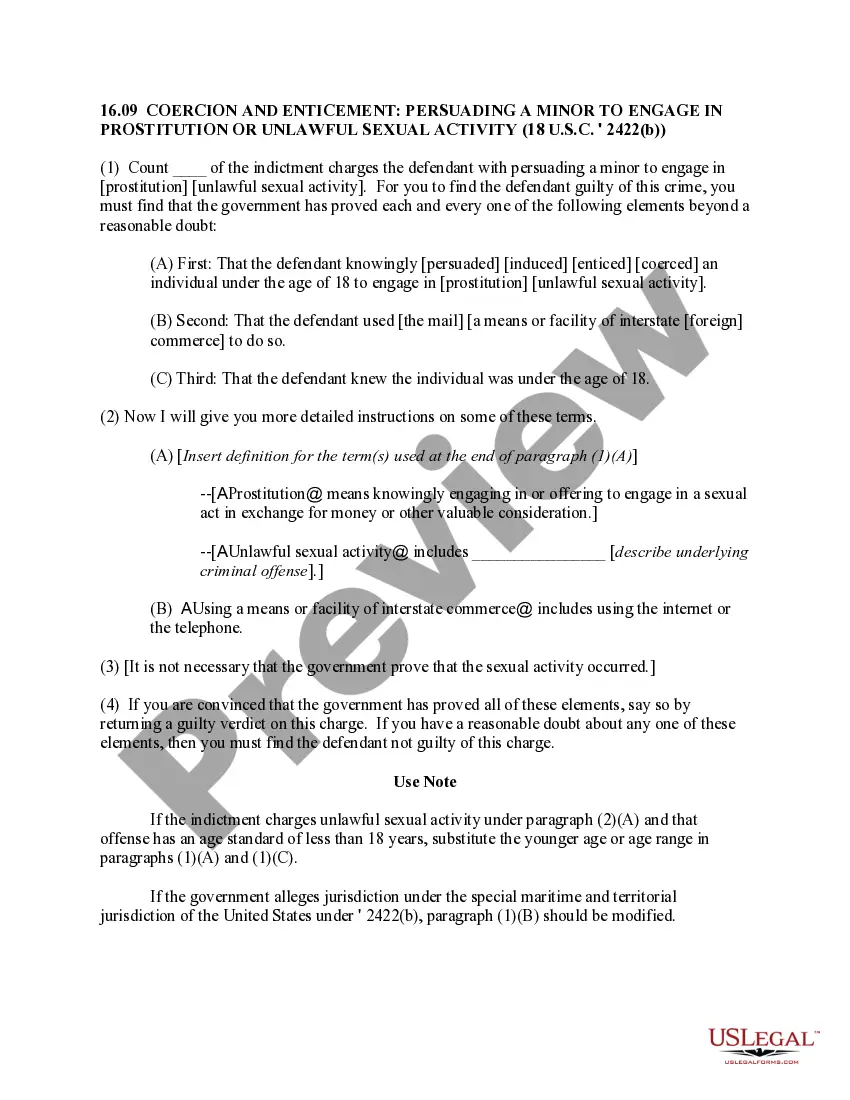
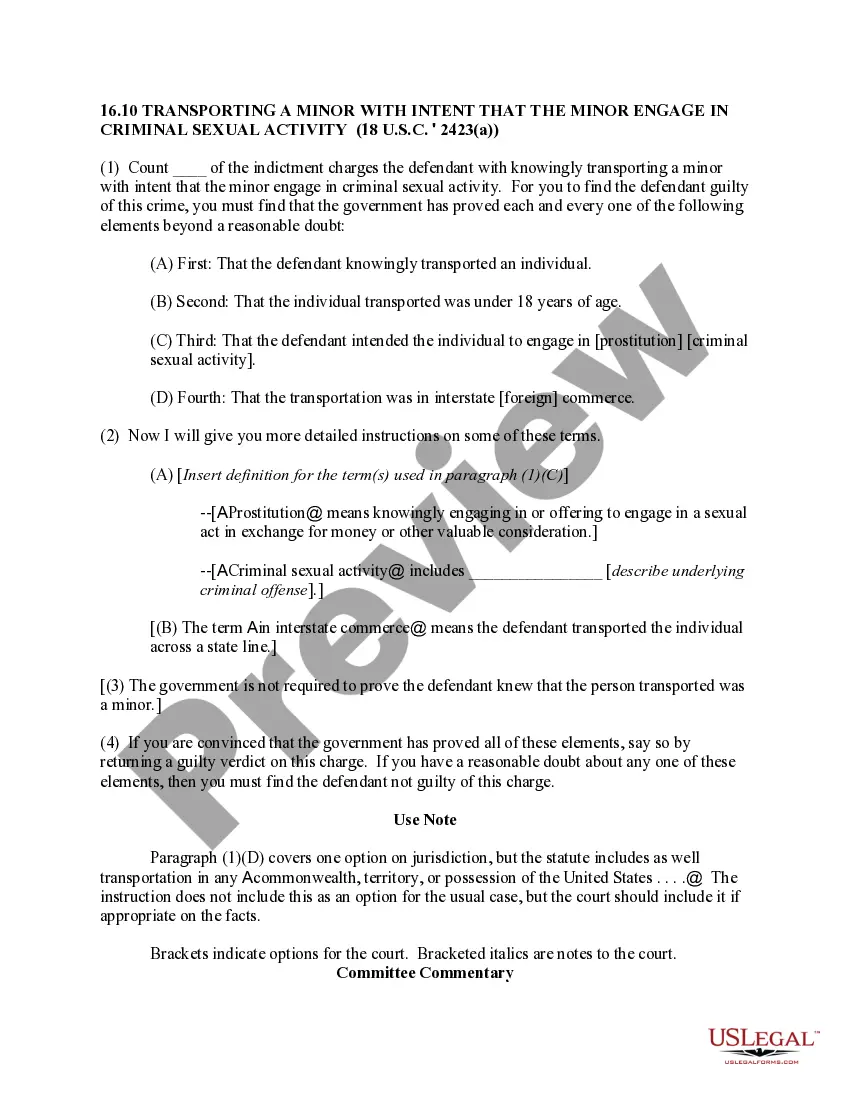
The Sex Trafficking form is a legal document that addresses the serious offense of sex trafficking as defined under 18 U.S.C. § 1591. This form is crucial for outlining the elements of the offense, which may include the recruitment, enticement, or harboring of individuals for the purpose of engaging in commercial sex acts, either through coercion or involving minors. Unlike other legal agreements, this form specifically details the requirements necessary for prosecution in sex trafficking cases, highlighting the unique nature and severe penalties associated with this crime.
Form components explained
- Definition of sex trafficking and key legal terms related to coercion and consent.
- Elements required to establish guilt beyond a reasonable doubt in a court of law.
- Specific details about the role of commerce in prosecuting sex trafficking cases.
- Instructions on jury considerations if elements of the crime are met.
- Explanations of terms such as "commercial sex act," "serious harm," and "interstate commerce."
When this form is needed
This form is used in legal proceedings involving accusations of sex trafficking under federal law. It is applicable when the prosecution seeks to prove that an individual knowingly engaged in trafficking activities, such as recruiting or transporting victims through coercive practices or involving minors. This form serves as a guide for legal practitioners and jurors in understanding the complexities of such cases.
Intended users of this form
This form is intended for:
- Legal professionals involved in criminal prosecution or defense related to sex trafficking cases.
- Jurors who require clear instructions on the elements of the offense they must consider.
- Victims and advocacy groups seeking to understand the legal framework surrounding sex trafficking.
How to complete this form
To complete this form, follow these steps:
- Identify the defendant and the specific charges being brought against them.
- Specify the method of recruitment or enticement used against the victim.
- Indicate whether coercion was involved and describe any relevant details.
- Ensure that the elements of interstate commerce are correctly articulated.
- Complete any required declarations or signatures to validate the form.
Notarization requirements for this form
This form usually doesn’t need to be notarized. However, local laws or specific transactions may require it. Our online notarization service, powered by Notarize, lets you complete it remotely through a secure video session, available 24/7.
Get your form ready online
Our built-in tools help you complete, sign, share, and store your documents in one place.
Make edits, fill in missing information, and update formatting in US Legal Forms—just like you would in MS Word.
Download a copy, print it, send it by email, or mail it via USPS—whatever works best for your next step.
Sign and collect signatures with our SignNow integration. Send to multiple recipients, set reminders, and more. Go Premium to unlock E-Sign.
If this form requires notarization, complete it online through a secure video call—no need to meet a notary in person or wait for an appointment.
We protect your documents and personal data by following strict security and privacy standards.

Make edits, fill in missing information, and update formatting in US Legal Forms—just like you would in MS Word.

Download a copy, print it, send it by email, or mail it via USPS—whatever works best for your next step.

Sign and collect signatures with our SignNow integration. Send to multiple recipients, set reminders, and more. Go Premium to unlock E-Sign.

If this form requires notarization, complete it online through a secure video call—no need to meet a notary in person or wait for an appointment.

We protect your documents and personal data by following strict security and privacy standards.
Typical mistakes to avoid
- Failing to fully understand and define all legal terms listed in the form.
- Not providing clear evidence of the elements required for prosecution.
- Incorrectly stating the relationship between the defendant and the victim.
- Misrepresenting the jurisdictional authority concerning Interstate Commerce.
Benefits of using this form online
- Convenient access to comprehensive legal templates formatted for user needs.
- Editable content that can be tailored to specific case requirements.
- Reliable information drafted by licensed attorneys ensuring legal compliance.
- Instant downloads that save time on legal document preparation.
- This form outlines the legal standards set forth under federal law for prosecuting sex trafficking.
- Compliance with this form is essential in ensuring a fair trial and judicial process.
- Understanding the criteria for coercion and trafficking elements is crucial for legal arguments.
Quick recap
- The Sex Trafficking form is vital for outlining legal standards in serious trafficking cases.
- It provides a framework for jury members to consider when deliberating guilt.
- This form emphasizes the importance of commerce in establishing jurisdiction.
- Legal professionals must ensure clarity and precision when using this form to avoid common pitfalls.
Looking for another form?
Form popularity
FAQ
Human Trafficking Indicators Poor living conditions. Multiple people in cramped space. Inability to speak to individual alone. Answers appear to be scripted and rehearsed.
Red Flags for Sex Trafficking Person seems overly fearful, submissive, tense, or paranoid. Person is deferring to another person before giving information. Person has physical injuries or branding such as name tattoos on face or chest, tattoos about money and sex, or pimp phrases.
Often, false promises will be made to the victims about money, new clothes, work or education opportunities, financial aid for their family, etc. Many traffickers prey on victims who are looking for the promise of a better life, a job opportunity or a romantic relationship.
The term "sex trafficking" refers to criminal activity whereby one or more persons are subjected to engaging in commercial sexual activity through the use of force, fraud, or coercion, except that if the trafficked person is younger than age 18, the commercial sexual activity need not involve force, fraud, or coercion.
Warning Signs of Human Trafficking Appearing malnourished. Showing signs of physical injuries and abuse. Avoiding eye contact, social interaction, and authority figures/law enforcement. Seeming to adhere to scripted or rehearsed responses in social interaction. Lacking official identification documents.
Sex trafficking occurs when individuals are made to perform commercial sex through the use of force, fraud, or coercion. Any child under 18 who is involved in commercial sex is legally a victim of trafficking, regardless of whether there is a third party involved.
Where is human trafficking most prevalent? Asia and the Pacific: 29.3 million. Africa: 7 million. Europe and Central Asia: 6.4 million. Americas: 5.1 million. Arab States: 1.7 million.
Traffickers employ a variety of control tactics, the most common include physical and emotional abuse and threats, isolation from friends and family, and economic abuse. They make promises aimed at addressing the needs of their target in order to impose control.