Complaint For Strip Search - 4th and 14th Amendment, US Constitution - Jury Trial Demand
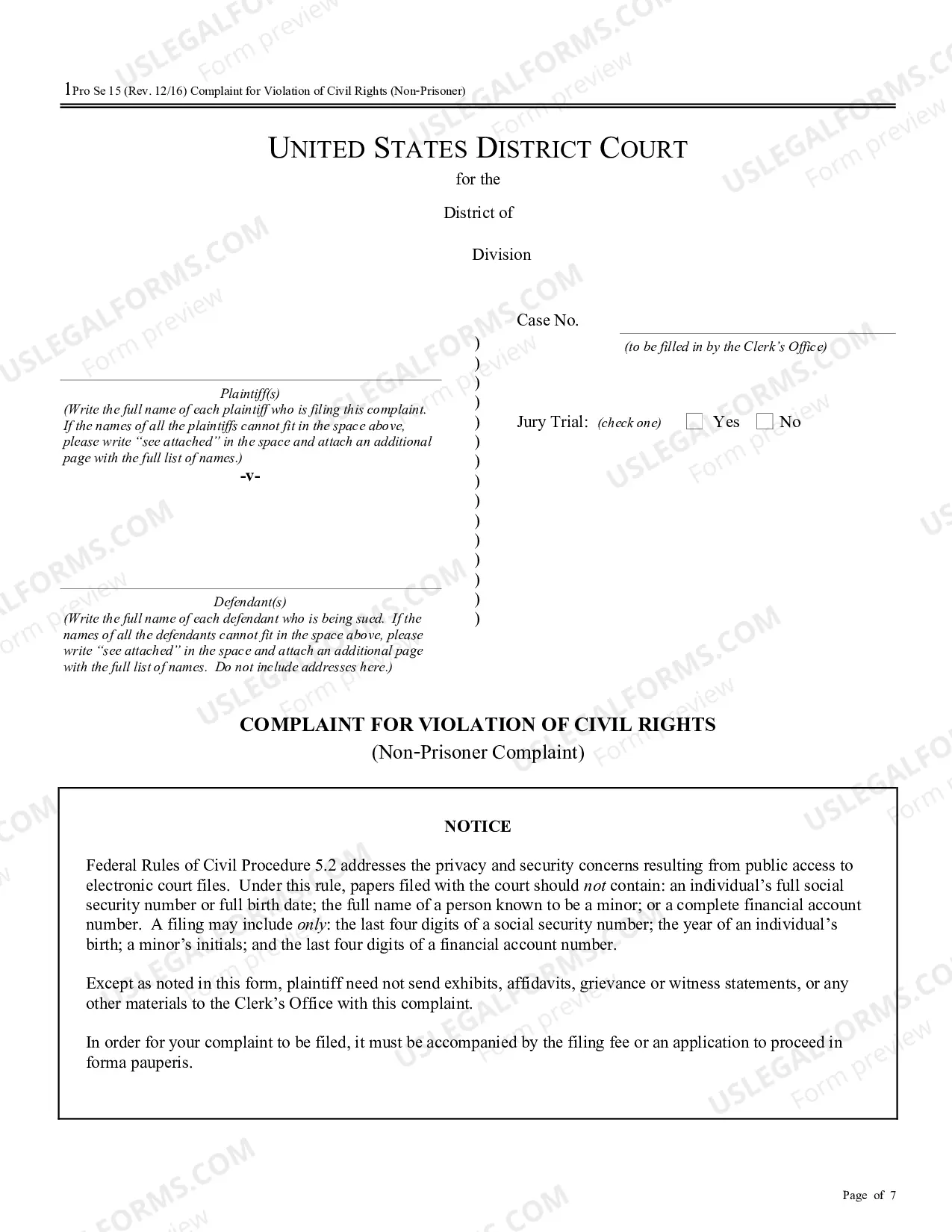
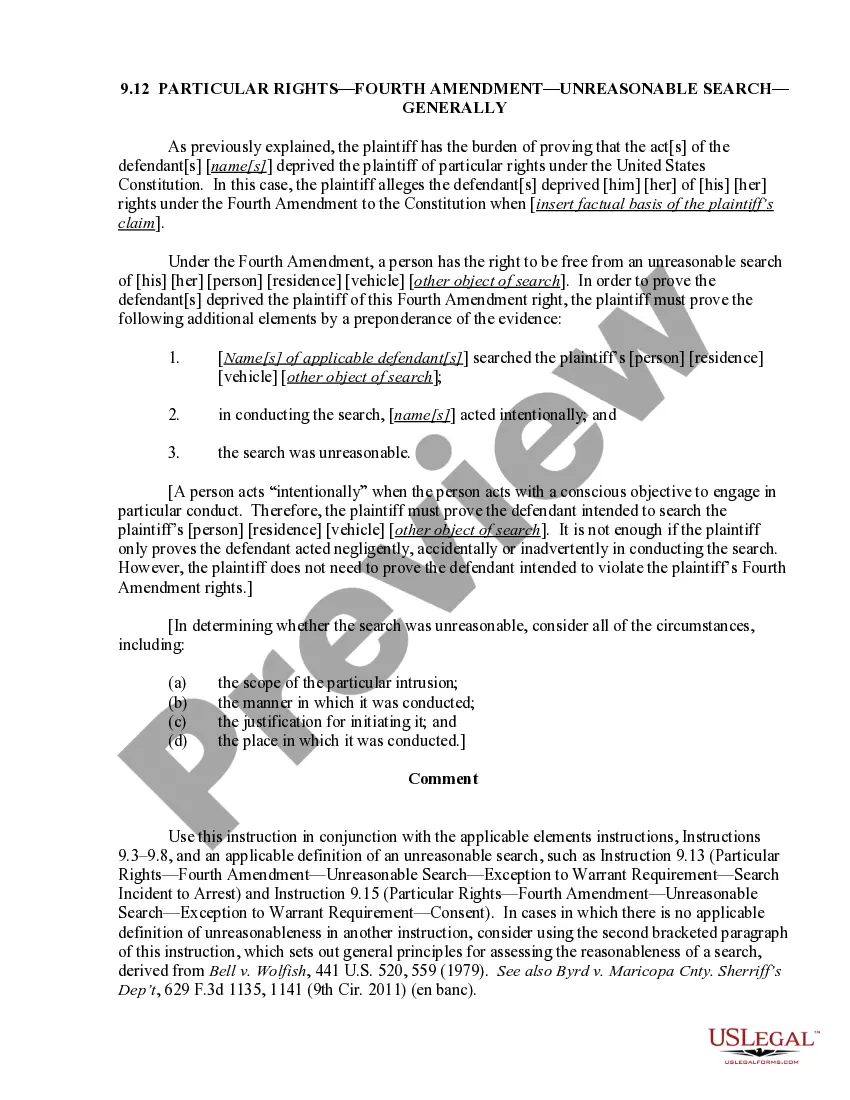
What is this form?
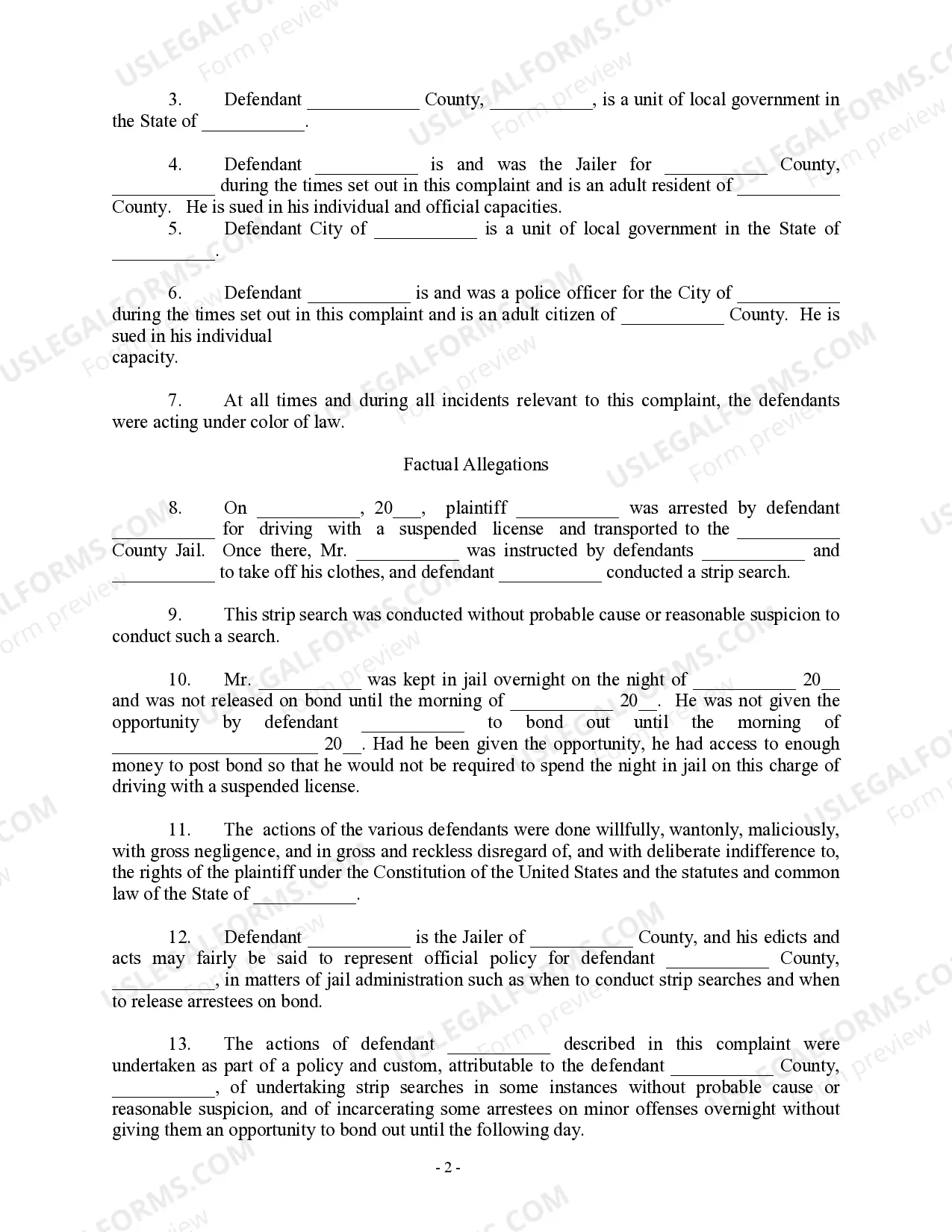
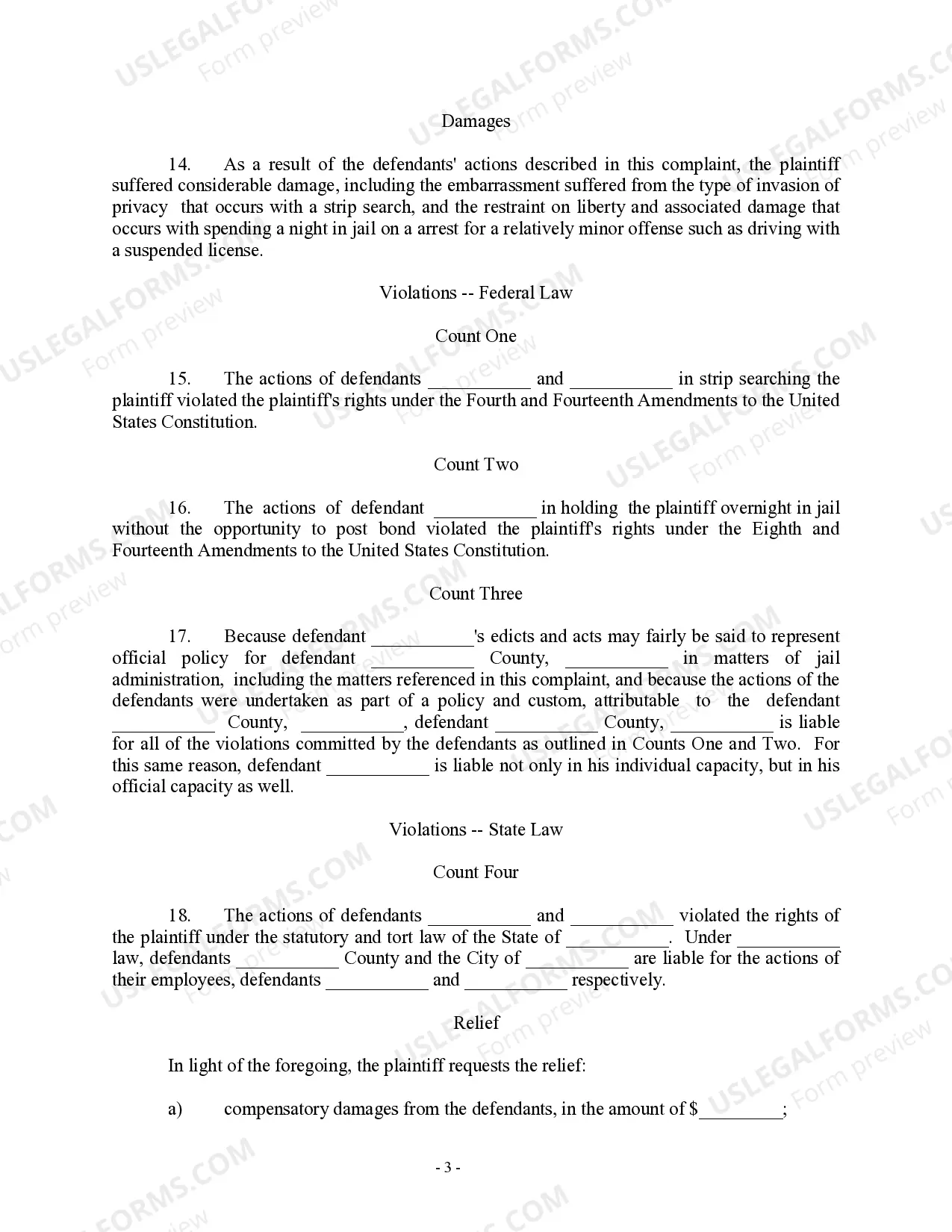
This Complaint for Strip Search addresses a violation of constitutional rights arising from a strip search conducted after an arrest. It specifically focuses on the Fourth and Fourteenth Amendments of the US Constitution. This form is distinct as it not only seeks compensatory and punitive damages for the plaintiff but also includes a jury trial demand, giving the plaintiff the right to seek a trial by jury regarding the alleged wrongful actions taken against them.
Key parts of this document
- Introduction: Overview of the strip search incident and the basis for the complaint.
- Jurisdiction: Details about the court's jurisdiction and the legal basis for the complaint.
- Plaintiff and Defendants: Identification of the parties involved in the case.
- Factual Allegations: Specifics of the incident leading to the complaint.
- Damages: Outline of the harm suffered, including emotional and physical implications.
- Counts of Violations: Legal basis for claims under federal and state laws.
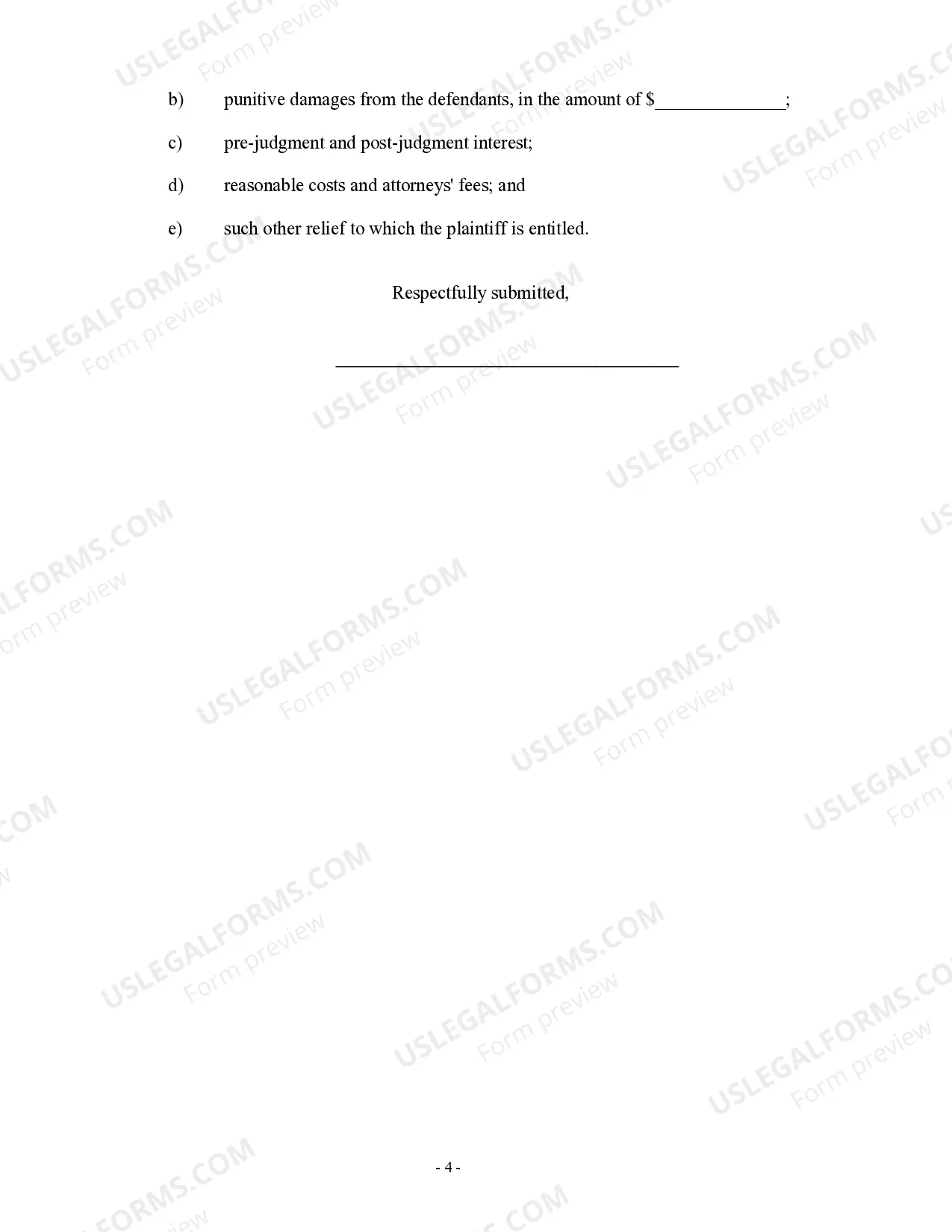
- Relief: What the plaintiff is seeking in terms of damages and other relief.




Common use cases
This form should be used when an individual believes their constitutional rights have been violated due to a strip search conducted without probable cause or reasonable suspicion, particularly following an arrest. It is applicable in scenarios involving wrongful imprisonment or invasive searches during the process of law enforcement, especially when facing minor charges.
Who needs this form
- Individuals who have been subjected to a strip search without proper legal justification.
- Clients seeking to pursue legal action against law enforcement or governmental entities for violations of their rights.
- Anyone who has experienced undue distress or humiliation as a result of such searches.
- Individuals who want to ensure their rights are upheld within the judicial system.
Instructions for completing this form
- Identify the plaintiff and defendants by entering their full names and relevant details.
- Provide the date and details of the strip search incident in the introduction section.
- Fill in the jurisdictional information, outlining why the court has authority over this case.
- Detail the factual allegations, noting any actions taken by law enforcement that are relevant to the complaint.
- Specify the damages sought, including both compensatory and punitive amounts.
- Review and sign the form to validate it before submission to the court.
Notarization guidance
This form usually doesn’t need to be notarized. However, local laws or specific transactions may require it. Our online notarization service, powered by Notarize, lets you complete it remotely through a secure video session, available 24/7.
Get your form ready online
Our built-in tools help you complete, sign, share, and store your documents in one place.
Make edits, fill in missing information, and update formatting in US Legal Forms—just like you would in MS Word.
Download a copy, print it, send it by email, or mail it via USPS—whatever works best for your next step.
Sign and collect signatures with our SignNow integration. Send to multiple recipients, set reminders, and more. Go Premium to unlock E-Sign.
If this form requires notarization, complete it online through a secure video call—no need to meet a notary in person or wait for an appointment.
We protect your documents and personal data by following strict security and privacy standards.

Make edits, fill in missing information, and update formatting in US Legal Forms—just like you would in MS Word.

Download a copy, print it, send it by email, or mail it via USPS—whatever works best for your next step.

Sign and collect signatures with our SignNow integration. Send to multiple recipients, set reminders, and more. Go Premium to unlock E-Sign.

If this form requires notarization, complete it online through a secure video call—no need to meet a notary in person or wait for an appointment.

We protect your documents and personal data by following strict security and privacy standards.
Common mistakes
- Failing to provide complete identification for all parties involved.
- Omitting key details regarding the circumstances of the strip search.
- Not specifying the jurisdiction correctly which may lead to dismissal of the case.
- Leaving the damages section blank or unclear.
- Neglecting to sign and date the form appropriately before submission.
Benefits of using this form online
- Convenient access to legal forms without the need for in-person visits.
- Edit and customize the form to fit individual circumstances easily.
- Reliability, as all forms are drafted by licensed attorneys, ensuring compliance with legal standards.
Legal use & context
- This form is utilized in federal and state court cases involving violations of constitutional rights.
- Claims made under 42 U.S.C. Section 1983 provide a federal avenue for lawsuits alleging civil rights violations.
- This form can be an essential tool for holding officials accountable for unlawful actions.
Summary of main points
- This Complaint for Strip Search seeks to remedy violations of rights under the US Constitution.
- Proper completion and filing of this form are crucial for pursuing legal action.
- Individuals subjected to unlawful strip searches have legal recourse through this complaint.
Looking for another form?
Form popularity
FAQ
Amendment XIV, Section 4 allowed the federal and state governments to refuse to pay war debts of the Confederate army as well as any claims made by slave owners for their losses when slaves were freed. Lastly, Amendment XIV, Section 5 gives Congress the power to enforce all the provisions within the whole amendment.
Overview. Procedural due process refers to the constitutional requirement that when the federal government acts in such a way that denies a citizen of a life, liberty, or property interest, the person must be given notice, the opportunity to be heard, and a decision by a neutral decisionmaker.
No person shall be held to answer for a capital, or otherwise infamous crime, unless on a presentment or indictment of a Grand Jury, except in cases arising in the land or naval forces, or in the Militia, when in actual service in time of War or public danger; nor shall any person be subject for the same offence to be
Section 4. The validity of the public debt of the United States, authorized by law, including debts incurred for payment of pensions and bounties for services in suppressing insurrection or rebellion, shall not be questioned.
The 14th Amendment to the U.S. Constitution, ratified in 1868, granted citizenship to all persons born or naturalized in the United Statesincluding former enslaved peopleand guaranteed all citizens equal protection of the laws. One of three amendments passed during the Reconstruction era to abolish slavery and
Section 4. The United States shall guarantee to every State in this Union a Republican Form of Government, and shall protect each of them against Invasion; and on Application of the Legislature, or of the Executive (when the Legislature cannot be convened) against domestic Violence.
It is a violation of due process for a state to enforce a judgment against a party to a proceeding without having given him an opportunity to be heard sometime before final judgment is entered.
No state shall make or enforce any law which shall abridge the privileges or immunities of citizens of the United States; nor shall any state deprive any person of life, liberty, or property, without due process of law; nor deny to any person within its jurisdiction the equal protection of the laws.
Procedural protections, such as notice and a hearing before termination of entitlements such as publicly funded medical insurance; individual rights listed in the Bill of Rights, including freedom of speech, free exercise of religion, the right to bear arms, and a variety of criminal procedure protections;