Specialty Services Contact - Self-Employed
What is this form?
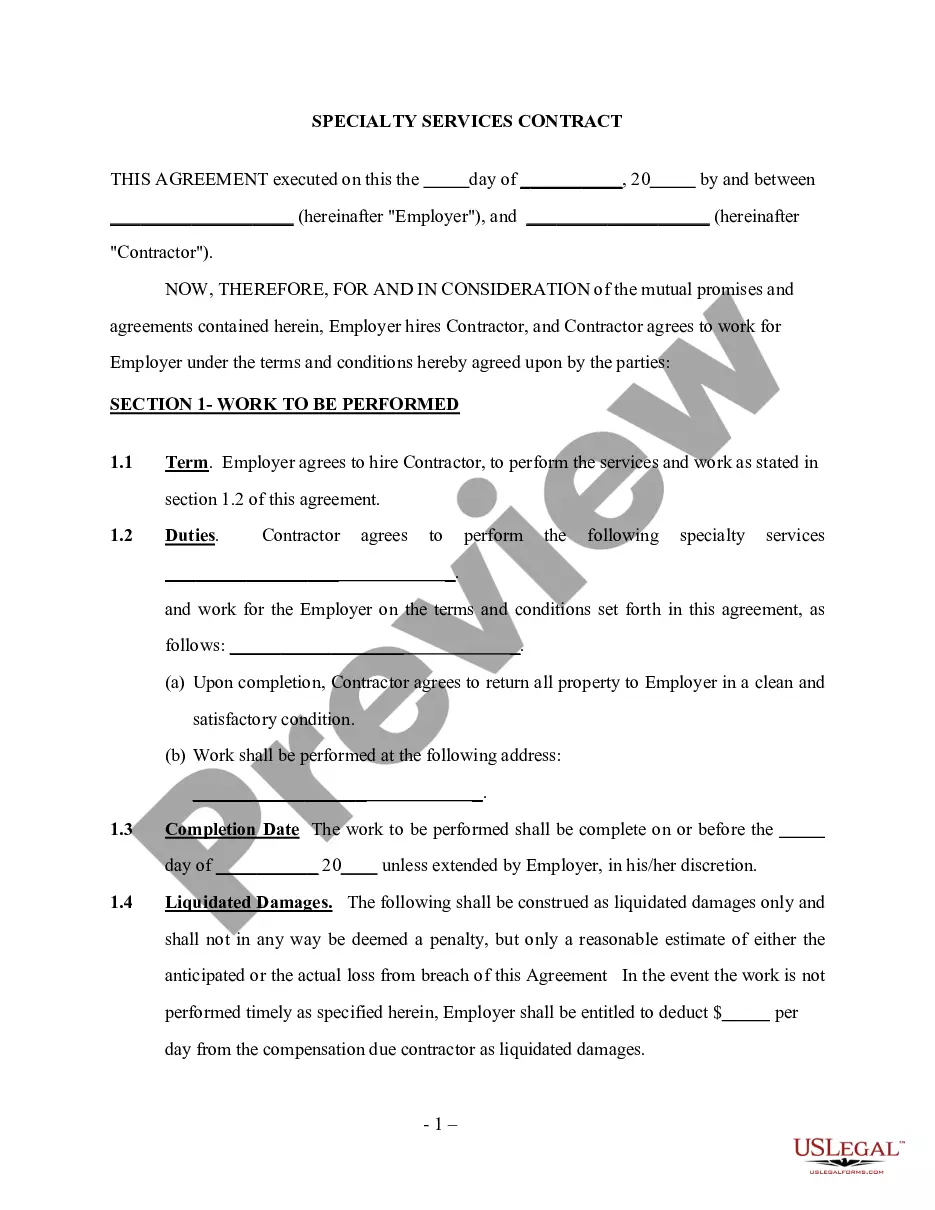
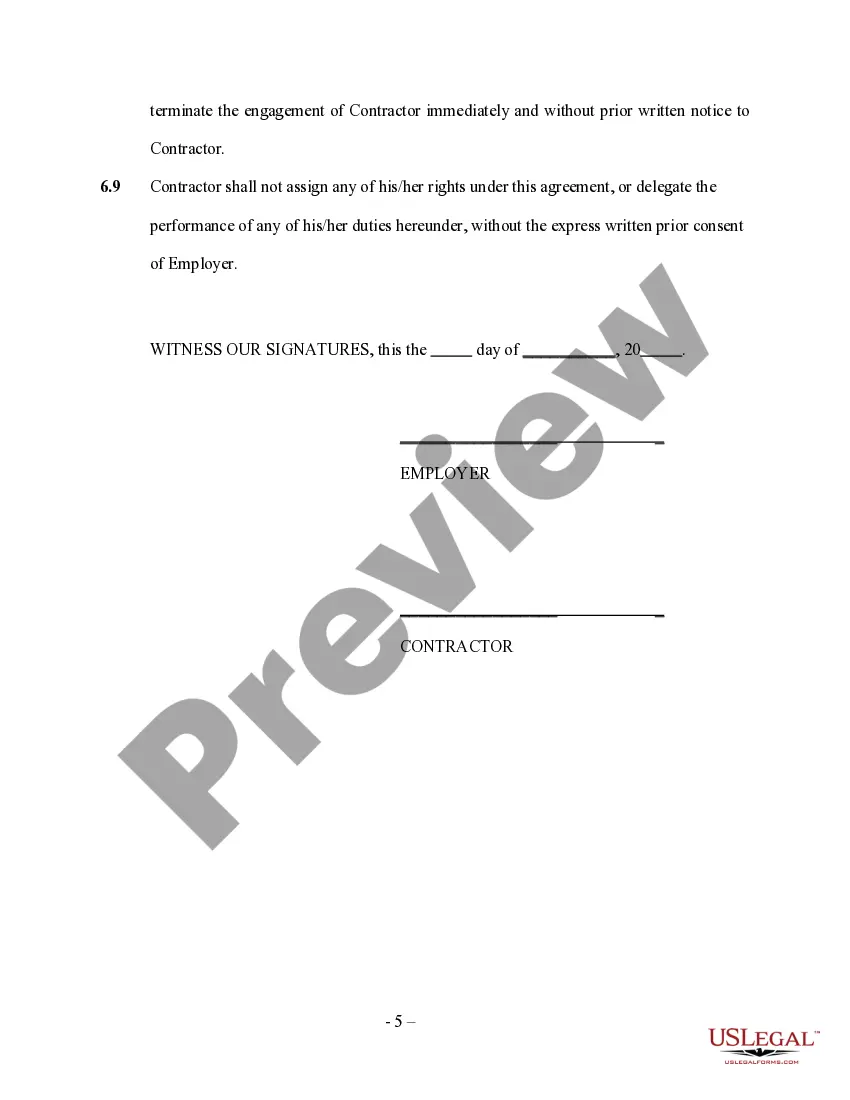
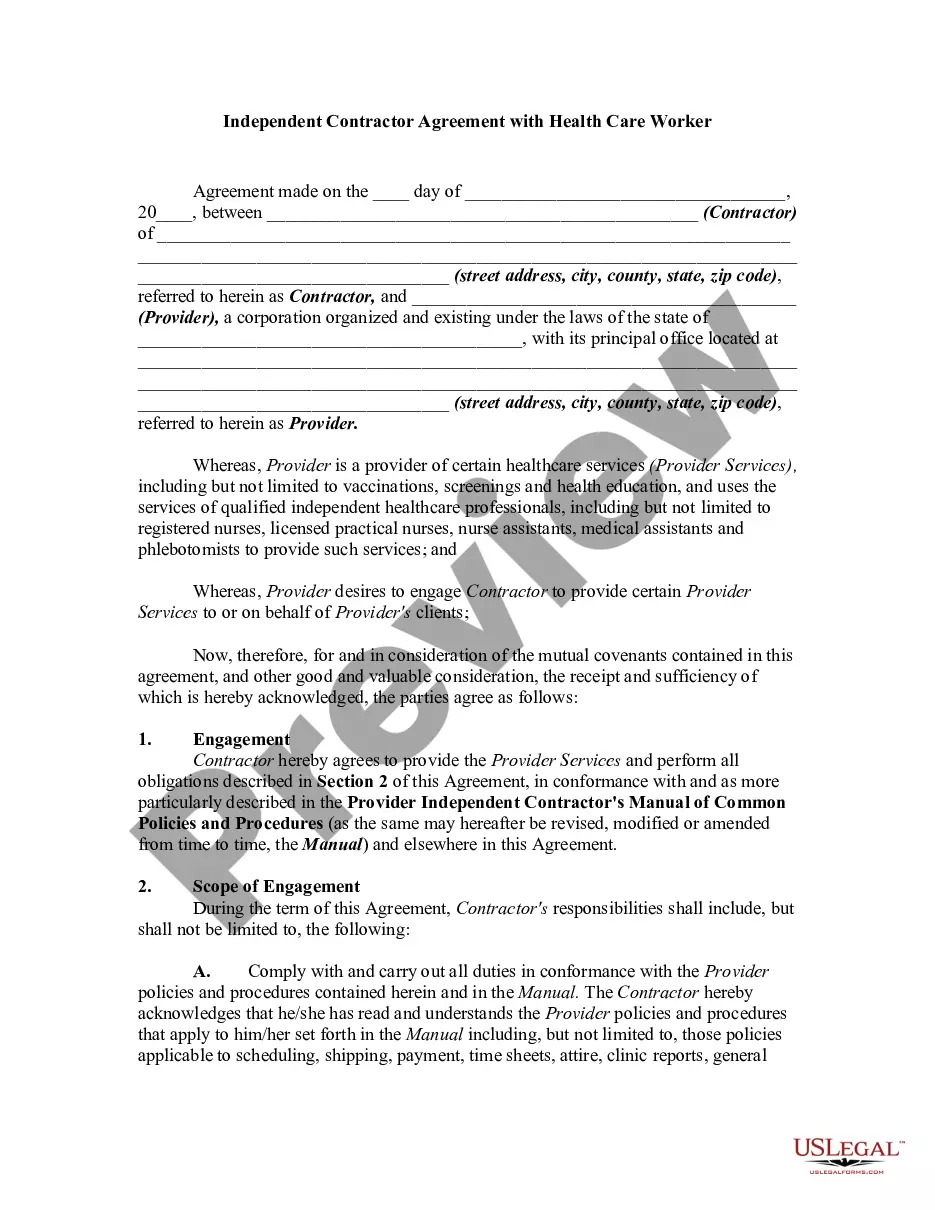
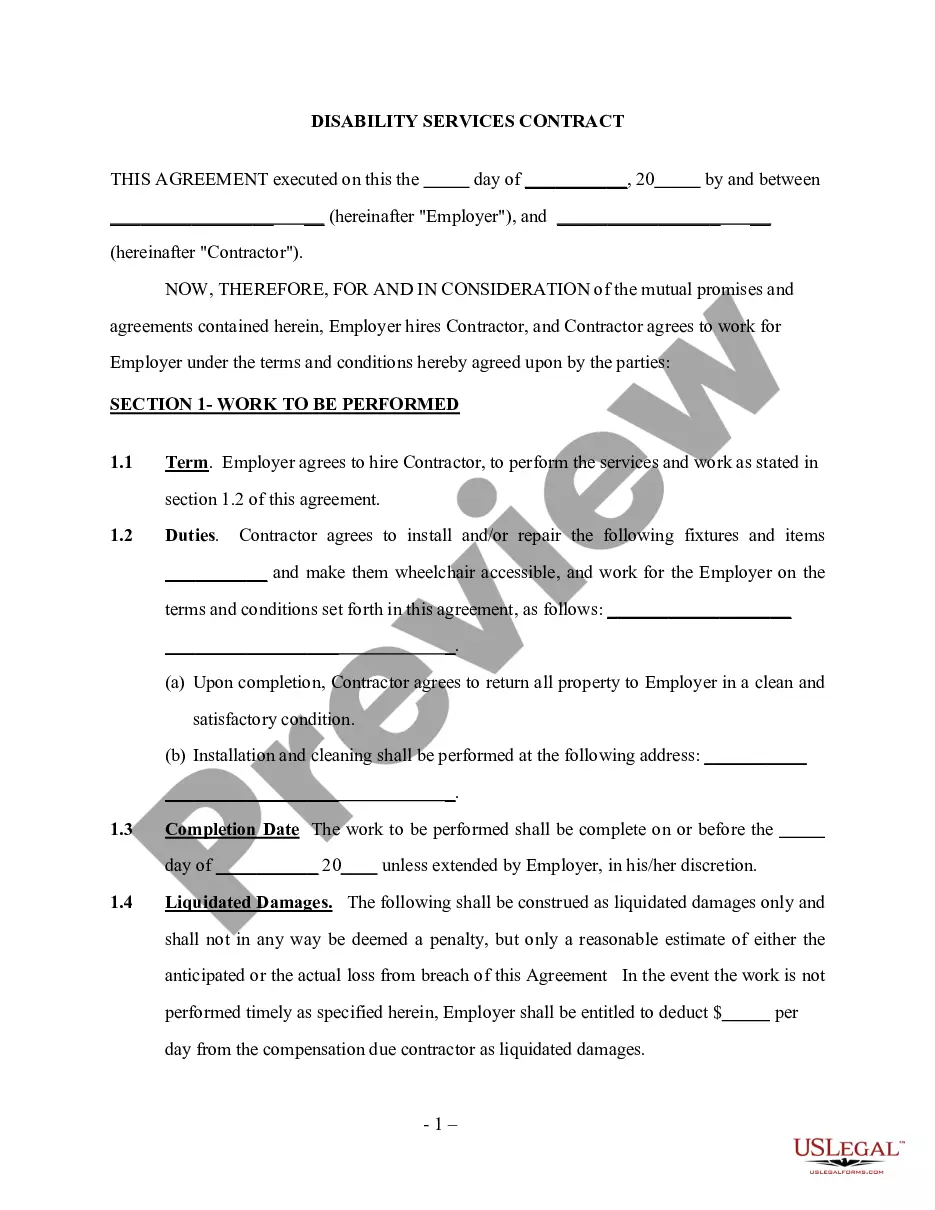
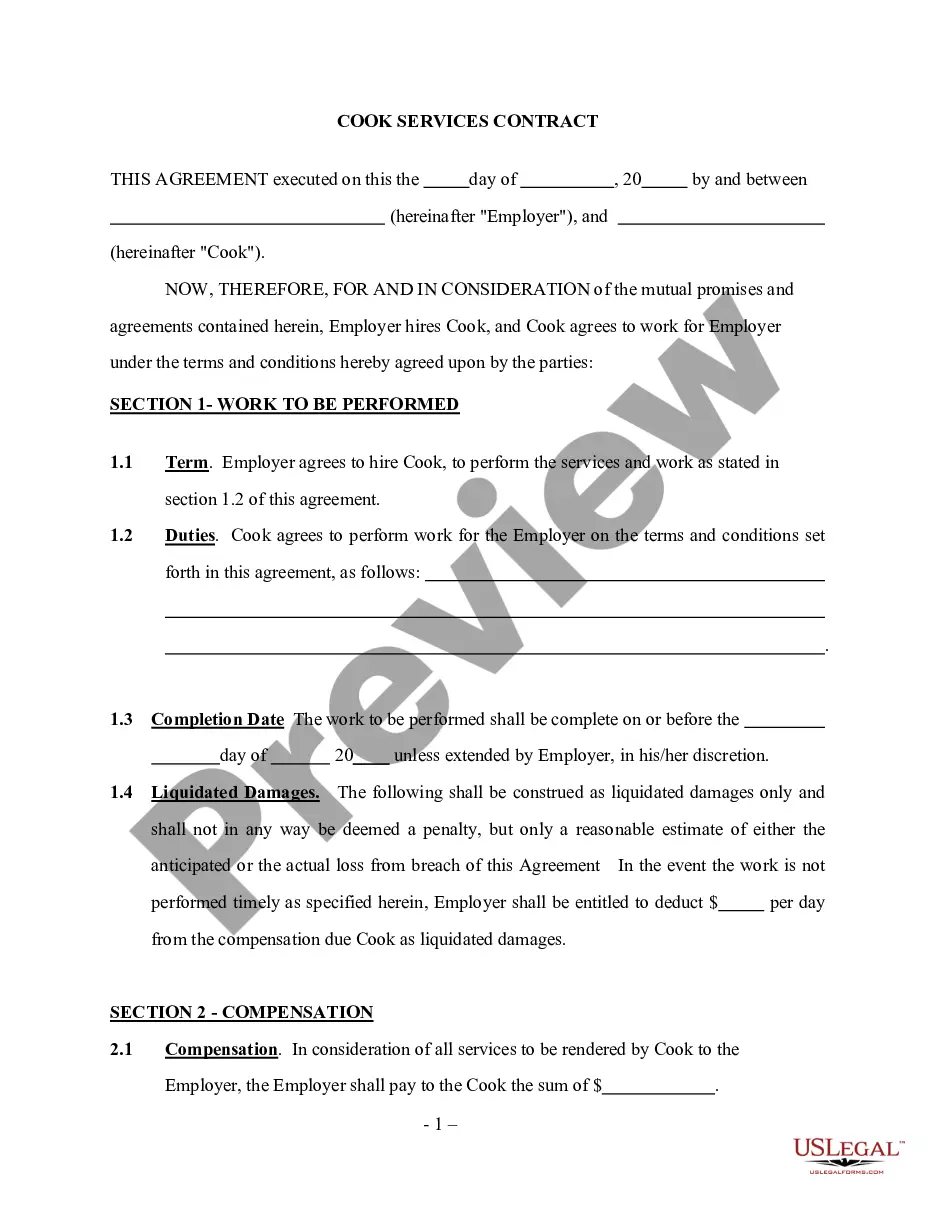
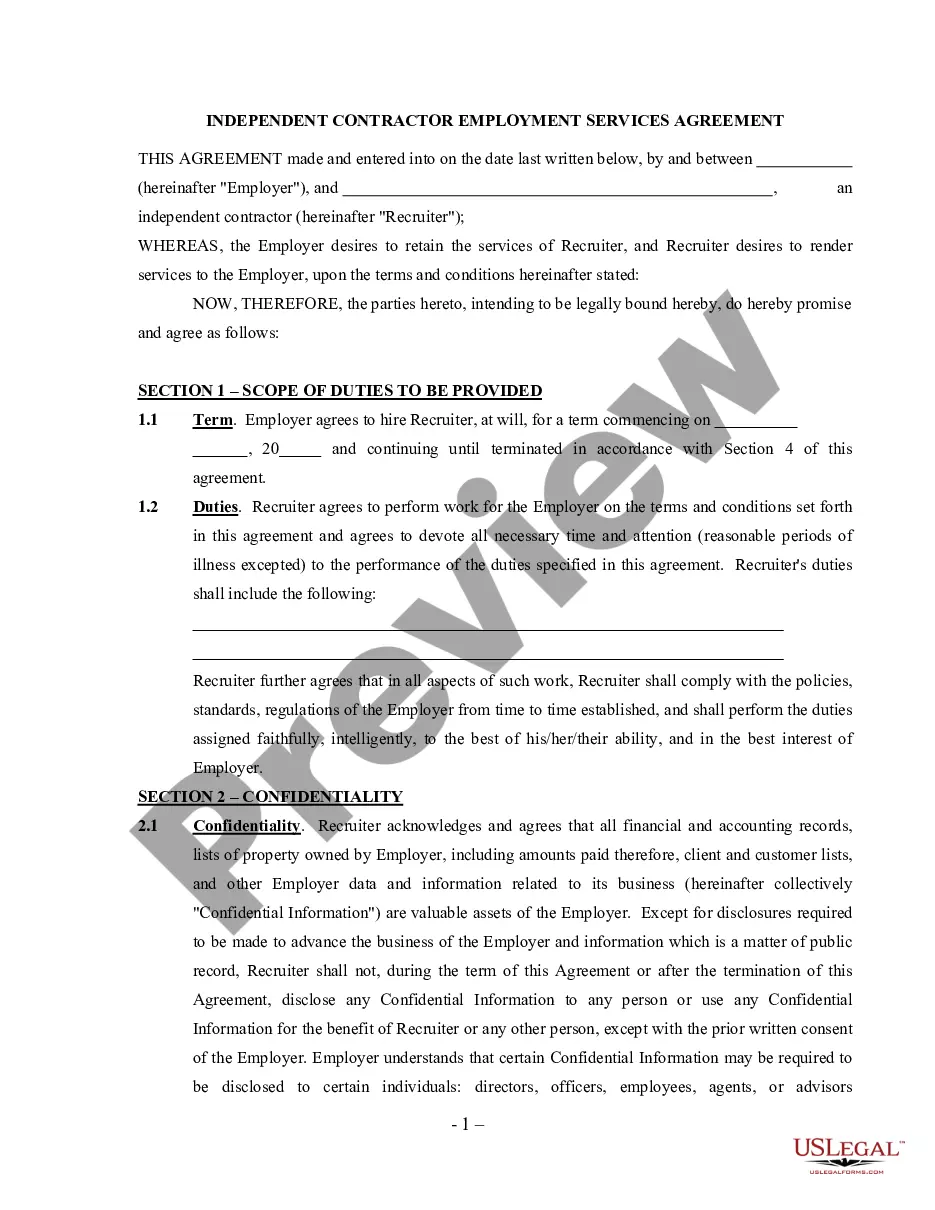
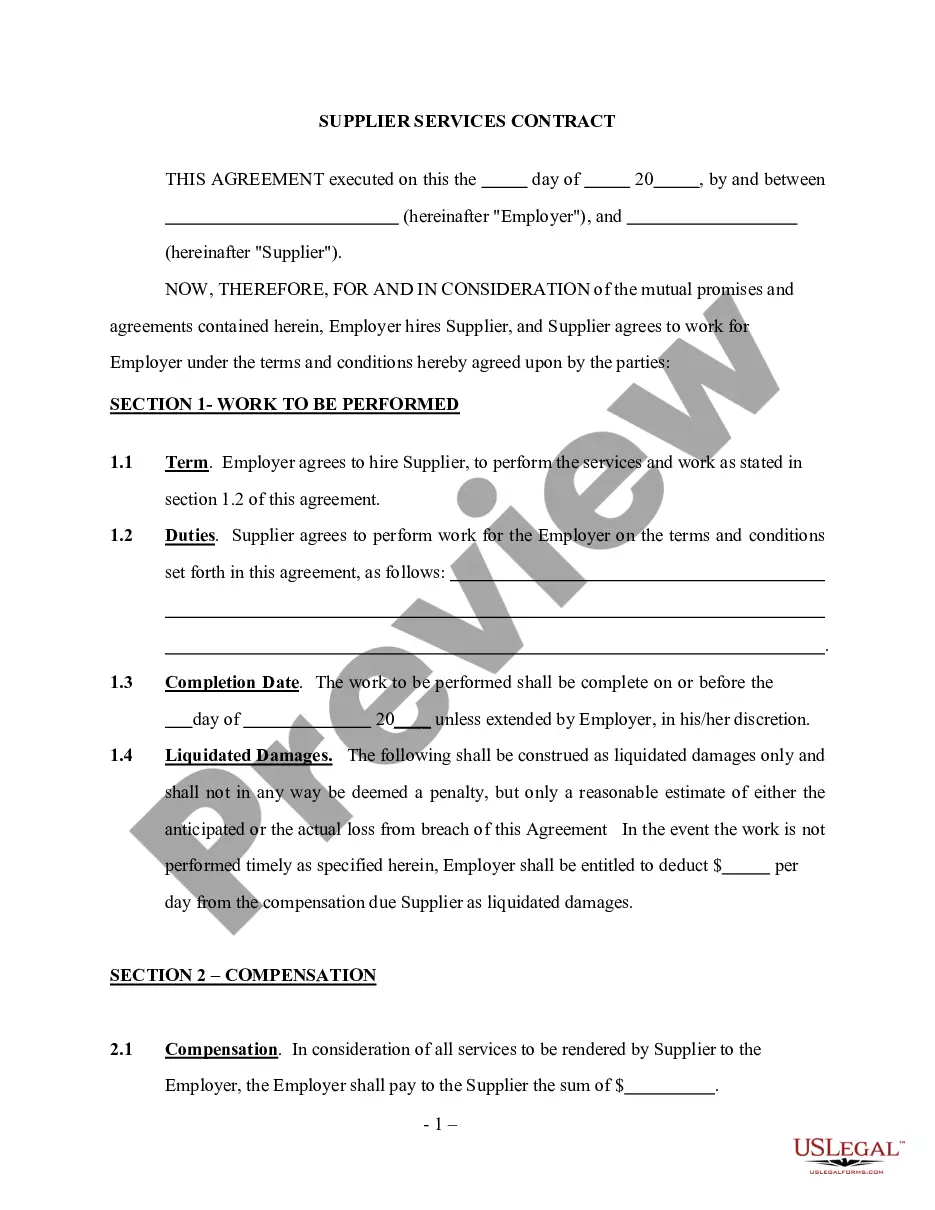
The Specialty Services Contact - Self-Employed is a legal agreement between an employer and an independent contractor. This form outlines the terms under which specialized services will be provided by the contractor. Unlike other employment agreements, this form emphasizes the independent status of the contractor, including tax responsibilities and work conditions, making it suitable for freelance or self-employed individuals working on a project basis.
Key components of this form
- Work to be performed: Details the specific specialty services the contractor will provide.
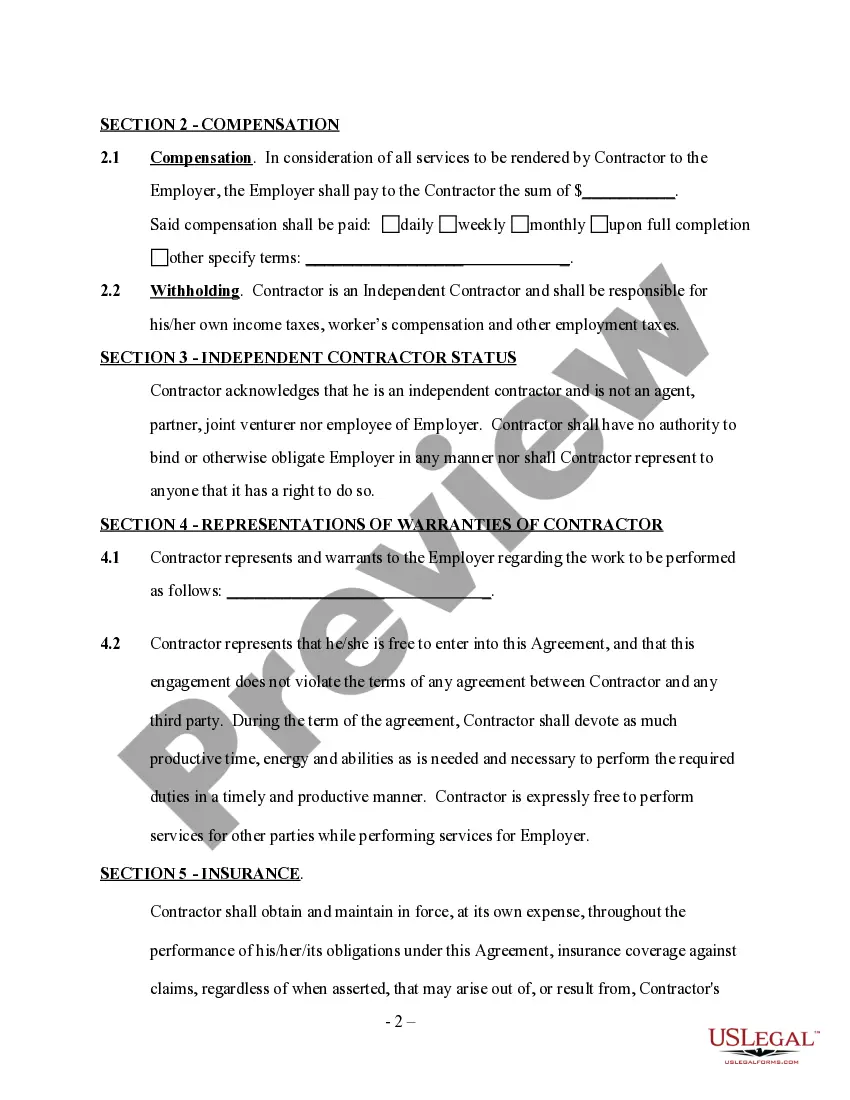
- Compensation: Specifies the payment terms, including the amount and frequency of payment.
- Independent contractor status: Clarifies that the contractor is not an employee of the employer, outlining the lack of agency and representation rights.
- Representations and warranties: Includes assurances made by the contractor regarding non-violation of other commitments.
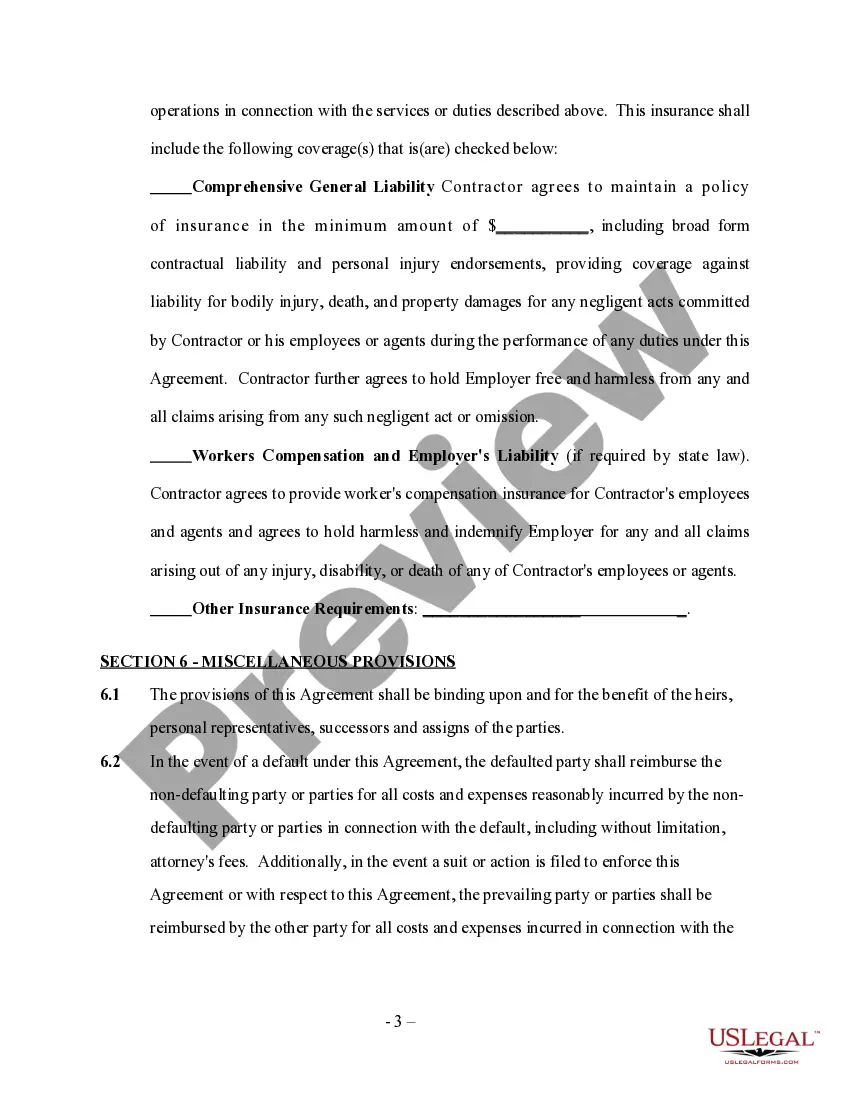
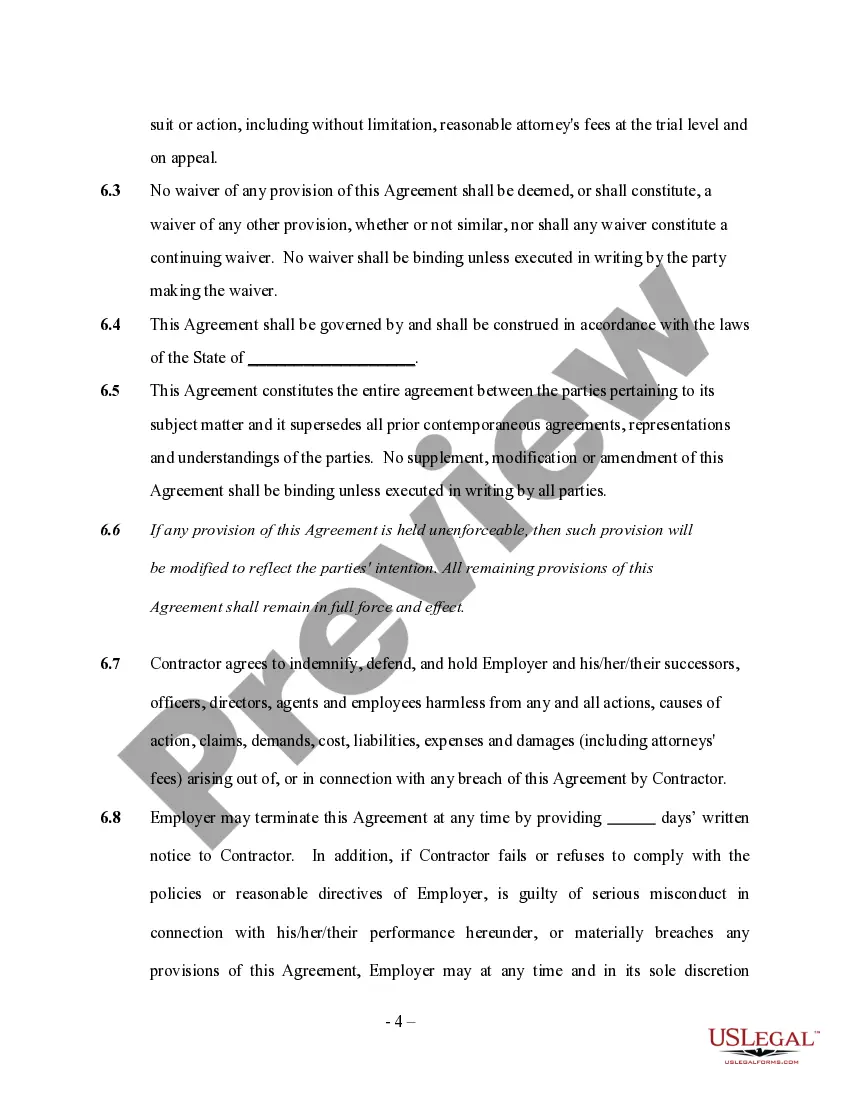
- Insurance and defaults: Details insurance responsibilities and procedures in case of contract default.
When this form is needed
This form is ideal when an employer seeks to hire a self-employed contractor for specialized services. Use this contract when the nature of work requires specific expertise that is not typically associated with employees, such as consulting, freelance design, or technical services. It helps establish clear expectations and responsibilities from the outset, minimizing potential disputes over the scope of work or payment terms.
Who this form is for
- Employers looking to hire independent contractors for specialized services.
- Self-employed individuals who provide specific services to clients or companies.
- Freelancers who need to formalize their working agreements with clients.
- Businesses requiring clear contracts that delineate the working relationship with independent contractors.
How to prepare this document
- Identify the parties involved by entering the employer's and contractor's names and contact information.
- Detail the specialty services that the contractor will perform, specifying the scope and requirements.
- Specify the compensation, including the total amount and payment frequency.
- Include terms related to independent contractor status and any warranties provided by the contractor.
- Ensure both parties sign and date the agreement to make it legally binding.
Does this document require notarization?
This form does not typically require notarization unless specified by local law. It is always recommended to check state laws to ensure compliance with any additional requirements for legal validity.
Get your form ready online
Our built-in tools help you complete, sign, share, and store your documents in one place.
Make edits, fill in missing information, and update formatting in US Legal Forms—just like you would in MS Word.
Download a copy, print it, send it by email, or mail it via USPS—whatever works best for your next step.
Sign and collect signatures with our SignNow integration. Send to multiple recipients, set reminders, and more. Go Premium to unlock E-Sign.
If this form requires notarization, complete it online through a secure video call—no need to meet a notary in person or wait for an appointment.
We protect your documents and personal data by following strict security and privacy standards.

Make edits, fill in missing information, and update formatting in US Legal Forms—just like you would in MS Word.

Download a copy, print it, send it by email, or mail it via USPS—whatever works best for your next step.

Sign and collect signatures with our SignNow integration. Send to multiple recipients, set reminders, and more. Go Premium to unlock E-Sign.

If this form requires notarization, complete it online through a secure video call—no need to meet a notary in person or wait for an appointment.

We protect your documents and personal data by following strict security and privacy standards.
Avoid these common issues
- Failing to clearly define the scope of work can lead to misunderstandings about responsibilities.
- Not specifying payment terms can create disputes over compensation.
- Overlooking local legal requirements may invalidate the contract.
- Neglecting to include both partiesâ signatures renders the agreement unenforceable.
Why use this form online
- Convenience of downloading and completing the form at your own pace.
- Editable templates allow for customization based on specific needs.
- Access to professionally drafted forms increases the reliability of legal agreements.
- Instant availability reduces the time typically required to consult a lawyer for simple agreements.
Legal use & context
The Specialty Services Contact - Self-Employed serves as a legally binding agreement between the employer and contractor, ensuring that both parties understand their rights and obligations. Itâs essential for protecting both parties in case of disputes about the work performed or payment issues.
Key takeaways
- This form is designed for agreements between employers and independent contractors.
- Clearly defining roles and compensation can prevent future disputes.
- It's important for both parties to understand their rights under this contract.
Looking for another form?



Form popularity
FAQ
A freelancer is a self-employed person who: Pays their own income tax, known as self-employment tax. Doesn't usually have employees, but may outsource work for specific projects. Has full control over where they work (e.g., they'll often work remotely) and the work hours.
Special rules apply to workers who perform in-home services for elderly or disabled individuals (caregivers).In such cases, the caregiver must still report the compensation as income of his or her Form 1040 or 1040-SR, and may be required to pay self-employment tax depending on the facts and circumstances.
Simply put, being an independent contractor is one way to be self-employed. Being self-employed means that you earn money but don't work as an employee for someone else.An independent contractor is someone who provides a service on a contractual basis.
To be self-employed is essentially what it says you are employed by yourself. A freelancer is self-employed, for instance.As a self-employed person, you might run a business with employees or use freelancers. Self-employed people are also not necessarily working with clients in the same way freelancers do.
The Internal Revenue Service considers freelancers to be self-employed, so if you earn income as a freelancer you must file your taxes as a business owner. While you can take additional deductions if you are self-employed, you'll also face additional taxes in the form of the self-employment tax.
Self-employed persons, including direct sellers, report their income on Schedule C (Form 1040), Profit or Loss from Business (Sole Proprietorship). Use Schedule SE (Form 1040), Self-Employment Tax if the net earnings from self-employment are $400 or more.
Locate all of your annual tax returns. Tax returns are your first go-to when it comes to income proof. Bank statements indicate personal cash flow. Make use of online accounting services that track payments and expenditures. Maintain profit and loss statements.
A self-employed person refers to any person who earns their living from any independent pursuit of economic activity, as opposed to earning a living working for a company or another individual (an employer).
As a freelancer, you're going to have to register as self-employed and more specifically as a sole trader. Despite how it sounds, it doesn't actually apply to people who just work alone. So you can take on staff if you want. It just means that you're solely responsible for the business.