Cooperative Apartment Sublease Agreement
What is this form?
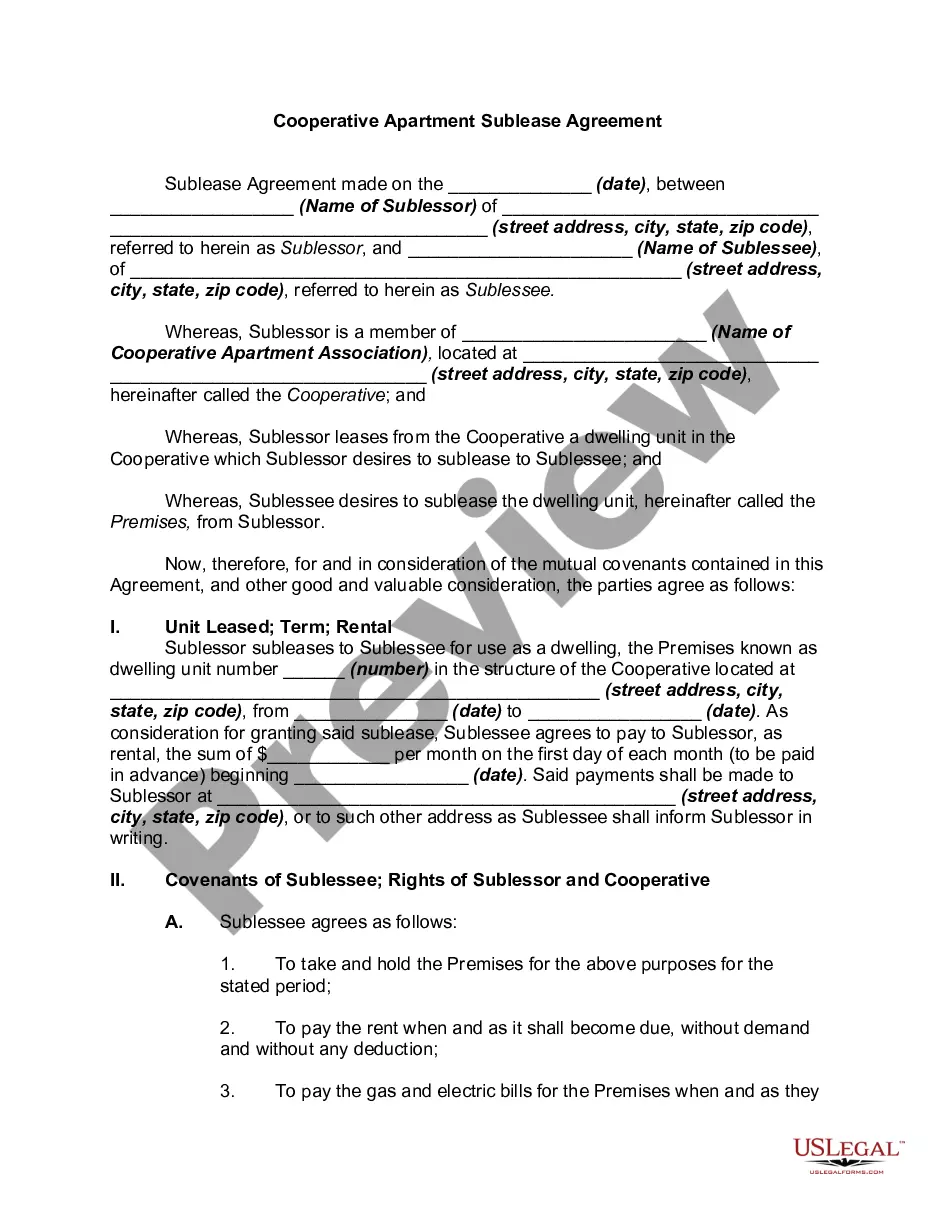
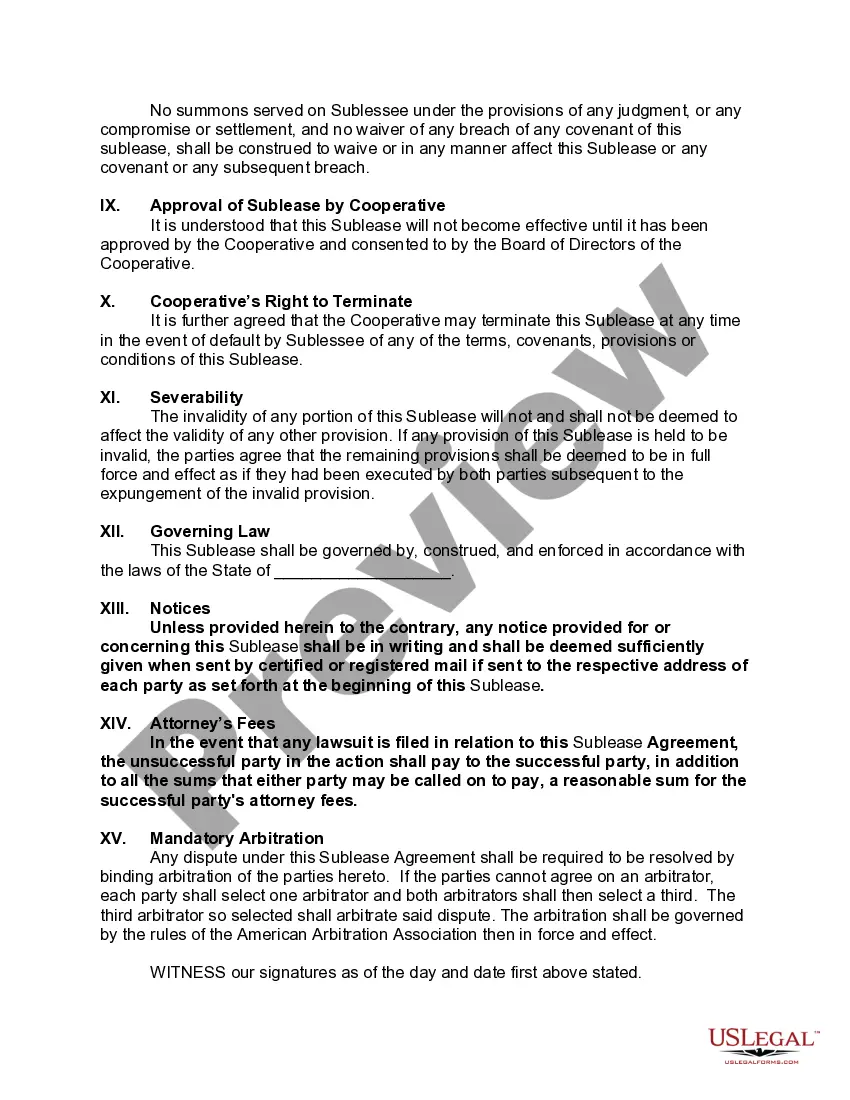
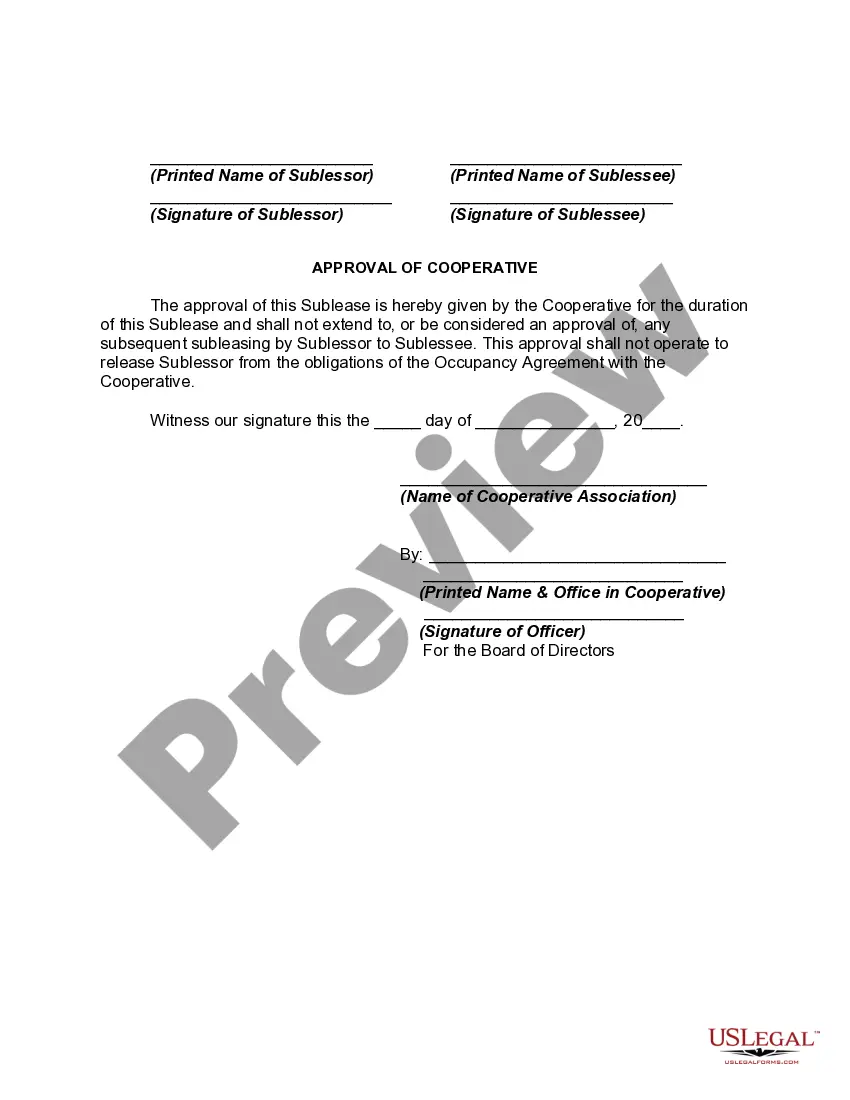
The Cooperative Apartment Sublease Agreement is a legal document that allows a member of a cooperative apartment to sublease their unit to another individual. This form differs from standard lease agreements because it takes into account the unique structure of cooperatives, where residents own shares in a corporation that owns the building. Subleasing in this context typically requires board approval and complies with specific rules governing cooperative living.
Main sections of this form
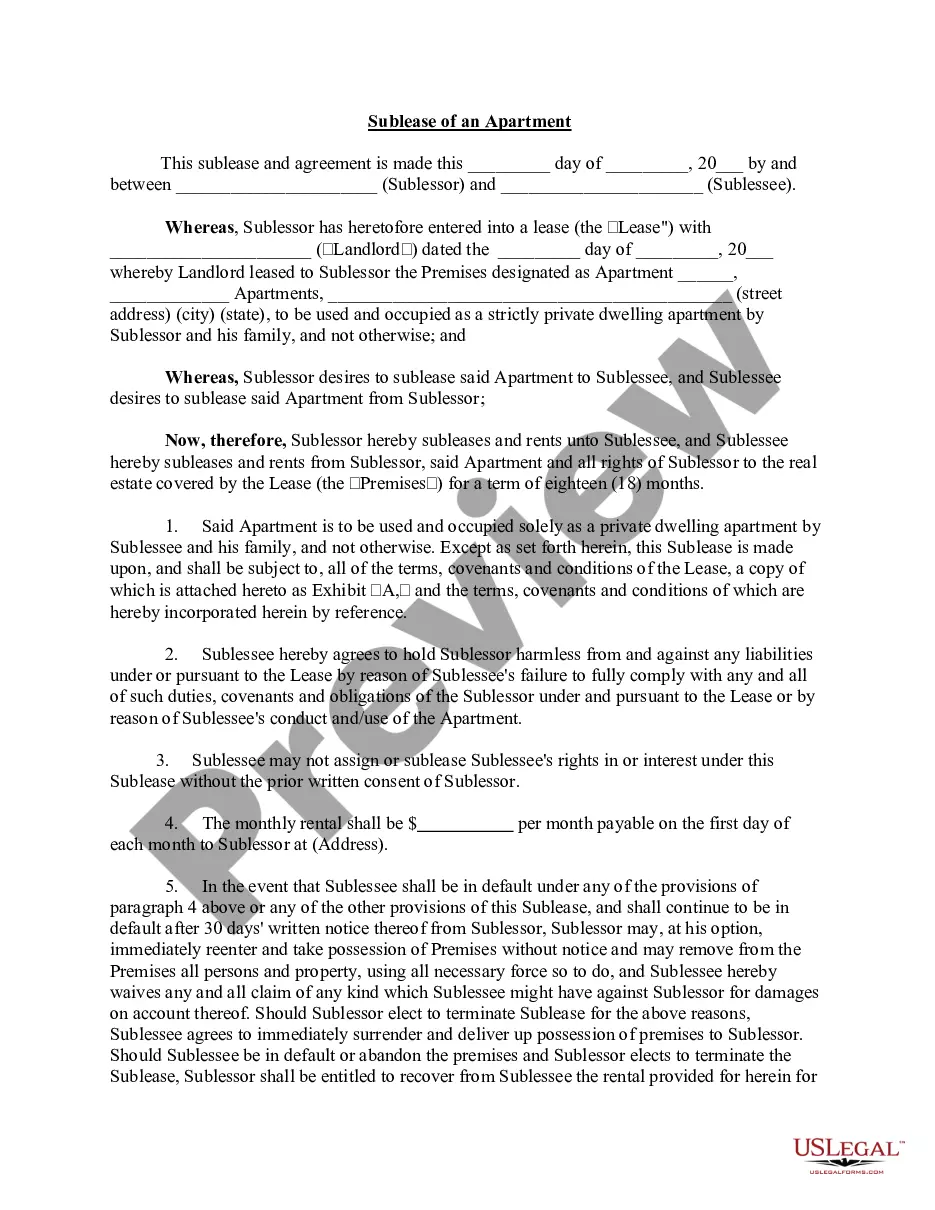
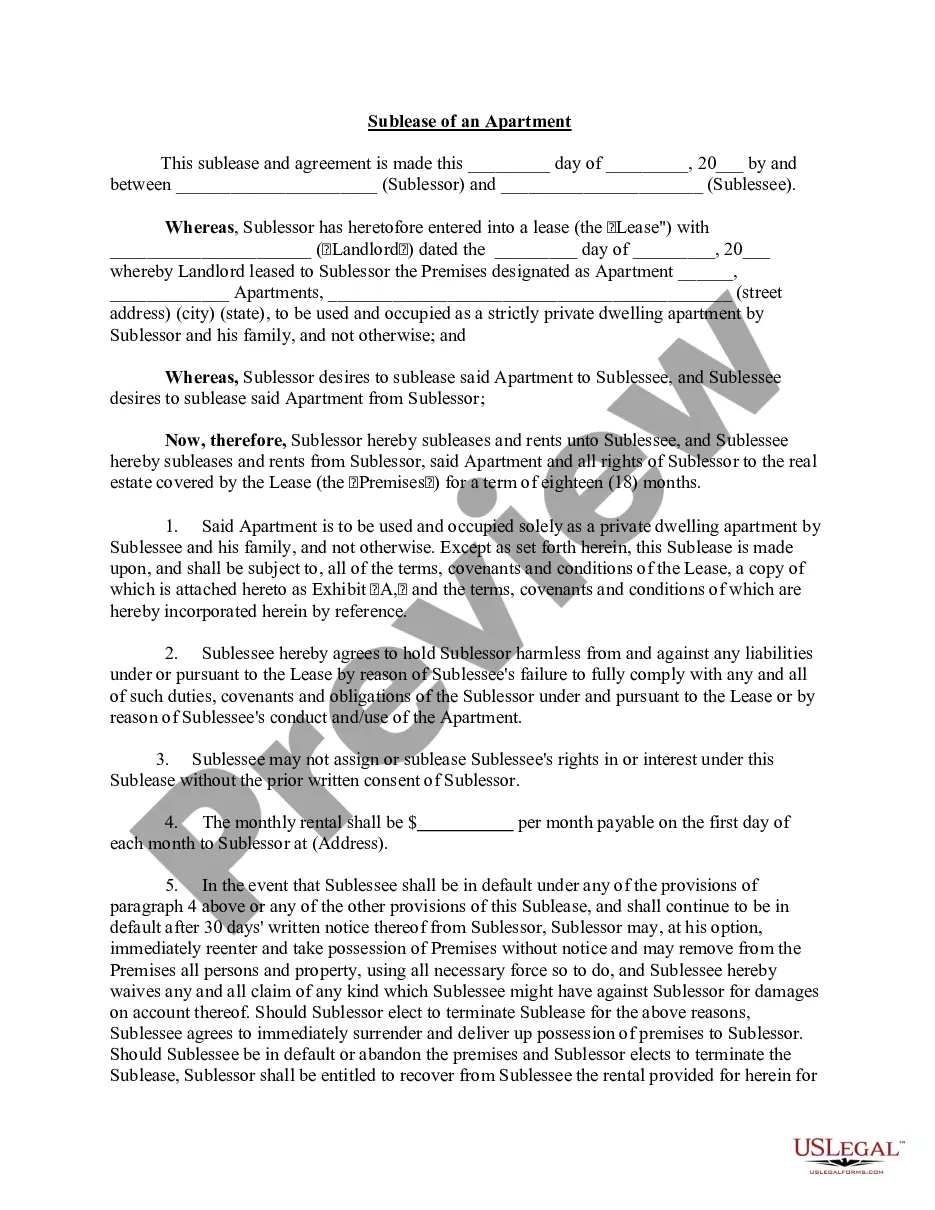
- Identifies the parties involved: Sublessor (current tenant) and Sublessee (prospective tenant).
- Details the term of the sublease, including start and end dates.
- Specifies the monthly rental amount and payment obligations.
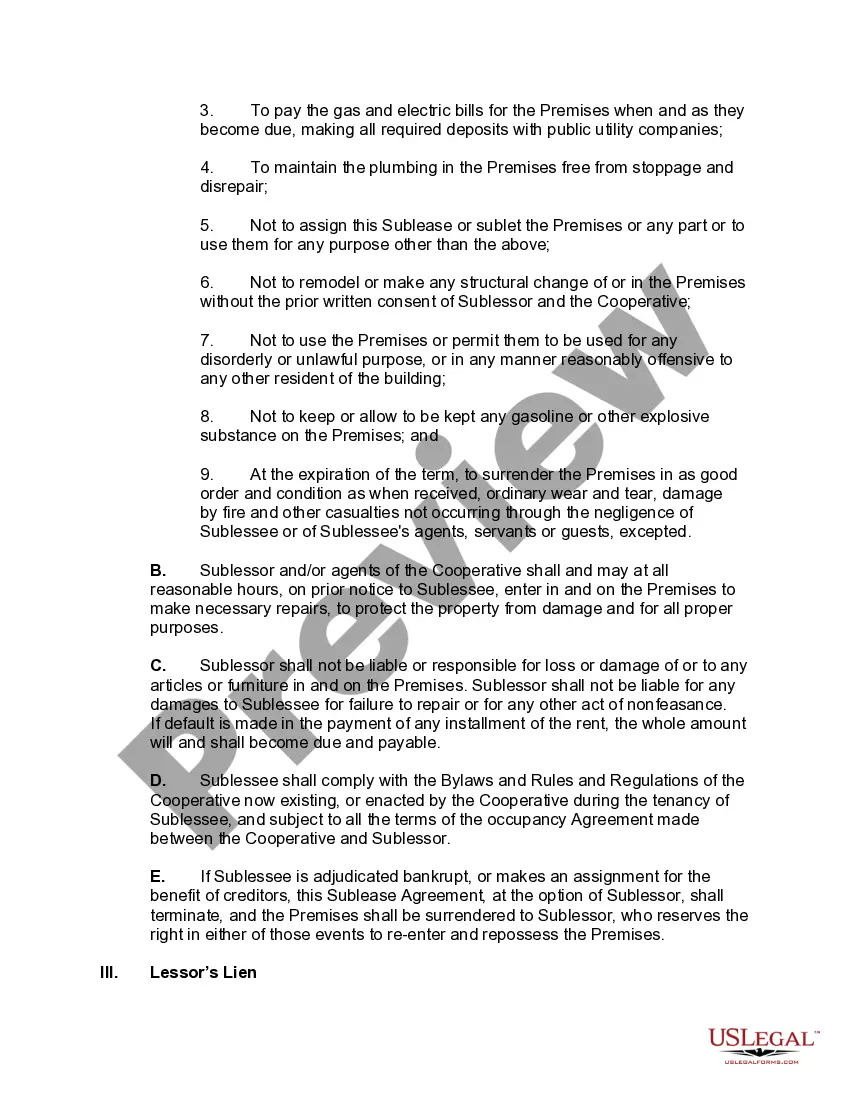
- Outlines the responsibilities of the Sublessee, including maintenance and adherence to rules.
- Addresses the requirement for board approval from the cooperative association.
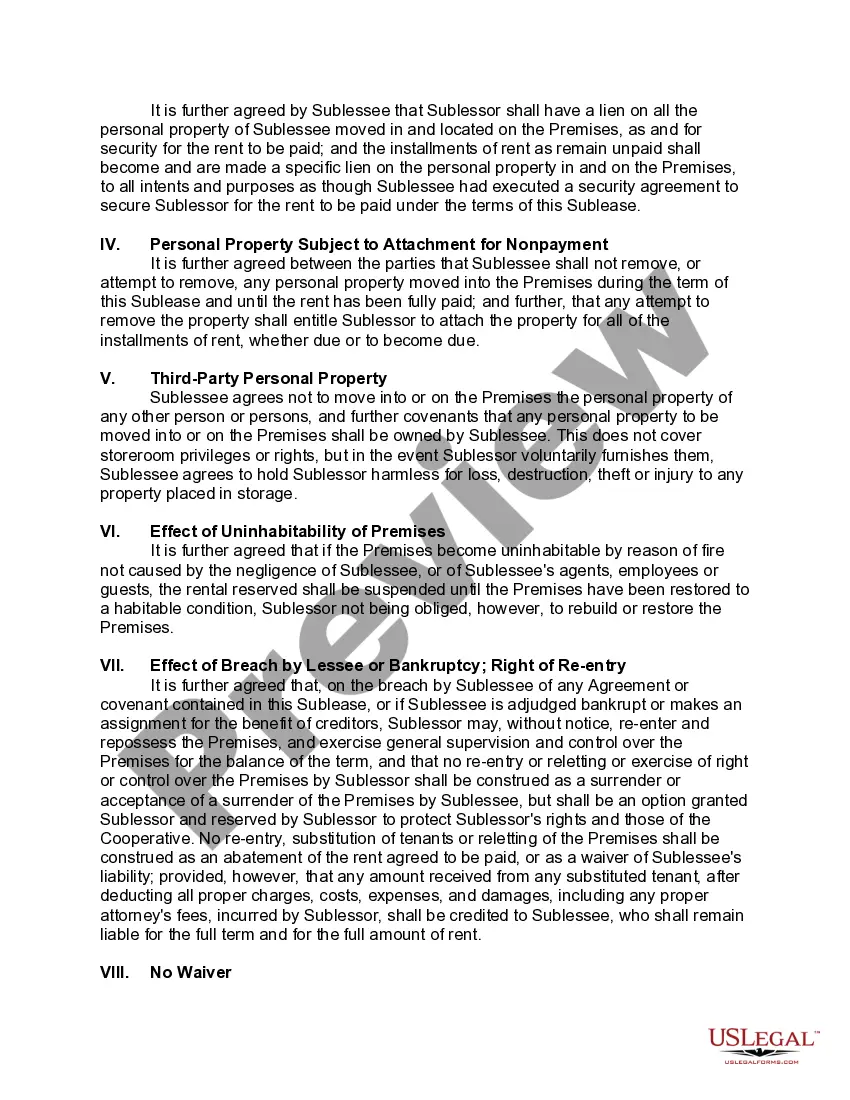
- Covers legal provisions regarding breach of contract and remedies available to the Sublessor.
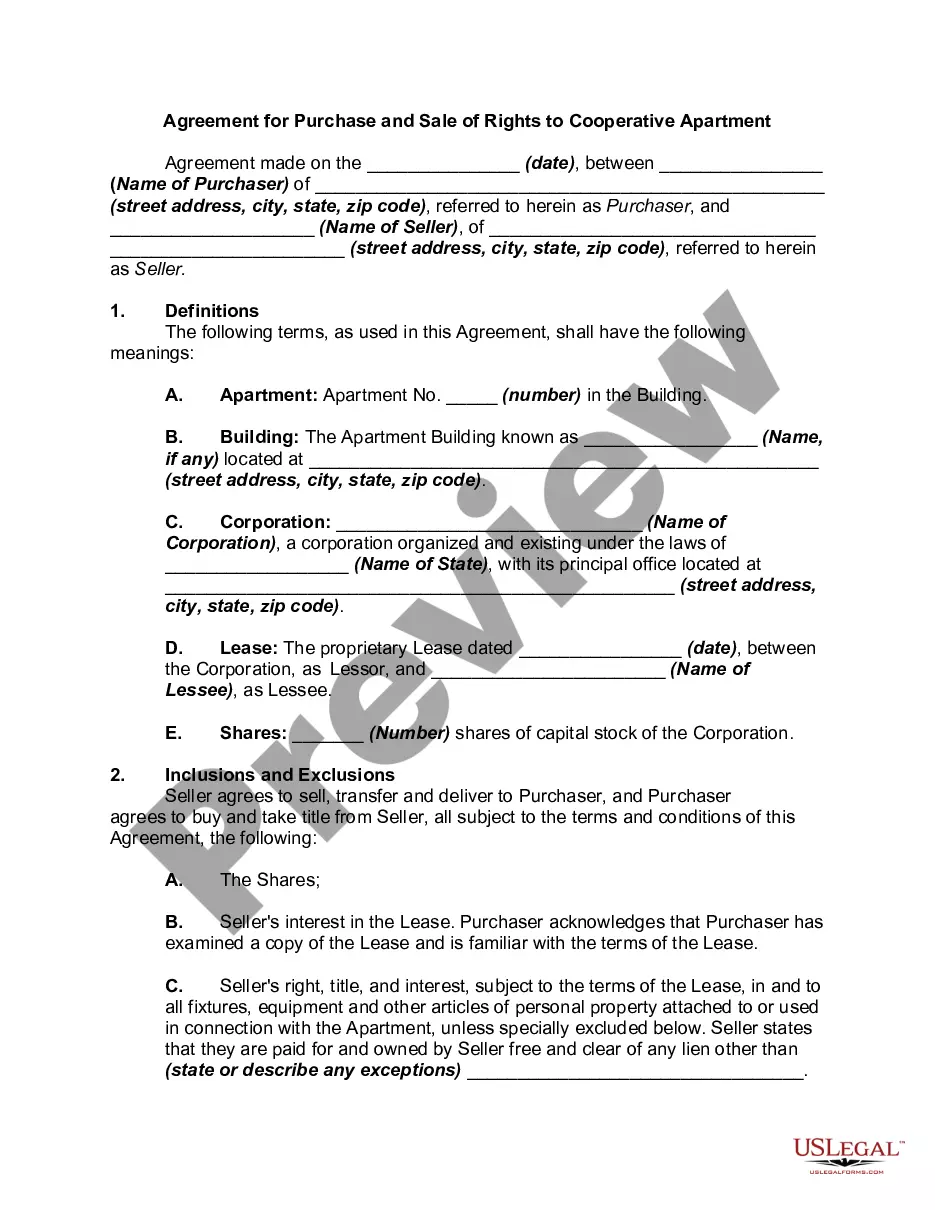
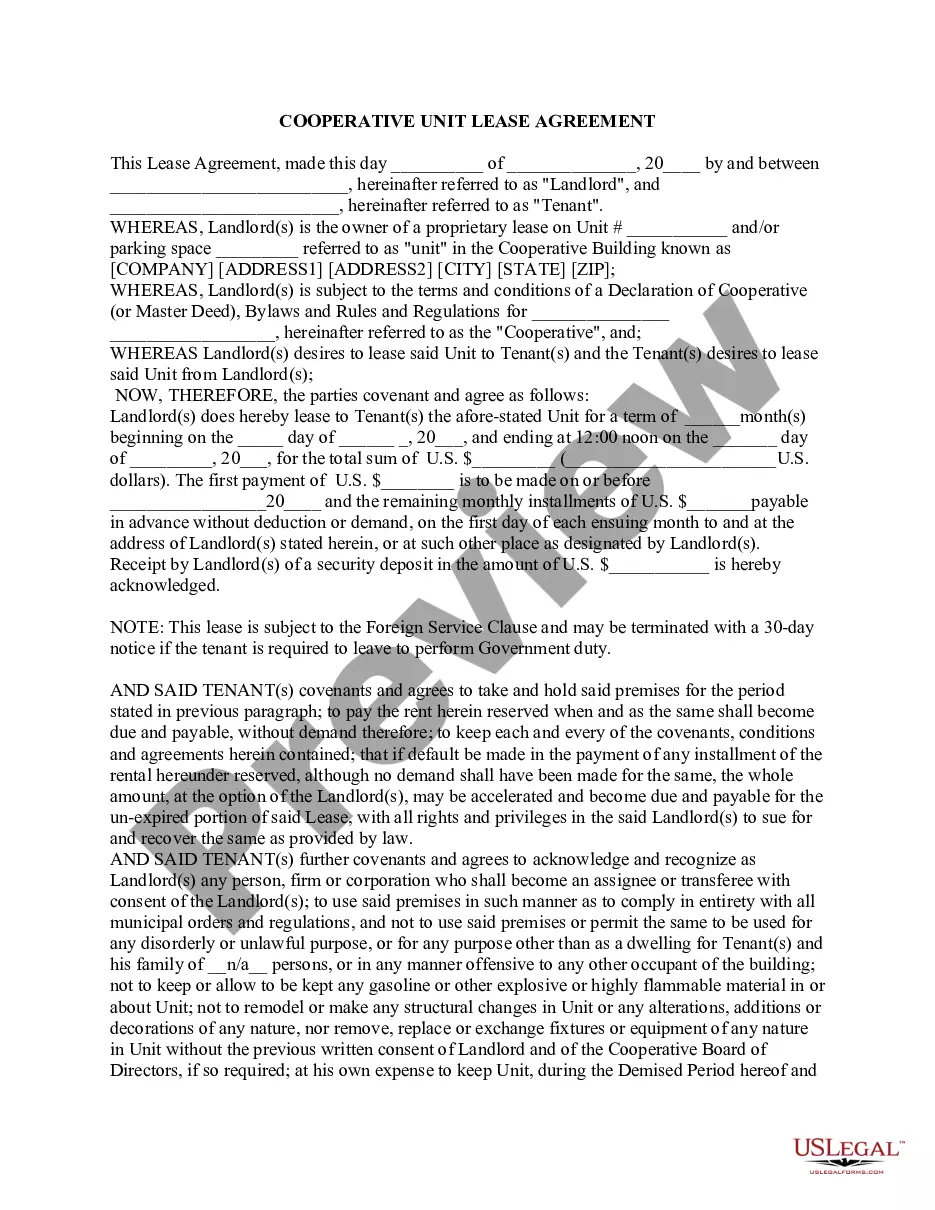
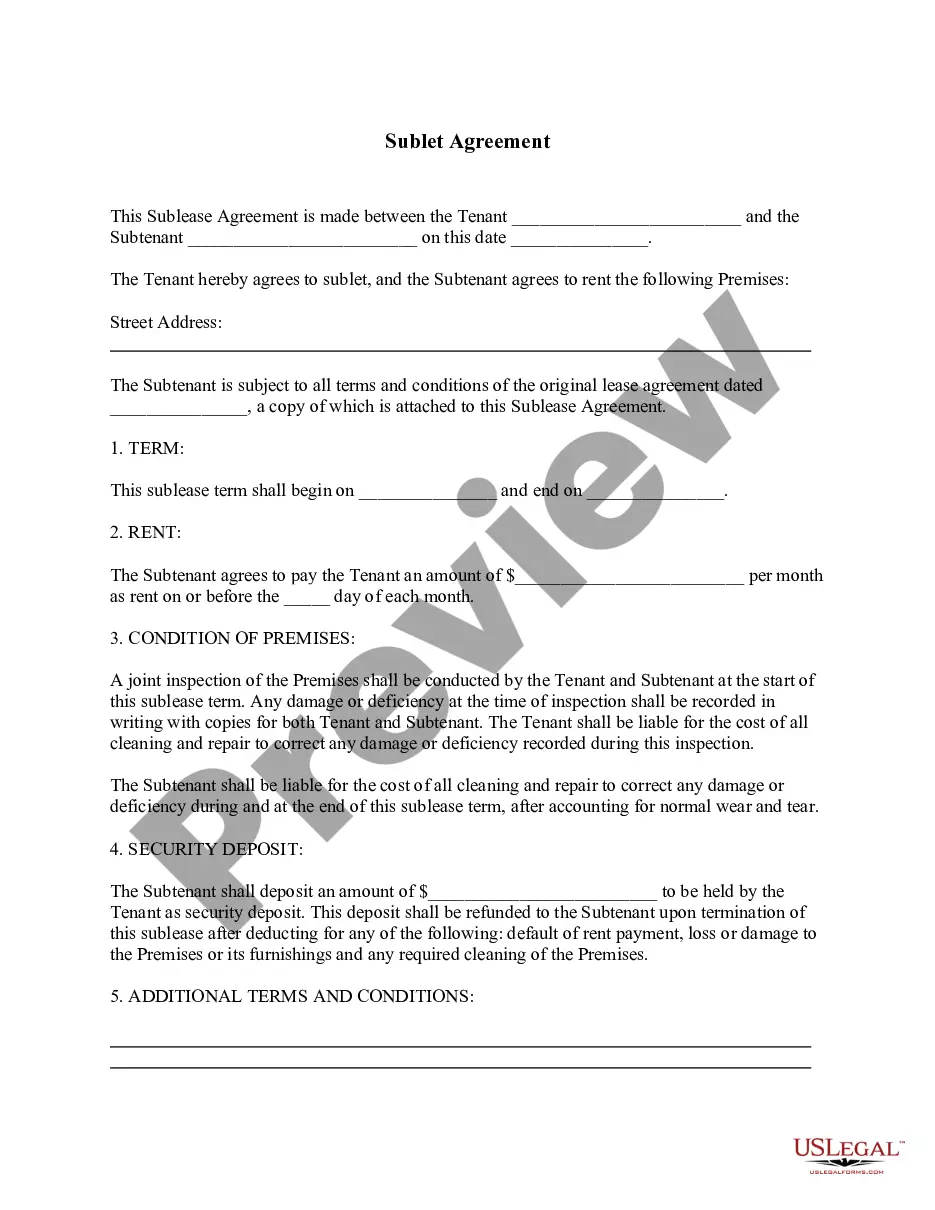
When to use this form
This form should be used when a member of a cooperative apartment wishes to temporarily lease their unit to another individual. Situations may include a member needing to relocate for job purposes, travel, or personal reasons, and wanting to ensure that their apartment is occupied during their absence, while also complying with cooperative regulations.
Who can use this document
Eligibility to use this form includes:
- Members of a cooperative apartment looking to sublease their unit.
- Individuals seeking to rent a unit within a cooperative structure.
- Both parties must be willing to comply with the cooperative's bylaws and the terms of this agreement.
Steps to complete this form
- Identify the parties involved by filling in the names and addresses of the Sublessor and Sublessee.
- Specify the cooperative name and address, as well as the apartment unit number being subleased.
- Set the term of the lease by entering the start and end dates.
- Determine and state the monthly rental amount, including details on payment instructions.
- Review and ensure compliance with cooperative rules, including obtaining board approval for the sublease.
Does this form need to be notarized?
This form does not typically require notarization unless specified by local law. However, parties involved in the sublease should check local regulations to confirm any additional requirements for enforceability.
Get your form ready online
Our built-in tools help you complete, sign, share, and store your documents in one place.
Make edits, fill in missing information, and update formatting in US Legal Forms—just like you would in MS Word.
Download a copy, print it, send it by email, or mail it via USPS—whatever works best for your next step.
Sign and collect signatures with our SignNow integration. Send to multiple recipients, set reminders, and more. Go Premium to unlock E-Sign.
If this form requires notarization, complete it online through a secure video call—no need to meet a notary in person or wait for an appointment.
We protect your documents and personal data by following strict security and privacy standards.

Make edits, fill in missing information, and update formatting in US Legal Forms—just like you would in MS Word.

Download a copy, print it, send it by email, or mail it via USPS—whatever works best for your next step.

Sign and collect signatures with our SignNow integration. Send to multiple recipients, set reminders, and more. Go Premium to unlock E-Sign.

If this form requires notarization, complete it online through a secure video call—no need to meet a notary in person or wait for an appointment.

We protect your documents and personal data by following strict security and privacy standards.
Typical mistakes to avoid
- Failing to obtain board approval before executing the sublease.
- Not specifying the correct rental amount or payment terms.
- Neglecting to outline the responsibilities of both parties adequately.
- Overlooking the need for a clear description of the premises being subleased.
Why complete this form online
- Convenient access to a legally compliant template tailored to cooperative apartments.
- Editability allows users to customize specific terms to fit their unique situation.
- Downloadability ensures the document is readily available for printing and submission.
- Reliability, with forms drafted by licensed attorneys to meet legal standards.
The Cooperative Apartment Sublease Agreement is legally enforceable, provided it is executed in compliance with cooperative rules and applicable local laws. It is essential for both parties to understand that any breach of agreement can lead to legal and financial consequences.
Main things to remember
- The agreement facilitates a temporary transfer of tenancy within cooperative housing arrangements.
- Careful attention to the rules of the cooperative is critical to avoid lease violations.
- Clearer communication and documentation protect the rights of both the sublessor and sublessee.
Looking for another form?
Form popularity
FAQ
Writing Your Sublease. State the name of the parties and the date of the contract. Identify the full names of each party and what their role is in the contract. The original leaseholder of the property is the Tenant and the person subletting the property is the Subtenant.
The majority of co-op buyers in New York City plan to use the apartment as their primary residence and don't sublet.Co-ops are generally not viewed as attractive rental properties for investment buyers because the sublet policies restrict the ability of shareholders to sublet the unit.
Check the over-lease. This refers to the lease that was signed by the tenant from whom you're sub-leasing. Note the condition of your room. Get in touch with the management company. Make all payments in person. Ask for a deposit receipt. Comments.
Writing Your Sublease. State the name of the parties and the date of the contract. Identify the full names of each party and what their role is in the contract. The original leaseholder of the property is the Tenant and the person subletting the property is the Subtenant.
A Residential Sublease is a legally binding contract made between the original tenant of a rental property (sublandlord) and a new tenant (also known as a subtenant or a sublessee). The sublease gives the subtenant the right to share or to take over the rented premises from the original tenant.
The short answer is: yes, it is legal to sublease in NYC. Under the New York City sublease laws, tenants renting in a building with four or more units have the right to sublet their apartment.
Q. What are some reasons that co-op boards may dislike sublets? A. Many feel it gives buildings an air of transience, with renters who care less than owners about upkeep (though this may be overstated many rental buildings are luxurious and well-kept).
There are no laws that prevent your roommate from subletting without your consent.If it doesn't, then your roommate may need to get your landlord's approval for the subletbut they don't need to get yours.
However, when subletting a co-op apartment, you are at the mercy of the building's sublet policy which may put restrictions on the amount of time for which you can sublet the apartment. The rules of each co-op building can vary but, generally speaking, most co-ops limit sublets to a maximum of 2 years.