Checklist Purchasing a Broadcast Station
Understanding this form
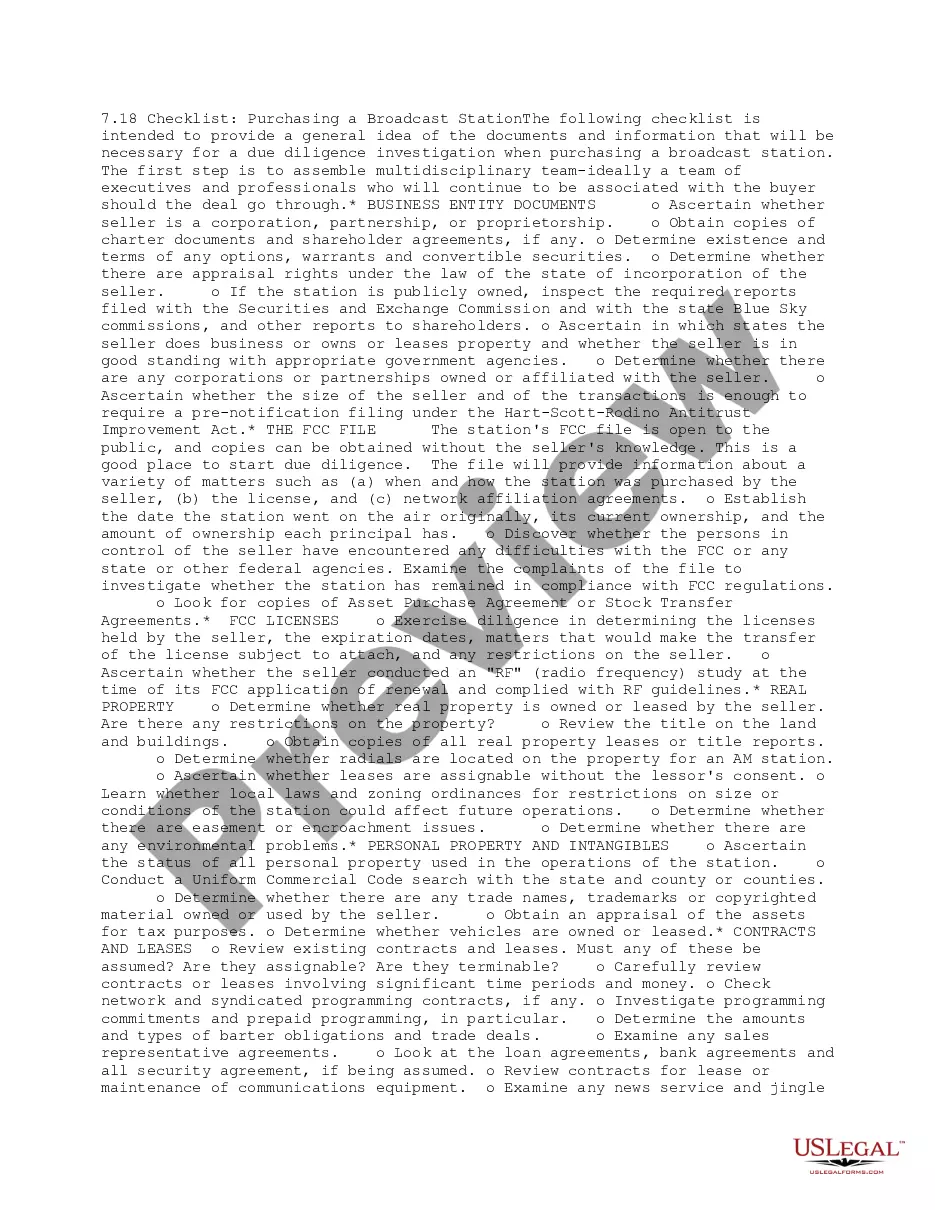
The Checklist Purchasing a Broadcast Station is a comprehensive guide designed to assist buyers in conducting due diligence before acquiring a broadcast station. This form outlines necessary documents and information crucial for making informed decisions and ensuring compliance during the purchasing process. Unlike other generic checklists, this form is tailored specifically for broadcast station acquisitions, covering key areas such as legal entity documents, FCC compliance, real property, and more.
Main sections of this form
- Business entity documents and verification of the seller's corporate status.
- Examination of the FCC file for compliance and operational history.
- Review of real property ownership, leases, and zoning restrictions.
- Assessment of contracts and leases relevant to the station's operations.
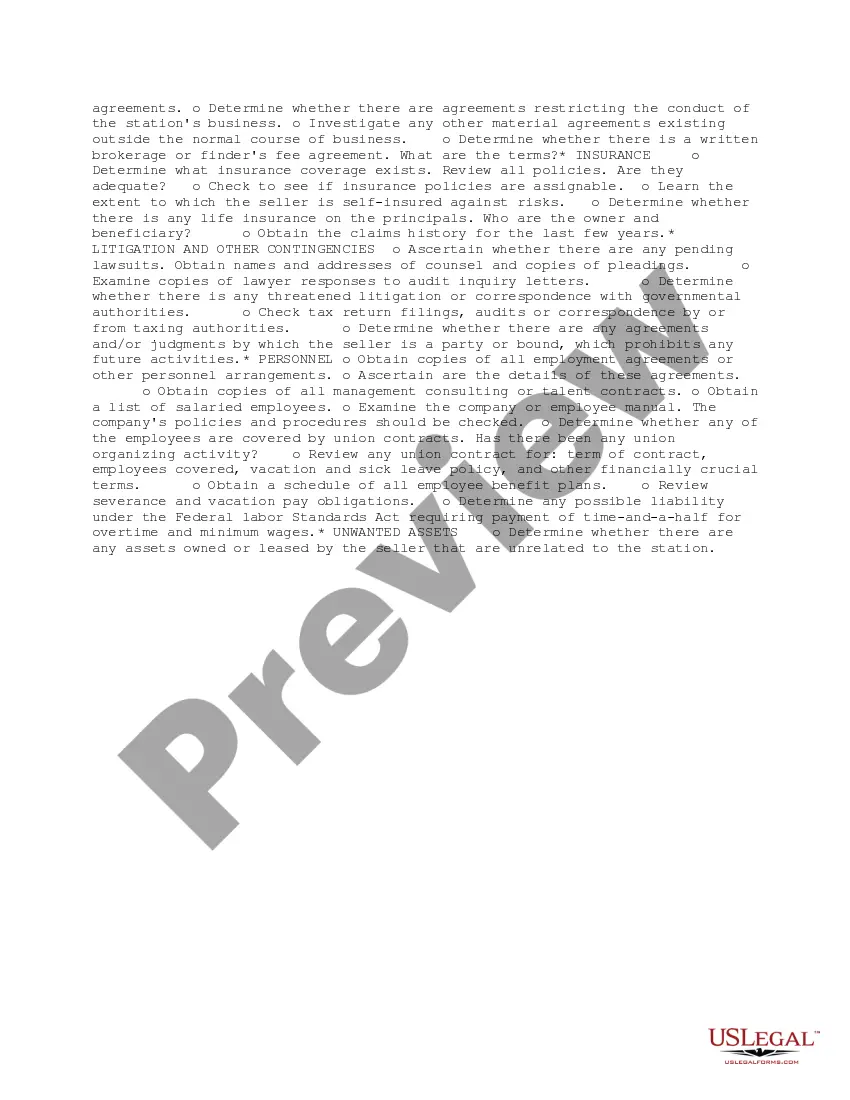
- Evaluation of personnel agreements and obligations.
- Investigation of insurance coverage and any pending litigation.



When this form is needed
This checklist is essential when you are considering the purchase of a broadcast station. It helps you identify vital documents required for thorough due diligence, enabling you to evaluate the seller's legal and operational standing. Use this form to ensure you do not overlook any critical aspects of the acquisition process, which could affect the value and legality of your investment.
Intended users of this form
This checklist is intended for:
- Buyers of broadcast stations, including private individuals and corporate entities.
- Legal and financial advisors assisting in the acquisition process.
- Due diligence teams involved in evaluating broadcast station purchases.
How to prepare this document
- Gather the necessary documents related to the seller's business entity.
- Request and review the FCC file for the broadcast station.
- Assess real property ownership and lease agreements.
- Evaluate existing contracts and employee agreements.
- Compile information on insurance coverage and any ongoing litigation.
Notarization guidance
This form usually doesn’t need to be notarized. However, local laws or specific transactions may require it. Our online notarization service, powered by Notarize, lets you complete it remotely through a secure video session, available 24/7.
Get your form ready online
Our built-in tools help you complete, sign, share, and store your documents in one place.
Make edits, fill in missing information, and update formatting in US Legal Forms—just like you would in MS Word.
Download a copy, print it, send it by email, or mail it via USPS—whatever works best for your next step.
Sign and collect signatures with our SignNow integration. Send to multiple recipients, set reminders, and more. Go Premium to unlock E-Sign.
If this form requires notarization, complete it online through a secure video call—no need to meet a notary in person or wait for an appointment.
We protect your documents and personal data by following strict security and privacy standards.

Make edits, fill in missing information, and update formatting in US Legal Forms—just like you would in MS Word.

Download a copy, print it, send it by email, or mail it via USPS—whatever works best for your next step.

Sign and collect signatures with our SignNow integration. Send to multiple recipients, set reminders, and more. Go Premium to unlock E-Sign.

If this form requires notarization, complete it online through a secure video call—no need to meet a notary in person or wait for an appointment.

We protect your documents and personal data by following strict security and privacy standards.
Common mistakes
- Failing to verify the corporate status of the seller.
- Overlooking FCC compliance issues in the due diligence process.
- Neglecting to review existing contracts thoroughly, leading to unforeseen liabilities.
- Ignoring local zoning laws that may affect operations.
Why use this form online
- Convenient access to comprehensive information anytime and anywhere.
- Editable format allows for easy customization according to specific needs.
- Reliable guidance crafted by licensed attorneys, minimizing the risk of oversight.
Legal use & context
- This checklist aids in complying with legal requirements during the purchase of a broadcast station.
- Utilizing this form helps mitigate risks associated with station ownership transitions.
- Understanding potential liabilities and obligations supports informed decision-making.
Quick recap
- The checklist is crucial for effective due diligence in broadcast station purchases.
- Key components include legal documents, asset reviews, and contract analysis.
- Completing this form helps ensure all necessary considerations are addressed.
Looking for another form?
Form popularity
FAQ
Radio advertising costs range from $200 to $5,000 per week, on average, depending on location and the size of the listening audience. The cost of producing the commercial is $1,000 to $2,500 depending on what is included, like music, voice actors, and editing.
Radio stations require a large variety of equipment, including microphones, transmitters, audio mixers, and headphones -- to name a few. Your best bet is to contact a professional radio broadcast equipment seller who can assist you in determining what equipment will best suit your needs.
Apply for a frequency. It may take a long time before you're assigned a frequency source FCC. Apply for a license. It's illegal to operate an unlicensed radio station, even at extremely low power source: FCC. Establish a source of funding. Remember, you'll need to pay for studio space and power, among other things.
Terrestrial radio stations do not charge their listeners for the product they create and distribute. Instead, they make a profit from the ads they sell, the special events they hold, the syndication of their most popular shows and in some cases the special services they can provide to other radio stations.
Over the years, too many bloated egos have crashed and burned on the rocks of radio station ownership.Given the looming headwinds for the radio industry, radio ownership in the future is a questionable investment with minimal potential for asset appreciation. Yes, I said it is still a good business for the time being.
Step 1: Set up your station, time zone and user roles. Step 2: Add other DJs or Program Managers. Step 3: Upload Audio. Step 4: Create your first radio show.
Turn on the stereo mini system. On the system remote control, press the TUNER/BAND button to select FM or AM . Press the TUNING +/- button to select a radio station. Press the TUNER MEMORY button. Press the PRESET +/- button to select the desired preset number. Press the ENTER button.
Choose a Location. One of the papers you have to file with the FCC is a construction permit for your new station. Find a Frequency. Once you select a tentative site for your station, enter the longitude and latitude into the FCC's FM allotment finder. Filing the Paperwork. The Auction Process. Build, Equip and Broadcast.
Apply for a frequency. It may take a long time before you're assigned a frequency source FCC. Apply for a license. It's illegal to operate an unlicensed radio station, even at extremely low power source: FCC. Establish a source of funding. Remember, you'll need to pay for studio space and power, among other things.