Texas Statutory Declaration of Guardian in the Event of Later Incapacity or Need of Guardian
What is this form?
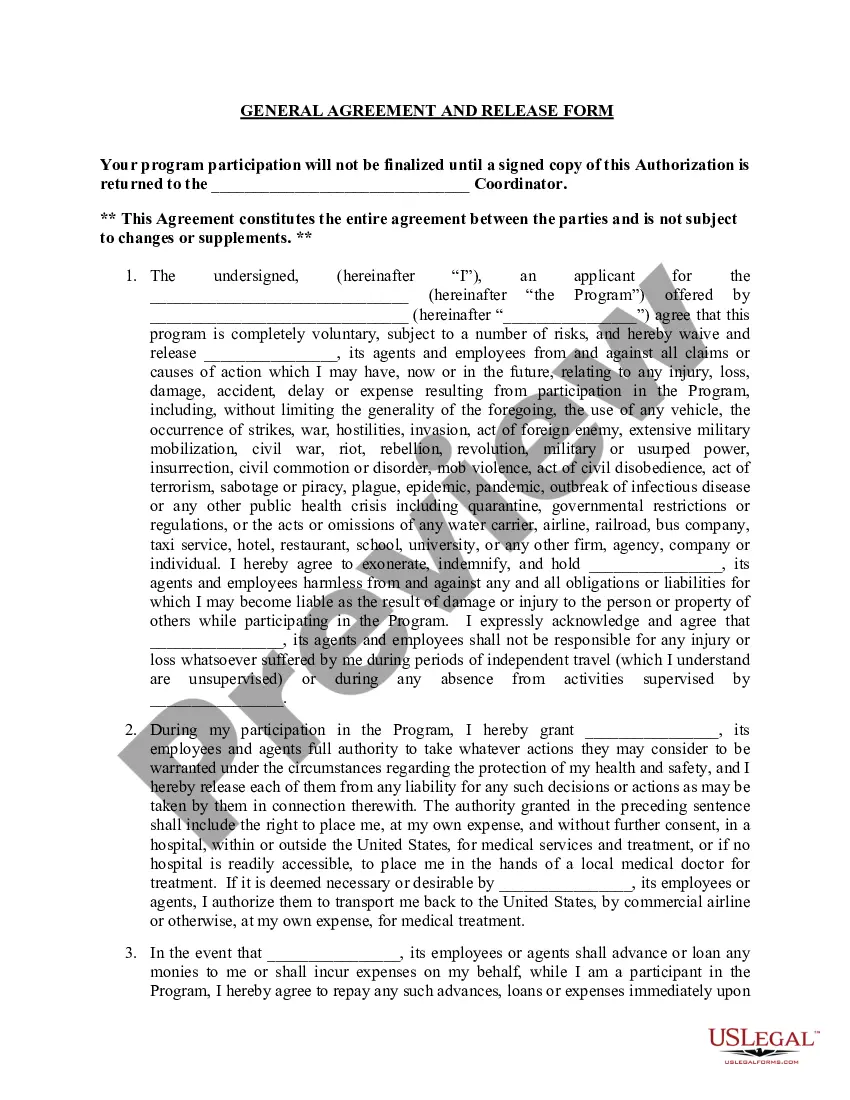
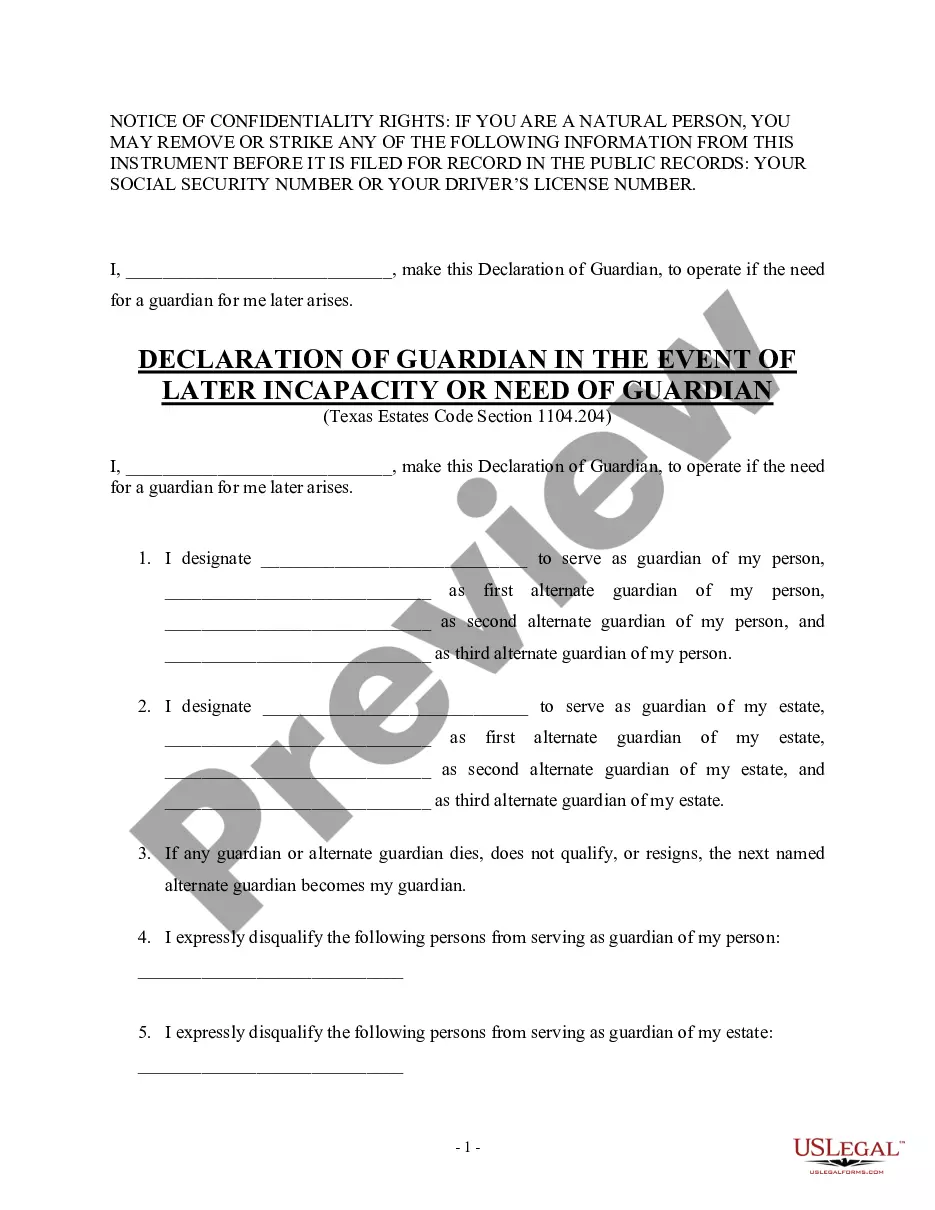
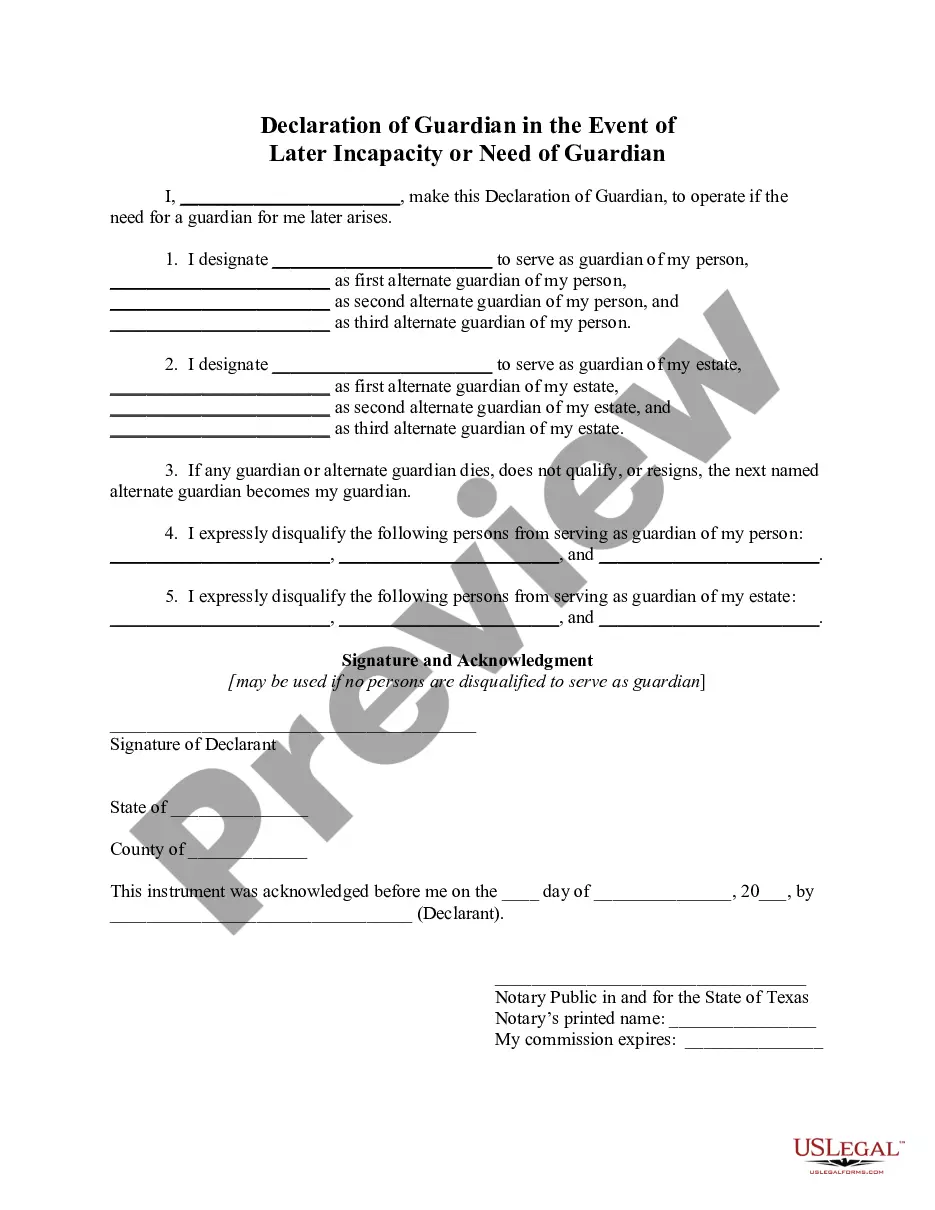
The Statutory Declaration of Guardian is a legal document that allows you to designate a guardian for yourself in the event of incapacity or the need for a guardian in the future. This form is based on the Texas Probate Code and is specifically designed to outline your choices for guardianship, distinguishing it from other power of attorney documents or wills.
Main sections of this form
- Identification of the declarant - the individual making the declaration.
- Designation of a primary guardian and alternate guardians for both person and estate.
- Provisions for disqualifying specific individuals from serving as guardians.
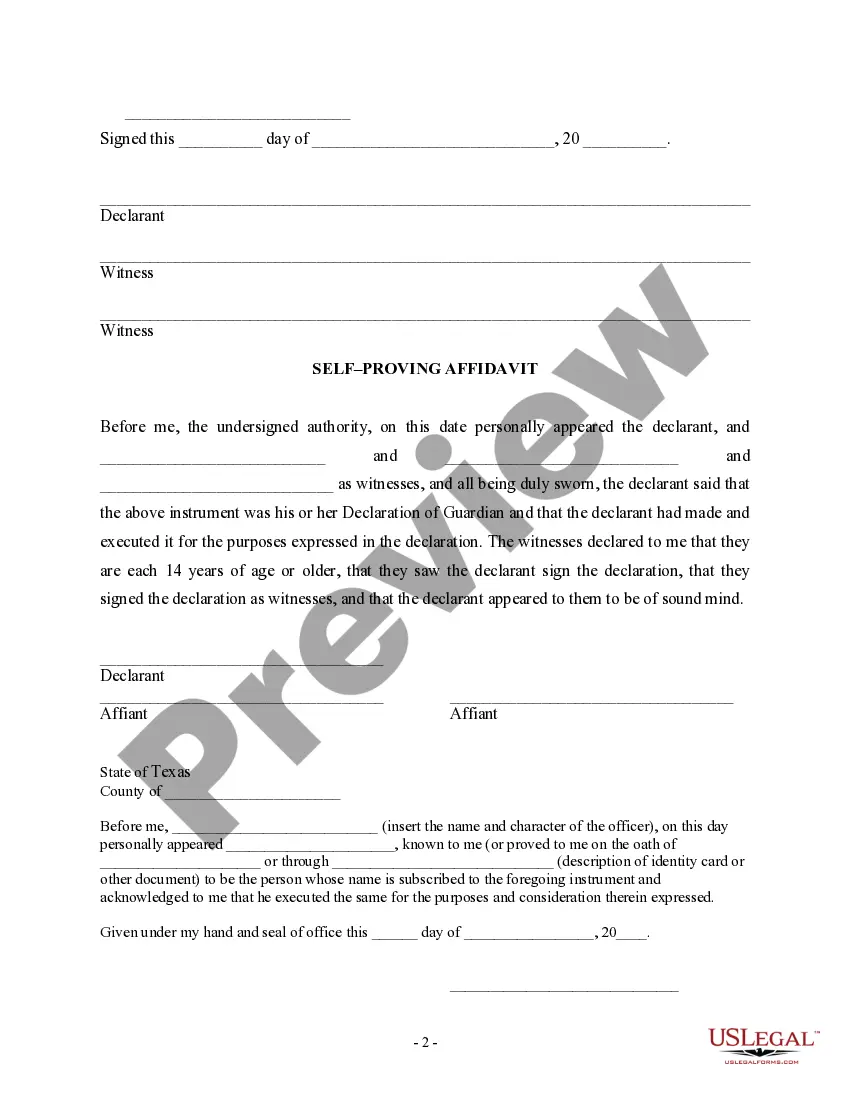
- Signature and date of execution by the declarant.
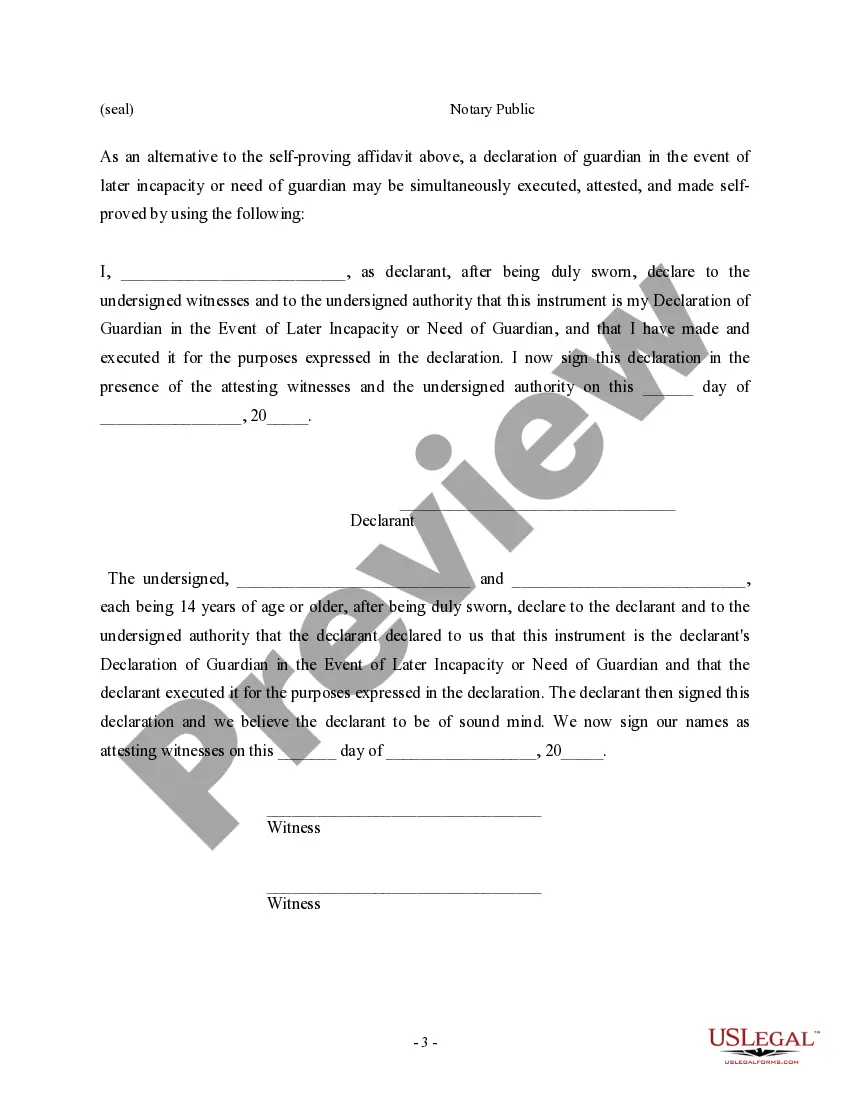
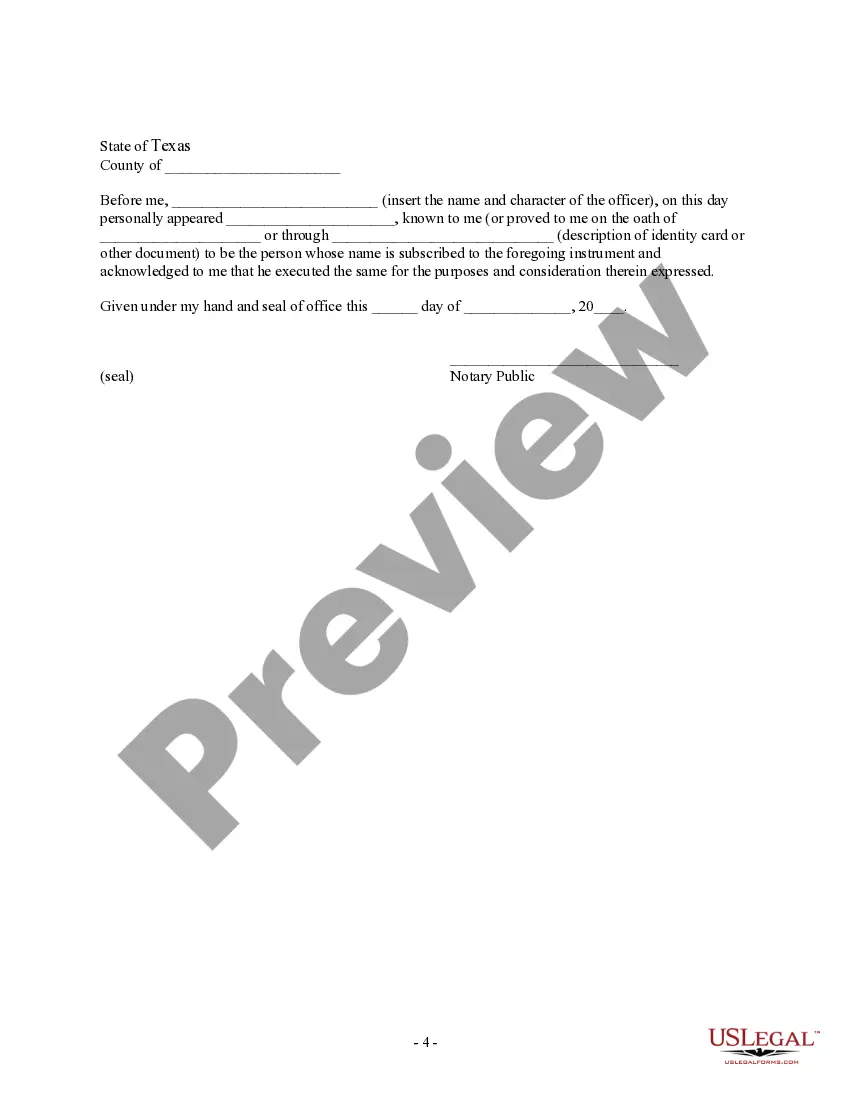
- Witnesses' signatures and a notarization section to validate the declaration.
Common use cases
This form should be used when you want to ensure that your preferences for guardianship are clearly documented in case you later become incapable of making decisions due to illness or other circumstances. It is particularly important for individuals who have dependents or significant estates and wish to plan for their future care and management.
Who needs this form
- Individuals planning for future incapacity or potential need for a guardian.
- Parents or caregivers who want to designate guardianship for their children or dependents.
- Persons managing significant assets who wish to appoint trusted guardians for their estate.
How to prepare this document
- Enter your name and date at the beginning of the declaration.
- Designate the primary guardian, followed by alternate guardians for both personal and estate responsibilities.
- Specify any individuals you wish to disqualify from serving as guardians.
- Sign and date the declaration to finalize it.
- Have witnesses sign the document and complete the notarization to ensure its validity.
Notarization guidance
This form needs to be notarized to ensure legal validity. US Legal Forms provides secure online notarization powered by Notarize, allowing you to complete the process through a verified video call, available anytime.
Get your form ready online
Our built-in tools help you complete, sign, share, and store your documents in one place.
Make edits, fill in missing information, and update formatting in US Legal Forms—just like you would in MS Word.
Download a copy, print it, send it by email, or mail it via USPS—whatever works best for your next step.
Sign and collect signatures with our SignNow integration. Send to multiple recipients, set reminders, and more. Go Premium to unlock E-Sign.
If this form requires notarization, complete it online through a secure video call—no need to meet a notary in person or wait for an appointment.
We protect your documents and personal data by following strict security and privacy standards.

Make edits, fill in missing information, and update formatting in US Legal Forms—just like you would in MS Word.

Download a copy, print it, send it by email, or mail it via USPS—whatever works best for your next step.

Sign and collect signatures with our SignNow integration. Send to multiple recipients, set reminders, and more. Go Premium to unlock E-Sign.

If this form requires notarization, complete it online through a secure video call—no need to meet a notary in person or wait for an appointment.

We protect your documents and personal data by following strict security and privacy standards.
Common mistakes to avoid
- Failing to designate alternate guardians, leaving ambiguity in the event of the primary guardian's unavailability.
- Not having the document properly witnessed or notarized, which can invalidate the declaration.
- Providing insufficient information about the disqualified individuals, leading to confusion later on.
Why use this form online
- Convenient and time-saving access to the form, available for download at any time.
- Editability allows for easy customization to fit your specific needs.
- Reliable resources and templates drafted by licensed attorneys ensure legal accuracy.
Quick recap
- The Statutory Declaration of Guardian ensures your wishes for guardianship are documented.
- It is vital for individuals planning for future incapacity and those with dependents.
- Proper execution, including notarization, is essential for the document's validity.
Looking for another form?
Form popularity
FAQ
A Declaration of Guardian is a legal document where you tell the court who you want to serve as your guardian if there is ever a guardianship proceeding for you. There are two types of guardians: Guardian of your estate, and guardian of your person.
The names of the forms are usually: Petition for Appointment of Guardian (or Petition for Appointment of Guardian of Minor) Petition for Conservatorship (when dealing with an incompetent adult) Order Appointing Guardian.
GUARDIAN: In the event I shall die as the sole parent of minor children, then I appoint ____________________________________ as Guardian of said minor children. If this named Guardian is unable or unwilling to serve, then I appoint ____________________________________ as alternate Guardian.
Decide if you want to get help or use a do-it-yourself software program. Select your beneficiaries. Choose the executor for your will. Pick a guardian for your kids. Be specific about who gets what. Be realistic about who gets what. If there's more you want to say, attach a letter to the will.
Decide Who Will Administer Your Estate. Someone needs to wrap up your affairs after you pass away. Decide How You Want to Distribute Your Assets. Choose One or More Guardians. Write and Sign Your Will.
A guardianship of the estate is set up to manage a child's income, money, or other property until the child turns 18. A child may need a guardian of the estate if he or she inherits money or assets. In most cases, the court appoints the surviving parent to be the guardian of the child's estate.
To do this, the person you nominate will need to file a Petition for Appointment of Guardian with the Probate Court, notify certain persons and agencies, and attend a court hearing. Although the probate court will take into account your wishes, other people will also have the opportunity to request guardianship.
You can establish guardianship of a child by filing papers in court. Initially, file a petition stating your interest in obtaining guardianship along with a filing fee. You'll also want to file a letter of consent from the child's parents.
The legal guardianship document is a formal declaration to the court system that another party is responsible for the well-being of the minors. No one can predict when an accident or other disaster may occur. Some include a legal guardianship document in their wills to determine who will raise their children.