Issues-Imputed Conduct-Relationship Admitted
What is this form?
The Issues-Imputed Conduct-Relationship Admitted form is a legal document used in court cases to guide juries on how to evaluate evidence regarding conduct that may not directly involve the parties in a case but affects the relationships or responsibilities of those parties. This form ensures that juries understand the importance of focusing solely on the law and evidence presented, rather than personal biases or opinions. It differentiates itself from other jury instructions by specifically addressing the nuances of imputed conduct and its implications in legal relationships.
Form components explained
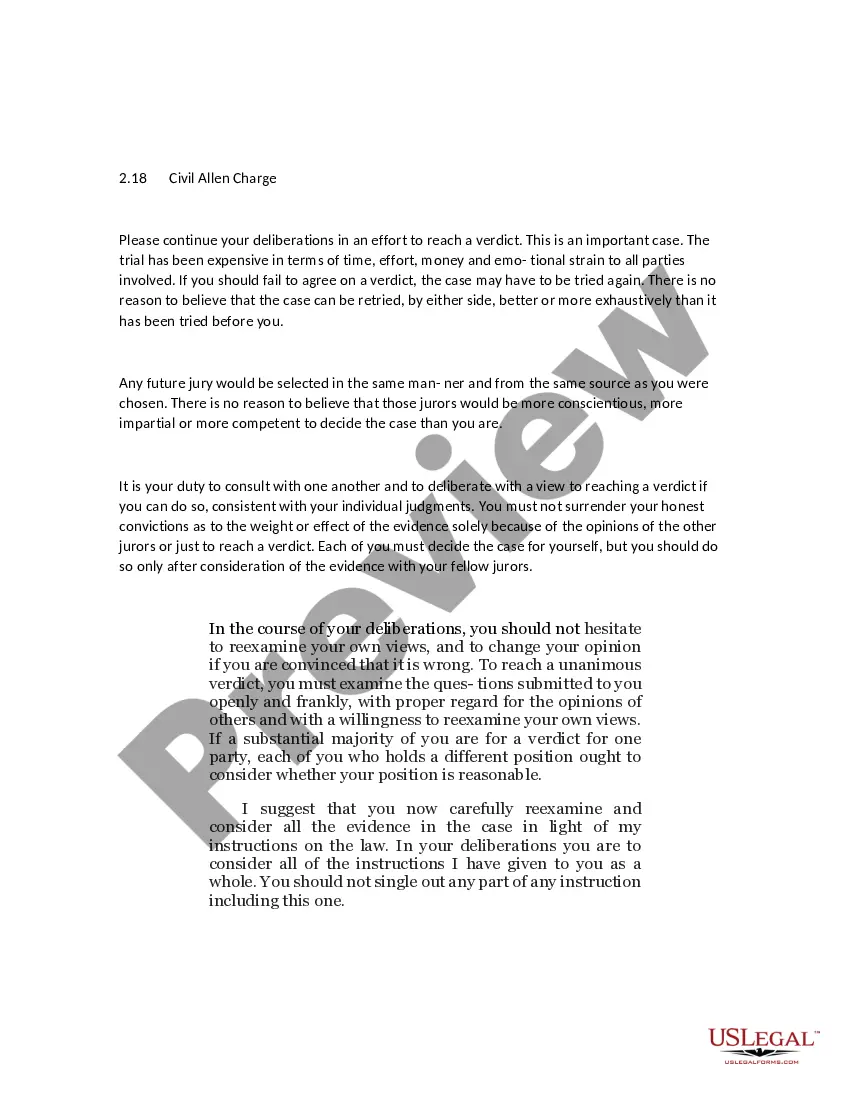
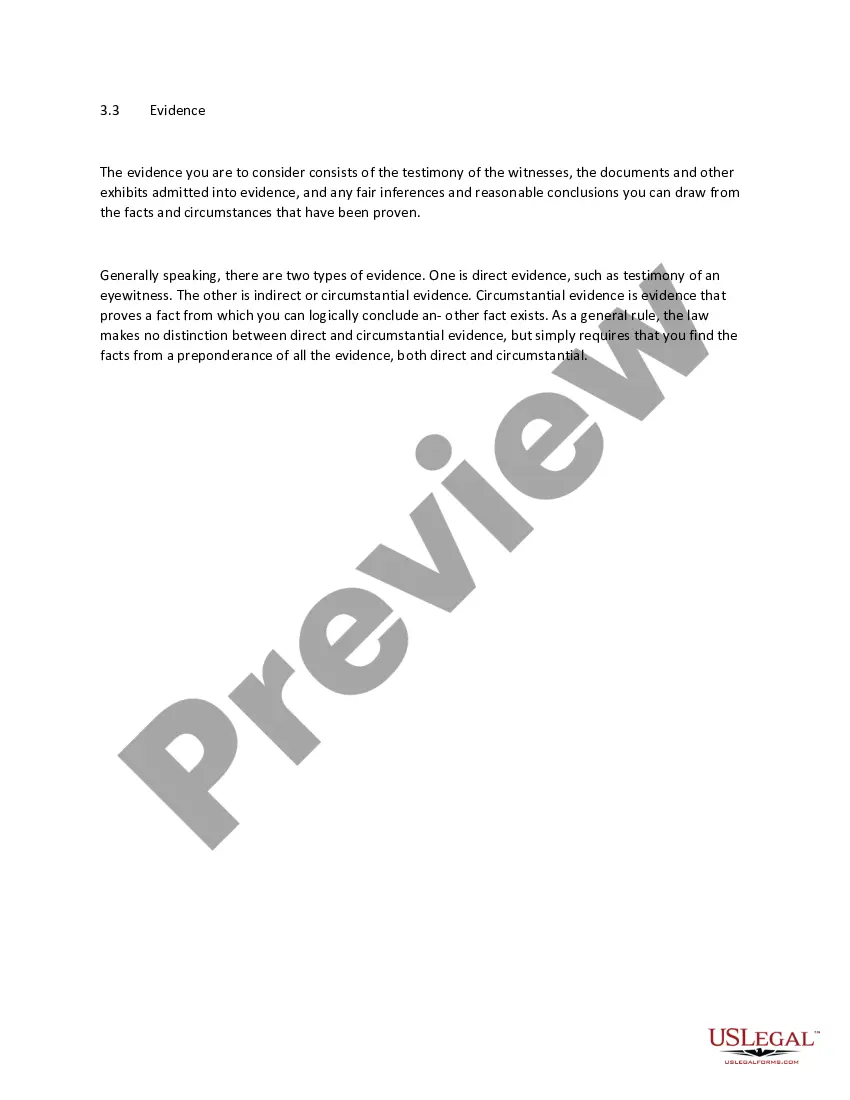
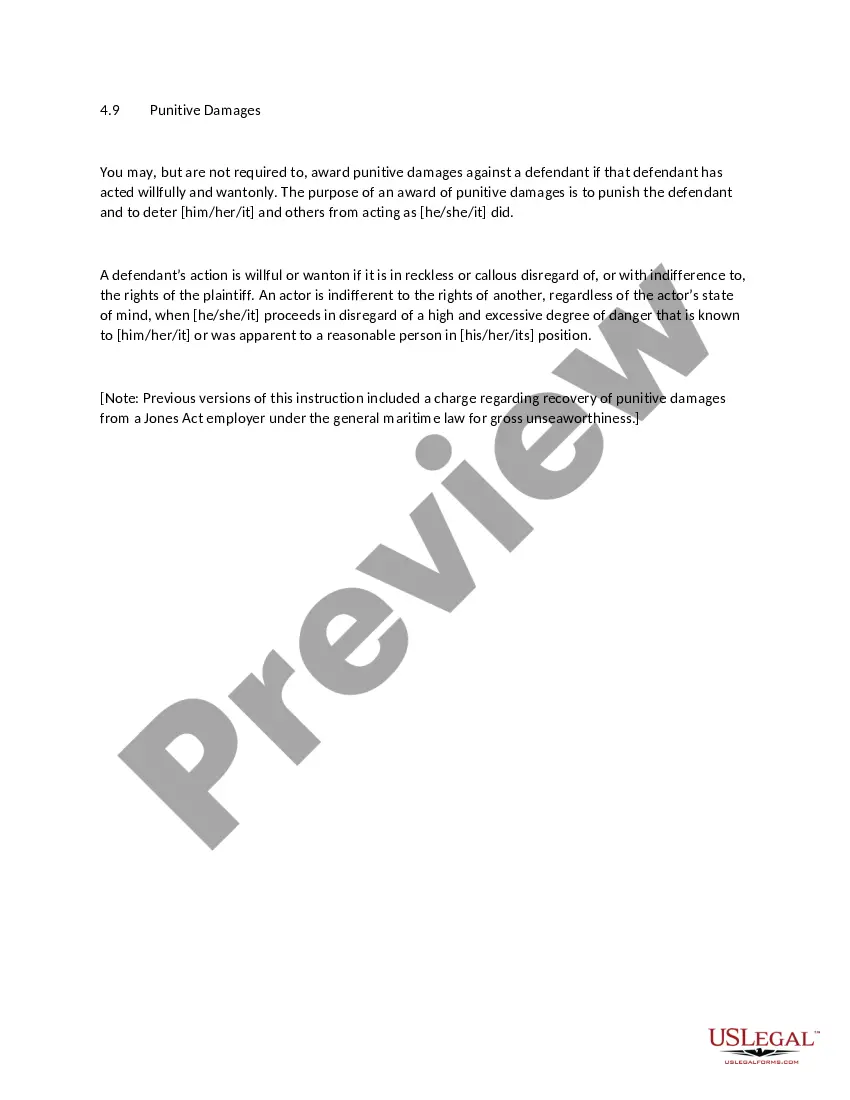
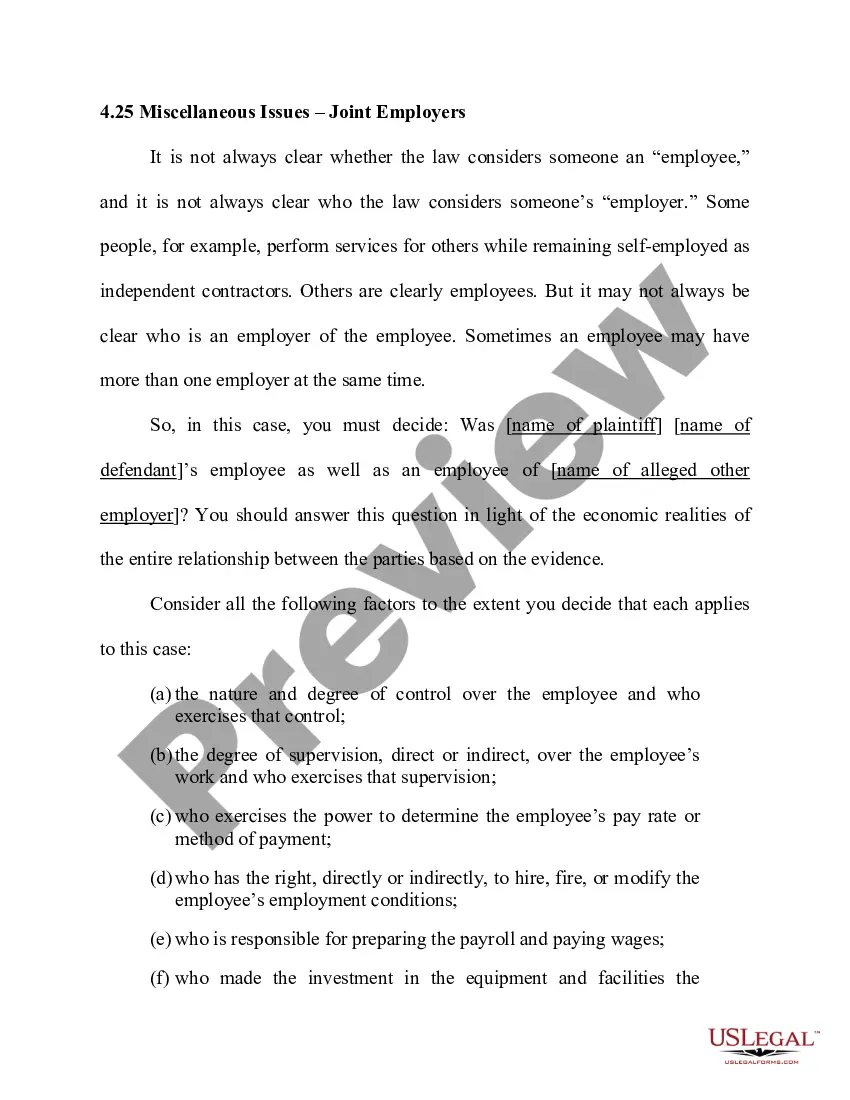
- Instructions to the jury about the strict adherence to legal guidance over personal opinion.
- Clarification that only the evidence presented in court should be considered in forming a verdict.
- Emphasis on the jury's role as judges of the facts of the case.
- Guidance on distinguishing between arguments provided by counsel and actual evidence.

Situations where this form applies
This form is typically used during jury trials where issues of imputed conduct are relevant. It is particularly important when relationships between parties are contested, and the jury must understand how to consider actions or behaviors that may have implications beyond the direct evidence presented.
Intended users of this form
- Judges overseeing jury trials involving complex relationship dynamics.
- Attorneys representing parties in cases where imputed conduct may come into play.
- Legal professionals needing clear guidelines on jury instructions related to conduct and relationships.
Completing this form step by step
- Begin with the introduction, instructing the jury on their responsibilities.
- Clearly outline the distinction between evidence and arguments made by counsel.
- Reiterate the jury's duty to remain impartial and unbiased in their deliberation.
- Provide specific instructions on how to interpret imputed conduct within the context of the trial.
- Conclude with final instructions reinforcing the need to apply the law as directed.
Does this document require notarization?
This form usually doesn’t need to be notarized. However, local laws or specific transactions may require it. Our online notarization service, powered by Notarize, lets you complete it remotely through a secure video session, available 24/7.
Get your form ready online
Our built-in tools help you complete, sign, share, and store your documents in one place.
Make edits, fill in missing information, and update formatting in US Legal Forms—just like you would in MS Word.
Download a copy, print it, send it by email, or mail it via USPS—whatever works best for your next step.
Sign and collect signatures with our SignNow integration. Send to multiple recipients, set reminders, and more. Go Premium to unlock E-Sign.
If this form requires notarization, complete it online through a secure video call—no need to meet a notary in person or wait for an appointment.
We protect your documents and personal data by following strict security and privacy standards.

Make edits, fill in missing information, and update formatting in US Legal Forms—just like you would in MS Word.

Download a copy, print it, send it by email, or mail it via USPS—whatever works best for your next step.

Sign and collect signatures with our SignNow integration. Send to multiple recipients, set reminders, and more. Go Premium to unlock E-Sign.

If this form requires notarization, complete it online through a secure video call—no need to meet a notary in person or wait for an appointment.

We protect your documents and personal data by following strict security and privacy standards.
Common mistakes to avoid
- Failing to emphasize the distinction between evidence and counsel's arguments.
- Overlooking the need for a neutral tone that avoids influencing the jury's perception.
- Not clearly articulating the implications of imputed conduct in the case context.
Advantages of online completion
- Convenience of accessing legal instructions anytime, anywhere.
- Editability allows for tailoring instructions to specific cases and jurisdictions.
- Reliability, ensuring instructions are drafted by licensed attorneys.
Legal use & context
- This form serves as an official instruction for jurors, ensuring clarity on the law.
- It is enforceable as part of the jury's guidance in civic cases across various jurisdictions.
- Proper use safeguards against jury misconceptions that may arise from personal biases.
What to keep in mind
- The Issues-Imputed Conduct-Relationship Admitted form guides juries to apply the law impartially.
- Understanding the distinction between counsel's arguments and presented evidence is crucial.
- This form is relevant in cases with complex interpersonal dynamics involving multiple parties.
Looking for another form?


Form popularity
FAQ
Rule 8.4 Misconduct - Comment 1 Lawyers are subject to discipline when they violate or attempt to violate the Rules of Professional Conduct, knowingly assist or induce another to do so or do so through the acts of another, as when they request or instruct an agent to do so on the lawyer's behalf.
Misconduct. (g) in the practice of law, knowingly engage in conduct constituting harassment or discrimination based upon race, sex, gender identity or expression, religion, national origin, ethnicity, disability, age, sexual orientation, marital status, or socioeconomic status.
Rule 8.4(7) defines ?professional misconduct? by a Connecticut attorney as including speech that the lawyer knows or reasonably should know ?is harassment or discrimination on the basis of? any of 15 listed characteristics?among them race, sex, religion, disability, sexual orientation, and gender identity.
(g) engage in conduct that the lawyer knows or reasonably should know is harassment or discrimination on the basis of race, sex, religion, national origin, ethnicity, disability, age, sexual orientation, gender identity, marital status or socioeconomic status in conduct related to the practice of law.
Connecticut law makes clear that the work product doctrine protects ?an attorney's interviews, statements, memoranda, correspondence, briefs, mental impressions, personal beliefs, and countless other tangible and intangible items.? Ullman v. State, 230 Conn.
(A) While representing a client, a member shall not communicate directly or indirectly about the subject of the representation with a party the member knows to be represented by another lawyer in the matter, unless the member has the consent of the other lawyer.
The establishment of the attorney-client relationship involves two elements: a person seeks advice or assistance from an attorney; and the attorney appears to give, agrees to give or gives the advice or assistance.
For example, if a lawyer is asked to represent the seller of a business in negotiations with a buyer represented by the lawyer, not in the same transaction but in another, unrelated matter, the lawyer could not undertake the representation without the informed consent of each client.