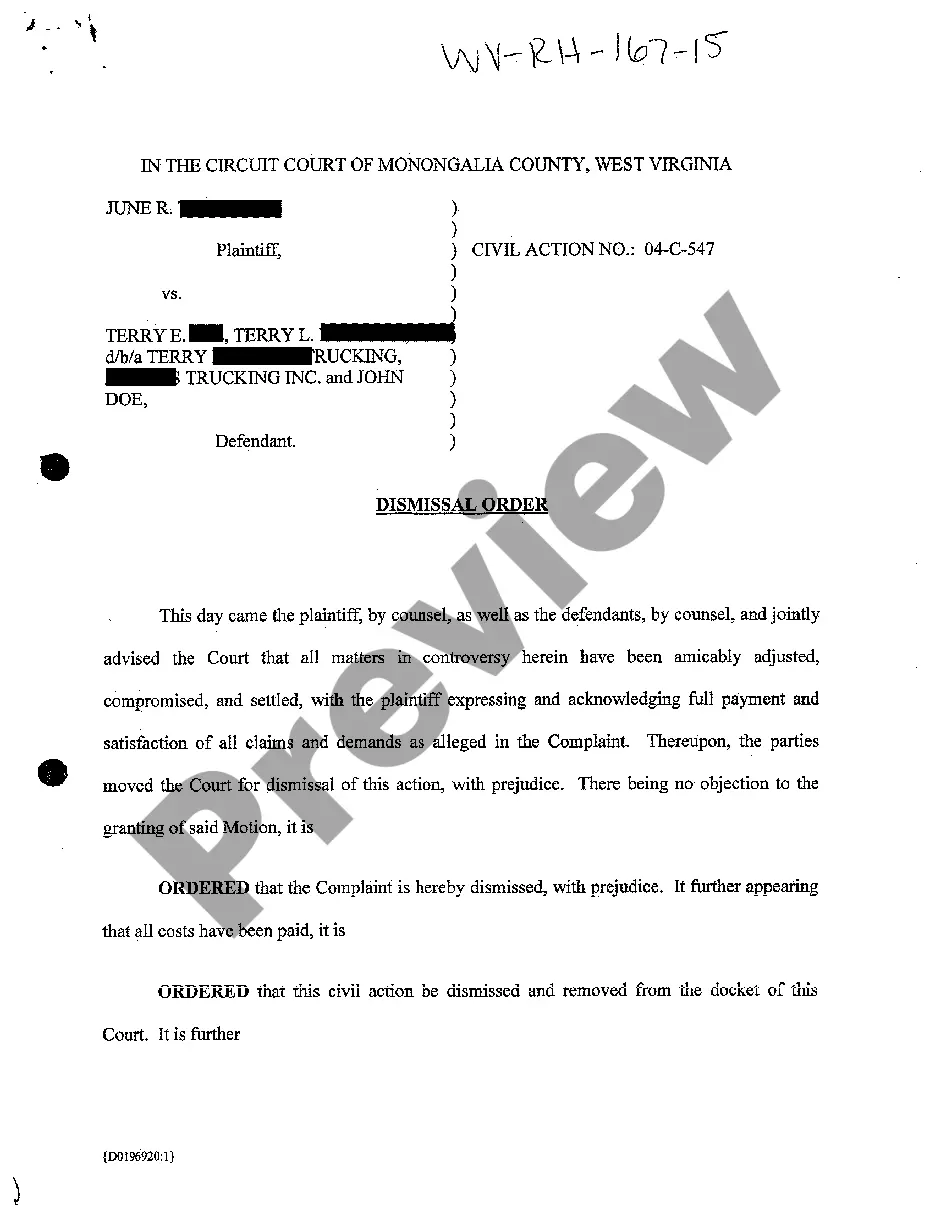
Rhode Island Letter from Tenant to Landlord containing Notice that premises in uninhabitable in violation of law and demand immediate repair
About this form
This letter from a tenant to a landlord documents that the leased premises are uninhabitable and violates health and safety laws. Unlike other notices or letters that may request repairs, this form explicitly outlines the demand for immediate repair and informs the landlord of the potential consequences, such as lease termination or rent reduction.
Form components explained
- Tenant's information: Name and contact details of the tenant.
- Landlord's information: Name and address of the landlord.
- Description of unhabitable conditions: Specific issues causing the premises to be considered untenantable.
- Demand for immediate repairs: Clear statement requesting the landlord to make the necessary repairs.
- Consequences for inaction: Notification of potential lease termination or rent abatement if repairs are not addressed.
- Signatures: Spaces for tenant and landlord signatures with dates.

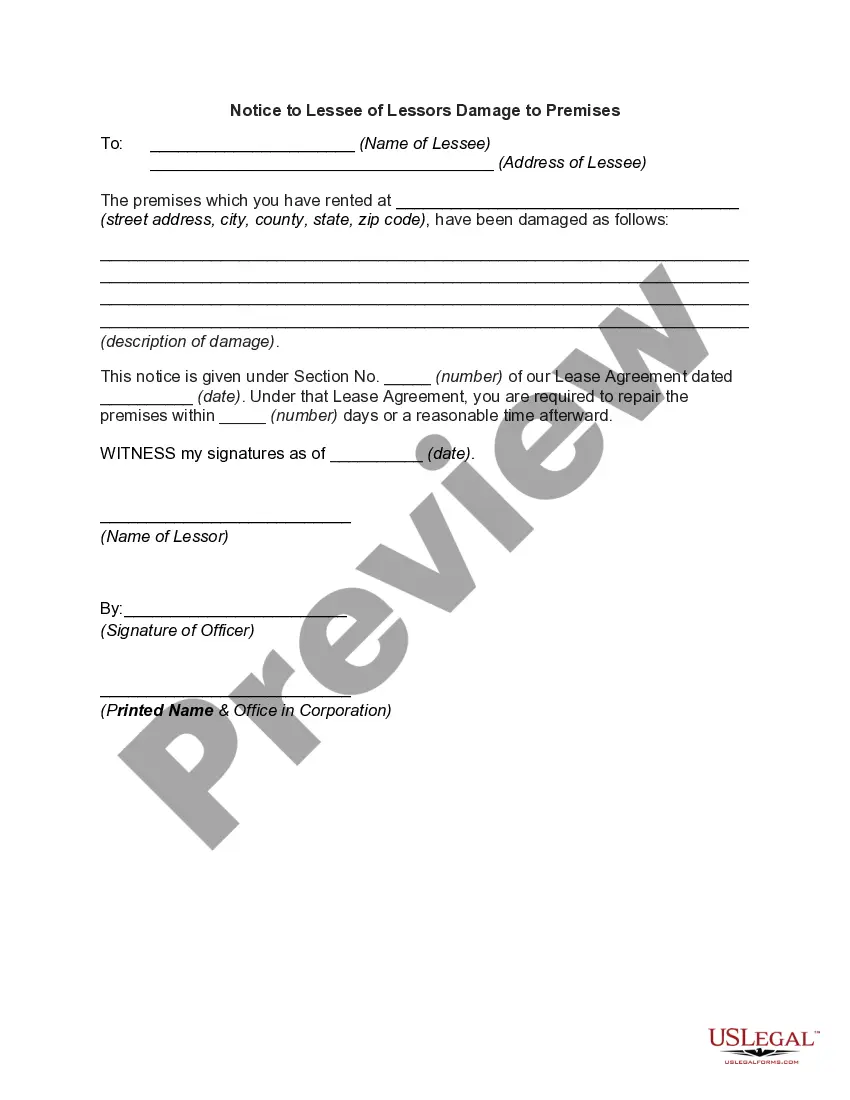
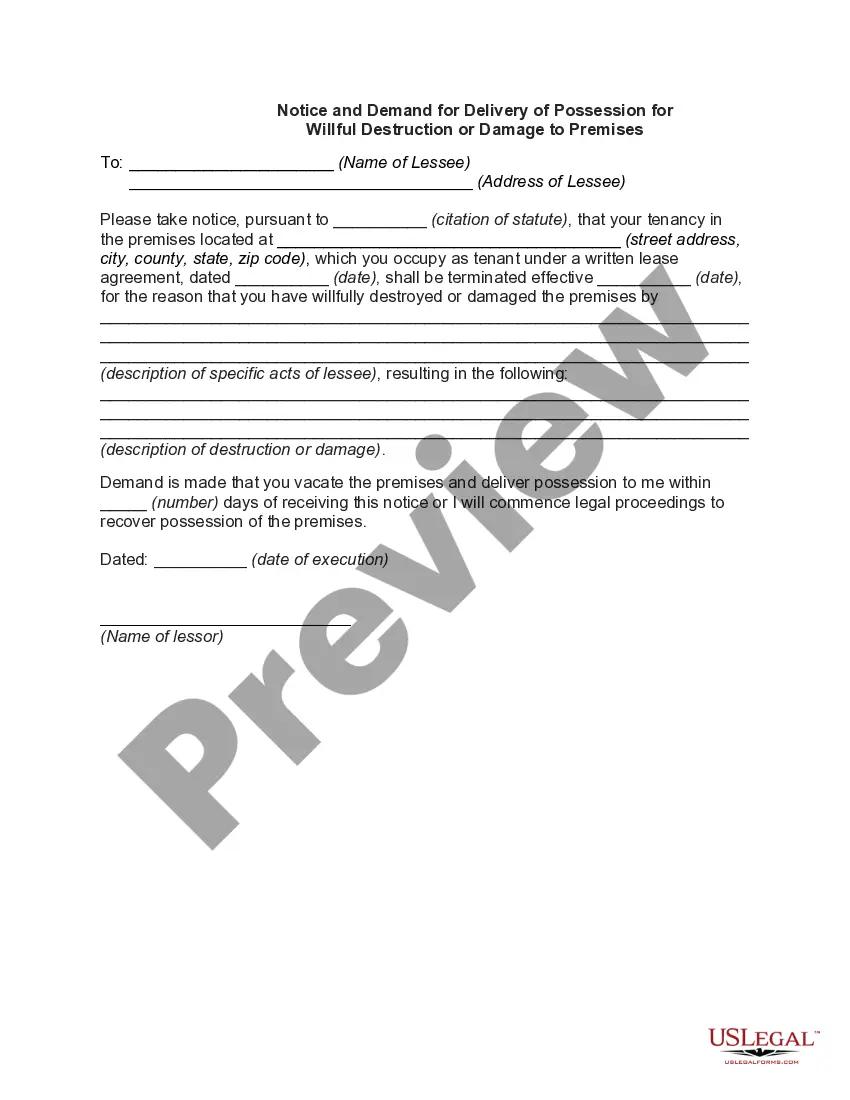

When to use this document
This form should be used by tenants when they discover serious issues in their rental property that impact livability, such as plumbing failures, mold, pest infestations, or other violations of health codes. It serves as an official notification to the landlord of these issues and demands prompt action to address them.
Who this form is for
- Tenants who are renting residential properties.
- Individuals living in a rental unit facing significant maintenance issues.
- Those who want to formally communicate with their landlord regarding uninhabitable conditions.
Instructions for completing this form
- Identify the parties: Fill in the names and addresses of both the tenant and the landlord.
- Specify the property: Include the address of the rental property in question.
- Describe the issues: Clearly outline the uninhabitable conditions that are being experienced.
- Make a demand: State the request for immediate repairs and any actions the tenant intends to take if repairs are not made.
- Sign and date: Ensure both tenant and landlord sign the document and date it appropriately.
Notarization requirements for this form
This form usually doesn’t need to be notarized. However, local laws or specific transactions may require it. Our online notarization service, powered by Notarize, lets you complete it remotely through a secure video session, available 24/7.
Get your form ready online
Our built-in tools help you complete, sign, share, and store your documents in one place.
Make edits, fill in missing information, and update formatting in US Legal Forms—just like you would in MS Word.
Download a copy, print it, send it by email, or mail it via USPS—whatever works best for your next step.
Sign and collect signatures with our SignNow integration. Send to multiple recipients, set reminders, and more. Go Premium to unlock E-Sign.
If this form requires notarization, complete it online through a secure video call—no need to meet a notary in person or wait for an appointment.
We protect your documents and personal data by following strict security and privacy standards.

Make edits, fill in missing information, and update formatting in US Legal Forms—just like you would in MS Word.

Download a copy, print it, send it by email, or mail it via USPS—whatever works best for your next step.

Sign and collect signatures with our SignNow integration. Send to multiple recipients, set reminders, and more. Go Premium to unlock E-Sign.

If this form requires notarization, complete it online through a secure video call—no need to meet a notary in person or wait for an appointment.

We protect your documents and personal data by following strict security and privacy standards.
Avoid these common issues
- Failing to provide detailed descriptions of the issues, which can lead to misunderstandings.
- Not including contact information for both parties, making it difficult for landlords to respond.
- Neglecting to keep a copy of the completed form for personal records.
- Sending the notice without signature or date.
Benefits of completing this form online
- Convenience: Downloadable and ready to use, saving time.
- Editability: Easily fill in your specific details before printing.
- Reliability: Created by licensed attorneys to ensure compliance with legal standards.
Looking for another form?
Form popularity
FAQ
The date that the tenant warning letter was written. The name and the basic personal information of the tenant. The name of the landlord or the owner of the property. The reason why a tenant warning letter has been written.
Your name, and the landlord's name and address. The date you're writing the letter. Informing the landlord you're breaking your lease early. The reason why you're breaking your lease. The building and apartment you're vacating. The date by which you're vacating.
Pay any delinquent rent that is due to the landlord within the allotted time of the notice. Move out of the premises within the allotted time of the notice. File an answer with the judicial court. File a motion to stay with the court.
Yes, your tenant is within their rights to refuse you access to the property. In a lot of cases, tenants will refuse because the date and time isn't convenient for them and will suggest an alternative date or ask you to rearrange. However, some tenants will persistently try to obstruct you from entering the property.
A lease is automatically void when it is against the law, such as a lease for an illegal purpose. In other circumstances, like fraud or duress, a lease can be declared void at the request of one party but not the other.
If the tenant refuses, you are permitted to send them a notice to agree or quit the property. The tenant refusing you access constitutes a breach in the lease agreement, so they could be evicted if they continue to deny access.
The rental property address, including unit number (if applicable) The names of all tenants on the lease agreement. The date the lease violation notice was written. The specific reason for the notice. The time and date the violation occurred (if applicable)
If you refuse access, the landlord/agent can apply to the Tribunal for an order that authorises them or any other person to enter the premises.
The landlord had a duty to reasonably maintain the property; The landlord knew or should have known of the dangerous condition; The landlord breached their duty by failing to repair/fix the dangerous condition;