Montana Tenant's Maintenance Repair Request Form
Understanding this form
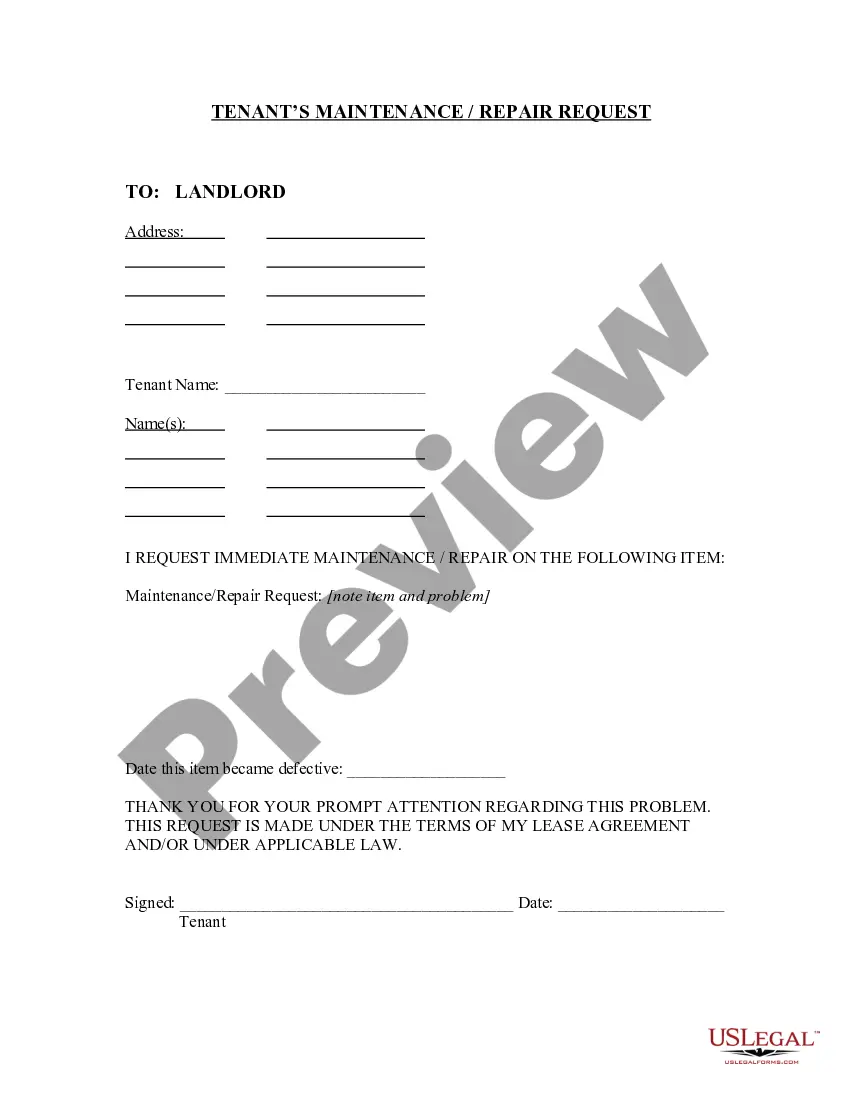
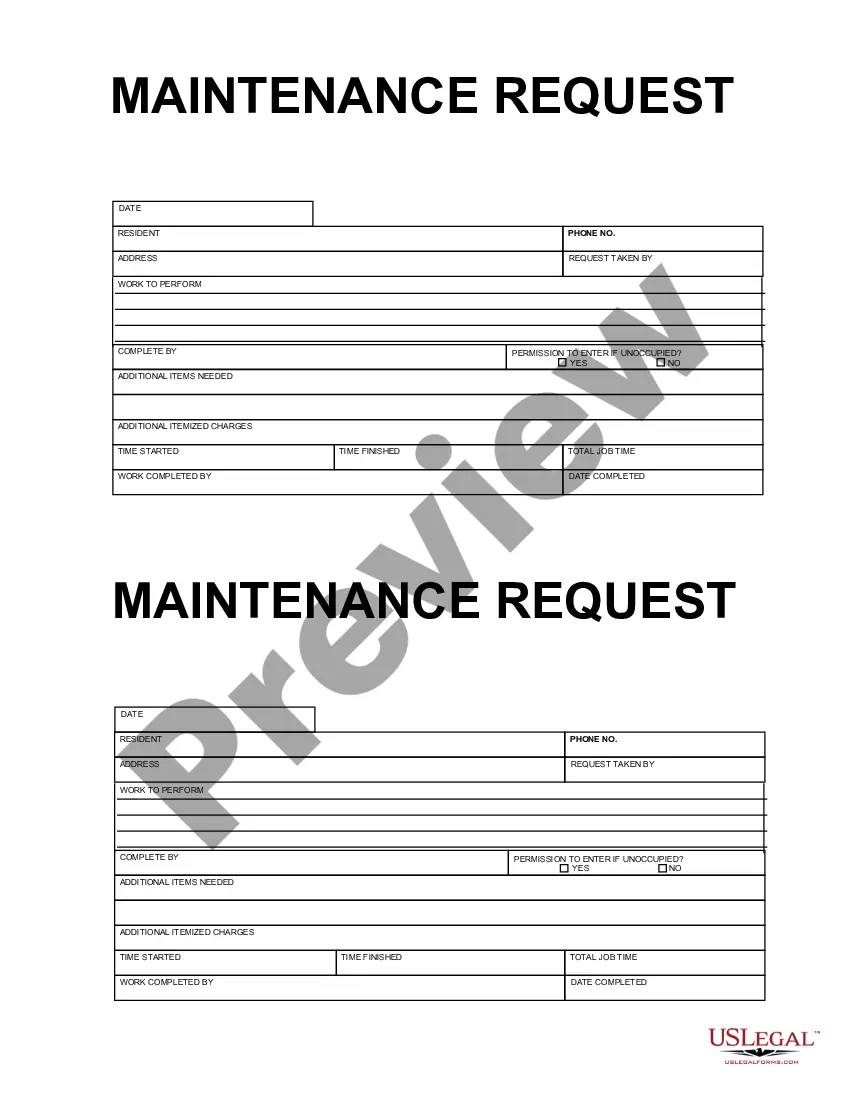
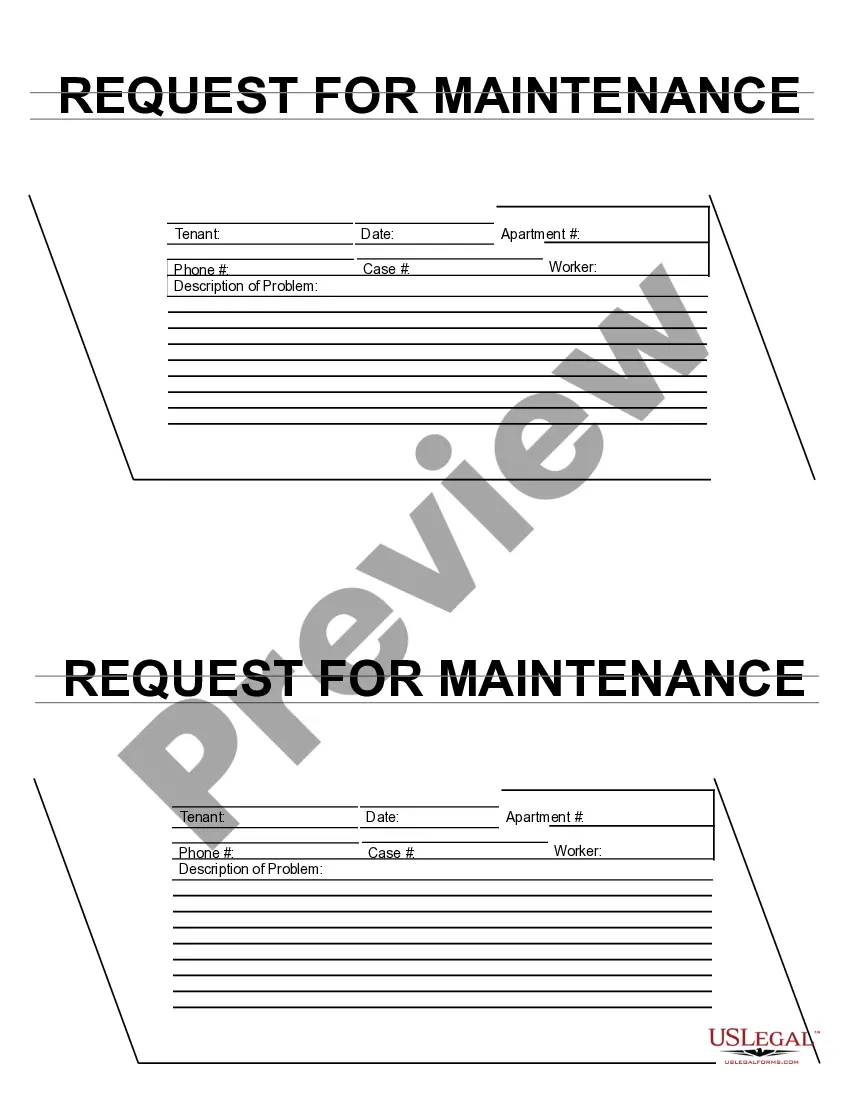
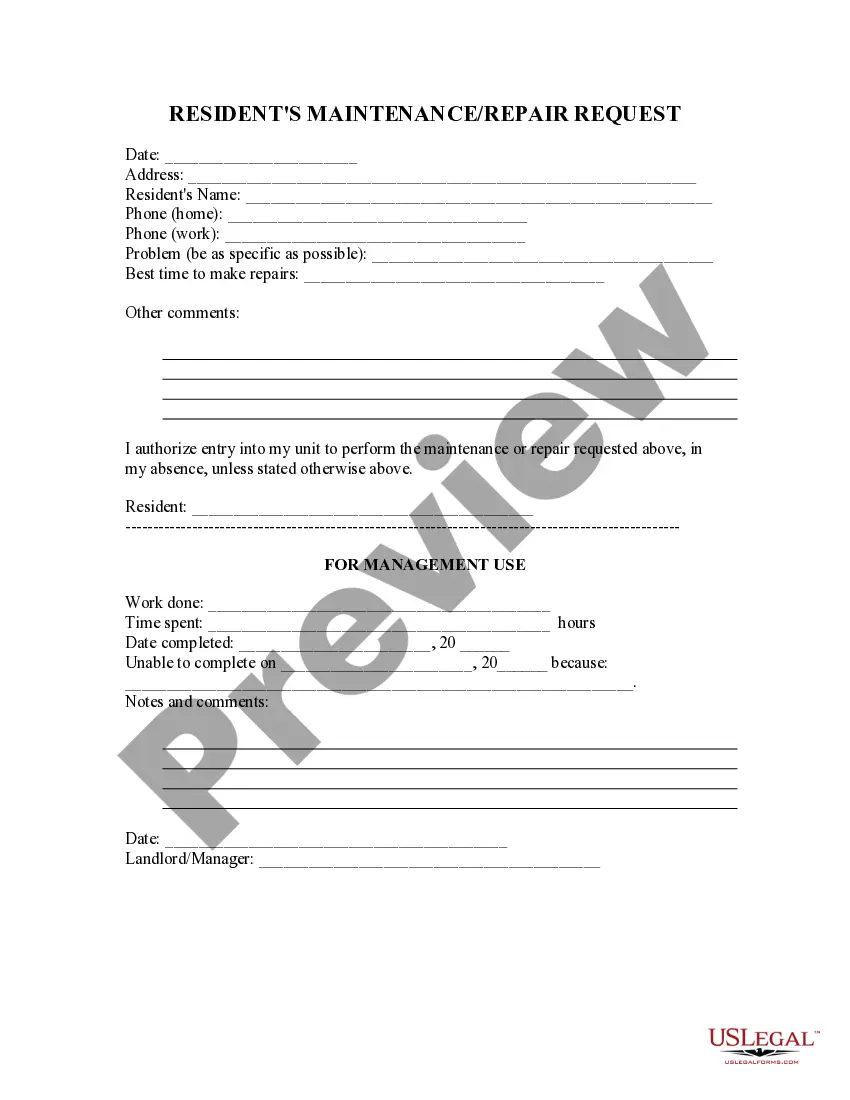
A Tenant's Maintenance Repair Request Form is a legal document used by tenants to formally notify their landlord about necessary repairs or maintenance within their rented property. This form helps ensure that tenants fulfill their obligations under the lease agreement while giving landlords the necessary legal notice to address maintenance issues. Unlike general communication, this form documents the request, establishing a formal record for both parties.
Form components explained
- Tenant's name and signature
- Date of the request
- Detailed description of the repair or maintenance issue
- Reference to the lease agreement and applicable laws
- Contact information for the tenant
When to use this document
Use the Tenant's Maintenance Repair Request Form whenever you encounter maintenance issues in your rented property, such as plumbing leaks, electrical problems, or broken appliances. This form is essential for documenting the request and ensuring it is formally received by your landlord, helping to prevent delays in necessary repairs.
Who can use this document
- Tenants living in rental properties who need repairs
- Individuals who want to provide legal notice to their landlord
- Renters seeking to document their maintenance requests formally
Instructions for completing this form
- Identify the tenant by including their full name and signature.
- Enter the date when you are submitting the maintenance request.
- Clearly describe the repair or maintenance issue in detail.
- Reference your lease agreement and any applicable laws.
- Provide your contact information for the landlord's response.
Notarization requirements for this form
Notarization is not commonly needed for this form. However, certain documents or local rules may make it necessary. Our notarization service, powered by Notarize, allows you to finalize it securely online anytime, day or night.
Get your form ready online
Our built-in tools help you complete, sign, share, and store your documents in one place.
Make edits, fill in missing information, and update formatting in US Legal Forms—just like you would in MS Word.
Download a copy, print it, send it by email, or mail it via USPS—whatever works best for your next step.
Sign and collect signatures with our SignNow integration. Send to multiple recipients, set reminders, and more. Go Premium to unlock E-Sign.
If this form requires notarization, complete it online through a secure video call—no need to meet a notary in person or wait for an appointment.
We protect your documents and personal data by following strict security and privacy standards.

Make edits, fill in missing information, and update formatting in US Legal Forms—just like you would in MS Word.

Download a copy, print it, send it by email, or mail it via USPS—whatever works best for your next step.

Sign and collect signatures with our SignNow integration. Send to multiple recipients, set reminders, and more. Go Premium to unlock E-Sign.

If this form requires notarization, complete it online through a secure video call—no need to meet a notary in person or wait for an appointment.

We protect your documents and personal data by following strict security and privacy standards.
Typical mistakes to avoid
- Failing to provide a detailed description of the issue.
- Not including the date of the request.
- Omitting the tenant's contact information.
- Neglecting to reference the relevant lease agreement.
Advantages of online completion
- Convenient access to downloadable forms at any time.
- Edit and customize to suit specific repair needs.
- Secure and reliable way to document maintenance requests.
Looking for another form?

Form popularity
FAQ
Your landlord is always responsible for repairs to: the property's structure and exterior. basins, sinks, baths and other sanitary fittings including pipes and drains. heating and hot water.
Renter Responsibilities You will maintain the property in a clean and habitable condition. You will inform the landlord when issues arise that could harm the value of the property. You will pay for any repairs due to your negligence or misuse of the property.
Keep your rental unit as clean and safe as the condition of the premises permits. Dispose of garbage, rubbish, and other waste in a clean and safe manner. Keep plumbing fixtures as clean as their condition permits.
The living space is safe and meets minimum housing, fire, building, and health standards; the heating, wiring, and plumbing work; the structure of the building is maintained including windows, doors, walls, roofs, ceilings, floors, and stairs; the fridge and stove work; and.
Tenants can all agree to withhold rent until the landlord makes repairs. A group of tenants can ask a judge to order the landlord to make repairs. If the landlord absolutely refuses to fix the bad conditions, tenants can ask a court to appoint a temporary landlord called a receiver in order to make repairs.
A burst water service or a serious water service leak. A blocked or broken toilet. A serious roof leak. A gas leak. A dangerous electrical fault. Flooding or serious flood damage. Serious storm or fire damage.
Keep your rented properties safe and free from health hazards. make sure all gas and electrical equipment is safely installed and maintained. provide an Energy Performance Certificate for the property. protect your tenant's deposit in a government-approved scheme.
Calling state or local building or health inspectors. withholding the rent. repairing the problem, or having it repaired by a professional, and deducting the cost from your rent (called repair-and-deduct) moving out, or.