Complaint Against Food Store - Americans With Disabilities Act - Jury Demand
About this form
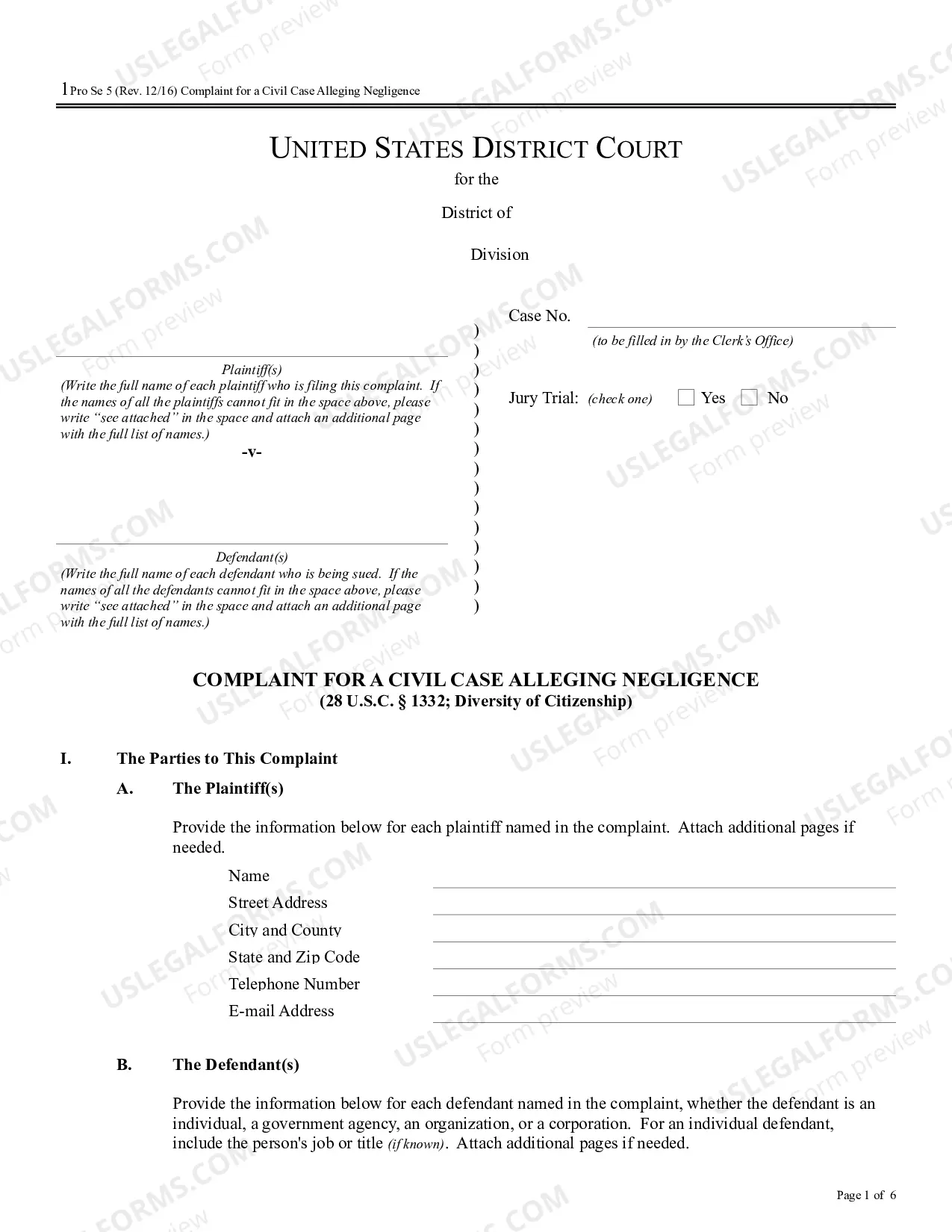
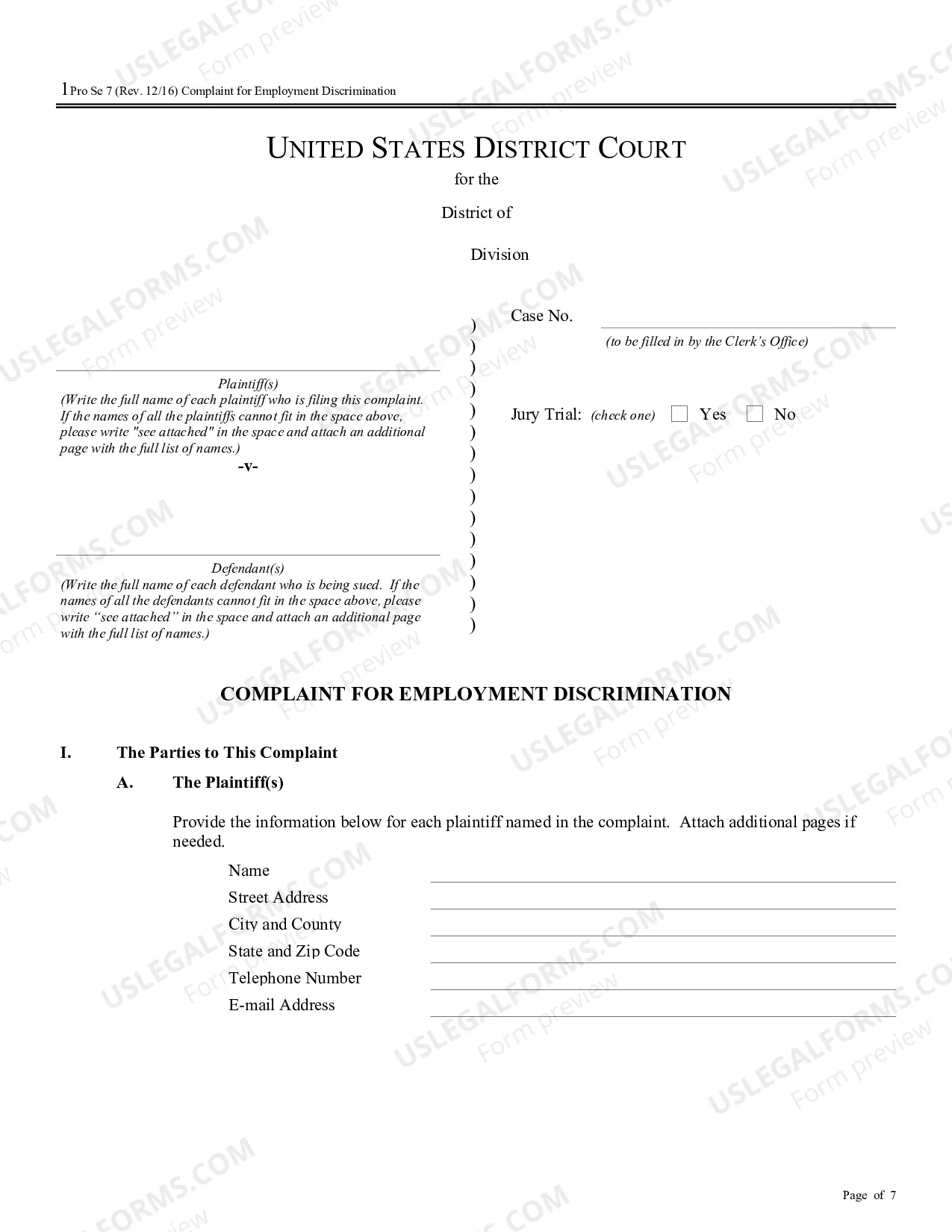
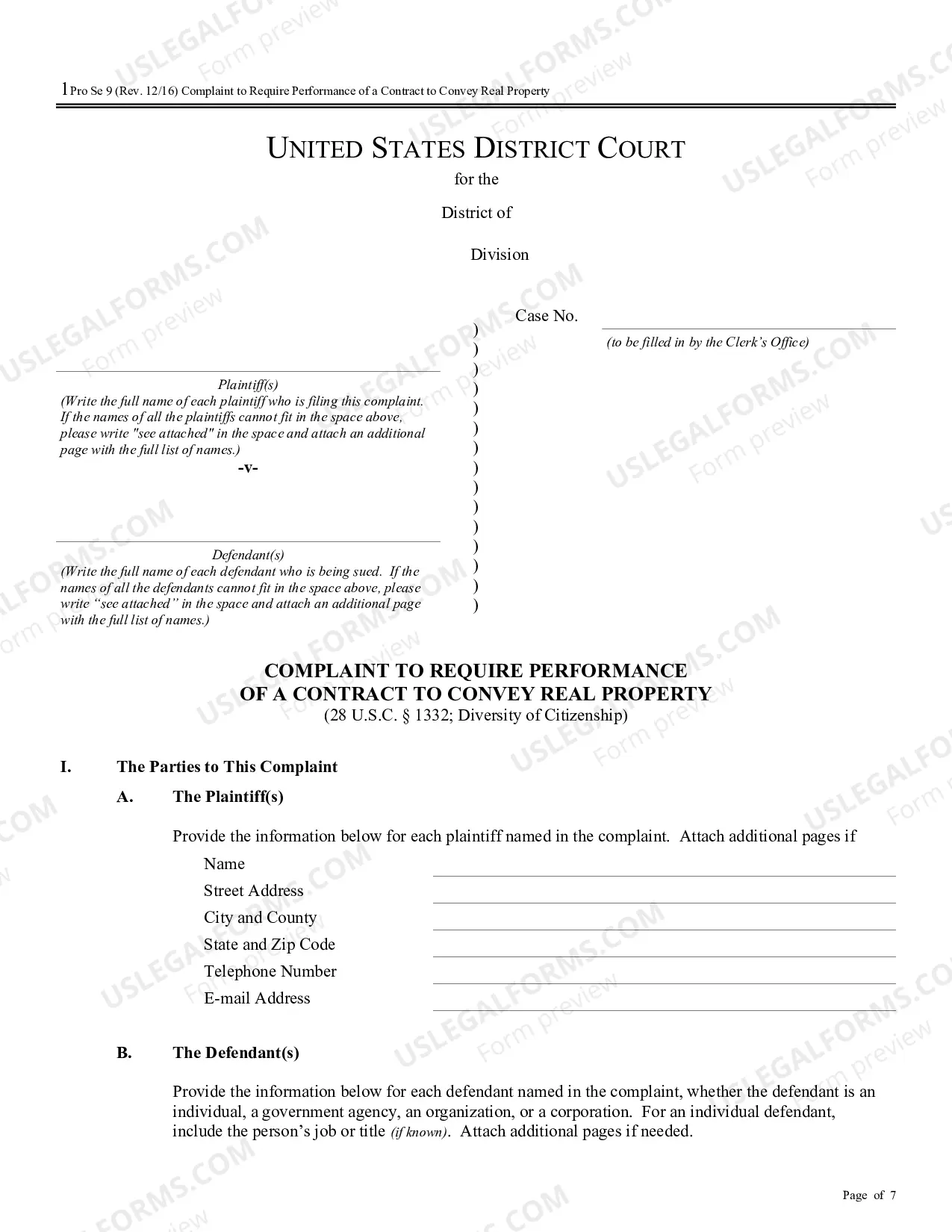
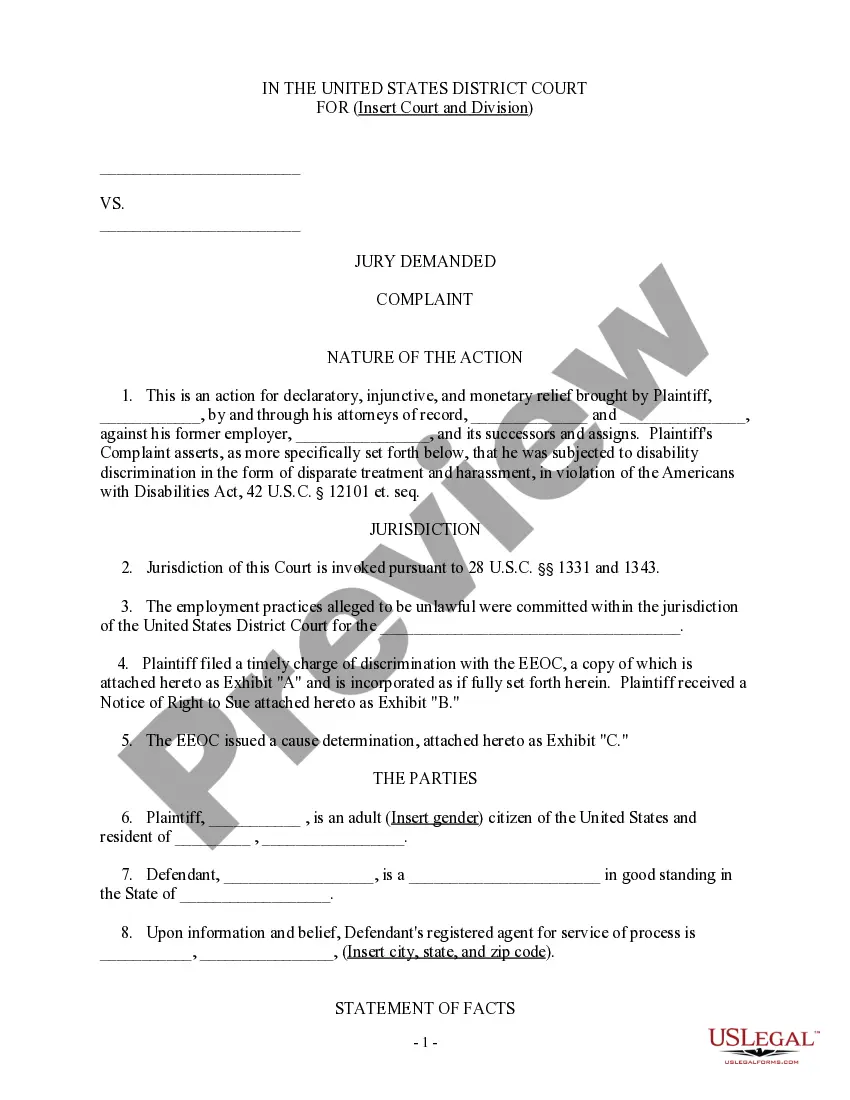
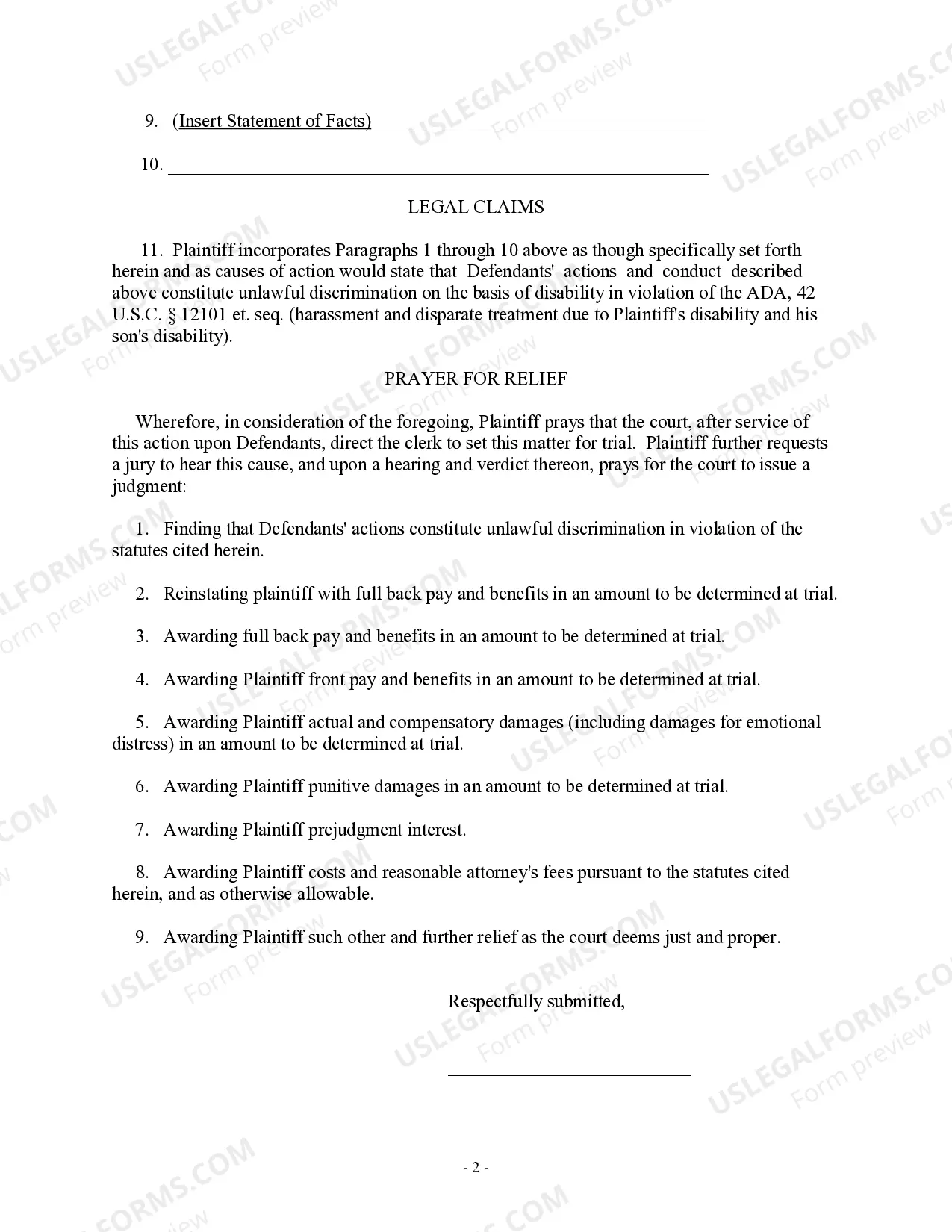
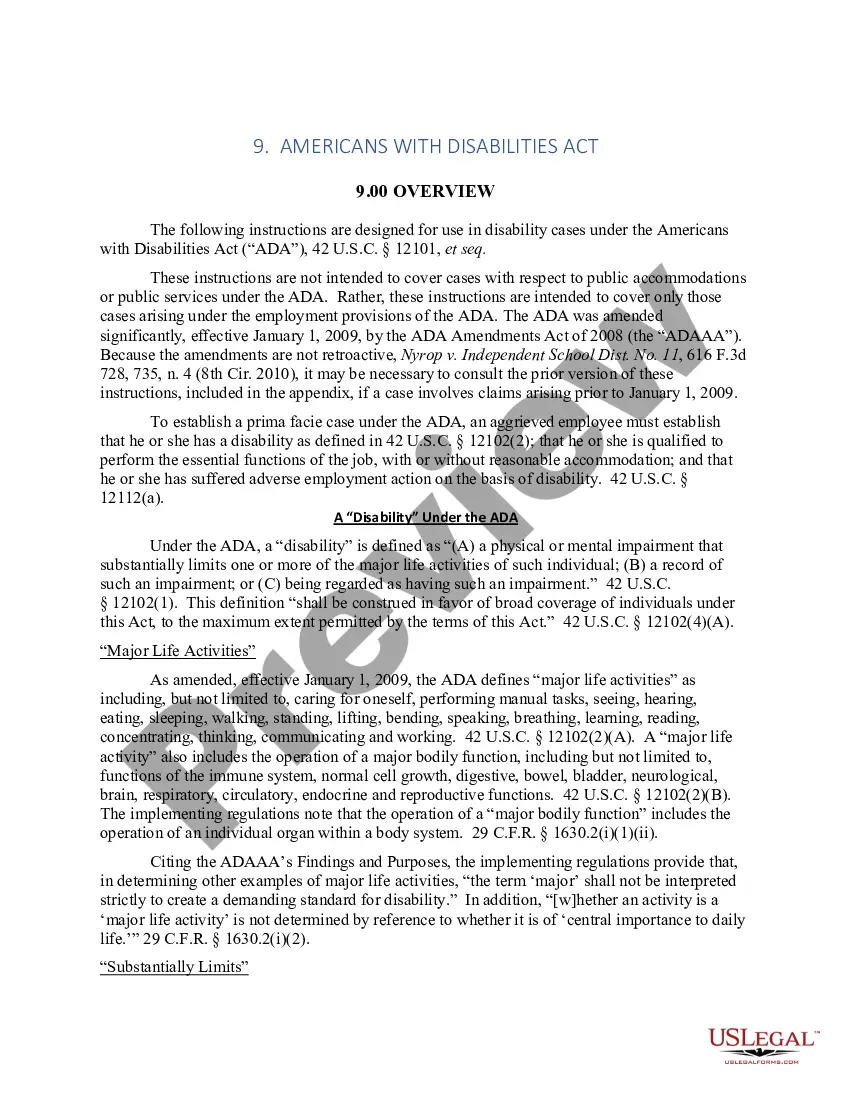
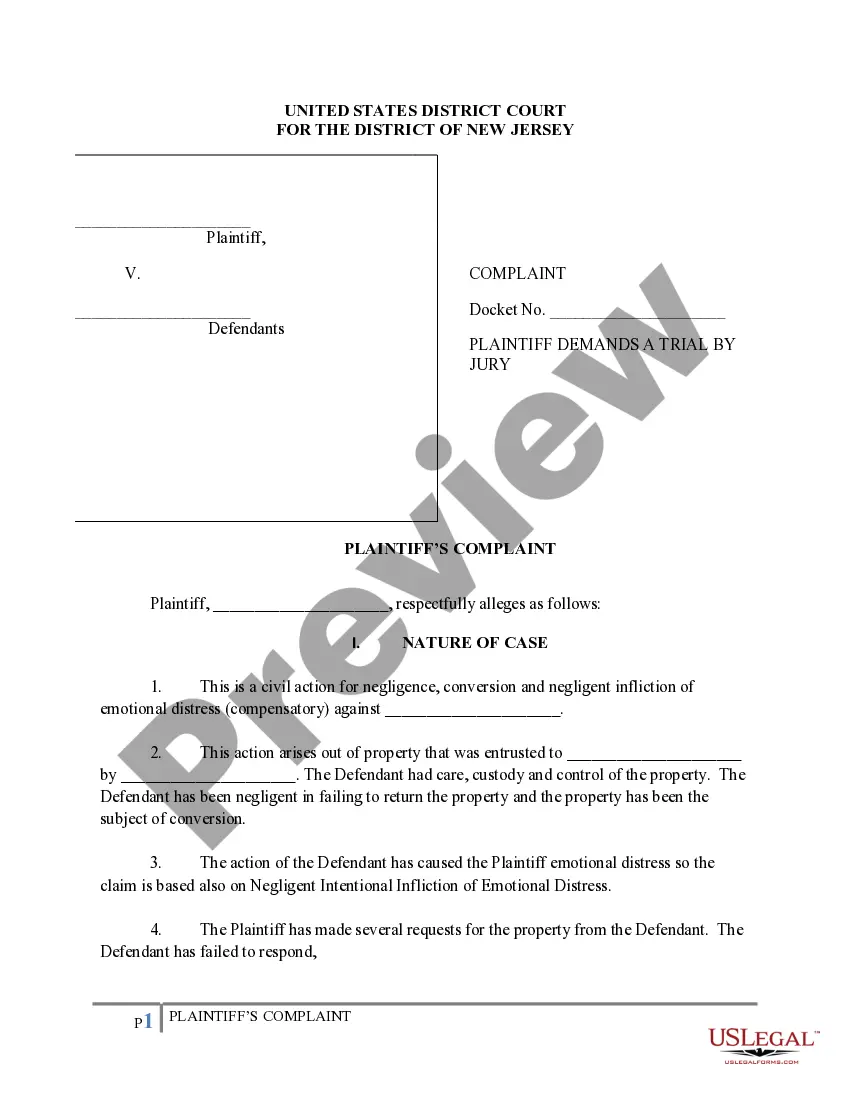
The Complaint Against Food Store - Americans With Disabilities Act - Jury Demand is a legal document filed by a plaintiff who believes they have faced discrimination based on their disability. This complaint is initiated against a former employer under the Americans with Disabilities Act (ADA), seeking declaratory, injunctive, and monetary relief. It aims to assert rights and protections under the ADA, differentiating it from other employment discrimination forms by specifically addressing disability-related issues and including a jury demand for the trial.
Key parts of this document
- Identification of the court and parties involved
- Nature of the action outlining discrimination claims
- Legal jurisdiction referenced under federal law
- Statement of facts detailing the discrimination experienced
- Legal claims citing violations of the ADA
- Prayer for relief specifying the type of damages sought


Common use cases
This form should be used when an individual believes they have been wrongfully treated due to a disability by their employer or a former employer and is seeking legal recourse under the ADA. Real-world scenarios include instances of harassment, disparate treatment, or any employment practices that violate legal protections for individuals with disabilities.
Intended users of this form
- Individuals who have faced disability discrimination at work
- Former employees seeking to assert their rights under the ADA
- Those who have filed a charge with the EEOC and received a right to sue letter
- People looking to pursue compensation and reinstatement due to wrongful termination or discrimination
How to prepare this document
- Identify the court and division where the complaint will be filed.
- Fill in the plaintiff's and defendant's information, including names and addresses.
- Clearly state the facts and circumstances surrounding the alleged discrimination.
- Detail the legal claims and specify which sections of the ADA are being violated.
- Include the prayer for relief, stating what the plaintiff seeks from the court after the trial.
Does this form need to be notarized?
Notarization is generally not required for this form. However, certain states or situations might demand it. You can complete notarization online through US Legal Forms, powered by Notarize, using a verified video call available anytime.
Get your form ready online
Our built-in tools help you complete, sign, share, and store your documents in one place.
Make edits, fill in missing information, and update formatting in US Legal Forms—just like you would in MS Word.
Download a copy, print it, send it by email, or mail it via USPS—whatever works best for your next step.
Sign and collect signatures with our SignNow integration. Send to multiple recipients, set reminders, and more. Go Premium to unlock E-Sign.
If this form requires notarization, complete it online through a secure video call—no need to meet a notary in person or wait for an appointment.
We protect your documents and personal data by following strict security and privacy standards.

Make edits, fill in missing information, and update formatting in US Legal Forms—just like you would in MS Word.

Download a copy, print it, send it by email, or mail it via USPS—whatever works best for your next step.

Sign and collect signatures with our SignNow integration. Send to multiple recipients, set reminders, and more. Go Premium to unlock E-Sign.

If this form requires notarization, complete it online through a secure video call—no need to meet a notary in person or wait for an appointment.

We protect your documents and personal data by following strict security and privacy standards.
Avoid these common issues
- Failing to provide accurate and complete parties' information.
- Neglecting to attach required exhibits or documents such as the EEOC charge.
- Using vague language instead of specific details of the alleged discrimination.
- Ignoring state-specific requirements for filing and service processes.
- Not adequately defining the relief sought in the prayer for relief section.
Advantages of online completion
- Convenient access to legal forms from any location.
- The ability to download and customize the form according to individual needs.
- Access to templates drafted by licensed attorneys ensures legal compliance.
- Quick completion process without the need for in-person legal consultations.
Looking for another form?
Form popularity
FAQ
Avoid Disability Assumptions. Upwards of 10 percent of people in the U.S. live with an invisible disability. Follow the the Official Process. The ADA protects both employees and customers. Maintain Thorough Documentation. Treat Workers As Individuals. Digital Accessibility Matters Too. Keep in mind the FMLA.
Fines. If found in violation of the ADA, you face steep penalties. Organizations and businesses can be fined up to $75,000 for your first ADA violation and $150,000 for any subsequent violation.
To prove a violation of the ADA, a plaintiff must prove three facts. First, he must have a disability. Second, the business is a place of public accommodation. Third, he was denied full and equal treatment because of his disability.
Instructions: Answer - Responding to the Complaint in an ADA Case. 25a1 Make three copies. Once you have completely filled out and signed your Answer and. STAY UP TO DATE. Tell the Court if you move. You must file a notice with the Clerk right away if your mailing. Check your mail.
A violation can occur when job postings discourage individuals with disabilities from applying, exclude them, or deny a qualified individual employment because of their disability. It is an ADA violation for any employer to demote, terminate, harass, or fail to provide reasonable accommodations to disabled employees.
The Americans with Disability Act (ADA) protects people with disabilities from discrimination. Conditions that are minor and temporary (such as a cold or flu) don't count as disabilities under the ADA. However, a short-term illness or other impairment may qualify as a disability if it is severe.
You can file an Americans with Disabilities Act (ADA) complaint alleging disability discrimination against a State or local government or a public accommodation (private business including, for example, a restaurant, doctor's office, retail store, hotel, etc.).
In addition to the U.S. Department of Labor, several other federal agencies have a role in enforcing, or investigating claims involving, the ADA: The U.S Equal Employment Opportunity Commission (EEOC) enforces Title I of the ADA.