9.00 Americans with Disabilities Act Overview
What is this form?
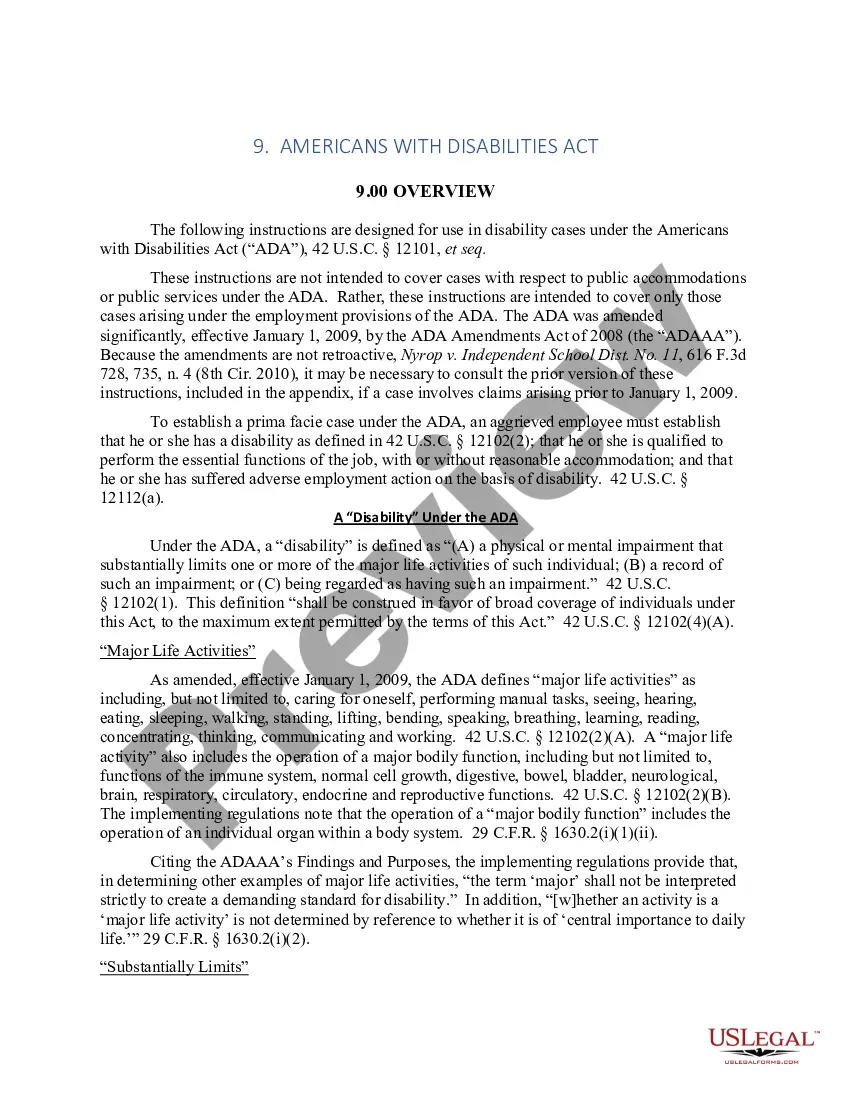
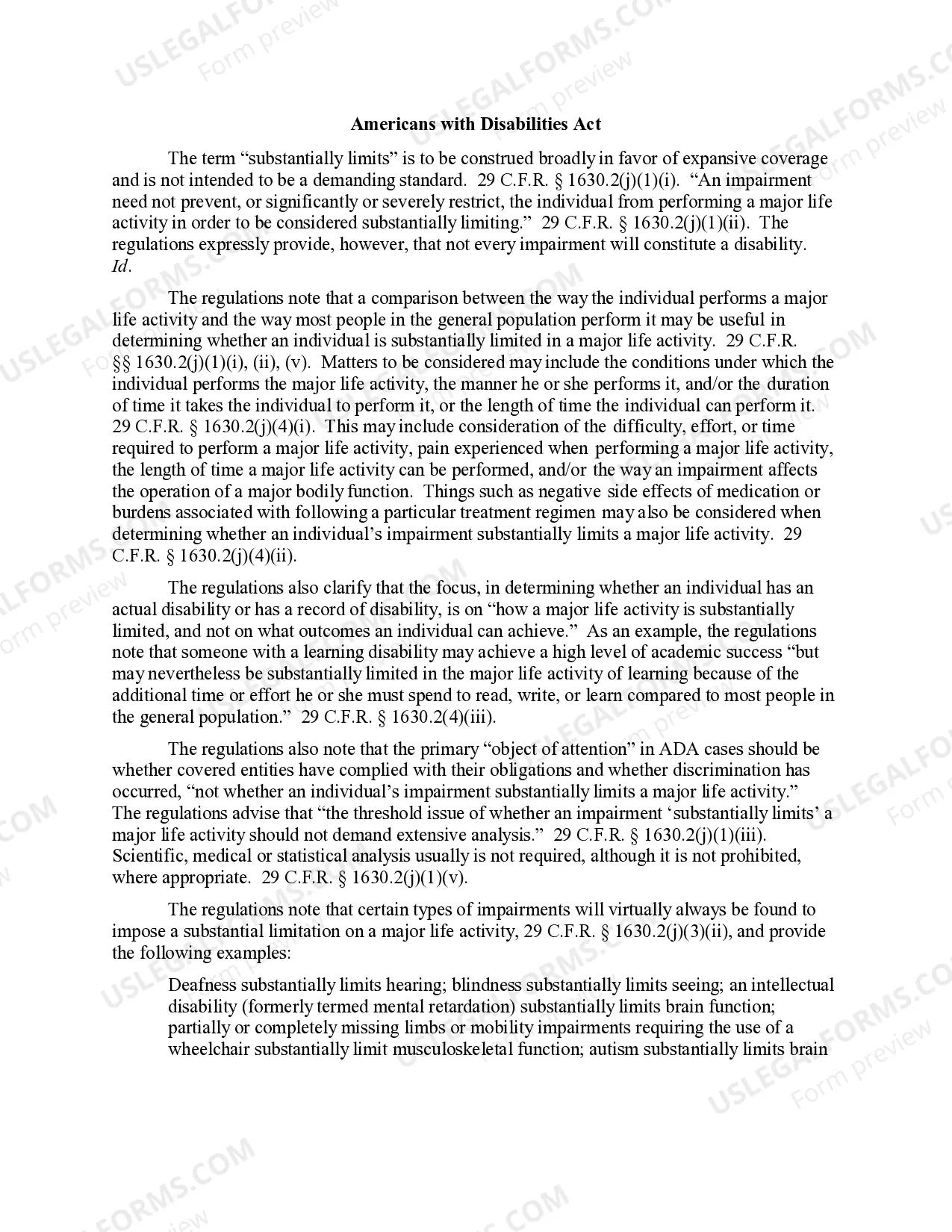
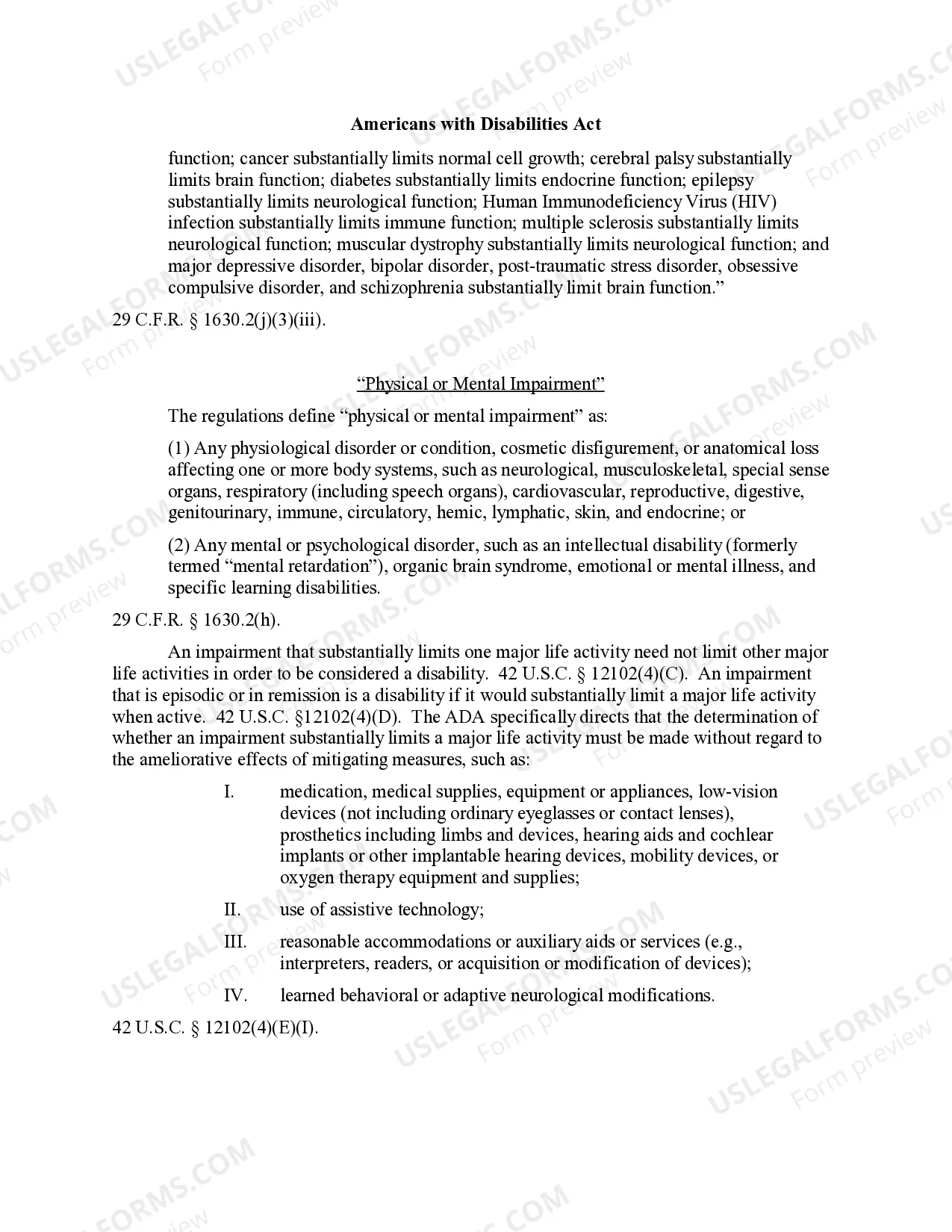
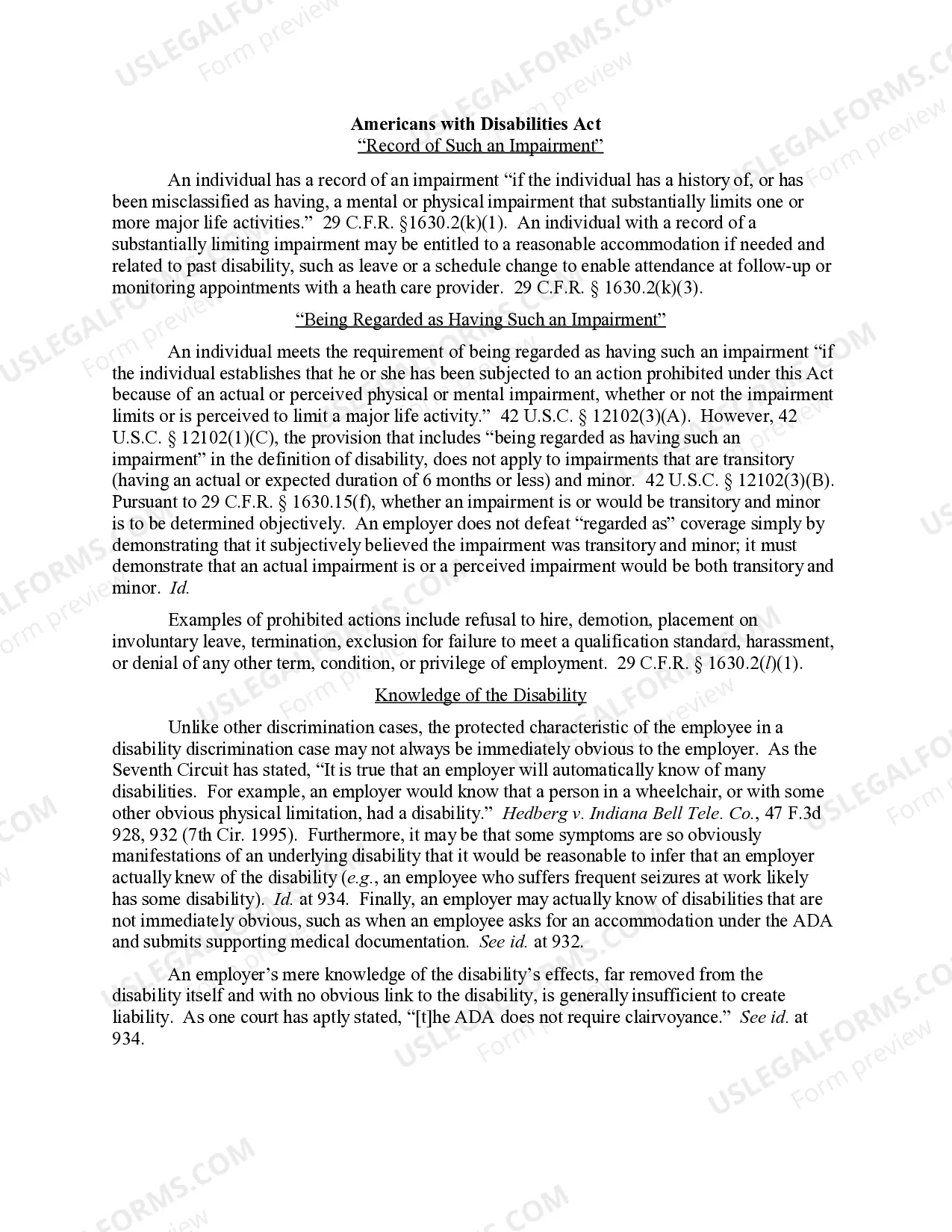
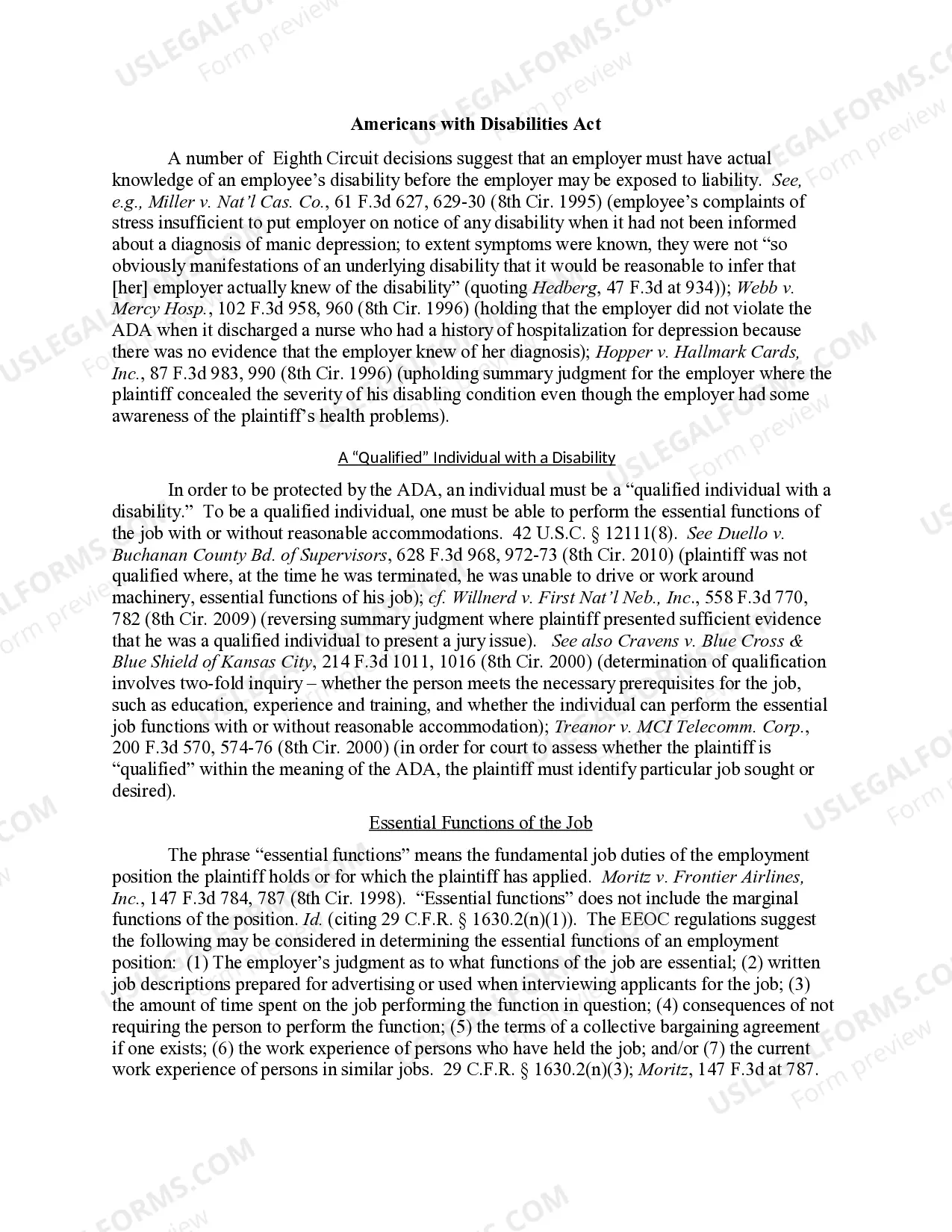
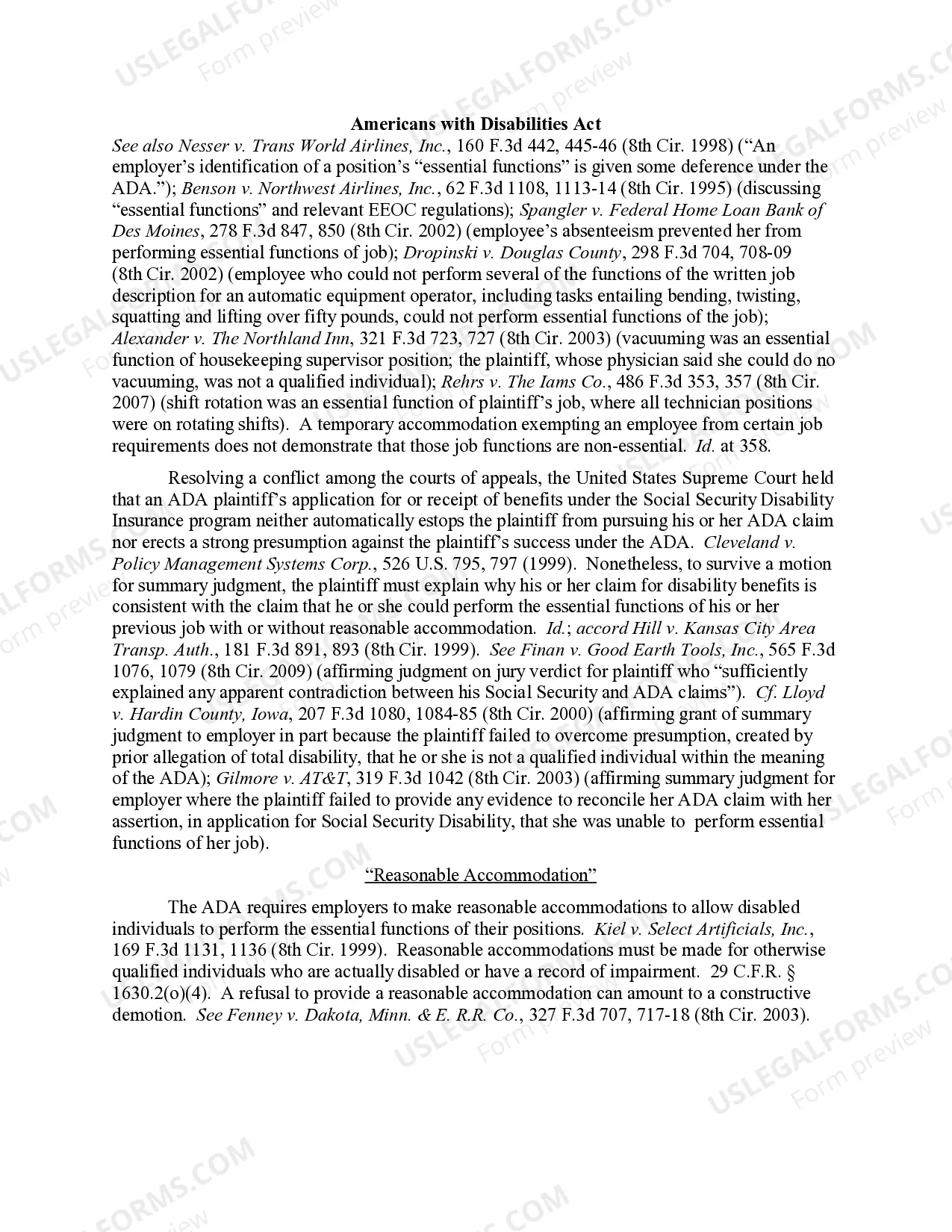
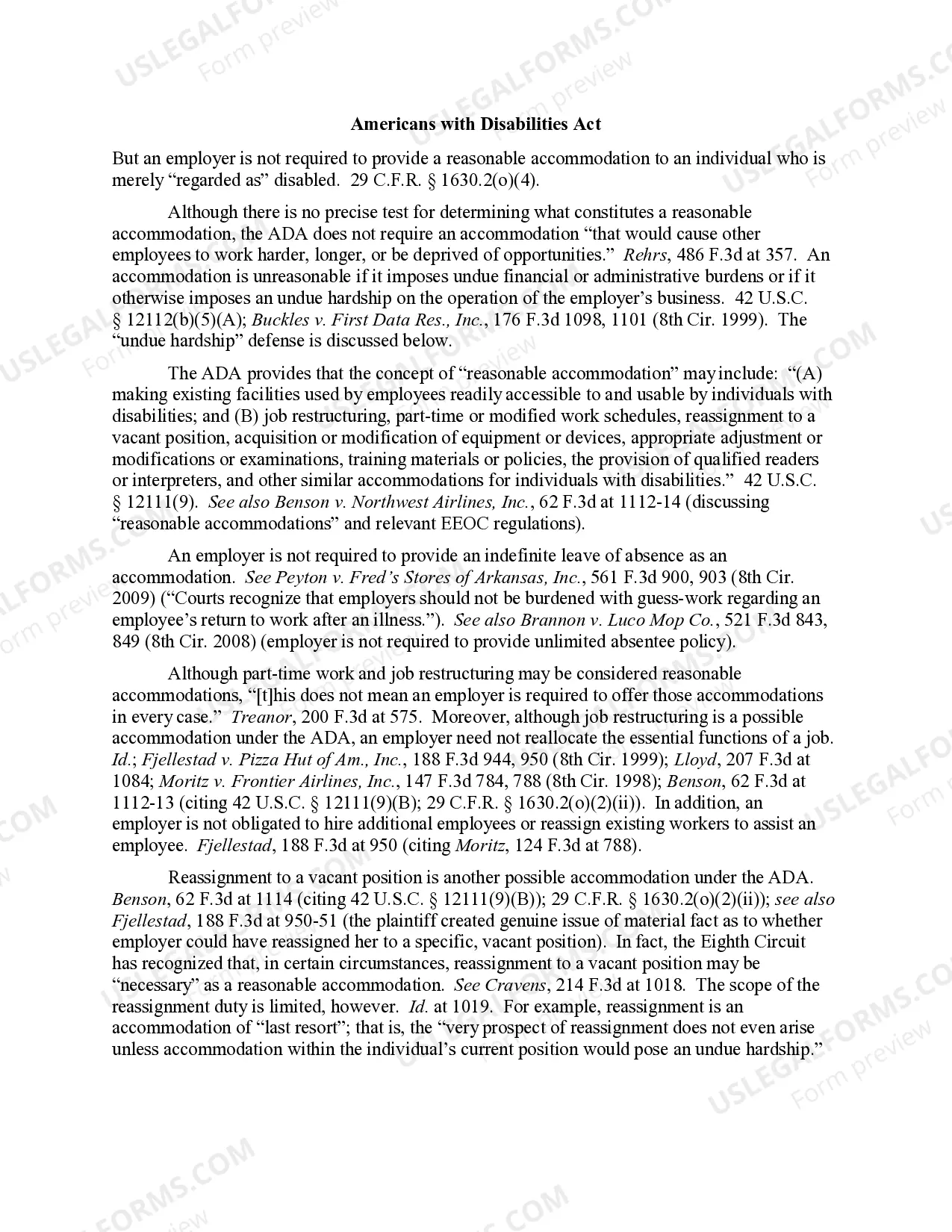
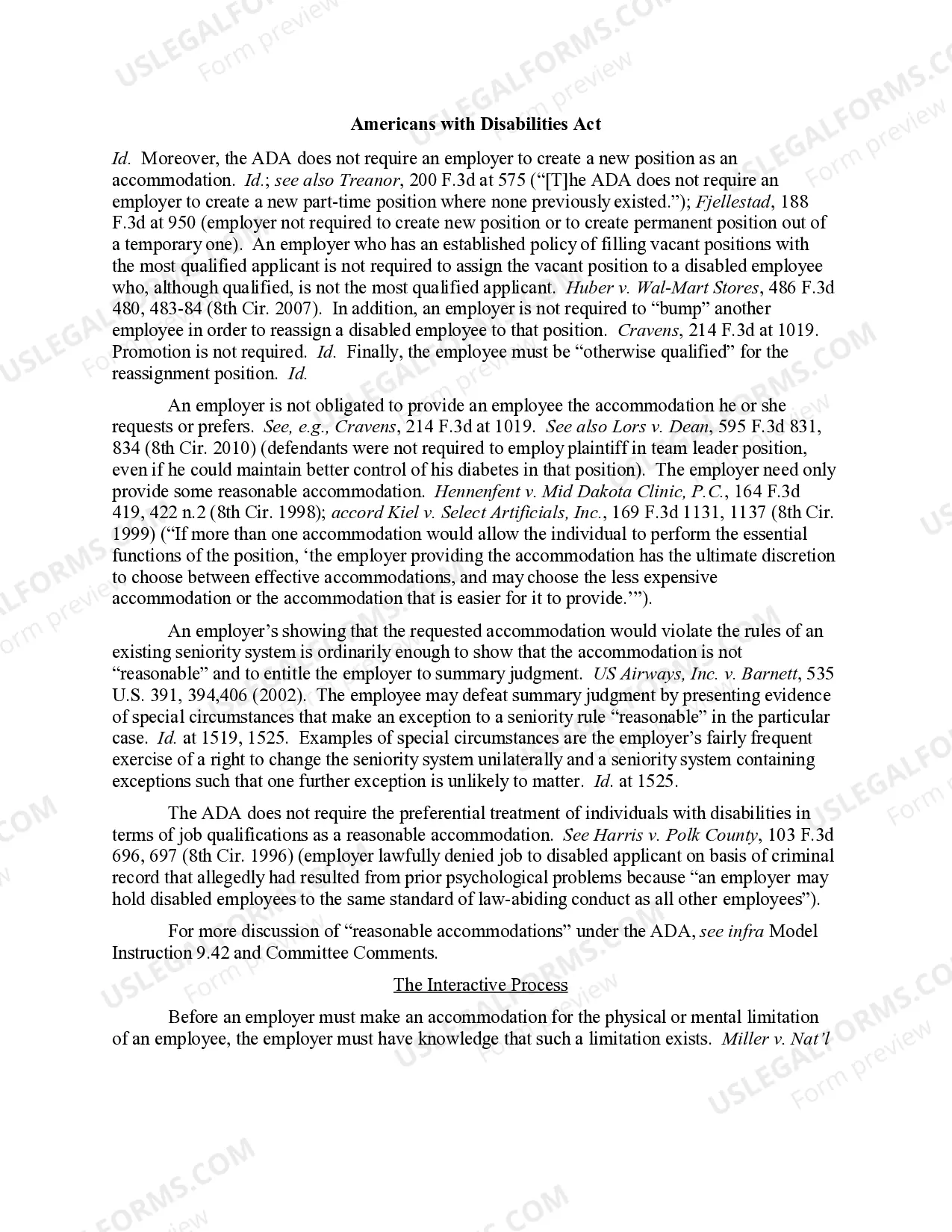
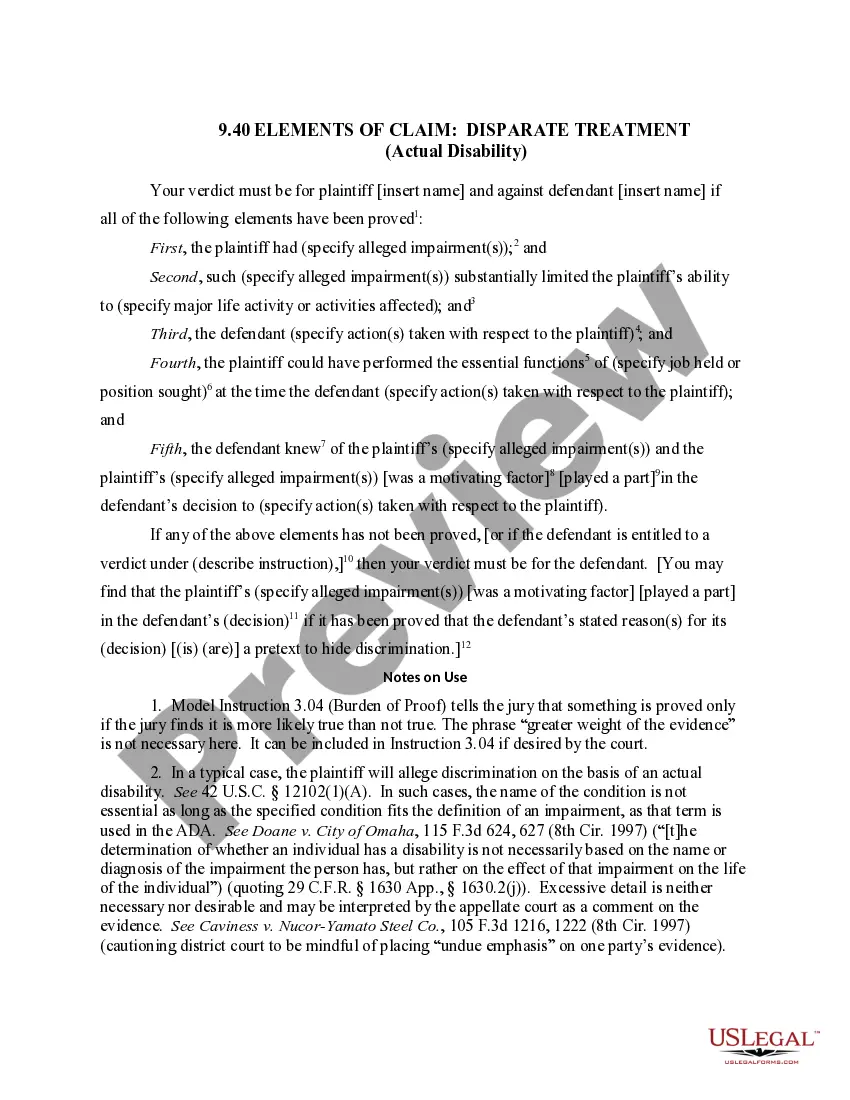
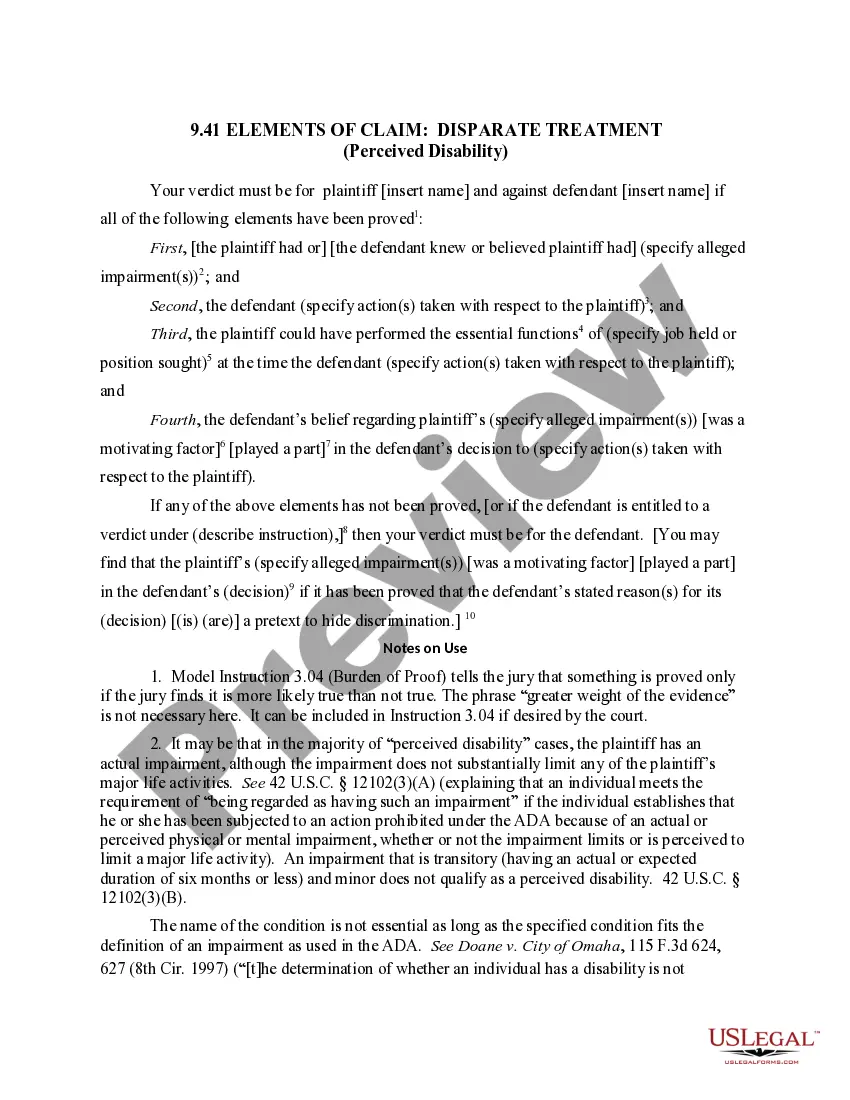
The Americans with Disabilities Act (ADA) Overview form provides clear guidelines for understanding the employment provisions of the ADA. This form outlines the legal definitions, criteria for establishing disability, and employers' obligations to accommodate individuals with disabilities in the workplace. Unlike forms related to public accommodations or services, this overview solely focuses on employment-related cases, helping users navigate their rights and responsibilities under the ADA.
Form components explained
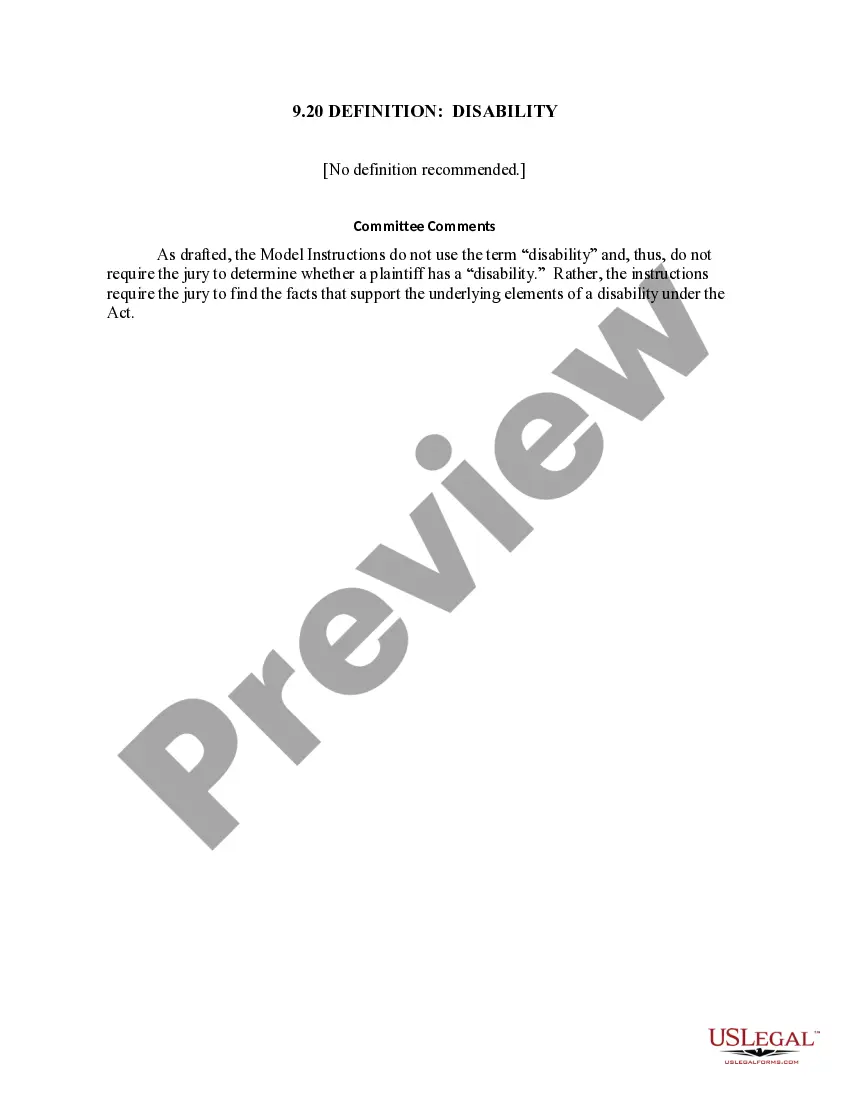
- Definition of disability as per the ADA.
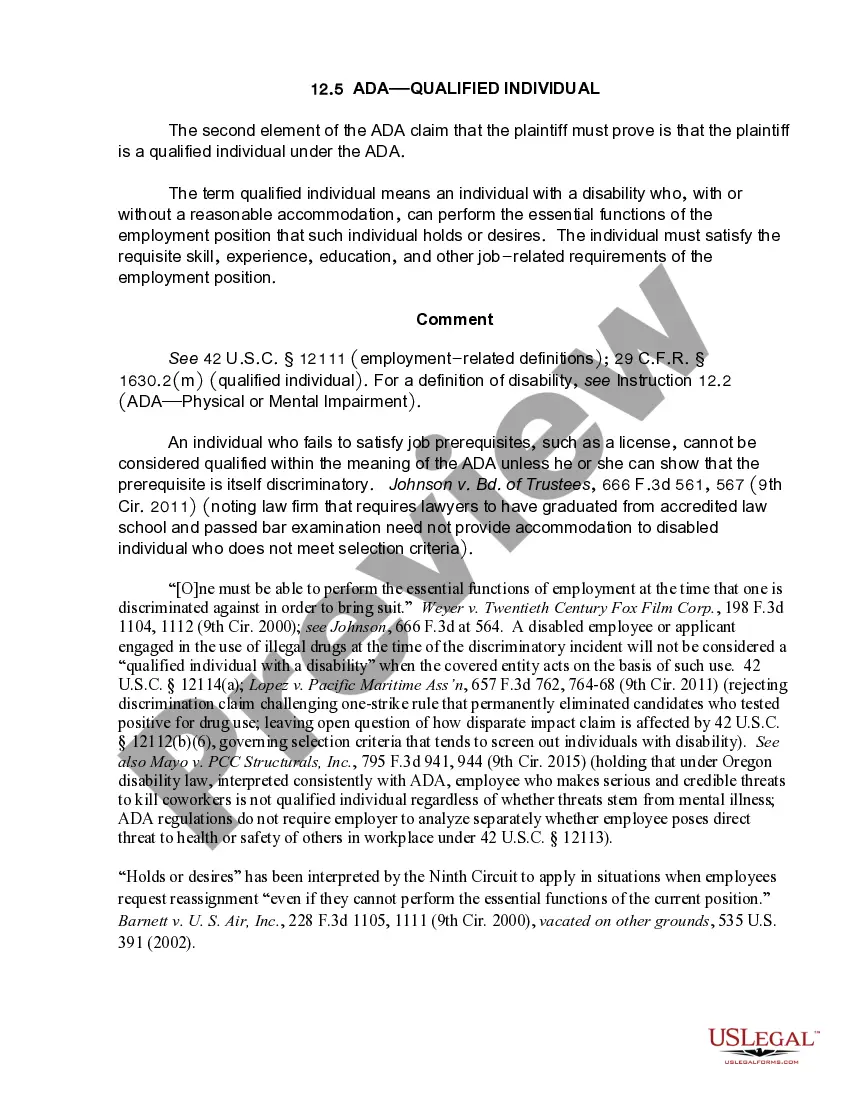
- Criteria for determining "qualified individuals" with disabilities.
- Explanation of what constitutes reasonable accommodation.
- Details on the employer's obligations under the ADA.
- Examples of prohibited actions and the concept of "direct threat."

When to use this document
This form is necessary when an employee believes they have suffered discrimination due to their disability in the workplace. It provides a framework for individuals to understand their rights under the ADA, whether seeking accommodations or if they have faced adverse employment actions related to their condition.
Intended users of this form
- Employees who believe they have been discriminated against due to a disability.
- Employers seeking clarity on their obligations under the ADA.
- Legal professionals representing clients in ADA discrimination cases.
How to prepare this document
- Identify the specific disability and its impact on your major life activities.
- Document any requests made for reasonable accommodations in the workplace.
- Collect any relevant correspondence or evidence regarding discrimination claims.
- Consult with legal counsel if filing a complaint or seeking additional guidance.
- Submit necessary documentation to the appropriate entities, including the employer and potentially the Equal Employment Opportunity Commission (EEOC).
Notarization requirements for this form
Notarization is generally not required for this form. However, certain states or situations might demand it. You can complete notarization online through US Legal Forms, powered by Notarize, using a verified video call available anytime.
Get your form ready online
Our built-in tools help you complete, sign, share, and store your documents in one place.
Make edits, fill in missing information, and update formatting in US Legal Forms—just like you would in MS Word.
Download a copy, print it, send it by email, or mail it via USPS—whatever works best for your next step.
Sign and collect signatures with our SignNow integration. Send to multiple recipients, set reminders, and more. Go Premium to unlock E-Sign.
If this form requires notarization, complete it online through a secure video call—no need to meet a notary in person or wait for an appointment.
We protect your documents and personal data by following strict security and privacy standards.

Make edits, fill in missing information, and update formatting in US Legal Forms—just like you would in MS Word.

Download a copy, print it, send it by email, or mail it via USPS—whatever works best for your next step.

Sign and collect signatures with our SignNow integration. Send to multiple recipients, set reminders, and more. Go Premium to unlock E-Sign.

If this form requires notarization, complete it online through a secure video call—no need to meet a notary in person or wait for an appointment.

We protect your documents and personal data by following strict security and privacy standards.
Common mistakes
- Failing to provide sufficient documentation of the disability.
- Not understanding the definition of "reasonable accommodation."
- Assuming all disabilities require the same accommodations.
- Neglecting to engage in the interactive process with an employer.
Benefits of completing this form online
- Convenient access to legal knowledge and resources regarding the ADA.
- Editable form templates that allow for personalization based on specific circumstances.
- Reliable source drafted by licensed attorneys to ensure compliance with current laws.
- Immediate availability for download which saves time compared to traditional legal processes.
Legal use & context
- The ADA is a federal law that prohibits discrimination against individuals with disabilities in all areas of public life.
- For employees to have a valid claim under the ADA, they must demonstrate that they are qualified individuals with disabilities.
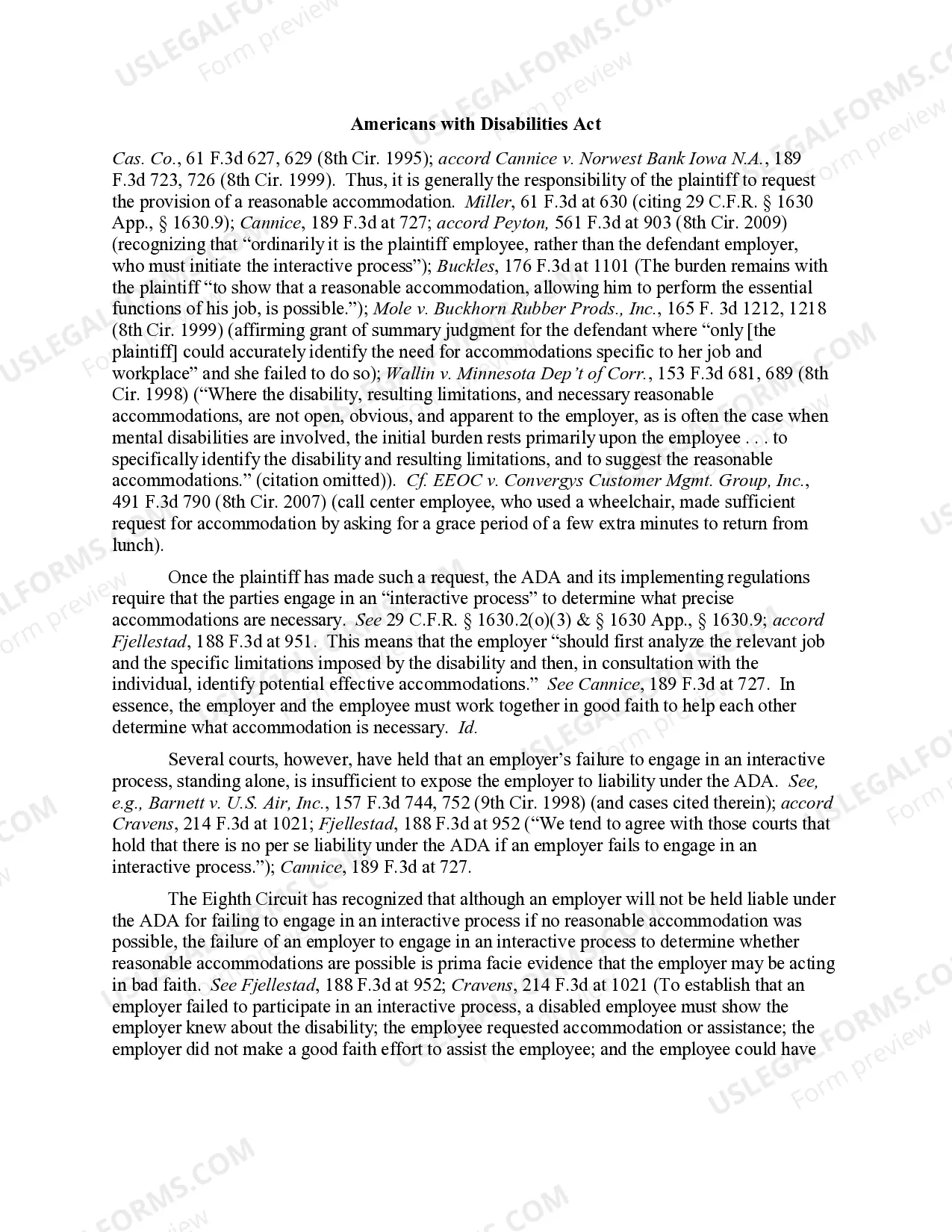
- Employers are required to engage in an interactive process to determine reasonable accommodations.
Key takeaways
- Understanding your rights under the ADA is crucial for both employees and employers.
- Employees must establish disability and qualification to seek ADA protections.
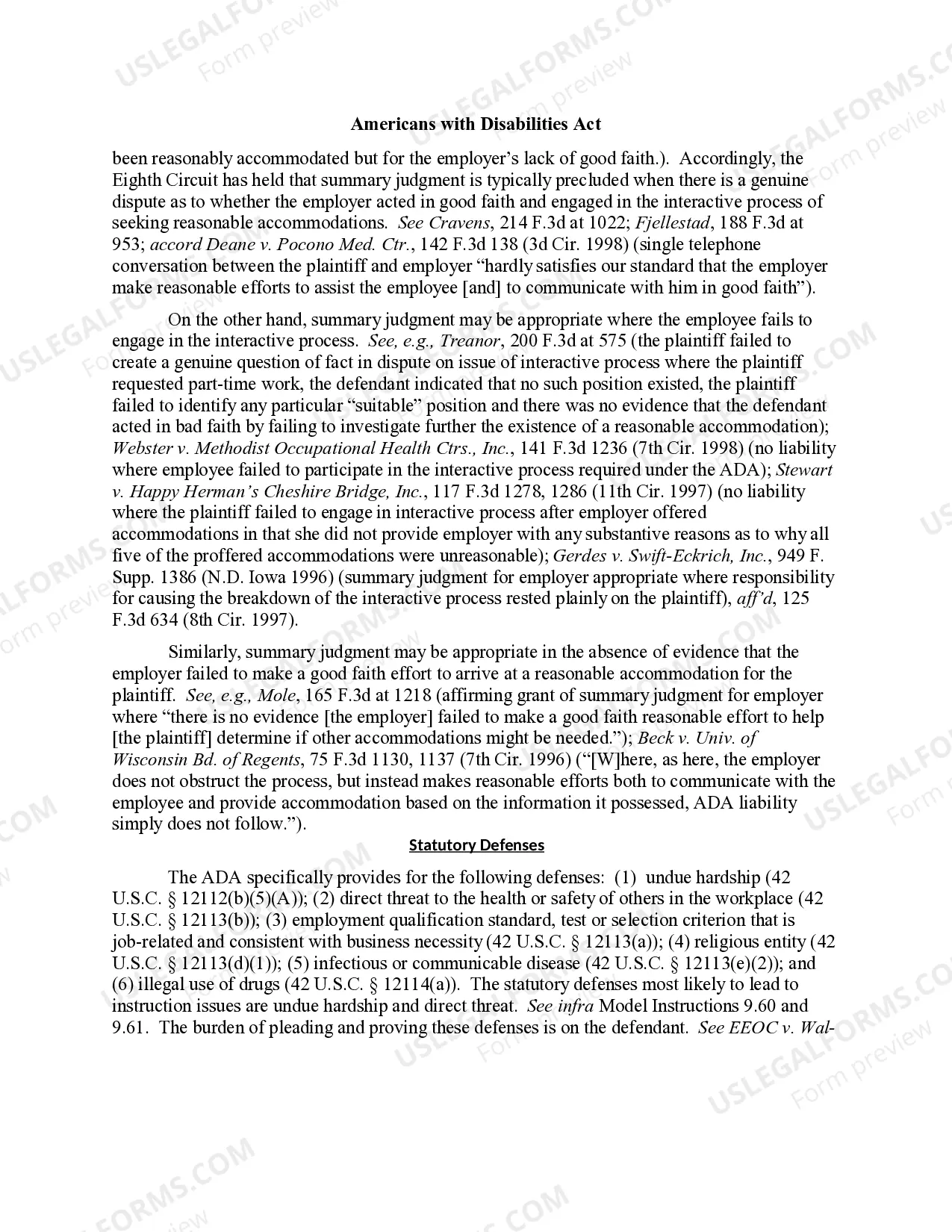
- Employers must consider accommodations unless they can prove undue hardship.
Looking for another form?
Form popularity
FAQ
The Americans with Disabilities Act (ADA) prohibits discrimination against people with disabilities in several areas, including employment, transportation, public accommodations, communications and access to state and local government' programs and services.
Editor's Note: Here is the text of the Americans with Disabilities Act of 1990 (ADA), including changes made by the ADA Amendments Act of 2008. Congress passed the ADA as a ?Public Law,? and it originally was in a different format than presented here.
Specifically, the ADAAA changed the definition of the term "disability" by clarifying and broadening it - which, in turn, increased the number and types of persons protected under the ADA and other federal nondiscrimination laws.
The goal of the ADA is to make it possible for people with disabilities to participate in the everyday commercial, economic, and social activities of American life. The law covers employment; state and local government programs, services, activities, and facilities; and businesses and nonprofit service providers.
Which best describes the Americans with Disabilities Act? It provides civil rights protections for citizens with disabilities.
The Americans with Disabilities Act Amendments Act (ADAAA) is a civil rights law that was originally passed by Congress in 1990 (as the Americans with Disabilities Act-ADA) and protects individuals with disabilities from discrimination in the workplace, as well as school and other settings.
The Americans with Disabilities Act (ADA) of 1990. A federal civil rights law designed to prevent discrimination and enable individuals with disabilities to participate fully in all aspects of society.