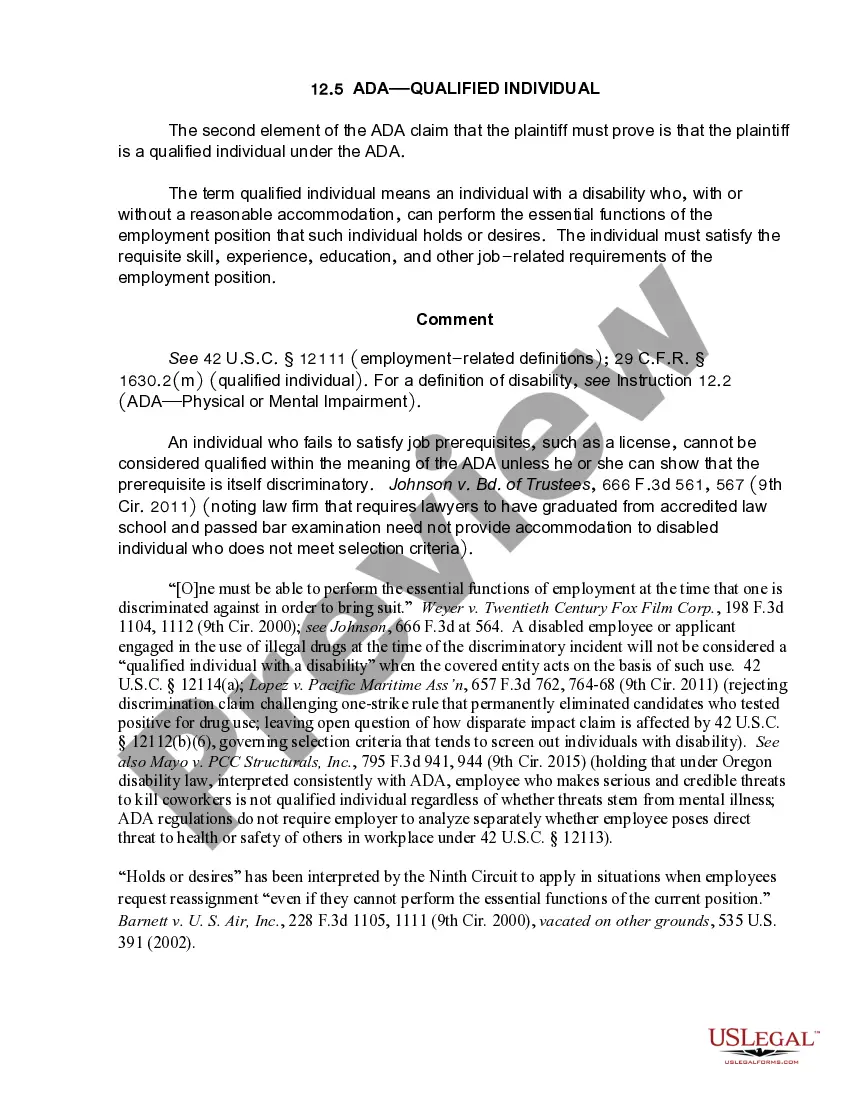
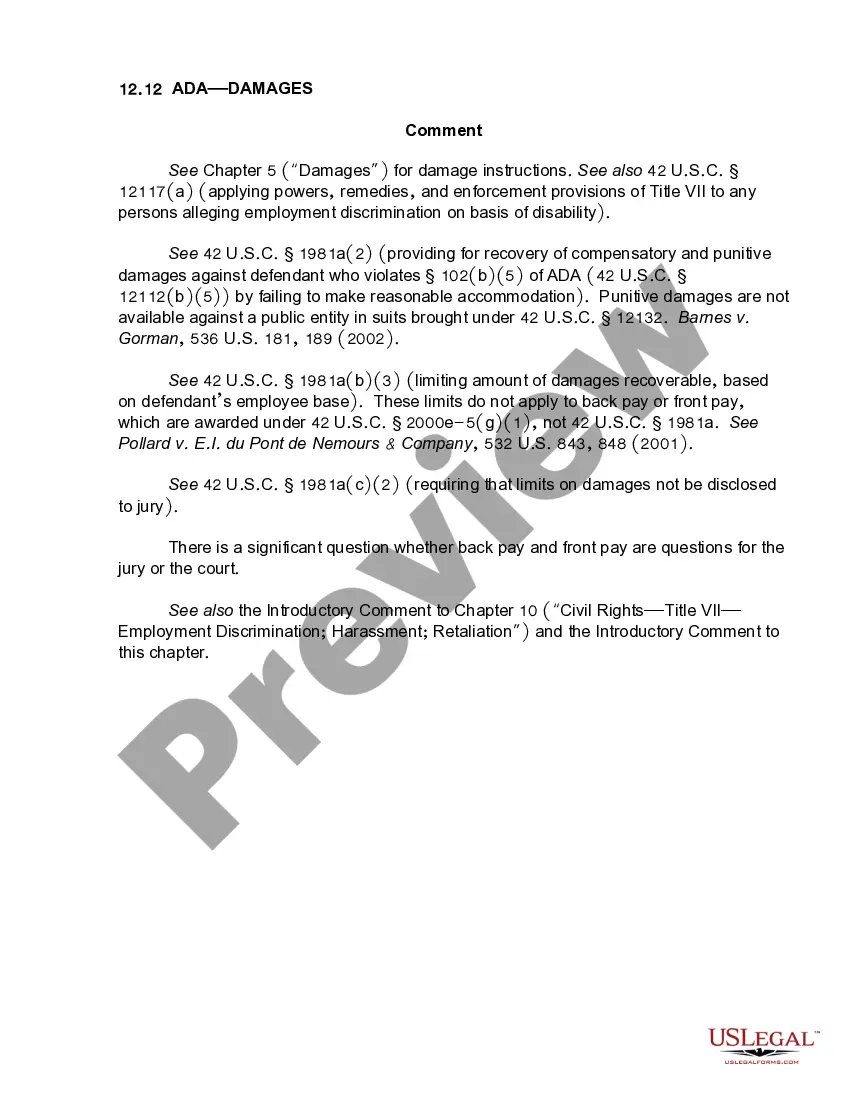
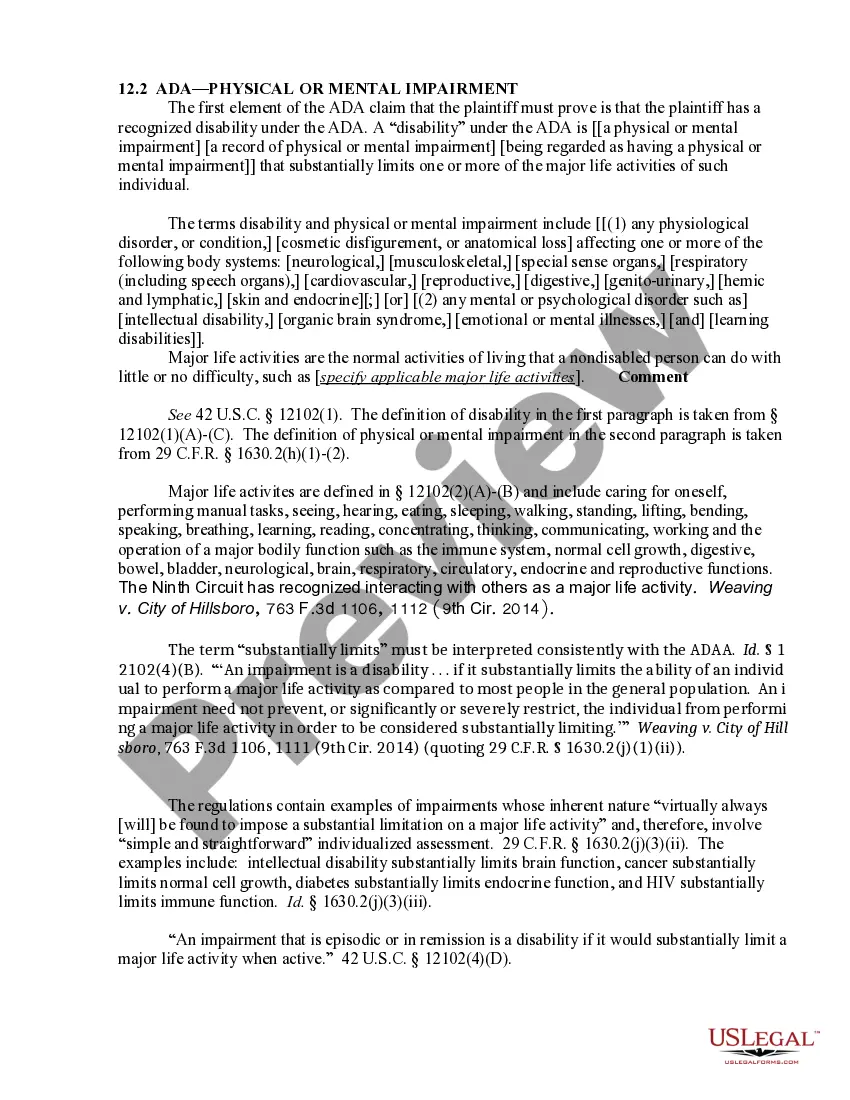
12.5 ADA-Qualified Individual
Notarization guidance
This form usually doesn’t need to be notarized. However, local laws or specific transactions may require it. Our online notarization service, powered by Notarize, lets you complete it remotely through a secure video session, available 24/7.
Get your form ready online
Our built-in tools help you complete, sign, share, and store your documents in one place.
Make edits, fill in missing information, and update formatting in US Legal Forms—just like you would in MS Word.
Download a copy, print it, send it by email, or mail it via USPS—whatever works best for your next step.
Sign and collect signatures with our SignNow integration. Send to multiple recipients, set reminders, and more. Go Premium to unlock E-Sign.
If this form requires notarization, complete it online through a secure video call—no need to meet a notary in person or wait for an appointment.
We protect your documents and personal data by following strict security and privacy standards.

Make edits, fill in missing information, and update formatting in US Legal Forms—just like you would in MS Word.

Download a copy, print it, send it by email, or mail it via USPS—whatever works best for your next step.

Sign and collect signatures with our SignNow integration. Send to multiple recipients, set reminders, and more. Go Premium to unlock E-Sign.

If this form requires notarization, complete it online through a secure video call—no need to meet a notary in person or wait for an appointment.

We protect your documents and personal data by following strict security and privacy standards.
Looking for another form?

Form popularity
FAQ
A qualified individual is a person who meets legitimate skill, experience, education, or other requirements of an employment position that s/he holds or seeks, and who can perform the essential functions of the position with or without reasonable accommodation.
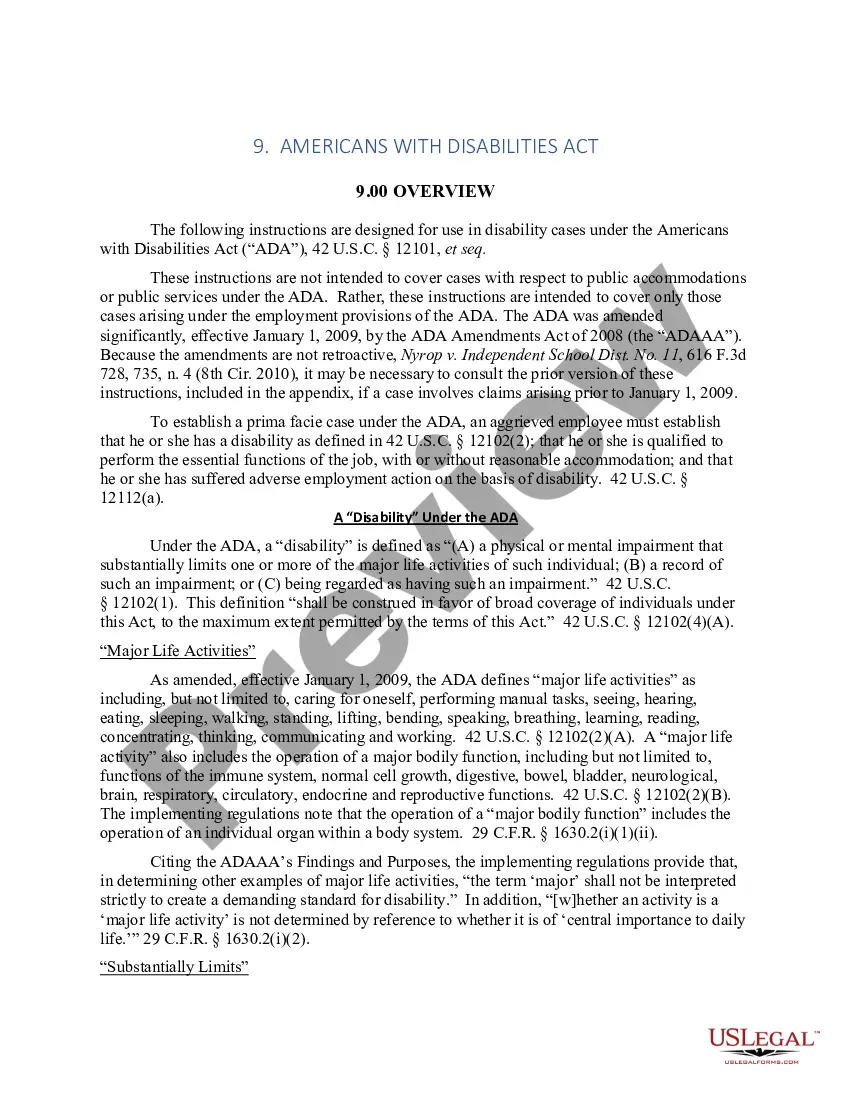
Who Is Protected Under the ADA? The ADA protects qualified individuals with disabilities. An individual with a disability is a person who has a physical or mental impairment that substantially limits major life activities; has a record of such an impairment; or is regarded as having such an impairment.
A qualified individual with a disability has the skills, experience, education, and other requirements of the job the individual holds or desires, and can perform the essential functions of the position with or without reasonable accommodation.
The ADA does contain guidance regarding specific conditions that are not considered to be impairments under the act and that are excluded from coverage. As worded in the current regulations, the term "impairment" does not include the following: Homosexuality and bisexuality. Compulsive gambling.
A qualified individual with a disability is a person with a disability who meets the necessary skills, experience, education, and other job-related requirements of the position they hold or seek to hold, and can perform the essential functions of the position with or without a reasonable accommodation.
An individual with a disability is defined by the ADA as a person who has a physical or mental impairment that substantially limits one or more major life activities, a person who has a history or record of such an impairment, or a person who is perceived by others as having such an impairment.
QUID is an abbreviation for qualified individual with a disability, which is a disabled person who meets the necessary skills, experience, education, and other job-related requirements of the position that they hold or seek, and can perform the essential functions of the position with or without reasonable
Anyone who is currently using drugs illegally is not protected by the ADA and may be denied employment or fired on the basis of such use. The ADA does not prevent employers from testing applicants or employees for current illegal drug use.