12.7 ADA-Reasonable Accommodation

Does this document require notarization?
This form does not typically require notarization to be legally valid. However, some jurisdictions or document types may still require it. US Legal Forms provides secure online notarization powered by Notarize, available 24/7 for added convenience.
Get your form ready online
Our built-in tools help you complete, sign, share, and store your documents in one place.
Make edits, fill in missing information, and update formatting in US Legal Forms—just like you would in MS Word.
Download a copy, print it, send it by email, or mail it via USPS—whatever works best for your next step.
Sign and collect signatures with our SignNow integration. Send to multiple recipients, set reminders, and more. Go Premium to unlock E-Sign.
If this form requires notarization, complete it online through a secure video call—no need to meet a notary in person or wait for an appointment.
We protect your documents and personal data by following strict security and privacy standards.

Make edits, fill in missing information, and update formatting in US Legal Forms—just like you would in MS Word.

Download a copy, print it, send it by email, or mail it via USPS—whatever works best for your next step.

Sign and collect signatures with our SignNow integration. Send to multiple recipients, set reminders, and more. Go Premium to unlock E-Sign.

If this form requires notarization, complete it online through a secure video call—no need to meet a notary in person or wait for an appointment.

We protect your documents and personal data by following strict security and privacy standards.
Looking for another form?
Form popularity
FAQ
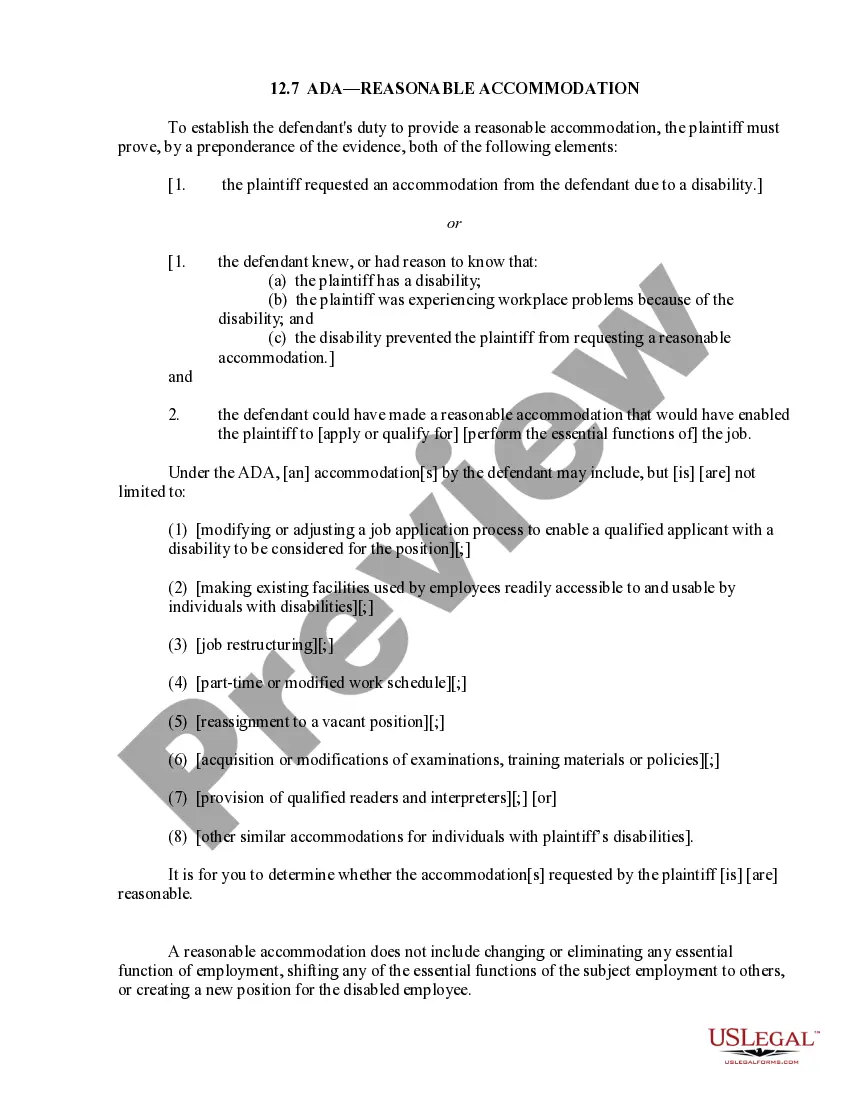
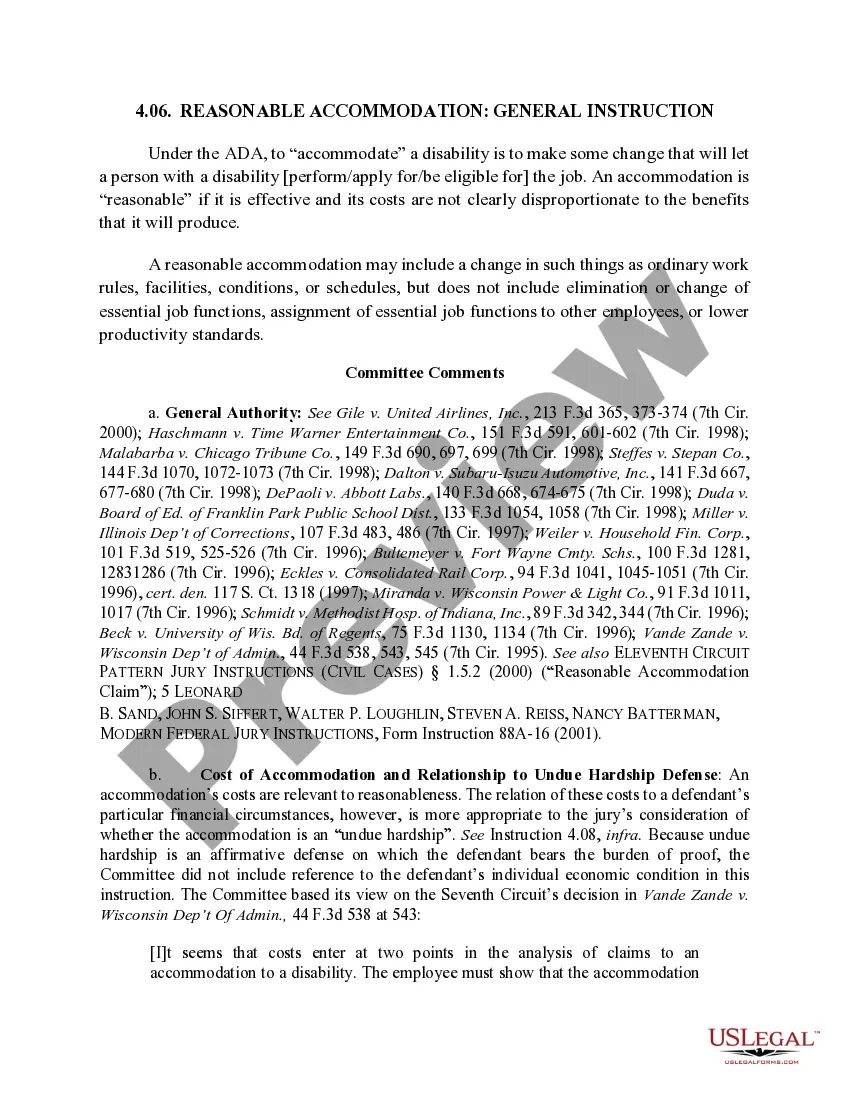
A reasonable accommodation is any change to the application or hiring process, to the job, to the way the job is done, or the work environment that allows a person with a disability who is qualified for the job to perform the essential functions of that job and enjoy equal employment opportunities.
Plaintiff has the initial burden of proving that: 1. she has a disability; 2. defendant knew, or should have known, of her disability; 3. the accommodation "may be necessary to afford her equal opportunity to use and enjoy" her dwelling; 4.
Providing an assistant as needed may be a reasonable accommodation for a person with a disability, if this does not impose an undue hardship. Examples include: An assistant may be needed to retrieve items on shelves, file, or selectively assist a person with quadriplegia with other clerical duties.
Examples of reasonable accommodations include: modifying a workspace to make it wheelchair accessible, providing screen reading software, or adjusting an employee's work schedule to accommodate medical appointments. Employer does not provide accommodations of a personal nature, such as eyeglasses or hearing aids.
Accessibility is the baseline of equal service, and accommodation is the second step to take when accessibility alone isn't enough. Or to put it even more simply, accommodations are reactive solutions to address special cases. Accessibility is a proactive solution to providing equal access for all.
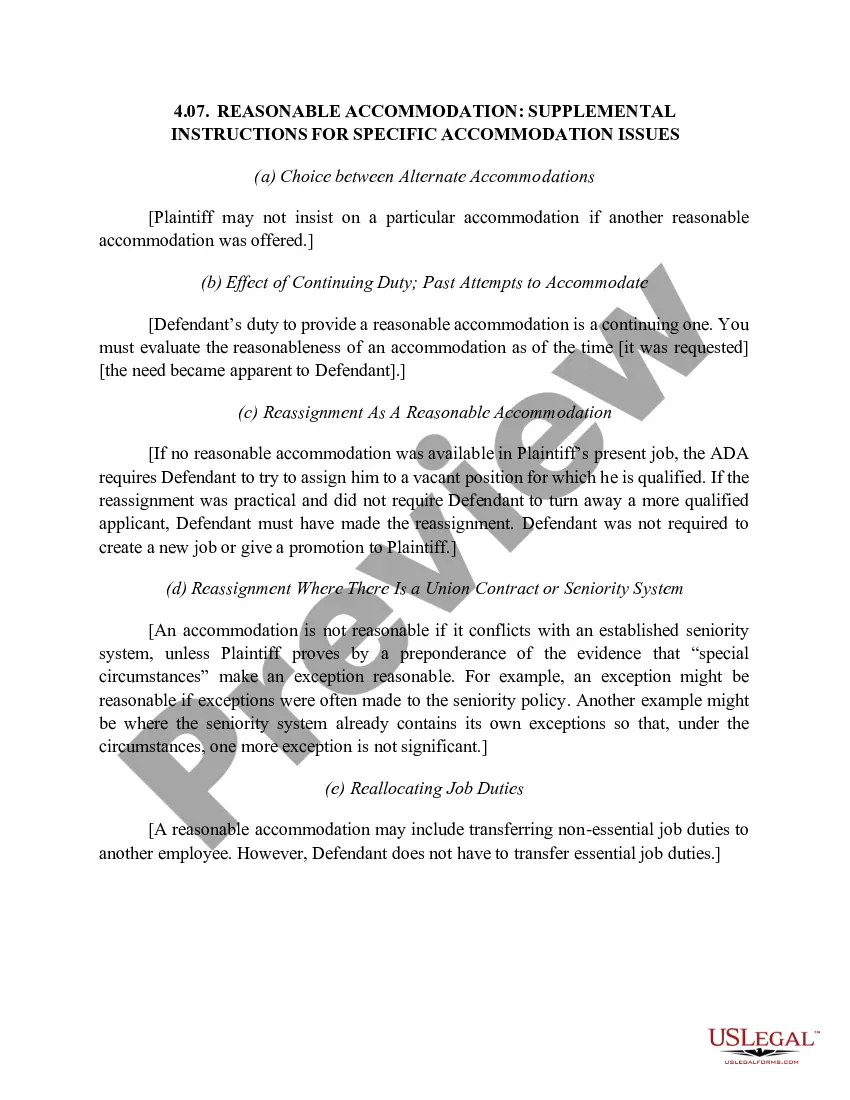
Acquiring or modifying equipment or devices such as adjusting a desk height to accommodate an employee who uses a wheelchair or providing an employee with quadriplegia a mouth stick device to type on their computer.
The ADA prohibits discrimination based on disability. Under the ADA, it is illegal to discriminate against someone because of their disability. For example, a fitness center could not exclude a person who uses a wheelchair from a workout class because they cannot do all of the exercises in the same way.