Americans with Disabilities Act:-Reasonable- Accommodation Claim
Overview of this form
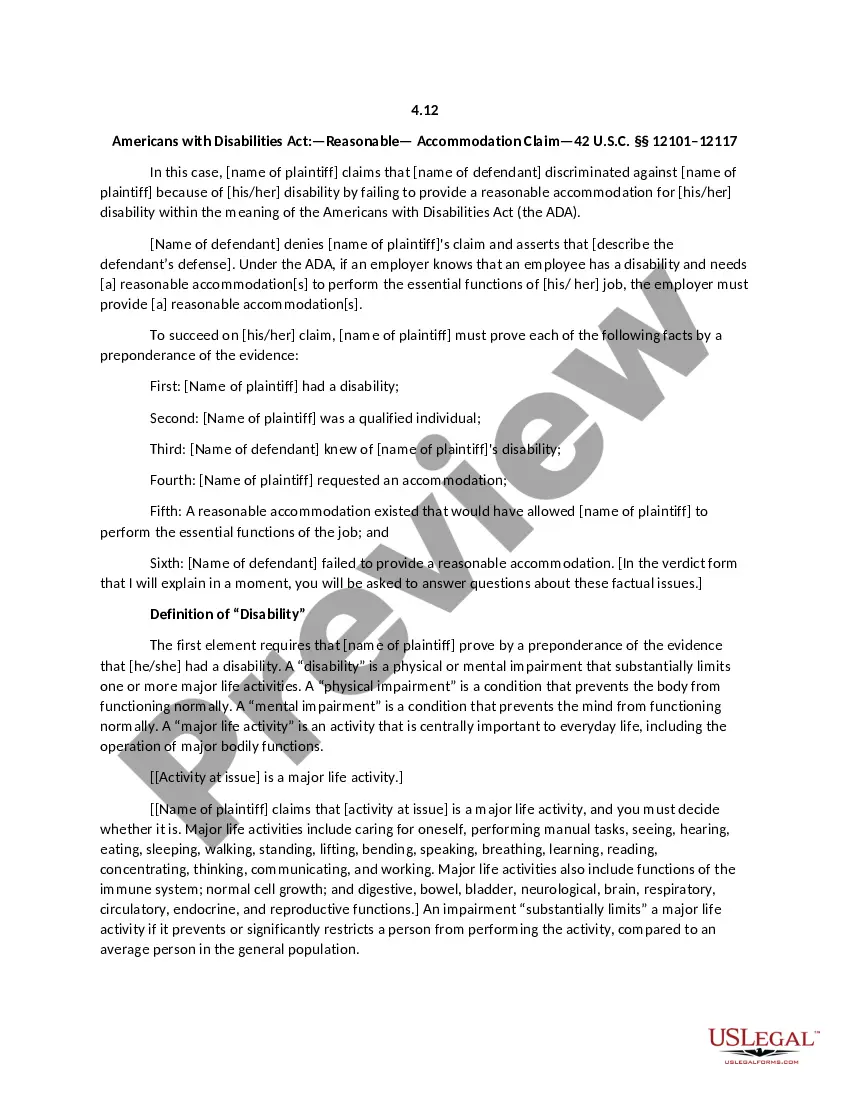
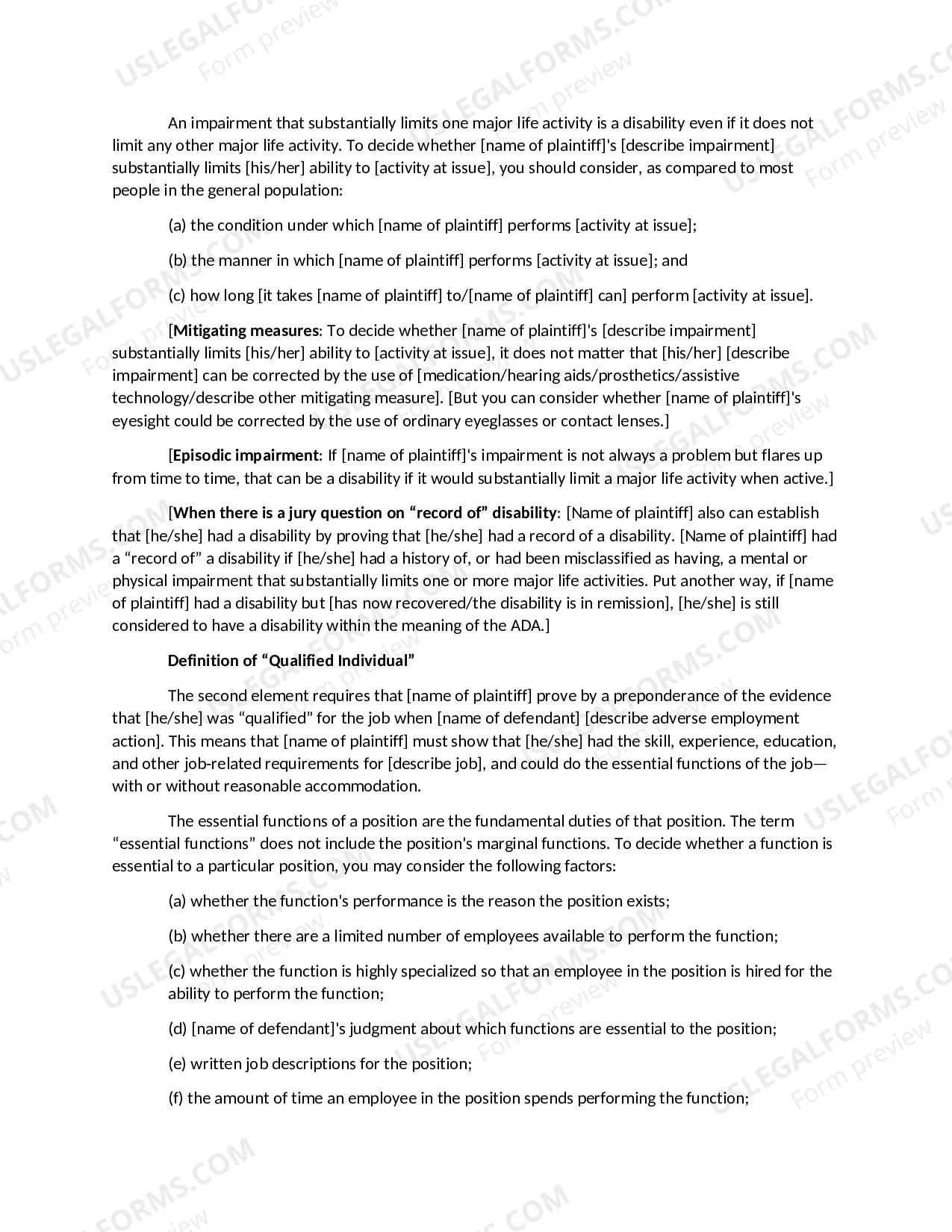
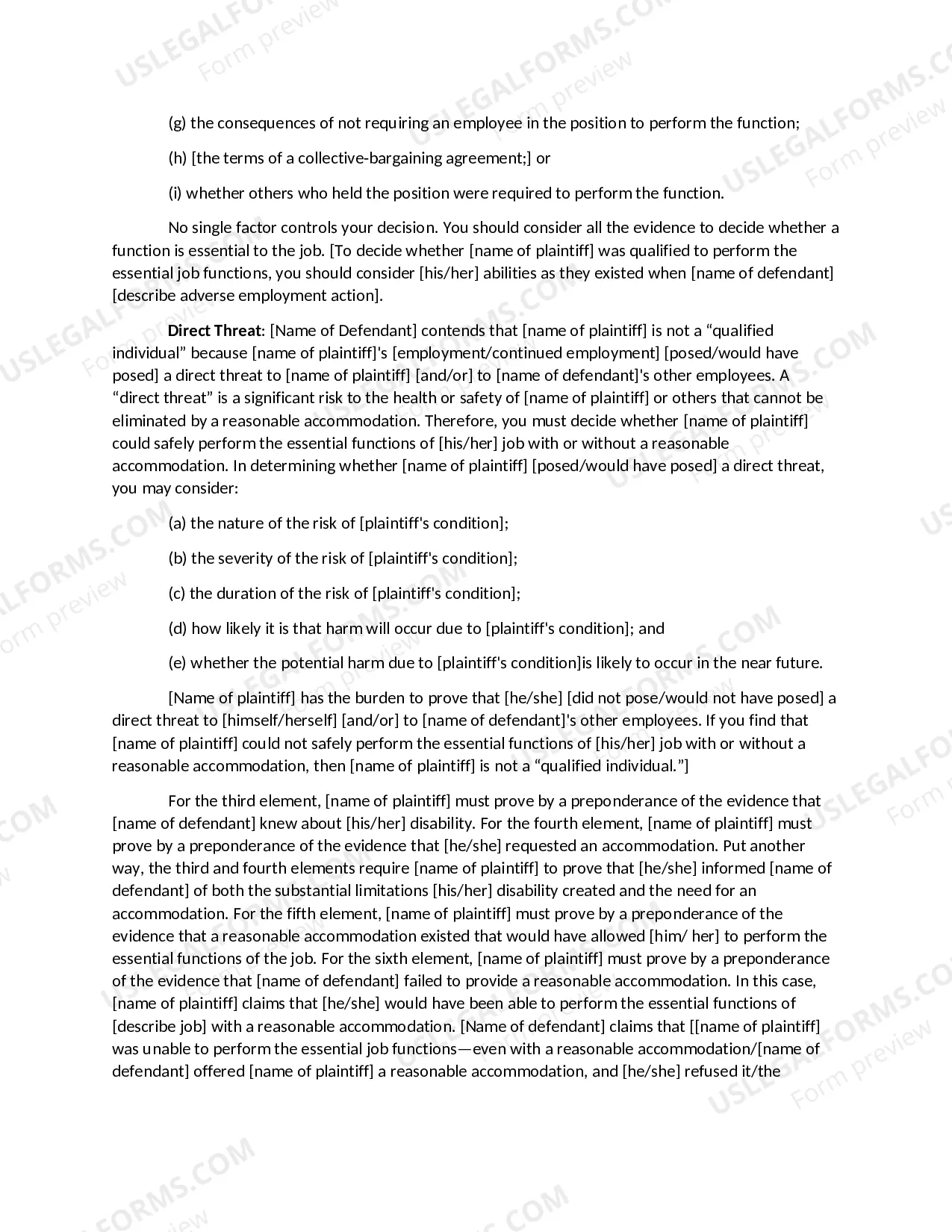
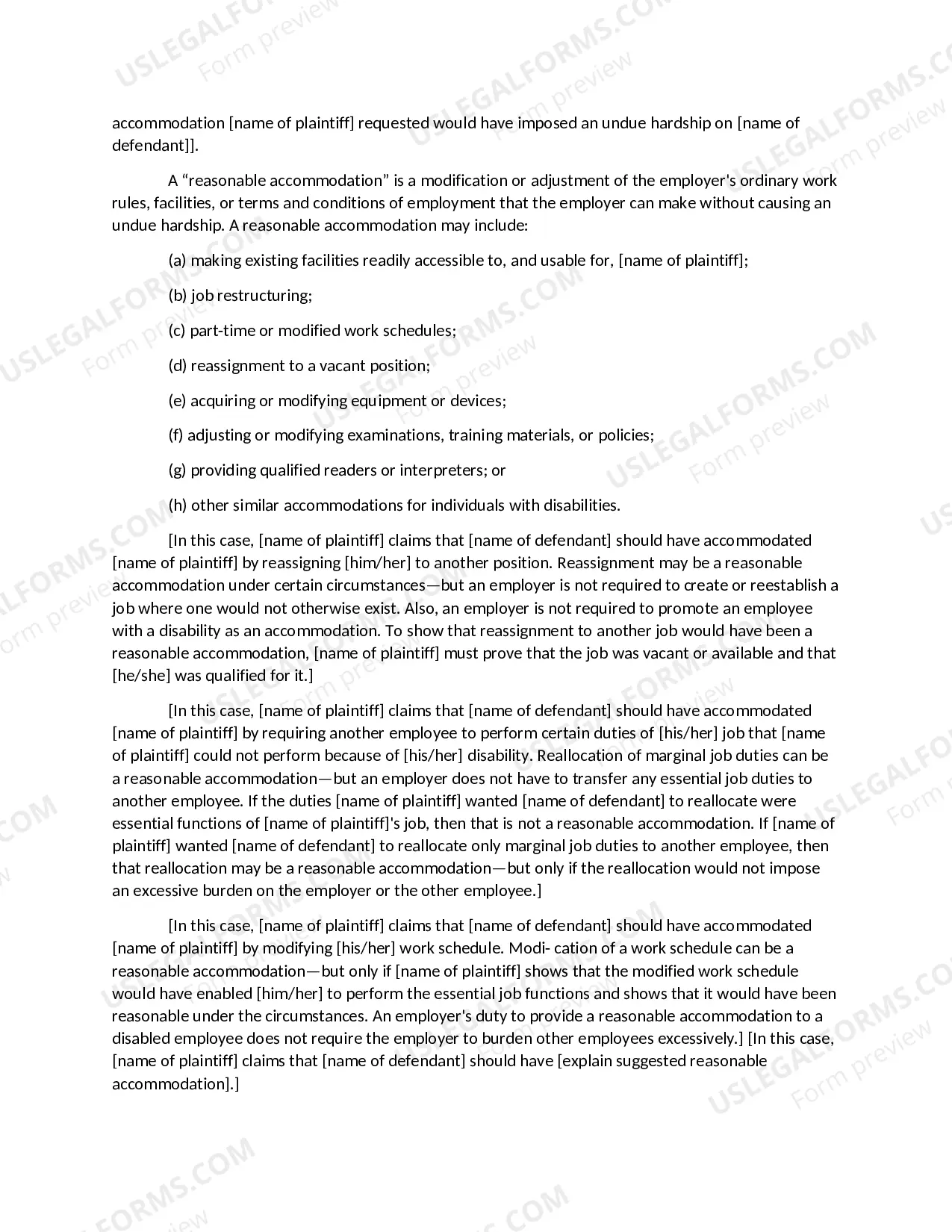
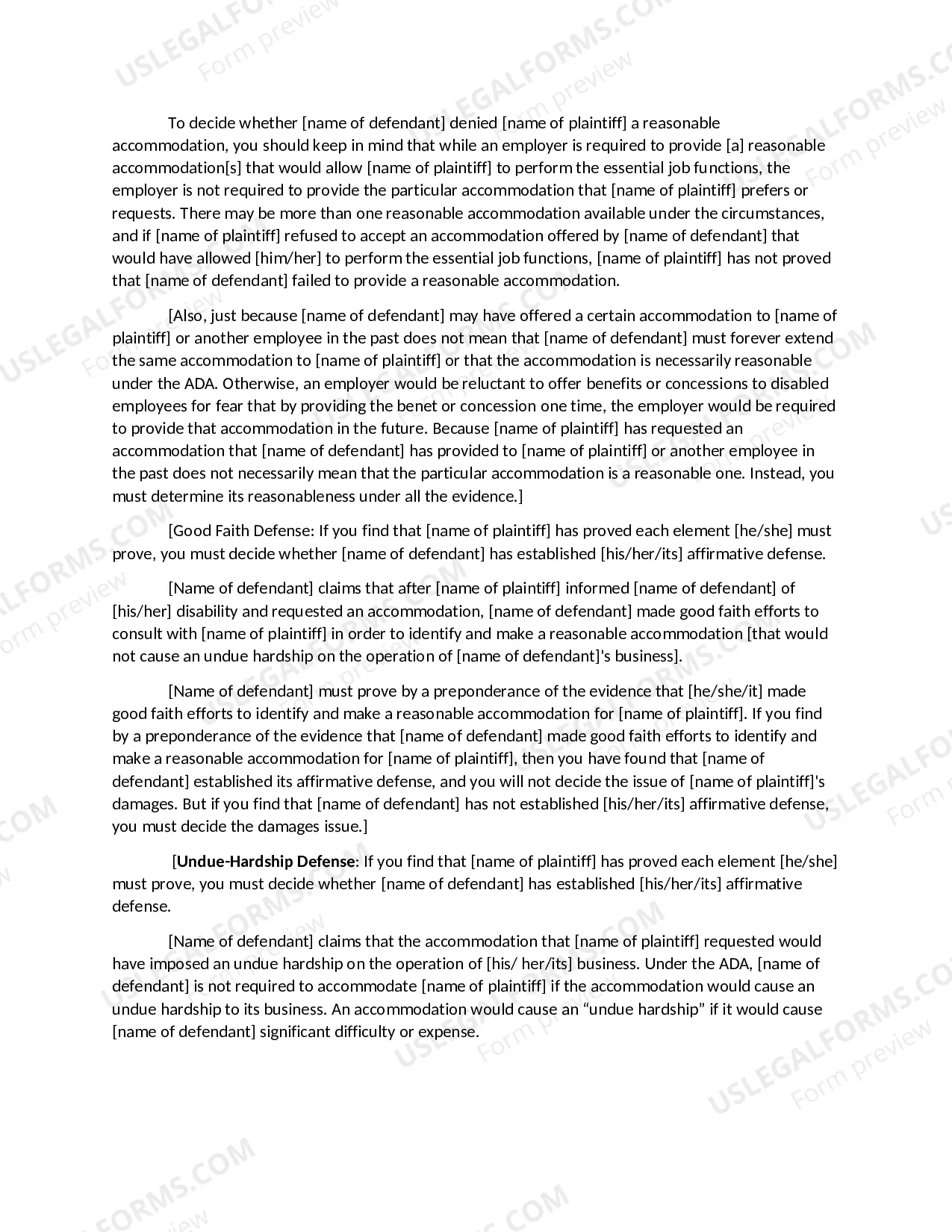
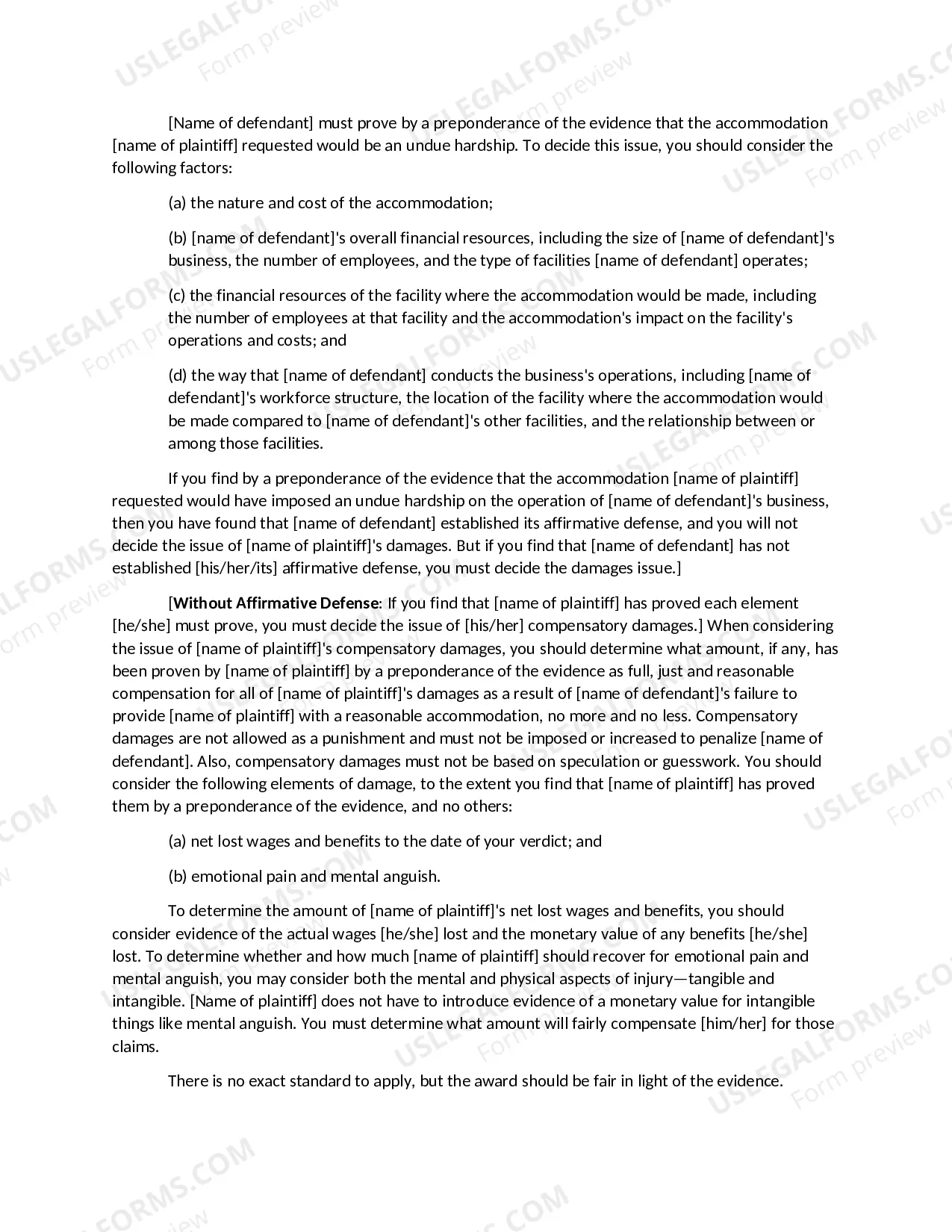
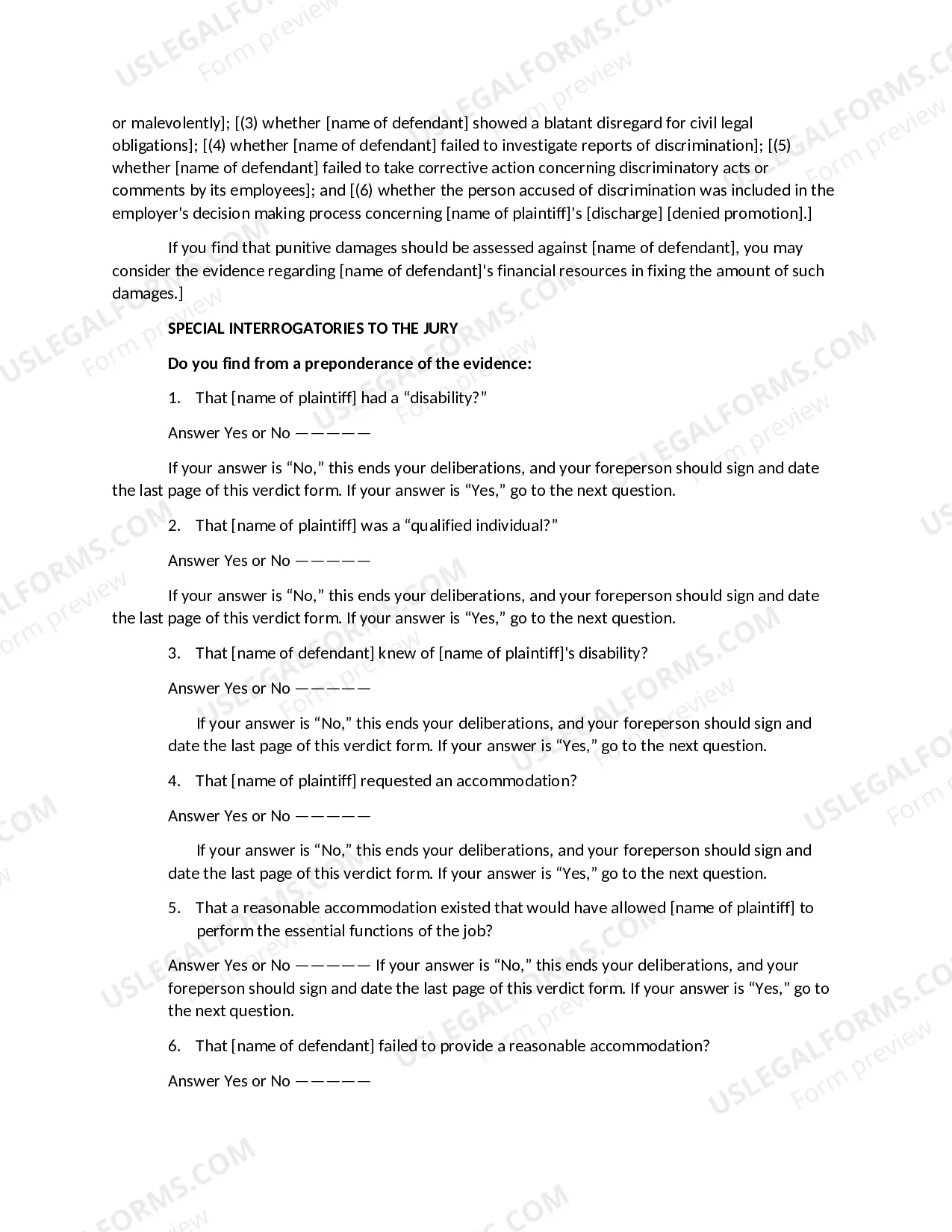
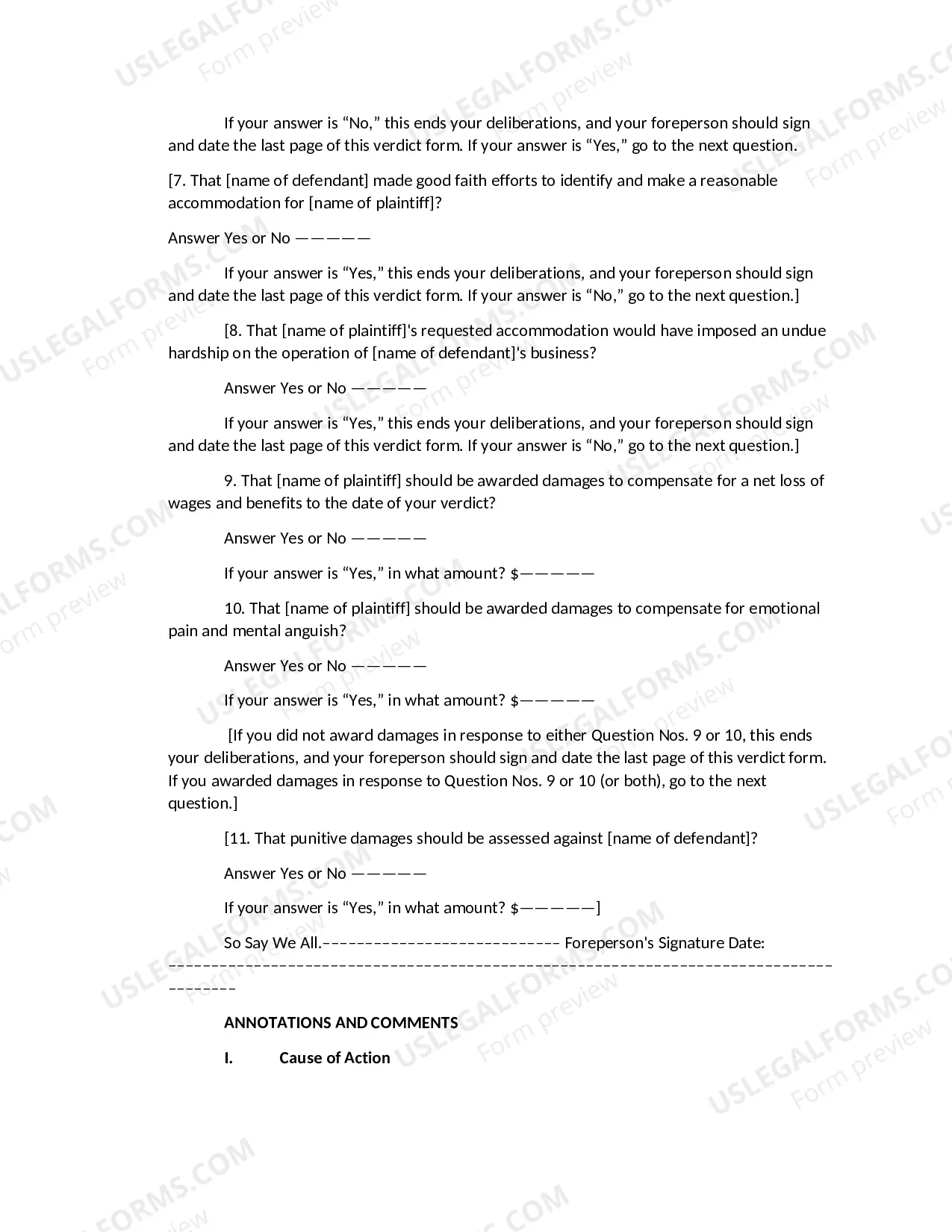
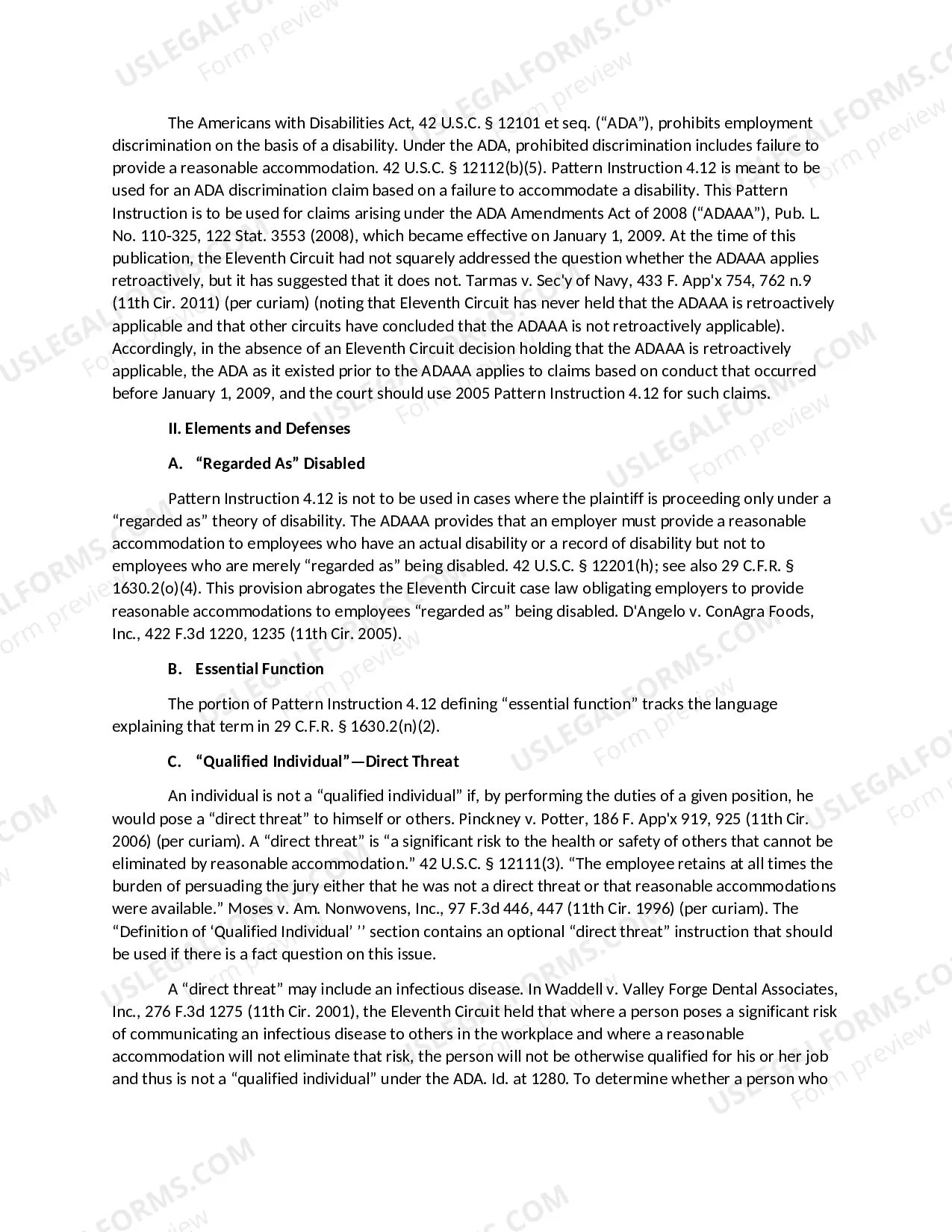
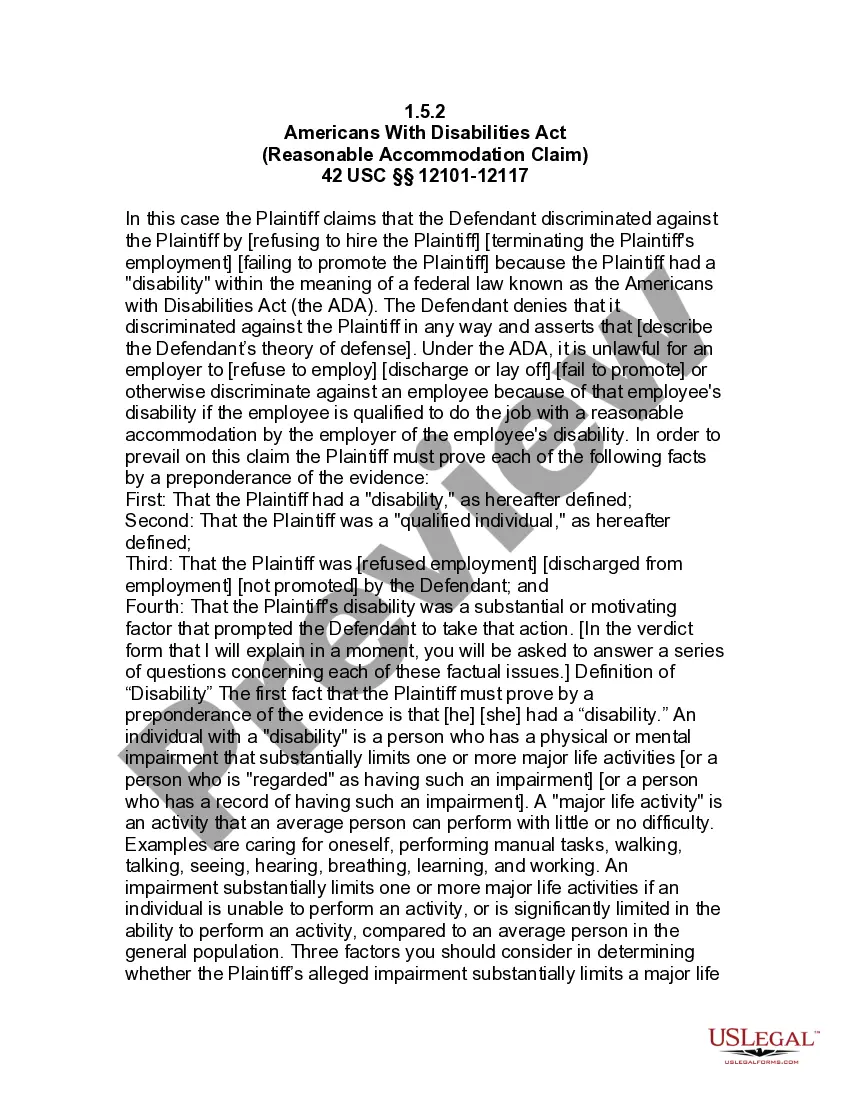
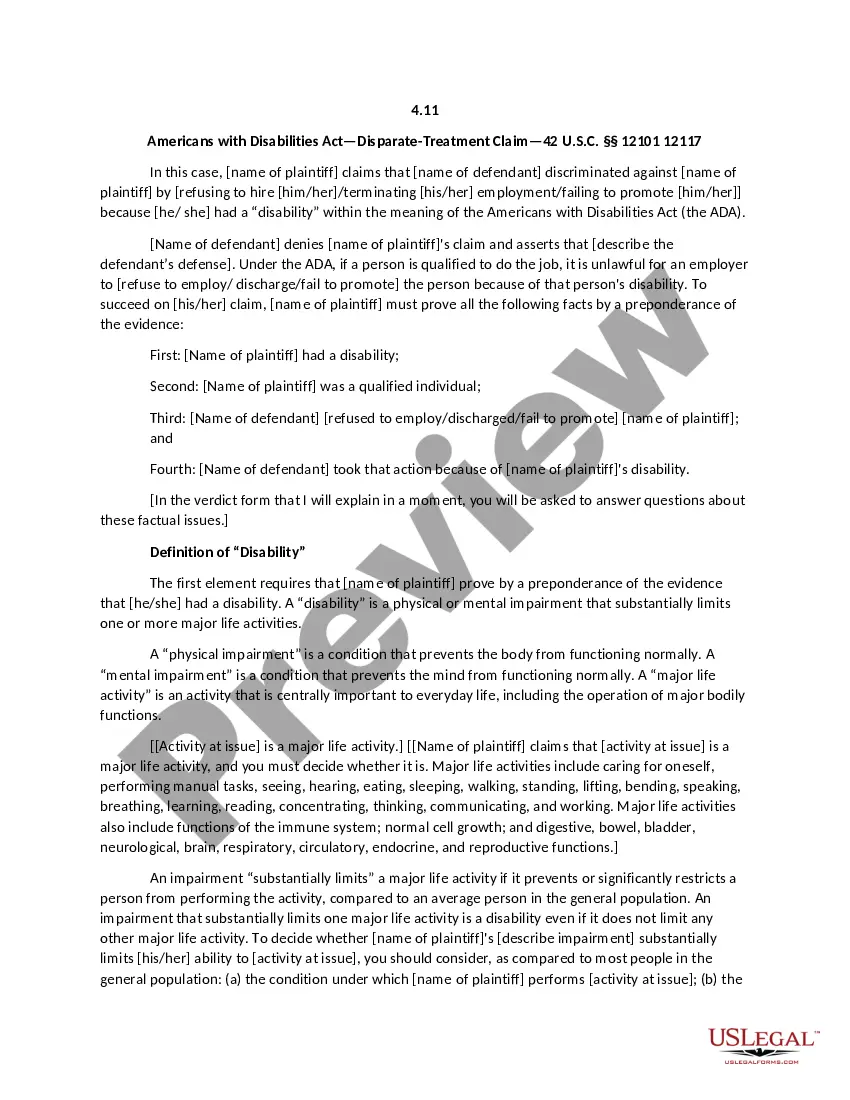
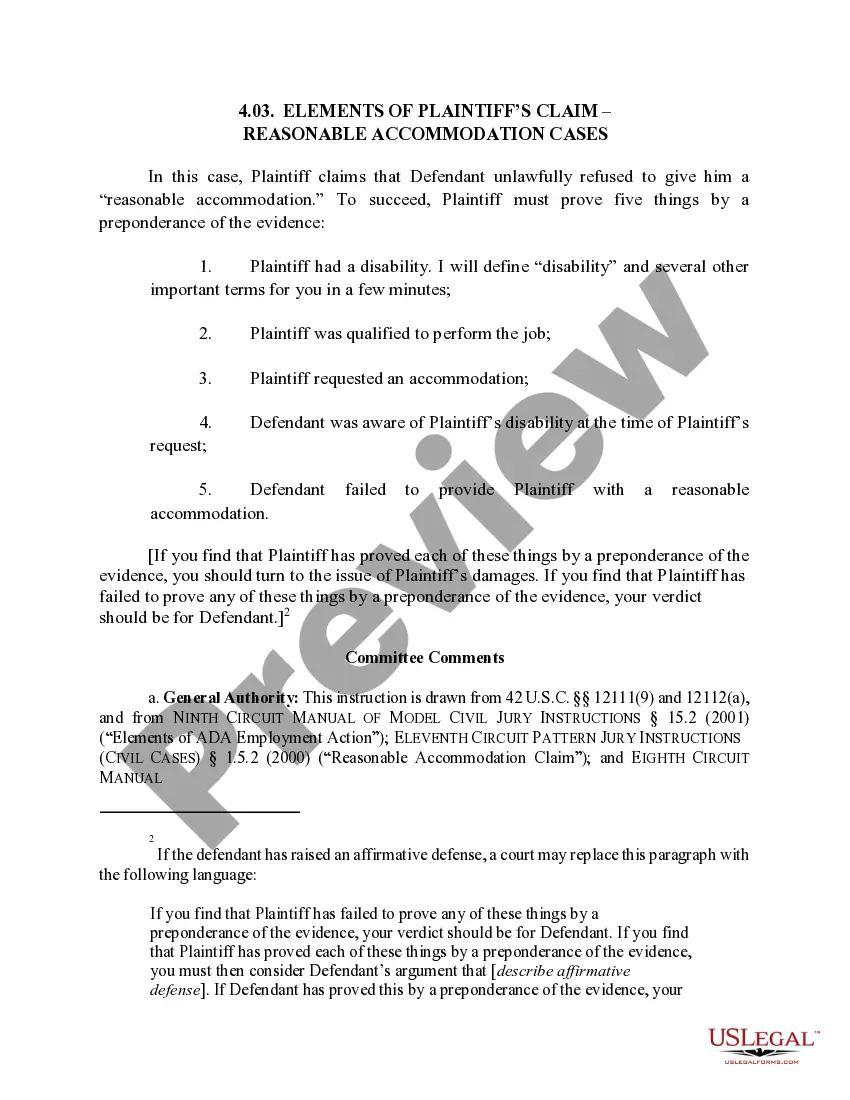
The Americans with Disabilities Act: Reasonable Accommodation Claim form is designed to assist individuals claiming discrimination based on disability due to an employer's failure to provide reasonable accommodations. This legal form outlines the elements required to establish a claim and helps clarify the responsibilities of both the employee and employer under the Americans with Disabilities Act (ADA). It serves as a guide for both parties on the necessary evidence and definitions involved in a reasonable accommodation dispute.
Key components of this form
- Definition of disability and key criteria to establish it.
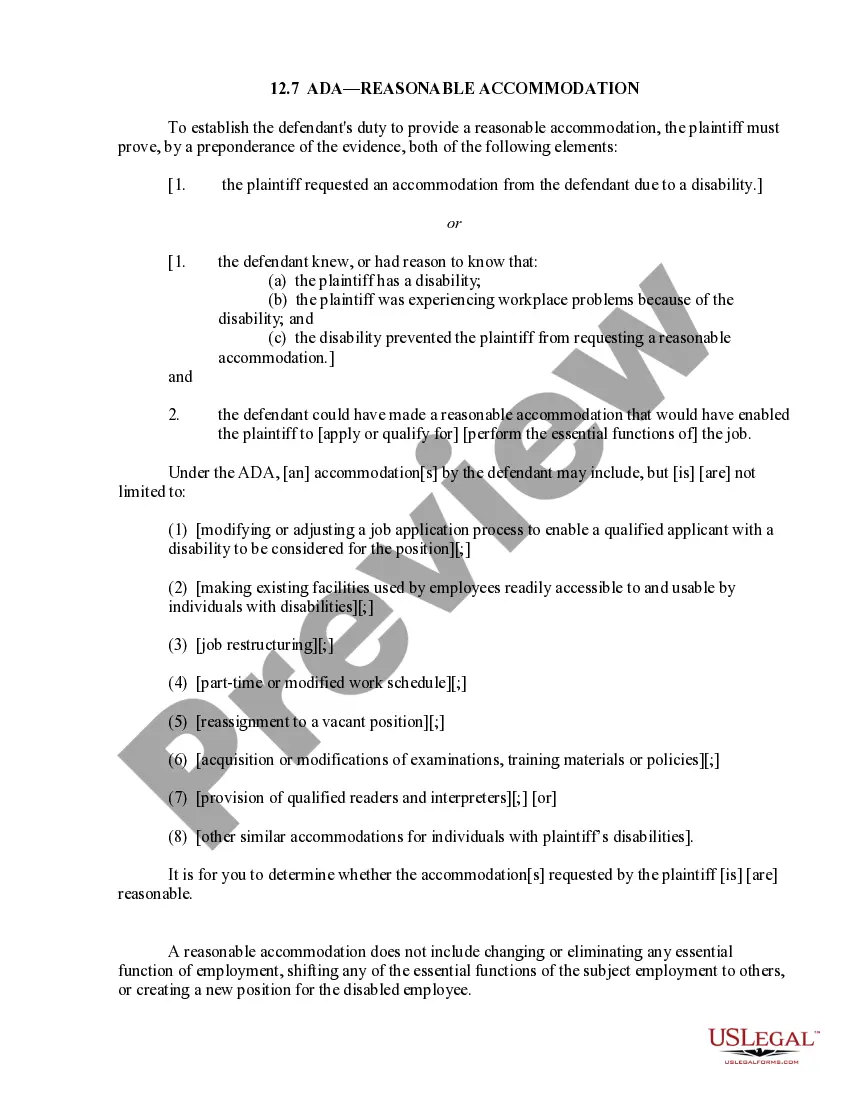
- Basis for claiming that a reasonable accommodation existed.
- Requirements for both the plaintiff and defendant in proving their cases.
- Elements that define a qualified individual under the ADA.
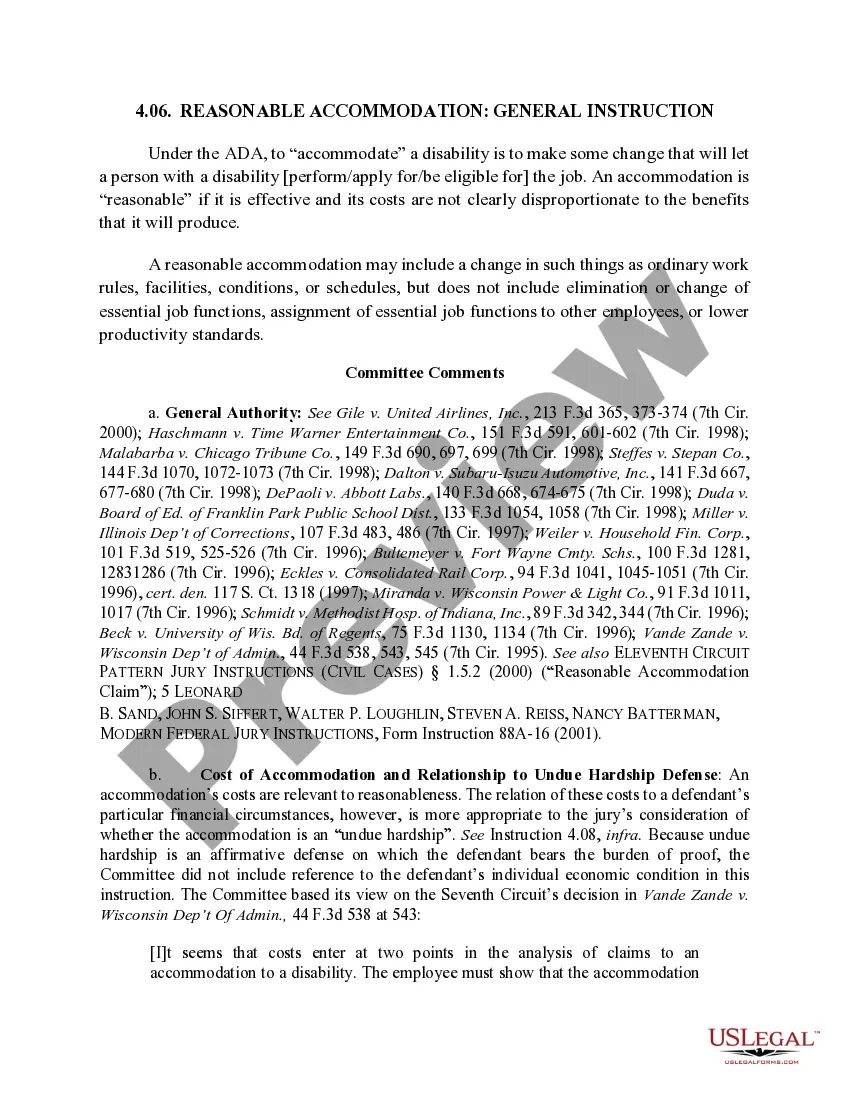
- Specialized definitions related to reasonable accommodations and undue hardship claims.
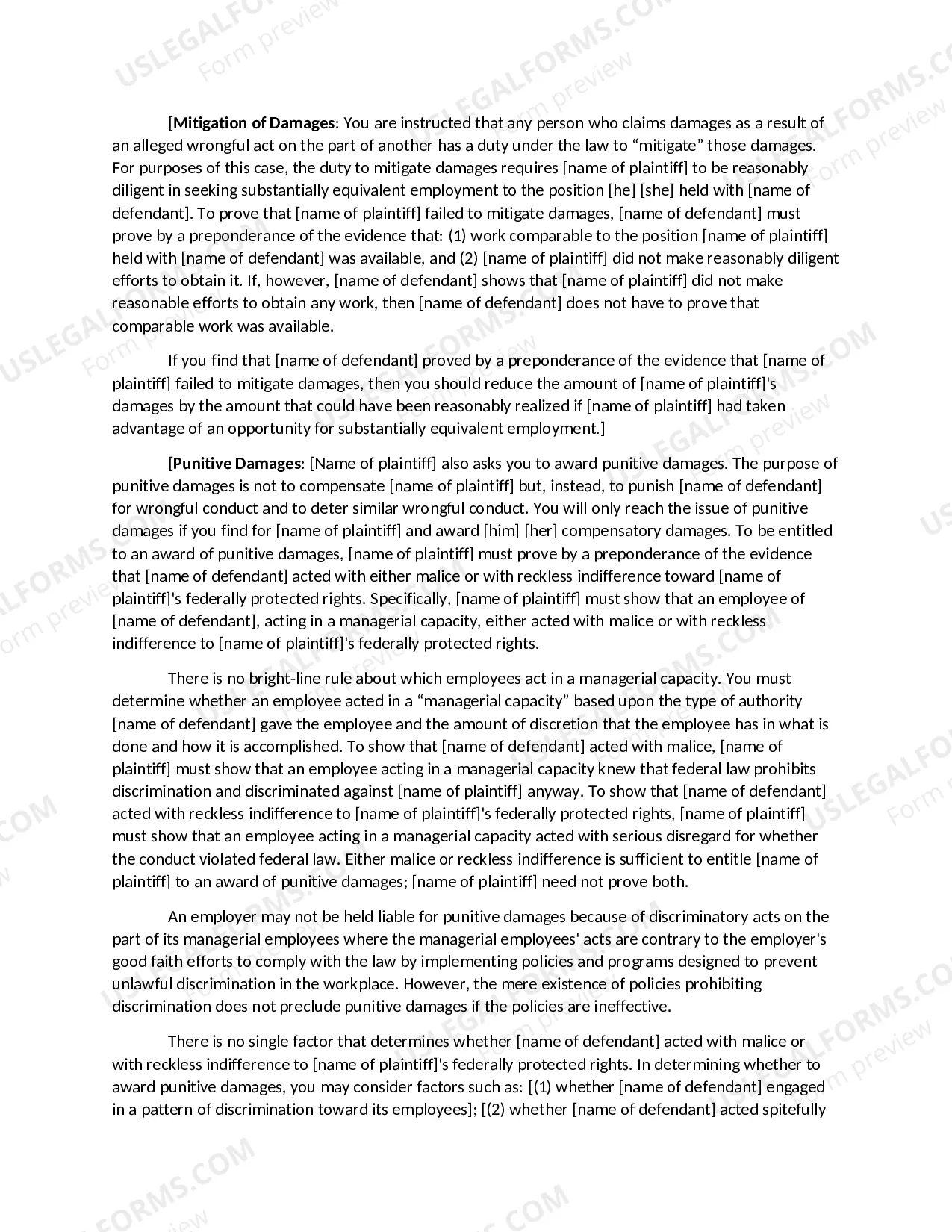
- Instructions on how to assess a claim for punitive damages.

When to use this form
This form should be used in situations where an individual believes they were denied reasonable accommodations by their employer, resulting in disability discrimination. Typical scenarios include situations where the employee has informed their employer of their disability and requested an adjustment or modification related to their job duties or work environment. It is also relevant when an employer is accused of not taking appropriate action despite knowledge of an employee's disability.
Intended users of this form
- Employees who have a disability and require accommodations to perform their job duties.
- Individuals who believe they have faced discrimination due to a lack of reasonable accommodations.
- Employers needing to understand their obligations under the ADA regarding accommodations.
- Legal representatives assisting clients with disability discrimination claims.
How to prepare this document
- Identify the parties involved, including the plaintiff (employee) and the defendant (employer).
- Clearly state the nature of the disability and how it substantially limits major life activities.
- Document the reasonable accommodation requested by the employee.
- Provide evidence of the employer's knowledge of the disability and the accommodation request.
- Outline the essential functions of the job and how the requested accommodation would facilitate those functions.
Does this document require notarization?
Notarization is generally not required for this form. However, certain states or situations might demand it. You can complete notarization online through US Legal Forms, powered by Notarize, using a verified video call available anytime.
Get your form ready online
Our built-in tools help you complete, sign, share, and store your documents in one place.
Make edits, fill in missing information, and update formatting in US Legal Forms—just like you would in MS Word.
Download a copy, print it, send it by email, or mail it via USPS—whatever works best for your next step.
Sign and collect signatures with our SignNow integration. Send to multiple recipients, set reminders, and more. Go Premium to unlock E-Sign.
If this form requires notarization, complete it online through a secure video call—no need to meet a notary in person or wait for an appointment.
We protect your documents and personal data by following strict security and privacy standards.

Make edits, fill in missing information, and update formatting in US Legal Forms—just like you would in MS Word.

Download a copy, print it, send it by email, or mail it via USPS—whatever works best for your next step.

Sign and collect signatures with our SignNow integration. Send to multiple recipients, set reminders, and more. Go Premium to unlock E-Sign.

If this form requires notarization, complete it online through a secure video call—no need to meet a notary in person or wait for an appointment.

We protect your documents and personal data by following strict security and privacy standards.
Typical mistakes to avoid
- Failing to provide sufficient evidence that the requested accommodations were reasonable.
- Not clearly defining the disability or how it limits major life activities.
- Overlooking the importance of demonstrating the employer's knowledge of the disability.
- Requesting accommodations that are not directly related to the essential functions of the job.
Why complete this form online
- Convenience: Easily accessible and can be completed at your own pace.
- Editability: Forms can be modified to suit individual circumstances without needing to start over.
- Reliability: Provides clear, attorney-drafted templates based on current legal standards.
Legal use & context
- This form serves as a guide for individuals pursuing claims under the Americans with Disabilities Act.
- Employers must comply with the ADA and make reasonable accommodations unless doing so would impose undue hardship.
- Claims must be proven through a preponderance of evidence demonstrating the elements outlined in the form.
Looking for another form?
Form popularity
FAQ
Examples of reasonable accommodations include providing interpreters, readers, or other personal assistance; modifying job duties; restructuring work sites; providing flexible work schedules or work sites (i.e. telework) and providing accessible technology or other workplace adaptive equipment.
Structural supports Here are some examples: Flexible break times, like the option to turn a 15-minute break into three five-minute breaks. Clear goals and metrics, including examples of how to achieve them. Breaking down large tasks into smaller steps.
Acquiring or modifying equipment or devices such as adjusting a desk height to accommodate an employee who uses a wheelchair or providing an employee with quadriplegia a mouth stick device to type on their computer.
Reasonable Accommodations for Anxiety Under Federal Law Even when your anxiety is mostly controlled by treatment and medication, it will qualify as a disability under the ADA if it is disabling when it is active.
Examples of Accommodations Audio, Brailled or electronic-formatted lecture notes, handouts, and texts. Verbal descriptions of visual aids. Raised-line drawings and tactile models of graphic materials. Braille lab signs and equipment labels, auditory lab warning signals.
The agency may reject an employee's request for a reasonable accommodation for the following reasons: The employee is not an individual with a qualifying disability.The employee is unable to provide requested documentation from a medical professional that demonstrates that he/she has a qualifying disability.