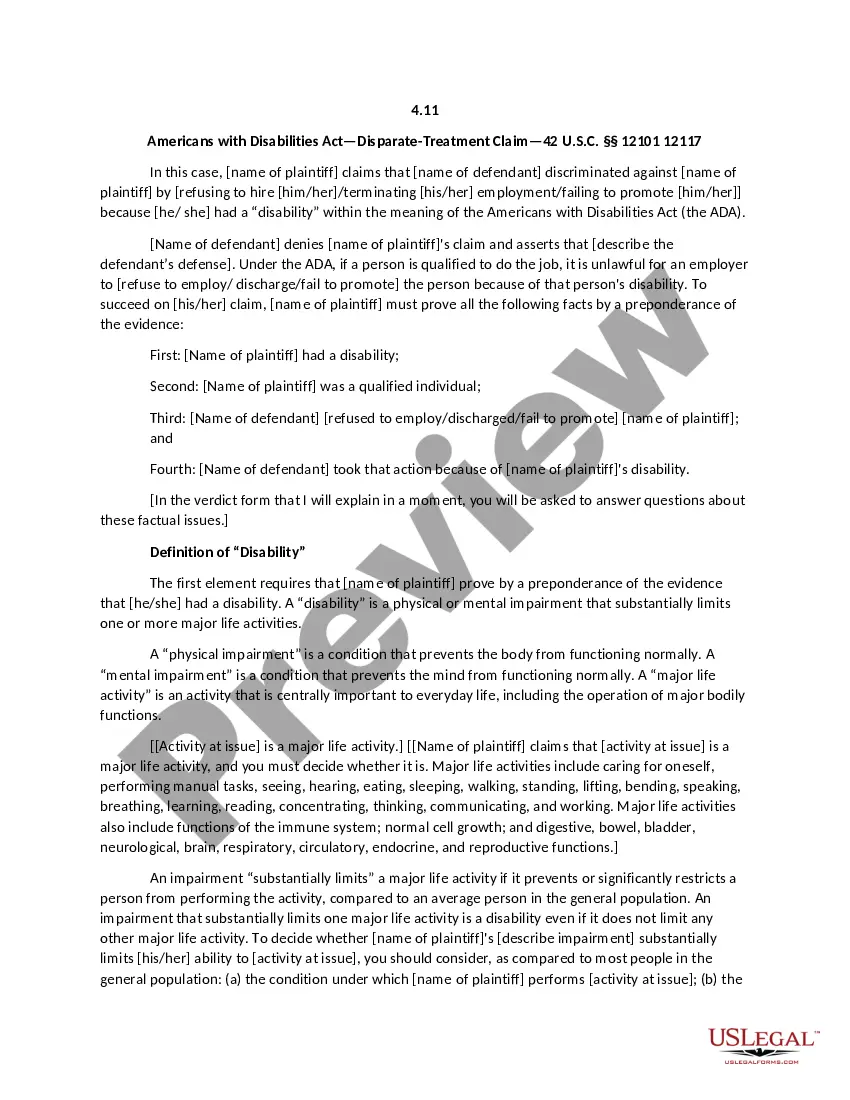
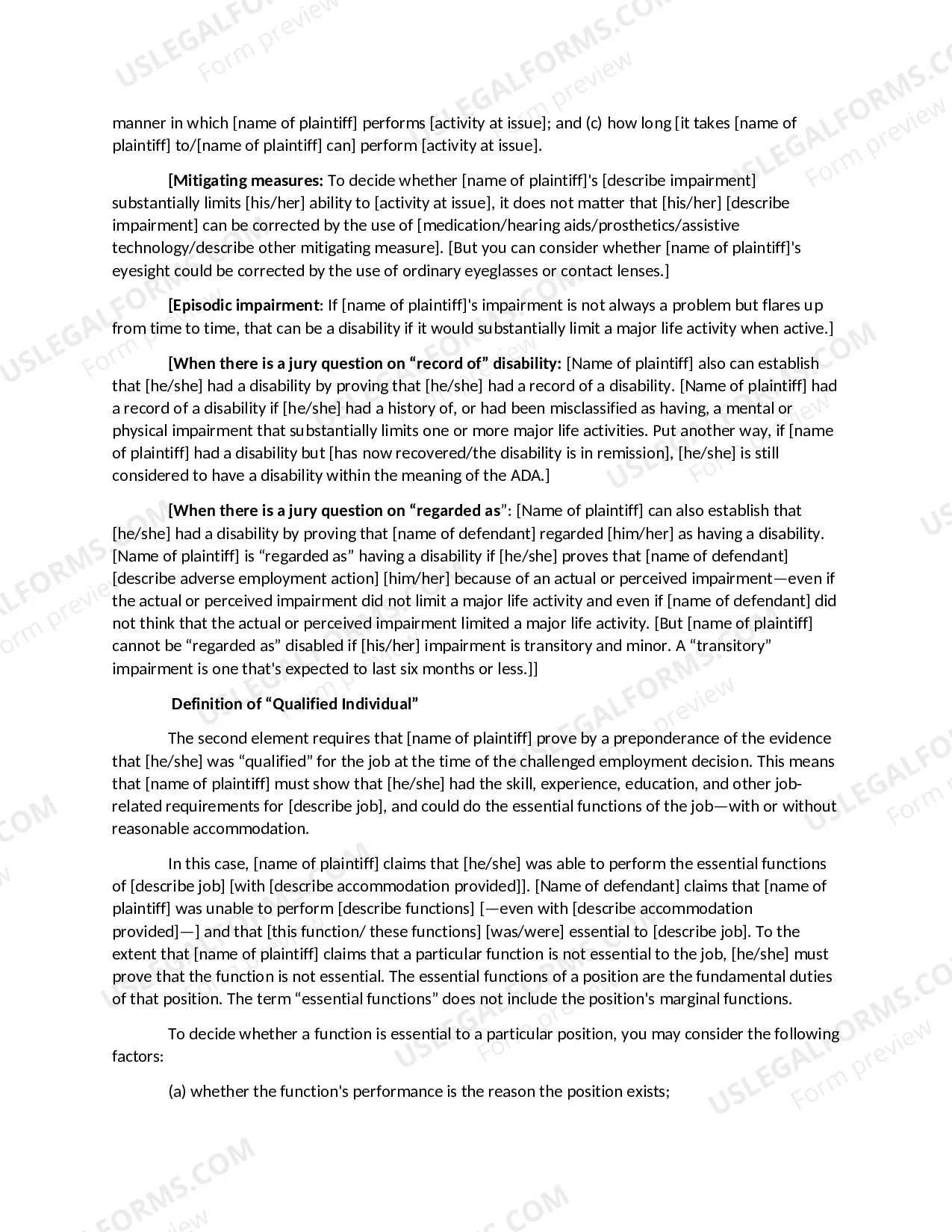
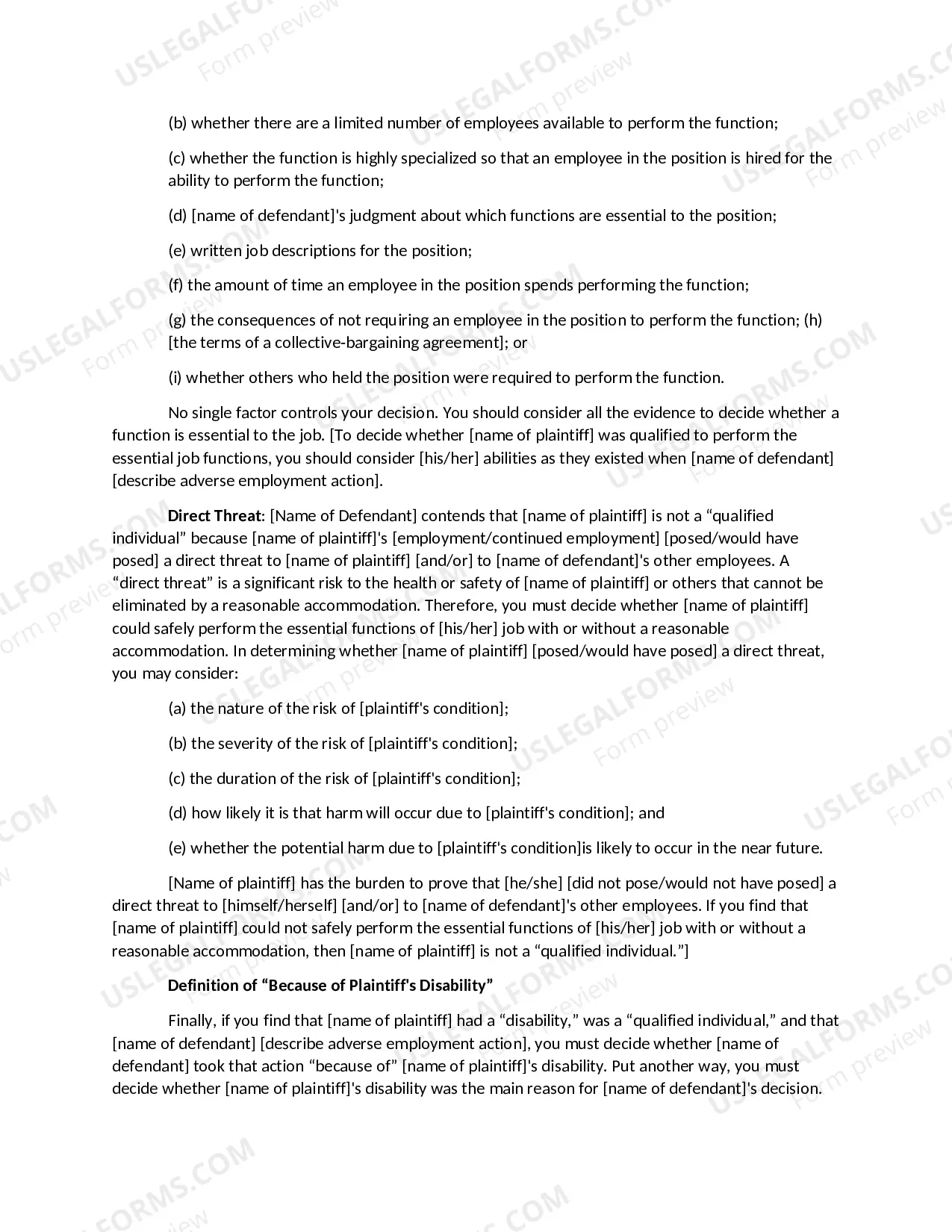
Americans with Disabilities Act-Disparate-Treatment Claim-42 U.S.C. Sec. 12101 12117
Understanding this form
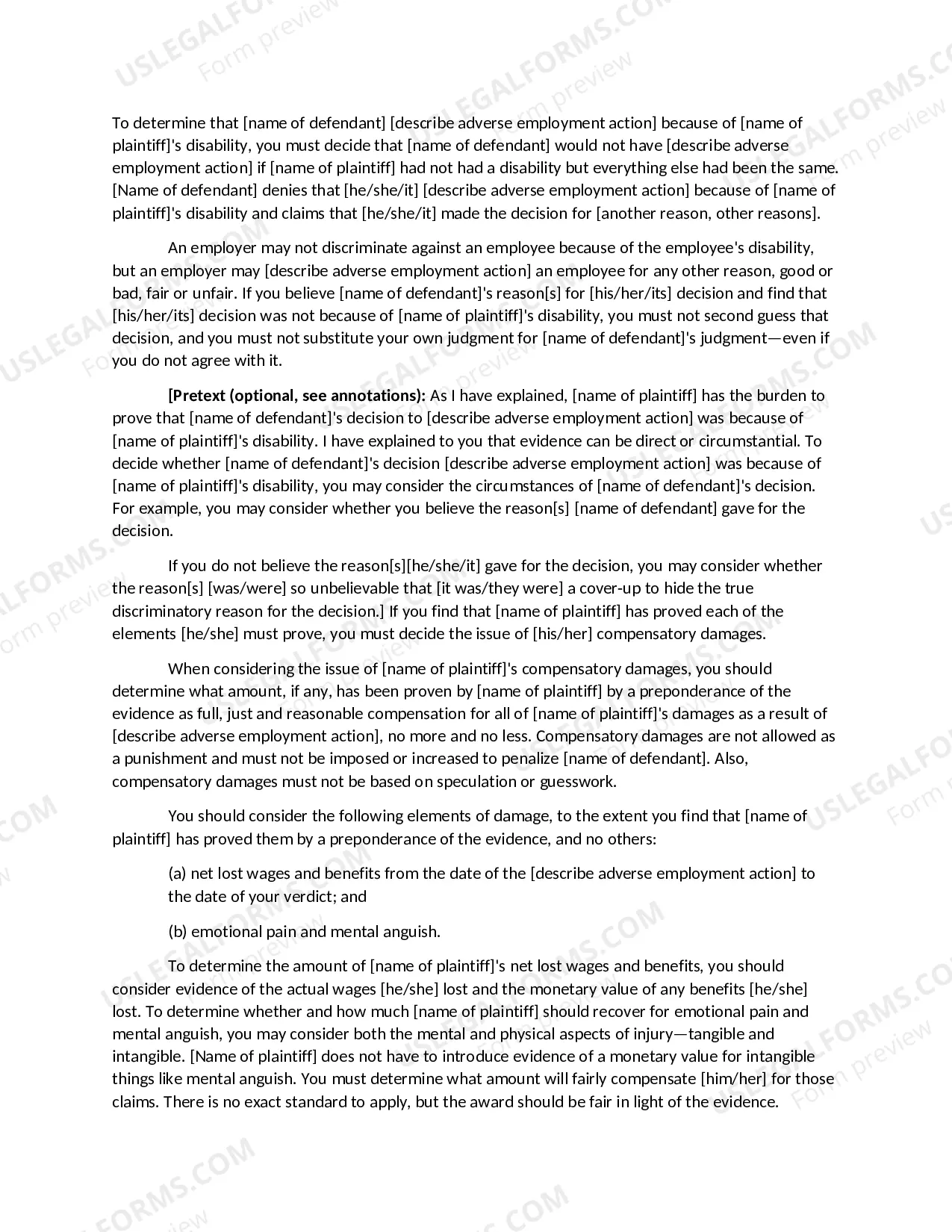
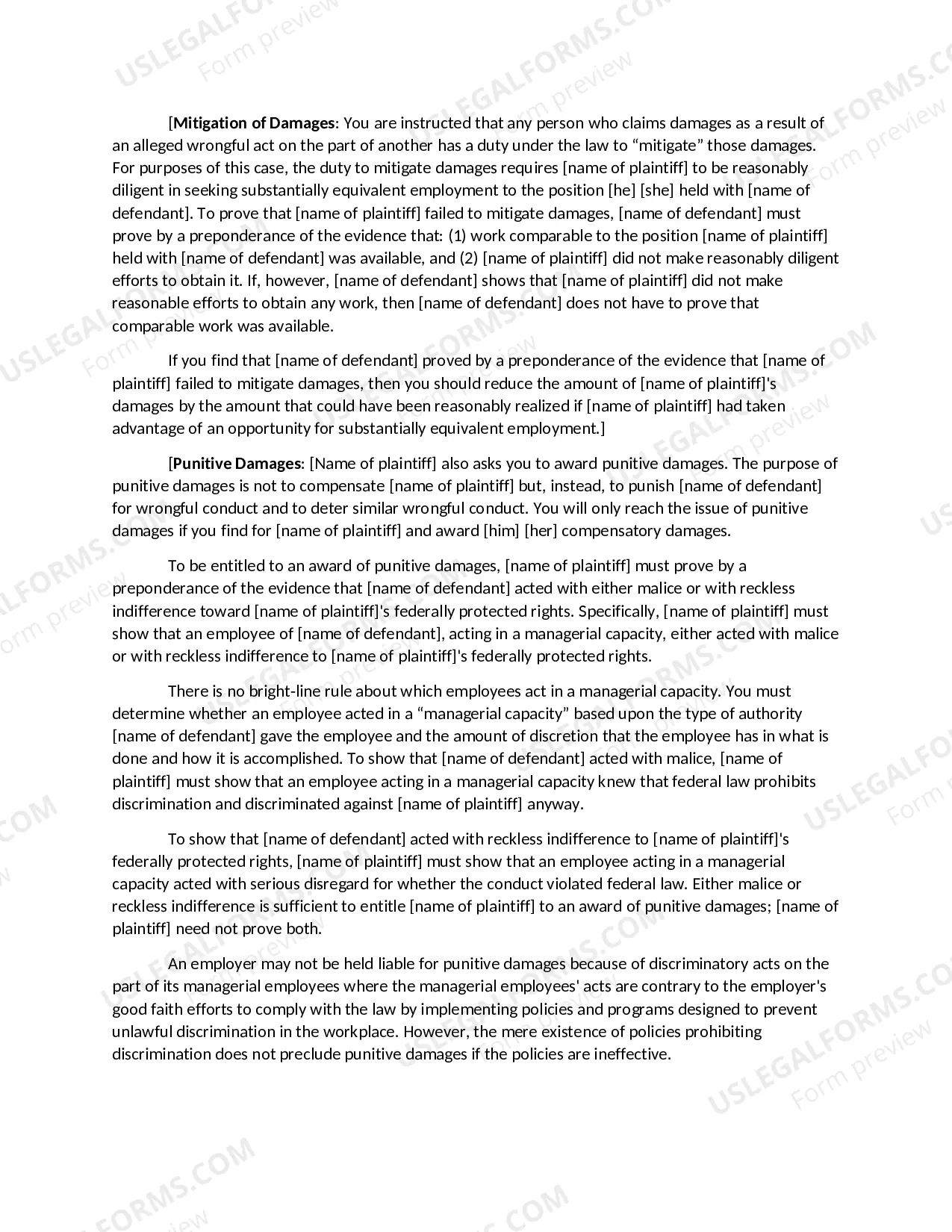
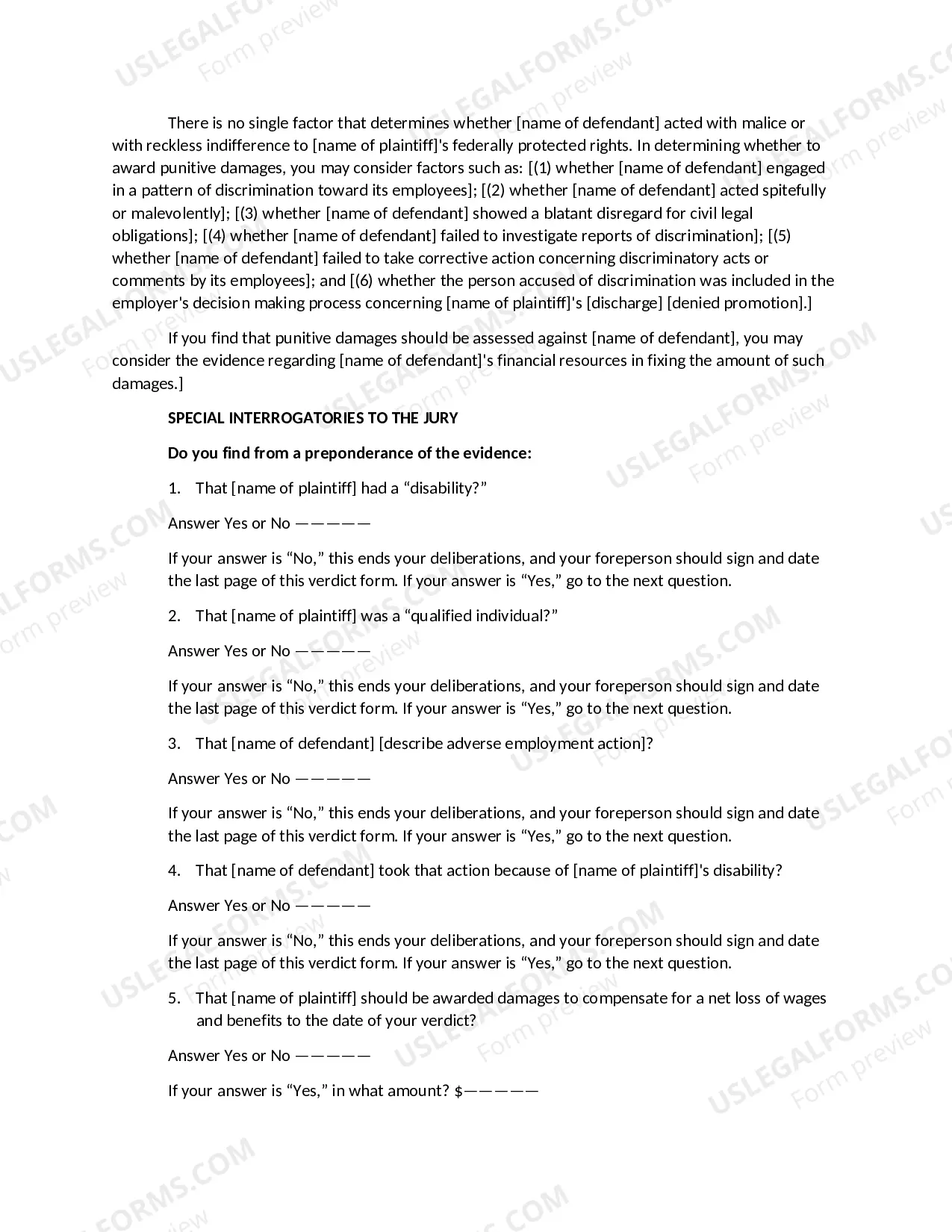
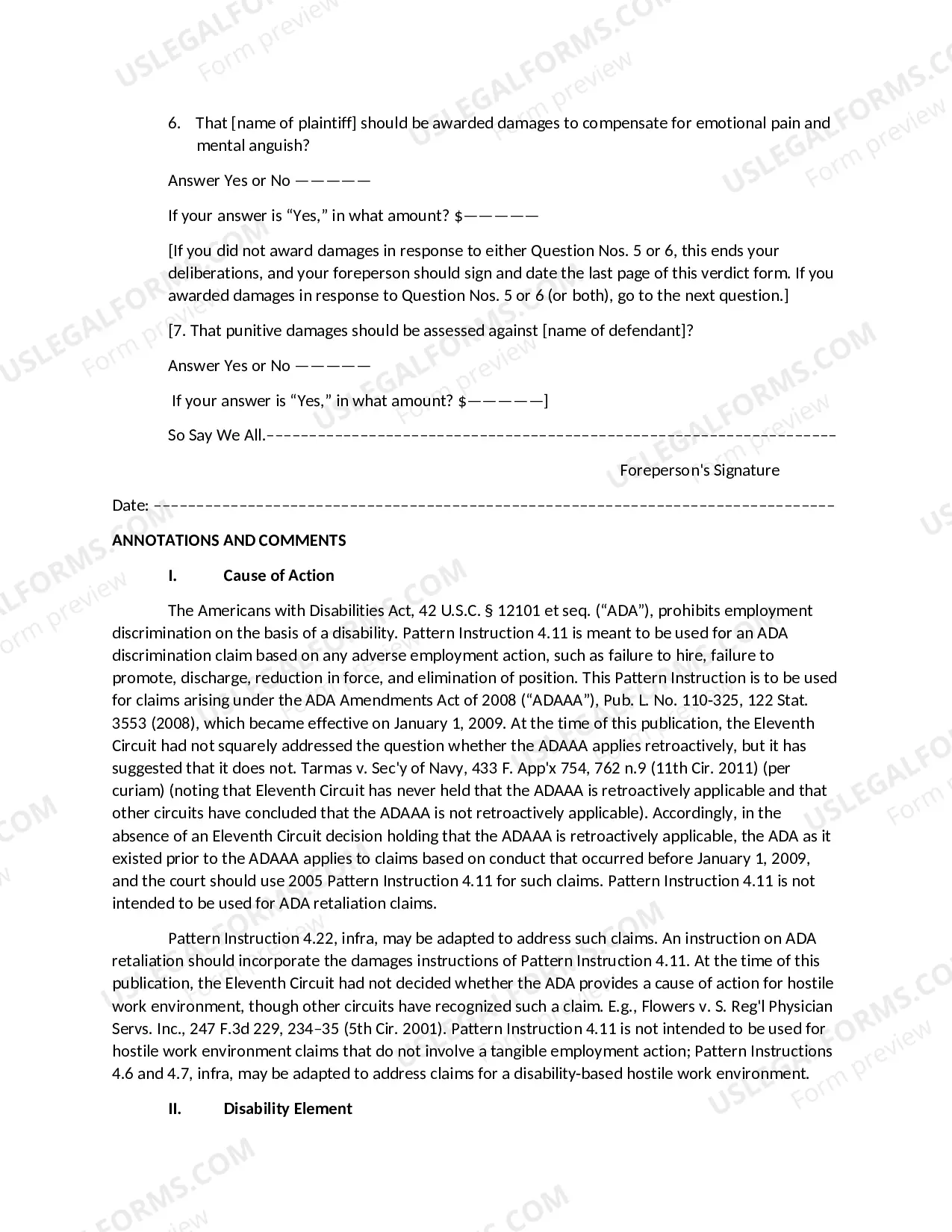
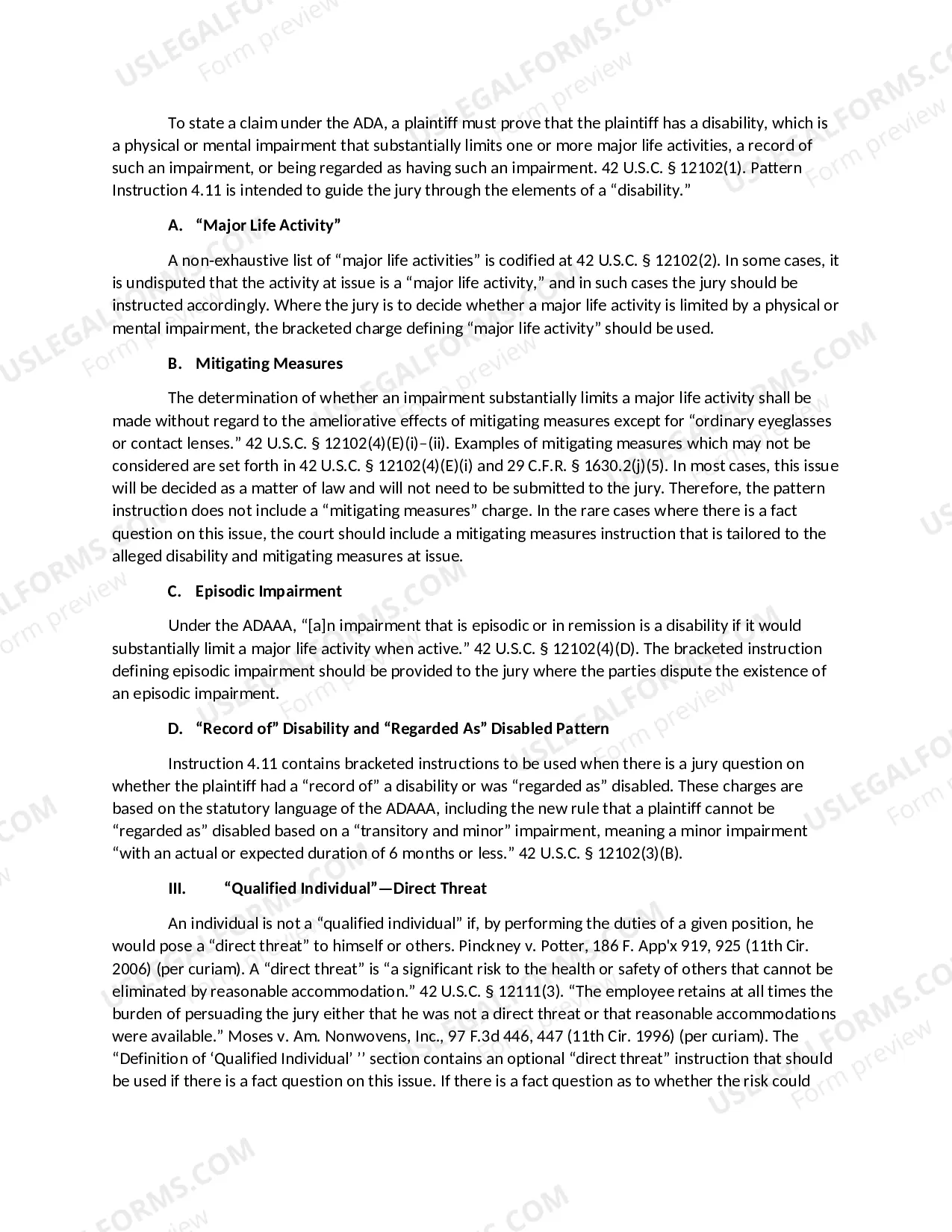
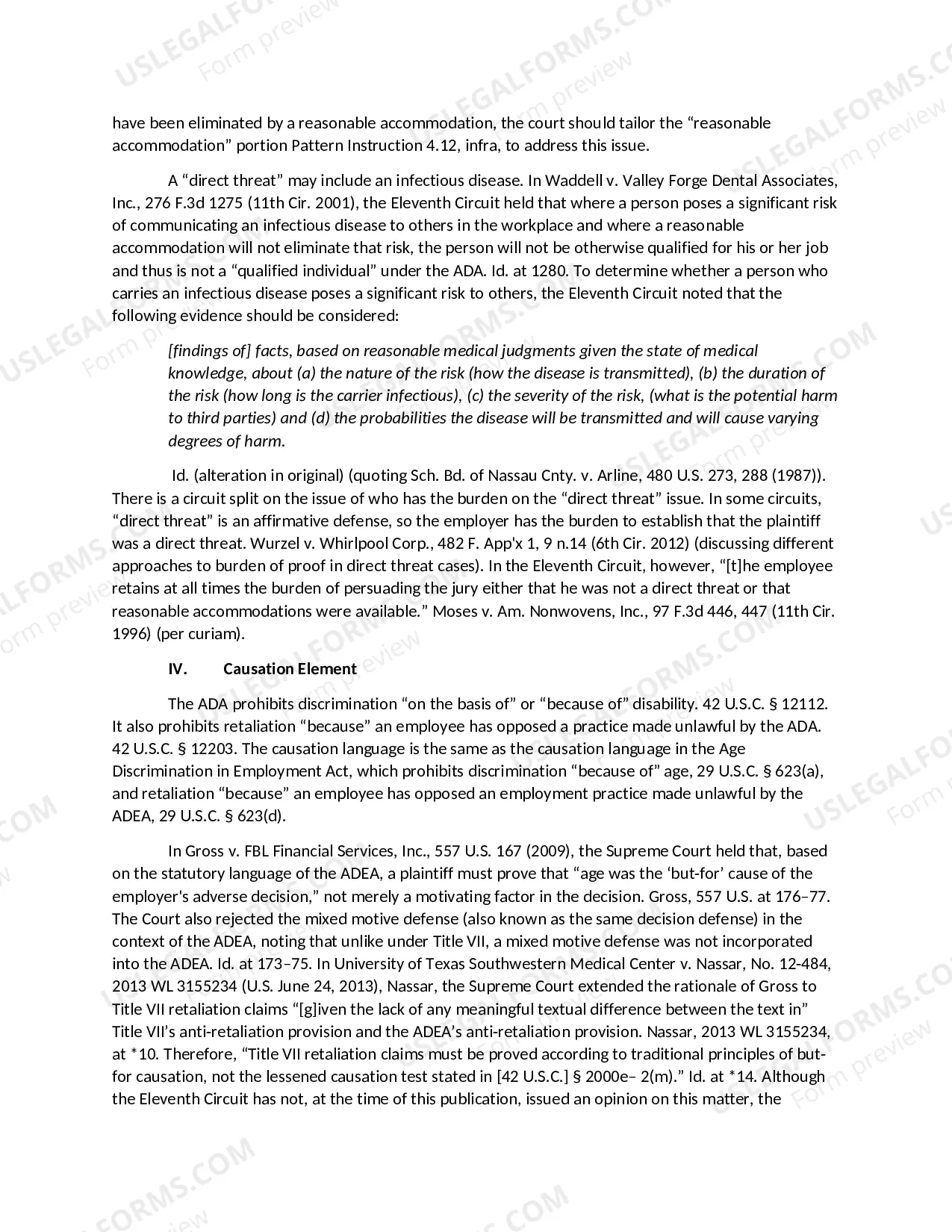
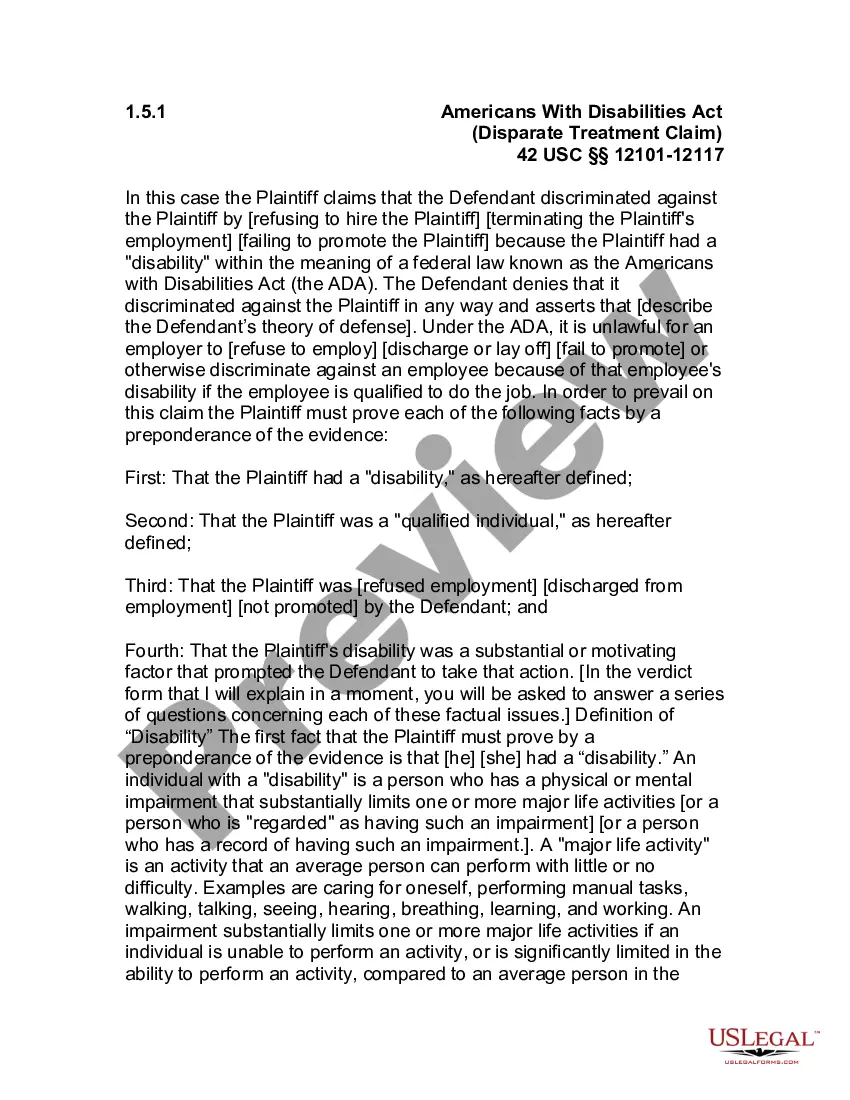
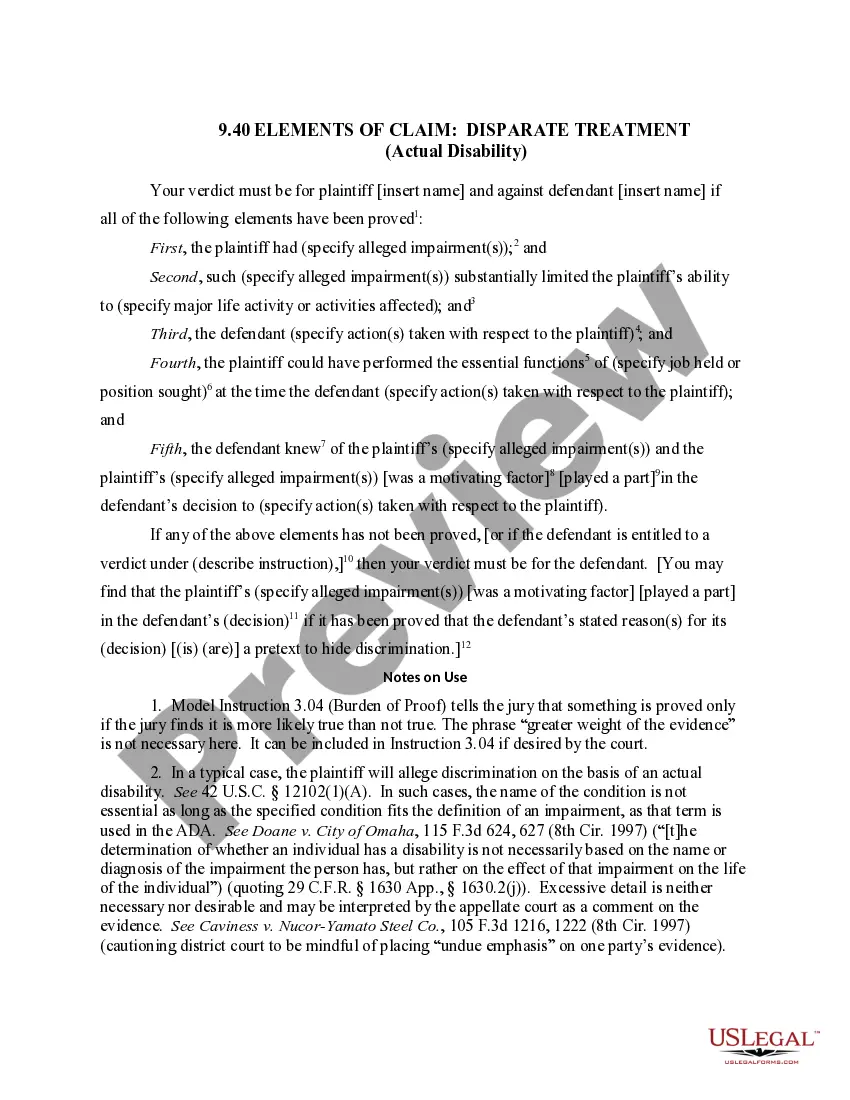
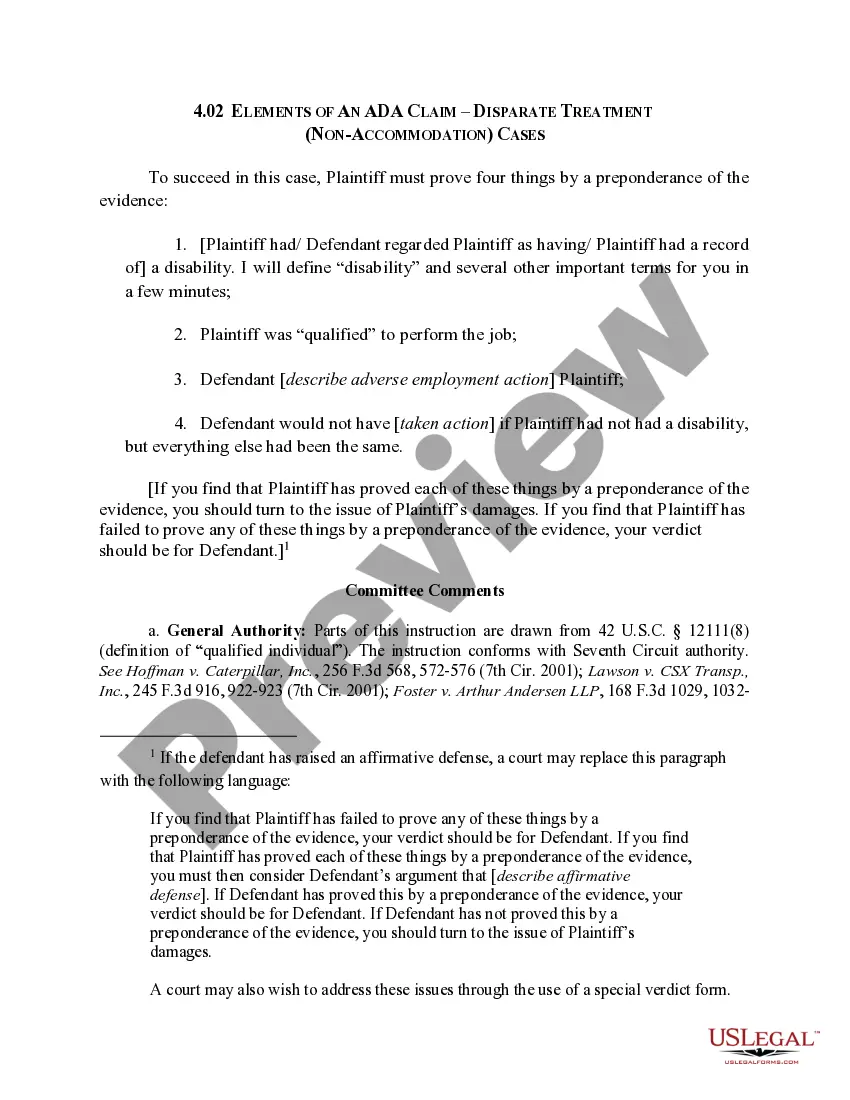
This form is a Disparate Treatment Claim under the Americans with Disabilities Act (ADA), specifically coded as 42 U.S.C. Sec. 127. It serves as a legal template for individuals who believe they have been discriminated against in the workplace due to a disability. Unlike other discrimination claims, this form specifically addresses situations where an employer's adverse employment action is linked directly to an individual's disability status, requiring proof that the individual was qualified for the job despite their disability.
Form components explained
- Identification of the plaintiff and defendant
- Claims of discrimination under the ADA
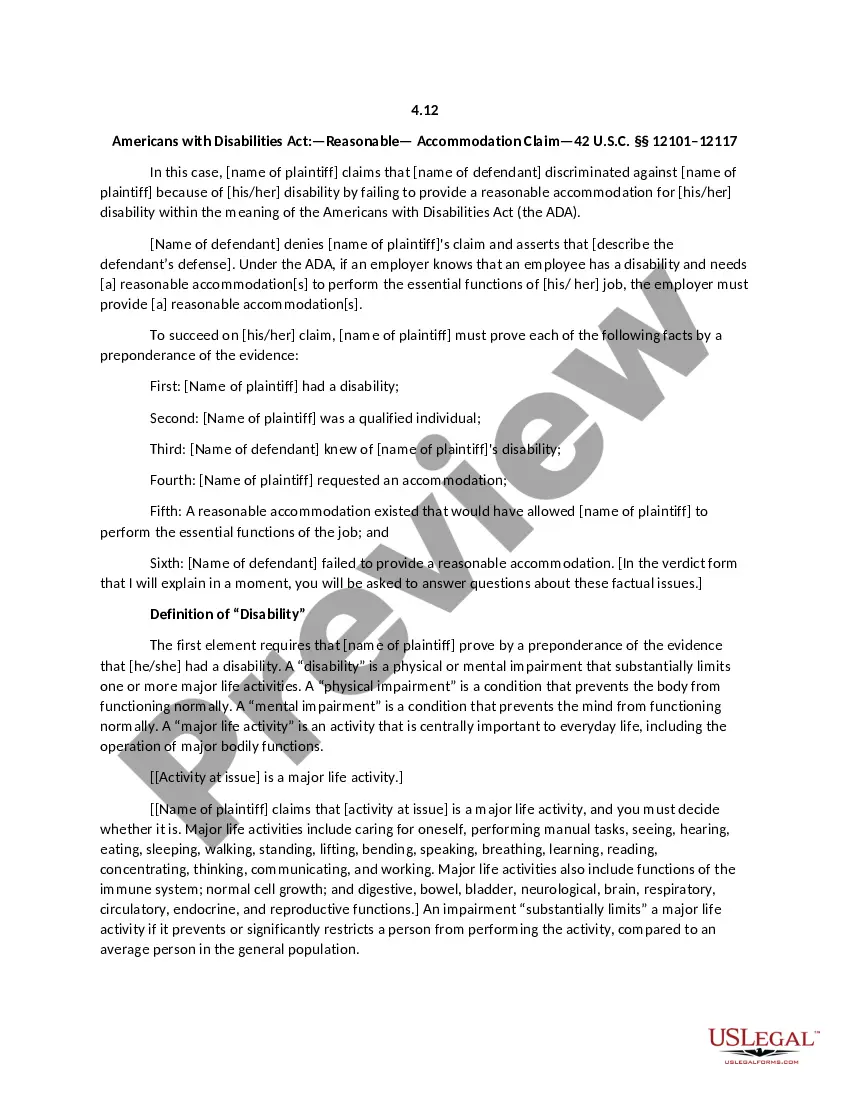
- Elements of establishing a disability
- Definition of a qualified individual and direct threat considerations
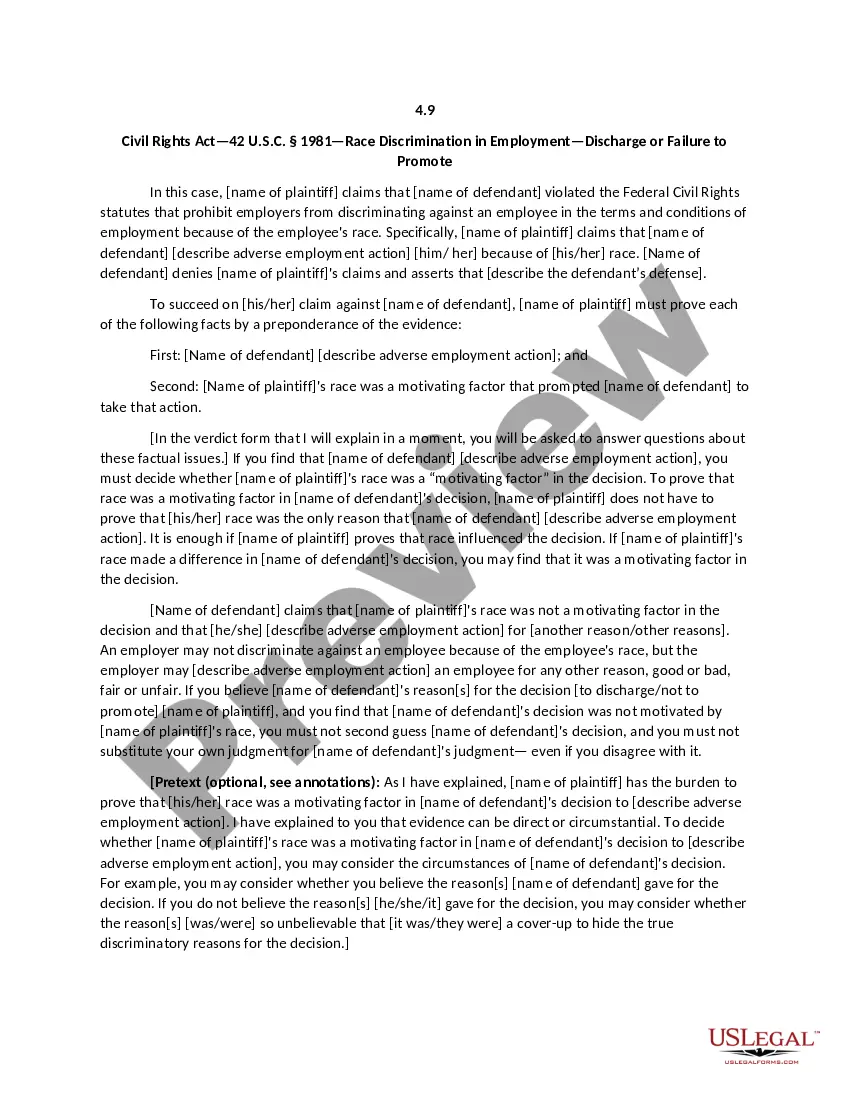
- Criteria for causation related to adverse employment actions
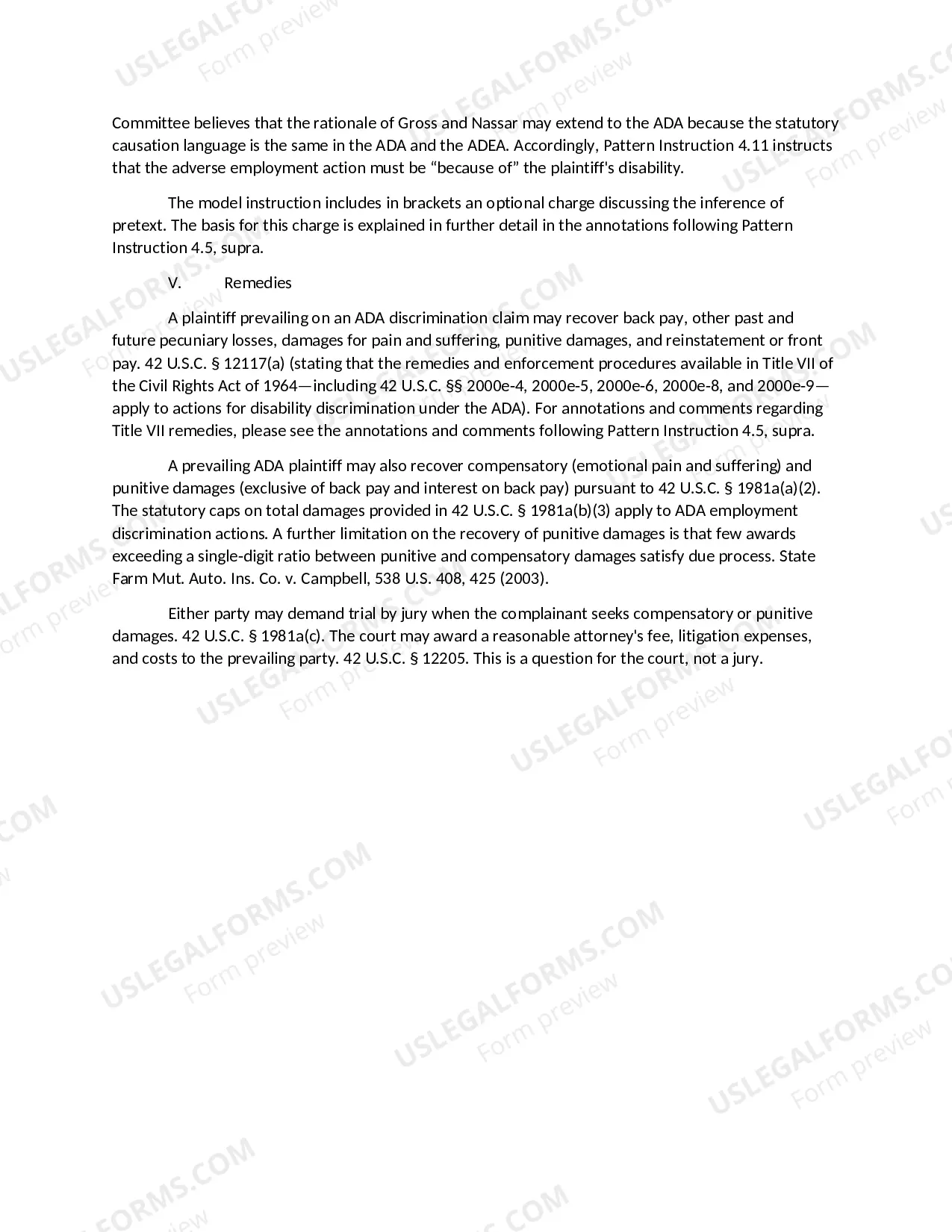
- Damage assessment for compensatory and punitive damages
When this form is needed
This form should be used if you have faced discrimination in the workplace due to a disability. It is applicable in scenarios where an employer has refused to hire you, terminated your employment, or failed to promote you based solely on your disability. This claim is specifically relevant if you can demonstrate that you were legally qualified for the position and that your disability played a significant role in the employer's decision-making process.
Who this form is for
- Individuals who have a documented disability under the ADA.
- Employees who believe they have experienced workplace discrimination due to their disability.
- Job applicants who were denied employment based on their disability status.
- Workers facing adverse employment actions such as discharge or demotion due to their disability.
Instructions for completing this form
- Identify and enter the full names of the plaintiff and defendant.
- Clearly state the nature of the alleged discrimination and the adverse action taken.
- Provide detailed facts supporting the existence of a disability as defined by the ADA.
- Illustrate how you meet the qualifications for the position in question.
- Outline the specific incidents or actions that you believe reflect discrimination.
Notarization guidance
In most cases, this form does not require notarization. However, some jurisdictions or signing circumstances might. US Legal Forms offers online notarization powered by Notarize, accessible 24/7 for a quick, remote process.
Get your form ready online
Our built-in tools help you complete, sign, share, and store your documents in one place.
Make edits, fill in missing information, and update formatting in US Legal Forms—just like you would in MS Word.
Download a copy, print it, send it by email, or mail it via USPS—whatever works best for your next step.
Sign and collect signatures with our SignNow integration. Send to multiple recipients, set reminders, and more. Go Premium to unlock E-Sign.
If this form requires notarization, complete it online through a secure video call—no need to meet a notary in person or wait for an appointment.
We protect your documents and personal data by following strict security and privacy standards.

Make edits, fill in missing information, and update formatting in US Legal Forms—just like you would in MS Word.

Download a copy, print it, send it by email, or mail it via USPS—whatever works best for your next step.

Sign and collect signatures with our SignNow integration. Send to multiple recipients, set reminders, and more. Go Premium to unlock E-Sign.

If this form requires notarization, complete it online through a secure video call—no need to meet a notary in person or wait for an appointment.

We protect your documents and personal data by following strict security and privacy standards.
Typical mistakes to avoid
- Failing to provide sufficient evidence of a disability.
- Not clearly establishing the connection between the disability and the adverse employment action.
- Overlooking to document qualifications and experience relevant to the job role.
- Neglecting to mention any attempts to mitigate damages, such as seeking alternative employment.
Benefits of using this form online
- Convenience of accessing and completing the form at any time.
- Editability allows users to customize the form to their specific circumstances.
- Reliable templates ensure all legal requirements are met for ADA claims.
- Easy download and print options for immediate use.
Legal use & context
- This form is enforceable under the Americans with Disabilities Act as legal proof of discrimination.
- It helps to establish a formal record when pursuing legal actions regarding employment discrimination.
- Understanding the legal boundaries and obligations under the ADA is crucial for both plaintiffs and defendants.
Looking for another form?
Form popularity
FAQ
42 U.S.C. § 12101, et. seq. The ADA defines disability as (A) a physical or mental impairment that substantially limits one or more major life activities; (B) a record of such an impairment; or (C) being regarded as having such an impairment.
Title I of the ADA, which became effective for employers with 25 or more employees on July 26, 1992, prohibits employment discrimination against qualified individuals with disabilities. Since July 26, 1994, Title I has applied to employers with 15 or more employees.
(1) Disability means, with respect to an individual: (i) A physical or mental impairment that substantially limits one or more of the major life activities of such individual; (ii) A record of such an impairment; or (iii) Being regarded as having such an impairment as described in paragraph (f) of this section.
No covered entity shall discriminate against a qualified individual on the basis of disability in regard to job application procedures, the hiring, advancement, or discharge of employees, employee compensation, job training, and other terms, conditions, and privileges of employment.
42 USC 12132. Subject to the provisions of this title, no qualified individual with a disability shall, by reason of such disability, be excluded from participation in or be denied the benefits of the services, programs, or activities of a public entity, or be subjected to discrimination by any such entity. SEC.
42 U.S.C. § 12101, et. seq. The ADA defines disability as (A) a physical or mental impairment that substantially limits one or more major life activities; (B) a record of such an impairment; or (C) being regarded as having such an impairment.
12101 12131 et seq. States must avoid disability-based discrimination unless doing so would fundamentally alter the nature of the service, program, or activity provided by the State.
An impairment that substantially limits one major life activity need not limit other major life activities in order to be considered a disability. An impairment that is episodic or in remission is a disability if it would substantially limit a major life activity when active.