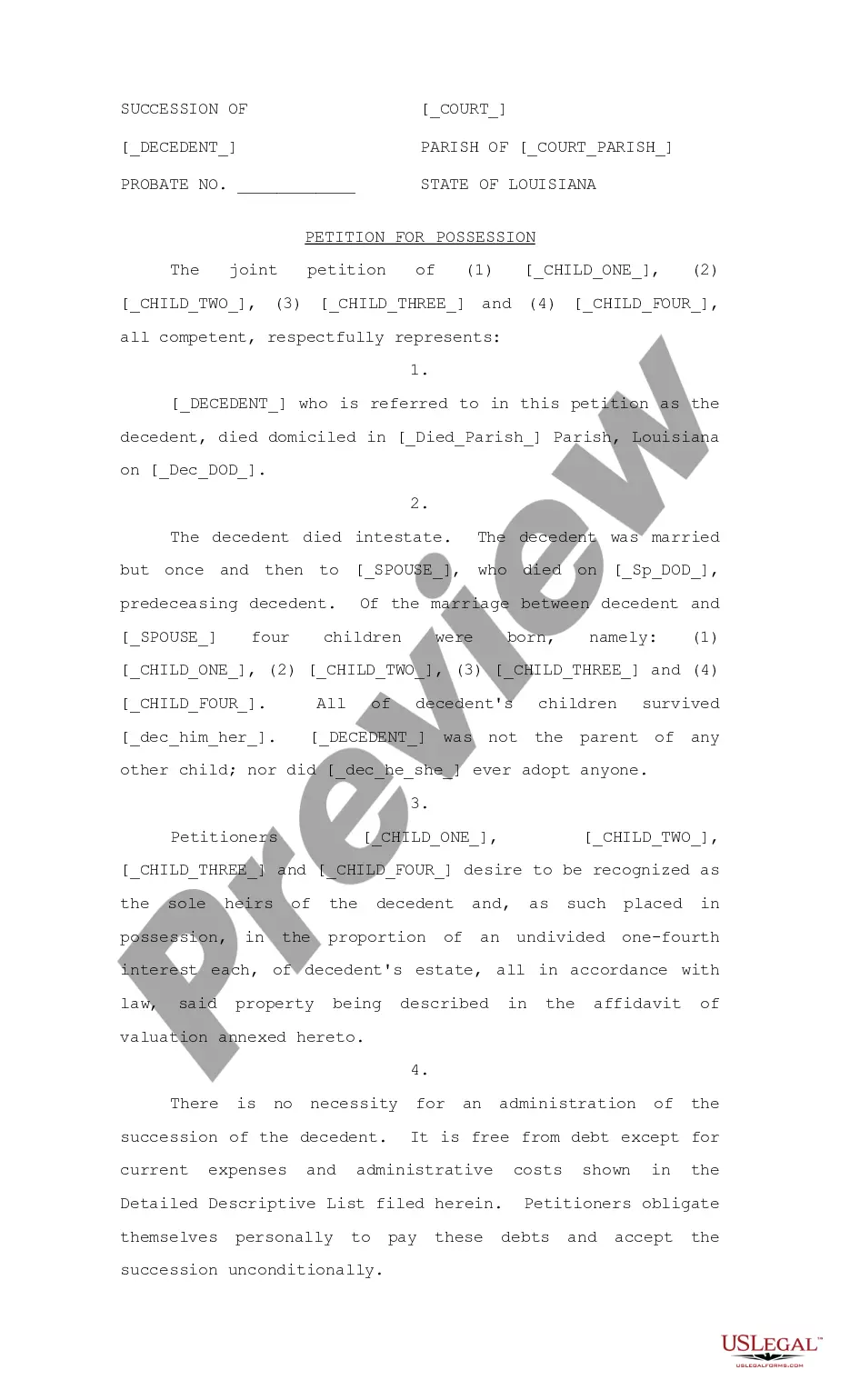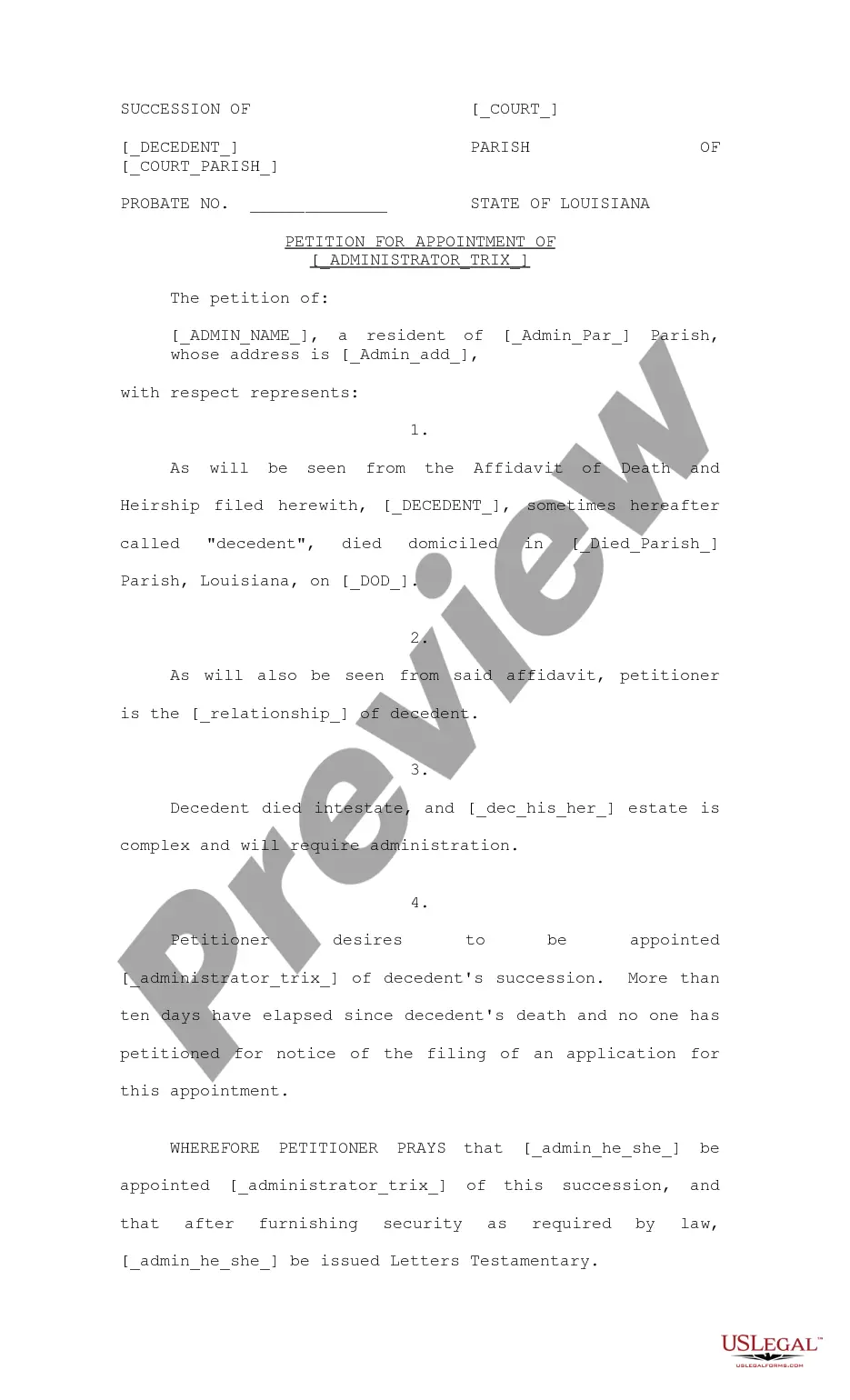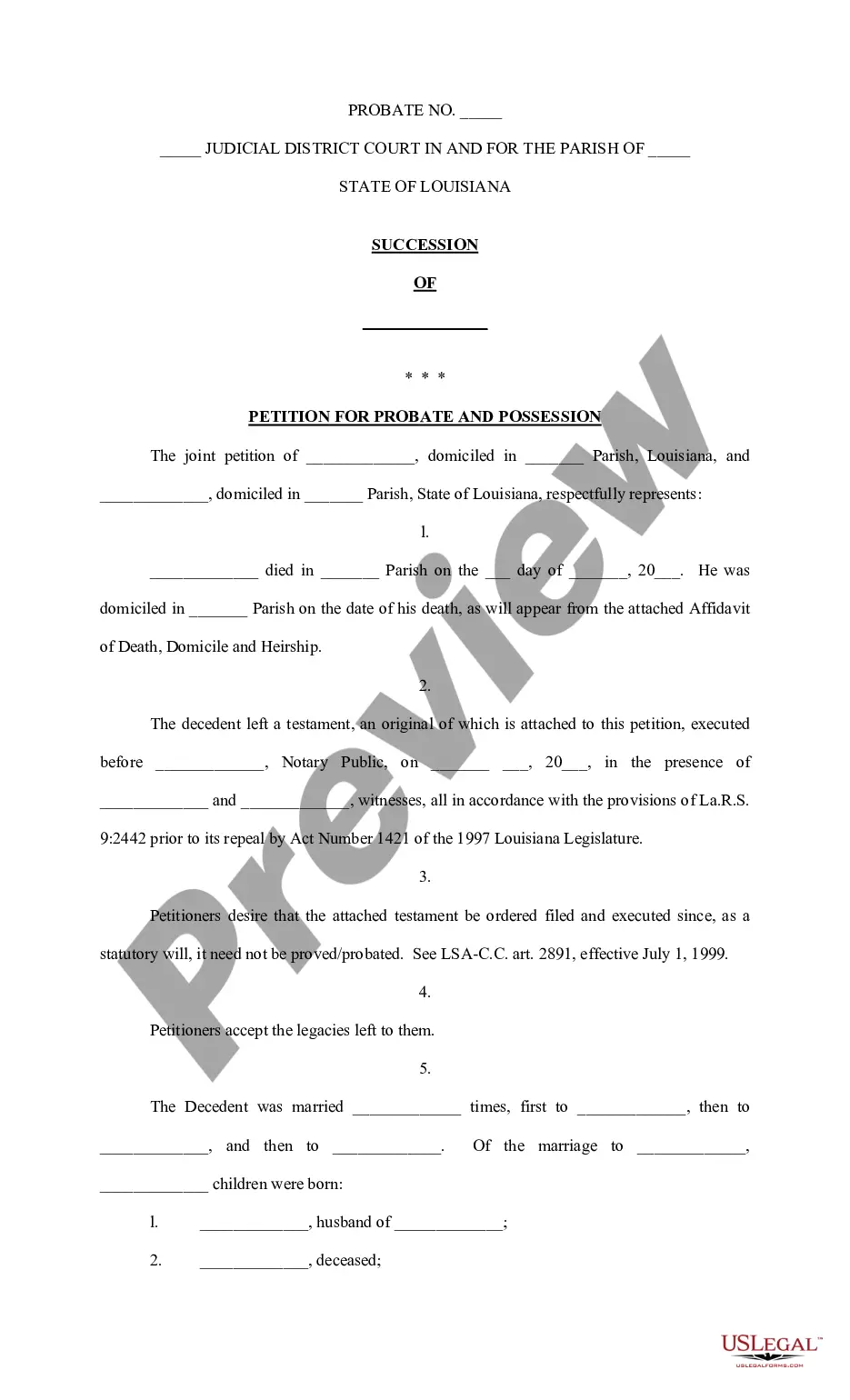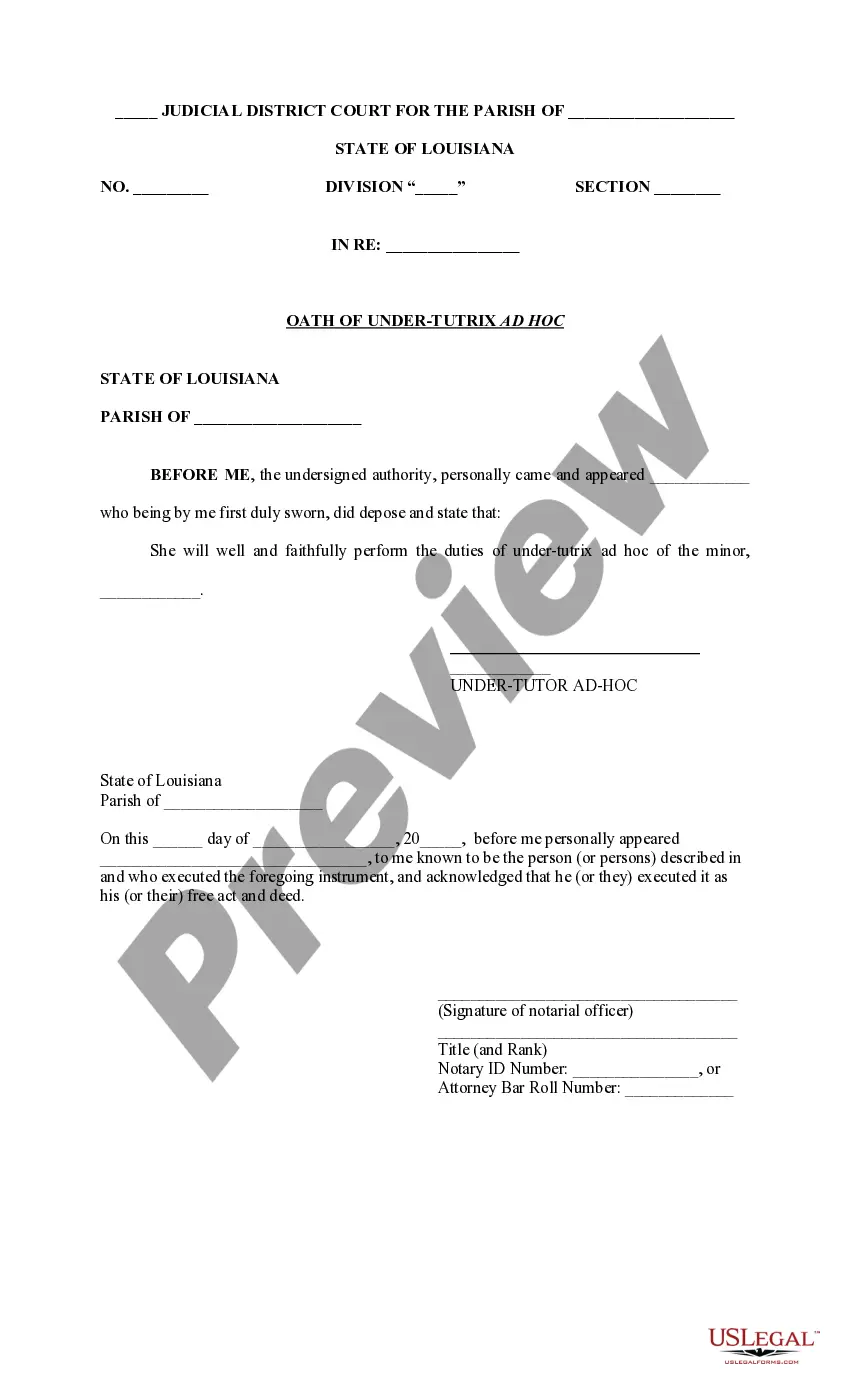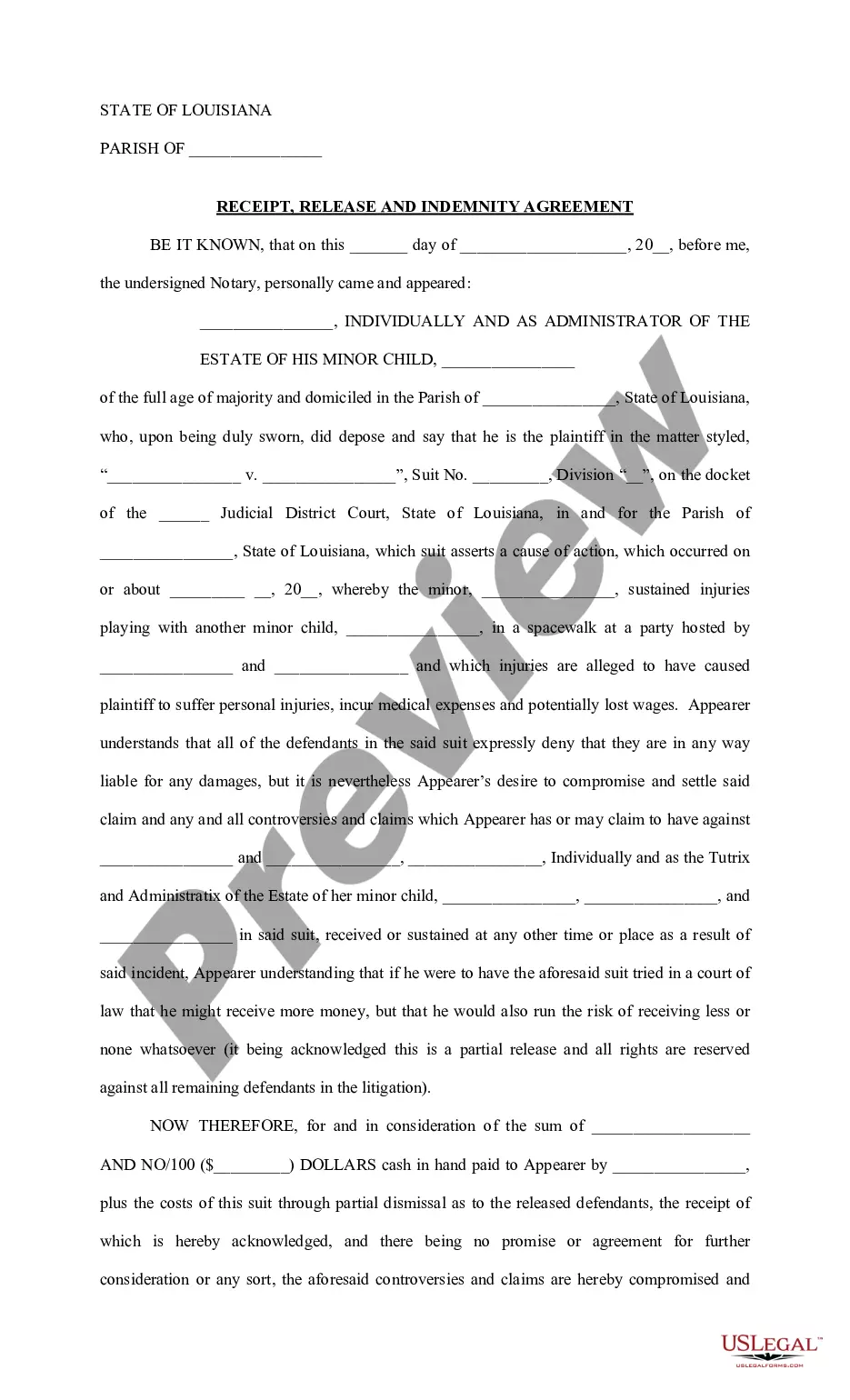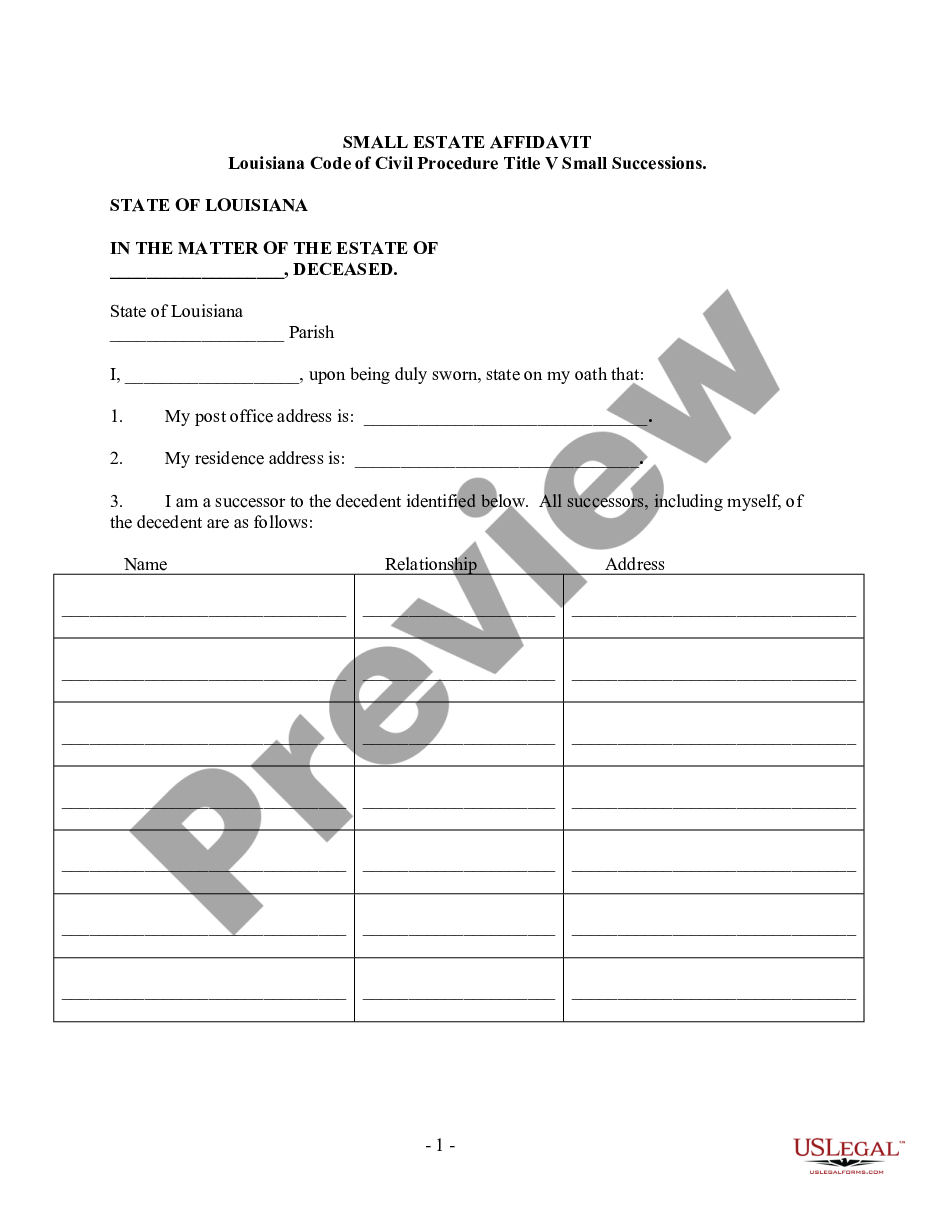
Louisiana Probate Forms

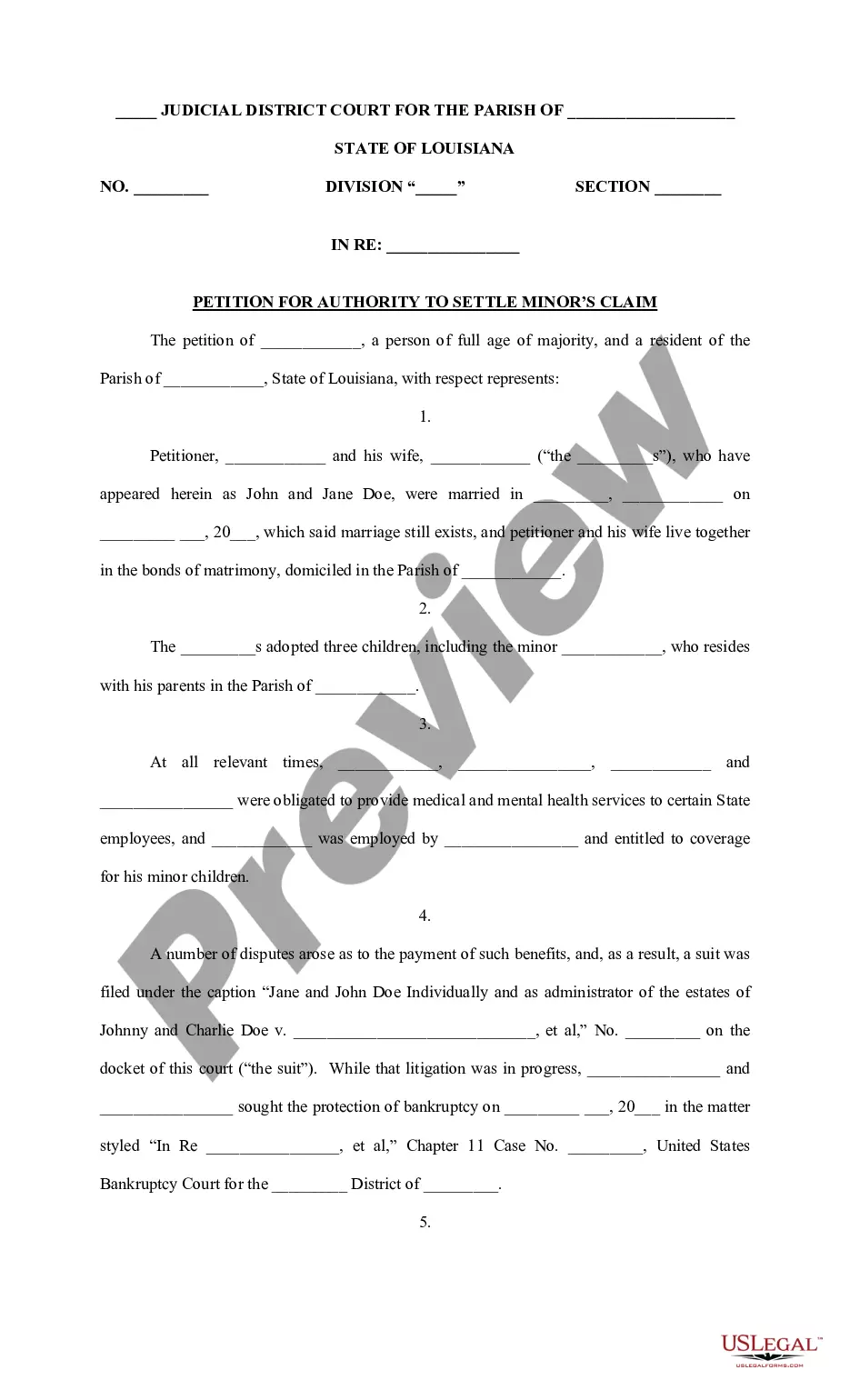
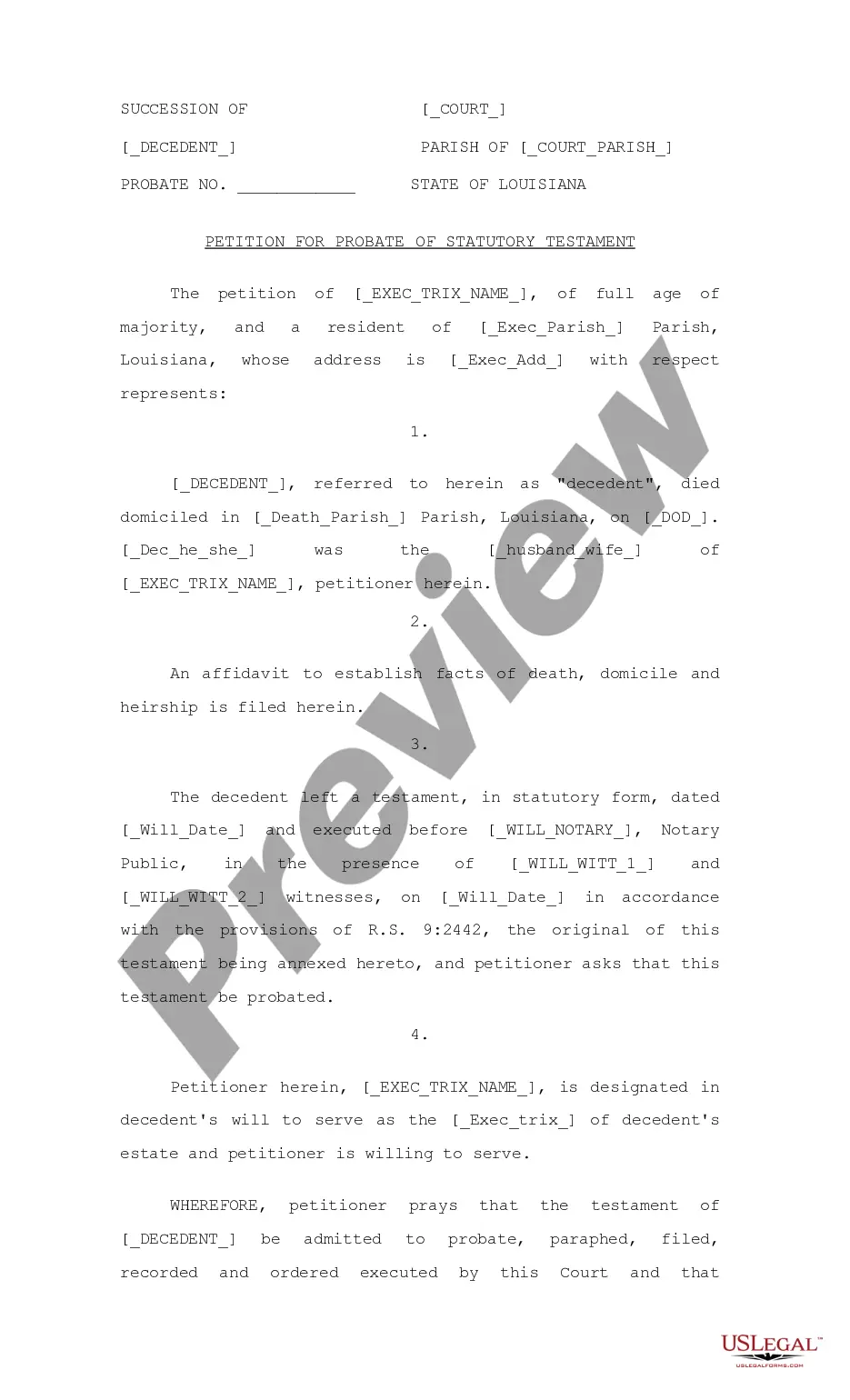
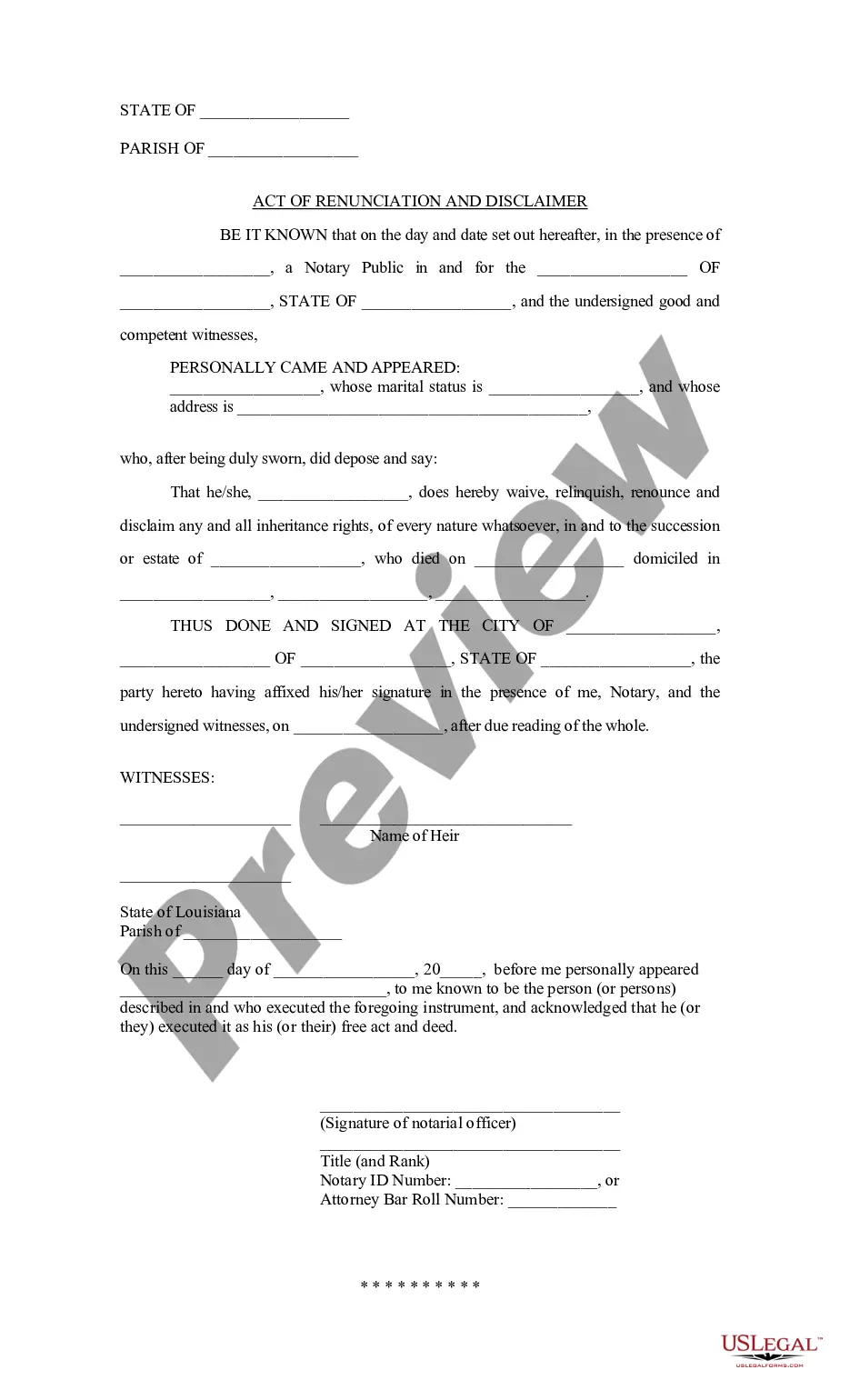
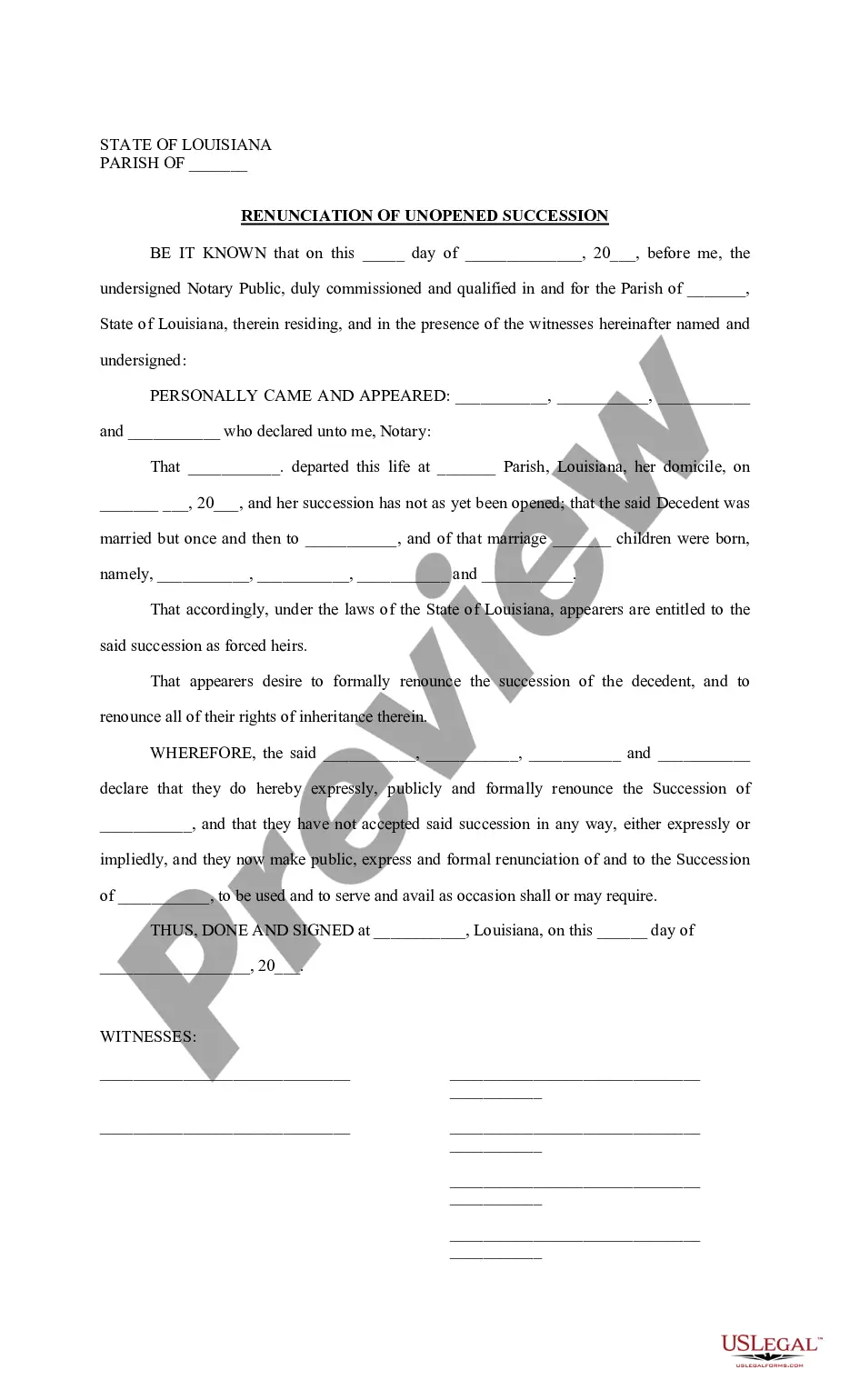
We offer thousands of Probate forms. Some of the forms offered are listed by area below. For others, please use our search engine.

Louisiana Probate Forms FAQ

What is probate? 

When a person dies, their assets are distributed in the probate process. Probate is a general term for the entire process of administration of estates of deceased persons, including those without wills, with court supervision. If a person dies with a will, a petition to probate the will is filed with the probate court in the county where the deceased resided at the time of death, asking for letters testamentary to be issued, giving the executor authority to handle the estate affairs. If a person dies with a valid will, an executor is named to handle the distribution of the estate. If the person dies without a valid will, the court appoints an administrator to distribute the decedent's assets according to the state's laws of intestacy. The court will issue letters of administration, also called letters testamentary, to the administrator, giving the authority to handle the affairs of the deceased. An heirship affidavit may also be used to conduct estate affairs when a small estate is involved. In cases where the decedent didn't own property valued at more than a certain amount, which varies by state, the estate may go through a small estate administration process, rather than the formal probate process.

What are the duties of an executor? 

The executor's obligations are generally to: a. Safeguard the property and assets of the estate; b. Inventory (or make a list of) the property; c. Submit accounts or inventories to the court as required (these could be waived); d. Pay the debts and expenses of the deceased (such as funeral and burial expenses, medical expenses, and credit card bills); e. Pay any federal or state death taxes, if any; and f. Distribute the estate to those named in the will or, if no will exists, to your heirs as designated by statute.

How can probate be avoided? 

All property of a decedent may not be subject to the probate process. Some assets, such as insurance policies or cd’s may name a beneficiary or pass automatically to a surviving joint owner outside the probate estate of the will. Assets held in trust, or in an account or policy with an insurer or financial institution with a named beneficiary, typically pass outside the probate process. Such assets go to the named beneficiary outside the probate process. If it is a survivorship account, or transfer on death account, it passes outside the probate process. Property held in trust is distributed according to the terms of the trust. It is possible to write a "pourover" clause in a will, so that property "pours over" into the trust, which is exempted from probate. The involvement of the court to transfer such property is not required. A bank account or motor vehicle title may also specify a death beneficiary and thus be exempt from the probate process.

Top Questions about Louisiana Probate Forms

  • How long do you have to file probate after death in Louisiana?

    In Louisiana, you generally have one year from the date of death to file probate proceedings. It’s important to initiate this process within this time frame to avoid complications. Delaying could limit your options and affect the distribution of assets. Using Louisiana Probate Forms can help you navigate this process smoothly and ensure all filings are completed accurately.

  • How do I avoid probate in Louisiana?

    To avoid probate in Louisiana, you can take several practical steps. First, consider establishing a revocable living trust, which allows assets to transfer outside of probate. Additionally, ensure to name beneficiaries directly on accounts and real estate where possible. Using Louisiana Probate Forms will assist you in setting up these arrangements properly.

  • Can you avoid probate in Louisiana?

    Yes, avoiding probate in Louisiana is possible through several strategies. You can designate beneficiaries for certain assets, set up trusts, or hold properties jointly. These methods enable direct transfer without probate court involvement. Familiarizing yourself with Louisiana Probate Forms can help you implement these strategies effectively.

  • Does a will have to be probated in Louisiana?

    In Louisiana, a will typically needs to be probated if it contains assets that require validation. This process ensures that the will reflects the testator's true intentions and complies with state law. However, simpler estates might utilize non-probate methods to avoid this step. Having the right Louisiana Probate Forms can facilitate easier management of the probate process.

  • Do all wills in Louisiana have to go through probate?

    Not all wills in Louisiana must go through the probate process. If a will holds assets that fall under non-probate categories, these assets can be transferred without the probate court's involvement. However, probate is often necessary for assets that do not have designated beneficiaries. Utilizing Louisiana Probate Forms can streamline this process.

  • What are non-probate assets in Louisiana?

    Non-probate assets in Louisiana are those that do not go through the probate process after death. These may include life insurance policies, retirement accounts, and properties that are jointly owned with rights of survivorship. Since these assets transfer automatically to the designated beneficiaries, being aware of Louisiana Probate Forms can help you manage your estate better.

  • What makes a will invalid in Louisiana?

    A will can become invalid in Louisiana for several reasons. If it is not signed by the testator or the necessary witnesses, it may not meet legal requirements. Additionally, if the will was created under duress or fraud, it can also be invalidated. Understanding Louisiana Probate Forms can help you ensure your will follows the correct legal format.

  • What are the rules for probate in Louisiana?

    The rules for probate in Louisiana dictate how estates are administered and assets distributed. This process includes filing a petition, notifying heirs, and settling debts. Understanding these rules is crucial, and utilizing Louisiana Probate Forms can assist you in ensuring compliance with state regulations, paving the way for a successful estate settlement.

  • Can you file succession in Louisiana without a lawyer?

    Yes, it is possible to file for succession in Louisiana without a lawyer. Individuals can utilize available resources and Louisiana Probate Forms to help guide them through the process. However, be prepared to invest time and effort into understanding legal requirements, as this DIY approach may pose challenges.

  • How to fill out paperwork for probate?

    Filling out paperwork for probate involves gathering all relevant documents and completing them accurately. Start with the initial petition and include various Louisiana Probate Forms required for your specific situation. Ensure you understand what is needed, as errors can lead to delays in the process, keeping you focused on resolution and closure.

Tips for Preparing Louisiana Probate Forms

  1. Start probate. Before you begin planning Louisiana Probate Forms, check if you're qualified to become an property executor. In situations where a deceased individual didn't name an executor, the court can assign one. To start the process, you should submit a application for probate, a valid will, and the death certificate to the court.
  2. Gather evidence. Collect and look at the details you need to use to complete the Louisiana Probate Forms correctly, prepare probate documents, and after that give them to the legal court. The procedure can entail pension and bank accounts and stocks and shares, real estate such as a house, and personal assets as collections and other valuables.
  3. Take care of debts and taxes, and monthly bills. Be sure that the assets you dispose of can cover all debts, rents, and bills. Otherwise, the legal court will prioritize claims of loan companies. In addition, you're in charge of processing an income tax return and paying out taxes.
  4. Distribute assets. When you're done paying out financial obligations, you are able to move on to the next thing. The remaining property is split between the heirs (brothers and sisters, parents, spouse and next of kin) or according to the will.
  5. Close estate. Gather statements and records, and other probate documents during the entire procedure and then send them to verify that you settled an property and finished the Louisiana Probate Forms according to federal and state demands.