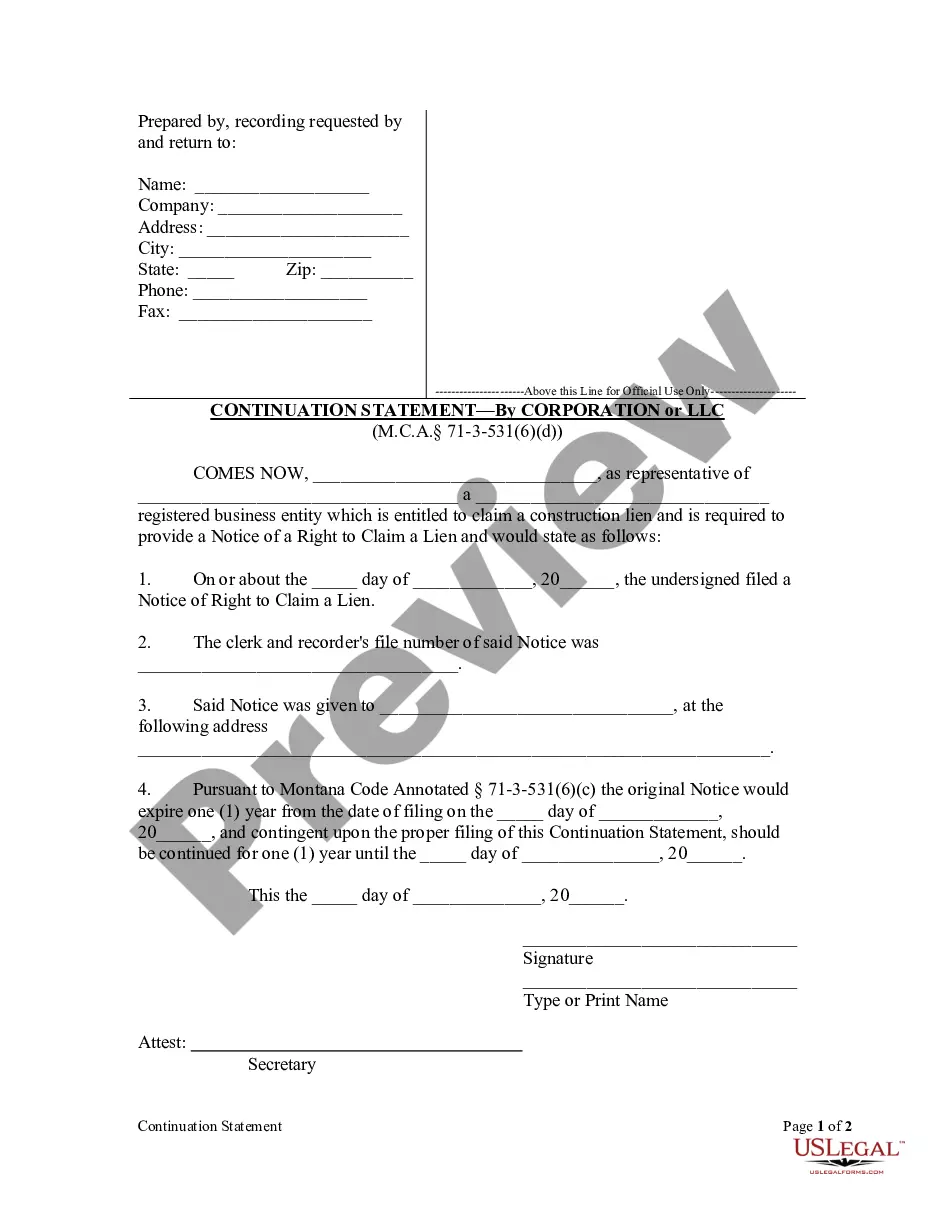
Louisiana Receipt, Release and Indemnity Agreement
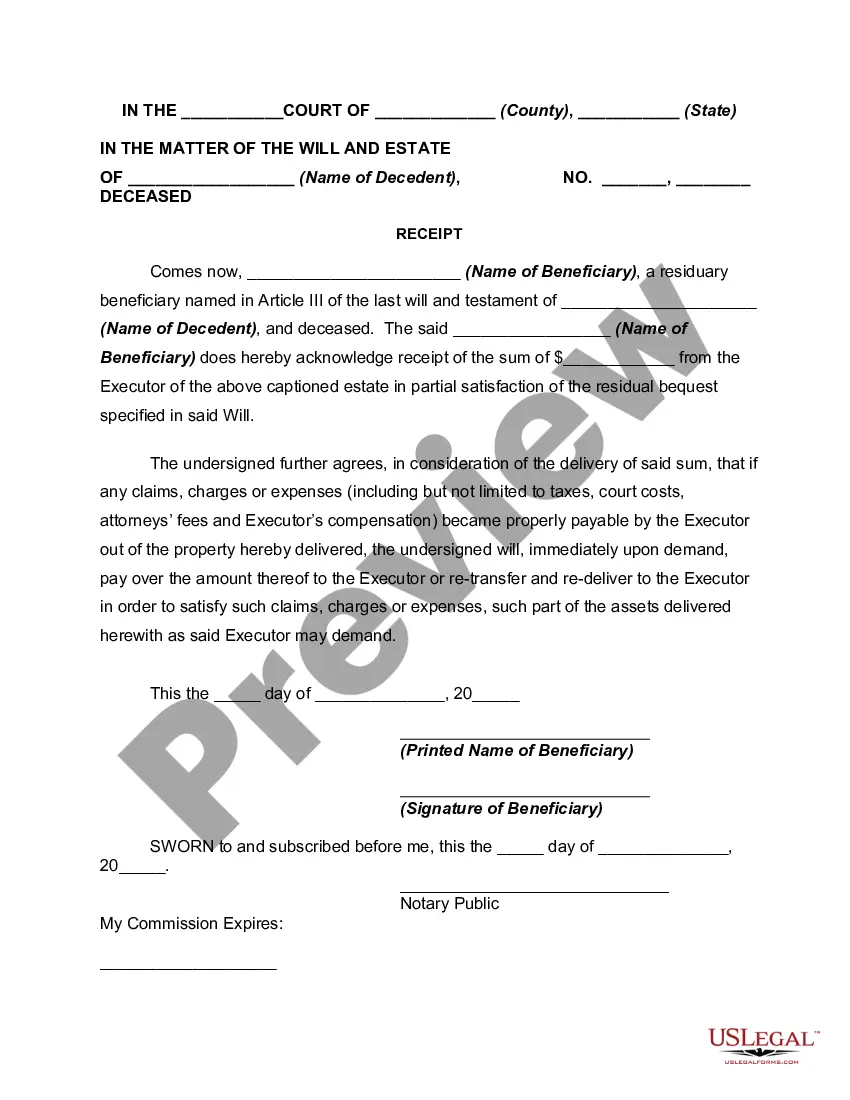
Understanding this form
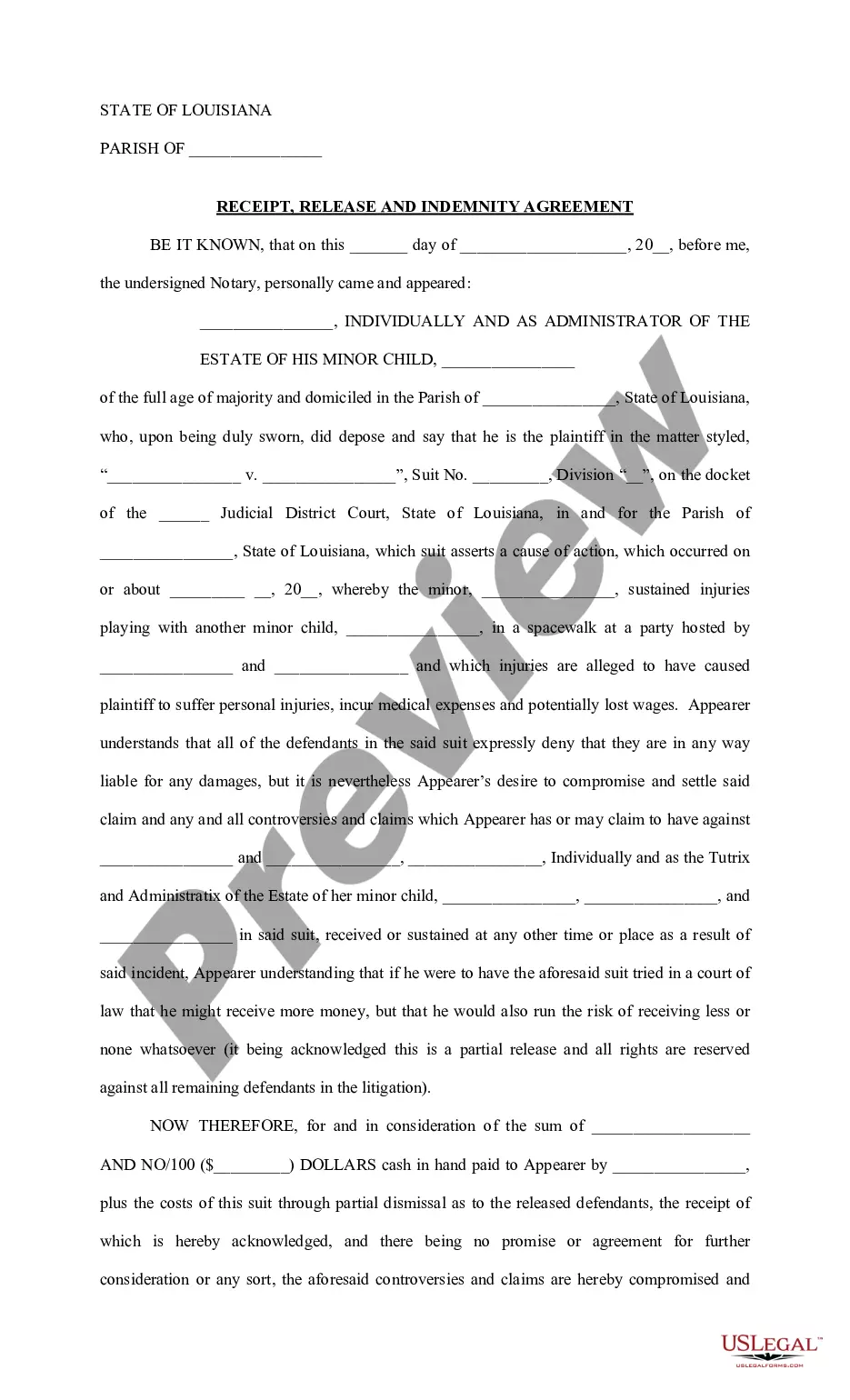
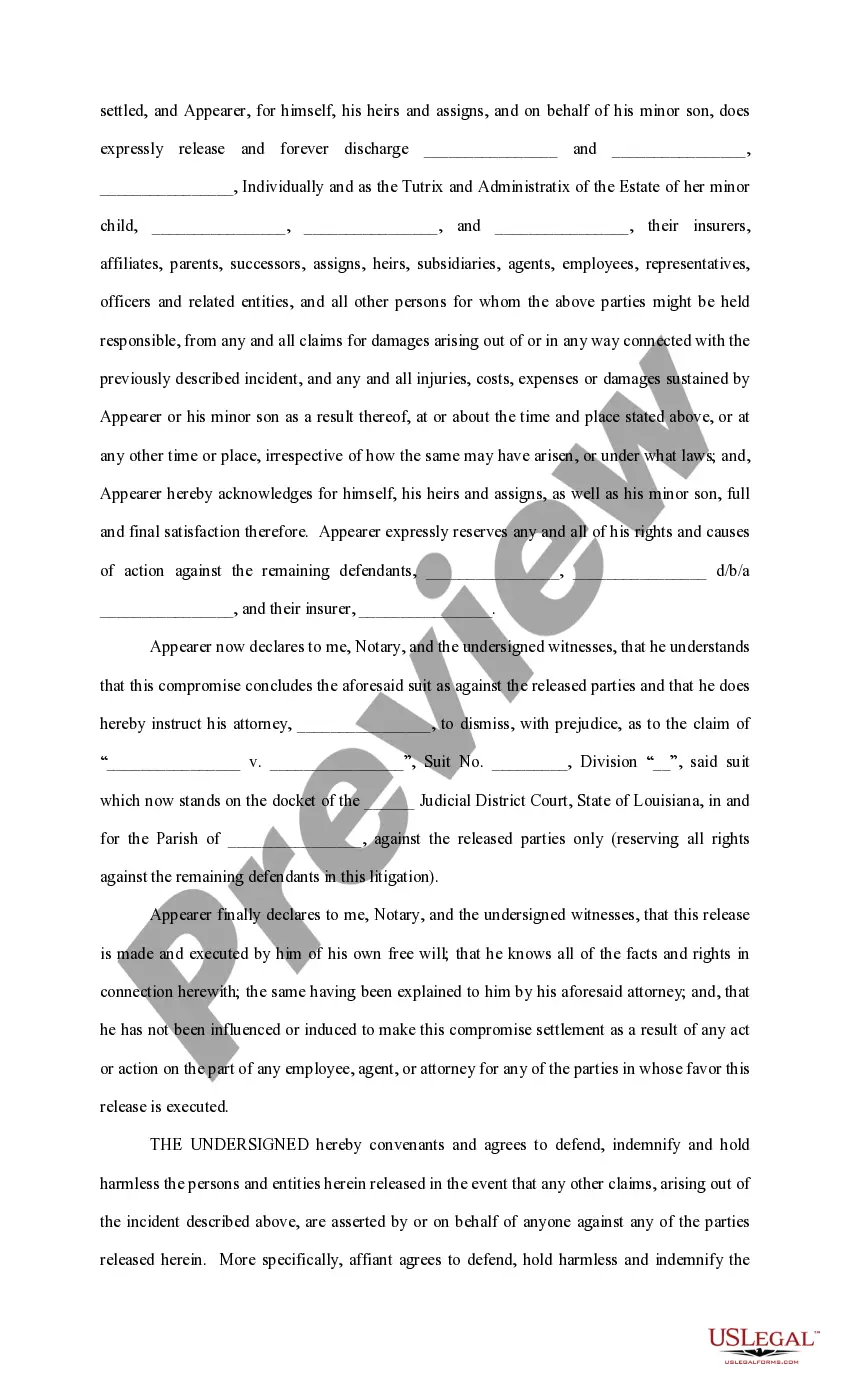
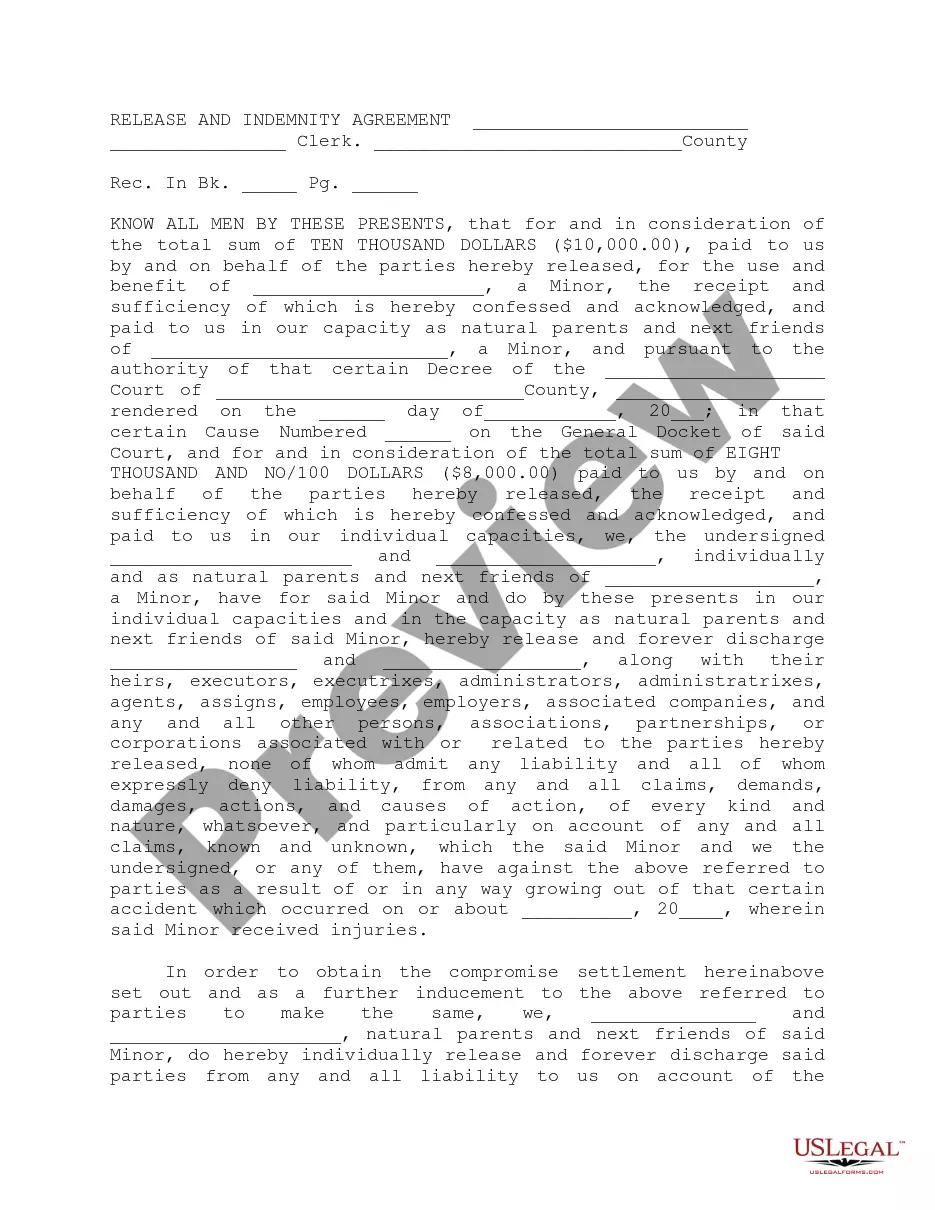
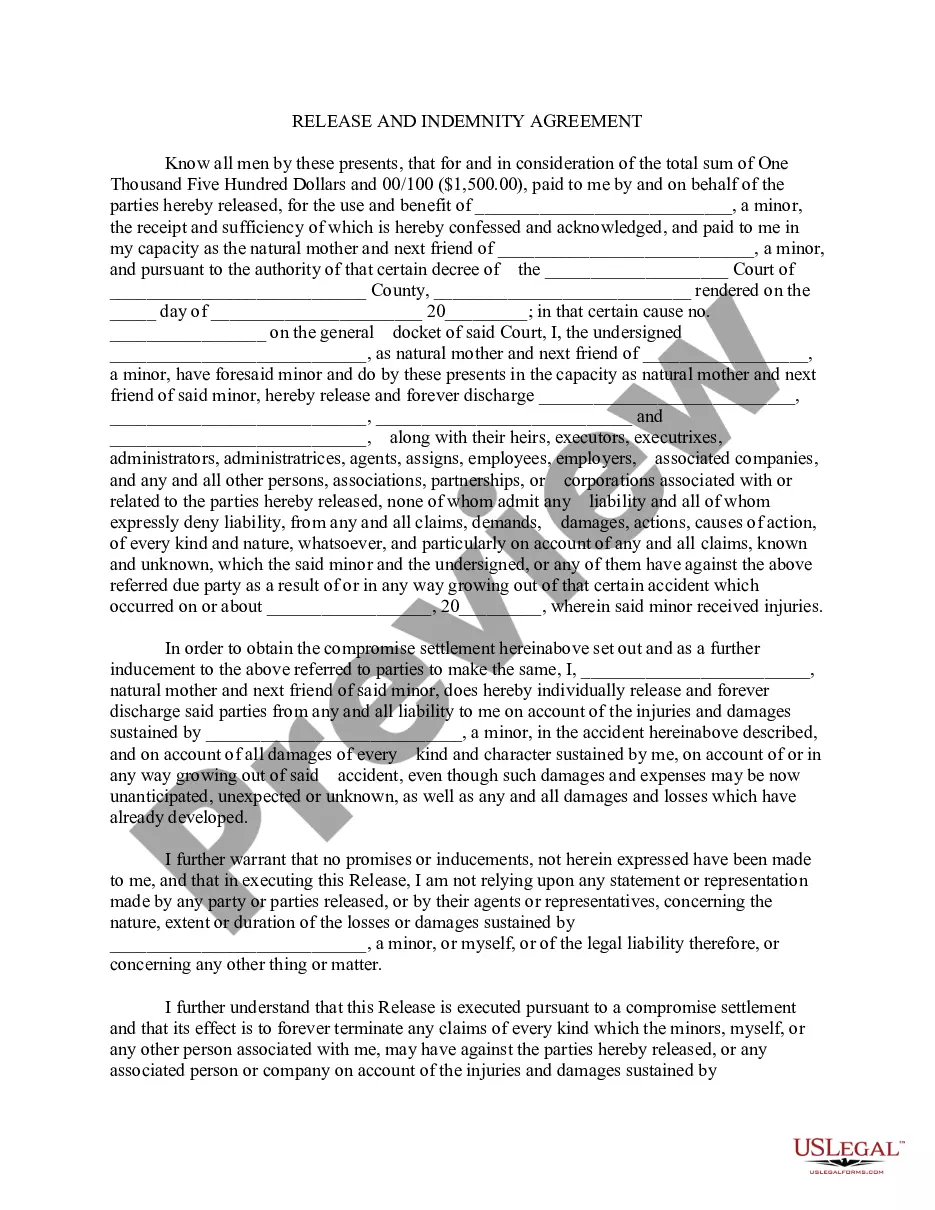
The Receipt, Release and Indemnity Agreement is a legal document used in personal injury cases involving minors. This form serves as a partial settlement and release of claims against certain defendants while preserving the right to pursue remaining claims against others. It is specifically designed for scenarios where a minor has sustained injuries, allowing the responsible parties to settle claims without admitting liability. By using this form, parties can ensure that they remain protected from further claims related to the incident for which they are settling, while still leaving open the possibility to pursue future actions against non-released defendants.
Key components of this form
- Identification of the parties involved, including the minor and the administrator of their estate.
- Details regarding the personal injury incident, including dates and nature of the injuries.
- Terms of the settlement amount and acknowledgment of receipt.
- A clause releasing the released parties from further liabilities while reserving rights against remaining defendants.
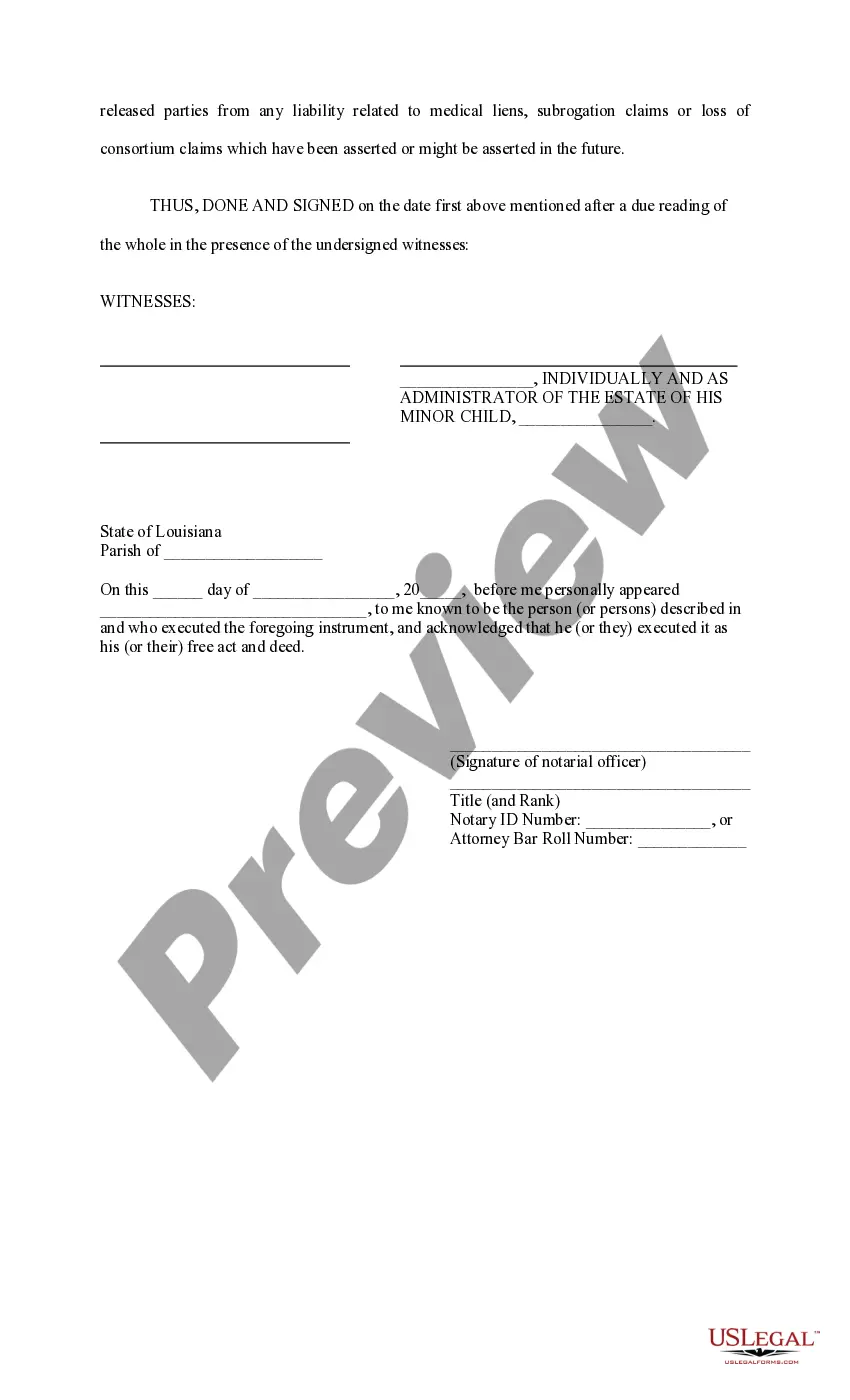
- Signature lines for the releasor and notary certification to validate the agreement.
Common use cases
This form should be utilized when settling a personal injury claim involving a minor, particularly in circumstances where the minor has sustained injuries and there is a desire to settle with some defendants while maintaining claims against others. Common scenarios include accidents at events, such as parties or playgrounds, where the minor's injuries occurred due to negligent conditions or actions, but liability is contested by some parties involved.
Who should use this form
This form is intended for:
- Parents or legal guardians acting on behalf of a minor who has suffered an injury.
- Administrators of estates representing minors in personal injury lawsuits.
- Parties involved in a personal injury claim against multiple defendants where some are being released as part of a settlement agreement.
How to complete this form
- Identify and fill in the names of the parties involved, including the minor and the administrator.
- Specify the details of the personal injury incident, including the date and nature of the injuries.
- Enter the settlement amount being paid for the release of claims.
- Ensure to include language that reserves rights against remaining defendants as necessary.
- Obtain signatures from all relevant parties and have the document notarized to finalize the agreement.
Does this document require notarization?
Yes, this form must be notarized to be legally valid. Having the agreement notarized is essential to confirm the identities of the parties involved and ensure that all signatures are authentic. US Legal Forms offers integrated online notarization for added convenience, allowing you to complete the process securely via video call, 24/7, without the need for travel.
Get your form ready online
Our built-in tools help you complete, sign, share, and store your documents in one place.
Make edits, fill in missing information, and update formatting in US Legal Forms—just like you would in MS Word.
Download a copy, print it, send it by email, or mail it via USPS—whatever works best for your next step.
Sign and collect signatures with our SignNow integration. Send to multiple recipients, set reminders, and more. Go Premium to unlock E-Sign.
If this form requires notarization, complete it online through a secure video call—no need to meet a notary in person or wait for an appointment.
We protect your documents and personal data by following strict security and privacy standards.

Make edits, fill in missing information, and update formatting in US Legal Forms—just like you would in MS Word.

Download a copy, print it, send it by email, or mail it via USPS—whatever works best for your next step.

Sign and collect signatures with our SignNow integration. Send to multiple recipients, set reminders, and more. Go Premium to unlock E-Sign.

If this form requires notarization, complete it online through a secure video call—no need to meet a notary in person or wait for an appointment.

We protect your documents and personal data by following strict security and privacy standards.
Common mistakes
- Failing to accurately identify all parties involved in the incident.
- Not specifying the settlement amount clearly.
- Omitting the reservation of rights clause against remaining defendants.
- Neglecting to have the document notarized or signed by witnesses, leading to potential invalidity.
Benefits of using this form online
- Convenient access to legal documents available for immediate download.
- Editable templates that allow users to customize their agreements according to specific needs.
- Reliable legal forms drafted by licensed attorneys, ensuring compliance with laws.
Key takeaways
- This form allows for a partial settlement involving a minor in a personal injury case.
- It ensures that certain defendants are released from further liability while preserving claims against others.
- Proper completion and notarization are essential for legal enforceability.
Looking for another form?
Form popularity
FAQ
When the term indemnity is used in the legal sense, it may also refer to an exemption from liability for damages. Indemnity is a contractual agreement between two parties. In this arrangement, one party agrees to pay for potential losses or damages caused by another party.
Indemnity is compensation paid by one party to another to cover damages, injury or losses.An example of an indemnity would be an insurance contract, where the insurer agrees to compensate for any damages that the entity protected by the insurer experiences.
An Indemnity Bond may be drafted as below and executed on a stamp paper of the value which differs for every state. This deed of Indemnity executed on DATE at PLACE by ___________ having its registered office at ___________, through Mr.
What is an indemnity?An indemnity form also limits the person's contractual and delictual liability. This means that a person indemnifies another person from liability by giving up his/her right to sue that person when s/he suffers damages, loses something or gets injured.
There are no formal requirements for creating a valid indemnity, so it could be oral, or in writing but not signed. However, an indemnity would still have to meet the requirements for a valid contract as it (in common with a guarantee) is only enforceable as a contractual obligation.
First, include the date the document is being executed (signed). Title the letter as a "Letter of Indemnity" to make it clear what the document is about. Include a statement that the agreement will be governed by the laws of the specific state (where the agreement would be taken to court).
The date of the agreement. The name of the person held harmless or protected, with their address. The name of the other party to the agreement, with their address. Details about the activity or event the agreement is about, such as horseback riding or country club membership.
It's still your business decision whether you sign them or not, but you should do so only where it is a critical contract that you have no way of modifying or negotiating changes. In contrast, the best kind of Indemnity Agreement is commonly called a Mutual Indemnity Agreement or a Mutual Hold Harmless Provision.
An indemnity agreement is a contract that 'holds a business or company harmless' for any burden, loss, or damage. An indemnity agreement also ensures proper compensation is available for such loss or damage.