Pennsylvania Last Will and Testament for Divorced person not Remarried with Adult Children
What is this form?
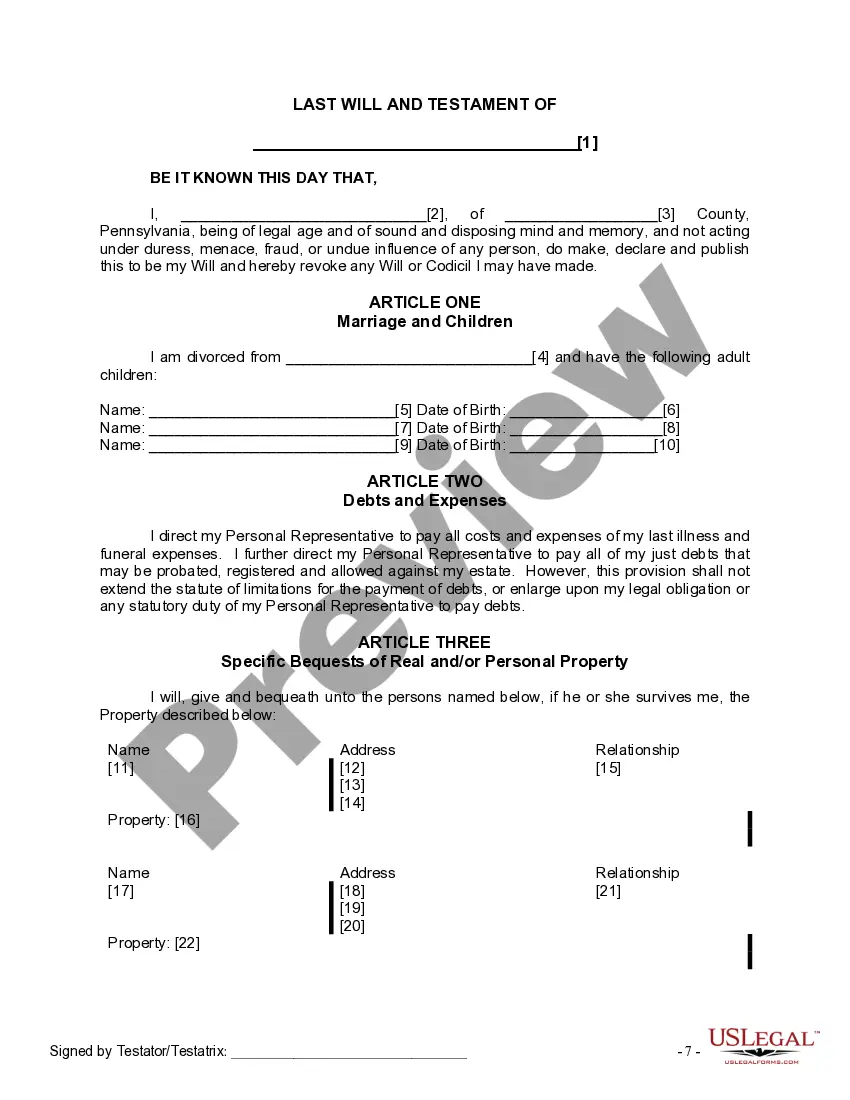
The Last Will and Testament for a divorced person not remarried with adult children is a legal document that outlines how a person's assets will be distributed upon their death. This specific form addresses the needs of individuals who are divorced, have adult children, and want to ensure their wishes are clearly stated. It differs from other wills by specifically stating the status of the individual (divorced, not remarried) and the age of the children, allowing for a tailored distribution of assets and responsibilities.
What’s included in this form
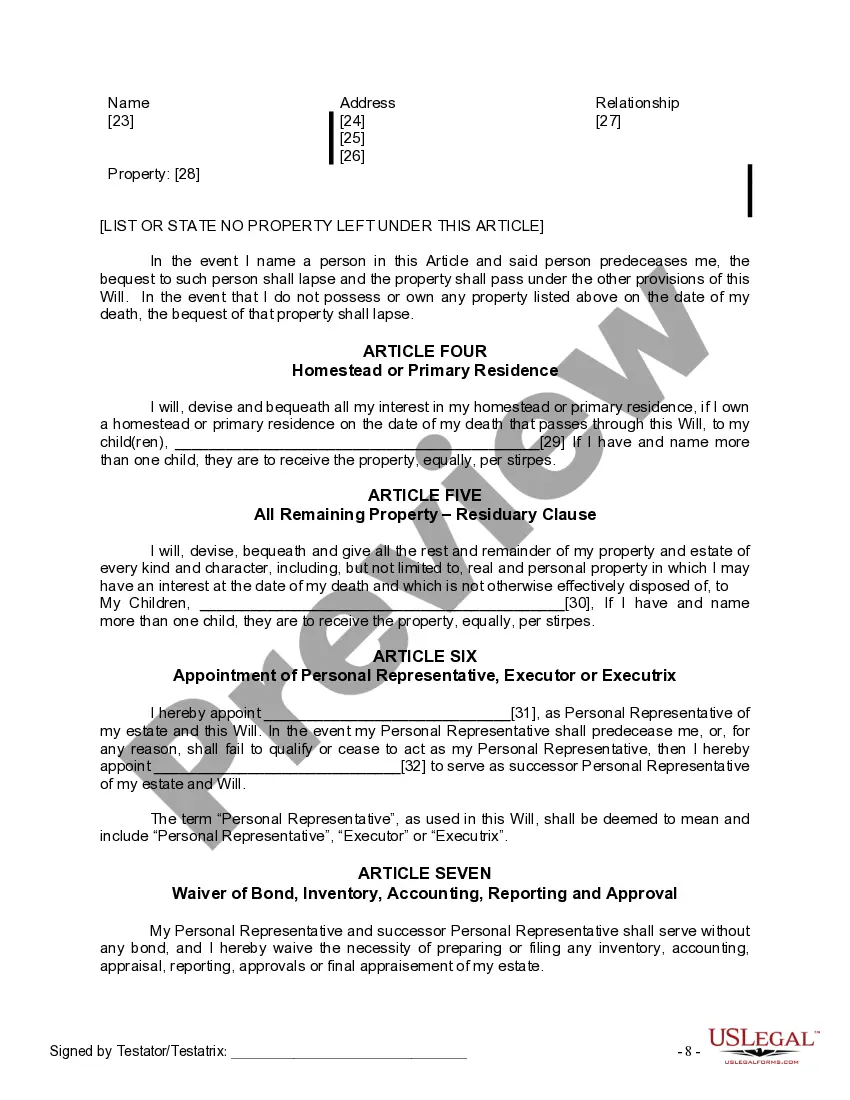
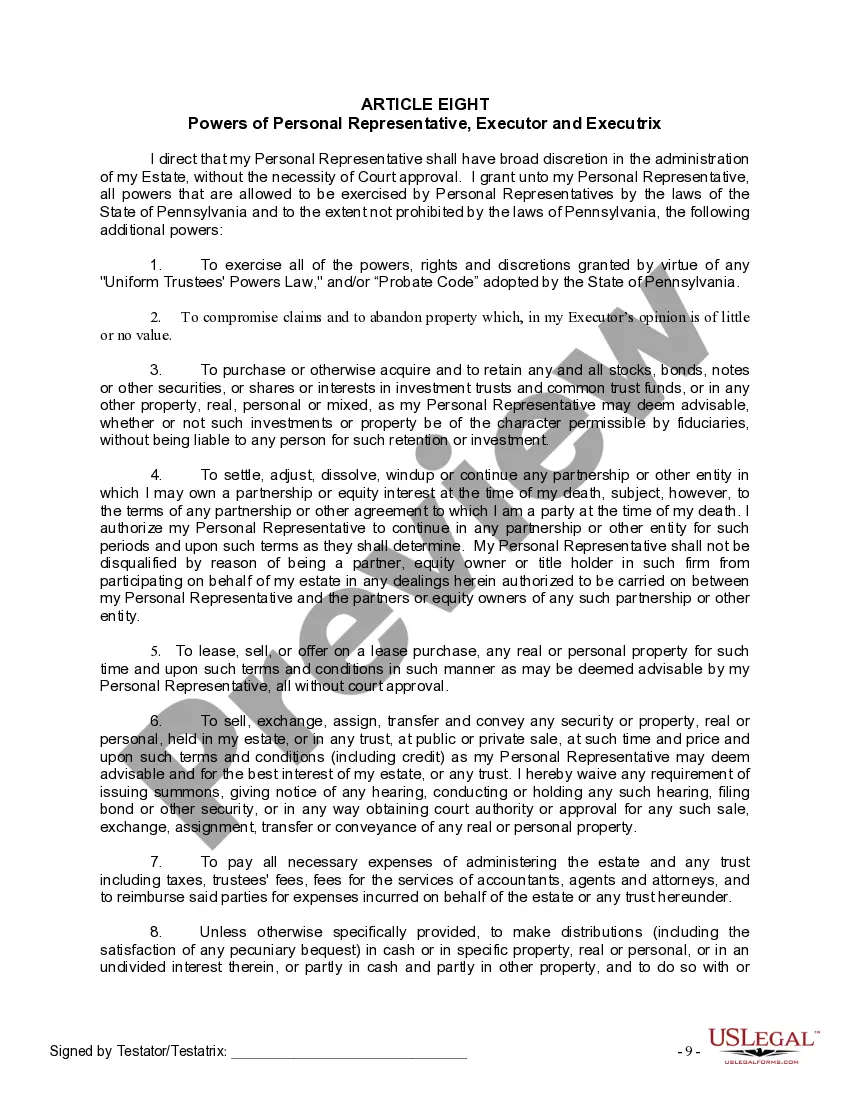
- Appointment of a personal representative or executor to manage estate affairs.
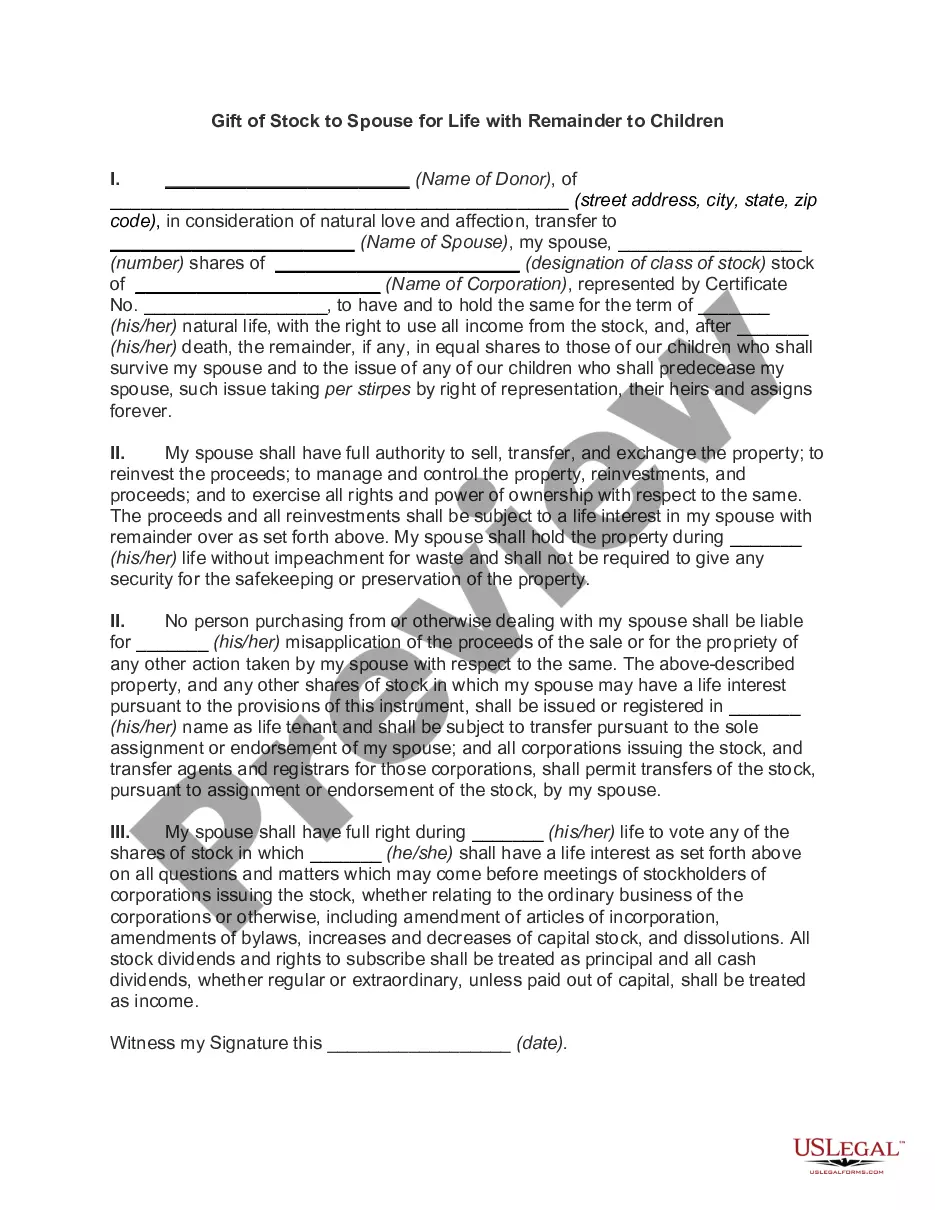
- Specifications on who will inherit property, including specific bequests to individuals.
- Options to leave homestead or primary residence to designated beneficiaries.
- Provisions for settling debts and funeral expenses before distributions.
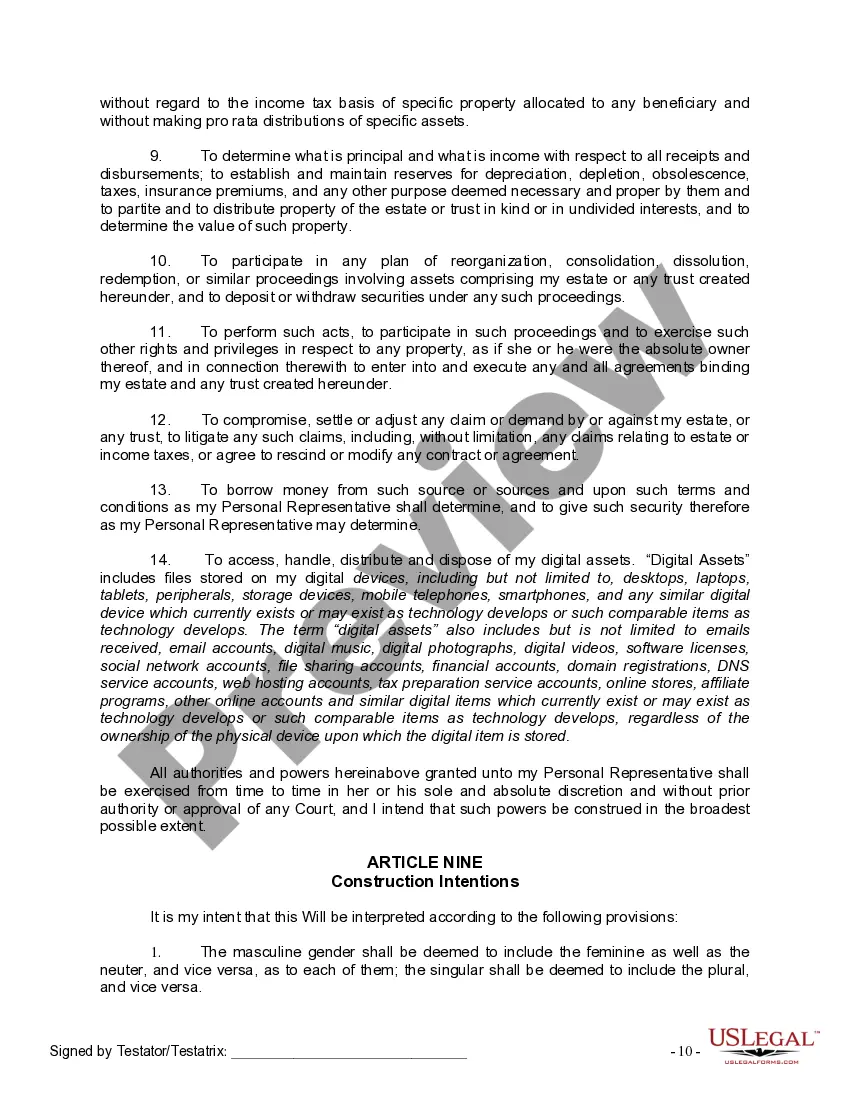
- Legal clauses outlining the powers of the executor in managing the estate.
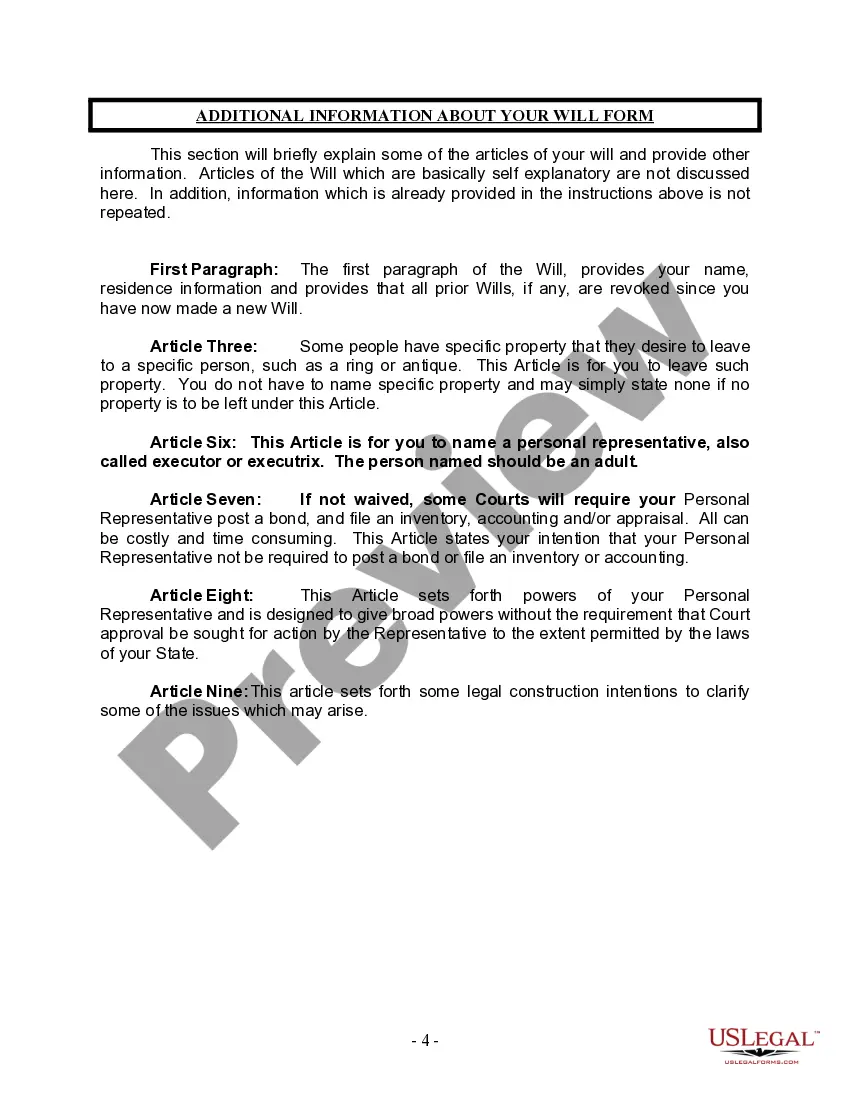
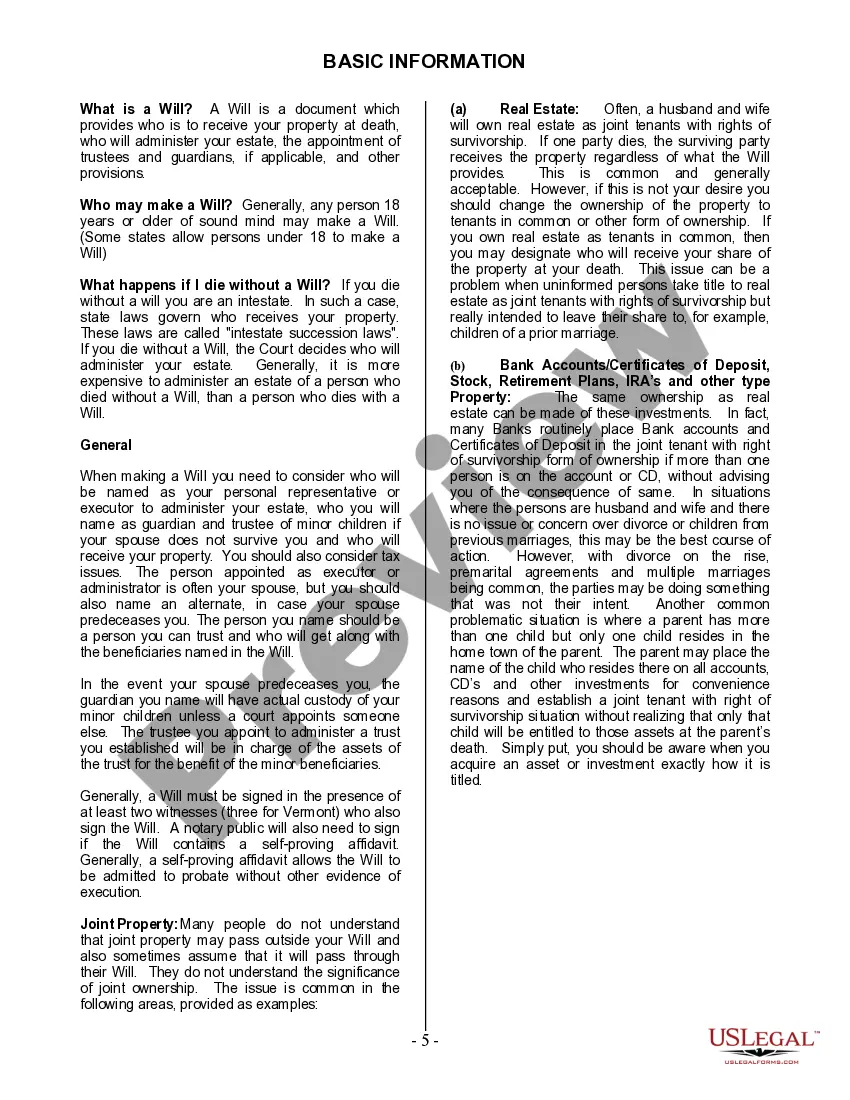
- Self-proving affidavit provisions for smoother probate processes.





When this form is needed
This form should be used when a divorced individual, who is not remarried and has adult children, wants to create a legally binding document to specify how their assets and property will be distributed after their passing. It is particularly relevant for ensuring that the individual's wishes are honored, avoiding potential disputes among heirs, and providing clarity about who will administer the estate.
Who can use this document
- Individuals who are divorced and have not remarried.
- Parents with adult children who want to ensure their heirs receive designated assets.
- Those wishing to clarify asset distribution and appoint a personal representative.
- Any person who wishes to establish a legally binding testament to their final wishes.
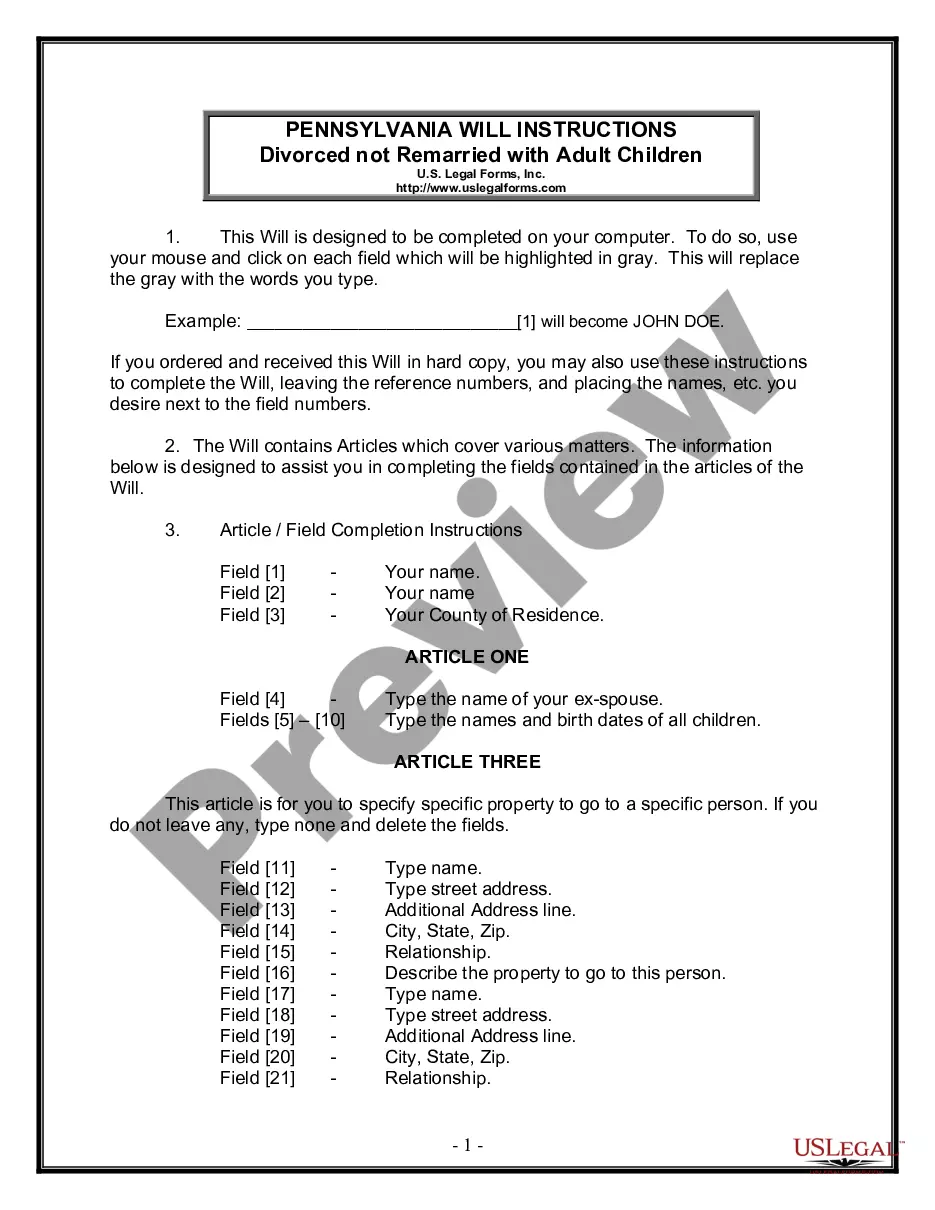
Completing this form step by step
- Identify yourself and include your county of residence.
- List your ex-spouse's name and your children's names and birth dates.
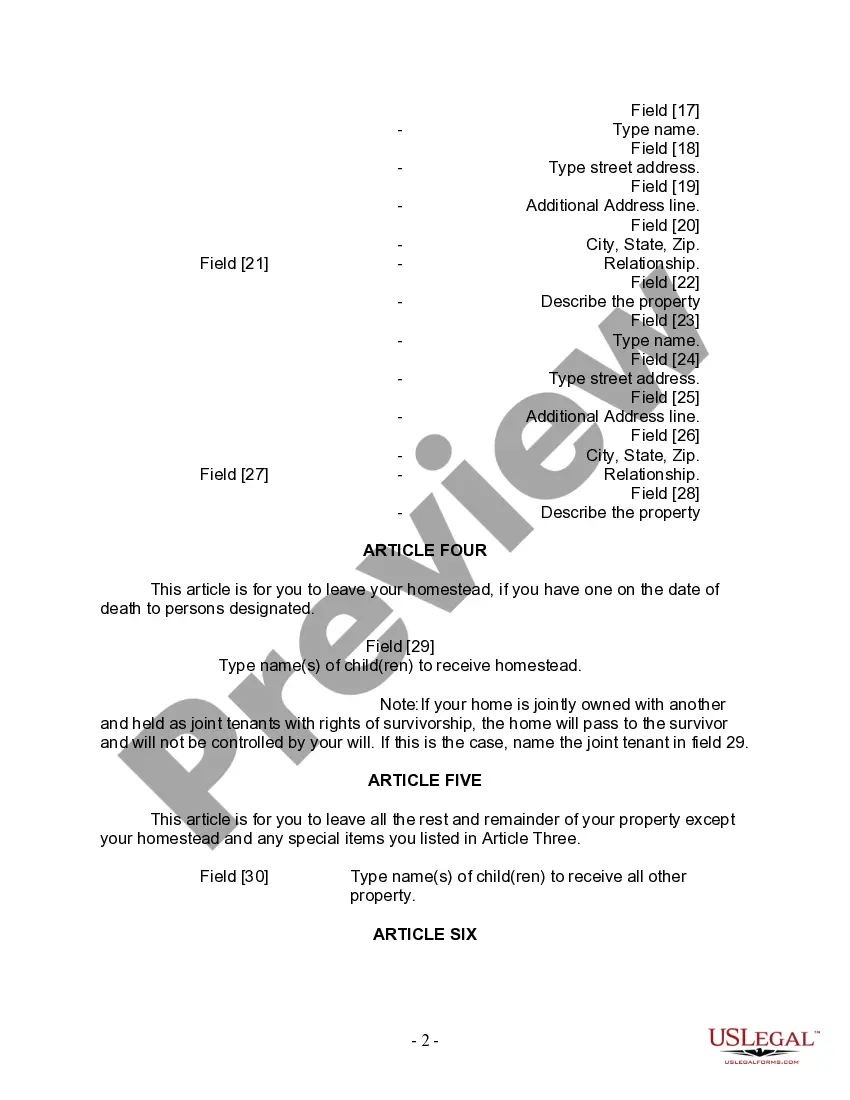
- Specify any particular property you wish to designate to specific individuals.
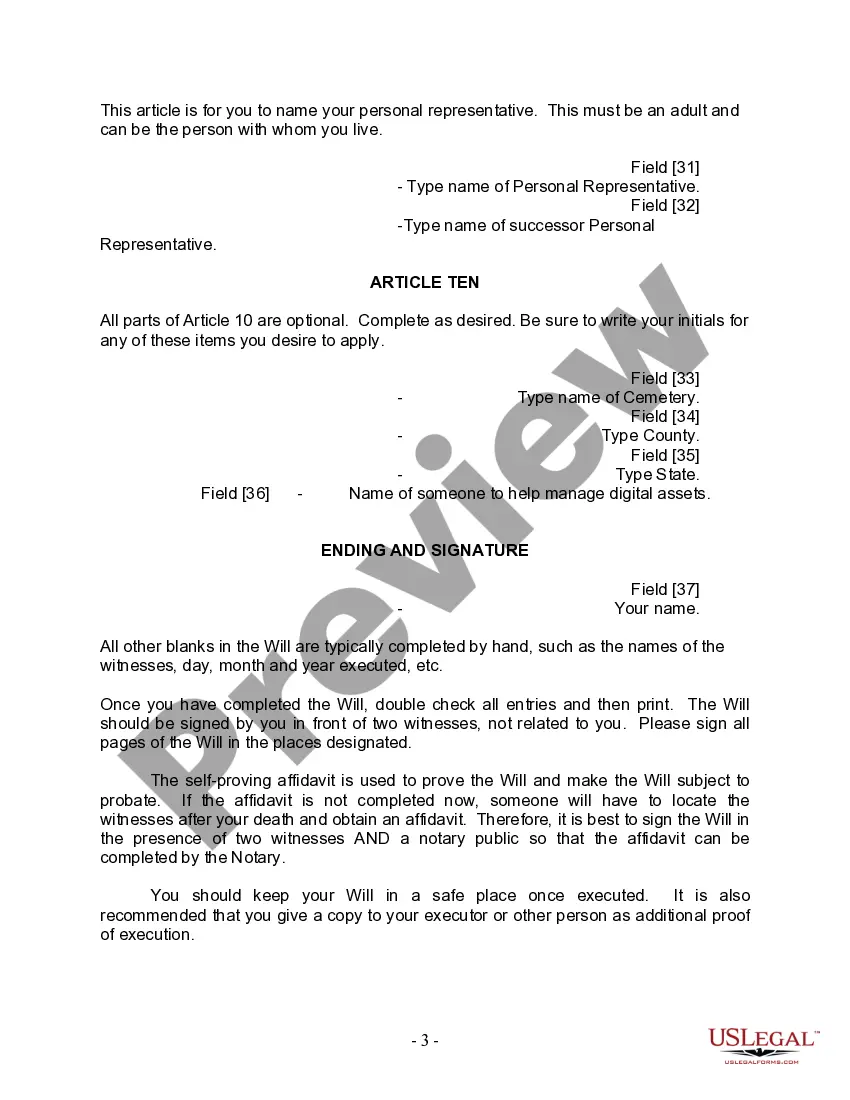
- Appoint a personal representative to manage your estate and a successor if necessary.
- Complete the self-proving affidavit for smoother probate if applicable.
- Sign the document in front of two witnesses, ensuring all parties are aware of the contents.
Notarization requirements for this form
Yes, this form must be notarized to be legally valid. It includes a self-proving affidavit that requires notarization, which helps streamline the probate process. If you utilize our online services, we provide integrated notarization options for added convenience.
Get your form ready online
Our built-in tools help you complete, sign, share, and store your documents in one place.
Make edits, fill in missing information, and update formatting in US Legal Forms—just like you would in MS Word.
Download a copy, print it, send it by email, or mail it via USPS—whatever works best for your next step.
Sign and collect signatures with our SignNow integration. Send to multiple recipients, set reminders, and more. Go Premium to unlock E-Sign.
If this form requires notarization, complete it online through a secure video call—no need to meet a notary in person or wait for an appointment.
We protect your documents and personal data by following strict security and privacy standards.

Make edits, fill in missing information, and update formatting in US Legal Forms—just like you would in MS Word.

Download a copy, print it, send it by email, or mail it via USPS—whatever works best for your next step.

Sign and collect signatures with our SignNow integration. Send to multiple recipients, set reminders, and more. Go Premium to unlock E-Sign.

If this form requires notarization, complete it online through a secure video call—no need to meet a notary in person or wait for an appointment.

We protect your documents and personal data by following strict security and privacy standards.
Mistakes to watch out for
- Failing to sign the will in front of required witnesses.
- Not specifying details about the distribution of specific assets.
- Overlooking the need for a self-proving affidavit if required by state law.
- Leaving the will in an inaccessible location after execution.
- Not reviewing or updating the will after significant life changes.
Why use this form online
- Convenient and accessible format that allows for easy completion from home.
- Editability to ensure personal information and wishes are accurately captured.
- Reliable templates drafted by licensed attorneys, ensuring legality and compliance.
- Immediate download option for quick safeguarding of your legal wishes.
Looking for another form?

Form popularity
FAQ
No. You can make your own will in Pennsylvania, using Nolo's do-it-yourself will software or online will programs. However, you may want to consult a lawyer in some situations. For example, if you think that your will might be contested or if you want to disinherit your spouse, you should talk with an attorney.
An adult can make a valid will without notifying their wife or husband. Not telling a spouse would be unusual, but not illegal.
Like most wills, a joint will lets the will-makers name who will get their property and assets after they die. Joint wills are usually created by married couples.After one spouse has died, all the couple's property will be left to the surviving spouse; and.
To create a valid will in Pennsylvania, the will creator (testator) must be 18 years of age and must possess a sound mind. Possessing a sound mind means that the testator is mentally competent and fully understands what property they own and who they are conveying their property to.
If a spouse acquired an inheritance, even during a marriage, this asset is considered separate from a marital or nonmarital asset. Pennsylvania divorce law considers an inheritance a nonmarital asset only if the funds are kept in a separate account and are not used to purchase jointly owned property.
A handwritten will may be legal in Pennsylvania depending on the individual circumstances. Under Pennsylvania state code, wills must be in writing and signed by the person making the will, known as the testator.The state of Pennsylvania therefore makes no legal distinction between a handwritten and typed will.
Pennsylvania estate planning advisors and attorneys agree that joint and mutual wills are usually not in a married couple's best interest.