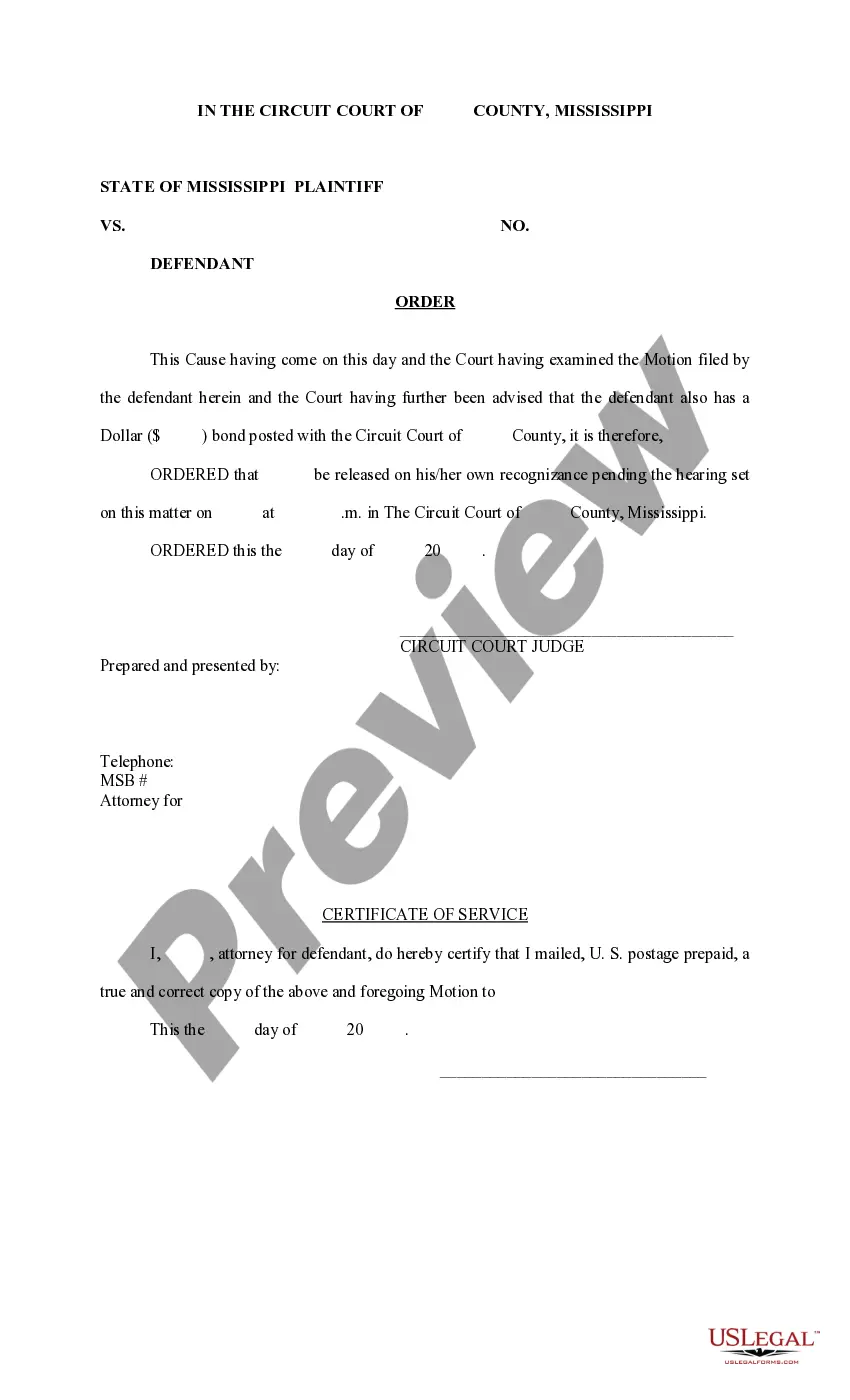
Mississippi Order Releasing Defendant on his own Recognizance
Understanding this form
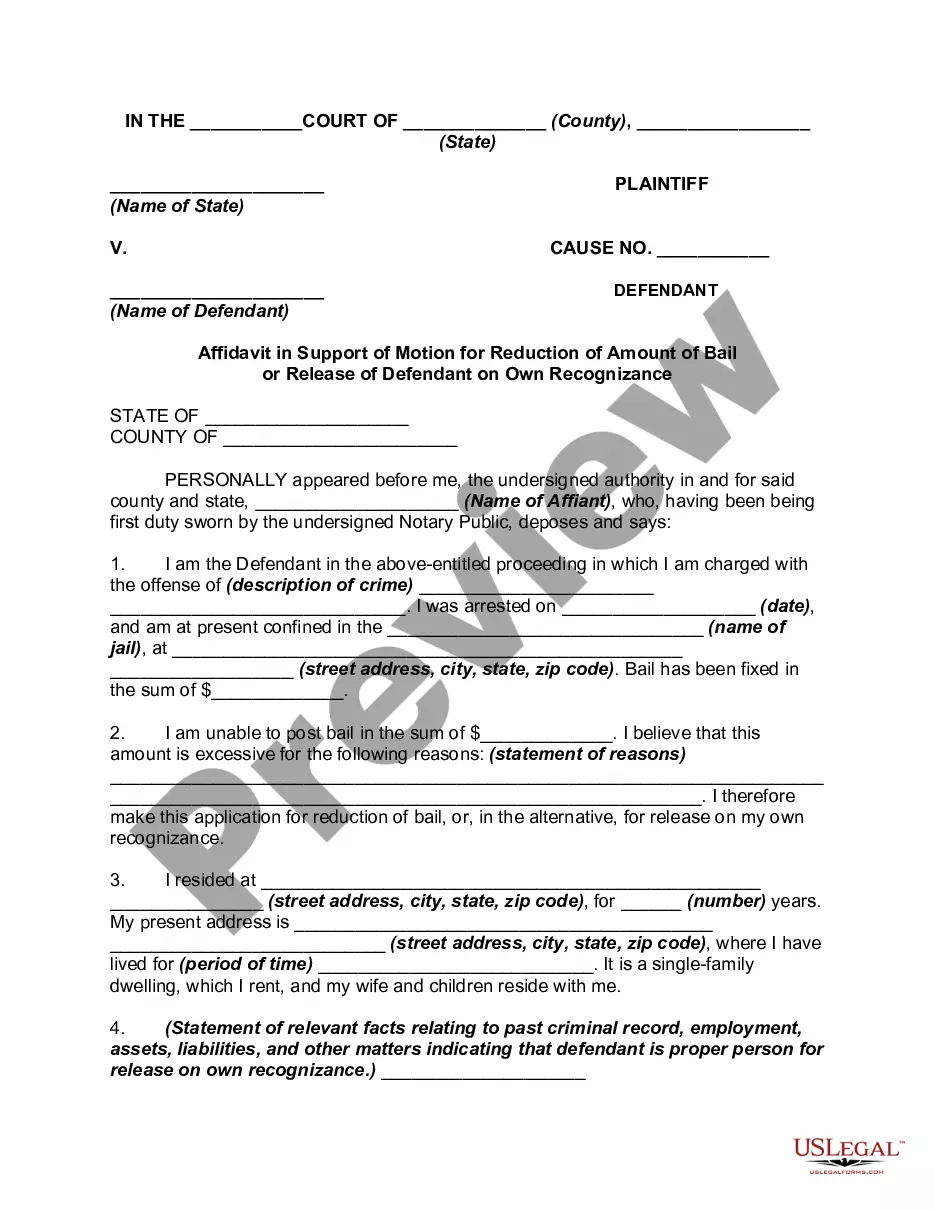
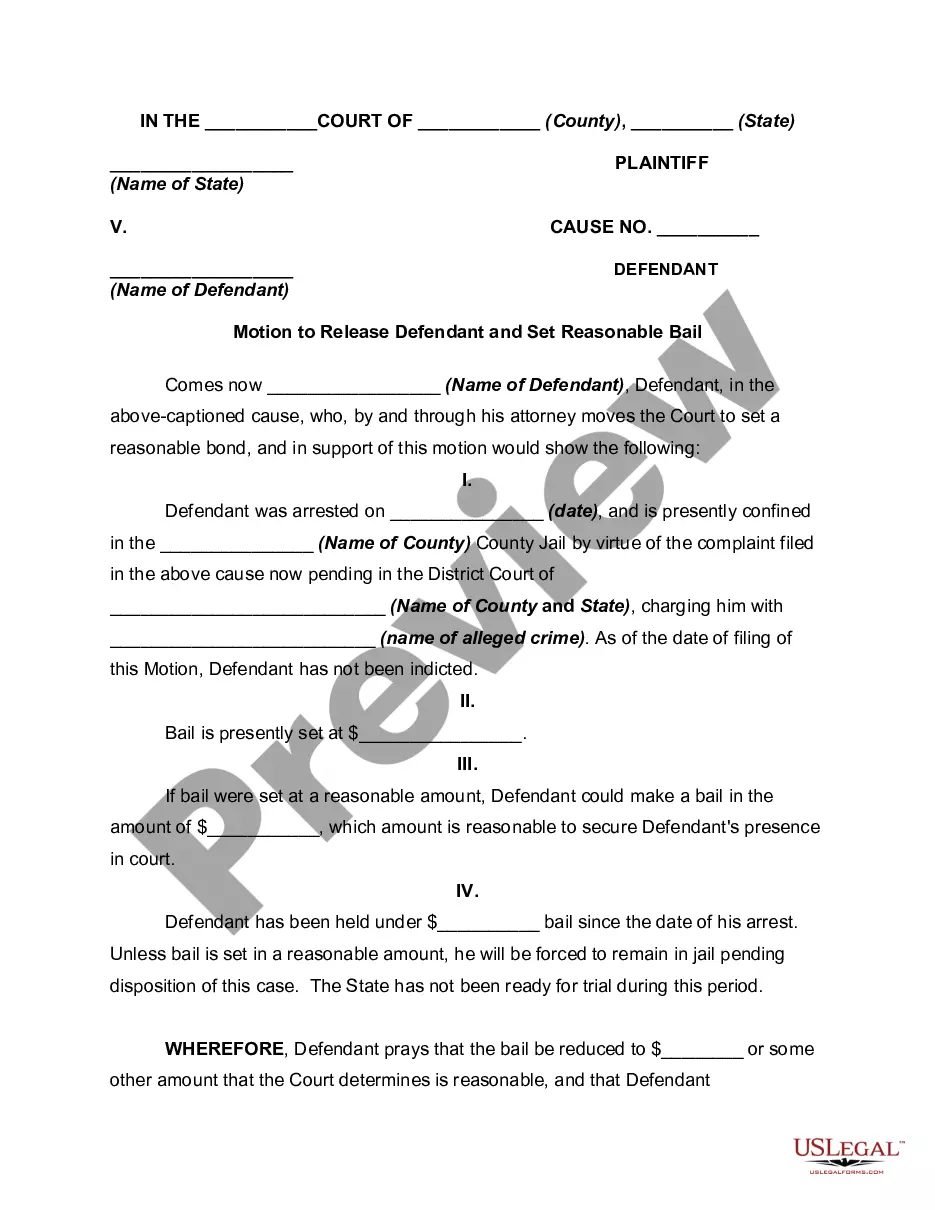
The Order Releasing Defendant on His Own Recognizance is an official court document that allows a defendant to be released from custody without the need to post bail, based on their promise to appear for all scheduled court dates. This form differs from other bail documents as it does not require a financial commitment from the defendant, aiming to facilitate their release while ensuring compliance with court orders.
Main sections of this form
- Defendant's details: Name and personal information of the individual being released.
- Judge's signature: Official endorsement from the presiding judge to validate the order.
- Conditions of release: Specific terms that the defendant must follow while out of custody.
- Notice to the defendant: A brief statement outlining the responsibilities of the released individual.
When to use this form
This form should be used when a defendant is awaiting trial or a hearing and the court finds them suitable for release based on their assurance to appear. It is often employed in cases where the charges are not severe enough to warrant a financial bond, allowing for the defendant to stay out of jail while preparing their defense.
Who this form is for
This form is intended for:
- Defendants seeking release from custody without bail.
- Attorneys representing clients who are eligible for release on their own recognizance.
- Judicial staff tasked with processing release orders.
Steps to complete this form
- Identify the parties: Enter the defendant's full name and relevant personal information.
- Document the conditions: Clearly state any specific conditions the defendant must meet upon their release.
- Obtain judicial approval: Ensure that the presiding judge reviews and signs the order.
- Provide a notification: Include a notice explaining the defendant's obligations to appear in court.
Notarization guidance
Notarization is not commonly needed for this form. However, certain documents or local rules may make it necessary. Our notarization service, powered by Notarize, allows you to finalize it securely online anytime, day or night.
Get your form ready online
Our built-in tools help you complete, sign, share, and store your documents in one place.
Make edits, fill in missing information, and update formatting in US Legal Forms—just like you would in MS Word.
Download a copy, print it, send it by email, or mail it via USPS—whatever works best for your next step.
Sign and collect signatures with our SignNow integration. Send to multiple recipients, set reminders, and more. Go Premium to unlock E-Sign.
If this form requires notarization, complete it online through a secure video call—no need to meet a notary in person or wait for an appointment.
We protect your documents and personal data by following strict security and privacy standards.

Make edits, fill in missing information, and update formatting in US Legal Forms—just like you would in MS Word.

Download a copy, print it, send it by email, or mail it via USPS—whatever works best for your next step.

Sign and collect signatures with our SignNow integration. Send to multiple recipients, set reminders, and more. Go Premium to unlock E-Sign.

If this form requires notarization, complete it online through a secure video call—no need to meet a notary in person or wait for an appointment.

We protect your documents and personal data by following strict security and privacy standards.
Avoid these common issues
- Failing to include all required defendant information.
- Not specifying conditions of release clearly enough.
- Forgetting to obtain proper court endorsement with the judge's signature.
Advantages of online completion
- Convenience of downloading and accessing the form anytime, anywhere.
- Editability allows for easy customization to meet specific case needs.
- Reliability, as the forms are drafted by licensed attorneys ensuring legal validity.
Looking for another form?
Form popularity
FAQ
The discharge process can take as little as 30 minutes or as long as 24 hours. Unfortunately, the speed of your release is unpredictable but typically the quicker you are able to make your bond payment the quicker the process will be to be released.
Release with a surety bond. Release with a cash bond. Release on your own recognizance.
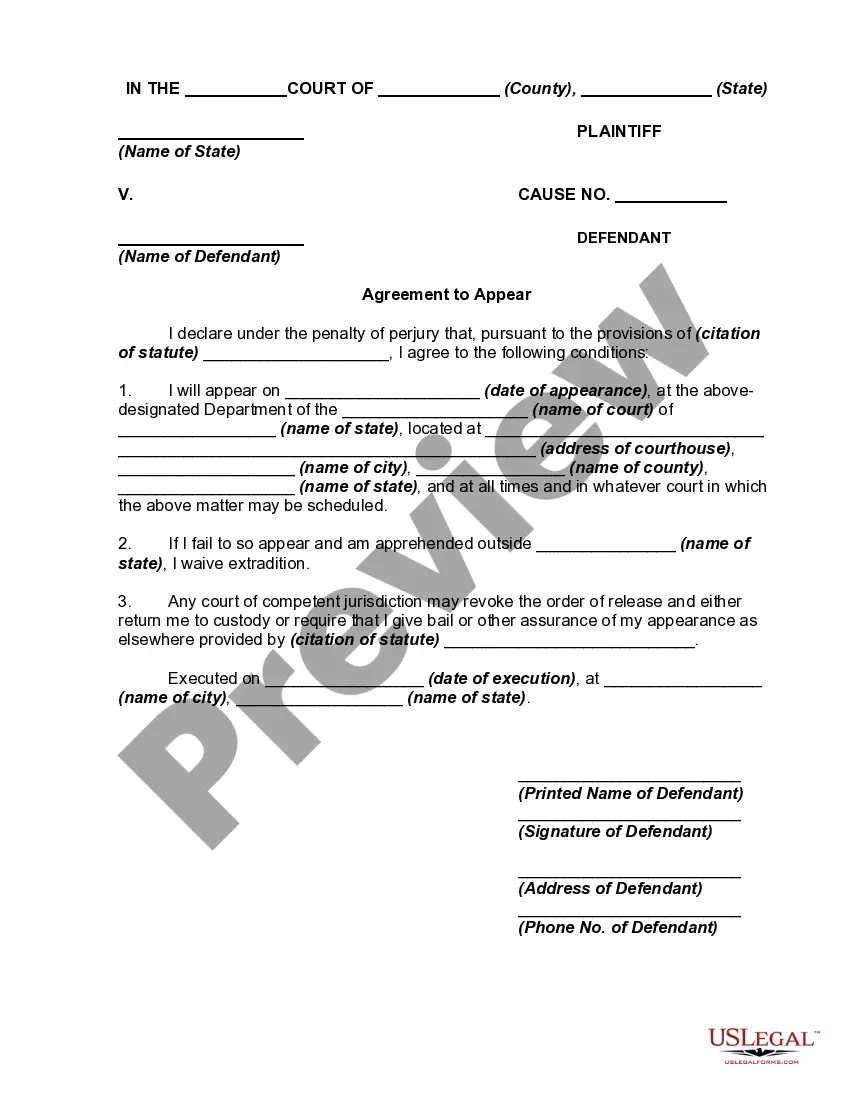
Defendants who are released pretrial on their own recognizance sign an agreement promising to return to court as requiredwithout having to pay bail as a guarantee.
Section 3. Recognizance Defined. Recognizance is a mode of securing the release of any person in custody or detention for the commission of an offense who is unable to post bail due to abject poverty.
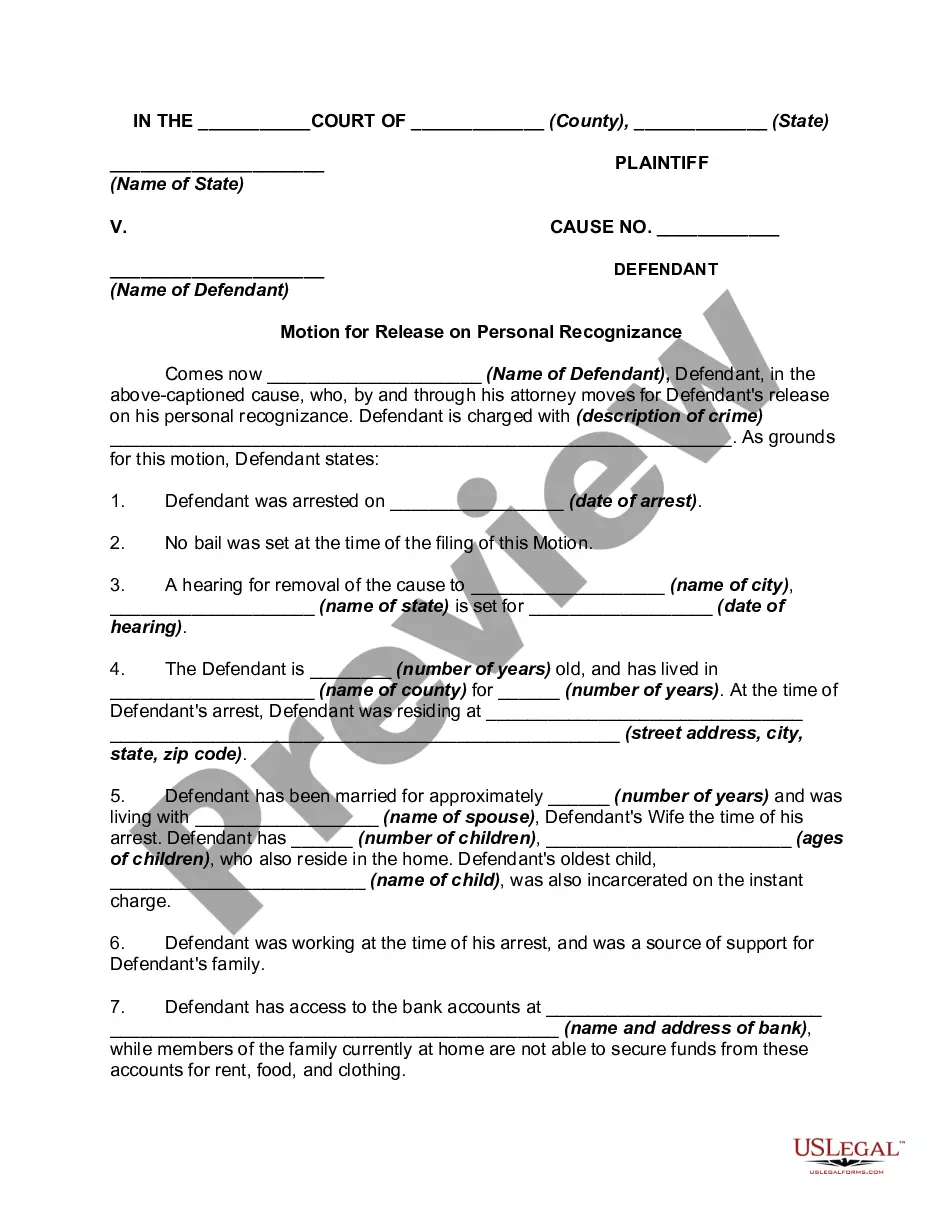
Release on Own Recognizance.People in this situation may be able to obtain a release on their own recognizance, which means that they can get bail without paying bond. A defendant will need to sign a written promise to show up at their scheduled court appearance.
State Legislatures: Commercial bail is the most common form of pretrial release.
Release on your own recognizance means you don't have to pay bail. Simply put, OR release is no-cost bail. Defendants released on their own recognizance need only sign a written promise to appear in court as required. No bail has to be paid, either to the court or to a bail bond seller.
Release on your own recognizance means you don't have to pay bail. Simply put, OR release is no-cost bail. Defendants released on their own recognizance need only sign a written promise to appear in court as required. No bail has to be paid, either to the court or to a bail bond seller.
The defendant is released upon personal or own recognizance (promise to appear in court) without an appearance bond. the defendant is released on an unsecured appearance bond with a monetary amount that is secured only by the signature of the defendant.