Pennsylvania Last Will and Testament for Married person with Minor Children from Prior Marriage
What is this form?
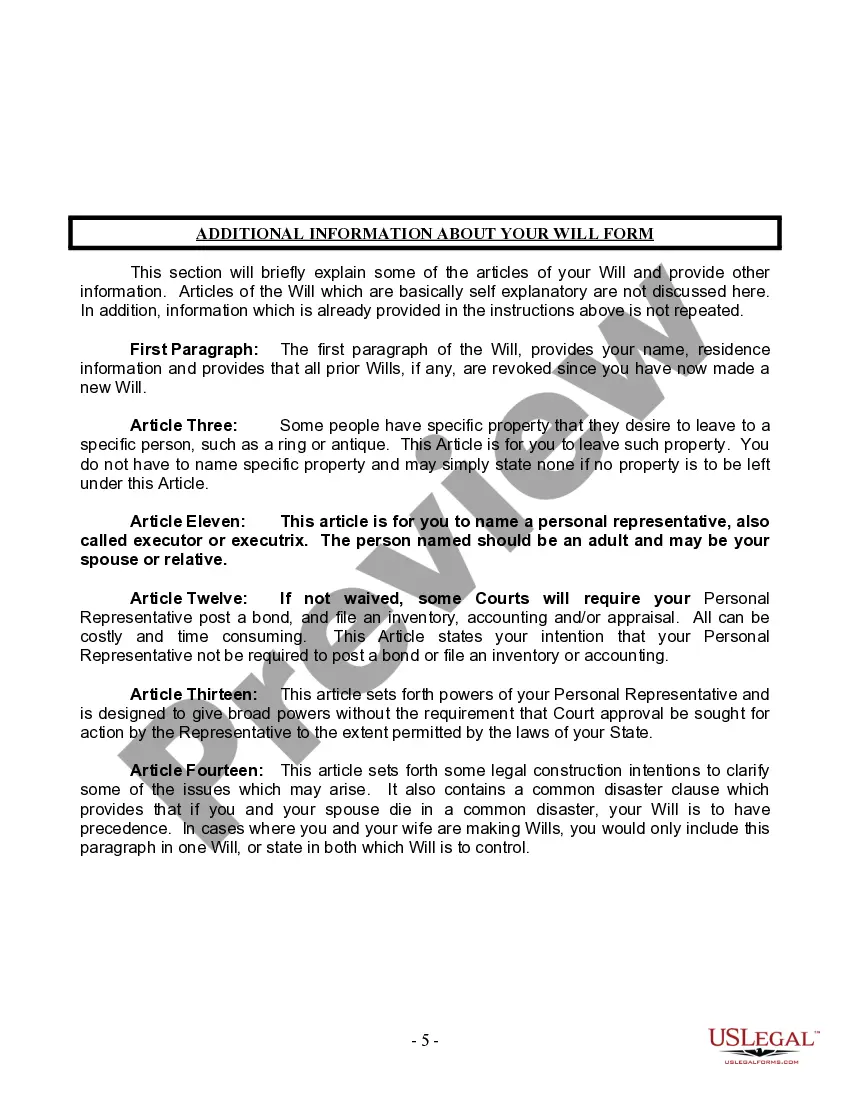
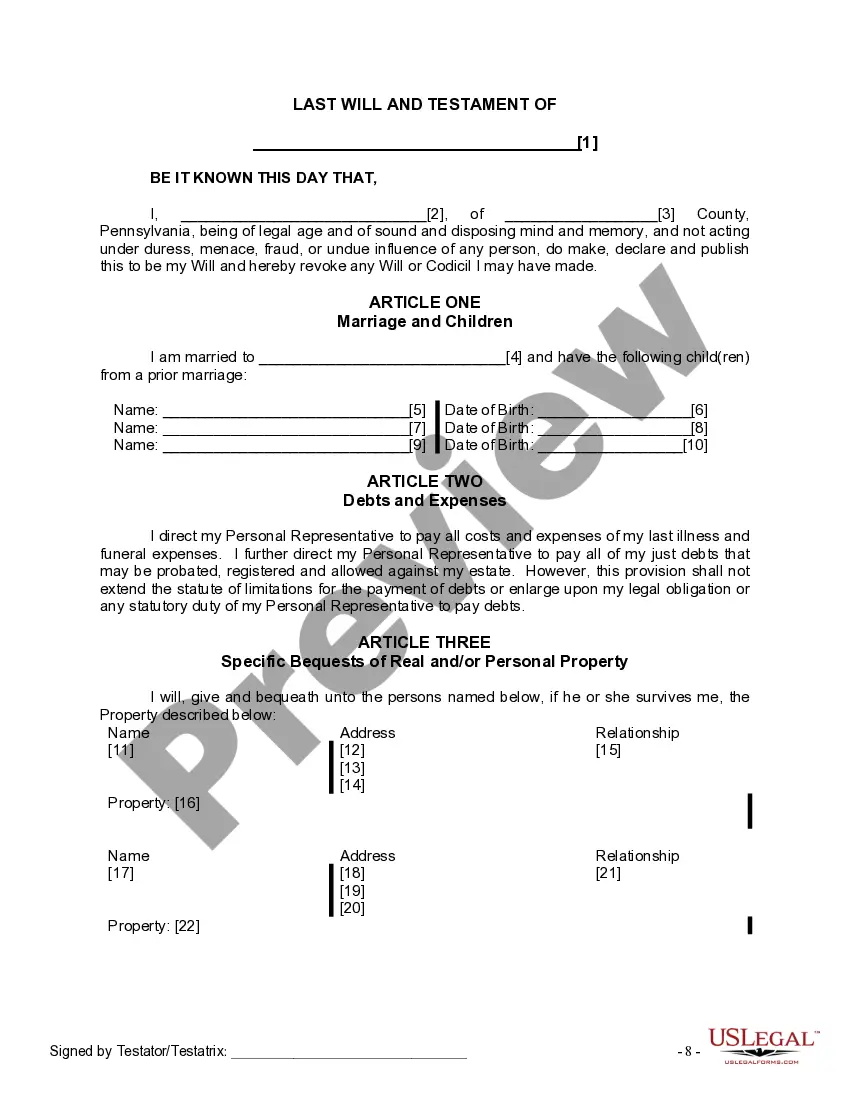
The Last Will and Testament for a Married Person with Minor Children from a Prior Marriage is a legal document that specifies how your property and assets will be distributed upon your passing. This will includes provisions for appointing a personal representative (executor), designs who will receive your assets, and ensures a trustee is designated to manage assets left for your minor children. Unlike standard wills, this document specifically addresses the complexities that arise from having children from a prior marriage, ensuring that all beneficiaries are clearly defined according to your wishes.
What’s included in this form
- Appointment of Personal Representative: Designate an adult to administer your estate.
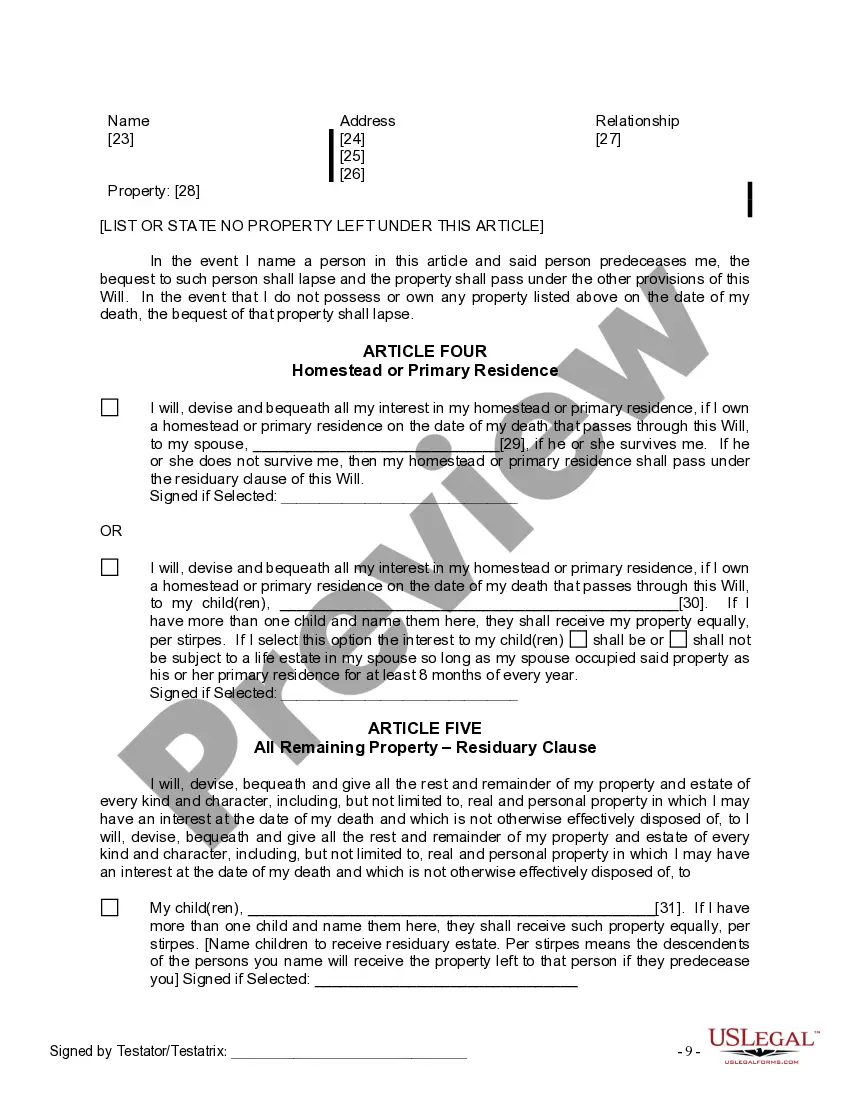
- Specific Bequests: Detail any specific property you wish to leave to certain individuals.
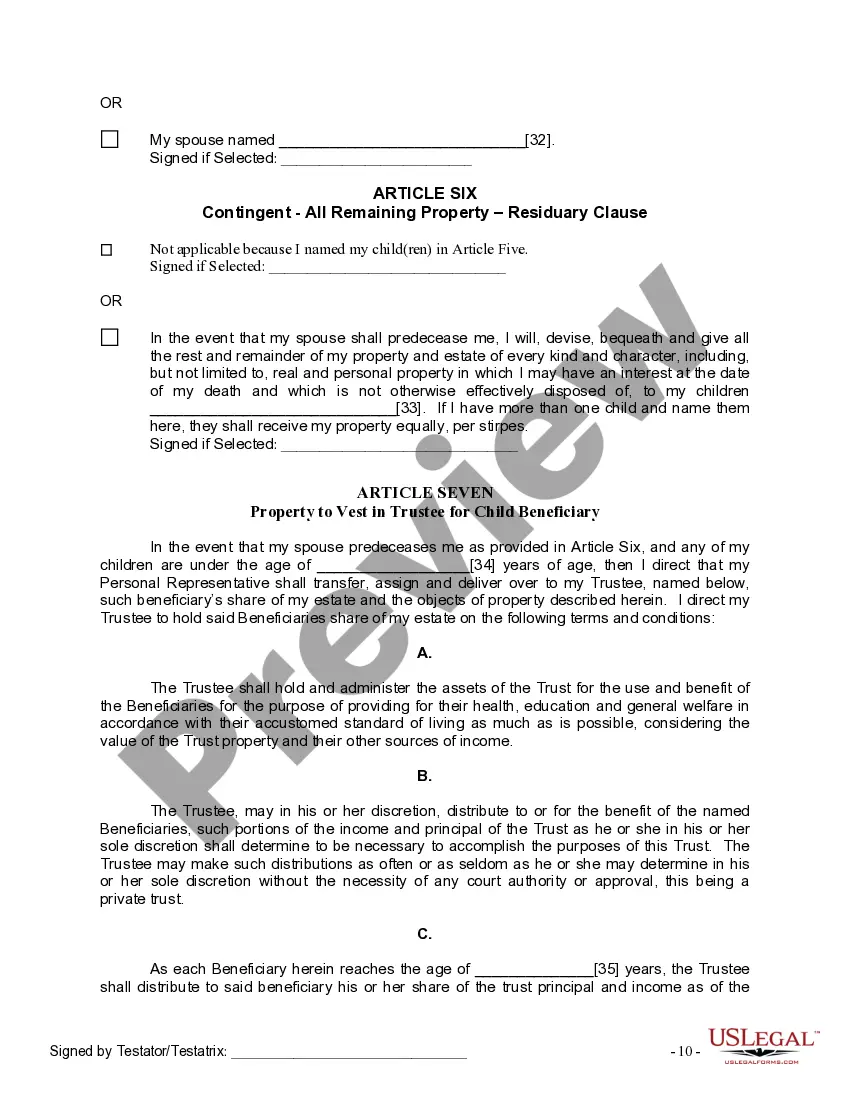
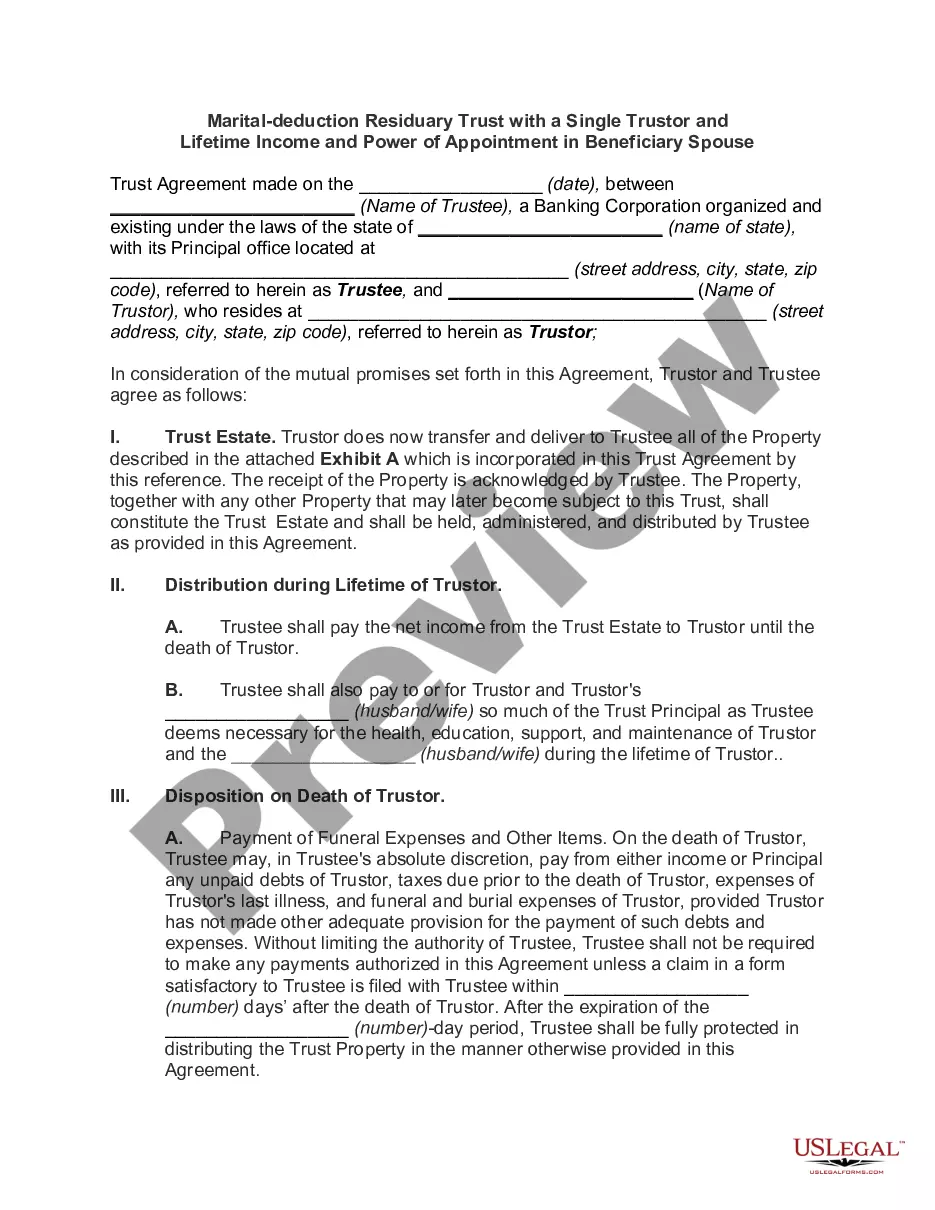
- Trust for Minor Children: Create a trust for assets intended for your minor children.
- Guardian Appointment: Name a guardian for your minor children in case of your death.
- Homestead Distribution: Specify what will happen to your primary residence.
- Residuary Clause: Determine how remaining assets will be distributed after specific bequests.




When to use this form
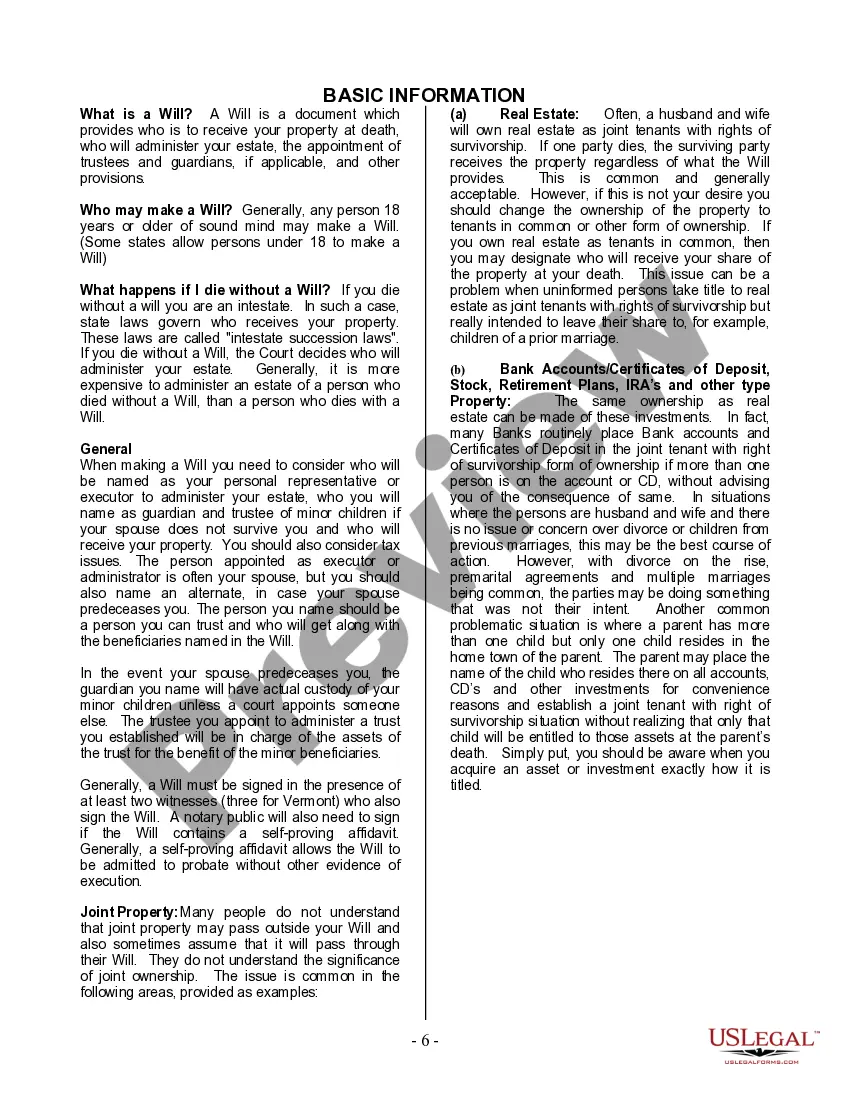
This form is essential if you are a married individual with minor children from a previous marriage. You should use it when you wish to clearly outline your wishes regarding the distribution of your estate, ensure that your children are provided for, and appoint guardians and trustees, especially in a blended family situation where you want to avoid potential conflicts or misunderstandings after your passing.
Who can use this document
- Married individuals with minor children from a prior marriage.
- Those who want to ensure that their estate is distributed according to their wishes.
- Individuals looking to avoid disputes among family members regarding inheritance.
- Parents who want to provide for their children while still accounting for a new spouse.
Instructions for completing this form
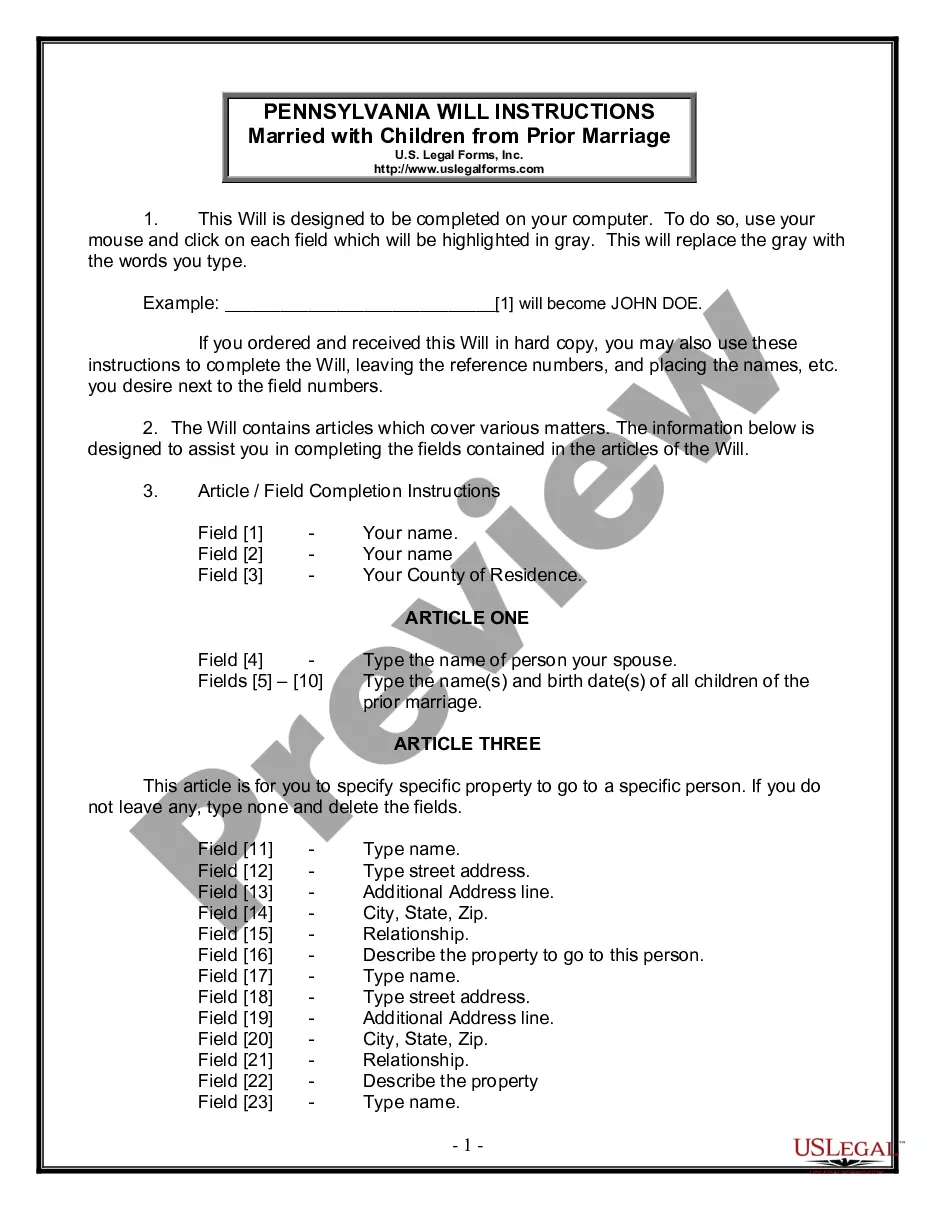
- Begin by entering your full name and county of residence in the designated fields.
- List your spouse's name and the names and birth dates of all children from your prior marriage.
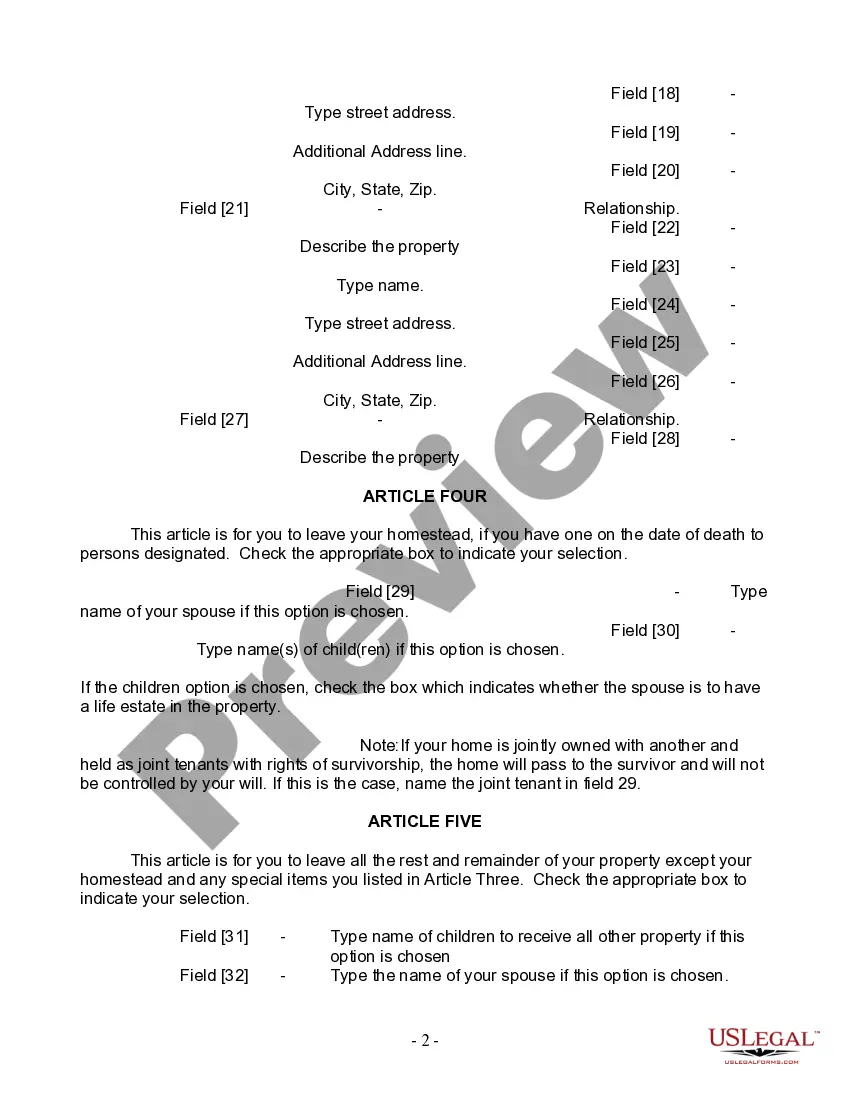
- Specify any specific property you wish to bequeath to individuals, answering relevant questions about those properties.
- Designate the homestead or primary residence to your spouse or children as desired.
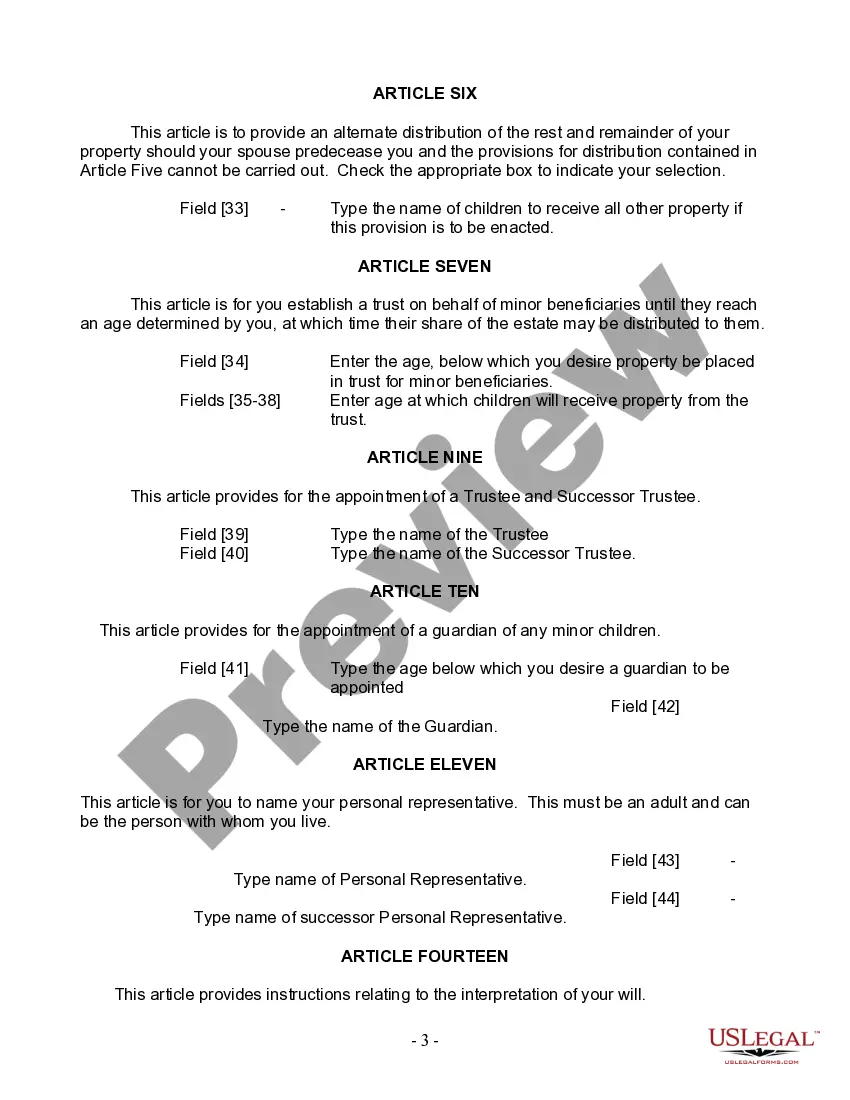
- Complete sections regarding guardianship and trustee appointments for any minor beneficiaries.
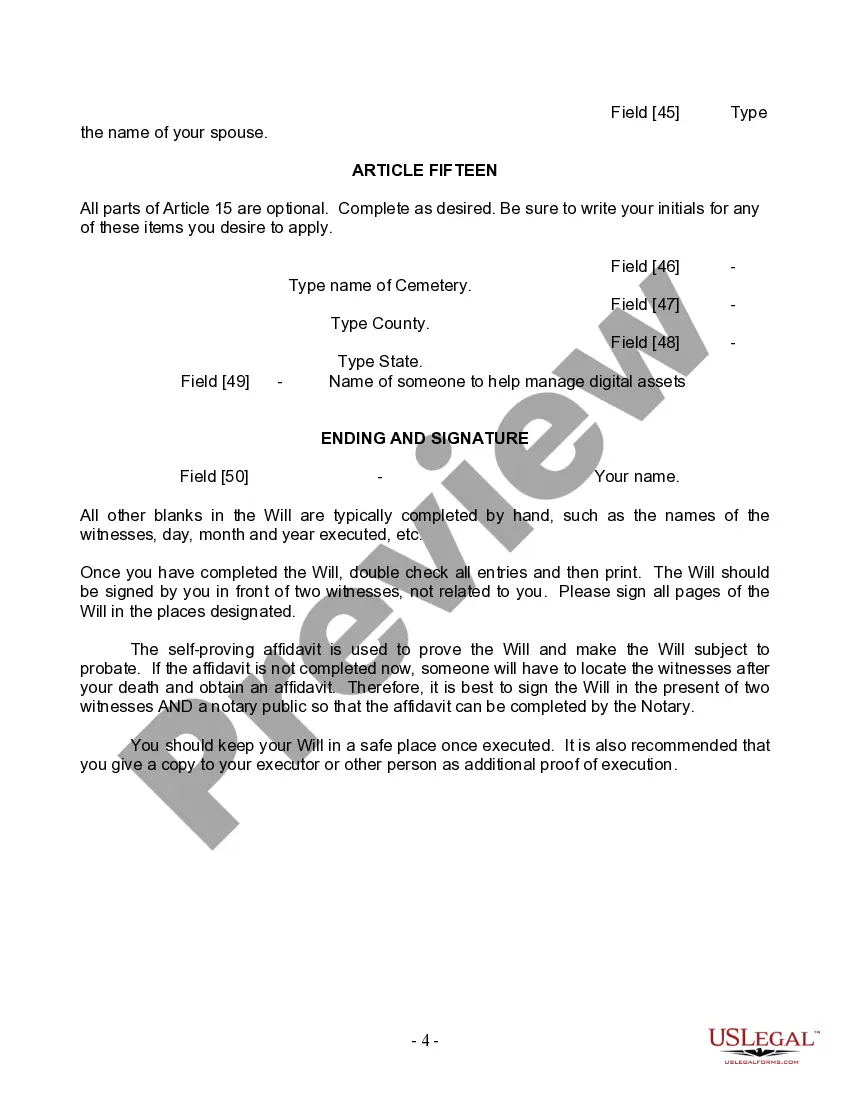
- Sign the will in the presence of two witnesses and a notary public if required to finalize the document.
Does this document require notarization?
Yes, this form must be notarized to be legally valid. It is recommended to sign the Will in the presence of a notary public. This helps to create a self-proving affidavit, streamlining the probate process and ensuring that your wishes are upheld without contest.
Get your form ready online
Our built-in tools help you complete, sign, share, and store your documents in one place.
Make edits, fill in missing information, and update formatting in US Legal Forms—just like you would in MS Word.
Download a copy, print it, send it by email, or mail it via USPS—whatever works best for your next step.
Sign and collect signatures with our SignNow integration. Send to multiple recipients, set reminders, and more. Go Premium to unlock E-Sign.
If this form requires notarization, complete it online through a secure video call—no need to meet a notary in person or wait for an appointment.
We protect your documents and personal data by following strict security and privacy standards.

Make edits, fill in missing information, and update formatting in US Legal Forms—just like you would in MS Word.

Download a copy, print it, send it by email, or mail it via USPS—whatever works best for your next step.

Sign and collect signatures with our SignNow integration. Send to multiple recipients, set reminders, and more. Go Premium to unlock E-Sign.

If this form requires notarization, complete it online through a secure video call—no need to meet a notary in person or wait for an appointment.

We protect your documents and personal data by following strict security and privacy standards.
Typical mistakes to avoid
- Failing to sign the document in front of the required witnesses.
- Not including specific property or clearly defining beneficiary interests.
- Neglecting to update the will after significant life changes such as marriage or divorce.
- Forgetting to appoint a trustee or guardian for minor children.
Why complete this form online
- Convenience of preparing your will from home without the need for an attorney.
- Immediate access to professionally drafted legal templates.
- Easy to edit and customize as your circumstances change.
- Secure and reliable online process for creating and storing your will.
Legal use & context
- This will is a legally binding document that directs how your estate is handled after your death.
- Proper execution and witnessing are crucial for its enforceability.
- Failure to create a valid will may result in your estate being distributed according to state intestacy laws.
- Always ensure the will complies with the laws of your state to avoid legal complications.
Summary of main points
- The Last Will and Testament for a Married Person with Minor Children from a Prior Marriage is tailored for individuals in complex family situations.
- Certain legal requirements, such as witness signatures and notarization, must be fulfilled for validity.
- By using this form, you can ensure your wishes are documented and reduce the likelihood of disputes among family members.
- Regular updates to your will are essential to reflect changes in your family circumstances.
Looking for another form?








Form popularity
FAQ
But for estates in Pennsylvania that exceed the small estate's threshold, and for which there is either no Will, or a Will (but not a Living Trust), probate will be required before an estate can be tranferred to the decedent's heirs or beneficiaries.
Fraud or Undue Influence A nonfamily caregiver forcing the testator to leave them an inheritance. A family member getting the testator to sign a will by pretending it is just a general legal document that needs a signature.
Set up joint accounts with the people you wish to benefit. Gift your assets to your children. Buy extra life insurance. Utilize life insurance to give money to beneficiaries who are taxed at the highest tax rates. Buy real estate outside of Pennsylvania. Pay the PA inheritance tax early. Convert your IRA to a Roth IRA.
No. You can make your own will in Pennsylvania, using Nolo's do-it-yourself will software or online will programs. However, you may want to consult a lawyer in some situations. For example, if you think that your will might be contested or if you want to disinherit your spouse, you should talk with an attorney.
In order for a will to be valid, it must be: made by a person who is 18 years old or over and. made voluntarily and without pressure from any other person and.signed by the two witnesses, in the presence of the person making the will, after it has been signed.
No, in Pennsylvania, you do not need to notarize your will to make it legal. However, you must go to a notary to make your will self-proving, see above.
Pennsylvania will requirements Under Pennsylvania state code, wills must be in writing and signed by the person making the will, known as the testator. The testator must be 18 years of age and of sound mind, which is generally defined as being capable of understanding what he or she prepared and signed the will.
A handwritten will may be legal in Pennsylvania depending on the individual circumstances. Under Pennsylvania state code, wills must be in writing and signed by the person making the will, known as the testator.The state of Pennsylvania therefore makes no legal distinction between a handwritten and typed will.
If the decedent and his or her current spouse are their parents, the children are entitled to an inheritance only after the surviving spouse inherits $30,000 and half of the balance of the estate. But if the children were born out of marriage or during a previous relationship, their share shifts to half of the estate.