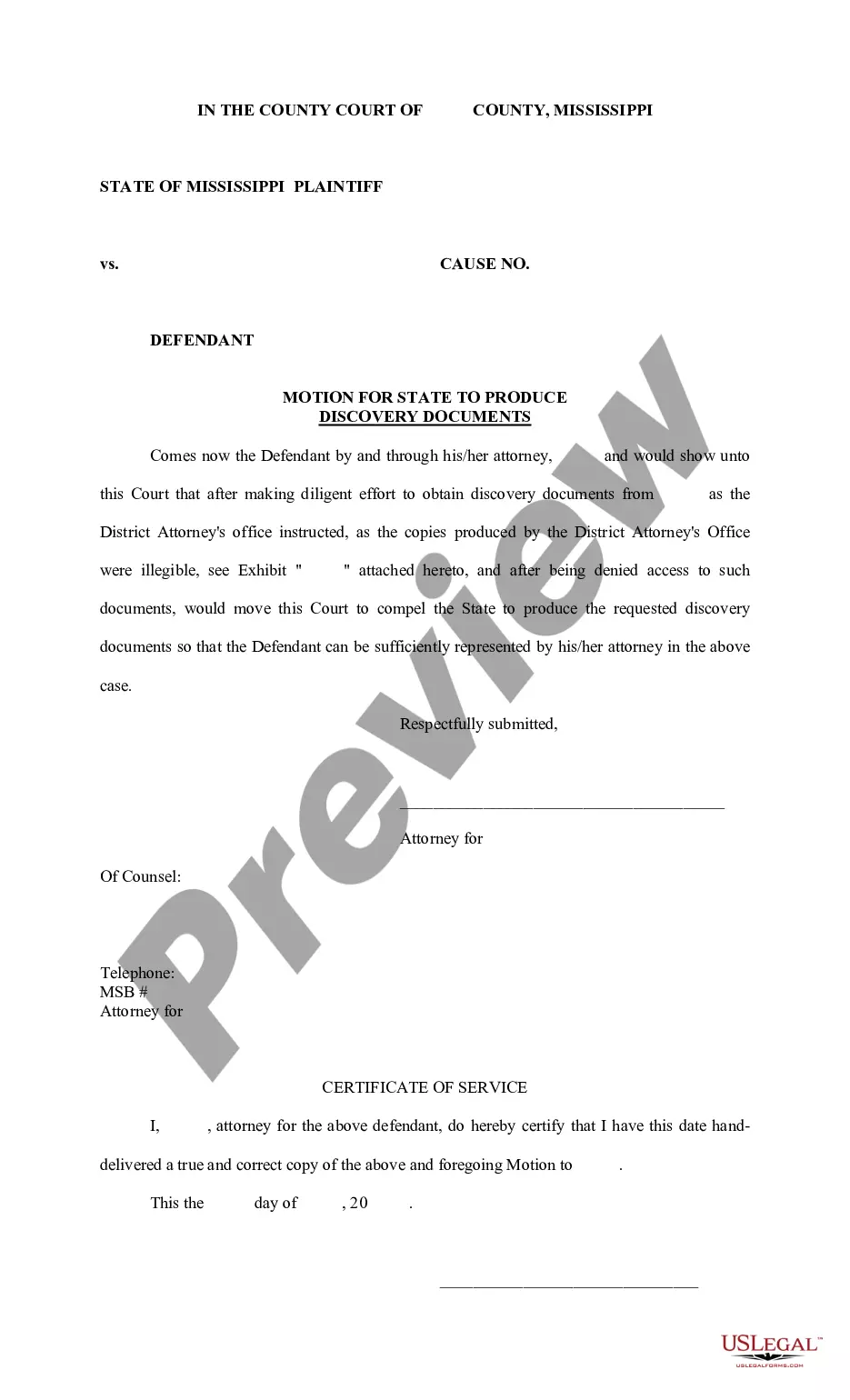
Mississippi Motion for State to Produce Discovery Document
What this document covers
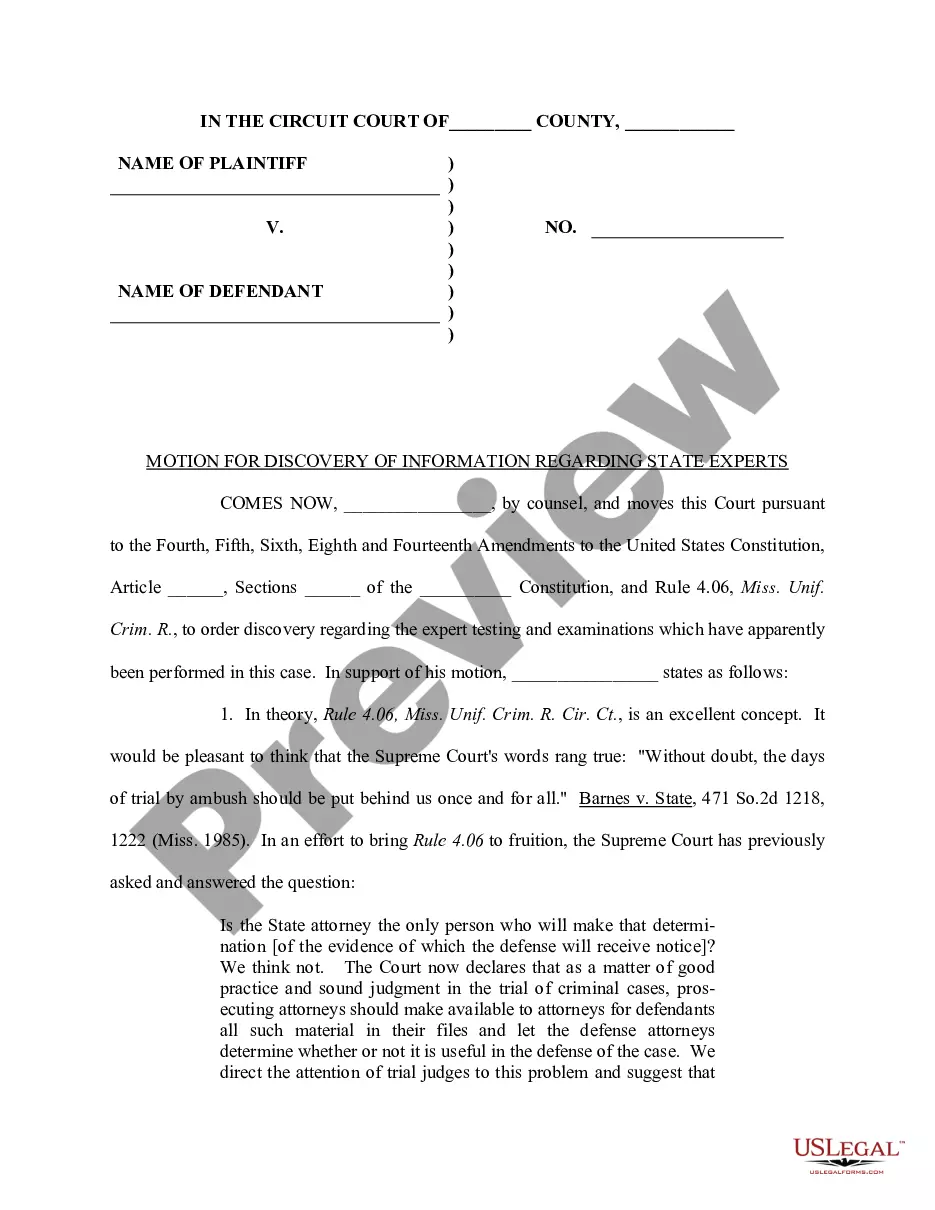
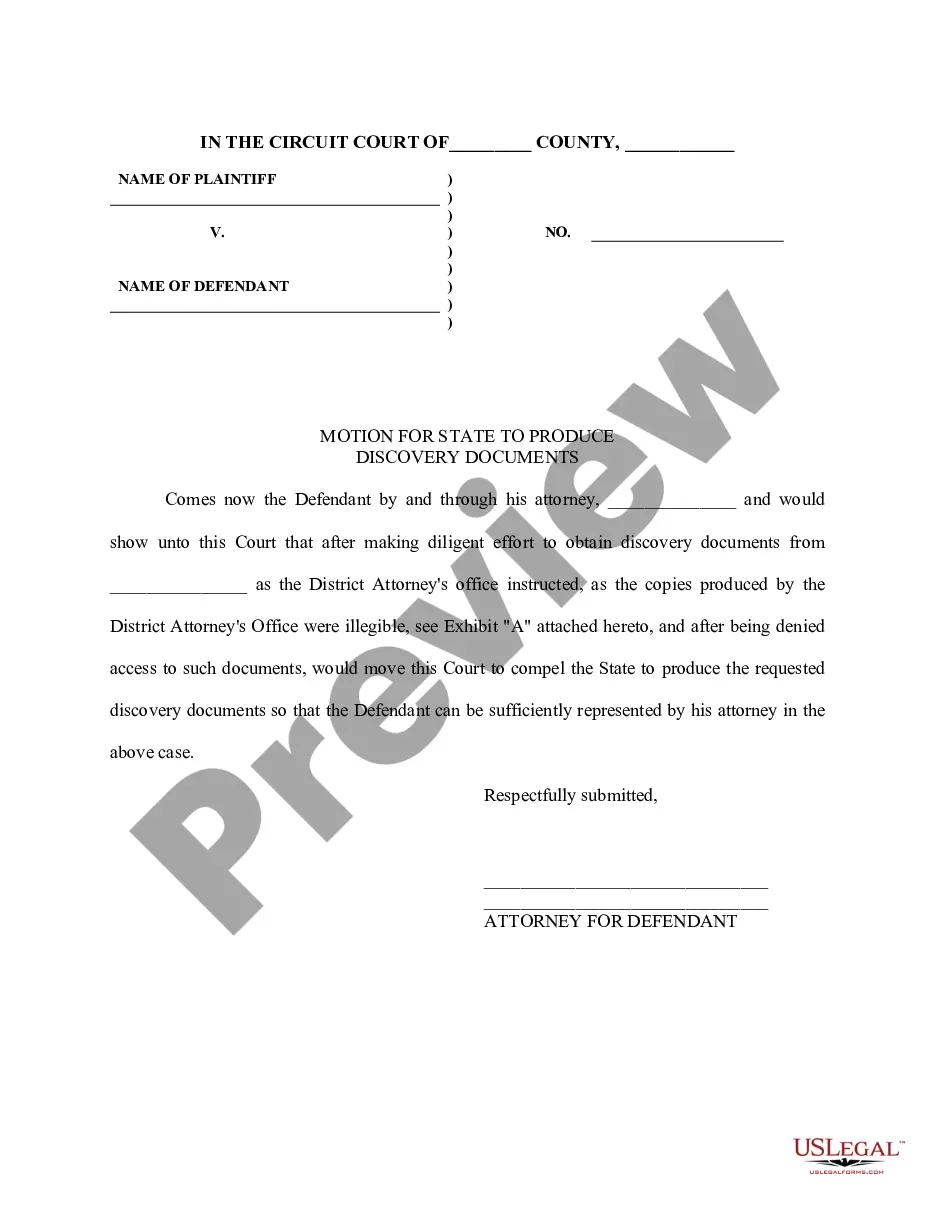
The Motion for State to Produce Discovery Document is a legal request made to the court, asking for specific evidence or documents related to a case. This form is essential for parties seeking to obtain information that may be vital to their legal arguments. It differs from other motions as it focuses specifically on discovery issues, ensuring that all parties have access to necessary documents during litigation.
What’s included in this form
- Title of the motion, indicating it is a request to compel the state to produce certain documents.
- A section identifying the parties involved in the case.
- Statement of facts explaining the necessity of the discovery request.
- Legal arguments outlining the basis for the court to grant the motion.
- A space for signatures and dates, ensuring proper filing procedures.

When this form is needed
This form should be used when a party believes that the state possesses documents that are critical to their case, and those documents have not been provided voluntarily. It is particularly important in civil cases where evidence from the state can impact the outcome of the litigation.
Who needs this form
- Individuals or entities involved in legal disputes seeking information from the state.
- Legal representatives or attorneys acting on behalf of clients in civil litigation.
- Parties who believe that the state has withheld critical documents necessary for their case.
Steps to complete this form
- Identify the parties involved in the legal case and include their information at the top of the document.
- Explain the facts that justify your request for the documents in the statement of facts.
- Present the legal arguments clearly that support your motion to compel the state.
- Complete all signature fields, ensuring that both the requesting party and their attorney (if applicable) sign the document.
- File the completed motion with the appropriate court and serve copies to all involved parties.
Notarization requirements for this form
This form does not typically require notarization unless specified by local law. However, confirming local filing requirements can ensure compliance with specific jurisdictional obligations.
Get your form ready online
Our built-in tools help you complete, sign, share, and store your documents in one place.
Make edits, fill in missing information, and update formatting in US Legal Forms—just like you would in MS Word.
Download a copy, print it, send it by email, or mail it via USPS—whatever works best for your next step.
Sign and collect signatures with our SignNow integration. Send to multiple recipients, set reminders, and more. Go Premium to unlock E-Sign.
If this form requires notarization, complete it online through a secure video call—no need to meet a notary in person or wait for an appointment.
We protect your documents and personal data by following strict security and privacy standards.

Make edits, fill in missing information, and update formatting in US Legal Forms—just like you would in MS Word.

Download a copy, print it, send it by email, or mail it via USPS—whatever works best for your next step.

Sign and collect signatures with our SignNow integration. Send to multiple recipients, set reminders, and more. Go Premium to unlock E-Sign.

If this form requires notarization, complete it online through a secure video call—no need to meet a notary in person or wait for an appointment.

We protect your documents and personal data by following strict security and privacy standards.
Common mistakes to avoid
- Failure to clearly articulate the reasons for the request in the statement of facts.
- Not signing or dating the motion before submission.
- Omitting required information about the case or parties involved.
- Not adhering to specific formatting requirements of the court.
Why complete this form online
- Convenient access to a legally vetted form tailored to your needs.
- Edit and customize the template to fit your specific situation easily.
- Reliable format that meets legal requirements, reducing the risk of errors.
Legal use & context
- This motion is used as part of the discovery process in litigation.
- Failure to produce requested documents can result in court sanctions against the non-compliant party.
- The motion must comply with local court rules for successful submission.
Looking for another form?

Form popularity
FAQ
It is a court-requested motion to compel the state to produce specific discovery documents in a case. The form is used when, in a Mississippi criminal matter, the state has critical documents not provided voluntarily. It organizes the request with a title, identifies the parties, includes a facts section, legal arguments, and a signature/date area for filing.
This motion lets you request that the court compel the state's production of discovery documents or evidence that are relevant to the case and not provided voluntarily. The form includes a title indicating the request, sections identifying the parties, a facts section explaining the need, legal arguments supporting the motion, and space for signatures and dates to complete filing.
Any party or attorney representing a party in a Mississippi criminal case who believes the state possesses missing documents may file this motion. The form provides a signatures and dates section to document approval, and it requires filing by the appropriate party or counsel as part of the discovery process.
After filing, the motion presents the request to the court with the facts and legal arguments. The form includes signature and date blocks to complete filing. The subsequent steps depend on Mississippi court rules and scheduling, so consult a licensed attorney for the exact procedure in your case.
The statement of facts should explain why the discovery is necessary and how the requested documents will influence the case. It should describe the connection between the documents and the issues in dispute, supporting the request with relevance and potential impact on the party's legal arguments in Mississippi criminal discovery.
This motion differs from other discovery motions because it specifically seeks to compel the state to produce documents and evidence and is structured to address discovery issues in a Mississippi criminal matter. It includes a distinct title, parties, facts, legal arguments, and signature blocks to support the request.