Mississippi Judgment of Conviction and Sentence - Circuit Court
Overview of this form
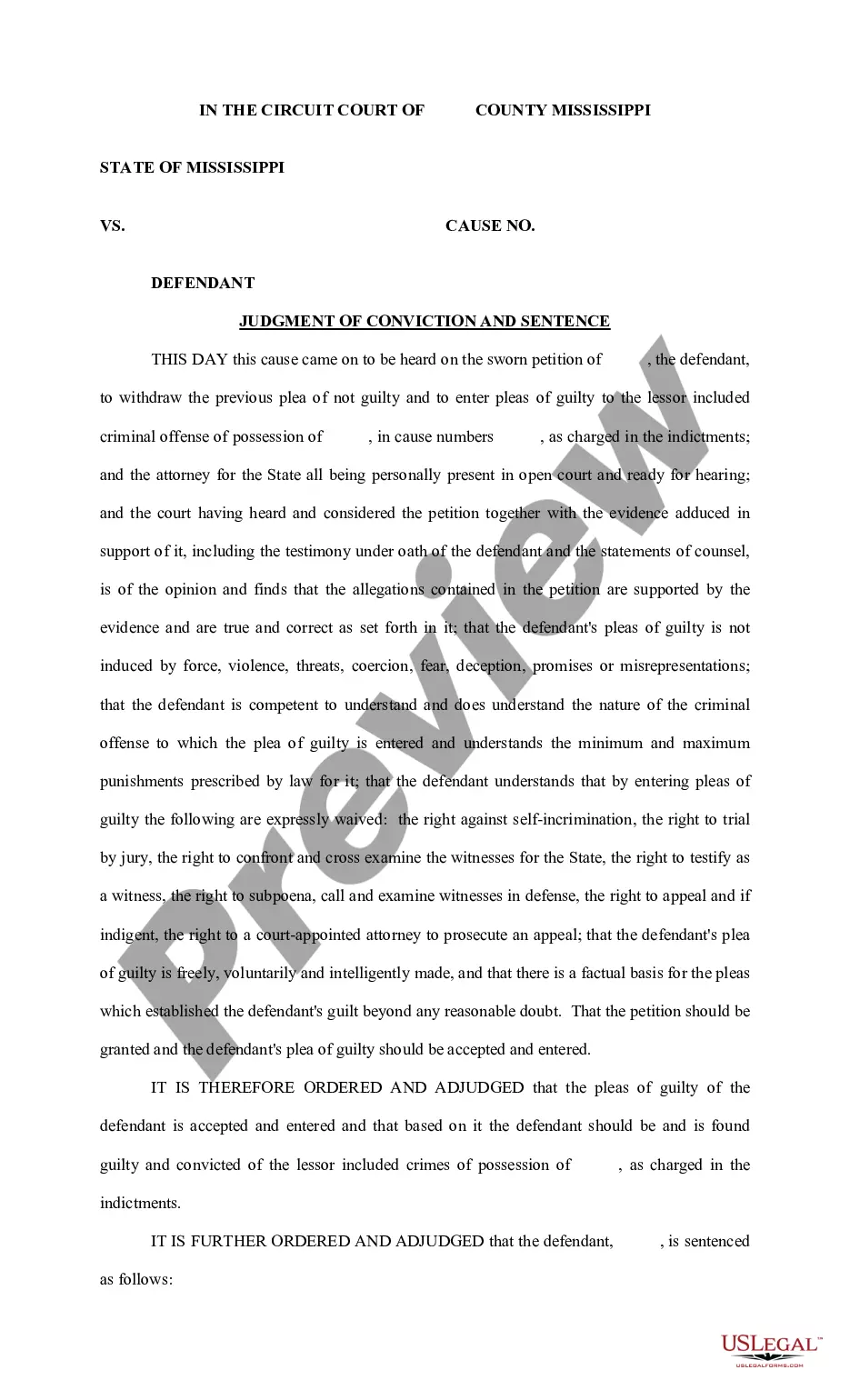
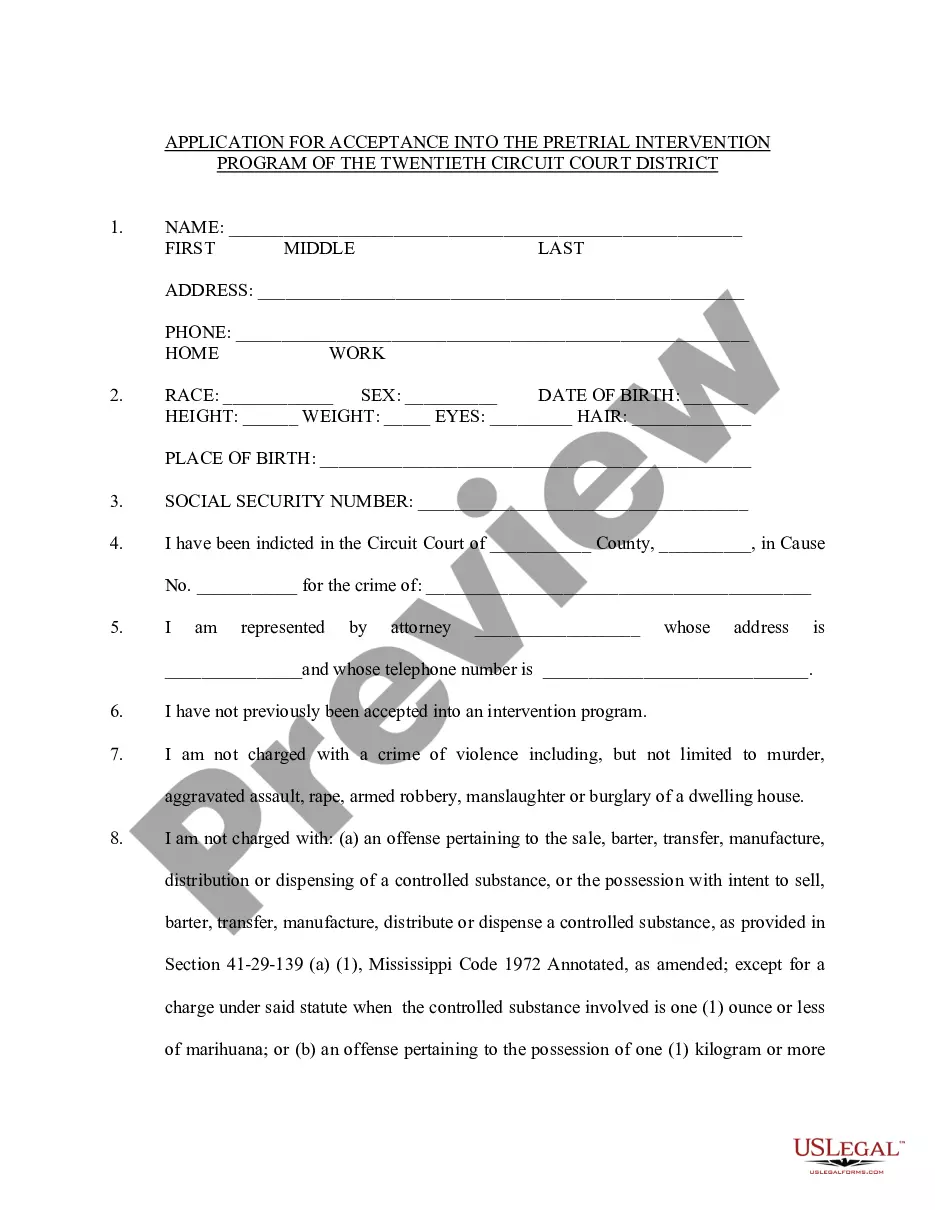
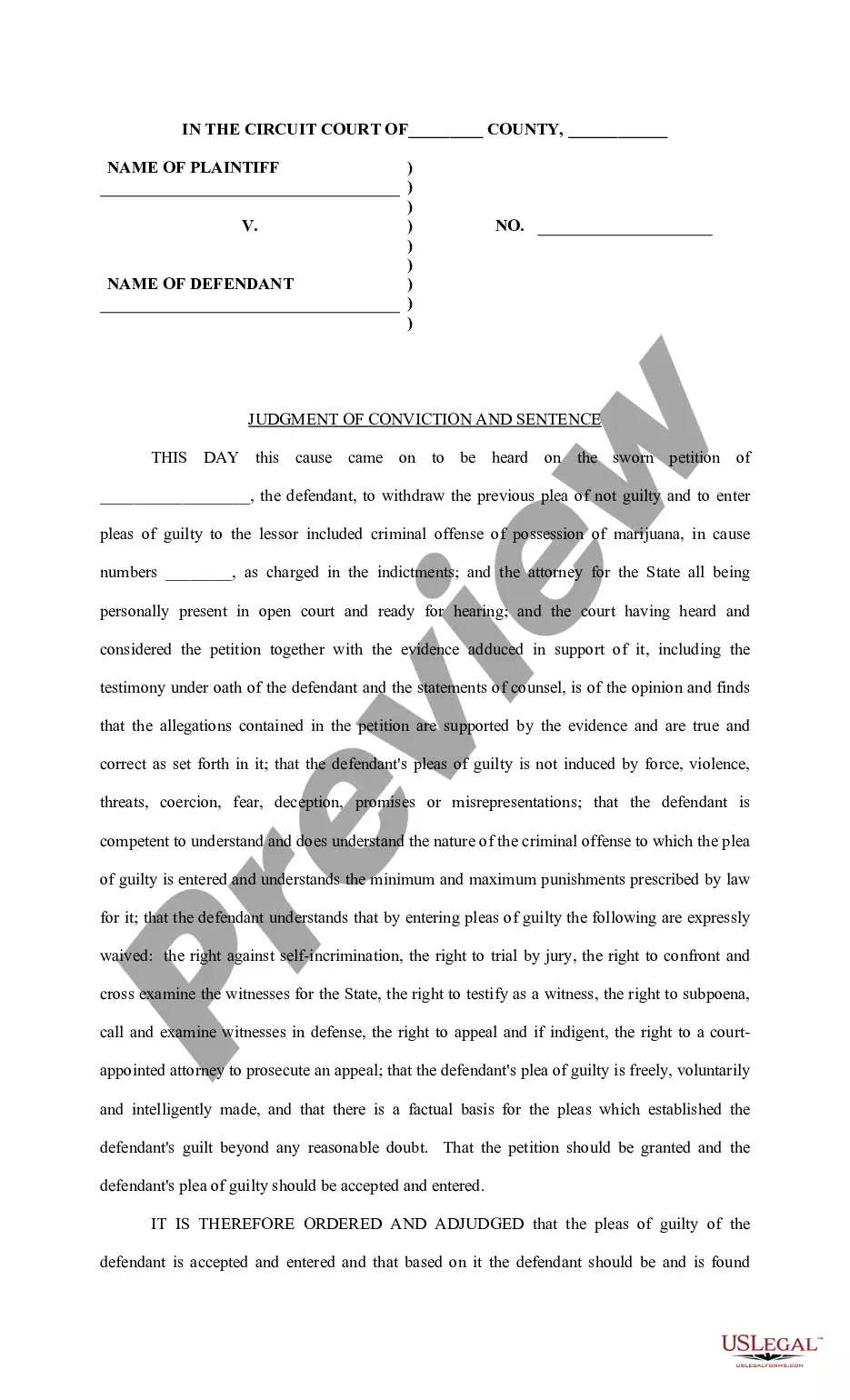
The Judgment of Conviction and Sentence is a legal document used to formalize the court's decision following a criminal trial. This form outlines the judgment rendered by the court, including the sentencing details for the convicted individual. Once signed by the judge, it serves as a binding decision. Unlike other forms, this judgment is specifically tailored to reflect the legal outcomes of criminal proceedings, making it essential for ensuring the enforcement of the courtâs ruling.
What’s included in this form
- Defendantâs name and identifying information.
- Details of the criminal charges and verdicts.
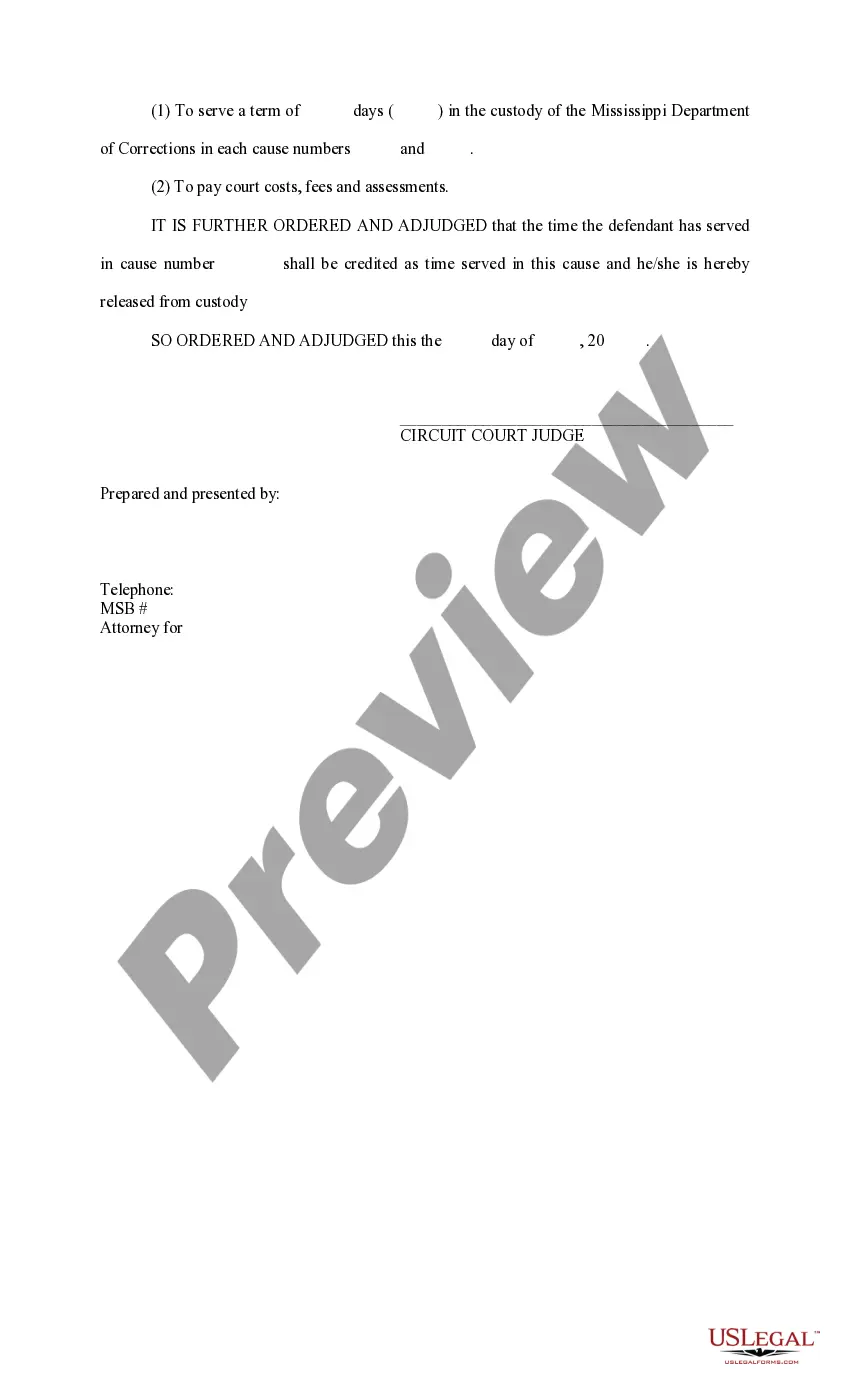
- Specifics of the sentence, including terms of imprisonment or probation.
- Judicial officer's signature to confirm the binding nature of the judgment.
- Dates relevant to the conviction and sentence issuance.
When to use this form
This form is necessary when a court has reached a verdict in a criminal case and is ready to impose a sentence. It should be completed whenever an individual is convicted of a crime and is subject to a penal sentence, whether that be incarceration, probation, or a fine. Using this form is critical to formalize the judicial ruling and ensure compliance with the court's decision.
Who needs this form
- Judges presiding over criminal cases.
- Court clerks responsible for processing legal documents.
- Legal representatives involved in the sentencing phase.
- Defendants who need a copy of the formal judgment for their records.
Steps to complete this form
- Identify the defendant and provide their personal information.
- Clearly state the charges and specify the outcomes of the trial.
- Detail the sentencing terms as directed by the court.
- Include the date of sentencing and other relevant dates for the judgment.
- Obtain the judge's signature to validate the judgment.
Notarization guidance
This form does not typically require notarization unless specified by local law. Ensure to check your jurisdictionâs requirements before submitting.
Get your form ready online
Our built-in tools help you complete, sign, share, and store your documents in one place.
Make edits, fill in missing information, and update formatting in US Legal Forms—just like you would in MS Word.
Download a copy, print it, send it by email, or mail it via USPS—whatever works best for your next step.
Sign and collect signatures with our SignNow integration. Send to multiple recipients, set reminders, and more. Go Premium to unlock E-Sign.
If this form requires notarization, complete it online through a secure video call—no need to meet a notary in person or wait for an appointment.
We protect your documents and personal data by following strict security and privacy standards.

Make edits, fill in missing information, and update formatting in US Legal Forms—just like you would in MS Word.

Download a copy, print it, send it by email, or mail it via USPS—whatever works best for your next step.

Sign and collect signatures with our SignNow integration. Send to multiple recipients, set reminders, and more. Go Premium to unlock E-Sign.

If this form requires notarization, complete it online through a secure video call—no need to meet a notary in person or wait for an appointment.

We protect your documents and personal data by following strict security and privacy standards.
Avoid these common issues
- Failing to include all necessary identifying information for the defendant.
- Inaccurately stating charges or outcomes of the trial.
- Omitting dates that are crucial for the legal validity of the judgment.
- Not obtaining the judge's signature, which makes the judgment non-binding.
Why use this form online
- Immediate access to download and use the form at your convenience.
- Edit and customize the form easily to fit specific case details.
- Ensure reliability and adherence to legal standards set by licensed attorneys.
Legal use & context
- The Judgment of Conviction and Sentence is an official court document, central to the legal process.
- Compliance with this form is essential for the enforcement of the judgment issued by the court.
What to keep in mind
- The Judgment of Conviction and Sentence officially documents a court ruling on a criminal case.
- It is essential for maintaining accurate legal records and enforcing penalties.
- Correct completion of this form is crucial to avoid legal complications.
Looking for another form?

Form popularity
FAQ
Circuit court judges preside over cases involving breach of contract, civil wrongs where monetary damages are awarded, and disputes over title to real property. These judges also issue injunctions and orders of wage garnishment. Moreover, circuit court judges make decisions concerning adoption and election contests.
Circuit Courts hear felony criminal prosecutions and civil lawsuits. Circuit Courts hear appeals from County, Justice and Municipal courts and from administrative boards and commissions such as the Workers' Compensation Commission and the Mississippi Department of Employment Security.
A charge is brought against someone by a prosecutor. But in an indictment, a grand jury brings the charges against the defendant. All indictments are charges, but not all charges are indictments.
After you're indicted, then you'll go to trial. Getting to trial, however, isn't as cut and dry as it's portrayed on television. There will be numerous pre-trial hearings, and depending on how busy the courts are in your state, it can be months or even years before you'll ever make it before a jury.
All minor criminal cases are heard in the District Court summarily (i.e., without a jury). The Circuit Court has the jurisdiction to hear all non-minor offences, except murder, rape, aggravated sexual assault, treason, piracy and related offences.
If the grand jury decides not to indict, it returns a "no bill." However, even if a grand jury doesn't indict, the prosecutor can return to the same grand jury and present additional evidence, get a new grand jury, or even file criminal charges regardless.
The criminal statute of limitations requires prosecutors to file criminal charges against a suspect within two years for misdemeanors and within five years for certain felonies, but there is no time limit in Mississippi for charges of murder, kidnapping, rape, burglary, robbery, larceny, and several other serious
Sixteen-year-old William Haymon has spent more than 500 days in an adult jail in rural Lexington, Mississippi. There are no state rules governing how long a person can be incarcerated without being formally charged with a crime.