Monthly Partial Payment to Creditor
What this document covers
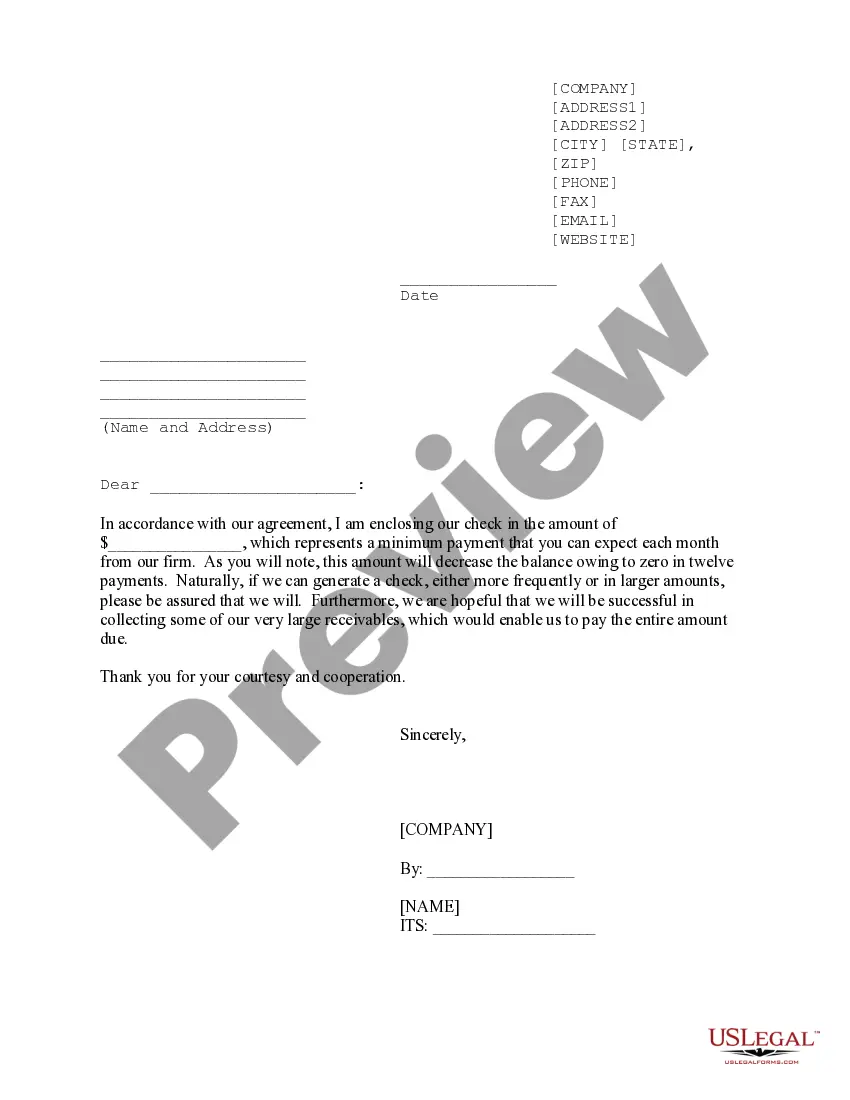
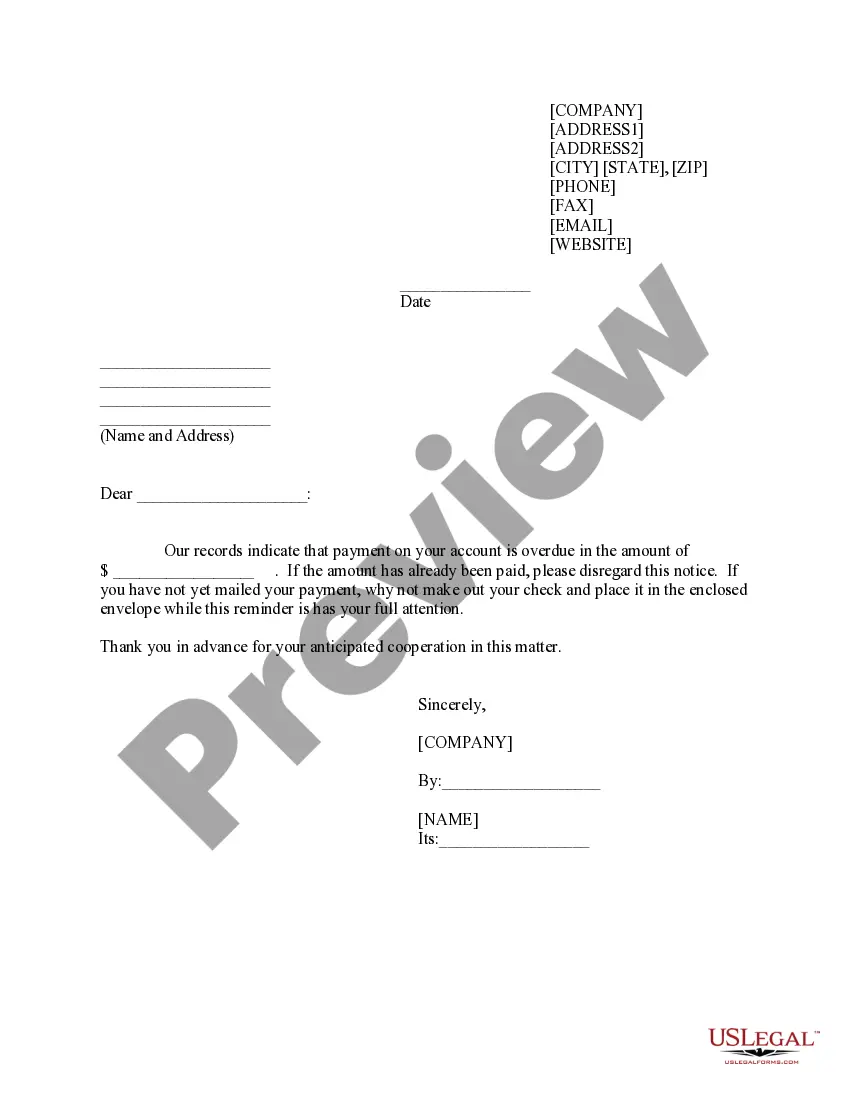
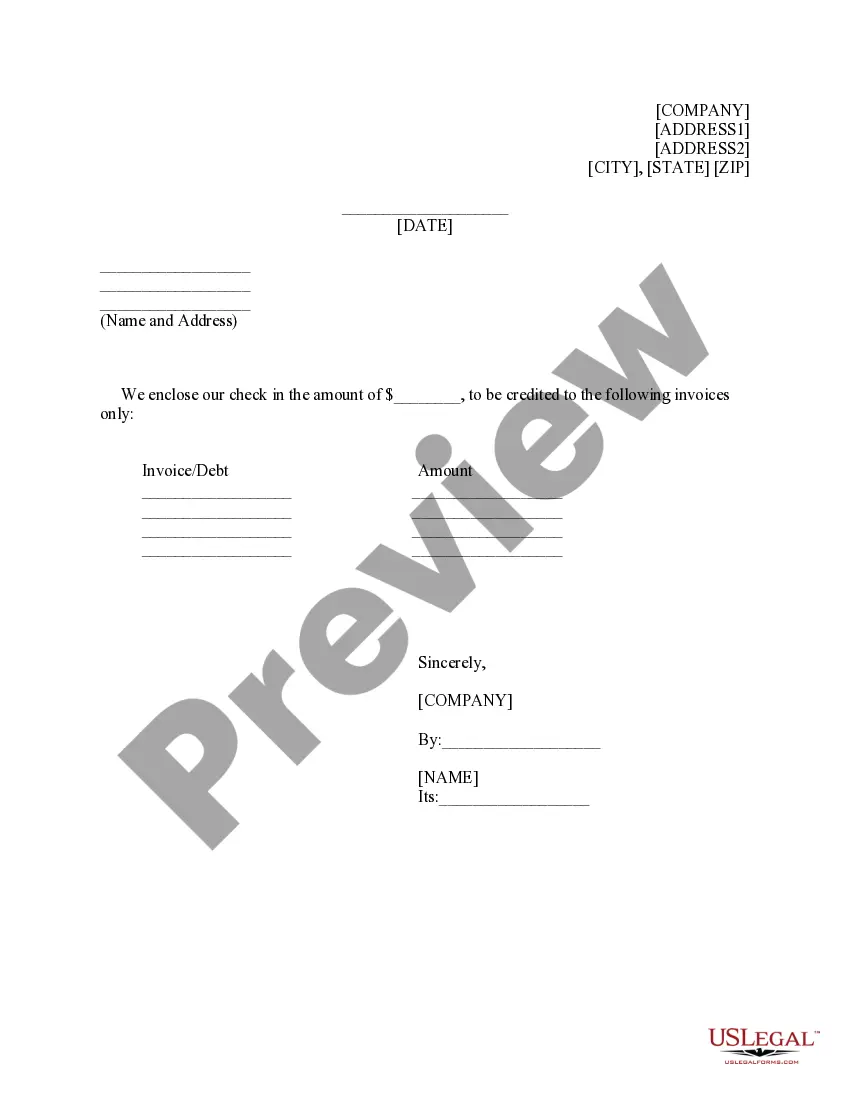
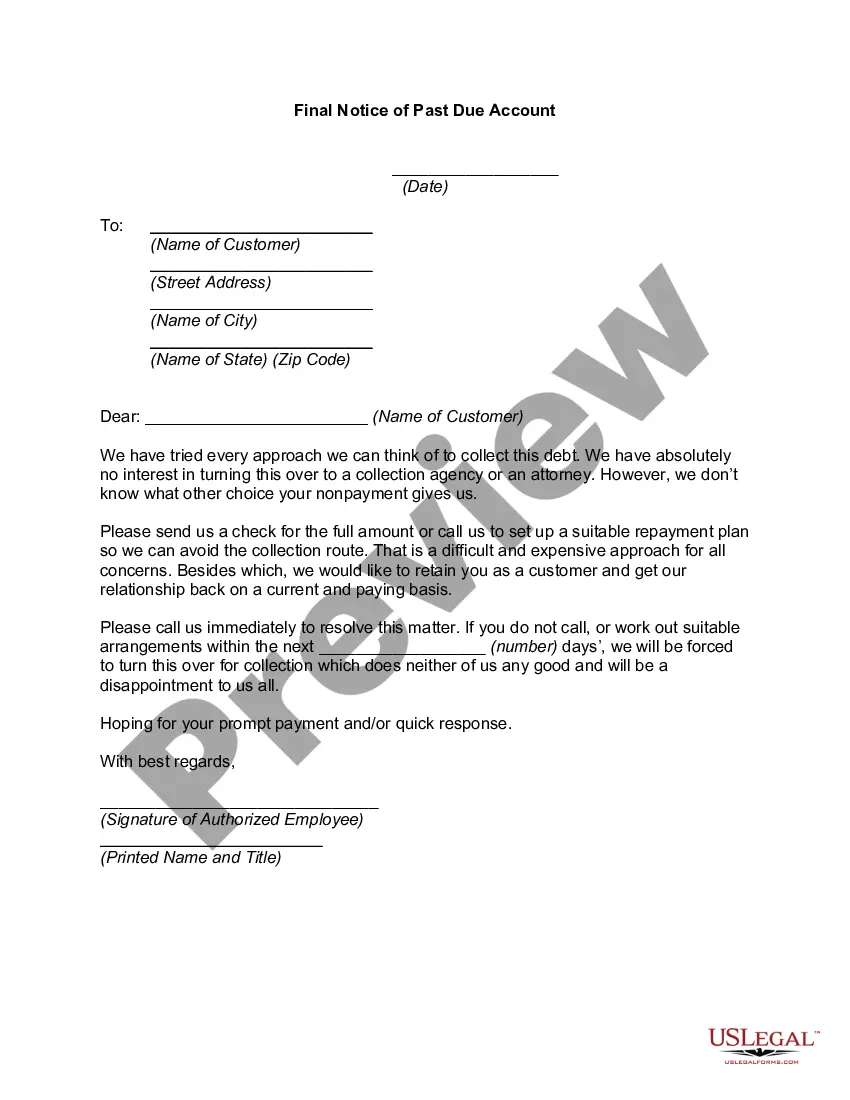
The Monthly Partial Payment to Creditor form is a legal document used to formally communicate a scheduled payment arrangement between a debtor and a creditor. This form specifically outlines a plan whereby a debtor commits to making regular minimum payments, ultimately reducing the debt owed over a specified period. Unlike other payment forms, this one emphasizes consistent communication and cooperation aimed at debt repayment while maintaining a positive relationship with the creditor.
Key parts of this document
- Contact information for both the debtor and creditor, including names and addresses.
- The date the payment is made.
- The specific payment amount enclosed, which reflects the agreed-upon minimum monthly payment.
- A statement outlining the payment plan duration, indicating the intention to reduce the debt balance within twelve payments.
- A closing statement expressing gratitude for the creditor's cooperation.
When to use this document
This form is commonly used in situations where a debtor is unable to pay off their debt in full but wants to establish a clear plan for reducing it over time. It can be particularly useful for businesses or individuals facing financial difficulties, allowing them to demonstrate a proactive approach in managing their finances while maintaining communication with their creditors.
Who this form is for
- Individuals or businesses looking to negotiate a payment plan with creditors.
- Debtors who prefer to formalize their payment commitments to ensure clarity and accountability.
- Companies managing multiple receivables and wanting a structured approach to payments.
Completing this form step by step
- Identify the parties involved by filling in the names and addresses of both the debtor and the creditor.
- Enter the current date to mark when the payment correspondence is being sent.
- Specify the amount of the payment you are enclosing in the designated field.
- Clearly outline the terms of the payment plan, noting that the debt will be fully paid off in twelve installments.
- Sign the document and include your printed name and title to formalize the payment arrangement.
Notarization requirements for this form
Notarization is not commonly needed for this form. However, certain documents or local rules may make it necessary. Our notarization service, powered by Notarize, allows you to finalize it securely online anytime, day or night.
Get your form ready online
Our built-in tools help you complete, sign, share, and store your documents in one place.
Make edits, fill in missing information, and update formatting in US Legal Forms—just like you would in MS Word.
Download a copy, print it, send it by email, or mail it via USPS—whatever works best for your next step.
Sign and collect signatures with our SignNow integration. Send to multiple recipients, set reminders, and more. Go Premium to unlock E-Sign.
If this form requires notarization, complete it online through a secure video call—no need to meet a notary in person or wait for an appointment.
We protect your documents and personal data by following strict security and privacy standards.

Make edits, fill in missing information, and update formatting in US Legal Forms—just like you would in MS Word.

Download a copy, print it, send it by email, or mail it via USPS—whatever works best for your next step.

Sign and collect signatures with our SignNow integration. Send to multiple recipients, set reminders, and more. Go Premium to unlock E-Sign.

If this form requires notarization, complete it online through a secure video call—no need to meet a notary in person or wait for an appointment.

We protect your documents and personal data by following strict security and privacy standards.
Common mistakes to avoid
- Failing to include accurate contact information for both parties.
- Omitting the specified payment amount or not aligning it with the payment plan.
- Not dating the letter, which may lead to confusion about the timeline of payments.
- Ignoring to clearly communicate the duration of the payment plan.
Benefits of using this form online
- Convenience of downloading and editing the form at any time.
- Access to legally drafted templates ensures reliability and adherence to legal standards.
- Ability to store and retrieve electronic records easily.
Main things to remember
- The Monthly Partial Payment to Creditor form helps establish a payment plan between debtor and creditor.
- This form is useful for individuals and businesses seeking structured debt repayment solutions.
- Accurate completion and adherence to local laws strengthen the enforceability of the payment arrangement.
Looking for another form?
Form popularity
FAQ
Occasionally, when a debt goes to collections you may be able to negotiate with the collector to accept a smaller amount than what you originally owed. An agent may decide it's worthwhile to accept partial payment now rather than go through a prolonged collection process.
A fully paid collection is better than one you settled for less than you owe. Over time, the collections account will make less difference to your credit score and will drop off entirely after seven years.
A partial payment can affect your credit score because a lender may regard it as a missed or delayed payment if it's below the minimum payment amount. This could lead to marking your account delinquent or in default, which adversely impacts your credit score.
Partial payment means a payment that is less than the full amount due. Other terms for partial payment include part payment, installment payment, down payment, or upfront payment.
Yes, creditors can refuse partial payments because they're not considered to be full payments. This allows creditors to legally charge late fees, add interest, and mark your account as delinquent or in default.
Yes, you can choose which debt your payment is applied to. The CFPB's Debt Collection Rule clarifying certain provisions of the Fair Debt Collection Practices Act (FDCPA) became effective on November 30, 2021. Learn more about the Debt Collection Rule and your debt collection rights.
PART PAYMENT RULE Definition & Legal Meaning A rule which states that if a payment is made in parts, it cannot be used to satisfy for the entire sum that is due.
A debt buyer buys debt for pennies on the dollar and may agree to a decreased amount. In either case, the minimum amount a collection agency will sue you for is usually $1000. It can be less than this amount depending on the written agreements signed when you acquired the debt.