Mississippi Motion for New Trial
Overview of this form
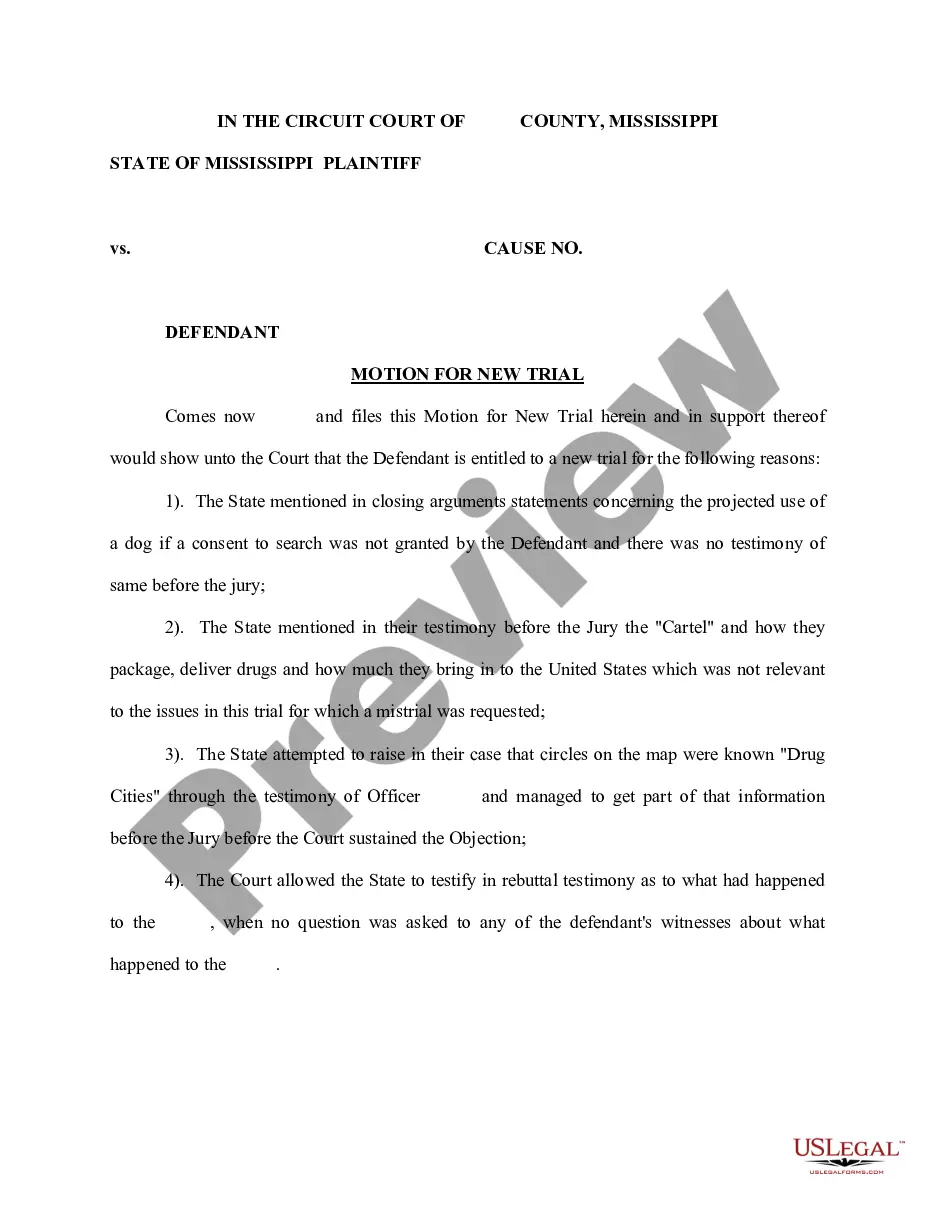
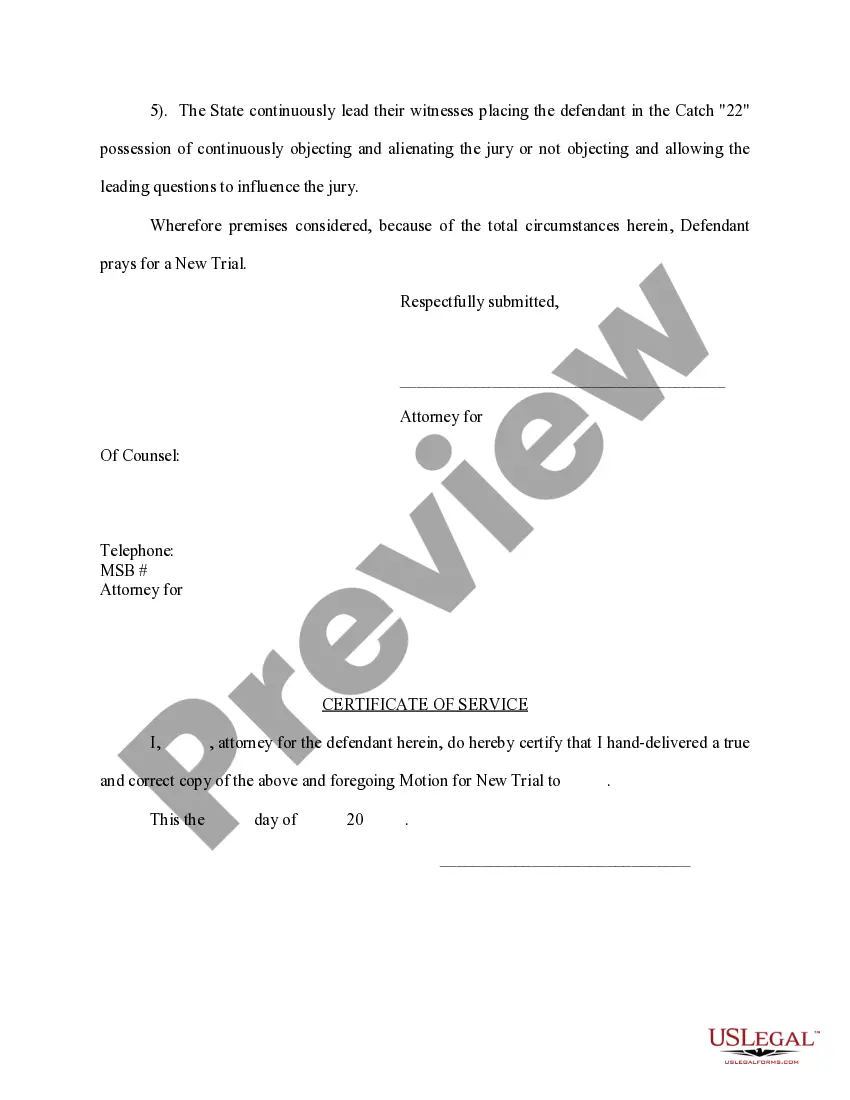
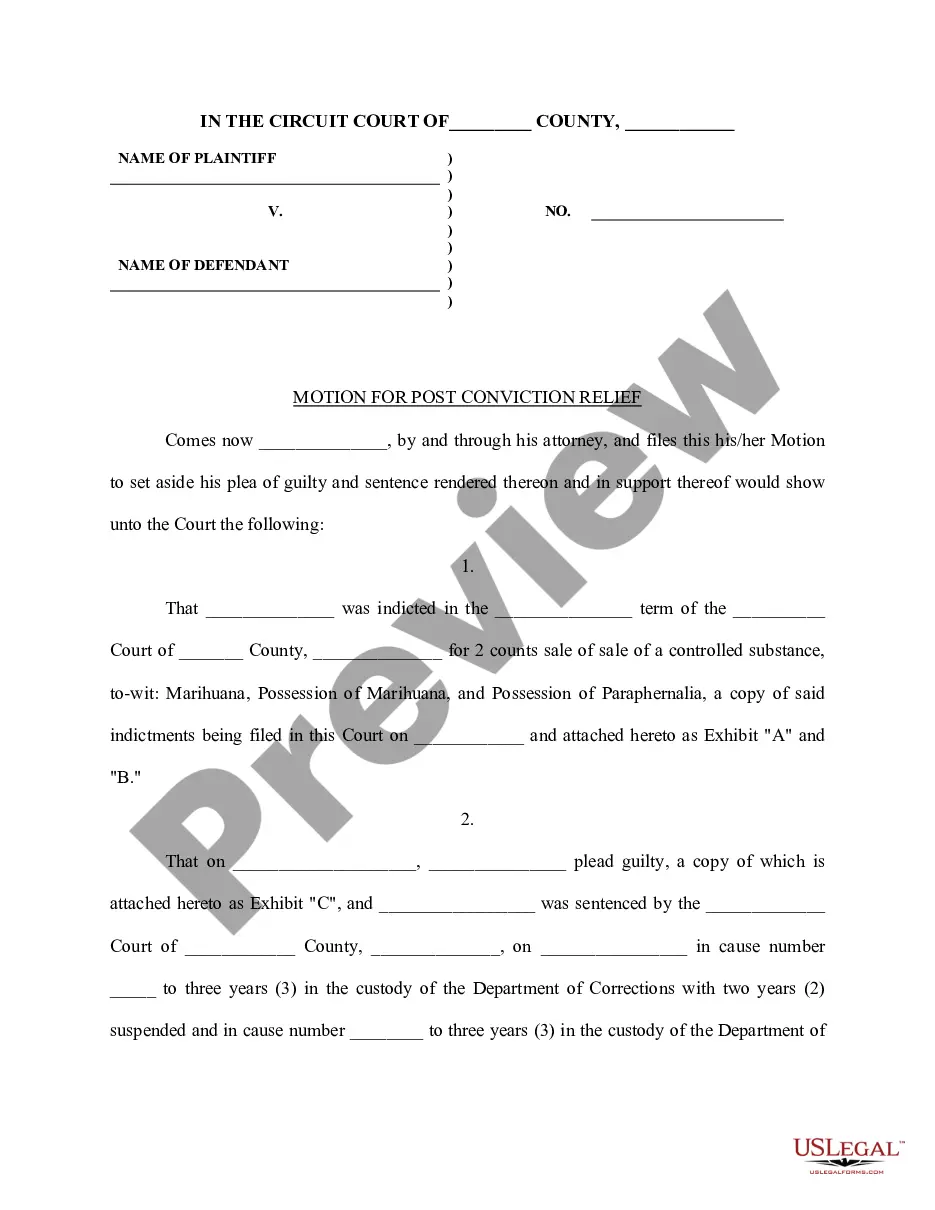
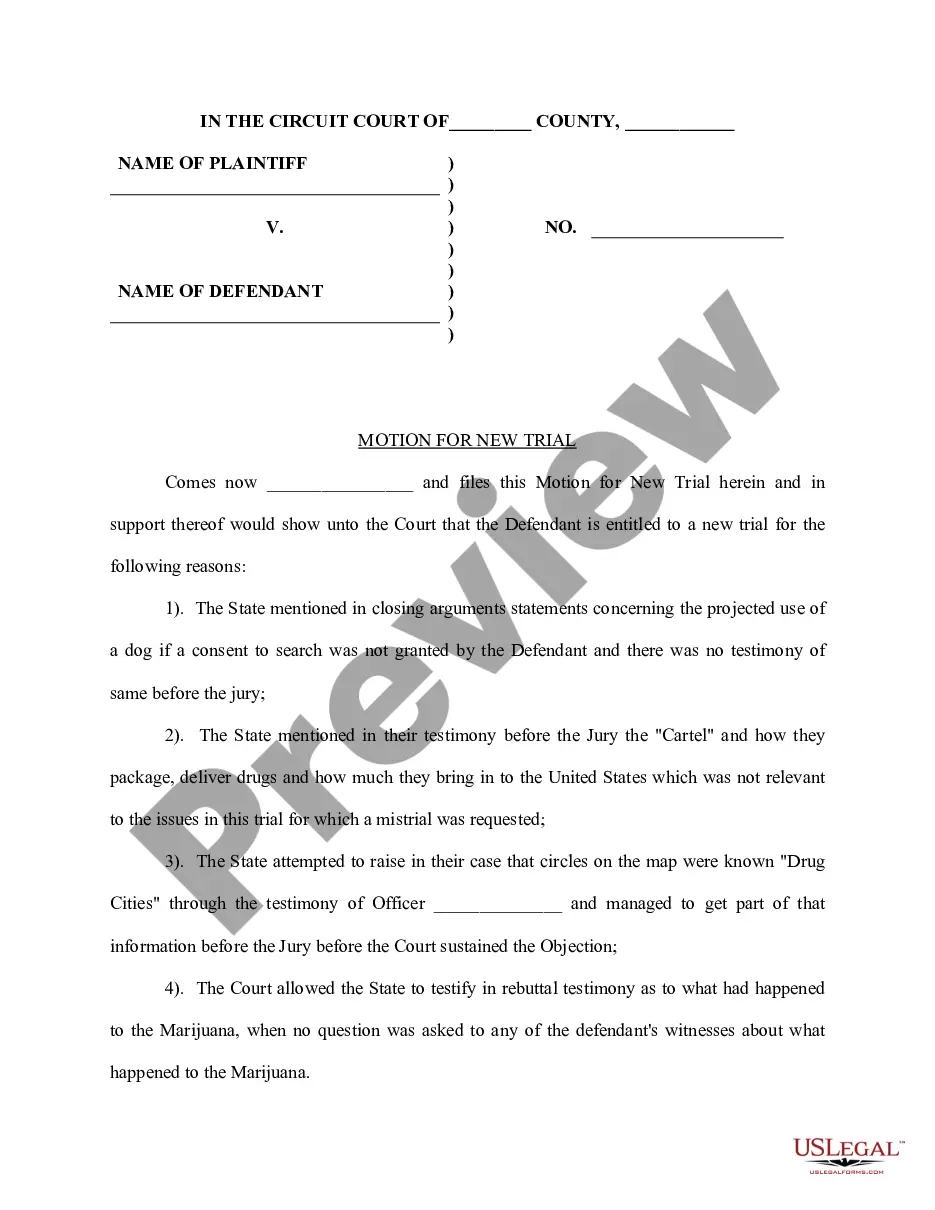
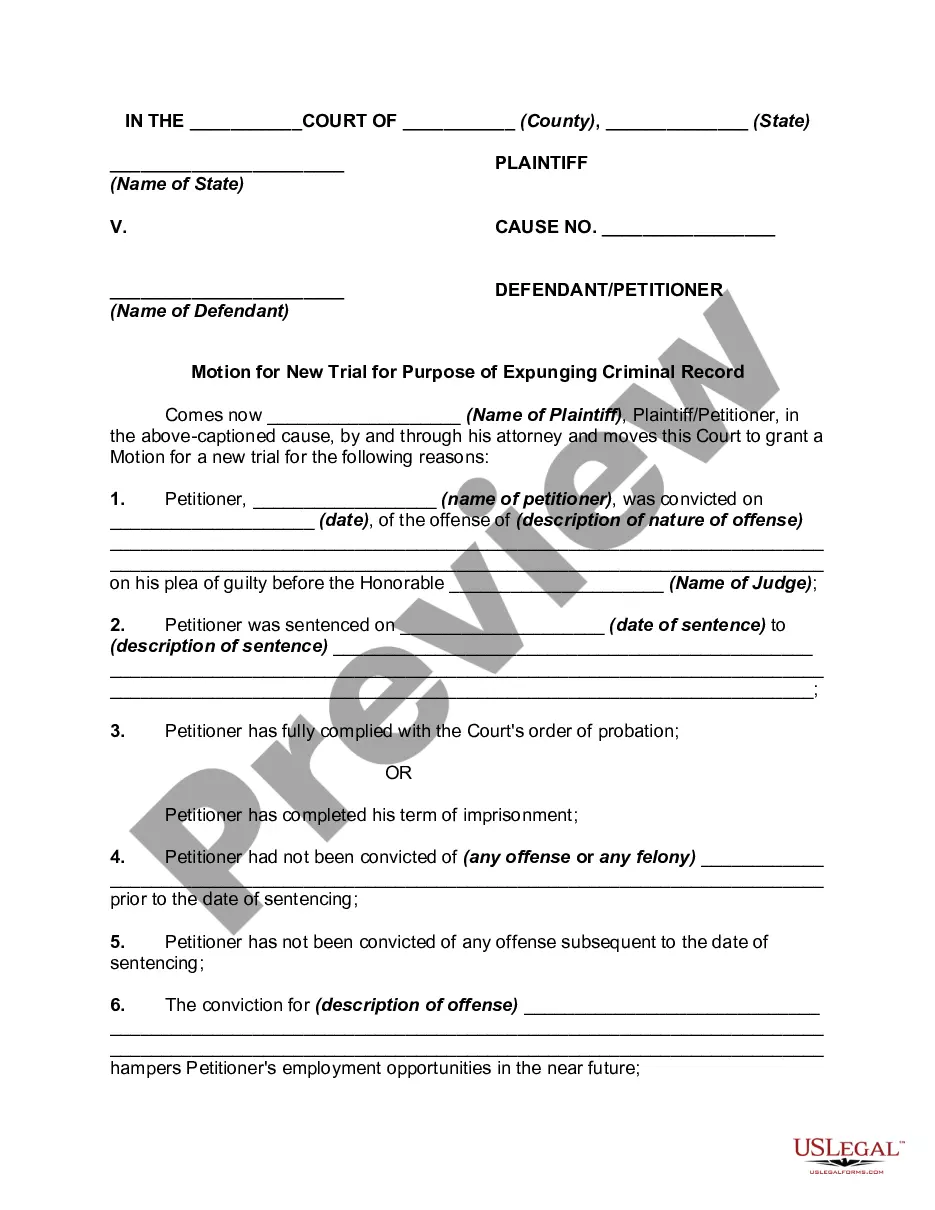
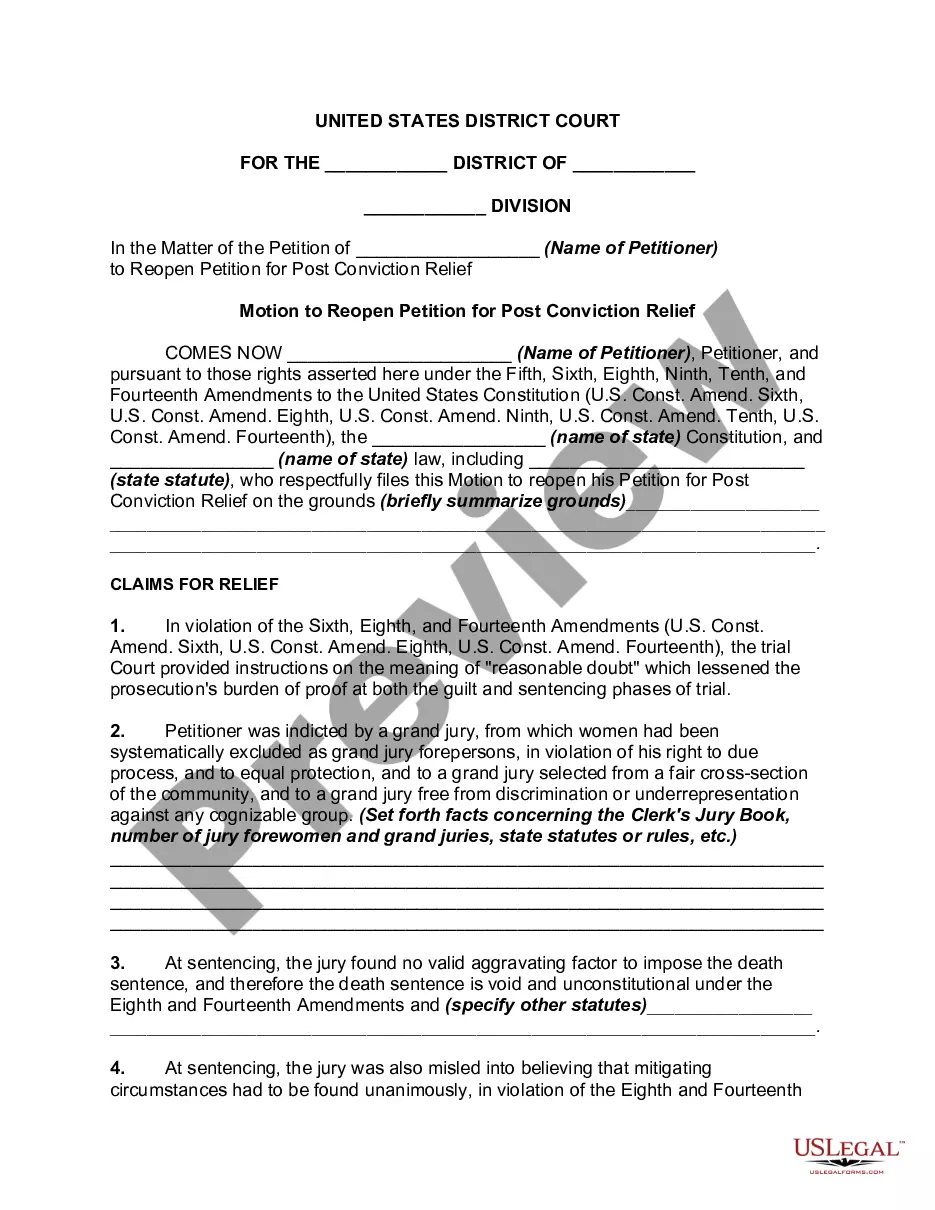
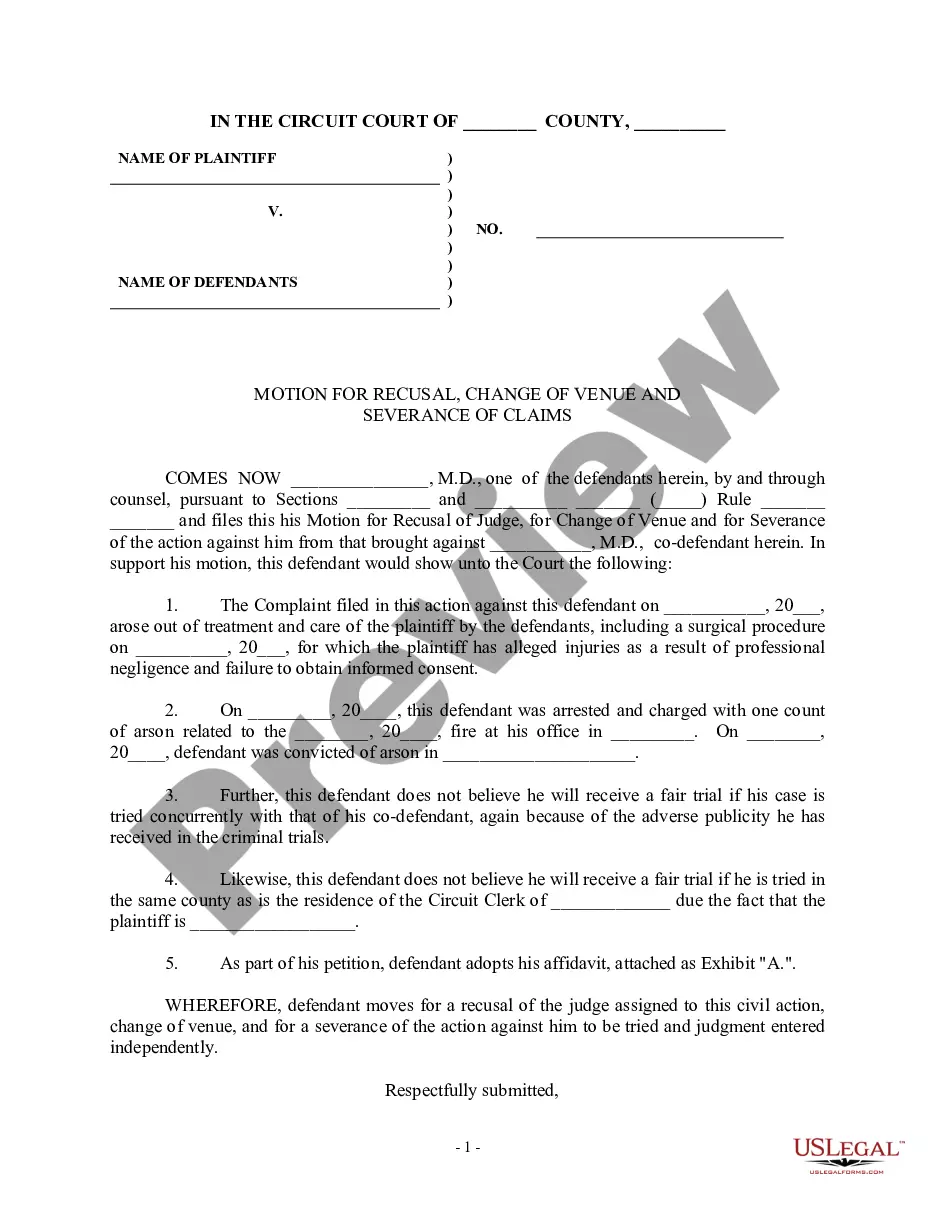
A Motion for New Trial is a formal written request submitted to the court, asking the judge to overturn or reconsider a prior verdict. This legal document differs from other motions in its specific focus on requesting a new trial due to potential errors made in the previous trial, such as improper jury instructions or evidence mishandling. It is essential for parties seeking to challenge a judgment based on perceived legal mistakes.
Key components of this form
- Name of the court and case number
- Parties involved in the case
- Statement of the grounds for the motion
- Supporting arguments and legal precedents
- Proposed relief or action requested from the court
- Signature and date of the filing party
When to use this document
This form is typically used when a party believes there were significant errors during the initial trial that warrant a new trial. Situations may include improper statements made by the prosecution during closing arguments or when evidence was presented inappropriately. If you feel the verdict was unjust due to such legal missteps, this form is crucial for initiating the request for reconsideration.
Who needs this form
- Defendants who wish to challenge a conviction
- Plaintiffs seeking to overturn a ruling in a civil case
- Parties in a trial who believe the outcome was affected by legal errors
How to complete this form
- Identify and fill in the court's name and case number at the top of the form.
- Clearly state the parties involved in the case.
- Detail the grounds for your request for a new trial, citing specific errors from the original trial.
- Include relevant legal arguments and precedents to support your motion.
- Specify the relief you are seeking from the court, such as requesting a new trial date.
- Date and sign the motion to certify it is filed correctly.
Does this form need to be notarized?
This form usually doesn’t need to be notarized. However, local laws or specific transactions may require it. Our online notarization service, powered by Notarize, lets you complete it remotely through a secure video session, available 24/7.
Get your form ready online
Our built-in tools help you complete, sign, share, and store your documents in one place.
Make edits, fill in missing information, and update formatting in US Legal Forms—just like you would in MS Word.
Download a copy, print it, send it by email, or mail it via USPS—whatever works best for your next step.
Sign and collect signatures with our SignNow integration. Send to multiple recipients, set reminders, and more. Go Premium to unlock E-Sign.
If this form requires notarization, complete it online through a secure video call—no need to meet a notary in person or wait for an appointment.
We protect your documents and personal data by following strict security and privacy standards.

Make edits, fill in missing information, and update formatting in US Legal Forms—just like you would in MS Word.

Download a copy, print it, send it by email, or mail it via USPS—whatever works best for your next step.

Sign and collect signatures with our SignNow integration. Send to multiple recipients, set reminders, and more. Go Premium to unlock E-Sign.

If this form requires notarization, complete it online through a secure video call—no need to meet a notary in person or wait for an appointment.

We protect your documents and personal data by following strict security and privacy standards.
Common mistakes
- Failing to cite specific legal grounds for the motion.
- Missing deadlines for filing the motion.
- Not including all required parties in the motion.
- Submitting the motion without a signature or date.
Advantages of online completion
- Convenience of downloading and completing the form from anywhere.
- Editability allows for easy adjustments according to your unique circumstances.
- Reliability, as the form is drafted by licensed attorneys to ensure compliance with legal standards.
Looking for another form?



Form popularity
FAQ
Section 1. New trial or reconsideration. At any time before a judgment of conviction becomes final, the court may, on motion of the accused or at its own instance but with the consent of the accused, grant a new trial or reconsideration.
Fraud, accident, mistake or excusable negligence.Newly discovered evidence.Damages awarded were excessive.Insufficient evidence to support.
At any time before a judgment of conviction becomes final, the court may, on motion of the accused or at its own instance but with the consent of the accused, grant a new trial or reconsideration.
Defendants typically make motions for new trials after guilty verdicts. In some jurisdictions, the trial judge can order a new trial without a defendant asking.But in some instances the prosecution can appeal a trial judge's grant of a new trial, and it can usually appeal a new trial order by an appellate court.
When a trial has concluded and a verdict has been rendered by a judge or jury, the judgment must be formalized in writing by the court. Once the judgment has been rendered, either party may file what is called a post trial motion, or motion which is filed after the trial is over.
Fraud, accident, mistake or excusable negligence. Newly discovered evidence. Damages awarded were excessive. Insufficient evidence to support.
Write a motion for reconsideration. You must explain why you think the ruling is wrong and the reason must be one of the nine reasons listed in Civil Rule 59(a) (on back of page). 2. File the motion within ten calendar days after the judge or court commissioner made the ruling.
EFFECTS OF GRANTING NEW TRIAL OR RECONSIDERATION f0b4When new trial is granted on the ground of: 1. Errors of law or irregularities committed during trial, all the proceedings and evidence affected thereby shall beset aside and take a new. f0b4The court may in the interest of justice, allow the introduction of new evidence.