Alabama Motion for Substitution
About this form
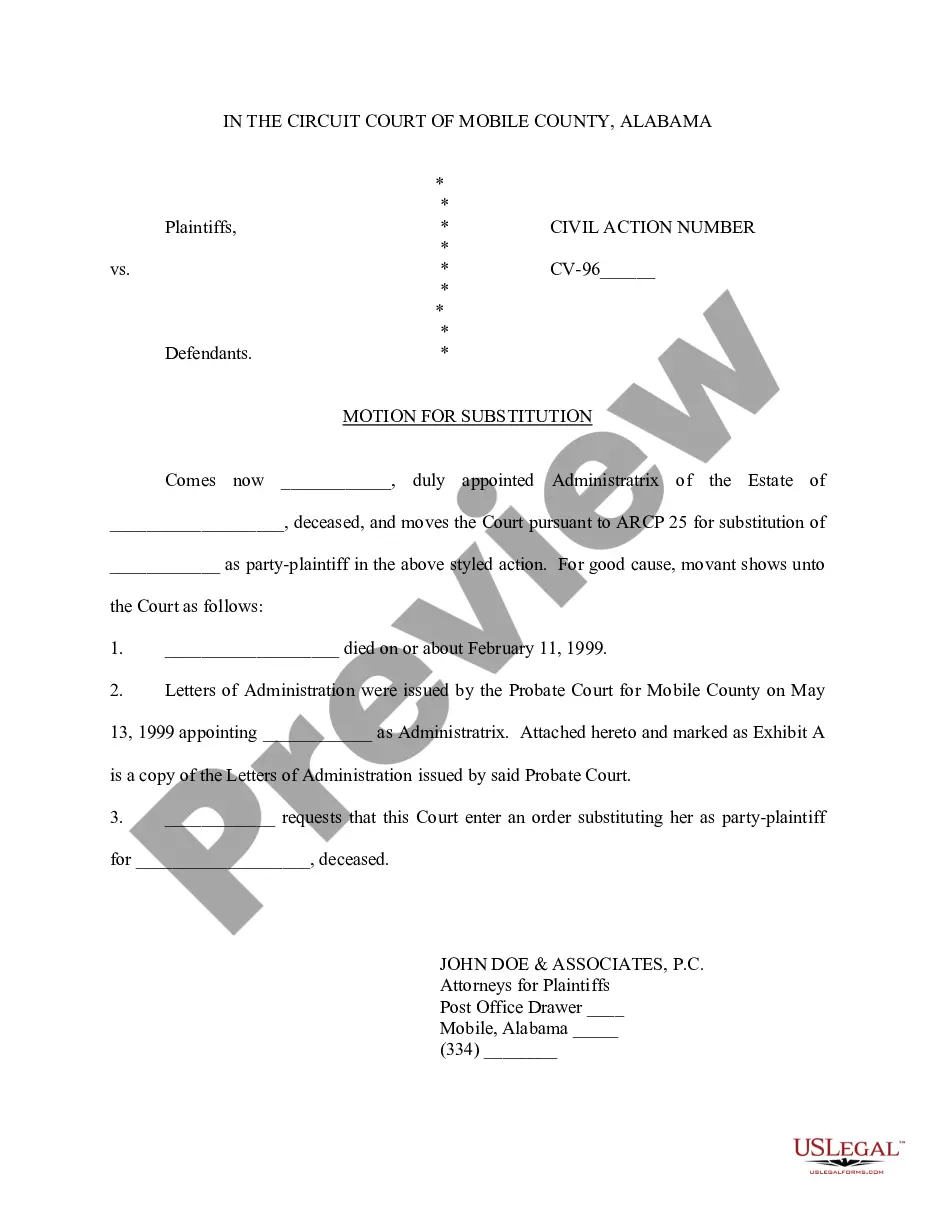
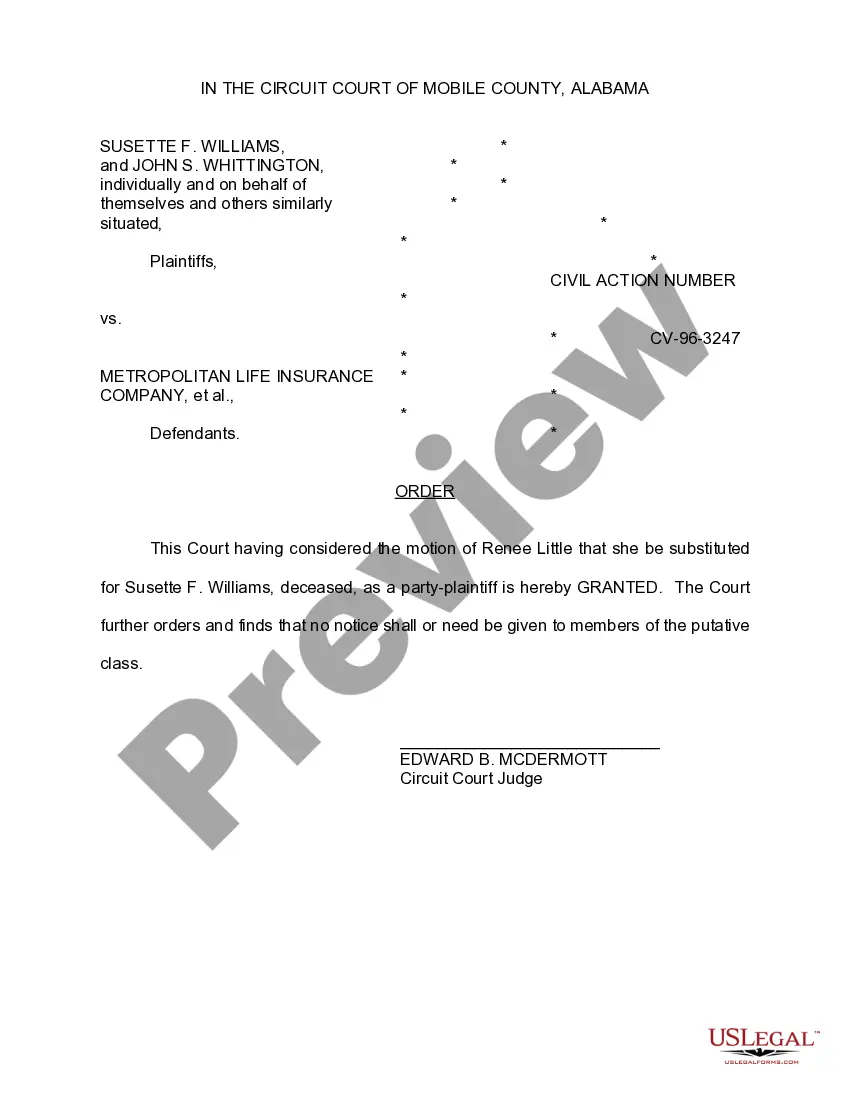
The Motion for Substitution of Parties is a legal document used in civil court proceedings. Its primary purpose is to request that a court substitutes one party for another in an ongoing case, often due to the death or incapacity of the original party. This form is specifically utilized by an administratrix of an estate to formally invoke this procedural change, ensuring that the estate's interests continue to be represented in the lawsuit.
What’s included in this form
- Identification of the parties involved in the case.
- CIVIL ACTION NUMBER for tracking the case in court.
- Declaration by the administratrix requesting to be substituted as party-plaintiff.
- Details of the deceased party, including date of death and administrative information.
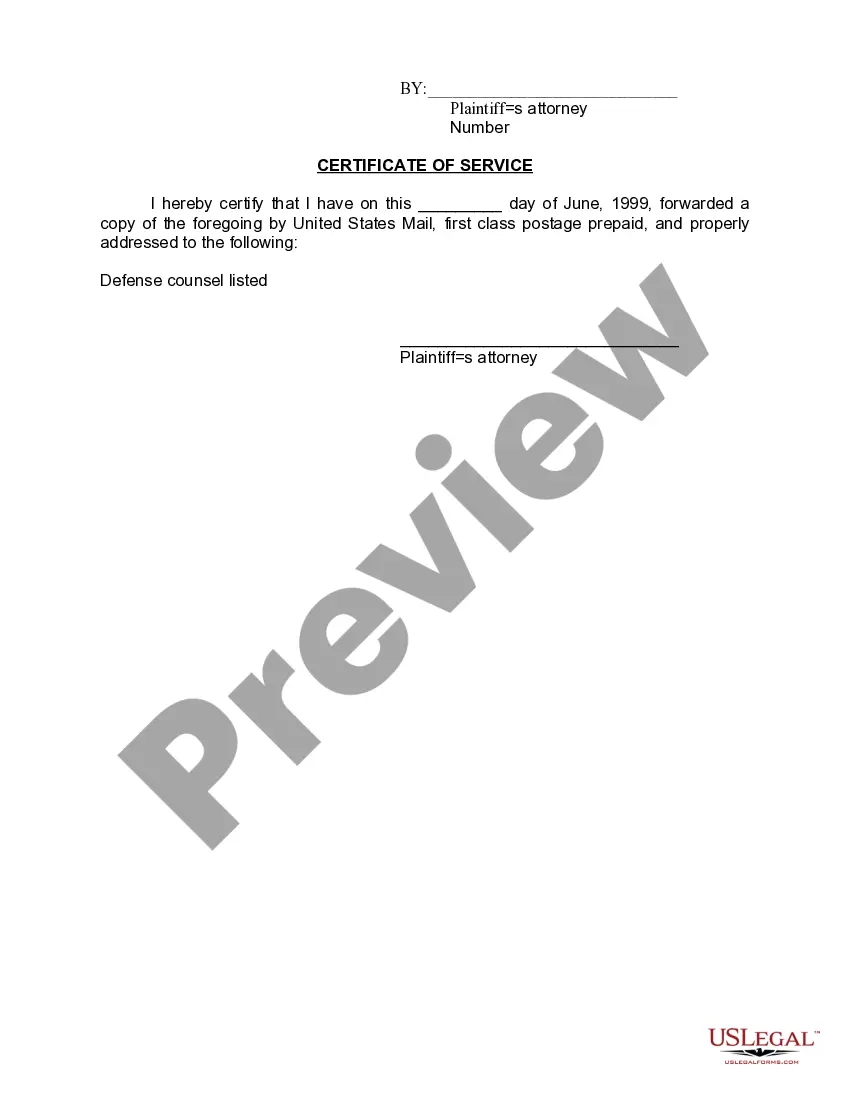
- Signature lines for the attorney and verification of service.

Common use cases
This form should be used when a party in a civil action has passed away, and it is necessary to substitute a representative of the estate to continue pursuing the case. It is often utilized in estate-related disputes or when representing beneficiaries in legal actions initiated by or against the deceased party.
Who can use this document
- Administrators or executors of an estate.
- Legal representatives of beneficiaries in an estate matter.
- Attorneys representing parties in civil litigation involving deceased individuals.
- Individuals seeking to ensure that legal actions are continued despite the death of a party.
Instructions for completing this form
- Identify and fill out the names of the plaintiffs and defendants in the case.
- Enter the civil action number assigned to the case.
- Provide details about the deceased, including the date of death and their status as a party in the action.
- Attach the Letters of Administration as an exhibit to demonstrate legal authority to represent the estate.
- Sign and date the motion as well as verify service to concerned parties.
Is notarization required?
In most cases, this form does not require notarization. However, some jurisdictions or signing circumstances might. US Legal Forms offers online notarization powered by Notarize, accessible 24/7 for a quick, remote process.
Get your form ready online
Our built-in tools help you complete, sign, share, and store your documents in one place.
Make edits, fill in missing information, and update formatting in US Legal Forms—just like you would in MS Word.
Download a copy, print it, send it by email, or mail it via USPS—whatever works best for your next step.
Sign and collect signatures with our SignNow integration. Send to multiple recipients, set reminders, and more. Go Premium to unlock E-Sign.
If this form requires notarization, complete it online through a secure video call—no need to meet a notary in person or wait for an appointment.
We protect your documents and personal data by following strict security and privacy standards.

Make edits, fill in missing information, and update formatting in US Legal Forms—just like you would in MS Word.

Download a copy, print it, send it by email, or mail it via USPS—whatever works best for your next step.

Sign and collect signatures with our SignNow integration. Send to multiple recipients, set reminders, and more. Go Premium to unlock E-Sign.

If this form requires notarization, complete it online through a secure video call—no need to meet a notary in person or wait for an appointment.

We protect your documents and personal data by following strict security and privacy standards.
Common mistakes to avoid
- Failing to attach necessary documentation, such as Letters of Administration.
- Not including the civil action number, which is crucial for identifying the case.
- Omitting signatures or date fields which can render the motion invalid.
- Incorrectly identifying the deceased party or using outdated information.
Benefits of completing this form online
- Convenience of downloading from home at any time.
- Editable format allows for accurate and personalized information input.
- Access to professionally drafted legal documents ensures compliance and accuracy.
- Eliminates waiting times and reduces the need for in-person visits to legal offices.
Looking for another form?



Form popularity
FAQ
(1) Number. Unless otherwise stipulated or ordered by the court, a party may serve on any other party no more than 25 written interrogatories, including all discrete subparts. Leave to serve additional interrogatories may be granted to the extent consistent with Rule 26(b)(1) and (2).
A Motion for Substitution may be made by any party or by the descendant's successor or representative. It permits a party to substitute into an adversary proceeding or contested matter as a party if any of the following circumstances exist in a case:If a party dies and the claim is not extinguished.
Subtitution of counsel is usually filed when court records show that one attorney represents you, and another attorney is stepping in to replace that attorney.
So, can you refuse to answer interrogatories? The answer is, no, you may not.That answer must either permit inspection of the requested information or object to the production of the information for a specific reason.
A party shall not propound more than forty (40) interrogatories to any other party without leave of court. Upon motion, and for good cause shown, the court may increase the number of interrogatories that a party may serve upon another party.
Anyone can file the Substitution of Attorney form with the court. There is no court rule or code section mandating who should file it.
(1) Substitution if the Claim Is Not Extinguished. If a party dies and the claim is not extinguished, the court may order substitution of the proper party. A motion for substitution may be made by any party or by the decedent's successor or representative.A statement noting death must be served in the same manner.
Interrogatory answers, in order to be used as substantive evidence at trial, must be introduced into evidence as part of the record.One procedure for admitting the answers, after securing the court's permission, is to read the questions and answers before the jury so that they are in the trial transcript.
The interrogatories must not exceed 30, including all subparts, unless the court permits a larger number on motion and notice and for good cause.