New York Warranty Deed from two Individuals to Husband and Wife
About this form
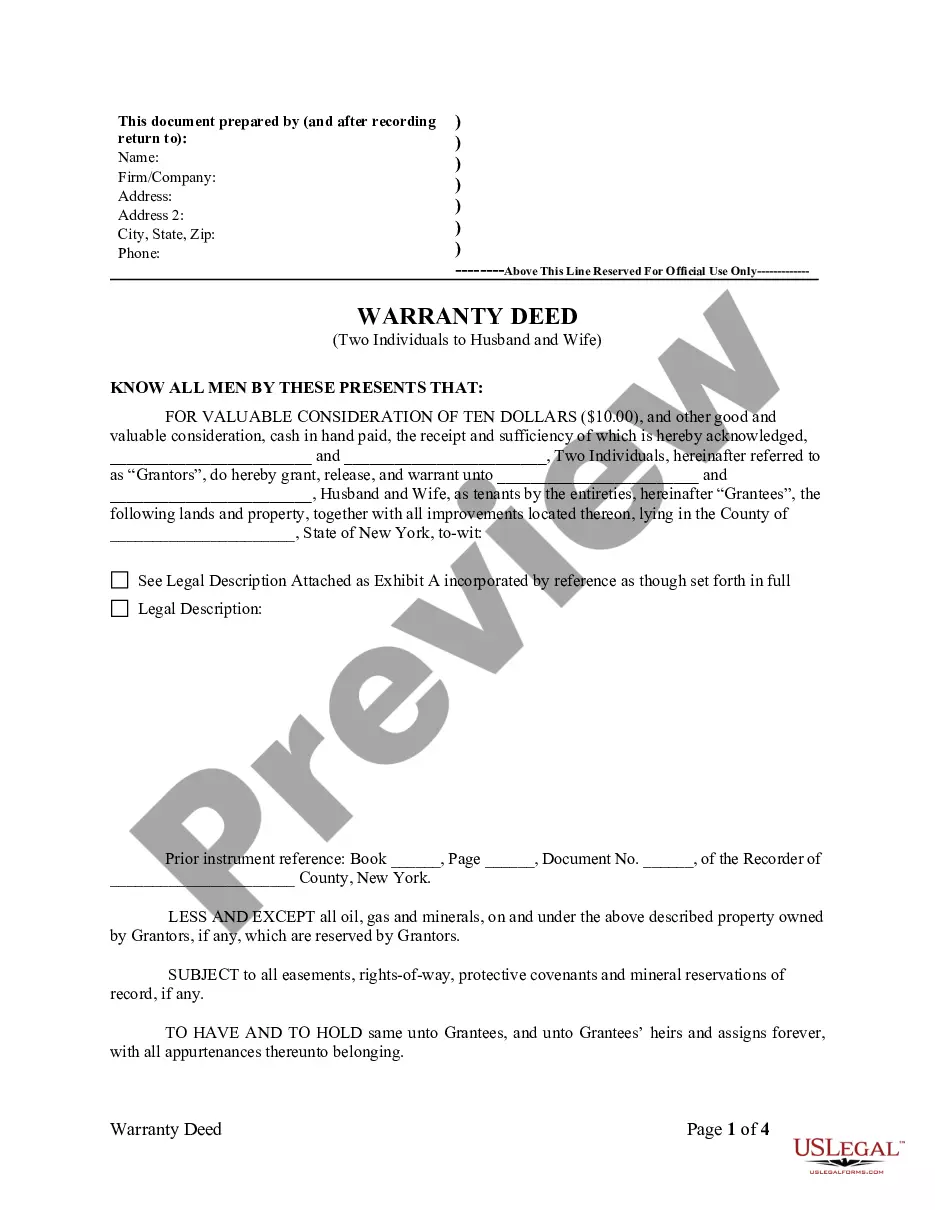
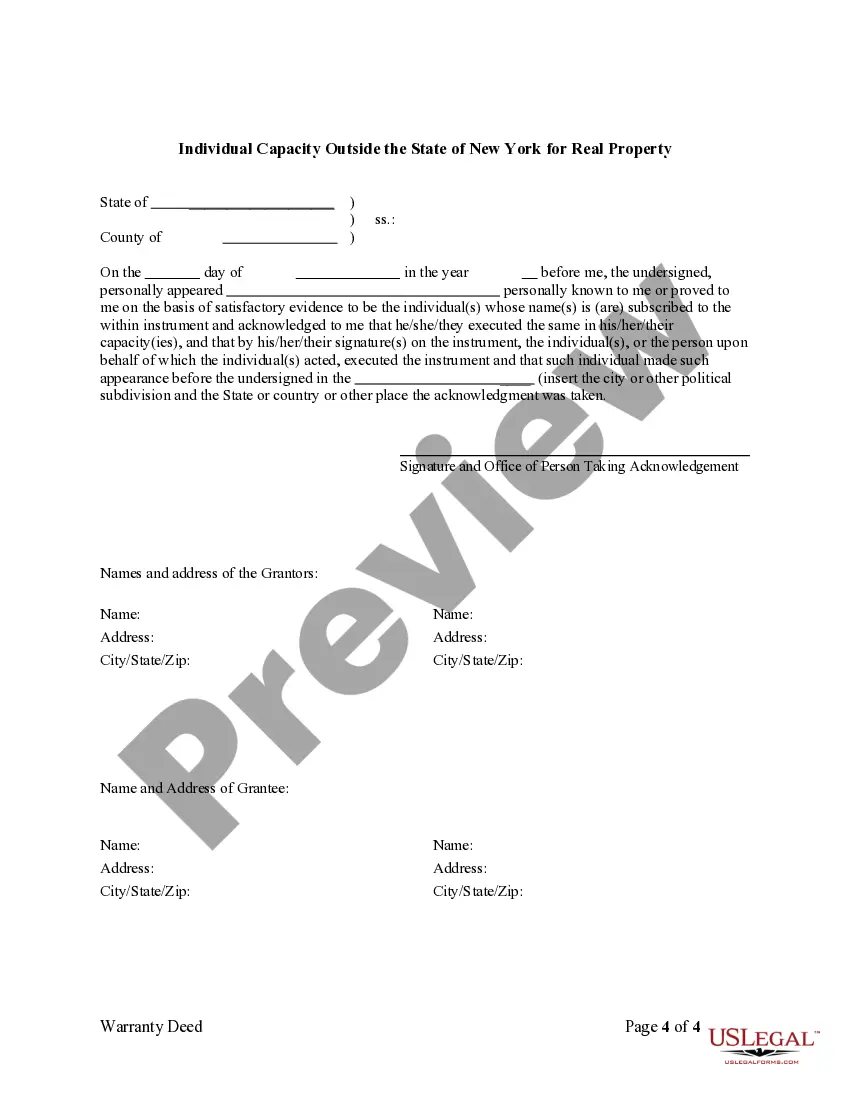
This Warranty Deed from two Individuals to Husband and Wife is a legal document that transfers property ownership from two individuals (Grantors) to a married couple (Grantees). It ensures that the property is conveyed free from encumbrances, except for mineral rights, if any. This form is essential for legally documenting the transfer of property between individuals and specifically addresses the needs of married couples, distinguishing it from other types of deeds.
Key parts of this document
- Grantors and Grantees: Identifies who is transferring the property and who is receiving it.
- Legal Description of Property: A detailed description of the property being conveyed, referenced as Exhibit A.
- Easements and Reservations: Notes any rights-of-way or mineral reservations that may affect the property.
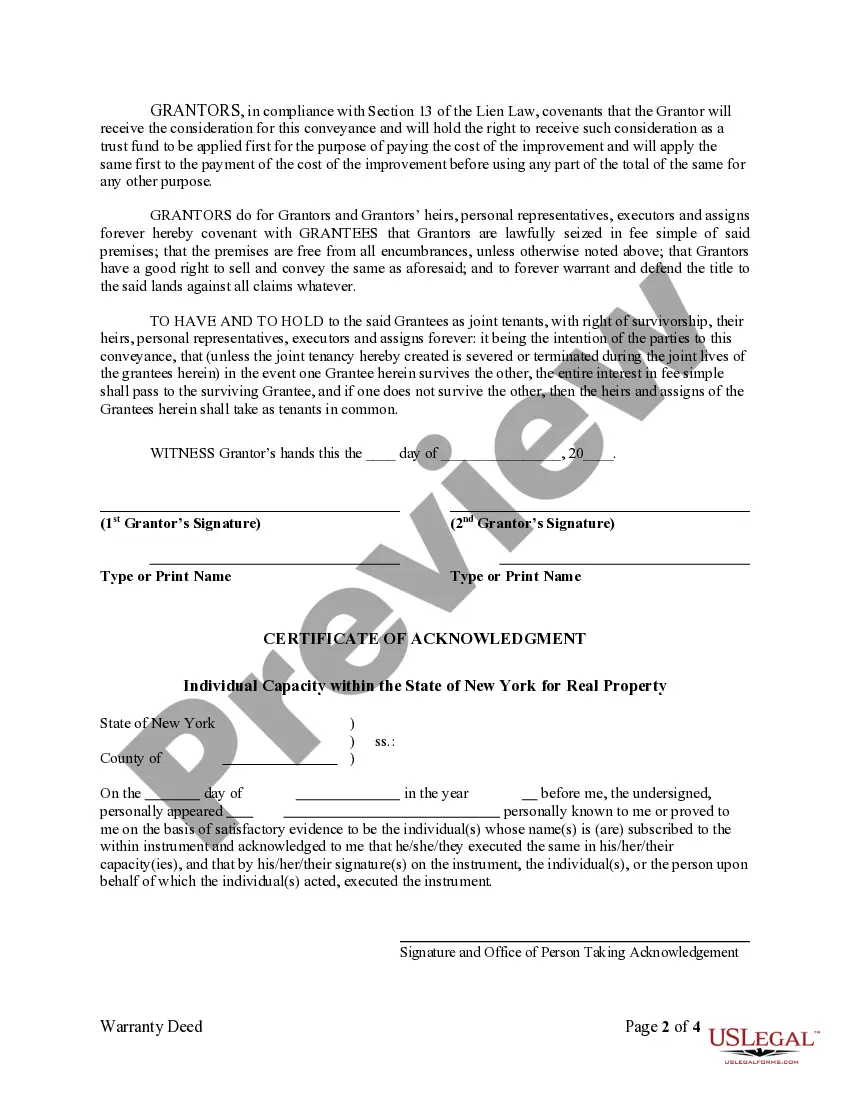
- Consideration Clause: States that the Grantor has received consideration for the transfer and its purpose.
- Covenants: Confirms that Grantors hold a good title and will defend it against any claims.
- Joint Tenancy Clause: Establishes ownership as joint tenants with right of survivorship, outlining how the property will be handled upon the death of one owner.






Situations where this form applies
This form is ideal for situations where two individuals are transferring real property to a married couple. It is commonly used during property purchases, transfers between family members, or when consolidating property ownership into joint tenancy. It helps ensure that the new ownership is legally recognized and protected.
Who needs this form
- Individuals (Grantors) looking to transfer property to a married couple (Grantees).
- Couples who want to hold property jointly and ensure survivorship rights.
- Real estate professionals assisting clients in property transfer transactions.
- Attorneys who require a standardized form for property conveyance.
Steps to complete this form
- Identify the parties involved by entering the names of the Grantors (two individuals) and the Grantees (husband and wife).
- Clearly specify the property being transferred, including a legal description as referenced in Exhibit A.
- Fill in the consideration amount received for the property transfer.
- Sign and date the document in the presence of a notary if required for your jurisdiction.
- Ensure all specified easements and reservations are noted and acknowledged.
Is notarization required?
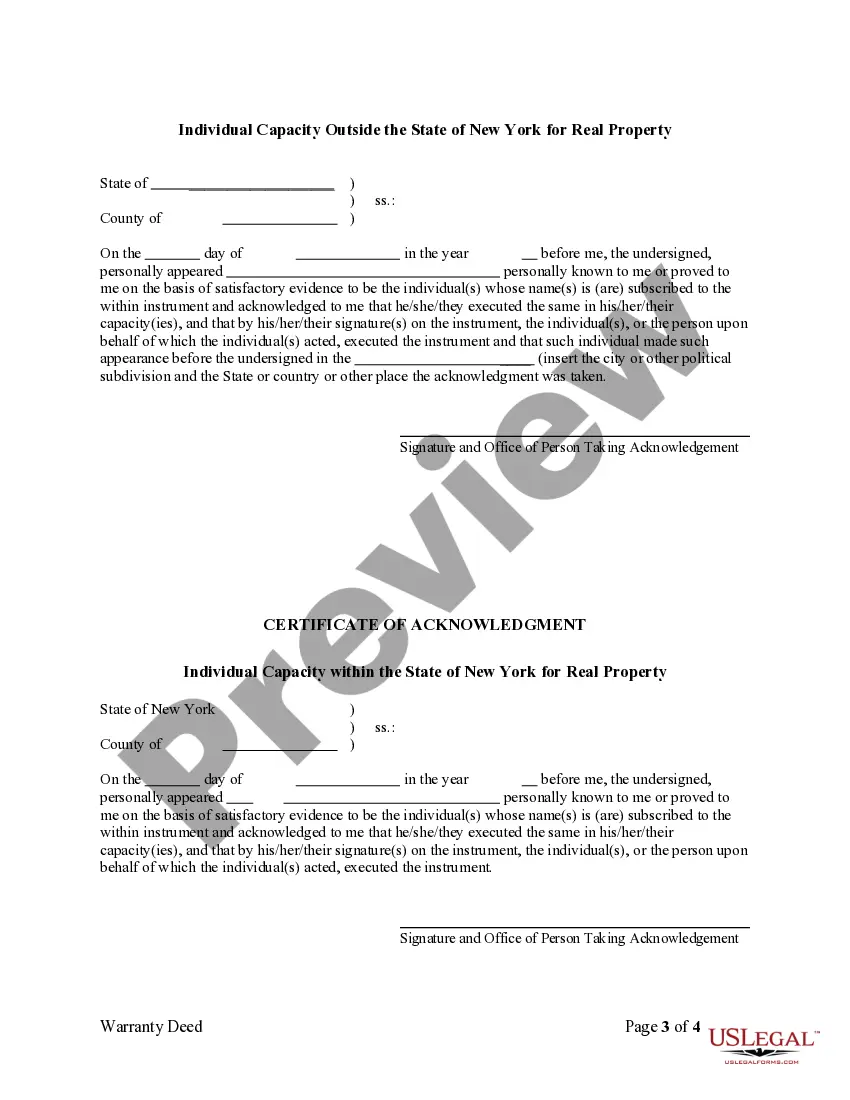
This form needs to be notarized to ensure legal validity. US Legal Forms provides secure online notarization powered by Notarize, allowing you to complete the process through a verified video call, available anytime.
Get your form ready online
Our built-in tools help you complete, sign, share, and store your documents in one place.
Make edits, fill in missing information, and update formatting in US Legal Forms—just like you would in MS Word.
Download a copy, print it, send it by email, or mail it via USPS—whatever works best for your next step.
Sign and collect signatures with our SignNow integration. Send to multiple recipients, set reminders, and more. Go Premium to unlock E-Sign.
If this form requires notarization, complete it online through a secure video call—no need to meet a notary in person or wait for an appointment.
We protect your documents and personal data by following strict security and privacy standards.

Make edits, fill in missing information, and update formatting in US Legal Forms—just like you would in MS Word.

Download a copy, print it, send it by email, or mail it via USPS—whatever works best for your next step.

Sign and collect signatures with our SignNow integration. Send to multiple recipients, set reminders, and more. Go Premium to unlock E-Sign.

If this form requires notarization, complete it online through a secure video call—no need to meet a notary in person or wait for an appointment.

We protect your documents and personal data by following strict security and privacy standards.
Mistakes to watch out for
- Failing to accurately describe the property in Exhibit A.
- Not including necessary easements or reservations, leading to legal disputes later.
- Omitting signatures or not having the document notarized when required.
Benefits of using this form online
- Immediate access to professionally drafted legal documents.
- Easy to download and complete at your convenience.
- Reduces the risk of errors by utilizing standardized templates.
Looking for another form?



Form popularity
FAQ
It is possible to be named on the title deed of a home without being on the mortgage. However, doing so assumes risks of ownership because the title is not free and clear of liens and possible other encumbrances.If a mortgage exists, it's best to work with the lender to make sure everyone on the title is protected.
Adding someone to your house deed requires the filing of a legal form known as a quitclaim deed. When executed and notarized, the quitclaim deed legally overrides the current deed to your home. By filing the quitclaim deed, you can add someone to the title of your home, in effect transferring a share of ownership.
Two of the most common ways to transfer property in a divorce are through an interspousal transfer deed or quitclaim deed. When spouses own property together, but then one spouse executes an interspousal transfer or a quitclaim deed, this is known as transmutation.
Before adding your spouse to the deed, speak with your attorney. The easiest way to grant your spouse title to your home is via a quitclaim deed (Californians generally use an interspousal grant deed). With a quitclaim deed, you can name your spouse as the property's joint owner.
In states like California and Florida, the spouses may use a quitclaim deed to transfer the property without warranting title. Other stateslike Texasrecognize a similar type of deed called a deed without warranty.
A deed that conveys an interest in your real estate ownership (adds someone on) has the legal effect of giving that additional person the same bundle of rights to which you are entitled. Once the conveyance happens, it cannot be undone except with that other additional owner's consent.
You can gift property to spouse, child or any relative and register the same. Under section 122 of the Transfer of Property Act, 1882, you can transfer immovable property through a gift deed. The deed should contain your details as well as those of the recipient.
You would simply prepare a deed to you and your fiance. You would then have to prepare and execute the other necessary forms take them to the clerks office and file them. I suggest that you consult with a local attorney. They can do this at a modest cost.
The law doesn't forbid adding people to a deed on a home with an outstanding mortgage. Mortgage lenders are familiar and frequently work with deed changes and transfers.When you "deed" your home to someone, you've effectively transferred part ownership, which could activate the "due-on-sale" clause.