Sample Letter for Corrected Statement for Legal Services
What this document covers
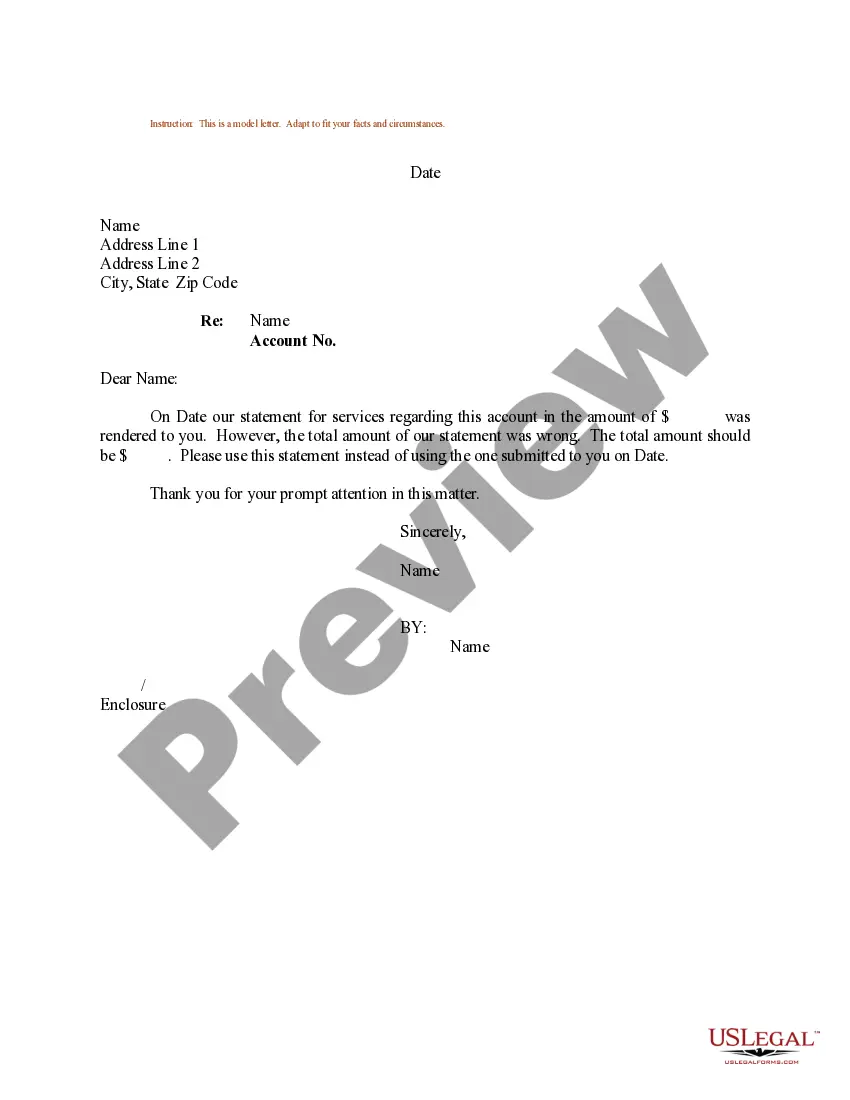
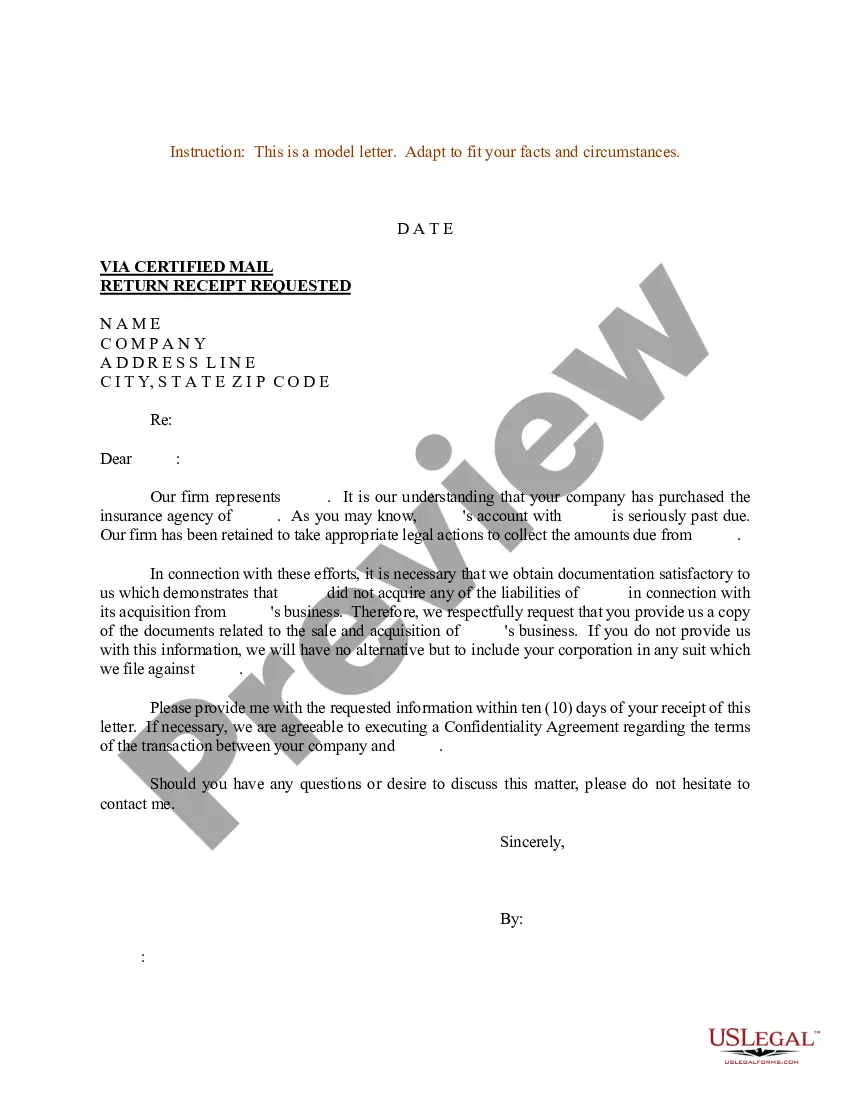
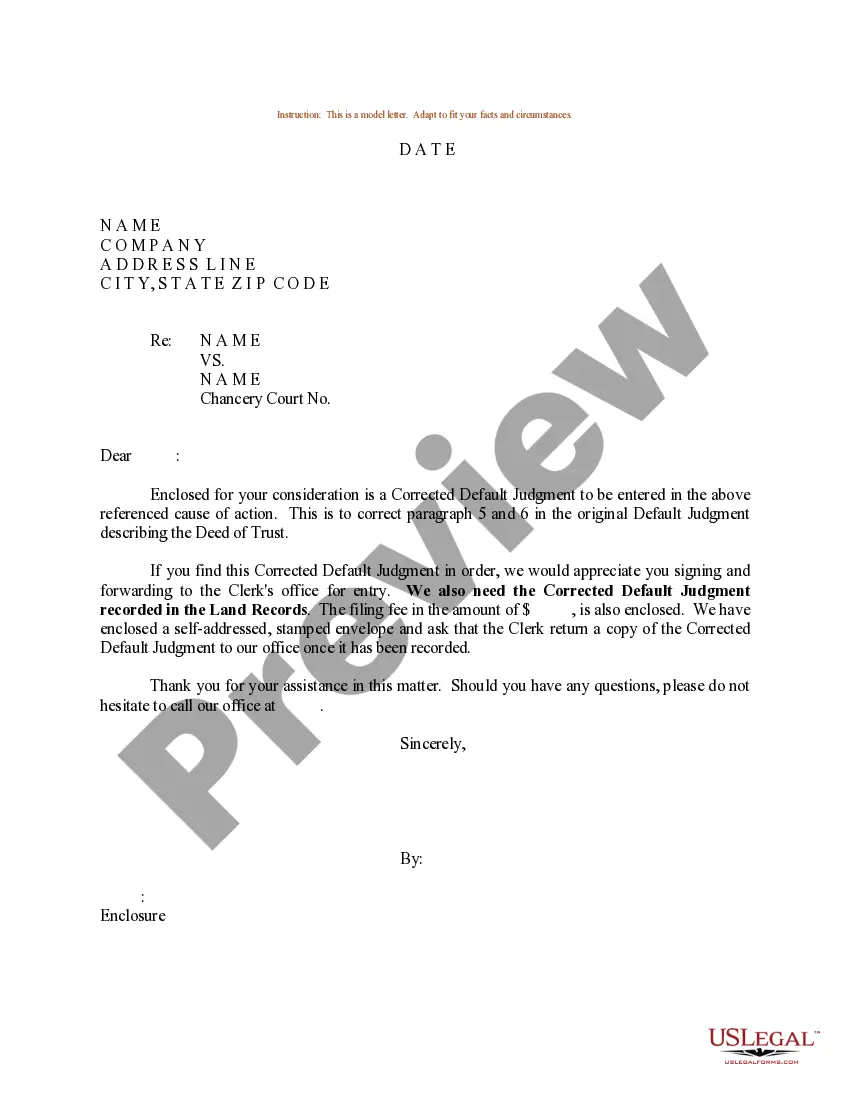
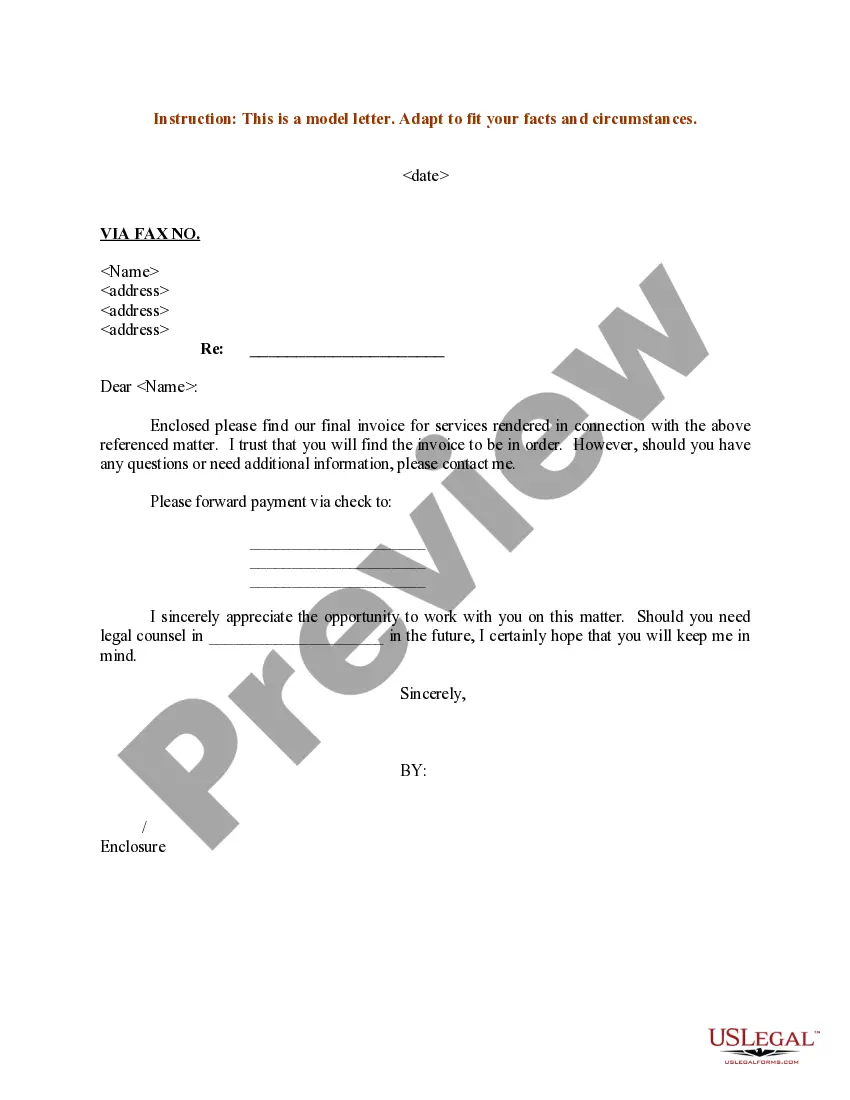
The Sample Letter for Corrected Statement for Legal Services is a formal template designed to request corrections to a legal services statement. This letter aims to clarify inaccuracies and ensures that the billing aligns with the services provided. Unlike other letters, this specific format is tailored for legal services, making it suitable for situations where billing discrepancies arise.
Key components of this form
- Date: Indicate the date the letter is being sent.
- Recipient Information: Include the name and address of the person or entity receiving the letter.
- Subject Line: Clearly state the purpose of the letter.
- Body of the Letter: Detail the issues with the statement and specify the corrections needed.
- Closing: Provide a polite conclusion and signature line for formal closure.
When this form is needed
You should use this form when you receive an inaccurate statement for legal services rendered. It is appropriate in cases where there are mischarges, unitemized services, or errors in the billing amount. Sending a corrected statement letter helps facilitate communication with service providers and resolves discrepancies efficiently.
Who can use this document
This form is intended for:
- Clients who have received a statement for legal services.
- Individuals seeking to clarify billing issues with an attorney or law firm.
- Those who need a structured format for requesting corrections in a formal manner.
Completing this form step by step
To complete this form:
- Begin by entering the date at the top of the letter.
- Provide the name and address of the recipient.
- Write a clear subject line that summarizes the purpose of your letter.
- In the body, explain the discrepancies and specify the corrections needed.
- Sign the letter at the bottom to formally close your request.
Does this form need to be notarized?
This form does not typically require notarization unless specified by local law. Review your local requirements to ensure compliance.
Get your form ready online
Our built-in tools help you complete, sign, share, and store your documents in one place.
Make edits, fill in missing information, and update formatting in US Legal Forms—just like you would in MS Word.
Download a copy, print it, send it by email, or mail it via USPS—whatever works best for your next step.
Sign and collect signatures with our SignNow integration. Send to multiple recipients, set reminders, and more. Go Premium to unlock E-Sign.
If this form requires notarization, complete it online through a secure video call—no need to meet a notary in person or wait for an appointment.
We protect your documents and personal data by following strict security and privacy standards.

Make edits, fill in missing information, and update formatting in US Legal Forms—just like you would in MS Word.

Download a copy, print it, send it by email, or mail it via USPS—whatever works best for your next step.

Sign and collect signatures with our SignNow integration. Send to multiple recipients, set reminders, and more. Go Premium to unlock E-Sign.

If this form requires notarization, complete it online through a secure video call—no need to meet a notary in person or wait for an appointment.

We protect your documents and personal data by following strict security and privacy standards.
Typical mistakes to avoid
- Failing to include specific details about the inaccuracies in the billing.
- Not addressing the letter to the proper person or department.
- Using an informal tone inappropriate for a legal correspondence.
- Neglecting to proofread the letter for clarity and professionalism.
Why use this form online
- Convenience of downloading a professionally drafted template.
- Ability to customize the content easily to fit specific needs.
- Reliable format that meets legal standards for correspondence.
- The completed letter serves as a formal request, which can be beneficial in resolving disputes.
- Using a standard format increases the likelihood of a prompt response.
What to keep in mind
- The Sample Letter for Corrected Statement for Legal Services is crucial for addressing billing issues.
- The form is easy to complete and can be tailored for various situations.
- Be clear and specific about discrepancies to facilitate resolution.
Looking for another form?


Form popularity
FAQ
Start with why you chose it, then try and summarise this in one or two sentences. Be original and refer to personal experiences as a way to draw attention. Avoid overused opening sentences, quotes and cliches like 'when I was young2026' They want to know about you now, not your childhood or Shakespeare!
Litigation, including cases relating to contracts, construction, and employment issues (gender, race, age, disability, and civil rights); draft related legal pleadings and make court appearances in state and federal courts and at administrative hearings.
Begin the document by writing the full legal name, complete address, and the occupation of the witness giving the statement. Number the paragraphs and make sure that each paragraph has an idea or fact in it. Ask the witness to affix his signature on the last page along with the date he signed the document.
Write a personal introduction. Write an introduction that reflects you and your personality. Expand on relevant skills, interests and experiences. Write a strong conclusion. Proofread and edit.
Your statement of purpose shouldn't have any spelling or grammatical errors. Use strong, clear, and concise writing. Avoid cliches and repetitive language. Stay away from overly informal language. Keep a positive and confident tone.
First, you need to know the subject of the legal statement you are writing or what it is all about. Together with the heading or title, include the date when the legal statement is written and the place of issuance of the document. Write the facts of your statement in chronological order.
Step 1: Statement is Created In the Doc File. Step 2: Title of the Statement Must Be Put At the Top of the Document. Step 3: Address Your Name and the Purpose In the Statement. Step 4: Mention the Necessary Points or Evidence In It. Step 5: Submit the Written Statement.
Each issue should ideally be no longer than a sentence. Here you list out all the contentions raised by both the parties to prove their case. Corresponding contentions of opposing parties should be clubbed together. The decision or holding should be framed in the order of issues or contentions in separate paragraphs.
Be a single sentence. Be a question that can be answered "yes" or "no" State the legal issue that you will analyze. State the names of the parties. Include enough facts to provide necessary context to the reader.