Michigan Letter from Tenant to Landlord responding to Notice to Terminate for Noncompliance - Noncompliant condition caused by Landlord's own deliberate or negligent act
Understanding this form
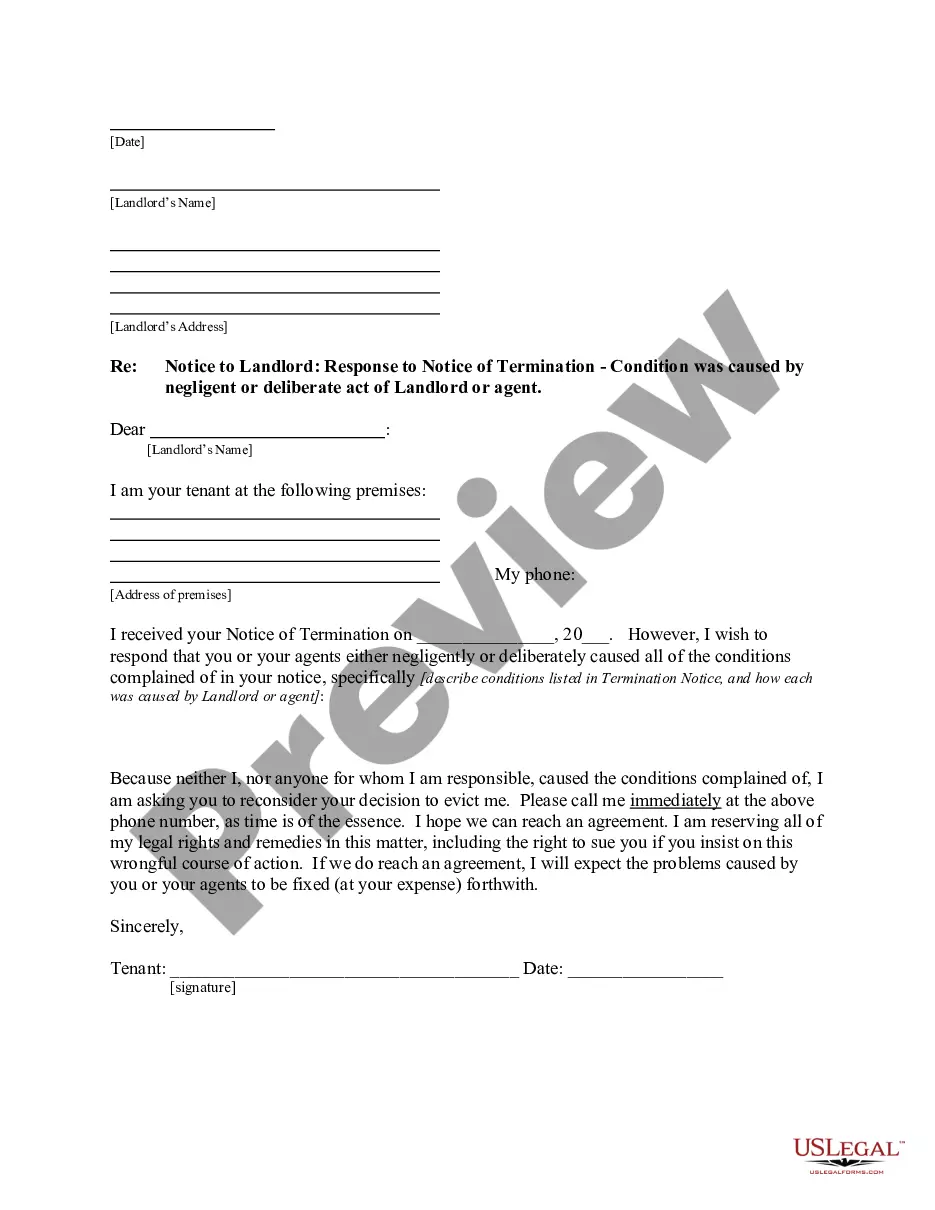
This form is a Letter from Tenant to Landlord responding to a Notice to Terminate for Noncompliance. It allows tenants to formally contest an eviction notice by asserting that the noncompliant condition leading to the eviction was caused by the landlord's own actions. This letter requests the landlord to halt the eviction process and make necessary repairs, while reserving the tenant's legal rights for possible future action.
Form components explained
- Tenant's contact information.
- Reference to the landlord's eviction notice.
- Assertion of the landlord's responsibility for the noncompliant condition.
- Request for immediate repairs and cessation of the eviction process.
- Statement reserving the tenant's legal rights.
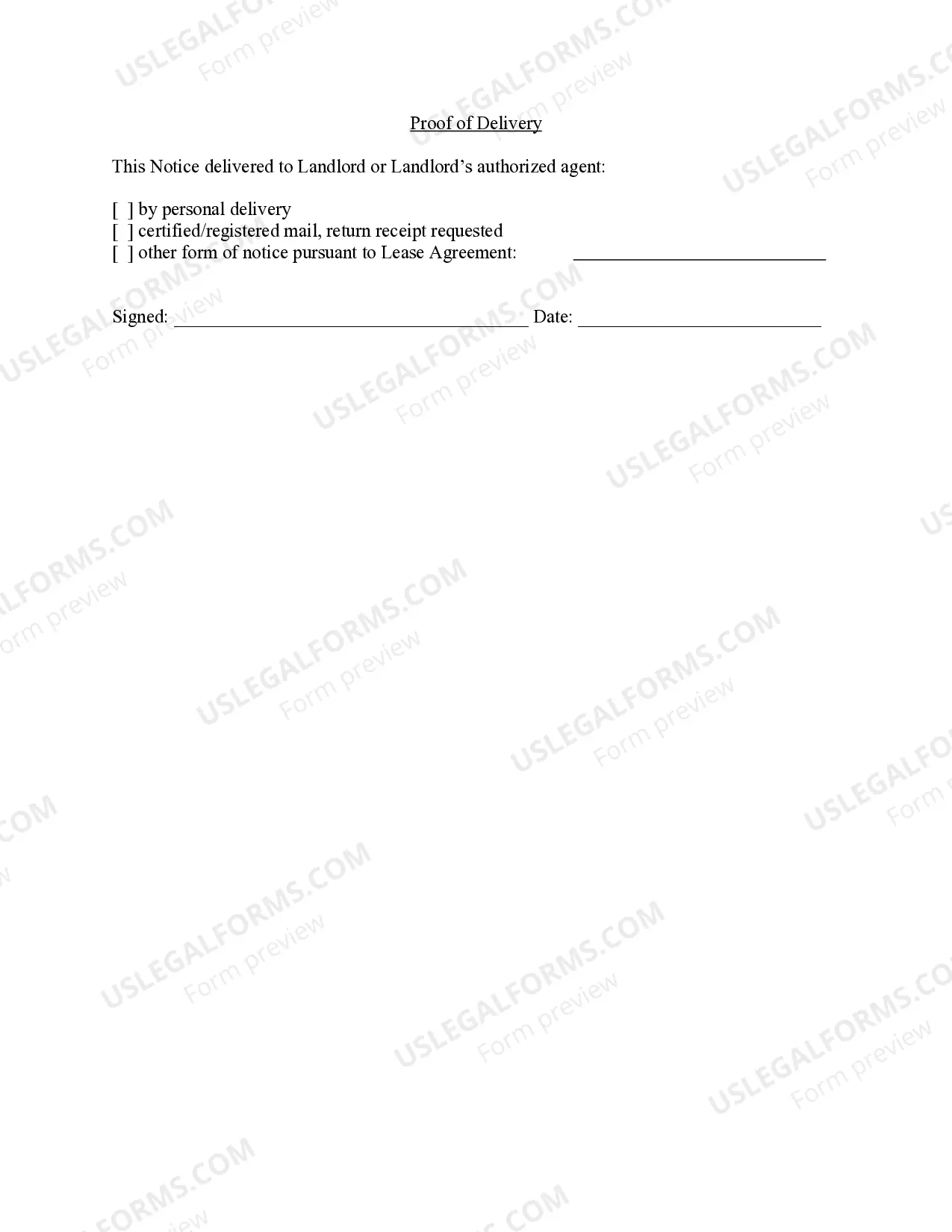
- Proof of delivery options to the landlord or their agent.




Common use cases
This form should be used by tenants who have received a notice of eviction from their landlord citing noncompliance with rental conditions. It is particularly relevant when the tenant believes that the issues leading to the eviction are a result of the landlord's negligence or deliberate action. Using this form helps to document the tenant's position and assert their rights to contest the eviction while seeking repairs.
Who should use this form
This letter is intended for:
- Tenants currently facing eviction due to alleged noncompliance.
- Individuals who believe the eviction notice is unjust and wish to formally respond.
- Tenants seeking to document the landlord's responsibilities for repair issues.
- Those who wish to preserve their legal rights while resolving the dispute.
Completing this form step by step
- Enter the tenant's contact information at the top of the letter.
- Clearly reference the eviction notice received from the landlord.
- State the reasons why the tenant believes the eviction is unwarranted, focusing on the landlord's actions or negligence.
- Request that the landlord cease eviction proceedings and make necessary repairs to the property.
- Sign and date the letter to confirm its validity.
- Select a method for delivering the letter to the landlord or their authorized agent, and include proof of delivery.
Notarization requirements for this form
Notarization is not commonly needed for this form. However, certain documents or local rules may make it necessary. Our notarization service, powered by Notarize, allows you to finalize it securely online anytime, day or night.
Get your form ready online
Our built-in tools help you complete, sign, share, and store your documents in one place.
Make edits, fill in missing information, and update formatting in US Legal Forms—just like you would in MS Word.
Download a copy, print it, send it by email, or mail it via USPS—whatever works best for your next step.
Sign and collect signatures with our SignNow integration. Send to multiple recipients, set reminders, and more. Go Premium to unlock E-Sign.
If this form requires notarization, complete it online through a secure video call—no need to meet a notary in person or wait for an appointment.
We protect your documents and personal data by following strict security and privacy standards.

Make edits, fill in missing information, and update formatting in US Legal Forms—just like you would in MS Word.

Download a copy, print it, send it by email, or mail it via USPS—whatever works best for your next step.

Sign and collect signatures with our SignNow integration. Send to multiple recipients, set reminders, and more. Go Premium to unlock E-Sign.

If this form requires notarization, complete it online through a secure video call—no need to meet a notary in person or wait for an appointment.

We protect your documents and personal data by following strict security and privacy standards.
Typical mistakes to avoid
- Failing to clearly reference the eviction notice, which can create confusion.
- Neglecting to keep a copy of the letter for personal records.
- Not signing the letter, which can make it legally ineffective.
- Using an unclear or vague language that does not specify the requested actions.
Why use this form online
- Convenience: Easily downloadable and usable at any time.
- Editability: Customize the letter to fit your specific situation and legal needs.
- Reliability: Drafted by licensed attorneys to ensure compliance with state laws.
Legal use & context
- This letter serves as a formal response to an eviction notice and is useful in court if disputes escalate.
- It strengthens the tenant's position by documenting their claims regarding the landlord's actions.
- Effective communication via this letter can sometimes prevent eviction proceedings altogether.
Quick recap
- The letter is essential for tenants facing eviction due to alleged noncompliance.
- It allows tenants to formally contest the eviction and assert their rights.
- Using this form helps to outline the responsibilities of the landlord clearly.
Looking for another form?

Form popularity
FAQ
If you think your landlord is violating the Fair Housing Act, you can get that landlord in trouble by filing a complaint at HUD.gov. Your remedy for breach of quiet enjoyment is to terminate the lease and move or sue in small claims court.
If you're seeking damages for emotional distress caused by a landlord's discrimination, or punitive damages for especially blatant and intentional discrimination, a lawsuit may well be your best bet. Understand what's involved in suing your landlord. You may file a lawsuit in either federal or state court.
Your landlord can't enter your home without permission except in an emergency. If there is a problem that your landlord needs to enter your home to fix, you should be given notice a reasonable time before the landlord plans to enter.
Injury at Rental Property: You could have a case for a lawsuit against your landlord if you are injured at the rental property due to a landlord's neglect. Filing an Illegal Eviction: You can countersue your landlord if you feel your landlord is trying to evict you illegally.
Introduce the problem clearly. Begin your letter by stating specifically why you are writing. Provide a brief description of the specific problem, then detail any efforts you have made prior to the letter to notify your landlord of the problem or to fix the problem yourself.
Review Your Lease Before You Sign. Research Local Laws. Keep Records. Pay Your Rent. Maintain Respectful Communication. Seek an Agreeable Solution. Request Repairs in Writing. What Do You Think?
Tenant Rights to Withhold Rent in MichiganTenants may withhold rent or exercise the right to repair and deduct if a landlord fails to take care of important repairs, such as a broken heater. For specifics, see Michigan Tenant Rights to Withhold Rent or Repair and Deduct.
Persons who have complaints against landlords/property owners can file a complaint with the Michigan Attorney General's Consumer Protection Division at 517-373-1140.