North Dakota Construction Contract Cost Plus or Fixed Fee
Understanding this form
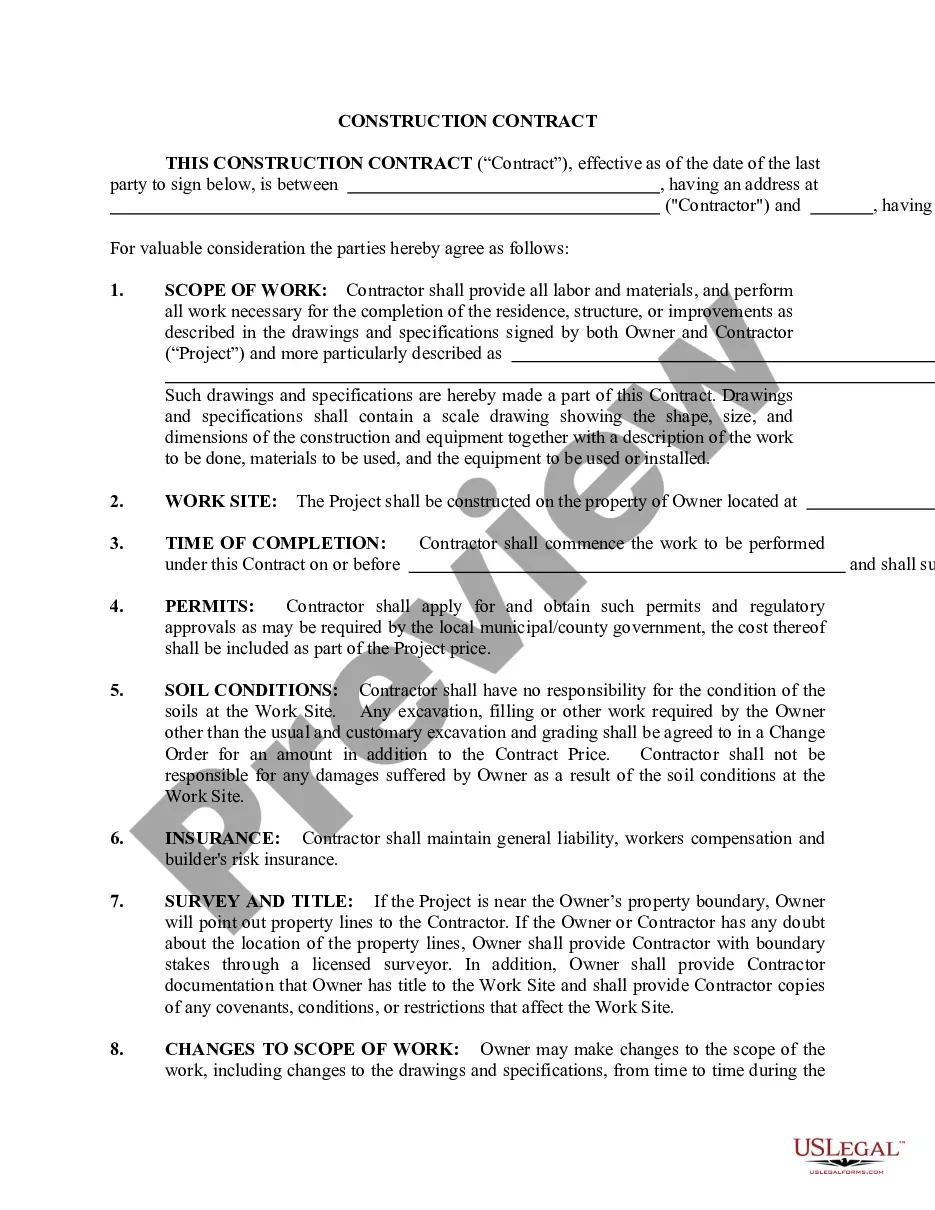
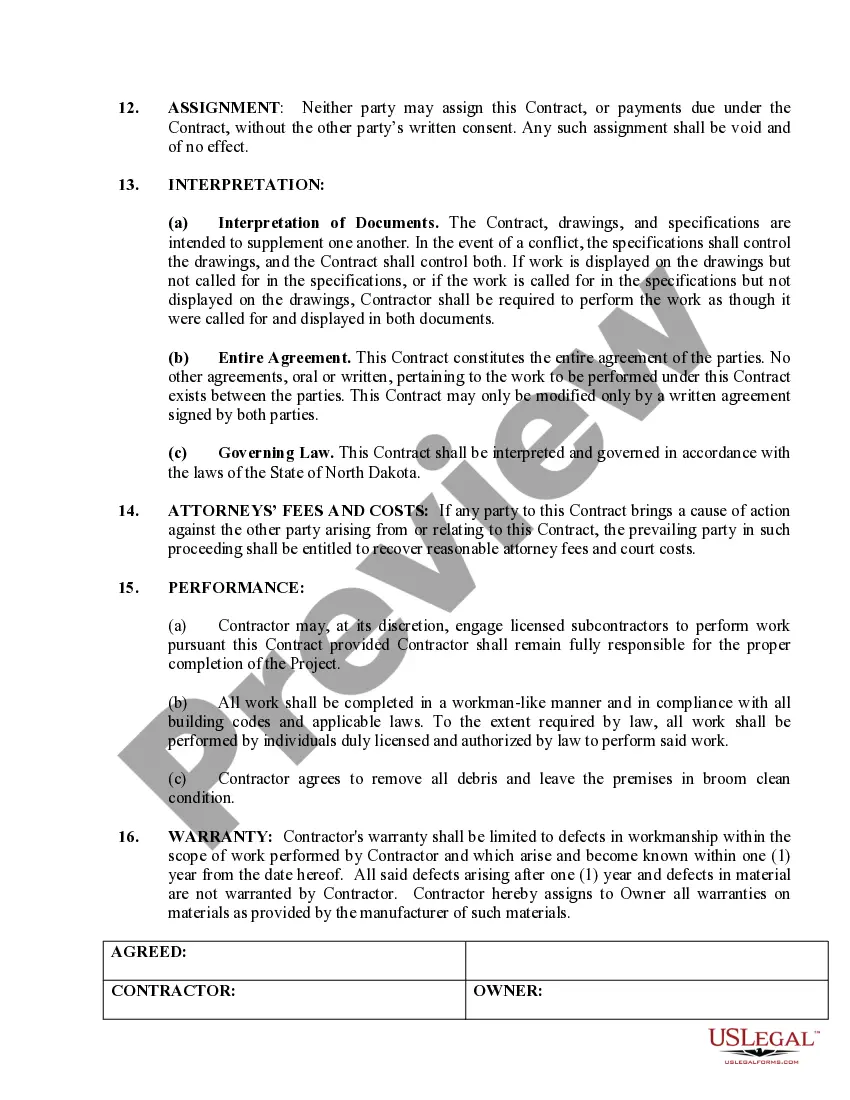
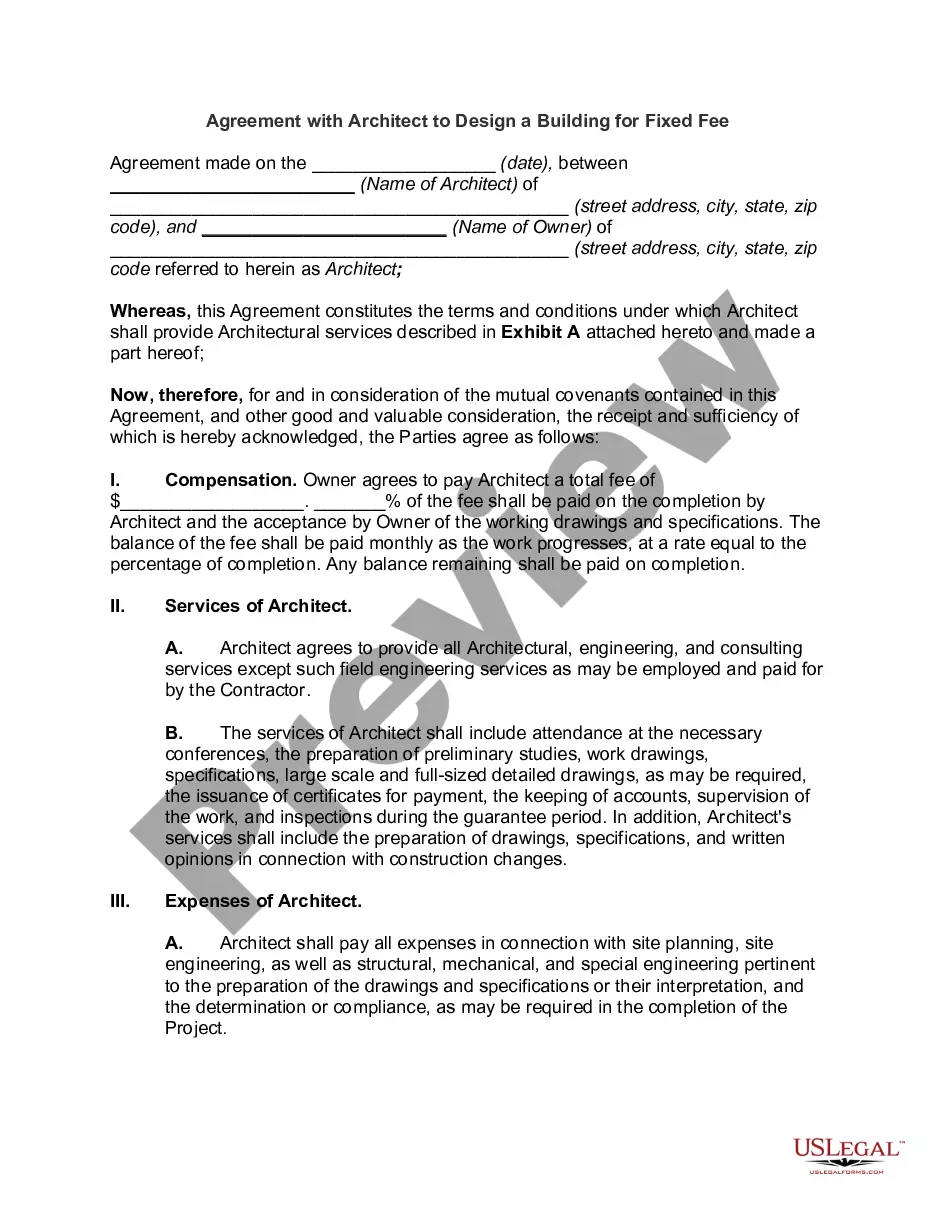
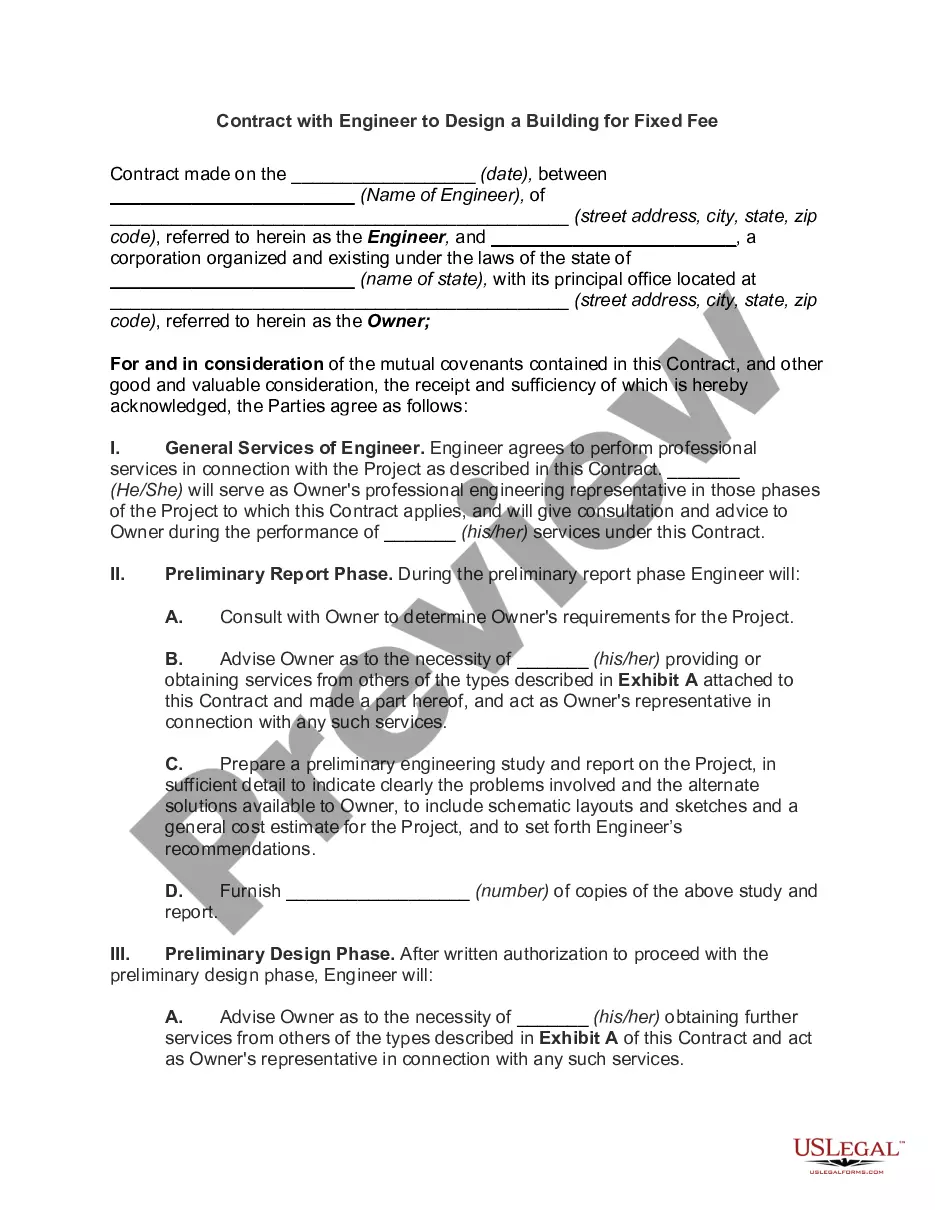
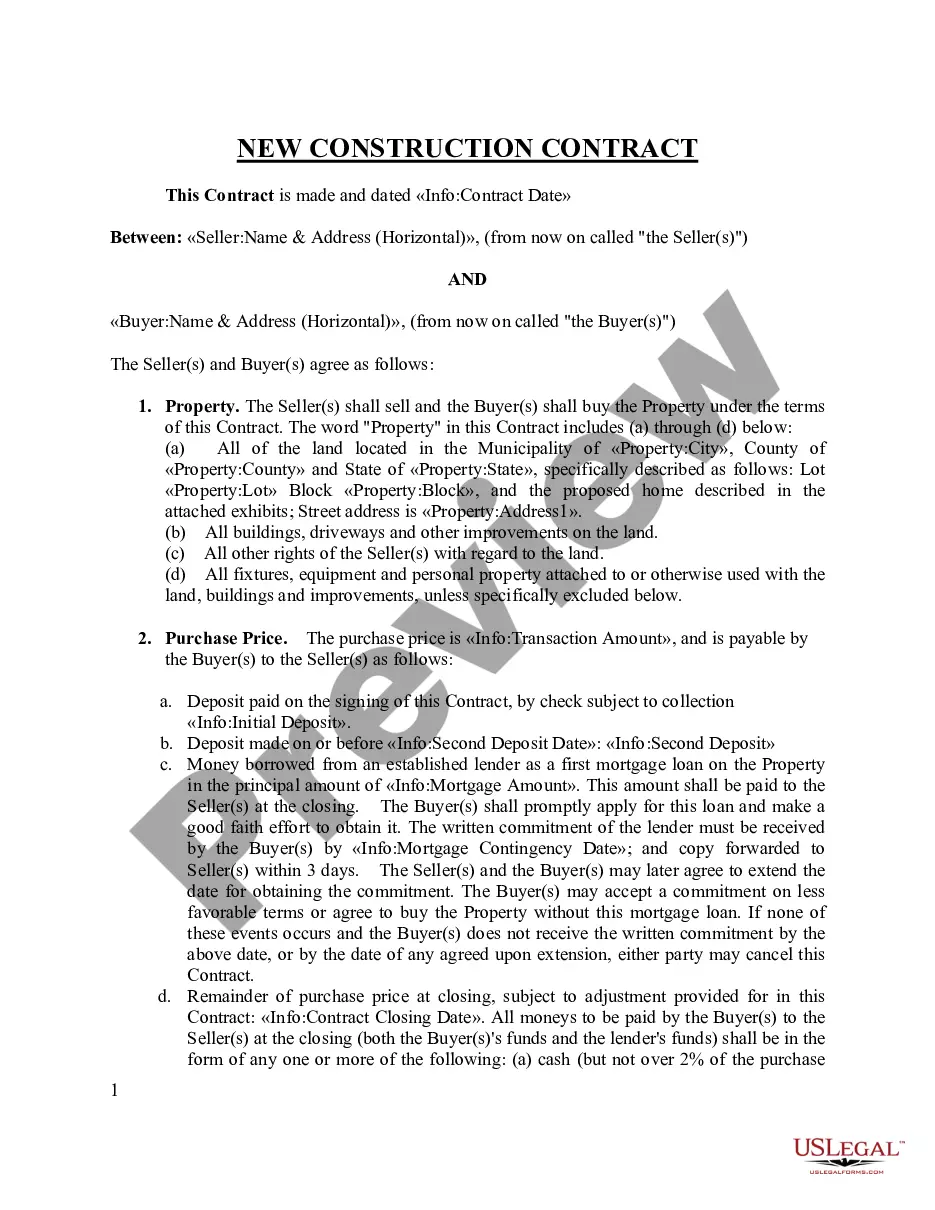
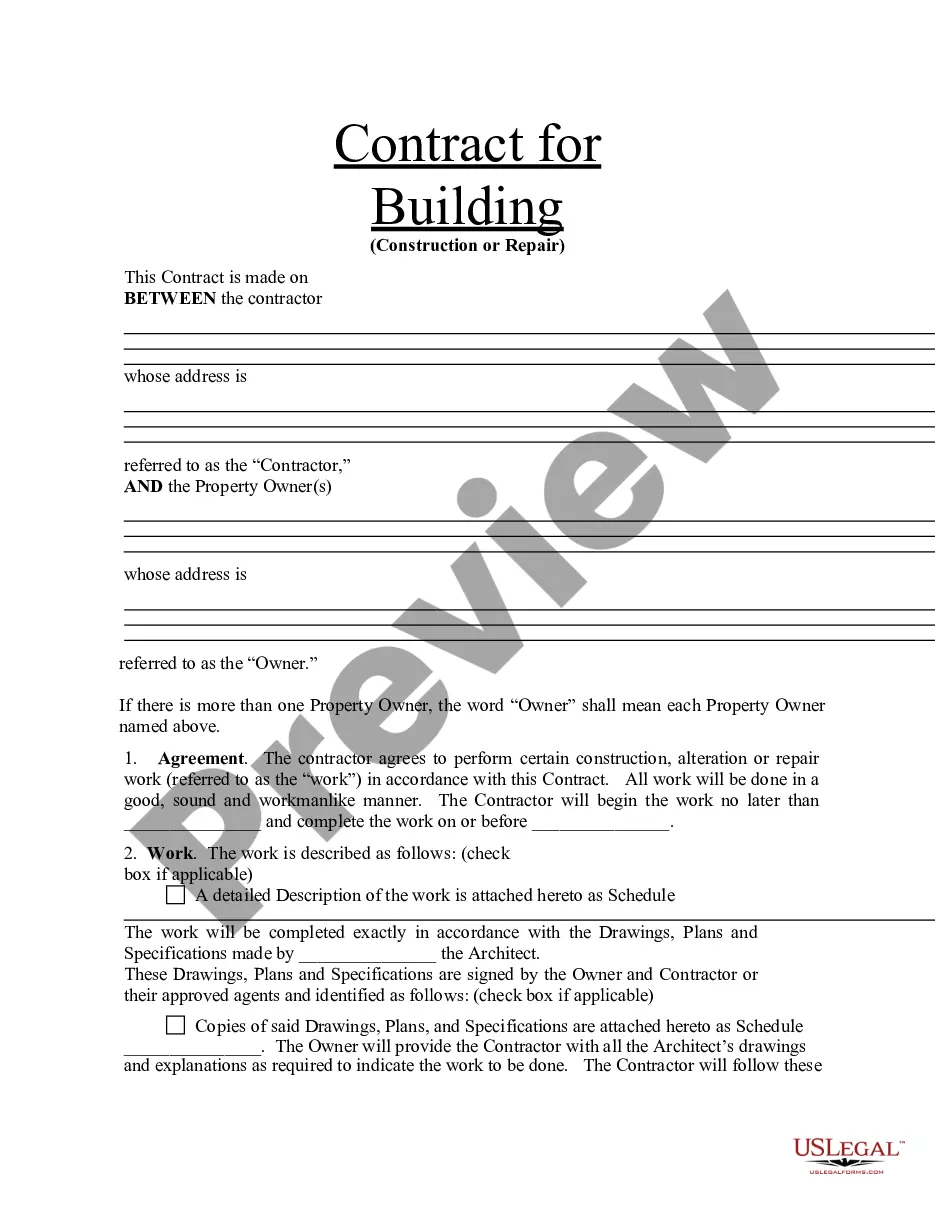
The Construction Contract Cost Plus or Fixed Fee is a legal document that outlines the terms of construction projects where payment can be based on either the actual costs incurred plus a fee or a predetermined fixed fee. This form ensures clarity on various aspects of the project such as the scope of work, work site details, warranties, and insurance, all while complying with the laws of the State of North Dakota. It is important to note that this contract is different from standard construction contracts due to the specific payment arrangements it provides.
What’s included in this form
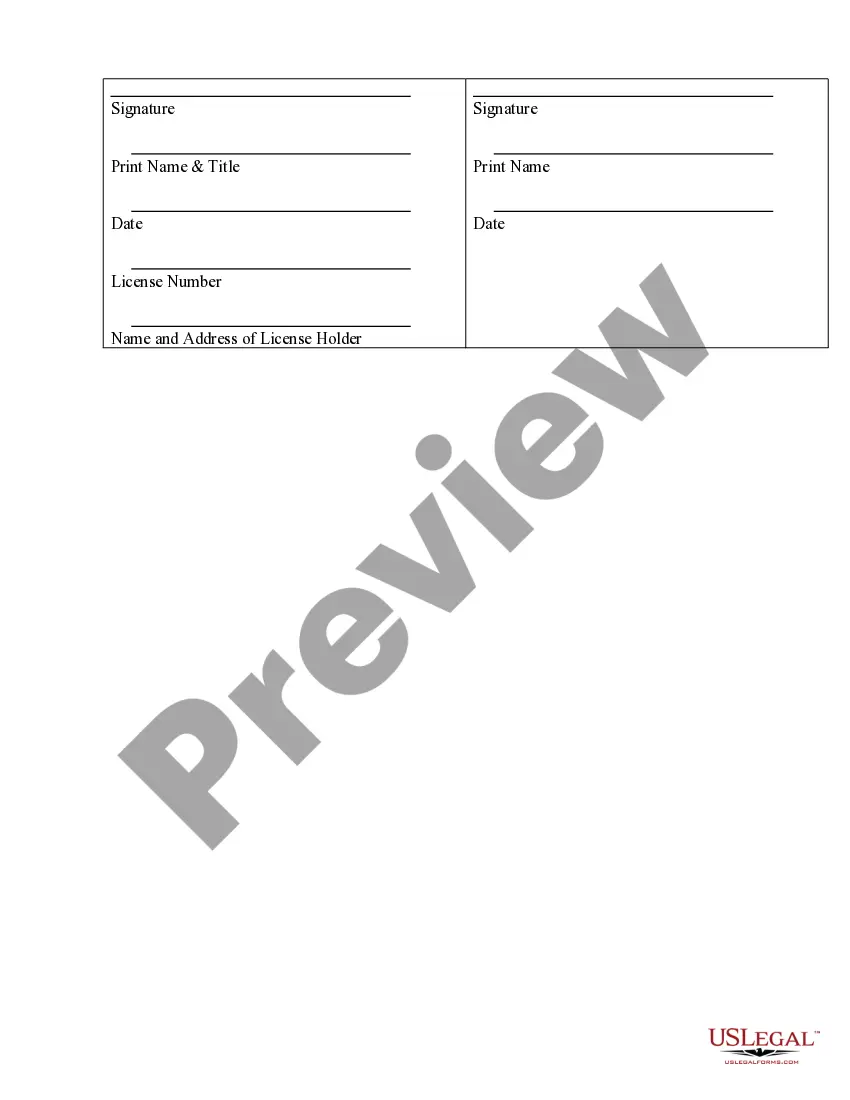
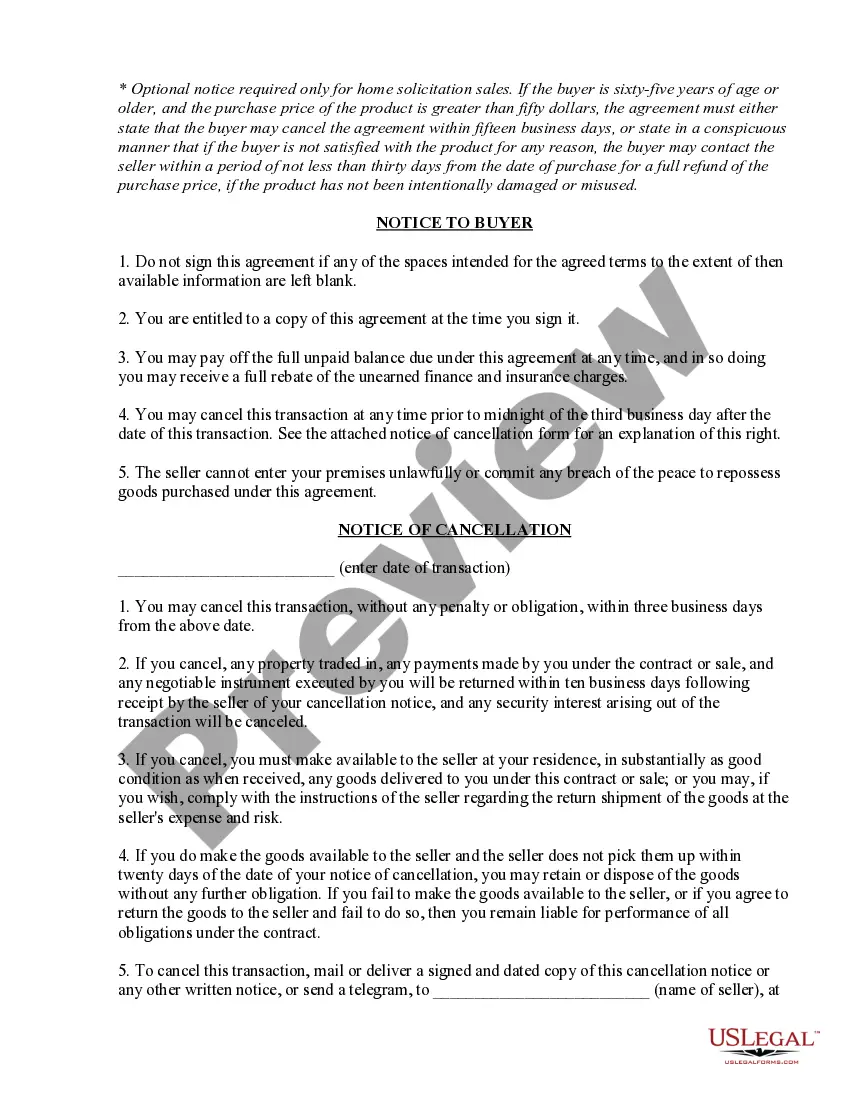
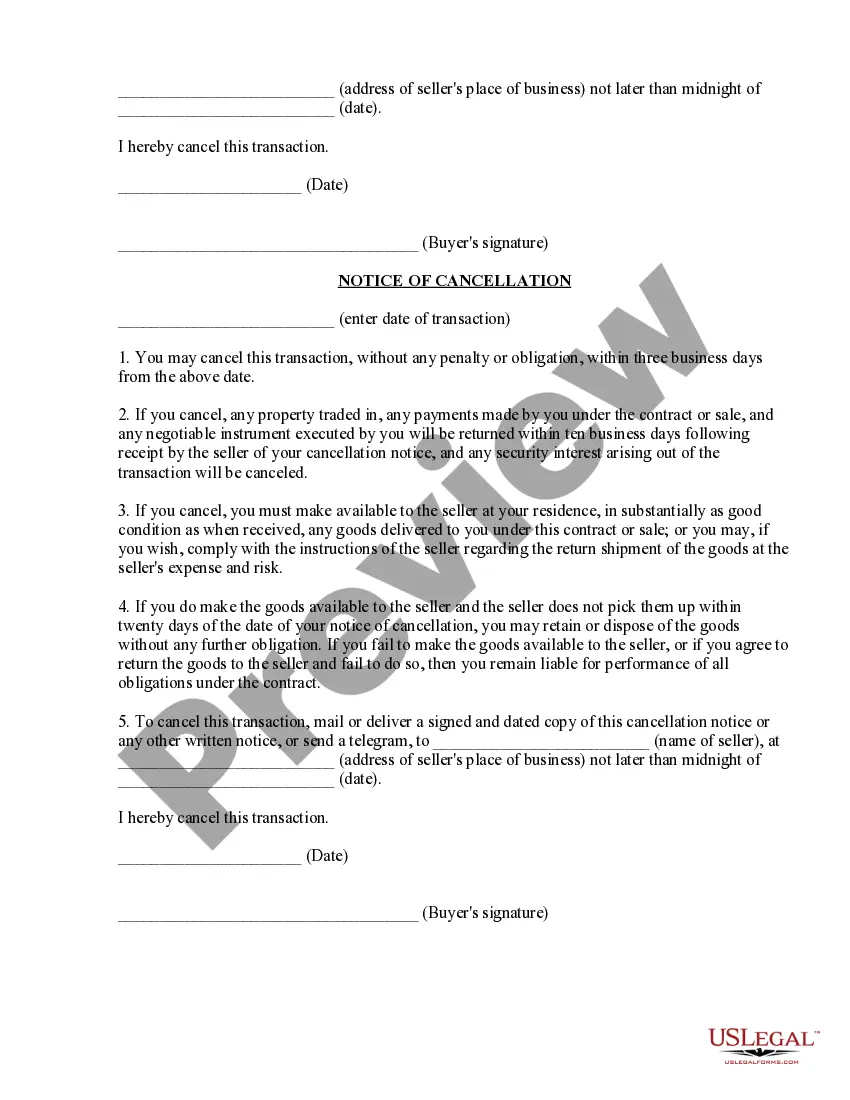
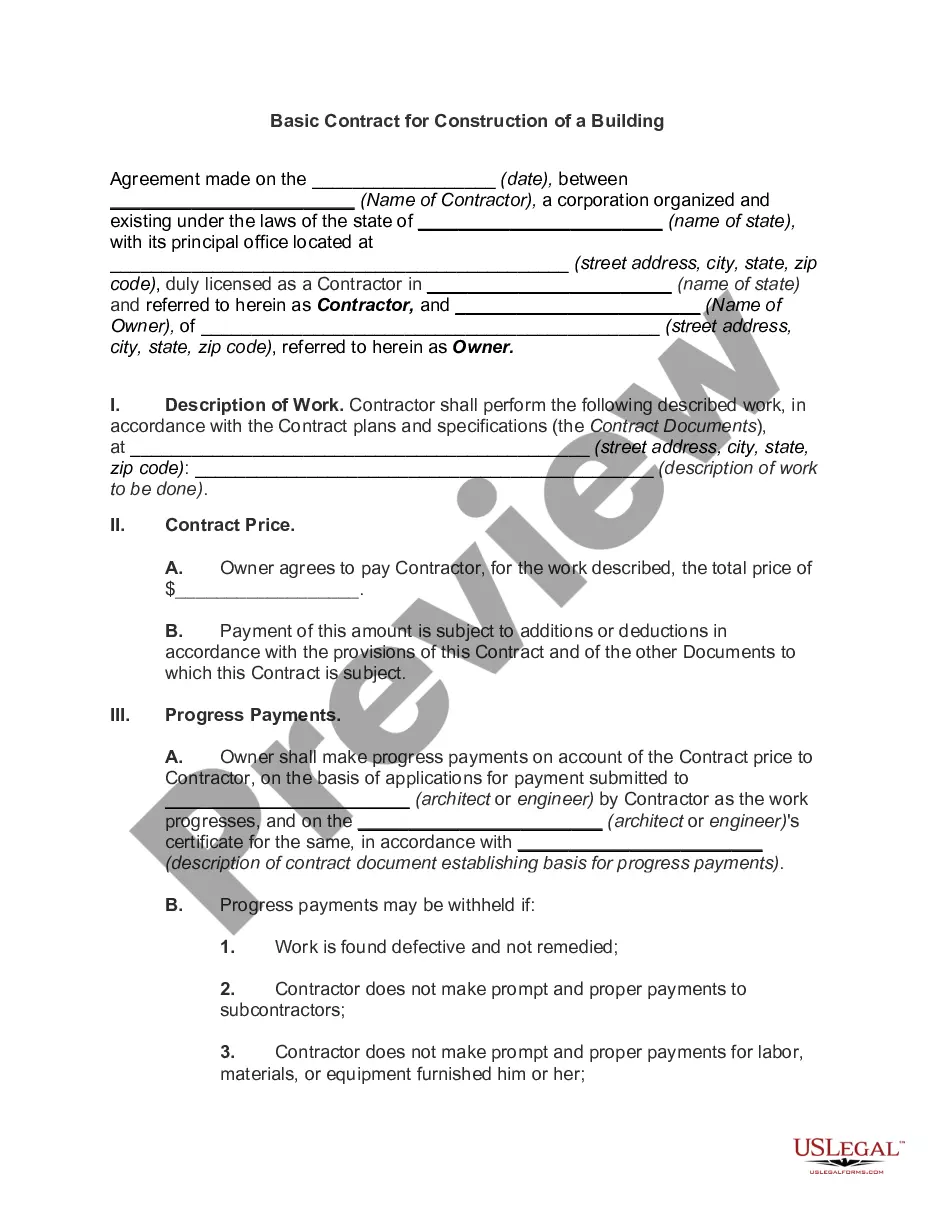
- Work site specifications detailing the location of the project.
- Permits and approvals required for the construction.
- Soil conditions and liabilities regarding site conditions.
- Insurance requirements for the contractor.
- Change order provisions for any amendments to the project scope.
- Late payment penalties and conditions for contract termination.

When to use this form
This form is necessary when entering into a construction agreement where the cost structure is either cost plus or fixed fee. It is particularly useful in situations where the exact costs of a project cannot be predetermined, or when the owner has specific budgetary constraints. Using this form helps ensure that both parties are on the same page regarding payments, changes, and responsibilities throughout the construction process.
Who should use this form
- Property owners planning a construction project.
- Contractors seeking to establish clear terms with clients.
- Individuals involved in renovation or new construction in North Dakota.
- Parties requiring assurance of compliance with local regulations and laws.
Completing this form step by step
- Identify the parties involved in the contract, including the owner and contractor.
- Specify the work site where the project will be carried out.
- Clearly outline the scope of work to be completed.
- Indicate the payment structure, whether cost plus or fixed fee.
- Include any necessary permits and regulatory approval details.
- Ensure both parties sign and date the agreement to make it legally binding.
Notarization guidance
This form does not typically require notarization unless specified by local law. However, both parties should keep a signed copy for their records to help ensure agreement enforcement and understanding.
Get your form ready online
Our built-in tools help you complete, sign, share, and store your documents in one place.
Make edits, fill in missing information, and update formatting in US Legal Forms—just like you would in MS Word.
Download a copy, print it, send it by email, or mail it via USPS—whatever works best for your next step.
Sign and collect signatures with our SignNow integration. Send to multiple recipients, set reminders, and more. Go Premium to unlock E-Sign.
If this form requires notarization, complete it online through a secure video call—no need to meet a notary in person or wait for an appointment.
We protect your documents and personal data by following strict security and privacy standards.

Make edits, fill in missing information, and update formatting in US Legal Forms—just like you would in MS Word.

Download a copy, print it, send it by email, or mail it via USPS—whatever works best for your next step.

Sign and collect signatures with our SignNow integration. Send to multiple recipients, set reminders, and more. Go Premium to unlock E-Sign.

If this form requires notarization, complete it online through a secure video call—no need to meet a notary in person or wait for an appointment.

We protect your documents and personal data by following strict security and privacy standards.
Common mistakes to avoid
- Leaving sections blank, which can lead to disputes later on.
- Failing to specify the payment terms clearly.
- Not including necessary details about permits required for the project.
- Ignoring soil condition clauses that outline liability.
- Not having both parties sign the agreement, which invalidates the contract.
Why use this form online
- Easy access to legal templates drafted by licensed attorneys.
- Immediate availability for download saves time.
- Customizable fields allow for personal specifications.
- Ensures compliance with local laws and regulations.
- Convenient process that can be completed from anywhere.
Legal use & context
- This form is legally binding when properly executed by both parties.
- It protects the interests of both the contractor and the owner by clearly defining responsibilities.
- Any changes to the contract must be documented through change orders to ensure enforceability.
Key takeaways
- This Construction Contract allows for flexible payment arrangements to accommodate different project needs.
- It outlines essential legal provisions and responsibilities for both homeowners and contractors.
- Ensuring completeness and accuracy in the form helps avoid legal disputes during the construction process.
Looking for another form?

Form popularity
FAQ
A fixed price contract sets a total price for all construction-related activities during a project. Many fixed price contracts include benefits for early termination and penalties for a late termination to give the contractors incentives to ensure the project is completed on time and within scope.
Determine your COGS (cost of goods sold). For example $40 . Find out your gross profit by subtracting the cost from the revenue. Divide profit by COGS. Express it as a percentage: 0.25 100 = 25% . This is how to find markup... or simply use our markup calculator!
In the cost plus a percentage arrangement, the contractor bills the client for his direct costs for labor, materials, and subs, plus a percentage to cover his overhead and profit. Markups might range anywhere from 10% to 25%.
A cost-plus contract is an agreement to reimburse a company for expenses incurred plus a specific amount of profit, usually stated as a percentage of the contract's full price.
A cost-plus contract, also known as a cost-reimbursement contract, is a form of contract wherein the contractor is paid for all of their construction-related expenses. Plus, the contractor is paid a specific agreed-upon amount for profit.
A cost-plus fixed fee contract is a specific type of contract wherein the contractor is paid for the normal expenses for a project, plus an additional fixed fee for their services.
A cost plus percentage of cost contract or CPPC is a cost reimbursement contract containing some element that obligates the non-state entity to pay the contractor an amount, undetermined at the time the contract was made and to be incurred in the future, based on a percentage of future costs.