Post-Separation Letter conveying Questionnaire
About this form
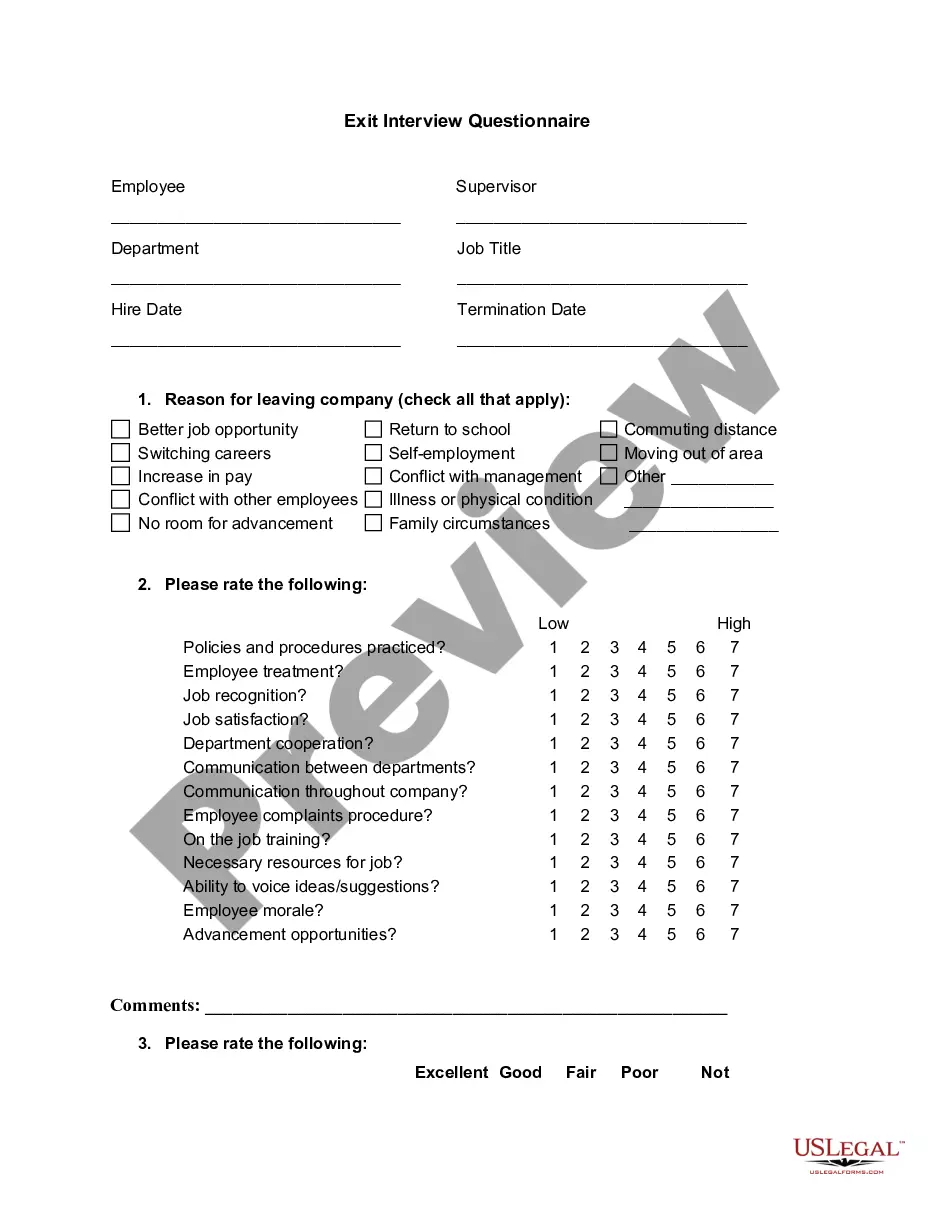
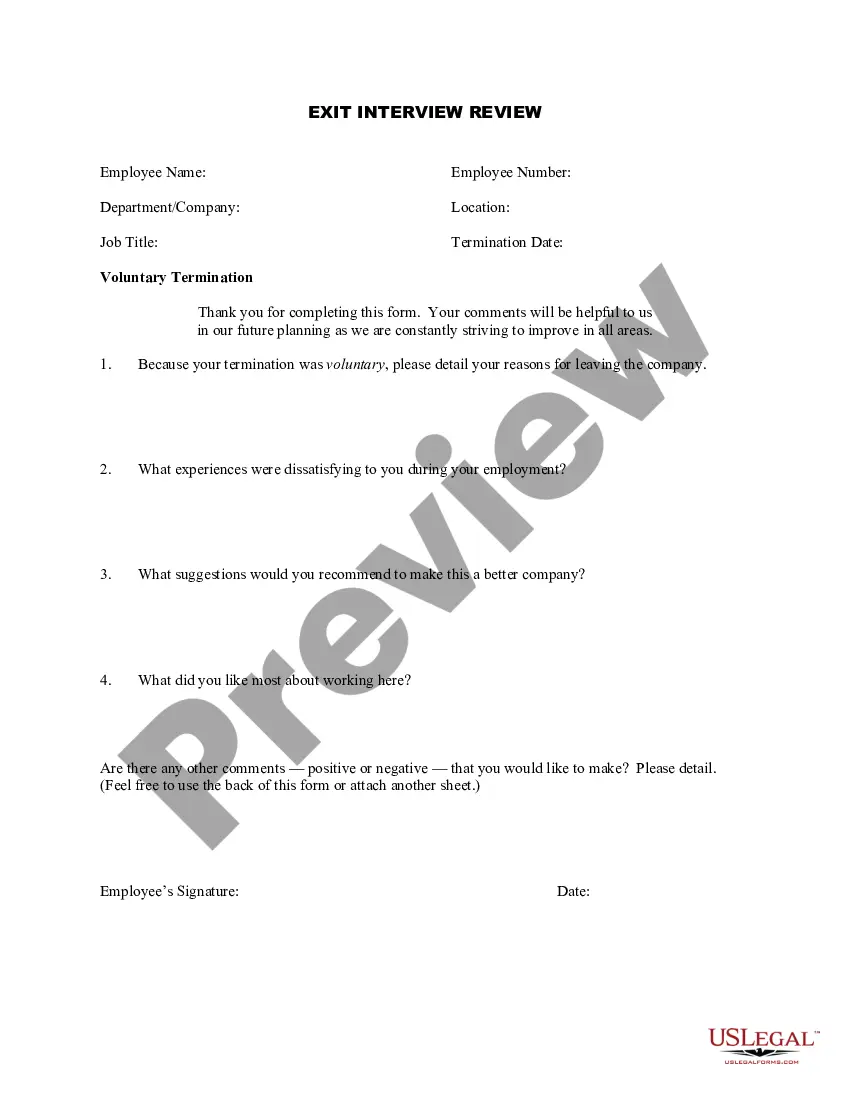
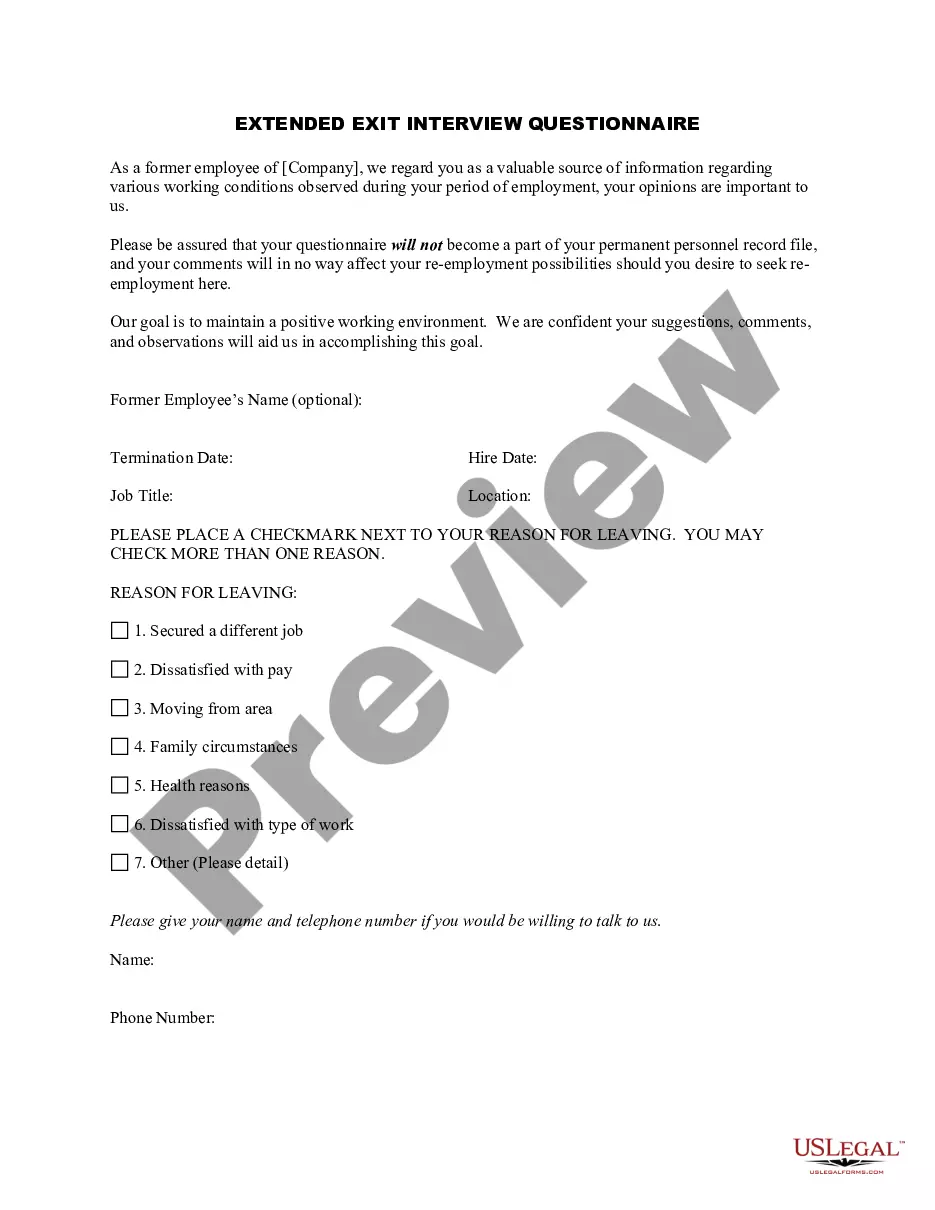
The Post-Separation Letter conveying Questionnaire is a formal document used by employers to gather feedback from former employees. This form helps organizations understand how employees perceived their work environment, management, and colleagues after their departure. This differs from standard exit interviews as it allows for anonymity and can lead to more honest feedback.
Key components of this form
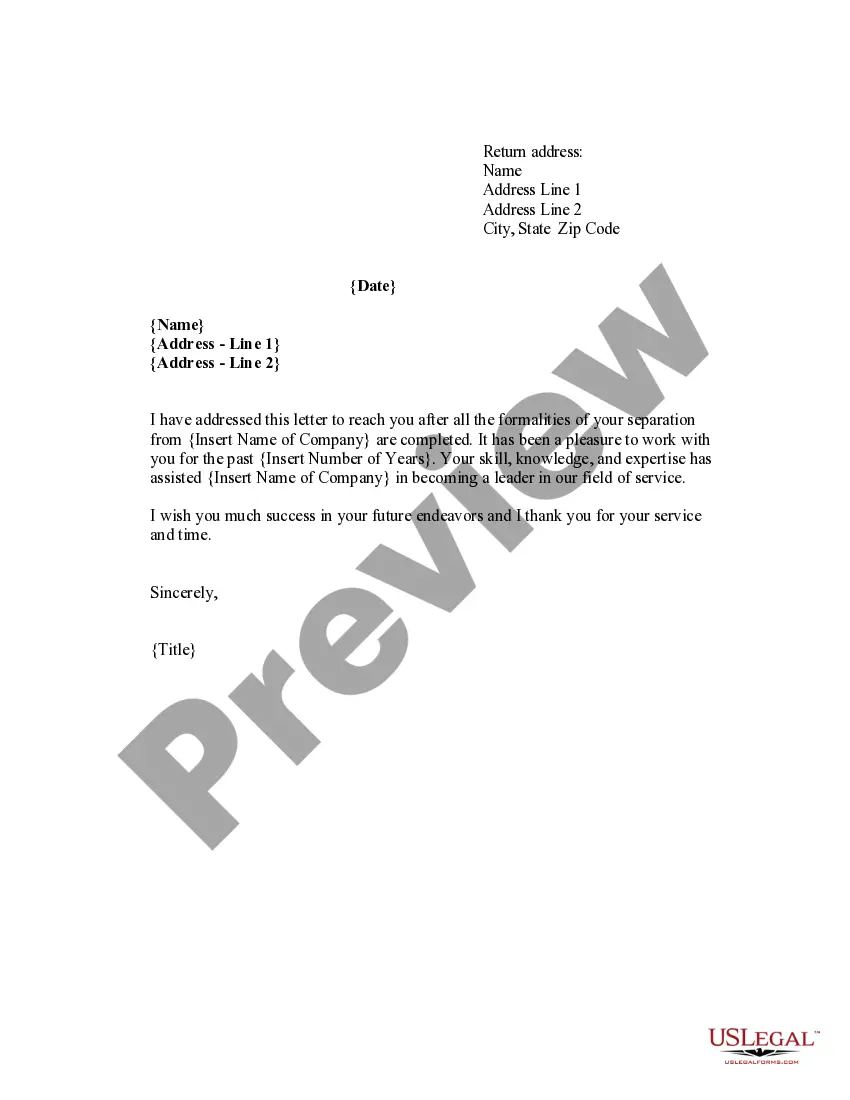
- Ex-Employeeâs name and mailing address fields.
- Subject line for feedback communication.
- Text requesting completion of the attached questionnaire.
- Space for the former employee to provide their feedback and optional contact information.
- Closing signature from the Human Resources Department.

When to use this form
This form is useful when a company seeks to gather insights from employees who have recently left. It is particularly beneficial to identify areas of improvement within the organization, understand employee satisfaction levels, and learn from the past experiences of departing staff.
Intended users of this form
Intended Audience:
- Employers who wish to gain feedback from former employees.
- Human resources personnel tasked with improving workplace culture.
- Organizations seeking to enhance employee retention in the future.
Completing this form step by step
Steps to Complete the Form:
- Fill in the ex-employee's name and address accurately.
- Write the subject to reflect the purpose of the feedback.
- Ensure the body text clearly requests their completion of the questionnaire.
- Optionally request contact information for follow-up, if they are open to discussion.
- Sign off the letter with a proper closing and signature from the Human Resources Department.
Notarization requirements for this form
This form does not typically require notarization unless specified by local law. Always check state-specific requirements to confirm.
Get your form ready online
Our built-in tools help you complete, sign, share, and store your documents in one place.
Make edits, fill in missing information, and update formatting in US Legal Forms—just like you would in MS Word.
Download a copy, print it, send it by email, or mail it via USPS—whatever works best for your next step.
Sign and collect signatures with our SignNow integration. Send to multiple recipients, set reminders, and more. Go Premium to unlock E-Sign.
If this form requires notarization, complete it online through a secure video call—no need to meet a notary in person or wait for an appointment.
We protect your documents and personal data by following strict security and privacy standards.

Make edits, fill in missing information, and update formatting in US Legal Forms—just like you would in MS Word.

Download a copy, print it, send it by email, or mail it via USPS—whatever works best for your next step.

Sign and collect signatures with our SignNow integration. Send to multiple recipients, set reminders, and more. Go Premium to unlock E-Sign.

If this form requires notarization, complete it online through a secure video call—no need to meet a notary in person or wait for an appointment.

We protect your documents and personal data by following strict security and privacy standards.
Typical mistakes to avoid
- Forgetting to include a clear subject line in the letter.
- Failing to provide an anonymous method for feedback submission.
- Not personalizing the letter to address the specific ex-employee.
- Neglecting to follow up on responses received.
Why complete this form online
- Easy online completion ensures that the form is accessible and editable at any time.
- Employers can quickly gather feedback to identify and address workplace issues.
- Anonymity can lead to more candid responses, leading to valuable insights.
- The feedback collected via this form is to be used solely for the purpose of improving workplace culture.
- No identifying information is needed unless the former employee provides consent.
- Employers must adhere to privacy laws when handling the responses.
Quick recap
- The Post-Separation Letter conveying Questionnaire is essential for understanding employee feedback after separation.
- Completion of this form can help organizations improve their management and culture.
- Employers should facilitate easy, anonymous feedback to encourage participation.
Looking for another form?
Form popularity
FAQ
Mistake #1: using your divorce proceedings to get back at your spouse. mistake #2: confusing material needs with emotional needs. mistake #3: letting other people define and prioritize your needs. mistake #4: embarking on an adversarial process without. mistake #5: not thinking about the family's finances as a whole.
I think ex spouse/husband/wife or just plain ex is fine even if a divorce hasn't been finalized in informal circumstances. In Court (which would mean something has been filed at least), petitioner/respondent is fine (if that's what the parties are called in that jurisdiction).
#1. Start with the Basics. #2. Include the Details. #3. Confirm Your Agreement. #4. Identify and Divide Assets and Debts. #5. Create a Parenting Plan for Custody and Visitation. #6. Agree on Child Support and Spousal Support (Alimony) #7. Polishing Your Agreement. Conclusion.
The spouses' right to live separately. Custody of the children. A visitation schedule, or a provision for reasonable visitation. Child support. Alimony or spousal support. The children's expenses, including medical, dental, educational and recreational. Property and debt division. Insurance, including medical, dental and life.
Write in plain English. There are no legal magical words. Be clear and unambiguous. Along the same lines, you also want to make sure that your agreement makes logical sense. Draft an agreement that can grow with you. Include a provision for omitted property. Be creative.
Separation agreements can be long and complex, especially if you and your partner have been together for years and have extensive marital property or children. While you can draft a separation agreement yourself, it's best to have an attorney do it for you.
A detailed parenting-time scheduleincluding holidays! Specifics about support. Life insurance. Retirement accounts and how they will be divided. A plan for the sale of the house.
Some people wonder if they can save even more by money by writing their own settlement agreement and not seeking the help of a divorce attorney at all. While there is no legal requirement that you have a lawyer draft your settlement agreement, it is certainly a good idea to do so.
Make sure you have all of the basic information and divorce forms you need according to the divorce laws in your state. Make sure you have all of the personal information you need. Include a statement that you and the other party are in agreement with the contents of the document.
